Q5L

Search documents
奔驰、宝马、奥迪集体换帅
21世纪经济报道· 2026-03-04 15:08
Core Viewpoint - The recent leadership changes in the German luxury car brands (BBA) in China are a response to significant sales and profit declines, indicating a need for strategic restructuring in the face of intense competition and market shifts [1][2][10]. Group 1: Sales Performance - In 2025, Mercedes-Benz's global sales fell by 10% to 2.16 million units, with a 19.5% drop in China to 575,000 units, returning to 2017 levels [1][2]. - BMW's global sales slightly increased by 0.5% to 2.4637 million units, but in China, sales dropped by 12.5% to 625,500 units [1][2]. - Audi's sales in China were 617,500 units, down 5%, marking the third consecutive year of negative growth [1][2]. Group 2: Profitability Issues - Mercedes-Benz's adjusted EBIT for 2025 plummeted by 40% to €8.2 billion, with net profit nearly halving to €5.331 billion [2]. - BMW's EBIT for the first three quarters of 2025 fell by 16.2% to €8.06 billion, with net profit dropping to €5.7 billion [2]. - Audi's operating profit for the first three quarters of 2025 was only €1.6 billion, with bleak full-year profit expectations [2]. Group 3: Market Challenges - The luxury brands are facing a "double whammy" in the Chinese market, with price wars eroding profits in the fuel vehicle sector and a lack of competitive electric vehicle offerings [7][12]. - Mercedes-Benz's sales profit margin has dropped to 5.0%, down from previous double-digit figures, due to increased competition and cost pressures [6]. - BMW's product line is experiencing a structural imbalance, with significant sales declines in higher-margin SUV models [6][7]. Group 4: Strategic Shifts - The leadership changes signal a shift from a "remote control" approach to a more localized strategy that emphasizes understanding and responding to Chinese consumer needs [10][11]. - Mercedes-Benz plans to introduce over 15 new and updated models in China in 2026, focusing on local demand and collaboration with tech companies [11]. - BMW and Audi are also ramping up their electric vehicle offerings to regain market share, with new models set to launch in 2026 [12]. Group 5: Competitive Landscape - Chinese luxury brands are gaining ground, with significant sales figures and a new definition of luxury that emphasizes technology and smart features [12][13]. - The shift in consumer perception towards "technology equals luxury" poses a challenge for BBA, which historically defined luxury through materials and brand heritage [12][13]. - The urgency for BBA to adapt is underscored by the rapid rise of domestic brands and the need for a fundamental rethinking of their market strategies in China [13].

一汽-大众第1000万台EA888发动机在大连基地下线
Zhong Guo Zhi Liang Xin Wen Wang· 2026-01-30 07:50
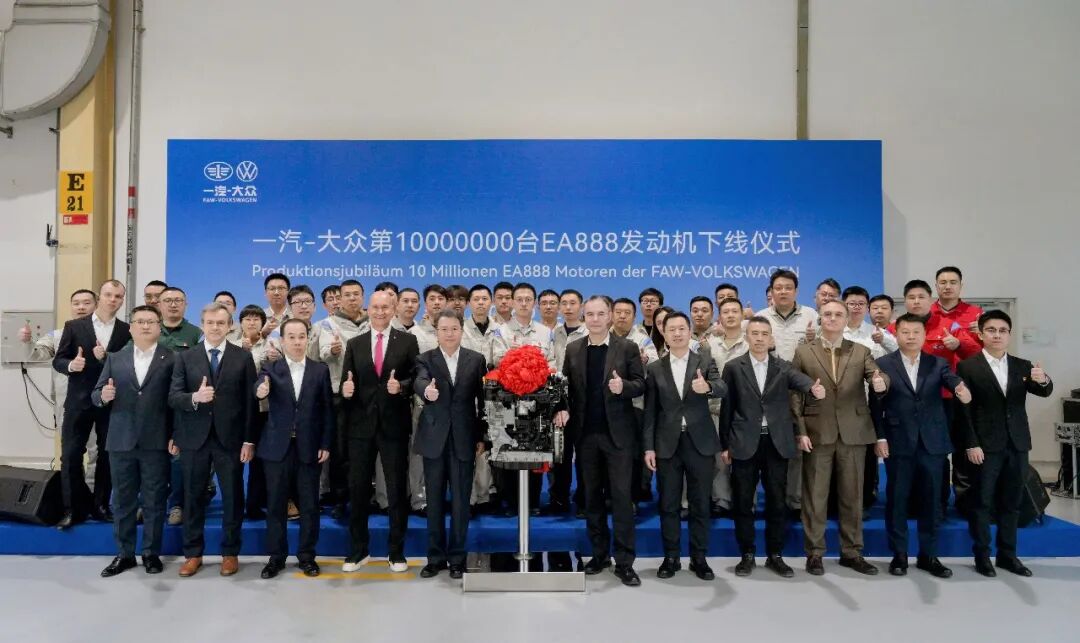
Core Insights - The 10 millionth EA888 engine from FAW-Volkswagen was produced at the Dalian base on January 20, marking a significant milestone for the engine series which has seen over 20 million units installed globally since its debut in 2006 [1][3] Group 1: Engine Technology - The latest fifth-generation EA888 2.0T engine features advanced technologies including VTG variable geometry turbocharging, a 500bar high-pressure direct fuel injection system, and a full-load Miller cycle [3] - The engine achieves a peak torque of 400N·m at 1500 RPM, extending the high torque range up to 4500 RPM, effectively eliminating traditional turbo lag [3] - The WLTC combined fuel consumption is reduced to 8.35L/100km, with thermal efficiency improved by 40% compared to the third generation, enhancing power output stability under high-speed conditions [3] Group 2: Market Position - The EA888 engine is primarily used in key models from the Volkswagen and Audi brands, including Magotan, Passat, Tayron, Tiguan L, A4L, A6L, Q5L, and Q3, serving as a core power source for German mid-size cars and SUVs in the domestic market [5]
大众第1000万台EA888发动机在大连基地下线
Zhong Guo Zhi Liang Xin Wen Wang· 2026-01-21 04:52
Core Insights - The 10 millionth EA888 engine from FAW-Volkswagen was produced at the Dalian base on January 20, marking a significant milestone for the engine series which has seen over 20 million units installed globally since its debut in 2006 [1][3] Group 1: Engine Technology - The latest fifth-generation EA888 2.0T engine features advanced technologies including VTG variable geometry turbocharging, a 500bar high-pressure direct fuel injection system, and a full-load Miller cycle, enhancing performance and efficiency [3] - The engine achieves a peak torque of 400N·m at 1500 RPM, with a torque plateau extending to 4500 RPM, effectively eliminating traditional turbo lag [3] - The WLTC combined fuel consumption is reduced to 8.35L/100km, with thermal efficiency improved by 40% compared to the third-generation model, and enhanced stability in high-speed power output [3] Group 2: Market Position - The EA888 engine is primarily used in key models from Volkswagen and Audi, including Magotan, Passat, Tayron, Tiguan L, A4L, A6L, Q5L, and Q3, serving as the core power source for German mid-size cars and SUVs in the domestic market [5]
智驾领域催化多,岚图与引望达成深化战略合作
CMS· 2026-01-18 13:01
Investment Rating - The report maintains a "Recommendation" rating for the automotive industry, indicating a positive outlook for the sector [5]. Core Insights - The automotive industry experienced an overall increase of 0.7% from January 11 to January 17, with significant developments in the smart driving sector, including strategic partnerships and advancements in autonomous vehicle technology [1][9]. - The report highlights that China's automotive production is projected to reach 34.53 million units and sales to hit 34.4 million units in 2025, marking a historical high and maintaining its position as the world's largest automotive market [26]. - The report emphasizes the growing importance of electric vehicles, with projections indicating that over 50% of new car sales will be electric or hybrid by 2025 [26]. Market Performance Overview - The automotive sector's performance was mixed, with the automotive services segment showing the highest weekly increase of 3.4%, while motorcycle and passenger vehicle segments experienced declines of 2.0% and 1.7%, respectively [2][13]. - Individual stocks within the automotive sector saw significant fluctuations, with notable gainers including Aikelan (+40.5%) and Jiaoyun Shares (+39.3%), while Tianpu Shares (-25.3%) and Yueling Shares (-15.4%) faced substantial losses [3][17]. Industry Dynamics - Key partnerships in the smart driving field were established, such as the collaboration between Lantu and Huawei's subsidiary, focusing on the development of intelligent driving and cockpit technologies [9][28]. - The report notes that Uber is set to launch a customized autonomous taxi service in San Francisco, marking its entry into the autonomous ride-hailing market [29]. - The report also mentions that Xpeng plans to establish a localized supply chain team in Europe and ASEAN markets to enhance operational efficiency and support local production [29]. Future Projections - The report forecasts a slight increase in domestic automotive sales to 34.75 million units in 2026, reflecting a 1% growth from the previous year [26]. - The report indicates that the Chinese automotive industry is expected to maintain its competitive edge globally, with a significant portion of sales driven by the domestic market [25][26].
BBA,势败如山倒
虎嗅APP· 2026-01-17 13:44
Core Viewpoint - The article discusses the significant decline in sales for traditional luxury car brands (BBA: BMW, Benz, Audi) in China in 2025, highlighting their reliance on marketing language to mask underlying issues [4][7]. Sales Performance - In 2025, the sales figures for BBA in China were as follows: BMW (including MINI) sold 625,500 units, down 12.5%; Audi (including FAW and SAIC) sold approximately 617,000 units, down 5%; and Mercedes-Benz (including commercial vehicles) sold 575,000 units, down 19% [5][7]. - All three brands saw their annual sales drop below 700,000 units, ending a five-year period of stable high sales [4]. Market Dynamics - The decline in BBA sales is attributed to a structural loss in the face of the rising tide of new energy vehicles (NEVs), with NEV penetration in China approaching 60% and domestic brands capturing 65% of the market share [8]. - The retail sales of fuel vehicles dropped by 30% year-on-year, indicating a significant shift in consumer preferences [8]. Consumer Sentiment - BBA's customer loyalty has fallen below 18%, meaning that out of 100 previous BBA customers, fewer than 18 intend to repurchase from the same brand [14]. - In contrast, new energy brands like AITO, Li Auto, Tesla, and Xiaomi have a high percentage of potential customers coming from BBA, with figures of 36.81%, 27.22%, 24.21%, and 19.15% respectively [14]. Strategic Responses - Audi plans to launch new models like the A6L e-tron and E7X in 2026 to address its technological shortcomings [15]. - Mercedes-Benz aims to introduce 15 new models in 2026, including a locally produced GLC, to enhance its market position [15]. - BMW's new generation iX3 is set to launch in late 2026, featuring advanced technology and local AI capabilities, with pricing being a critical factor for its success in the NEV market [16].
奥迪,撑不住了
商业洞察· 2025-06-23 09:04
Core Viewpoint - Audi has officially retracted its goal for full electrification by 2033, indicating a shift in strategy under the new CEO Gernot Döllner, who plans to continue producing combustion engine vehicles until around 2035 or longer, while maintaining a parallel development of combustion, hybrid, and electric vehicles until 2035 [1][2][3]. Group 1: Strategic Decisions - The previous CEO's aggressive electrification timeline is deemed outdated, leading to a more flexible approach to product offerings that includes combustion, hybrid, and electric vehicles [1][2]. - Other German luxury car manufacturers, including BMW and Mercedes-Benz, have also adjusted their electrification plans, indicating a collective shift among major players in the industry [2]. - Audi's financial performance has suffered due to strategic missteps, with a projected revenue of €64.5 billion in 2024, a 7.6% decline year-on-year, and a significant drop in operating profit by 37.8% to €3.903 billion [3][11]. Group 2: Market Performance - Audi's electric vehicle sales have not met expectations, with global sales of pure electric vehicles at 118,200 units in 2022 and 178,000 units in 2023, accounting for less than 10% of total sales [5][9]. - The launch of the Q6 e-tron has been delayed due to software development issues, resulting in a projected delivery of only 15,000 units in 2024 [5][6]. - In 2024, Audi's global sales are expected to decline by 11.8%, with significant drops in major markets: China down 10.9%, the U.S. down 14%, and Germany down 21.3% [9][11]. Group 3: Operational Changes - Audi has initiated a series of reforms, including the closure of its Brussels plant, which produced 53,000 electric vehicles in 2023, representing about 30% of its total electric vehicle deliveries [9][13]. - The company plans to cut 7,500 jobs in Germany by 2029 and aims to reduce material costs by €8 billion and labor costs by €10 billion by 2030 [13]. - Audi's new CEO has emphasized the need for a more competitive product lineup, with plans to launch over 20 new models in the next two years, including the Q6 e-tron and Q3 [15][16].

2025年,什么样的燃油车会被排队围观?
3 6 Ke· 2025-04-30 11:55
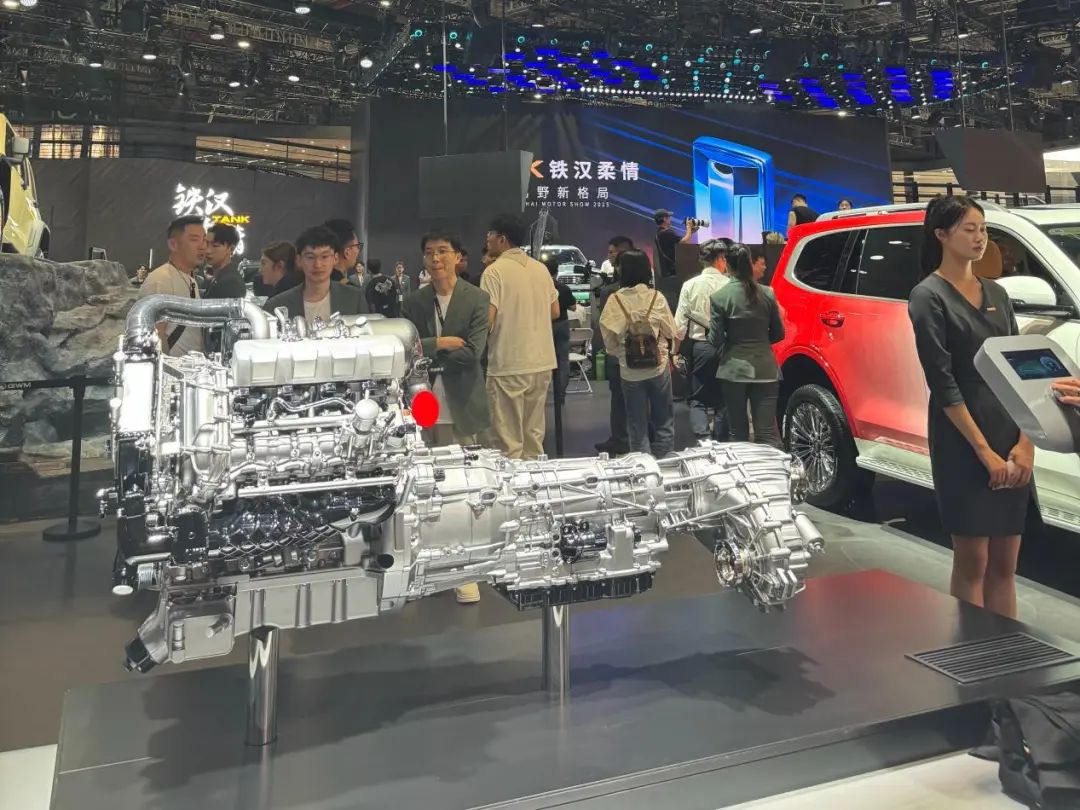
Core Insights - The Shanghai Auto Show 2023 highlighted the dominance of new energy vehicles (NEVs), with over 70% of the 1,300 exhibited vehicles being NEVs, while traditional fuel vehicles still accounted for 30% of the new models presented [1][11]. Group 1: New Energy Vehicles - NEVs were the main attraction at the Shanghai Auto Show, with major brands like BBA and Porsche showcasing multiple electric models [1][3]. - The presence of new energy brands such as Hongmeng Zhixing and NIO drew significant crowds, indicating a strong consumer interest in electric vehicles [1][3]. Group 2: Fuel Vehicles - Despite the rise of NEVs, fuel vehicles experienced a resurgence in interest, with many consumers drawn to classic models and unique offerings at the show [5][11]. - The presence of iconic models like the Lexus LS400 and the new Volvo XC90 attracted considerable attention, suggesting a nostalgic appeal among consumers [5][10]. Group 3: Consumer Preferences - Over 40% of consumers still prefer fuel vehicles, valuing the mechanical feel and driving experience that electric vehicles cannot replicate [11][16]. - Many consumers expressed a desire for a balance between the emotional value of fuel vehicles and the technological advancements of NEVs, indicating a potential market for hybrid offerings [20][23]. Group 4: Market Trends - The automotive market is likely to see a coexistence of fuel and electric vehicles, with each catering to different consumer needs [20][23]. - Fuel vehicles must innovate and incorporate smart technologies to remain competitive against the rapid advancements in NEVs [20][23].
“消失的”品牌,汽车圈的淘汰赛
3 6 Ke· 2025-04-30 08:22
Core Viewpoint - The 2025 Shanghai Auto Show reflects a significant shift in the automotive industry, where traditional competition based on speed and concepts is replaced by a focus on product quality, technology, brand strength, and comprehensive capabilities. The transition to electric and intelligent vehicles is now a consensus, but many companies face survival challenges in an increasingly competitive market [1][27]. Group 1: Absence of Brands - Several notable automotive brands, including Beijing Hyundai, Kia, and luxury brands like Rolls-Royce and Lamborghini, were absent from the 2025 Shanghai Auto Show, indicating strategic decisions or difficulties in surviving a highly competitive market [1][5]. - Neta Auto, once a rising star in the new energy vehicle sector, has faced severe operational challenges, with sales plummeting to just 487 units in January and February 2025, and no data available for March [3][5]. Group 2: Traditional Brands Struggling - Korean brands like Beijing Hyundai and Kia have seen a significant decline in market presence, with their absence from the auto show marking a historic low since entering the Chinese market in 2002. Their slow adaptation to the electric vehicle market has contributed to their decline [5][7]. - French brands under Dongfeng, such as Citroën and Peugeot, are also struggling, with their market share falling behind Korean brands and facing challenges in keeping up with the rapid pace of model updates in the domestic market [7][9]. Group 3: New Forces and Market Dynamics - The automotive market is witnessing a clear divide among leading players, with companies like BYD and Huawei maintaining strong market presence and technological innovation, while some new entrants are facing resource constraints and market exits due to financial difficulties [9][27]. - The trend of "reverse joint ventures" is gaining momentum, with companies like Toyota and BMW shifting decision-making power to their Chinese teams to better align with local market demands [10][12]. Group 4: Technological Competition - The auto show has transformed into a platform for technological competition, with advancements in charging speed, battery technology, and autonomous driving systems becoming critical for market success. L2-level driving assistance systems are becoming standard, with a penetration rate exceeding 65% [18][20]. - The presence of international technology suppliers at the auto show highlights the growing importance of global collaboration in the automotive supply chain, with many foreign companies showing keen interest in Chinese innovations [20][22]. Group 5: Global Expansion - Chinese automotive companies are increasingly focusing on global markets, with Chery and SAIC Motors leading the way in exports. Chery has become the top exporter of Chinese brands, while SAIC plans to launch 17 new models for overseas markets in the next three years [22][24]. - The presence of overseas dealers and media at the auto show indicates that international markets will be a key growth driver for Chinese automotive companies moving forward [26]. Conclusion - The 2025 Shanghai Auto Show signifies a critical juncture for the automotive industry, where the competition is intensifying, and companies must adapt to new technologies and market dynamics to survive. The industry is poised for a significant transformation, with potential for higher quality and performance vehicles for consumers in the future [27].