RV减速机

Search documents
双环传动20260303
2026-03-04 14:17
Company and Industry Summary Company Overview - The company discussed in the conference call is **双环传动** (Shuanghuan Transmission), which operates in the **new energy vehicle (NEV)** and **gear transmission** industry. Key Points Industry and Market Position - The company's **new energy business** is projected to generate revenue of approximately **4.2 to 4.4 billion yuan** in 2025, with a domestic market share of **42% to 45%** and a **pure electric three-in-one** market share exceeding **60%**. The market share is expected to steadily increase in 2026 [2][3][9]. - The **coaxial reducer** has a unit value exceeding **1,000 yuan**, which is double that of parallel axis reducers. The company supplies over **90%** of the market, with significant growth expected in the second half of 2026 as automakers ramp up production [2][3][7]. - The **injection gear business** is expected to generate around **800 million yuan** in revenue by 2025, with a gross margin rising above **20%**. The company holds the top market share in the **sweeping machine** segment and is expanding into **e-bikes** and automotive actuators, which are anticipated to be core growth drivers in the next 2-3 years [2][4][5]. Financial Performance and Projections - The company expects a **1.5%** annual decline pressure in 2026, which it plans to mitigate through bulk procurement and equipment optimization [2][3]. - The **Hungarian factory** aims for revenue of **500 to 600 million yuan** in 2026, targeting breakeven by year-end with a production capacity of **600,000 units** [2][12]. Business Segment Performance - The **commercial vehicle segment** is expected to see a slight decline in 2025 but is projected to recover in the third and fourth quarters, with a slight increase anticipated in 2026 [5]. - The **RV reducer** market share is close to **30%**, ranking first alongside Nabtesco, with ongoing supply to KUKA and ABB [2][5]. Strategic Initiatives - The company is focusing on expanding its **overseas market share**, leveraging its domestic NEV gear experience and utilizing its European base to capture global market share [6][11]. - The company anticipates that the **penetration rate** of NEVs in China could reach **70%** in the long term, although achieving this will take time [6]. Product Development and Innovation - The **coaxial reducer** offers advantages such as smaller size, lighter weight, and higher power density compared to parallel reducers, making it attractive to end vehicle manufacturers [7]. - The company is also enhancing the value per vehicle by introducing **differential assemblies** and expanding the application of injection gears beyond electric drives to include various actuators [8][15]. Challenges and Risks - The company faces potential risks from **raw material price fluctuations**, but it has strategies in place, such as strategic procurement, to mitigate these risks [19]. - The **cost structure** for operations in Hungary is expected to be higher due to energy costs, but local production can help avoid import tariffs and shipping costs [13][14]. Future Outlook - The company plans to maintain capital expenditures of around **1 billion yuan** annually over the next 1-2 years, focusing on NEV gears and overseas capacity expansion [21]. - The **gross margin** is expected to improve through cost reduction and efficiency measures, although external factors may introduce uncertainties [20]. Conclusion - Overall, the company is well-positioned in the NEV and gear transmission market, with strong growth prospects driven by strategic initiatives, product innovation, and market expansion efforts. However, it must navigate challenges related to raw material costs and competition in the evolving automotive landscape [2][3][6][19].

山东烟台黄渤海新区加快融入“机器人+”发展浪潮
Zhong Guo Jin Rong Xin Xi Wang· 2026-01-16 08:36
Core Insights - The article highlights the rising prominence of intelligent robots in global technology competition, with significant developments in Shandong Yantai Huangbohai New Area, which has established a robust industrial foundation for the intelligent robotics sector [1] Industry Overview - Huangbohai New Area has positioned high-end equipment manufacturing as one of its five leading industries, successfully clustering multiple companies such as Koman Intelligent, Guoxing Intelligent, Aidi Aichuang, and Qingke Jia, covering various segments including industrial, service, and special robots [2] - Guoxing Intelligent, recognized as a national-level "specialized and innovative" small giant, has developed firefighting and mining robots widely used in emergency scenarios [2] - Aidi Aichuang has achieved a 100% localization rate for core components like RV reducers, with an annual production capacity of 20,000 industrial robots and 600,000 RV reducers [2] Technological Innovations - The Huangbohai New Area is actively promoting technological innovation to meet the demands for key components and materials in intelligent robotics, with several companies collaborating with robot manufacturers to provide technical support [4] - Zhenghai Group, a leader in high-performance neodymium-iron-boron permanent magnet materials, supplies critical components for humanoid robots, enhancing motor miniaturization and responsiveness [4] - Aidi Precision is focusing on developing products like RV reducers and planetary roller screws, with significant market potential due to their efficiency and precision [4] AI Integration - The integration of artificial intelligence is crucial for the advancement of intelligent robots, with Huangbohai New Area exploring AI applications in various industries [5] - Hanxin Technology is innovating in AI-driven fields such as smart manufacturing and smart driving, enhancing product standardization for industrial applications [6] - Yantai Haisen Big Data Co. utilizes an AI materials development platform to accelerate the research of key materials for robots, achieving a prediction accuracy of 90% [6] Future Outlook - Looking ahead to the 14th Five-Year Plan, China aims to focus on the deep integration of technological and industrial innovation, which will significantly boost related industries [7] - Huangbohai New Area plans to accelerate core technology innovation and further integrate regional resources to promote collaborative development across the industrial chain, injecting new growth momentum for high-quality development [7]


减速器板块备受市场关注,新时达、昊志机电、恒工精密、绿的谐波、斯菱智驱领涨,题材相关企业整理
Jin Rong Jie· 2025-12-30 14:21
Core Viewpoint - The A-share market has seen a strong performance in the reducer sector, with several companies leading the gains, indicating a growing interest and potential in automation-related technologies. Group 1: Company Highlights - Xinshi Da (002527.SZ) reported a stock price of 17.15 yuan with a daily increase of +10.01%. The company specializes in planetary reducers primarily used in the automation industry, having achieved mass production [1]. - Haozhi Electromechanical (300503.SZ) has a stock price of 63.80 yuan and a daily increase of +18.59%. The company possesses complete and fully independent design, manufacturing, and testing technology for harmonic reducers, overcoming key technical challenges [2]. - Henggong Precision (301261.SZ) has a stock price of 98.09 yuan with a daily increase of +13.11%. The technical team has made breakthroughs in core components of RV reducers and has begun small batch supply [3]. - Lide Harmonic (688017.SH) has a stock price of 191.10 yuan and a daily increase of +9.19%. It is a leading domestic company in harmonic reducers, having completed technology development for industrial robot harmonic reducers and achieved large-scale production [4]. - Siling Smart Drive (301550.SZ) has a stock price of 135.39 yuan with a daily increase of +8.92%. The company plans to cover various fields including industrial robots and humanoid robots, with harmonic reducers in the early stages of mass production preparation [5]. - Zhongdali De (002896.SZ) has a stock price of 92.15 yuan and a daily increase of +7.73%. The company leads in the domestic market for micro-reduction motors, with significant sales in precision planetary reducers and RV reducers, and has achieved small batch production of harmonic reducers for industrial robots [6]. - Shuanghuan Transmission (002472.SZ) has a stock price of 47.25 yuan with a daily increase of +6.59%. The company is a leader in domestic robot reducers, having developed a full series of RV reducers for industrial robots and successfully applied new high-load and high-power-to-weight ratio reducers [7]. - Yokogawa Precision (300539.SZ) has a stock price of 43.50 yuan with a daily increase of +6.44%. The company has successfully developed various harmonic reducers and is actively expanding its market and customer base in the reducer field [8].



老工业城市怎样开“新花”——来自河北省石家庄市的调查
Jing Ji Ri Bao· 2025-12-09 06:00
Core Viewpoint - Shijiazhuang is transforming from an old industrial city to a modern industrial hub by focusing on high-quality development and building a modern industrial system, with five major industrial clusters each exceeding 100 billion yuan in revenue [1] Industrial Development - Shijiazhuang has identified five key industrial clusters: biomedicine, new-generation electronic information, advanced equipment manufacturing, modern food, and modern commercial logistics, aiming for each to exceed 100 billion yuan in revenue [3][5] - The city is enhancing traditional industries while developing emerging and future industries, supported by projects, innovation, and a favorable business environment [1][3] Electronic Information Industry - The Luquan Economic Development Zone is a hub for the electronic information industry, hosting major companies and research institutes, and forming six advantageous industrial chains in semiconductors, modern communication, and more [2] - Previously fragmented, the electronic information sector is now consolidating, with leading enterprises attracting high-end talent and driving growth [2] Biomedicine Sector - Shijiazhuang, known as "Pharmaceutical City," is home to major pharmaceutical companies but has faced challenges in core technology and high-value product development [2] - The biomedicine industry is projected to grow from 77.1 billion yuan in 2021 to 125.72 billion yuan by 2024, with an annual growth rate of 10.8% [5] Innovation and R&D - The city is focusing on innovation as a key driver, with significant investments in R&D, including 211.6 billion yuan in 2024, representing an intensity of 2.7% [8] - Shijiazhuang has established numerous partnerships with universities and research institutions to enhance innovation and technology transfer [9][10] Business Environment - The city is committed to creating a market-oriented, law-based, and international business environment, implementing various reforms to streamline processes and improve service efficiency [11][12] - Initiatives include a "companion team" service for project support and a digital platform for efficient government services [12] Talent Development - Shijiazhuang is implementing a talent strategy to attract and retain skilled professionals, with over 13,000 talent green cards issued and substantial housing support provided [15][16] - The city has seen a net inflow of residents for three consecutive years, with a significant increase in young talent [17]
老工业城市怎样开“新花”
Jing Ji Ri Bao· 2025-12-08 22:18
Core Insights - The article discusses how Shijiazhuang, an old industrial city in Hebei Province, is transforming its economy by focusing on high-quality industrial development and creating five major industrial clusters worth over 100 billion yuan each [1][3]. Industrial Development - Shijiazhuang is revitalizing its economy by optimizing traditional industries, strengthening emerging sectors, and planning for future industries, with a focus on biomedicine, new-generation electronic information, advanced equipment manufacturing, modern food, and modern commercial logistics [1][3]. - The city has established a systematic approach to promote the development of these five industrial clusters, emphasizing policy guidance, technological innovation, and project construction [3][4]. Electronic Information Industry - The Luquan Economic Development Zone in Shijiazhuang has become a hub for the electronic information industry, hosting major companies and research institutes, and forming six advantageous industrial chains in semiconductor chips, modern communication, aerospace information, automotive electronics, new displays, and future industries [2][4]. Biomedicine Sector - Despite being known as a "Pharmaceutical City," Shijiazhuang's biomedicine industry has faced challenges such as a lack of core technologies and high-end talent, which has hindered its ability to upgrade and innovate [2][4]. - The biomedicine industry in Shijiazhuang has seen significant revenue growth, with sales projected to rise from 77.1 billion yuan in 2021 to 125.7 billion yuan in 2024, reflecting an annual growth rate of 10.8% [5]. Innovation and R&D - Shijiazhuang has strengthened its innovation capabilities, with a focus on integrating technological and industrial innovation, leading to a notable increase in R&D investment, which is expected to reach 21.16 billion yuan in 2024 [6][8]. - The city has established numerous partnerships with universities and research institutions to enhance innovation and technology transfer, resulting in the creation of over 400 cooperation agreements and multiple innovation platforms [7][8]. Talent Development - The city has implemented a talent strategy to attract and retain skilled professionals, including financial incentives and housing support, which has led to a net inflow of young talent [12][15]. - Shijiazhuang has been recognized as a top city for talent attraction, with over 100,000 young professionals moving to the city in 2024 [15].
老工业城市怎样开“新花” ——来自石家庄市的调查
Jing Ji Ri Bao· 2025-12-08 22:13
Core Insights - The article discusses how Shijiazhuang, an old industrial city in Hebei Province, is transforming its economy by focusing on high-quality industrial development and creating five major industrial clusters worth over 100 billion yuan each [1][3]. Industrial Development - Shijiazhuang is revitalizing its economy by optimizing traditional industries, strengthening emerging sectors, and planning for future industries, with a focus on biomedicine, new-generation electronic information, advanced equipment manufacturing, modern food, and modern commercial logistics [1][3]. - The city has established a systematic approach to promote the five major industrial clusters, emphasizing policy guidance, technological innovation, and project construction [3][4]. Electronic Information Industry - The Luquan Economic Development Zone in Shijiazhuang has become a hub for the electronic information industry, hosting major companies and research institutes, and forming six advantageous industrial chains in semiconductor chips, modern communication, and more [2][4]. - The electronic information sector has seen significant growth, with revenue projected to increase from 771.7 billion yuan in 2021 to 1,381.7 billion yuan by 2024, reflecting an annual growth rate of 12.1% [5]. Biomedicine Sector - Shijiazhuang is recognized as a "Pharmaceutical Capital," with major companies like Shijiazhuang Pharmaceutical Group leading the industry. However, challenges remain in core technology and high-end talent acquisition [2][5]. - The biomedicine industry is expected to grow from 771 billion yuan in 2021 to 1,257.2 billion yuan by 2024, with an annual growth rate of 10.8% [5]. Innovation and R&D - The city has invested heavily in R&D, with a budget of 211.6 billion yuan for 2024, aiming to enhance technological innovation and industry integration [6][8]. - Shijiazhuang has established numerous partnerships with universities and research institutions to foster innovation, resulting in over 400 cooperation agreements and the establishment of multiple innovation platforms [7][8]. Talent Development - The city has implemented a talent strategy that includes various incentives and support measures, attracting over 10,000 young talents in 2024 alone [12][15]. - Shijiazhuang has created a favorable environment for talent retention, including housing support and financial incentives, contributing to its recognition as a top city for talent attraction [13][15]. Business Environment - Shijiazhuang is focused on creating a market-oriented, law-based, and international business environment, streamlining administrative processes and enhancing service efficiency for enterprises [9][10]. - The city has introduced measures to protect intellectual property rights, which are crucial for fostering innovation and ensuring fair competition [11].



汽车行业深度报告:智能汽车产业链与具身智能产业链协同发展
Guoyuan Securities· 2025-08-01 11:12
Investment Rating - The report does not explicitly state an investment rating for the automotive industry or the embodied intelligence sector Core Insights - The embodied intelligence sector is entering a rapid implementation phase as of 2025, with multiple manufacturers planning mass production of robots across various applications [12][16][18] - The automotive industry is actively integrating embodied intelligence into its supply chain, leveraging existing technological advancements and manufacturing capabilities [34][37] - Government policies across various provinces are increasingly supportive of the embodied intelligence and robotics industries, aiming to foster innovation and market expansion [17][21][18] Summary by Sections 1. Rapid Development of Embodied Intelligence - The period from 2020 to 2025 marks a significant evolution in embodied intelligence, driven by advancements in AI and robotics, particularly following the release of OpenAI's ChatGPT3 [11] - Major manufacturers like Tesla and Xiaomi are entering the market, with Tesla predicting a production capacity of over 5,000 units by 2025 and 50,000 units by 2026 [13][16] - The demand for robots in various sectors is projected to grow significantly, with manufacturing being a primary area for automation due to its repetitive tasks [25][27] 2. Integration of Automotive and Embodied Intelligence - The automotive industry is leveraging its existing technological expertise in areas such as sensor fusion and control algorithms to facilitate the development of embodied intelligence [34][37] - Over ten automotive manufacturers are actively pursuing the embodied intelligence sector through self-development and strategic investments [36][37] - The shared supply chain for components like sensors and chips between automotive and robotics sectors is expected to reduce costs and enhance production efficiency [43][49] 3. Government Support and Policy Framework - Various provinces, including Shenzhen and Beijing, have introduced policies to support the development of embodied intelligence, focusing on technology breakthroughs and ecosystem building [17][21][18] - The policies aim to create a conducive environment for innovation, with specific targets for industry scale and technological advancements by 2027 [18][21] - The report highlights a collaborative approach among regions to drive the growth of the embodied intelligence sector, emphasizing the importance of technology and market integration [18][21]


从90%依赖进口到市场半壁江山,一颗“关节”如何撬动国产机器人崛起?
机器人大讲堂· 2025-06-17 12:21
Core Insights - The production of industrial robots in China reached 148,000 units in Q1 2024, marking a year-on-year increase of 26%, indicating a significant penetration of robots in various sectors such as automotive, electronics, and metal processing [1] - For the first time, domestic robot manufacturers have surpassed 50% market share, overtaking foreign companies, signifying China's transition from a "follower" to a "runner" in the robotics industry [1] - The RV reducer, a critical component in robotic arms, which was previously dominated by Japanese firms, is now pivotal for China's high-quality manufacturing development [1] Policy Guidance - The RV reducer is essential in industrial robots, bearing over 70% of the motion load, and has been historically monopolized by Japanese companies [2] - Prior to 2015, the procurement cost of a domestic RV reducer was tens of thousands of yuan, accounting for about 35% of the total cost of a robot, allowing foreign companies to capture most of the profits [2] - The Chinese government has initiated systematic efforts to overcome the technological barriers of RV reducers, prioritizing core component localization in the "Made in China 2025" initiative and the "14th Five-Year Plan" for robotics [2][4] Industry Chain Resonance - The push for RV reducer localization is not only a response to national strategy and market demand but also relies on the dedication of companies willing to tackle tough challenges [4] - The RV reducer's development has catalyzed the localization of upstream materials and precision manufacturing capabilities, significantly reducing overall costs and enhancing the safety of the domestic robot supply chain [5] - Companies like Huandong Technology have made significant advancements in precision processing technology for RV reducers, collaborating with domestic suppliers and universities to improve manufacturing processes [5] Market Validation - The market share of domestic RV reducers has been rapidly increasing, with Huandong Technology's share rising from 10.11% in 2021 to 24.98% in 2024, while the share of Nabtesco has decreased from 51.77% to 33.79% [8] - The choice of domestic products is driven not only by a 30% lower price but also by faster service response and higher flexibility in product customization [9] Future Outlook - The success of RV reducers illustrates a broader narrative of China's journey from dependency on imports to achieving self-sufficiency and participating in global competition [14] - The advancements in RV reducers are expected to drive further innovations in the robotics sector, with a focus on embodied intelligence and human-machine collaboration [15]

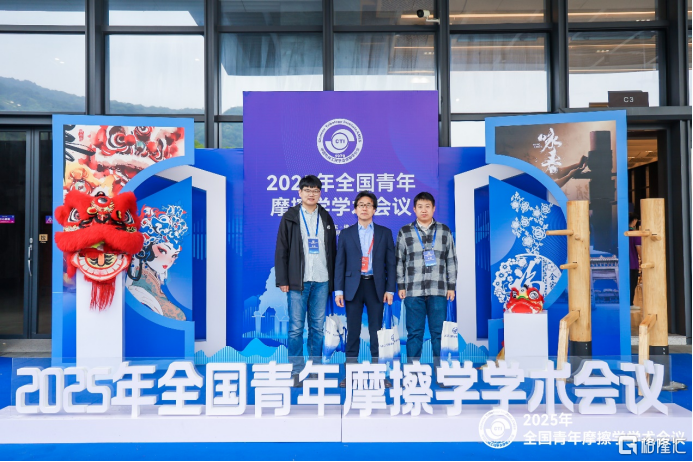
蓝橙实验室参与承办2025全国青年摩擦学会议,发表机器人前沿研究报告
Ge Long Hui· 2025-04-30 03:57
Core Insights - The 2025 National Youth Tribology Academic Conference was successfully held in Foshan, focusing on tribology and future industries, showcasing cutting-edge technology applications in tribology to support high-end manufacturing development [1] - Dr. Zhang Liuming from Midea's Blue Orange Laboratory presented significant advancements in tribological behavior mechanisms and fault diagnosis models for precision reducers used in industrial robots, attracting high attention from experts [3] - The Blue Orange Laboratory has developed a design optimization model and fault diagnosis model for precision reducers, enhancing their performance, lifespan, and reliability, while also achieving lightweight and high power density designs [3] - The laboratory has independently developed heat treatment processes for RV reducer friction pair materials, improving the reliability and lifespan of heavy-duty RV reducers under extreme conditions [7] - Midea Group is strengthening its ToB industry strategy, focusing on technological innovation in robotics, and has achieved breakthroughs in core components such as reducers and servo motors [9] - The Blue Orange Laboratory, established as a national key laboratory, focuses on core components, machine design, and intelligent control in robotics, promoting collaboration between industry and academia [11] Group 1 - The conference theme was tribology and future industries, with various presentations and exhibitions [1] - Dr. Zhang's report highlighted breakthroughs in tribological research for precision reducers [3] - The laboratory's research aims to address high-performance and reliability challenges in the precision transmission industry [3] Group 2 - The Blue Orange Laboratory has made significant progress in material performance enhancement for RV reducers [5] - The laboratory's research results have been published in high-level journals, indicating academic value and application prospects [7] - Midea's robotics projects have reached international advanced levels, with some technologies being internationally leading [9] Group 3 - The Blue Orange Laboratory has established an open cooperation ecosystem to support technological innovation in industrial robotics [11] - The laboratory has set up open topic funds and collaborated with over 30 universities for foundational research [11] - Future plans include leveraging technological advantages to enhance the global competitiveness of China's robotics industry [11]