SDR

Search documents
振芯科技:公司产品可适用于卫星载荷和地面设备
Zheng Quan Shi Bao Wang· 2025-12-30 03:15
Core Viewpoint - The company, Zhenxin Technology, has confirmed that its products applicable to satellite applications include basic components such as baseband, frequency synthesizers, SDR, and clocks, which can be tailored to different terminal needs based on various scenarios [1] Group 1 - The products are categorized as basic components for satellite applications [1] - Different manufacturing processes, testing, and production methods are employed based on the specific requirements of terminal scenarios [1] - The products are suitable for both satellite payloads and ground equipment [1]

Gogo(GOGO) - 2025 Q3 - Earnings Call Transcript
2025-11-06 14:30
Financial Data and Key Metrics Changes - Total revenue for Q3 was $224 million, down 1% year-over-year on a pro forma basis, and total service revenue increased 132% over the prior year to $190 million [24][25] - Adjusted EBITDA was $56.2 million, with an adjusted EBITDA margin of 25%, consistent with long-term expectations [29][30] - Free cash flow generated in Q3 was $31 million, totaling $94 million year-to-date [31] Business Line Data and Key Metrics Changes - Total ATG aircraft online at the end of Q3 was 6,529, a decline of approximately 7% year-over-year [24] - Advanced AOL increased 12% year-over-year, now comprising 75% of the total ATG fleet [25] - Total equipment revenue in Q3 was $33.6 million, up 80% year-over-year, with ATG equipment shipments reaching a record 437 units [25][26] Market Data and Key Metrics Changes - Global business jet flights are about 30% above pre-COVID levels, with major OEMs reporting strong backlogs [5] - The global addressable market of 41,000 business aircraft is less than 25% penetrated with broadband connectivity, indicating significant growth potential [5][6] - The MilGov segment is expected to grow from 13% to 20% of total revenue over the long term [20] Company Strategy and Development Direction - The company aims to grow its position in the under-penetrated market by delivering new products that significantly improve performance [6] - Recent contract wins with major global fleet operators and OEMs validate the company's multi-orbit, multi-band strategy [8][12] - The focus on 5G and Galileo investments is expected to drive future service revenue growth [22][34] Management's Comments on Operating Environment and Future Outlook - Management expressed confidence in achieving long-term sustained revenue and free cash flow growth due to new product launches and contract wins [4] - The company anticipates a return to modest year-over-year revenue growth in Q4, despite expected declines in adjusted EBITDA and free cash flow due to strategic investments [23][33] - Management noted that industry trends may pressure ATG online counts in the near term, but new product ramps and MilGov market progress are key to returning to service revenue growth [17] Other Important Information - The company received $6.6 million in FCC grant funding in Q3, bringing the total to $59.9 million [28] - The company expects to achieve over $30 million in annualized synergies from the SatCom acquisition, exceeding previous guidance [30] - The anticipated LTE cutover is expected in May 2026, with significant upgrades planned for the classic fleet [16][32] Q&A Session Summary Question: Can you elaborate on the fourth quarter implied guidance? - Management indicated that the ATG pressure continues, but they expect a less aggressive decline compared to previous quarters, with revenue anticipated to increase [36] Question: How is the transition from Classic to C1 expected to unfold? - Management noted that the transition is a mix, with customers looking forward to 5G and the C1 serving as a placeholder product [39] Question: What are the expectations for ARPU trends going into next year? - Management expects ARPU to increase as 5G services, which have higher pricing, begin to roll out [40] Question: Are there any impacts from the government shutdown on the business? - Management confirmed that while there has been some slowdown in government approvals, it has not significantly affected revenue outlook [44]

中国人民银行原行长周小川:美元的两难选择与国际货币体系的变革机遇!四种有潜能的挑战货币
Sou Hu Cai Jing· 2025-10-11 03:09
Core Viewpoint - The U.S. faces a "dilemma" regarding the dollar, balancing between maintaining its status as the dominant international reserve currency and addressing domestic economic challenges [1][6][15]. Group 1: Global Trade and Currency Connection - The current global trade and tariff disputes are deeply intertwined with currency issues, particularly the dollar's role in international trade [1][5]. - There are two main channels connecting trade disputes to currency: traditional exchange rates and the impact of high domestic savings rates in countries like China [2][4]. Group 2: U.S. Dollar's Dilemma - The U.S. aims to promote a competitive dollar to enhance manufacturing and improve trade balances while also wanting to maintain its geopolitical leverage through the dollar [6][15]. - Achieving both objectives is seen as unlikely, as the dollar will have to concede some of its global dominance [6][15]. Group 3: Potential Challengers to the Dollar - Four currencies are identified as potential challengers to the dollar: the euro, the renminbi, Special Drawing Rights (SDR), and digital currencies [8][9][12]. - The euro faces challenges related to the EU's internal dynamics and lacks a corresponding fiscal authority [8]. - The renminbi has made progress in internationalization but still lags in global financial transactions and reserves [9][10]. Group 4: Opportunities for Reform - The current situation presents an opportunity for reform in the international monetary system, particularly if the U.S. allows the dollar to retreat from its dominant position [13][14]. - The role of SDR could be expanded to provide a more stable alternative to the dollar, promoting a multipolar currency system [12][14]. Group 5: Conditions for Currency as Reserve - For a currency to serve as a reserve, it must provide stable and secure assets, which is currently a challenge for alternatives to the dollar [19][20]. - The global demand for reserve currencies is complex, and the scale of dollar assets may not reflect the actual need for reserve currencies [20][21].

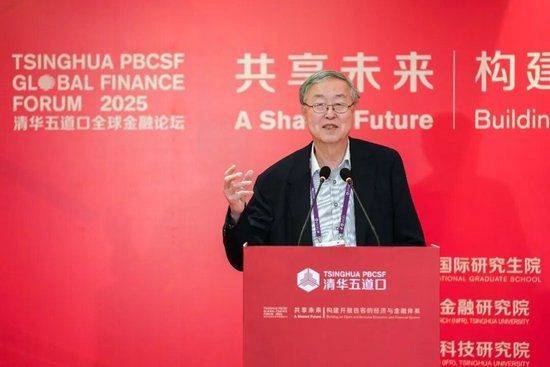
周小川:美元的两难选择与国际货币体系的变革机遇|特稿
清华金融评论· 2025-10-10 23:57
Core Viewpoint - The article discusses the conflicting goals of the United States regarding the dollar, highlighting the dilemma of maintaining its status as the dominant international reserve currency while also addressing domestic economic challenges [1][6]. Group 1: Global Trade and Currency Connection - The current global trade and tariff disputes are deeply intertwined with currency issues, which can be analyzed through two main channels: exchange rates and savings rate spillover [3][5]. - For smaller countries, exchange rates are effective tools for balancing international payments, but for major economies like the U.S., the impact of exchange rates is limited [3][5]. - The high domestic savings rate in Asia, particularly China, contributes to trade imbalances and strong foreign investment, which is linked to currency dynamics [3][5]. Group 2: U.S. Dilemma with the Dollar - The U.S. faces a dual challenge: promoting a competitive dollar to enhance manufacturing and trade balance while also using the dollar as a geopolitical tool [6][11]. - There is a contradiction in U.S. policy where it desires a weaker dollar for domestic benefits but also aims to maintain its global dominance [6][11]. - Achieving both objectives simultaneously is deemed unlikely, suggesting that the U.S. may have to concede some of its dollar dominance [6][11]. Group 3: Potential Challengers to the Dollar - The euro is the second-largest currency in the SDR basket but faces challenges such as unclear fiscal authority and insufficient market integration [9]. - The renminbi has made strides in internationalization, particularly after the 2008 financial crisis, but still lags in global financial transactions and reserves [10][11]. - The SDR could play a larger role in the international monetary system if it is recognized as a viable alternative to the dollar, promoting a multipolar currency system [13][14]. Group 4: Conditions for Other Currencies - For other currencies to gain prominence, they must meet certain conditions, such as having a significant trade deficit to export currency effectively [18][20]. - The ability to provide stable and secure assets is crucial for any currency aspiring to be a reserve currency, with the dollar currently seen as the most stable option [20][21]. - The global demand for reserve currencies must also be assessed, as the current volume of dollar-denominated assets may not reflect actual reserve needs [22]. Group 5: Opportunities for Reform - The current dilemma facing the dollar presents an opportunity for reform in the international monetary system, contingent on the willingness of the U.S. to adapt its stance [14][16]. - The potential for SDR to take on a more significant role hinges on achieving consensus among major economies and addressing the structural issues within the current system [15][16].

振芯科技(300101) - 300101振芯科技投资者关系管理信息20250912
2025-09-12 09:47
Group 1: Company Overview and Strategy - The company has deep technical expertise in integrated circuits and Beidou navigation, focusing on intelligent solutions and aiming to become a leader in "specific industries + AI" [2][4]. - The company is constructing a comprehensive development framework of "cloud, network, group, end, intelligence" to enhance its capabilities in providing all-around intelligent solutions [2][4]. - A wholly-owned subsidiary, Chengdu Xinzhi Xinghe Technology Co., Ltd., has been established to strengthen core competitiveness in the "end" and "intelligence" sectors [3][4]. Group 2: Competitive Advantages - The company's core competitive advantages include R&D, product, market, and talent advantages, supported by a stable core team and a strong technological foundation [3][4]. - The company is recognized as a national-level private high-tech enterprise, which enhances its credibility and market position [3][4]. Group 3: Financial Performance and Dividend Policy - The company plans to maintain a cash dividend exceeding 30% of the average net profit over the last three years, ensuring a balance between shareholder returns and funding for development projects [6][7]. - The 2024 profit distribution plan is based on actual operating conditions, cash needs, and investor returns, with a commitment to legal and regulatory compliance [6][7]. Group 4: Future Developments and Innovations - The company is not currently involved in AI chip development but is focusing on intelligent communication control and processing functions in RF chips [9][12]. - Future plans include accelerating the application of AI technology in specialized industries and vertical applications, aiming to meet new demands for "device autonomy" and "decision-making intelligence" [12].
申万宏观·周度研究成果(6.21-6.27)
赵伟宏观探索· 2025-06-29 00:12
Core Insights - The article discusses the potential for a new "3 trillion" investment, focusing on the transition of demand towards the service sector as GDP per capita reaches between $10,000 and $30,000, while highlighting the current supply constraints in services and the investment gap that exists [4]. Group 1: Deep Dive Topics - The article emphasizes the need for investment in human capital to bridge the existing gaps in service supply and to facilitate the transition towards a service-oriented economy [4]. Group 2: Hot Topics - The article explores the contrasting expectations and realities of inflation in the U.S. post-tariff implementation, questioning whether inflation will resurge in the latter half of the year [8]. - It also discusses the significance of the "15th Five-Year Plan" as a critical period leading up to the 2035 vision, outlining potential focus areas for development [10]. - The article addresses geopolitical risks, specifically regarding Iran's decision to block the Strait of Hormuz, and evaluates the credibility of such threats and their potential market impacts [13]. Group 3: High-Frequency Tracking - Domestic shipping prices have been on the rise, indicating a recovery in port freight volumes despite overall weak infrastructure construction activity [15]. - In the U.S., recent bond auctions have performed better than expected, while retail sales data for May fell short of projections, indicating mixed economic signals [20].