
VLA2.0

Search documents
小鹏汽车-W(09868):4Q25 首次盈利兑现,关注 VLA2.0 与新车周期接力
BOCOM International· 2026-03-24 05:44
Investment Rating - The report assigns a "Buy" rating to the company, Xpeng Motors (9868 HK), with a target price of HKD 134.69, indicating a potential upside of 88.1% from the current price of HKD 71.60 [1][10][11]. Core Insights - The company achieved its first quarterly profit in Q4 2025, with total revenue of RMB 22.25 billion, representing a year-on-year increase of 38.2% and a quarter-on-quarter increase of 9.2%. The gross margin reached a historical high of 21.3% [8][12]. - The management remains optimistic about the sales momentum in 2026, despite a weaker guidance for Q1 2026 due to seasonal factors and new product transitions. They expect a significant recovery in deliveries post-Chinese New Year [8][12]. - The company plans to double its overseas sales by 2026, aiming for overseas revenue to account for over 20% of total revenue, with new products being introduced to international markets [8][12]. Financial Overview - Revenue projections for the upcoming years are as follows: RMB 40.87 billion in 2024, RMB 76.72 billion in 2025, RMB 106.98 billion in 2026, RMB 129.52 billion in 2027, and RMB 142.56 billion in 2028, with respective year-on-year growth rates of 33.2%, 87.7%, 39.4%, 21.1%, and 10.1% [3][12]. - The company is expected to achieve a net profit of RMB 694 million in 2026, with earnings per share projected at RMB 0.36 [3][12]. - The cash reserves at the end of Q4 2025 stood at RMB 47.66 billion, indicating a strong financial foundation [8][12]. Market Performance - The stock has shown a year-to-date change of -9.77%, with a 52-week high of HKD 108.50 and a low of HKD 62.15 [7][11]. - The average daily trading volume is approximately 31.77 million shares, reflecting active market participation [7].
小鹏汽车-W:4Q25首次盈利兑现,关注VLA2.0与新车周期接力-20260324
BOCOM International· 2026-03-24 05:24
Investment Rating - The report assigns a "Buy" rating to the company, Xiaopeng Motors (9868 HK), with a target price of HKD 134.69, indicating a potential upside of 88.1% from the current price of HKD 71.60 [1][10]. Core Insights - Xiaopeng Motors achieved its first quarterly profit in Q4 2025, with total revenue of RMB 22.25 billion, representing a year-on-year increase of 38.2% and a quarter-on-quarter increase of 9.2%. The gross margin reached a historical high of 21.3% [8][12]. - The company delivered 116,200 vehicles in Q4 2025, maintaining stable delivery levels. The operating loss significantly narrowed to RMB 40 million, and the company reported a net profit of RMB 380 million (GAAP) and RMB 510 million (Non-GAAP) for the quarter [8][12]. - The management provided a cautious guidance for Q1 2026, expecting deliveries between 61,000 and 66,000 vehicles, reflecting a year-on-year decline of 29.8% to 35.1% due to seasonal factors and new product transitions. However, they anticipate a strong recovery in March 2026 [8][12]. Financial Overview - Revenue projections for Xiaopeng Motors are as follows: RMB 40.87 billion in 2024, RMB 76.72 billion in 2025, RMB 106.98 billion in 2026, RMB 129.52 billion in 2027, and RMB 142.56 billion in 2028, with respective year-on-year growth rates of 33.2%, 87.7%, 39.4%, 21.1%, and 10.1% [3][12]. - The company is expected to achieve a net profit of RMB 694 million in 2026, with earnings per share projected at RMB 0.36 [3][12]. - Cash reserves at the end of Q4 2025 stood at RMB 47.66 billion, indicating a strong financial foundation [8][12]. Market Position and Future Outlook - Xiaopeng Motors aims to double its overseas sales by 2026, with plans to increase the share of overseas revenue to over 20%. The company is also set to launch its flagship SUV model, GX, in Q2 2026 [8][12]. - The report highlights the potential for valuation uplift driven by advancements in VLA2.0 technology, the introduction of new models, and the company's strategic focus on autonomous driving and robotics [8][12].
小鹏汽车分析:技术引领,商业模式创新
数说新能源· 2026-03-24 03:02
Core Viewpoint - The article highlights the significant growth and strategic advancements of XPeng Motors, emphasizing its technological leadership and future growth potential in the electric vehicle market. Group 1: Sales and Market Performance - In 2025, XPeng achieved a substantial sales growth with a total of 429,000 vehicles sold, despite some late-stage growth fatigue. The company’s model competitiveness, particularly with models like Mona03 and P7+, has improved significantly, with over 10% of sales coming from overseas markets, contributing 20% to profits [2]. - The company plans to double its overseas sales this year, with revenue from international markets expected to reach 20%, positioning these markets as core drivers of future profitability [5]. Group 2: Technological Advancements - XPeng's technology services revenue reached 8.341 billion yuan for the year, with Q4 alone contributing 3.18 billion yuan. This revenue stream, derived from partnerships such as with Volkswagen, has significantly boosted the company's overall gross margin [2]. - The company is transitioning all models to self-developed Turing chips, with an annual shipment target of 1 million units, starting with Volkswagen as the initial partner [5]. - The VLA2.0 technology has been recognized for its leading advantages, with new versions set to be released quarterly, enhancing the company's smart driving capabilities and market share [4]. Group 3: Research and Development Investment - XPeng maintained high R&D investments, with Q4 spending increasing by 43.2% year-on-year and 18.3% quarter-on-quarter, totaling 2.87 billion yuan. This commitment to R&D, despite short-term profit pressures, is aimed at building long-term technological barriers [3]. - The company plans to increase its R&D investment to 7 billion yuan this year, up from 2.5 billion yuan last year, focusing on physical AI to create core competitive advantages [5]. Group 4: Future Growth Initiatives - XPeng aims to launch four new SUV models in the next three quarters, addressing current gaps in its product lineup and significantly boosting quarterly sales [4]. - The company is set to achieve mass production of Robotaxi, humanoid robots, and flying cars by the end of the year, indicating a clear development path focused on technology leadership and innovative business models [6].



交银国际每日晨报-20260324
BOCOM International· 2026-03-24 02:16
Group 1: Core Insights - Xiaopeng Motors achieved its first quarterly profit in 4Q25, with revenue reaching 22.25 billion yuan and a record high gross margin of 21.3% [1] - The company expects a weak guidance for 1Q26 due to seasonal factors and new product transitions, but management anticipates demand recovery starting in March [1] - Future sales are expected to improve quarter by quarter, driven by the VLA2.0, GX, and four new vehicle models [1] Group 2: Market Performance - The Hang Seng Index closed at 24,382.47, down 3.24% for the day and down 6.61% year-to-date [2] - Major global indices showed mixed performance, with the Dow Jones up 1.38% and the S&P 500 up 1.15% [2] - Commodity prices such as Brent crude oil increased by 84.25% year-to-date, while gold and silver also saw positive changes [2] Group 3: Economic Data Releases - Upcoming economic data releases include the Manufacturing Purchasing Managers' Index for March in the US, expected at 51.60, and initial jobless claims, expected at 206,000 [3] - The report highlights the importance of monitoring these indicators for understanding market trends and economic health [3] Group 4: Company Specifics - Xiaopeng Motors maintains a "Buy" rating with a target price of 134.69 HKD, indicating a potential upside of 88.1% from the current price of 71.60 HKD [1] - The report emphasizes long-term optimism regarding the dual-energy vehicle, Robotaxi, and robotics business, which are expected to enhance valuation [1]
小鹏汽车-W(09868):2025Q4及2025全年业绩点评:VLA2.0引领产品与技术共振,估值重塑提速
Guohai Securities· 2026-03-23 11:17
Investment Rating - The report maintains a "Buy" rating for the company [1] Core Insights - The company reported Q4 2025 revenue of 22.25 billion, a year-on-year increase of 38.2%, exceeding Bloomberg's consensus estimate of 21.64 billion [5] - The gross margin for Q4 2025 was 21.3%, higher than the expected 20.2% [5] - The adjusted net profit for Q4 2025 was 505 million, surpassing the consensus estimate of -70.22 million, marking the first quarterly profit for the company [5] - The company plans to launch four new models in 2026, including a large six-seat SUV and two Mona SUVs, while also expanding its overseas presence [5] - The introduction of VLA 2.0 is expected to strengthen the company's position in the intelligent driving sector, with significant improvements in safety and performance metrics [5] - The company anticipates a significant increase in overseas revenue, projected to reach 20% of total revenue by 2026 [6] Financial Summary - For 2025, the company expects revenue of 76.72 billion, with a growth rate of 87.7% [7] - The projected revenue for 2026 is 94.52 billion, with a growth rate of 23.2% [7] - The net profit for 2026 is expected to be -411 million, improving to 5.03 billion in 2027 [7] - The company’s return on equity (ROE) is projected to turn positive by 2027, reaching 16.03% [7] - The price-to-sales (P/S) ratio is expected to decrease from 1.6 in 2025 to 1.0 by 2027 [7]
VLA2.0深度体验
数说新能源· 2026-03-11 02:03
Core Viewpoint - The article discusses the advancements in the VLA2.0 technology, highlighting its capabilities and the potential for market re-evaluation of Xiaopeng's technological prowess [4]. Group 1: VLA2.0 Technology Performance - VLA2.0 demonstrated smooth navigation through narrow urban environments, showcasing its ability to handle complex driving scenarios without hesitation or abrupt maneuvers [2][3]. - The technology successfully executed a U-turn, which is a comprehensive test of perception, algorithm, decision-making efficiency, and vehicle control [2]. Group 2: Market Implications - There is an anticipation that VLA2.0 could lead to a significant moment that would prompt the market to reassess Xiaopeng's technological capabilities [4].

聚焦“盈利确定性”与“政策共振”
BOCOM International· 2026-03-02 12:47
Overview - The report emphasizes "profit certainty" and "policy resonance" as key themes, indicating a shift in market dynamics from "expectation speculation" to "profit verification" as macro policies and corporate earnings reports converge in March [5][6]. Market Insights - The macro strategy team highlights that the market is currently pricing in a pause from the Federal Reserve in March, with the focus on domestic growth signals becoming clearer as the "Two Sessions" will reveal annual economic targets and fiscal details [5][6]. - The report anticipates that the Hong Kong stock market will likely experience a revaluation in March, driven by passive fund adjustments and a focus on the quality of free cash flow and ROE improvements by long-term institutional investors [5][6]. Key Variables for March - The report identifies three main variables to watch in March: 1. The effectiveness of policy implementation from the "Two Sessions," focusing on GDP growth targets and fiscal measures [6]. 2. Corporate earnings guidance and share buyback activities during the earnings season [6]. 3. The Federal Reserve's guidance on future interest rate cuts, particularly regarding the summer window [6]. Industry Allocation - The report suggests a "barbell strategy" focusing on sectors with profit certainty and policy resonance: 1. **Internet and New Economy Growth**: Emphasis on head internet platforms with low valuations and increased buyback activities, alongside AI applications and smart driving assets [7]. 2. **Hard Technology and Overseas Manufacturing**: Focus on high visibility in semiconductor processes and equipment, as well as resilient demand in engineering machinery and appliances [7]. 3. **Global Pricing of Upstream Resources**: Metals like gold, copper, and aluminum are highlighted as inflation hedges amid global manufacturing recovery [7]. 4. **Low-Volatility Dividend Assets**: Telecom operators and core hydropower assets are noted for their defensive value [7]. Company-Specific Insights - **Cheung Kong Property Trust (778HK)**: Target price of 5.92 HKD with an 8.8% upside, driven by stable earnings and high dividend yield [10][11]. - **NVIDIA (NVDAUS)**: Target price of 260 USD with a 40.6% upside, supported by strong demand for AI chips and a robust supply chain [13][15]. - **Broadcom (AVGOUS)**: Target price of 460 USD with a 43.0% upside, driven by anticipated growth in AI revenue [23][25]. - **Xpeng Motors (9868HK)**: Target price of 134.69 HKD with a 97.1% upside, driven by new vehicle launches and overseas expansion [30][35]. - **Sihuan Pharmaceutical (2096HK)**: Target price of 16.40 HKD with a 32.3% upside, supported by new product launches and strong revenue growth [37][39]. - **Pop Mart (9992HK)**: Target price of 401.60 HKD with a 74.8% upside, focusing on IP platform strategy and overseas market growth [43][45]. - **China Resources Power (836HK)**: Target price of 21.50 HKD with a 12.7% upside, driven by renewable energy growth and stable dividend yield [48][50].


主打VLA2.0+超级增程技术,小鹏汽车四车同发开启2026年攻势
Jing Ji Guan Cha Wang· 2026-01-13 07:57
Core Insights - Xiaopeng Motors launched four new models at its global product launch on January 8, 2026, marking a significant push into the electric vehicle market with a focus on advanced technology and competitive pricing [4][6] - The company aims to leverage its VLA2.0 intelligent driving technology and Kunpeng super-range system to enhance its market position amidst a slowing automotive market [4][7] Group 1: Product Launch and Technology - The new models include the 2026 Xiaopeng P7+, G7 super-range, G6, and G9, priced between 170,000 to 270,000 yuan, showcasing a comprehensive attack on the electric vehicle market [4] - VLA2.0 technology, which eliminates traditional language translation steps, allows for direct conversion of visual information from cameras into vehicle control commands, enhancing the driving experience [4][5] - The VLA2.0 system has been trained on 1 billion kilometers of data and is expected to enable L3 level autonomous driving capabilities by March 2026 [5] Group 2: Market Strategy and Pricing - Xiaopeng's pricing strategy aims to position its vehicles as "smart-first" options in the 200,000 yuan market, offering advanced features at competitive prices [6] - The P7+ super-range version starts at 186,800 yuan, while the G7 super-range version starts at 195,800 yuan, both featuring high-end intelligent driving and fast-charging capabilities [6] - The company plans to cover a broader user base with its four-car strategy, addressing previous limitations in product diversity and enhancing market competitiveness [6][7] Group 3: Market Outlook and Challenges - The automotive market is expected to face significant pressure in 2026, with a projected 1% growth in retail sales and a 13% increase in new energy vehicle sales, down from 17.6% in 2025 [4][7] - Xiaopeng Motors aims to differentiate itself through technology and product strength, focusing on L4 level intelligent driving technology and range extension to alleviate consumer concerns about battery life [7] - Despite achieving significant growth in overseas sales, the company has yet to achieve profitability, and ongoing high R&D investments continue to exert pressure [7]
视频|何小鹏承认特斯拉FSD震惊到他
Xin Lang Cai Jing· 2026-01-10 05:04
Core Viewpoint - The chairman of XPeng Motors, He Xiaopeng, expressed his astonishment after test-driving Tesla's Full Self-Driving (FSD) in the U.S., indicating a significant leap in autonomous driving technology [1] Group 1: Company Insights - He Xiaopeng previously believed that both NGP and FSD were merely enhancements of Level 2 automation, but his recent experience with Tesla's FSD changed his perspective [1] - XPeng Motors has made rapid advancements from VLA1.0 to VLA2.0, but He Xiaopeng noted that Tesla's V14 upgrade demonstrates a remarkable capability to transform the same hardware and computing power into a vastly different state [1] - The experience of driving with Tesla's FSD led He Xiaopeng to feel that it marks the beginning of a new era in autonomous driving technology [1]

小鹏汽车─W(09868.HK):强势产品周期开启战略转型“物理AI”公司
Ge Long Hui· 2026-01-06 20:32
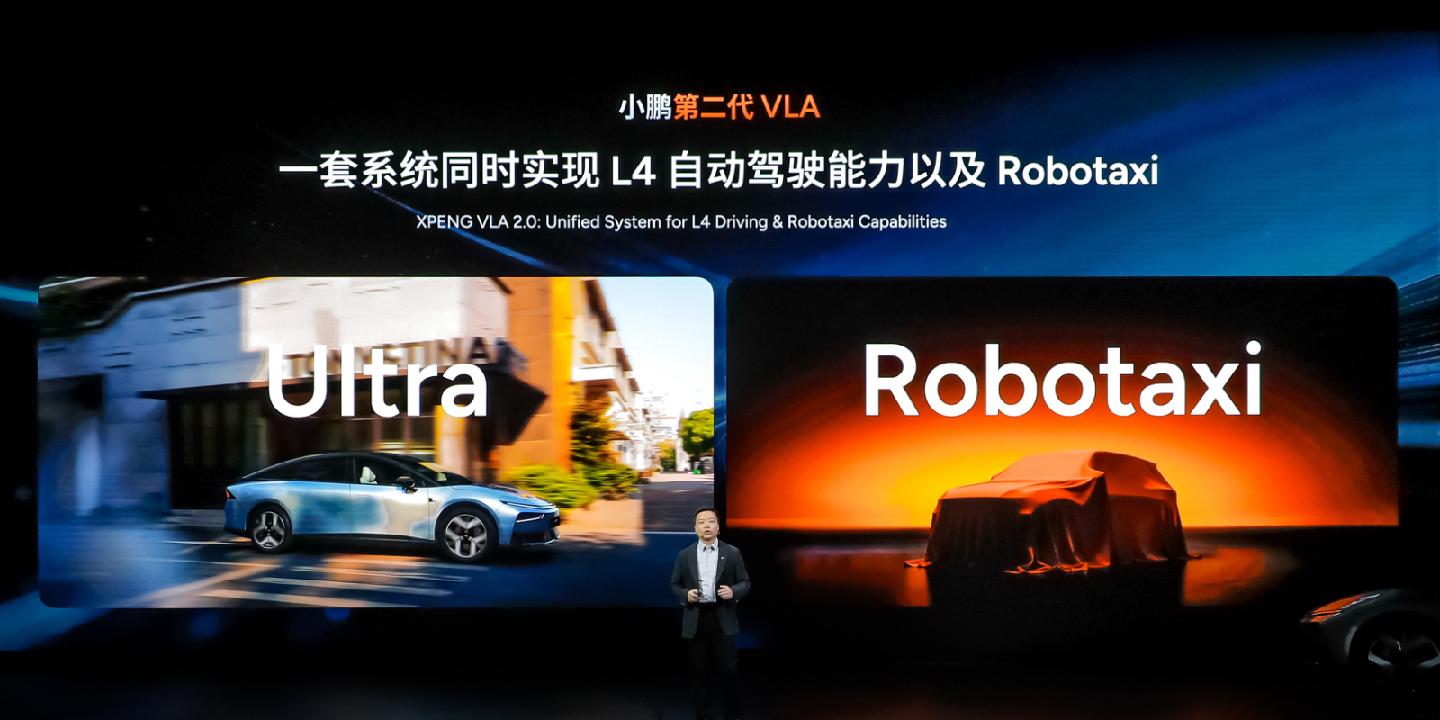
Group 1 - The company achieved a record high in total deliveries and gross margin in Q3 2025, with total revenue reaching 20.38 billion yuan, a year-on-year increase of 101.8%, and a significant reduction in net loss to 380 million yuan. Total delivery volume reached 116,007 units, a year-on-year increase of 149.3%, and the gross margin exceeded 20% for the first time, reaching 20.1% [1] - The company has launched a "dual power" strategy to address user range anxiety, introducing the first range-extended model, the X9 EREV, which features a 63.3 kWh battery and a conversion rate exceeding 3.6 kWh/L, achieving a pure electric range of 452 km. Additional range-extended versions of key models such as G6, G7, and P7i are expected to be launched in Q1 2026, along with four new models including two SUVs on the MONA platform [1] - The company is expected to enter a strong product cycle with the launch of range-extended and new models, leading to a continuous increase in vehicle sales [1] Group 2 - The company is transitioning to a "physical AI" company, showcasing its commitment and specific path at the 2025 Technology Day. The core technology, VLA 2.0, is a second-generation visual-language-action model that enhances reasoning efficiency by 12 times and improves average takeover mileage in complex scenarios by 13 times. This model is planned for full deployment on Ultra models in Q1 2026 and is expected to extend to robotics and other embodied intelligence fields [2] - The company announced the launch of China's first fully self-developed front-mounted mass-produced Robotaxi, with plans to introduce three models in 2026 and begin trial operations in H2 2026. Despite a gap in operational experience compared to industry leaders, the innovative "fully shared + private" business model may allow the company to secure a position in the billion-level mobility market [2] - The humanoid robot IRON is set to achieve mass production by the end of 2026, with initial trials in commercial scenarios such as guiding and shopping. The AI technology developed for the humanoid robot will also benefit the autonomous driving sector, creating a positive feedback loop [2] Group 3 - Revenue forecasts for the company from 2025 to 2027 are projected to be 75.8 billion, 132.1 billion, and 166.3 billion yuan, with year-on-year growth rates of 85.4%, 74.3%, and 25.9%, respectively. The net profit attributable to the parent company is expected to be -1.55 billion, 2 billion, and 6.13 billion yuan [3]