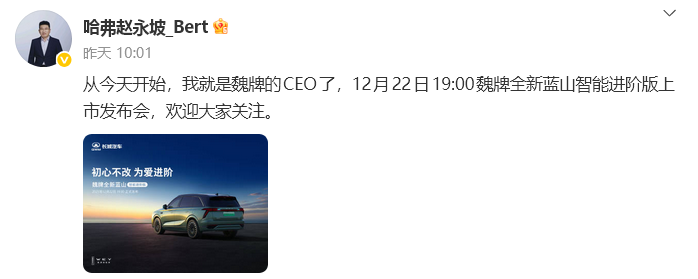
VV7

Search documents
长城汽车董事长回应魏牌人事更迭
21世纪经济报道· 2025-12-30 00:30
Core Viewpoint - The article discusses the challenges and strategies of WEY brand under Great Wall Motors, highlighting the frequent leadership changes and the ongoing pursuit of high-end market positioning despite past struggles [1][2][4]. Group 1: Leadership Changes - WEY brand has undergone its tenth leadership change in eight years, indicating a high turnover rate that is rare in the industry [1]. - The new CEO, Zhao Yongpo, aims to leverage his experience from the Haval brand to enhance WEY's operational efficiency and customer engagement [1][4]. Group 2: Sales Performance - WEY brand's sales reached 89,000 units in the first eleven months of the year, marking a 93.34% year-on-year increase, significantly outpacing other brands like Tank and Haval [2]. - The brand's strategy focuses on the "large six-seat SUV" segment, with substantial investments in direct sales channels amounting to at least 2 billion yuan [2][4]. Group 3: Financial Insights - In the first three quarters, Great Wall Motors reported a sales expense of 7.95 billion yuan, a 55.6% increase year-on-year, while revenue grew by 7.96% to 153.58 billion yuan [4]. - The net profit attributable to shareholders decreased by 16.97% to 8.64 billion yuan, reflecting the financial pressures associated with the brand's high-end positioning efforts [4]. Group 4: Brand Positioning and Strategy - The brand's high-end positioning remains unchanged, with a focus on creating a unified value perception among consumers [4][12]. - Great Wall Motors aims to establish a direct connection with customers through a network of direct sales stores, which is expected to enhance pricing and service consistency [4][12]. Group 5: Future Goals - Great Wall Motors has set ambitious targets for 2026, aiming for sales of at least 1.8 million units and a net profit of no less than 10 billion yuan [5]. - The company recognizes the need to transition from product success to a sustainable and replicable growth model for the brand [5].


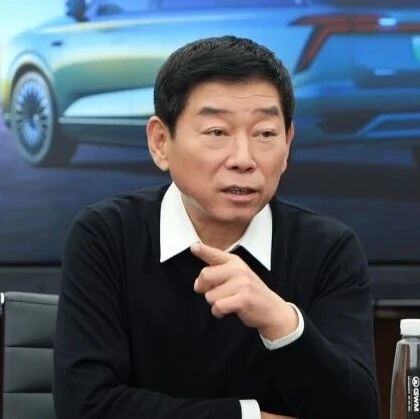
21对话|魏建军回应魏牌“八年十帅”:我们都有高估能力的幻觉
2 1 Shi Ji Jing Ji Bao Dao· 2025-12-29 11:06
Core Viewpoint - The leadership changes at Wey brand reflect the challenges of establishing a high-end automotive brand in China, with the company striving to find a sustainable path for growth and brand identity [2][3][4]. Group 1: Leadership Changes and Strategy - Wey brand has undergone its tenth leadership change in eight years, indicating a struggle to establish a stable brand identity and operational strategy [2][3]. - The recent appointment of Zhao Yongpo as CEO aims to leverage the efficiency of the main brand's system and user base to enhance Wey's performance [4][5]. - The company acknowledges the complexity of managing a high-end brand, emphasizing the need for comprehensive skills in leadership [7][8]. Group 2: Sales Performance and Financials - Wey brand's sales reached 89,000 units in the first eleven months of the year, marking a 93.34% year-on-year increase, significantly outpacing other brands like Tank and Haval [3]. - Despite revenue growth, Great Wall Motors reported a decline in net profit, with sales expenses rising to 7.95 billion yuan, a 55.6% increase from the previous year [3][5]. - The company has invested at least 2 billion yuan in direct sales channels to support its high-end strategy [3][4]. Group 3: Brand Positioning and Market Strategy - The high-end positioning of Wey brand remains unchanged, focusing on the "large six-seat SUV" category and expanding direct sales channels to unify pricing and service standards [3][4]. - Great Wall Motors claims the highest average selling price among Chinese automotive companies, with prices exceeding 180,000 yuan in international markets and 200,000 yuan domestically [4][15]. - The company is working to establish a clear value proposition in the minds of consumers, emphasizing the importance of brand perception in achieving high-end status [4][14]. Group 4: Technological Advancements and Future Products - Great Wall Motors is accelerating its efforts in smart technology, with the launch of the new Blue Mountain intelligent version featuring advanced driving assistance systems [4][16]. - The company plans to introduce a range of products with multiple powertrain options, including gasoline, HEV, PHEV, and electric vehicles, under a unified design [18][19]. - The focus on mechanical quality and emotional value remains a core aspect of the brand's identity, with plans to incorporate powerful engine options like V6 and V8 in future models [19].
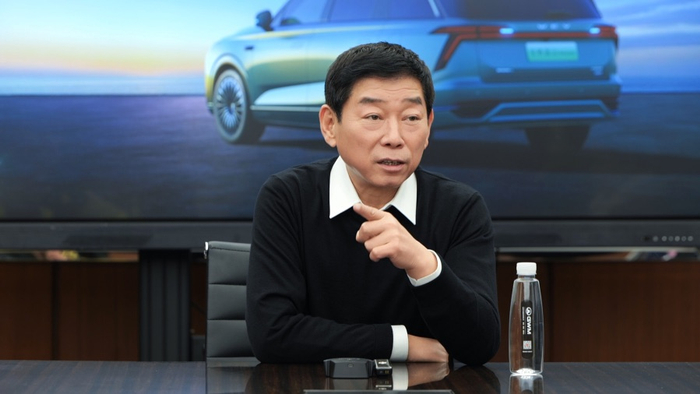
魏建军回应魏牌“八年十帅”:我们都有高估能力的幻觉
2 1 Shi Ji Jing Ji Bao Dao· 2025-12-29 11:06
Core Insights - The core viewpoint of the articles revolves around the challenges and strategies of WEY brand under Great Wall Motors, particularly focusing on its high-end positioning and the frequent changes in leadership, which reflect the complexities of establishing a successful luxury automotive brand in China [1][5][12]. Group 1: Leadership Changes and Challenges - WEY brand has undergone its tenth leadership change in eight years, indicating a struggle to establish a stable and effective management team [1][6]. - The frequent changes in leadership are attributed to the high expectations and pressures associated with managing a luxury brand, which requires a comprehensive skill set [6][7]. - The current CEO, Zhao Yongpo, aims to leverage the efficiencies from the main brand, Haval, to enhance WEY's performance [3][4]. Group 2: Sales Performance and Strategy - WEY brand has shifted its strategy to focus on the "large six-seat SUV" segment, launching new models and investing heavily in direct sales channels, resulting in a significant sales increase of 93.34% year-on-year, totaling 89,000 units in the first eleven months of the year [2][4]. - Despite the sales growth, Great Wall Motors reported a decline in net profit by 16.97% year-on-year, highlighting the financial pressures from increased sales and marketing expenses, which rose to 7.95 billion yuan [2][4]. Group 3: Brand Positioning and Market Perception - The brand's high-end positioning remains unchanged, with a focus on creating a clear value proposition that resonates with consumers, emphasizing that luxury is not merely a label but must be recognized by the public [3][12]. - Great Wall Motors claims the highest average selling price among traditional Chinese automotive companies, with an average price exceeding 180,000 yuan in international markets and 200,000 yuan domestically [3][12]. Group 4: Future Outlook and Innovations - The company is preparing for the tenth anniversary of WEY in 2026, with ambitious sales targets set at 1.8 million units and a net profit of 10 billion yuan [4]. - Great Wall Motors is also focusing on technological advancements, including the launch of the new Blue Mountain intelligent model, which incorporates advanced AI capabilities for enhanced safety and driving experience [3][14][18].
魏牌九年九帅,长城高端化之困待破局
Guan Cha Zhe Wang· 2025-12-22 10:37
Core Viewpoint - The appointment of Zhao Yongpo as CEO of WEY marks the ninth leadership change since the brand's establishment in 2016, reflecting ongoing strategic instability and challenges in positioning within the high-end automotive market [1][2][6]. Leadership Changes - WEY has experienced frequent CEO changes, with eight different leaders in nine years, indicating a lack of stability in its management [2][4]. - The longest-serving CEO, Yan Si, held the position for two years, while the shortest tenure lasted only two months [2][4]. - Recent CEOs, including Feng Fuzhi, have left due to various reasons, including failure to meet strategic goals such as establishing a direct sales channel [5][10]. Strategic Challenges - WEY's strategic direction has been inconsistent, with shifts in focus that have not solidified its market position [7][9]. - The brand initially aimed for a luxury market presence with models like VV7 and VV5 but struggled with innovation and market differentiation, leading to a decline in sales after 2019 [7][9]. - The decision to pivot to a "coffee series" of electric vehicles did not resonate with consumers, resulting in confusion and a loss of brand identity [9][10]. Market Performance - Despite a 93% year-on-year sales increase in the first eleven months of the year, WEY's total sales were only 89,000 units, representing just 4.4% of Great Wall's total sales [13]. - The brand's performance is significantly lower compared to competitors like Geely and Dongfeng, which have established stronger sales figures in the high-end market [13]. Broader Industry Context - Great Wall Motors faces challenges in high-end market penetration, electric vehicle transition, and global expansion, with its overseas revenue contributing nearly 40% of total income [11][13]. - The company is perceived as a follower in the competitive landscape, particularly in the smart vehicle sector, where it lags behind rivals like BYD and Chery [11][13].