蓝山

Search documents
从规模到价值:长城汽车营收创新高 平均单车指导价超20万元
Zhong Guo Jing Ying Bao· 2026-03-31 10:21
Core Insights - The core viewpoint of the article highlights Great Wall Motors' strong performance in 2025, achieving record revenue and maintaining a focus on high-quality development amidst a competitive automotive market [1][2]. Financial Performance - Great Wall Motors reported a total revenue of 222.824 billion yuan in 2025, marking a year-on-year increase of 10.2%, setting a new historical high [1]. - The net profit faced some pressure due to intensified industry competition and increased marketing expenditures, but the overall operational quality remained strong [2]. - The net cash flow from operating activities was approximately 40.4 billion yuan, providing solid support for long-term strategic investments [2]. Sales and Market Position - The company sold 1.324 million new vehicles in 2025, achieving another historical high, with significant contributions from new energy vehicles and overseas sales [2]. - Sales of high-end models priced above 200,000 yuan reached 534,000 units, an increase of 91,000 units from 2024, accounting for 41% of total sales, indicating a shift towards the mid-to-high-end market [2][3]. Brand Development - Great Wall Motors' various brands, including Haval, Wey, Tank, and Ora, have shown collaborative growth across different market segments [3]. - The Wey brand saw a significant increase in sales, with a year-on-year growth of 86.29%, demonstrating the effectiveness of its high-end transformation strategy [3]. Global Expansion - The Tank brand has expanded its presence in over 30 countries, with a notable increase in market share in non-American regions [5]. - In 2025, overseas sales grew by 11.7% to 506,000 units, representing 38.2% of total sales, with a strong growth momentum in the fourth quarter [5]. Technological Advancements - Great Wall Motors has developed a 4.0T V8 engine to enhance its high-end powertrain offerings, laying the groundwork for entry into the European and American markets [6]. - The company launched the world's first native AI all-power platform, which supports various powertrain types and aims to improve efficiency and reduce costs [6]. Strategic Focus - The company emphasizes long-termism and integrity as foundational principles for sustainable growth, with a commitment to building trust with consumers [7].

长城汽车(601633)2025年报业绩点评:新能源转型加速 26年在技术、渠道端优化
Xin Lang Cai Jing· 2026-03-31 08:28
Core Viewpoint - The company reported its 2025 annual results, showing a revenue increase of 10.20% year-on-year, but a significant decline in net profit and adjusted net profit, indicating challenges in profitability despite revenue growth [1]. Financial Performance - In 2025, the company achieved operating revenue of 222.82 billion yuan, a year-on-year increase of 10.20% - The net profit attributable to shareholders was 9.87 billion yuan, down 22.27% year-on-year - The adjusted net profit was 6.06 billion yuan, a decrease of 37.76% year-on-year - Earnings per share (EPS) stood at 1.15 yuan [1] Sales and Market Performance - The company sold 1.32 million vehicles in 2025, a year-on-year increase of 7.3% - In Q4 2025, vehicle sales reached 400,300 units, up 5.5% year-on-year and 13.2% quarter-on-quarter - New energy vehicle sales were 125,200 units, representing 31.3% of total sales, with a year-on-year increase of 13.5% [2] - The average selling price per vehicle increased to 168,000 yuan, a rise of 2.7% year-on-year [2] Profitability Challenges - The company's gross margin decreased by 1.47 percentage points to 18.04% in 2025 - In Q4 2025, the gross margin was 17.25%, down 1.17 percentage points year-on-year - The adjusted net profit per vehicle was 3,100 yuan, down 14.3% year-on-year [3] - Increased sales expenses by 43.9% to 11.27 billion yuan, primarily due to marketing for new energy and high-end products [3] Cost Structure - R&D, sales, management, and financial expense ratios for 2025 were 4.68%, 5.06%, 2.13%, and -0.88% respectively - The sales expense ratio increased due to marketing costs associated with new energy and high-end products [4] - The company launched the "Guiyuan" AI power platform to enhance cost efficiency and standardization across multiple brands and models [4] Future Outlook - The company aims to sell 1.8 million vehicles in 2026, with 600,000 units targeted for overseas markets - New models planned include high-end SUVs and hybrid versions, supporting the transition to high-end and new energy vehicles [5] - Revenue projections for 2026 to 2028 are 285.08 billion yuan, 324.40 billion yuan, and 370.26 billion yuan respectively, with net profits expected to rise correspondingly [5]
长城汽车(601633):销量环比回落,海外与高端化韧性凸显
Shanghai Aijian Securities· 2026-03-02 07:24
Investment Rating - The investment rating for the company is "Buy" (maintained) [5] Core Views - The company's February 2026 sales were 72,594 units, a year-on-year decrease of 6.79% and a month-on-month decrease of 19.61%. The cumulative sales for January-February 2026 were 162,906 units, a year-on-year increase of 2.58% [5] - The company is focusing on high-end and global strategies, with a target of 1.8 million units by 2026 [5] - The Haval brand's sales remained stable, while the Wey brand showed significant breakthroughs in high-end markets [5] - The Tank brand faced short-term pressure due to increased competition in the off-road segment [5] - The Ora brand is undergoing a transformation, with a strong position in the pickup market [5] - Overseas sales increased significantly, with a year-on-year growth of 37.36% in February [5] Financial Data and Profit Forecast - Total revenue forecast for 2023 is 173,212 million yuan, with a year-on-year growth rate of 26.1% [3] - Net profit for 2023 is projected at 7,022 million yuan, with a year-on-year decrease of 15.1% [3] - Earnings per share for 2023 is estimated at 0.82 yuan [3] - Gross margin for 2023 is expected to be 18.7% [3] - Return on equity (ROE) for 2023 is projected at 10.3% [3] - The price-to-earnings (PE) ratio for 2023 is 24.8 [3] Market Data - The closing price of the stock is 20.50 yuan [4] - The stock's one-year high and low are 27.52 yuan and 20.37 yuan, respectively [4] - The market capitalization of circulating A shares is 127,289 million yuan [4] - The dividend yield is 3.01% [4] Sales Performance - Haval brand sales in February were 43,660 units, a slight increase of 0.83% year-on-year [5] - Wey brand sales in February were 5,615 units, a year-on-year increase of 54.13% [5] - Tank brand sales in February were 10,036 units, a year-on-year decrease of 14.67% [5] - Ora brand sales in February were 1,263 units, a year-on-year decrease of 33.46% [5] - Pickup sales in February were 12,011 units, with a domestic market share of nearly 50% [5] Overseas Expansion - The company is enhancing its global presence, with overseas sales reaching 42,675 units in February, a year-on-year increase of 37.36% [5] - The company is utilizing sports marketing in markets like Brazil and Australia to boost its influence [5]
车企“比惨大会”召开!全是特朗普惹的祸?
电动车公社· 2026-02-14 16:05
Core Insights - The global automotive landscape is undergoing significant changes due to the rise of new energy vehicles, with Chinese automakers emerging as top competitors while traditional giants face strategic transformation challenges [1][2]. Group 1: Tesla - Tesla's 2025 financial report shows total revenue of $94.827 billion, a 3% year-over-year decline, marking the first revenue drop in its history [7]. - The company delivered 1.636 million vehicles in 2025, an 8.6% decrease from 2024, leading to a 10% drop in automotive revenue, which constitutes over 70% of total income [9]. - Despite record revenue from energy generation and storage, Tesla's overall revenue decline remains unmitigated [10]. - R&D investment surged by 41% to $6.411 billion, focusing on autonomous driving and humanoid robots, indicating a shift in strategic priorities [14]. Group 2: General Motors - General Motors reported 2025 revenue of $185 billion, down 1.3%, with net profit falling 55.1% to $2.697 billion due to a $7.9 billion charge for strategic restructuring [17][19]. - The company maintains strong cash flow of $10.6 billion despite the profit drop, attributed to one-time restructuring costs and market adjustments [20]. - GM's outlook for 2026 is optimistic, expecting net profit between $10.3 billion and $11.7 billion, supported by a solid market position in the U.S. and new product launches in China [24]. Group 3: Ford - Ford's 2025 revenue reached $187.3 billion, a 1% increase, but it reported a net loss of $8.2 billion, primarily due to a $19.5 billion charge related to electric vehicle restructuring [26][30]. - The company faces challenges similar to GM, with traditional vehicles performing well while electric vehicle strategies require adjustment [32]. Group 4: Hyundai - Hyundai's 2025 revenue was 186.3 trillion KRW (approximately 888.7 billion RMB), a 6.3% increase, but operating profit fell 19.5% to 11.47 trillion KRW [34]. - The decline in profit is largely due to increased tariffs on exports to the U.S., despite a reduction in tariffs effective November 2025 [38]. - The company is also navigating the transition to electric vehicles, which requires adjustments to its product lineup [39]. Group 5: Volvo - Volvo's 2025 revenue was 357.3 billion SEK (approximately 278.8 billion RMB), down 11%, with operating profit plummeting 99% [42]. - The decline is attributed to tariffs, weak demand, and price pressures, prompting a cost-cutting plan involving layoffs [45]. - Despite challenges, Volvo's electric vehicle offerings are performing well, particularly in the Chinese market [48]. Group 6: Great Wall Motors - Great Wall Motors reported 2025 revenue of 222.79 billion RMB, a 10.19% increase, but net profit fell 21.71% to 9.912 billion RMB [52]. - The company achieved record sales of 1.3237 million vehicles, indicating strong growth despite profit declines due to increased investments in new technologies and marketing [54]. - The focus on electric vehicle development, particularly through its premium brand WEY, is expected to enhance growth potential [56]. Group 7: GAC Group - GAC Group's 2025 sales fell 14.06% to 1.72 million vehicles, with a projected loss of 8-9 billion RMB [58]. - The decline is linked to poor performance in traditional fuel vehicles and slower growth in its electric vehicle segment [59]. - The company is pursuing deep collaborations with local suppliers to accelerate its electrification strategy [60]. Group 8: Toyota - Toyota's revenue for the first three quarters of the 2026 fiscal year was 38.09 trillion JPY (approximately 1.72 trillion RMB), a 6.8% increase, but net profit dropped 26.1% to 3.03 trillion JPY [63]. - The profit decline is primarily due to the impact of U.S. tariff policies, despite a 10.5% profit increase in the Chinese market [66][68]. - Toyota is implementing a company-wide plan to reduce its breakeven point and improve operational efficiency [71].





【长城汽车(601633.SH、2333.HK)】4Q25盈利承压,关注高端化+全球化推进——2025年业绩快报点评(倪昱婧/邢萍)
光大证券研究· 2026-02-03 23:07
Core Viewpoint - The company reported a mixed performance for 2025, with revenue growth but significant declines in net profit, indicating challenges in profitability despite increased sales [4]. Group 1: Financial Performance - In 2025, the company's operating revenue increased by 10.2% year-on-year to 222.79 billion yuan, while net profit attributable to shareholders decreased by 21.7% to 9.91 billion yuan [4]. - The fourth quarter of 2025 saw a revenue increase of 15.5% year-on-year and 13.0% quarter-on-quarter to 69.21 billion yuan, but net profit dropped by 43.5% year-on-year and 44.4% quarter-on-quarter to 1.28 billion yuan [4]. - The company's non-recurring net profit for 2025 fell by 36.5% year-on-year to 6.16 billion yuan, with a significant decline in per vehicle profitability [4]. Group 2: Strategic Developments - The company achieved a 7.3% year-on-year increase in total vehicle sales to 1.324 million units in 2025, with a notable 25.4% increase in new energy vehicle sales to 404,000 units [5]. - The high-end strategy is showing results, with the average selling price (ASP) per vehicle rising by 2.7% year-on-year to 168,300 yuan [5]. - The company is expanding its brand value through models like the Tank brand and the Wey brand, focusing on a dual flagship strategy to enhance market presence [5]. Group 3: Global Expansion - The company's overseas sales grew by 11.7% year-on-year to 506,000 units, accounting for 38.2% of total sales in 2025 [6]. - The launch of the "Guiyuan" platform, which supports multiple powertrain types, is expected to drive new vehicle cycles and enhance global competitiveness [6]. - The establishment of a factory in Brazil is anticipated to boost sales in Latin American markets, contributing to future growth [6].
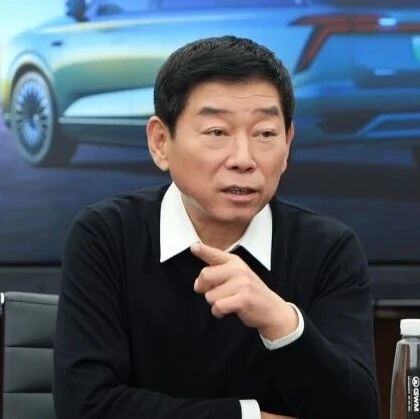
长城汽车董事长回应魏牌人事更迭
21世纪经济报道· 2025-12-30 00:30
Core Viewpoint - The article discusses the challenges and strategies of WEY brand under Great Wall Motors, highlighting the frequent leadership changes and the ongoing pursuit of high-end market positioning despite past struggles [1][2][4]. Group 1: Leadership Changes - WEY brand has undergone its tenth leadership change in eight years, indicating a high turnover rate that is rare in the industry [1]. - The new CEO, Zhao Yongpo, aims to leverage his experience from the Haval brand to enhance WEY's operational efficiency and customer engagement [1][4]. Group 2: Sales Performance - WEY brand's sales reached 89,000 units in the first eleven months of the year, marking a 93.34% year-on-year increase, significantly outpacing other brands like Tank and Haval [2]. - The brand's strategy focuses on the "large six-seat SUV" segment, with substantial investments in direct sales channels amounting to at least 2 billion yuan [2][4]. Group 3: Financial Insights - In the first three quarters, Great Wall Motors reported a sales expense of 7.95 billion yuan, a 55.6% increase year-on-year, while revenue grew by 7.96% to 153.58 billion yuan [4]. - The net profit attributable to shareholders decreased by 16.97% to 8.64 billion yuan, reflecting the financial pressures associated with the brand's high-end positioning efforts [4]. Group 4: Brand Positioning and Strategy - The brand's high-end positioning remains unchanged, with a focus on creating a unified value perception among consumers [4][12]. - Great Wall Motors aims to establish a direct connection with customers through a network of direct sales stores, which is expected to enhance pricing and service consistency [4][12]. Group 5: Future Goals - Great Wall Motors has set ambitious targets for 2026, aiming for sales of at least 1.8 million units and a net profit of no less than 10 billion yuan [5]. - The company recognizes the need to transition from product success to a sustainable and replicable growth model for the brand [5].
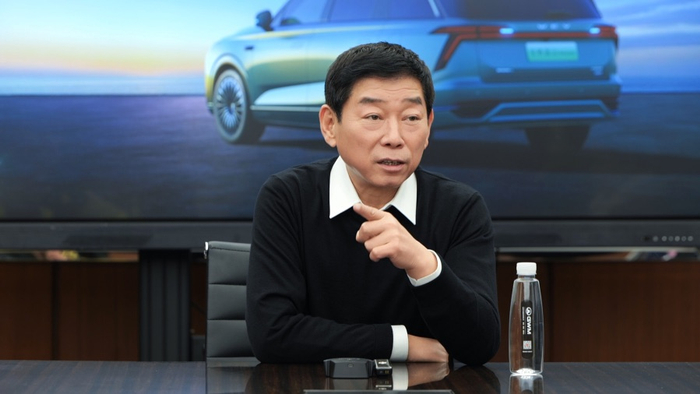
21对话|魏建军回应魏牌“八年十帅”:我们都有高估能力的幻觉
2 1 Shi Ji Jing Ji Bao Dao· 2025-12-29 11:06
Core Viewpoint - The leadership changes at Wey brand reflect the challenges of establishing a high-end automotive brand in China, with the company striving to find a sustainable path for growth and brand identity [2][3][4]. Group 1: Leadership Changes and Strategy - Wey brand has undergone its tenth leadership change in eight years, indicating a struggle to establish a stable brand identity and operational strategy [2][3]. - The recent appointment of Zhao Yongpo as CEO aims to leverage the efficiency of the main brand's system and user base to enhance Wey's performance [4][5]. - The company acknowledges the complexity of managing a high-end brand, emphasizing the need for comprehensive skills in leadership [7][8]. Group 2: Sales Performance and Financials - Wey brand's sales reached 89,000 units in the first eleven months of the year, marking a 93.34% year-on-year increase, significantly outpacing other brands like Tank and Haval [3]. - Despite revenue growth, Great Wall Motors reported a decline in net profit, with sales expenses rising to 7.95 billion yuan, a 55.6% increase from the previous year [3][5]. - The company has invested at least 2 billion yuan in direct sales channels to support its high-end strategy [3][4]. Group 3: Brand Positioning and Market Strategy - The high-end positioning of Wey brand remains unchanged, focusing on the "large six-seat SUV" category and expanding direct sales channels to unify pricing and service standards [3][4]. - Great Wall Motors claims the highest average selling price among Chinese automotive companies, with prices exceeding 180,000 yuan in international markets and 200,000 yuan domestically [4][15]. - The company is working to establish a clear value proposition in the minds of consumers, emphasizing the importance of brand perception in achieving high-end status [4][14]. Group 4: Technological Advancements and Future Products - Great Wall Motors is accelerating its efforts in smart technology, with the launch of the new Blue Mountain intelligent version featuring advanced driving assistance systems [4][16]. - The company plans to introduce a range of products with multiple powertrain options, including gasoline, HEV, PHEV, and electric vehicles, under a unified design [18][19]. - The focus on mechanical quality and emotional value remains a core aspect of the brand's identity, with plans to incorporate powerful engine options like V6 and V8 in future models [19].
魏建军回应魏牌“八年十帅”:我们都有高估能力的幻觉
2 1 Shi Ji Jing Ji Bao Dao· 2025-12-29 11:06
Core Insights - The core viewpoint of the articles revolves around the challenges and strategies of WEY brand under Great Wall Motors, particularly focusing on its high-end positioning and the frequent changes in leadership, which reflect the complexities of establishing a successful luxury automotive brand in China [1][5][12]. Group 1: Leadership Changes and Challenges - WEY brand has undergone its tenth leadership change in eight years, indicating a struggle to establish a stable and effective management team [1][6]. - The frequent changes in leadership are attributed to the high expectations and pressures associated with managing a luxury brand, which requires a comprehensive skill set [6][7]. - The current CEO, Zhao Yongpo, aims to leverage the efficiencies from the main brand, Haval, to enhance WEY's performance [3][4]. Group 2: Sales Performance and Strategy - WEY brand has shifted its strategy to focus on the "large six-seat SUV" segment, launching new models and investing heavily in direct sales channels, resulting in a significant sales increase of 93.34% year-on-year, totaling 89,000 units in the first eleven months of the year [2][4]. - Despite the sales growth, Great Wall Motors reported a decline in net profit by 16.97% year-on-year, highlighting the financial pressures from increased sales and marketing expenses, which rose to 7.95 billion yuan [2][4]. Group 3: Brand Positioning and Market Perception - The brand's high-end positioning remains unchanged, with a focus on creating a clear value proposition that resonates with consumers, emphasizing that luxury is not merely a label but must be recognized by the public [3][12]. - Great Wall Motors claims the highest average selling price among traditional Chinese automotive companies, with an average price exceeding 180,000 yuan in international markets and 200,000 yuan domestically [3][12]. Group 4: Future Outlook and Innovations - The company is preparing for the tenth anniversary of WEY in 2026, with ambitious sales targets set at 1.8 million units and a net profit of 10 billion yuan [4]. - Great Wall Motors is also focusing on technological advancements, including the launch of the new Blue Mountain intelligent model, which incorporates advanced AI capabilities for enhanced safety and driving experience [3][14][18].
哈弗猛龙辅助驾驶“自动挡”,高阶依旧选中元戎启行
Jing Ji Guan Cha Bao· 2025-12-25 09:27
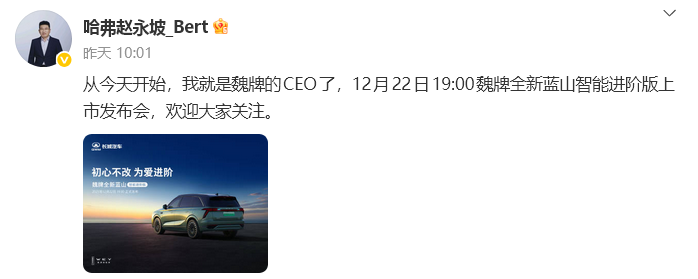
Group 1 - The appointment of Zhao Yongpo as CEO of Weipai marks the ninth leadership change in the brand's nine-year history, indicating a strategic shift within the company [1] - Weipai has taken on the role of testing advanced intelligent driving technologies within the Great Wall system, with models like Lanshan and Gaoshan showing improved product capabilities and stabilizing sales after integrating higher-level intelligent driving solutions [1] - The VLA (Vision-Language-Action model) adopted by Lanshan has emerged as a significant technological direction in the advanced driving assistance field, with competitors like Li Auto and XPeng also investing in similar technologies [1] Group 2 - The Haval Menglong is set to enhance its intelligent driving features, becoming a key model for Haval in this domain, with a clear stratification strategy for its configurations [2] - The top model of Menglong will utilize the Yuanrong Qixing solution to support advanced urban NOA capabilities, while the mid and low configurations will adopt a less advanced solution from Momenta, focusing on cost control and stable delivery [2][3] - The collaboration between Yuanrong Qixing and Great Wall began prior to the Menglong project, with a $100 million investment in Yuanrong Qixing in November 2024, laying the groundwork for long-term cooperation in advanced intelligent driving [3] Group 3 - Great Wall is forming a clear path for intelligent advancement, with Weipai exploring high-level technology and Haval focusing on functional segmentation to control costs and promote scalability [3] - The transition from "technology demonstration" to "scale operation" in intelligent driving raises the challenge of balancing technological advancement with commercial efficiency across different brands and price points [3]
魏牌九年九帅,长城高端化之困待破局
Guan Cha Zhe Wang· 2025-12-22 10:37
Core Viewpoint - The appointment of Zhao Yongpo as CEO of WEY marks the ninth leadership change since the brand's establishment in 2016, reflecting ongoing strategic instability and challenges in positioning within the high-end automotive market [1][2][6]. Leadership Changes - WEY has experienced frequent CEO changes, with eight different leaders in nine years, indicating a lack of stability in its management [2][4]. - The longest-serving CEO, Yan Si, held the position for two years, while the shortest tenure lasted only two months [2][4]. - Recent CEOs, including Feng Fuzhi, have left due to various reasons, including failure to meet strategic goals such as establishing a direct sales channel [5][10]. Strategic Challenges - WEY's strategic direction has been inconsistent, with shifts in focus that have not solidified its market position [7][9]. - The brand initially aimed for a luxury market presence with models like VV7 and VV5 but struggled with innovation and market differentiation, leading to a decline in sales after 2019 [7][9]. - The decision to pivot to a "coffee series" of electric vehicles did not resonate with consumers, resulting in confusion and a loss of brand identity [9][10]. Market Performance - Despite a 93% year-on-year sales increase in the first eleven months of the year, WEY's total sales were only 89,000 units, representing just 4.4% of Great Wall's total sales [13]. - The brand's performance is significantly lower compared to competitors like Geely and Dongfeng, which have established stronger sales figures in the high-end market [13]. Broader Industry Context - Great Wall Motors faces challenges in high-end market penetration, electric vehicle transition, and global expansion, with its overseas revenue contributing nearly 40% of total income [11][13]. - The company is perceived as a follower in the competitive landscape, particularly in the smart vehicle sector, where it lags behind rivals like BYD and Chery [11][13].