
iPhone 17系列

Search documents
1500元以下,再也买不到国产手机了?
创业邦· 2026-03-14 03:45
Core Viewpoint - The smartphone industry is experiencing a significant price increase, driven by rising memory costs and supply chain constraints, leading to a shift away from the era of high cost-performance ratios [5][14][56]. Group 1: Price Increases - Samsung's Galaxy S26 series has initiated a price hike, with the standard and S26+ models starting at 6999 yuan and 7999 yuan, respectively, an increase of 1000 yuan from the previous generation [8]. - Multiple domestic brands, including OPPO and others, are also planning price adjustments, indicating a broader industry trend towards higher prices [9][17]. - The average selling price (ASP) of smartphones is projected to rise by 14% globally by 2026, reaching a historical high of approximately 3700 yuan [34]. Group 2: Causes of Price Increases - The primary reason for the price hikes is the rising cost of memory, particularly DRAM and NAND, which are essential for smartphone functionality [28][39]. - The demand for high-bandwidth memory (HBM) due to the AI boom has led manufacturers to prioritize HBM production over consumer-grade memory, resulting in reduced supply and increased prices [53][55]. - The cost of 12GB DRAM, a standard in smartphones, has surged from around 200 yuan to nearly 600 yuan, significantly impacting the overall cost structure of mid-range and entry-level devices [56]. Group 3: Industry Response - Manufacturers are adopting various strategies to cope with rising costs, including direct price increases, reducing specifications, or delaying new product launches [61][64][70]. - Some brands, like Meizu, have halted hardware projects to pivot towards AI, citing unsustainable memory prices as a barrier to new product commercialization [71]. - The overall market is seeing a reduction in shipment targets as many consumers are postponing their device upgrades due to the price increases [100]. Group 4: Consumer Sentiment - Consumers are increasingly dissatisfied with the rising prices and perceive a lack of significant improvements in smartphone functionality despite the higher costs [80][81]. - The trend of rising smartphone prices is likened to an "AI tax," as smartphones have become integral to modern life, and their increased costs directly affect consumers' daily expenses [105][103].



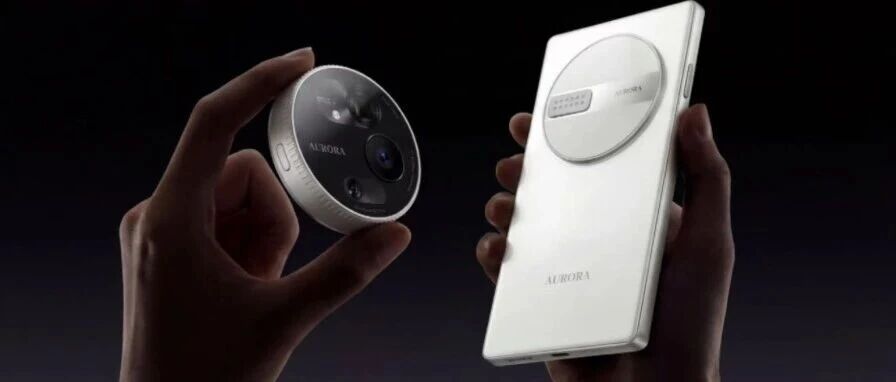
追觅AURORA亮剑高端手机赛道 百亿研发锚定核心技术突围
第一财经· 2026-03-12 05:36
Core Viewpoint - The article highlights the launch of the high-end smartphone brand, AURORA, by the company, emphasizing its commitment to innovation and quality in the global high-end smartphone market [1][3][8]. Product Series and Features - AURORA has developed two product series: AURORA LUX and AURORA NEX, targeting different segments of the high-end market while maintaining a focus on exceptional product quality [5]. - AURORA LUX aims at the top-tier market, integrating luxury craftsmanship and personalized services, while AURORA NEX emphasizes technological innovation with features like a modular camera system and AI capabilities [5][6]. Strategic Positioning - The company strategically enters the high-end market to avoid the intense competition in the mid-range segment, which is experiencing declining profits and shrinking market size [3][12][14]. - The high-end smartphone market remains resilient, with brands like Apple showing growth, indicating a lucrative opportunity for AURORA [14]. R&D Investment and Team Expansion - AURORA plans to invest over 10 billion in R&D over the next three years, focusing on imaging, AI systems, and display technologies to establish a strong technical foundation [10][11]. - The company aims to expand its team to 2,000 by 2026 and 5,000 by 2027, with at least 70% of the team dedicated to R&D [10]. Market Insights and Trends - The article notes a significant increase in component costs, particularly in the storage market, which affects low-end devices more than high-end ones, reinforcing AURORA's market choice [14]. - The company’s focus on high-end products allows it to better navigate industry fluctuations and maintain profitability [14]. Collaborative Ecosystem - AURORA emphasizes the importance of a collaborative ecosystem, working closely with global partners to enhance its market presence and technological capabilities [18][19]. - The brand's strategy includes transforming complex technical concepts into compelling global narratives to engage consumers [19]. Conclusion - AURORA's entry into the high-end smartphone market represents a significant shift in the consumer electronics landscape, combining substantial R&D investment, strategic market positioning, and a collaborative approach to build a competitive edge [19].
突发!薪资谈判破裂,芯片巨头8.9万人要罢工;养龙虾的第一批受害者出现了!OpenClaw给装惨用户自动转了笔钱;腾讯视频回应收视率造假
雷峰网· 2026-03-10 00:32
Key Points - Samsung Electronics faces a significant strike crisis with over 89,000 employees voting for a nationwide strike due to a breakdown in salary negotiations, which could severely impact memory supply [4][5] - OpenClaw, an AI-driven platform, has led to incidents of financial loss for users, highlighting risks associated with AI systems lacking proper safeguards [7][8] - OnePlus is set to announce a price increase for its products, with other smartphone brands also planning price adjustments due to rising costs [10][11] - Oracle plans to lay off approximately 30,000 employees as part of a major restructuring, reallocating funds towards AI and data center investments rather than due to AI replacing jobs [39][40] - The global market for home cleaning robots is dominated by Chinese manufacturers, with Stone Technology leading in market share and growth [27][28] - Shanghai Fangqing Technology has secured 1 billion yuan in Pre-A financing, focusing on AI chip and system architecture development [29] - Xiaomi is preparing to launch L3 and L4 autonomous driving technologies, emphasizing the importance of driver attention during the use of these features [23][30] - Zhaowei Electric has successfully listed on the Hong Kong Stock Exchange, marking a significant milestone in the micro-drive system market [45][46] - Estun has also listed on the Hong Kong Stock Exchange, becoming the first "A+H" listed company in the industrial robot sector in China [46]

苹果、三星并列第一!2025年全球智能手机品牌产量排名出炉
WitsView睿智显示· 2026-03-09 08:40
Core Viewpoint - TrendForce's latest smartphone research indicates that global smartphone production is expected to reach 337 million units in Q4 2025, driven by new Apple models, representing a quarter-on-quarter increase of 2.7% [4]. Group 1: Smartphone Production Forecast - In 2025, global smartphone production is projected to be approximately 1.254 billion units, reflecting a year-on-year growth of 2.5% due to subsidies in the Chinese market and seasonal demand in the latter half of the year [7]. - By 2026, due to soaring memory prices, smartphone production is expected to decline by about 10%, dropping to at least 1.135 billion units [7]. Group 2: Brand Performance in 2025 - Apple is anticipated to produce around 87 million units in Q4 2025, a quarter-on-quarter increase of 54% and a year-on-year increase of 9%, totaling approximately 239.8 million units for the year [5]. - Samsung's Q4 2025 production is estimated at 58.2 million units, showing a year-on-year growth of 11.1%, with a total production of 239.8 million units for the year [5][7]. - Xiaomi's Q4 2025 production is projected to be 41.5 million units, a decrease of 7% quarter-on-quarter and year-on-year, with an annual total of nearly 169.8 million units [5][8]. - Oppo is expected to produce about 39.2 million units in Q4 2025, with a slight year-on-year increase of 7%, totaling 143 million units for the year [5][8]. - Vivo's Q4 2025 production is forecasted at 23.8 million units, a significant quarter-on-quarter decrease of 16%, with an annual total of 102 million units [5][8]. - Transsion's Q4 2025 production is expected to be 21.1 million units, down 28% quarter-on-quarter, with an annual total of 98 million units [5][8]. - Honor is projected to produce 19.8 million units in Q4 2025, a quarter-on-quarter increase of 7%, with an annual total of 70.5 million units [5][9]. - Lenovo's Q4 2025 production is expected to remain stable at 16 million units, with an annual total of approximately 61 million units [5][9].


研报 | 2025年全球智能手机产量达12.5亿支,苹果、三星并列第一
TrendForce集邦· 2026-03-09 08:33
Core Insights - The global smartphone production reached 337 million units in Q4 2025, a quarter-on-quarter increase of 2.7%, driven by Apple's new product launch [2] - Apple and Samsung both produced nearly 240 million units in 2025, ranking first globally [2] - The total smartphone production for 2025 is estimated at 1.254 billion units, reflecting a year-on-year growth of 2.5% [2] - In 2026, due to soaring memory prices, global smartphone production is expected to decline by approximately 10%, dropping to 1.135 billion units [2] Brand Performance Summary - **Apple**: In Q4 2025, Apple produced approximately 87 million units, a 54% quarter-on-quarter increase and a 9% year-on-year increase, totaling 239.8 million units for the year [3][5] - **Samsung**: Samsung's Q4 2025 production was around 58.2 million units, an 11.1% year-on-year increase, with a total of 239.8 million units for 2025 [3][6] - **Xiaomi**: Xiaomi produced 41.5 million units in Q4 2025, a 7% decrease from the previous quarter, with an annual total of approximately 169.8 million units [3][7] - **Oppo**: Oppo's production for 2025 was about 143 million units, with a slight decrease in Q4 production [3][8] - **Vivo**: Vivo's Q4 production decreased by 16%, with an annual total of 102 million units [3][9] - **Transsion**: Transsion's Q4 production fell to 21.1 million units, a 28% decrease, with a focus on low-end models [3][10] - **Honor**: Honor's Q4 production increased by 7%, but faces competition and cost pressures in 2026 [3][11] - **Lenovo**: Lenovo's production remained stable in Q4 2025, with an annual total of approximately 61 million units [3][12]
苹果基带,用了FD-SOI工艺
半导体行业观察· 2026-03-03 02:31
Core Insights - The article highlights the integration of advanced SOITEC FD-SOI substrate technology in the 5G millimeter-wave antenna modules of Apple's iPhone 17 series, marking a significant architectural shift in high-frequency RF integration technology [2][3]. Group 1: Technology and Integration - The Qualcomm QTM565 millimeter-wave integrated antenna packaging (AiP) module used in the iPhone 17 series employs GlobalFoundries' 22FDX RF process, which is based on the advanced FD-SOI substrate provided by Soitec [2]. - The use of FD-SOI technology in the iPhone 17 series signifies its growing application in high-end smartphone millimeter-wave RF integrated circuit design, representing a major commercial validation for FD-SOI technology in the mass market 5G millimeter-wave application [3]. Group 2: Advantages of FD-SOI Technology - FD-SOI technology allows for complete integration of 5G millimeter-wave SoCs, enhancing the scalability of logic circuits while maintaining excellent RF characteristics. This integration enables designers to combine baseband functions, beamforming control logic, power management, and RF front-end components into a single chip [4]. - The integration leads to reduced bill of materials (BOM) costs, smaller PCB sizes, and lower interconnect losses between discrete components, which can translate into thinner device profiles or more space for battery capacity and thermal management in space-constrained smartphones [5]. Group 3: Performance and Future Trends - FD-SOI technology operates at low voltage, optimizing performance per watt through dynamic body biasing and precise threshold control, which is crucial for maintaining 5G millimeter-wave throughput without excessive battery drain [5]. - The technology provides the necessary device-level precision for high-frequency operation below 6GHz and in the FR2 millimeter-wave band, enhancing linearity and gain control in phased array architectures, which directly impacts transmission distance, data rate stability, and thermal performance [5]. - As 5G technology evolves and early research into 6G accelerates, the demand for compact, energy-efficient, and highly integrated millimeter-wave solutions will grow, positioning FD-SOI technology as a key enabler for future mobile connectivity platforms [6].

8点1氪:椰树集团再陷擦边营销风波被约谈;电影难看20分钟内可退款40%,一影院试行“观影后悔权”;中欧航线票价暴涨
36氪· 2026-03-03 00:34
Group 1 - Hainan Coconut Group faced public backlash due to vulgar advertisements displayed in their factory, prompting the Haikou Market Supervision Administration to request rectification [4][5] - The controversial ads included phrases that objectified female employees, leading to widespread complaints and discussions about social decency [5] - The company has not provided a clear response regarding the specific details of the advertisements when contacted by media [5] Group 2 - The international oil prices surged significantly due to escalating tensions in the Middle East, with Brent crude oil rising nearly 13% to around $82 per barrel, marking a year-to-date increase of approximately 17% [18] - Gold prices also spiked, with spot gold reaching $5,350 per ounce, as investors sought safe-haven assets amid geopolitical risks [18] - The stock market reacted negatively, with major U.S. indices showing declines, indicating a drop in market risk appetite [18] Group 3 - Xiaomi's robots have begun practical applications in automotive factories, with plans for mass deployment of humanoid robots in the next five years [19] - The company is set to release new robotic products that integrate self-developed chips, operating systems, and AI models [19] Group 4 - Alibaba has unified its AI branding under "Qwen," aiming to streamline its AI offerings and avoid confusion from multiple names previously used [20][21] - The new branding encompasses both foundational and specialized models, with the Qwen app serving as the flagship AI application for consumers [20][21] Group 5 - The Chinese telecommunications company, China Telecom, has invested in AI company Mianbi Intelligent, which focuses on AI public data platforms and intelligent robotics [22] - This investment reflects a growing trend of traditional companies entering the AI sector to enhance their technological capabilities [22]



库克也认栽!三星内存涨价苹果“秒同意”,手机真要涨价了!
Sou Hu Cai Jing· 2026-02-27 16:04
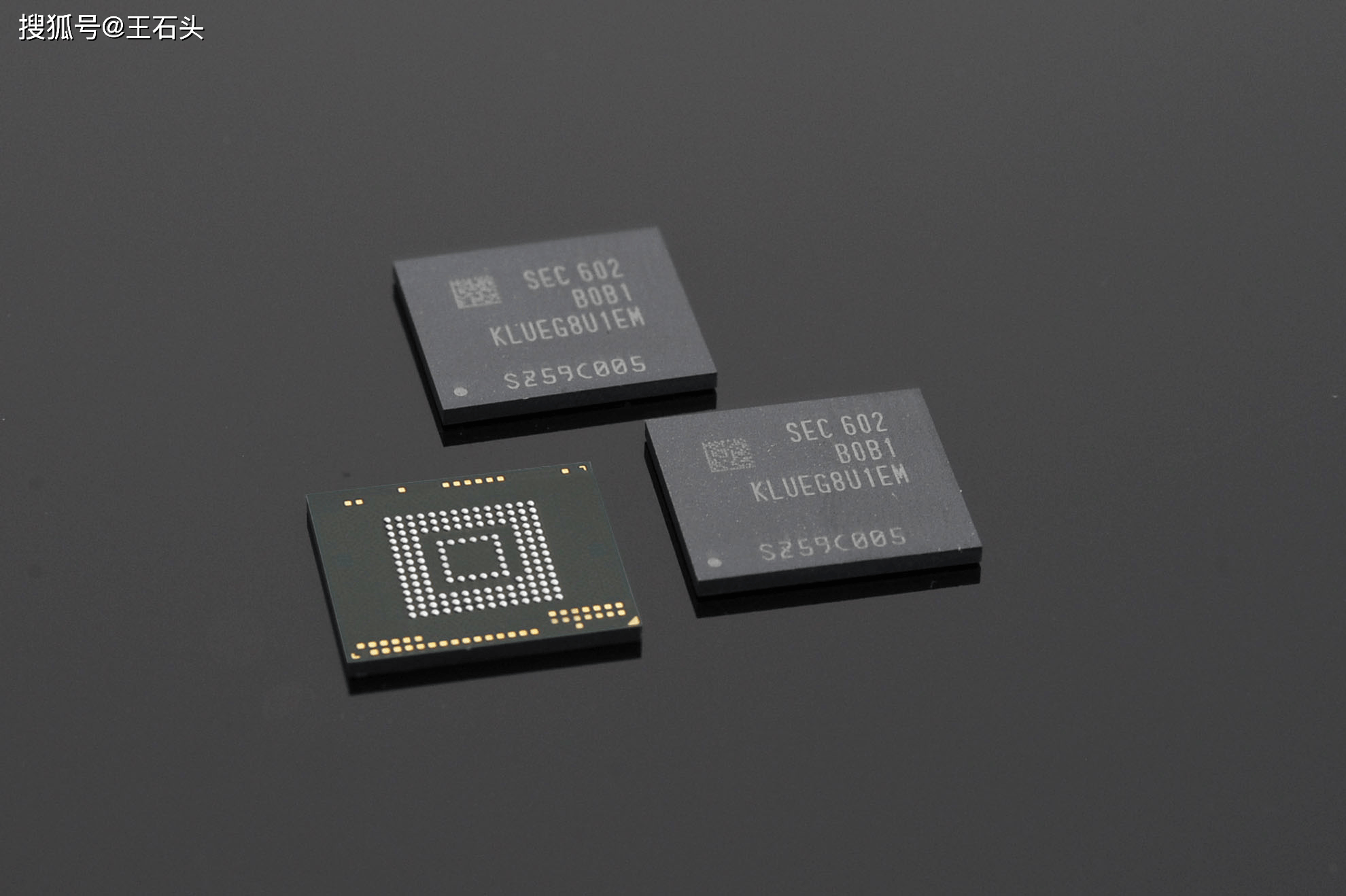
Core Viewpoint - Apple, traditionally seen as a dominant force in supply chain management, is now facing significant challenges due to a global shortage of memory chips, forcing the company to adapt its negotiation strategies with suppliers like Samsung [1][3]. Group 1: Supply Chain Dynamics - Apple is currently engaged in intense negotiations with Samsung to secure memory chips for the upcoming iPhone 17 series, with executives reportedly stationed in South Korea for direct discussions [3]. - Initially, Samsung planned to increase prices by approximately 60%, but later proposed a staggering 100% price hike, effectively doubling the cost [4]. - Contrary to expectations, Apple accepted the price increase without significant negotiation, indicating a deep-seated fear of supply disruptions [6]. Group 2: Market Conditions - The memory chip market is experiencing extreme price volatility, with the cost of a 12GB LPDDR5X memory chip rising from $25-$29 in early 2025 to $70 by the end of the same year [6]. - Industry analysts predict that contract prices for ordinary DRAM will increase by 55% to 60% in Q1 2026, while flash memory prices are expected to rise by over 30% [8]. - The surge in demand for high-end memory chips, driven by AI applications, has led to a decrease in the production of standard LPDDR memory, exacerbating supply shortages [8]. Group 3: Financial Implications - Apple's decision to accept the price increase reflects its substantial cash reserves, allowing it to absorb the costs without immediate financial strain [10]. - However, the increased costs are likely to be passed on to consumers, with potential price hikes for higher storage versions of the iPhone 17, possibly ranging from several hundred to over a thousand dollars [10].
三星存储部门漫天要价,苹果照单全收
3 6 Ke· 2026-02-27 03:31
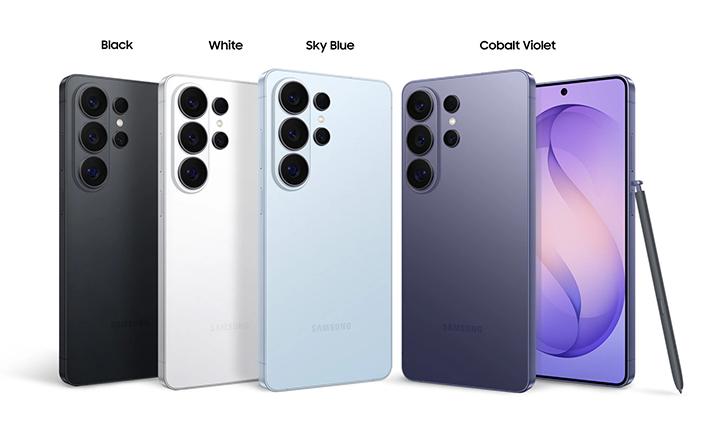
Core Insights - The pricing strategy for memory chips is significantly impacting the profitability of Samsung's Galaxy S26 series, with a 100% price increase for LPDDR5X memory chips quoted to Apple being accepted immediately, indicating fierce competition among smartphone manufacturers for memory inventory [1][4][5] Group 1: Memory Chip Pricing and Supply Dynamics - Samsung's semiconductor division has raised the price of LPDDR5X memory chips for Apple, which will be used in the iPhone 17 series, to double the previous price, reflecting the tight supply conditions in the memory market [4][5] - Samsung's semiconductor division has abandoned long-term supply agreements in favor of quarterly contracts to maximize profits amid rising memory prices [1][5] - The initial production of the Galaxy S26 series will see memory supplied equally by Samsung's semiconductor division and Micron Technology, each providing 50% of the required LPDDR5X memory [1][6] Group 2: Impact on Samsung's Mobile Experience Division - The price increase from Samsung's semiconductor division will also affect the pricing for the mobile experience division, which is expected to face significant profitability challenges due to rising memory costs [5][10] - Samsung's mobile experience division is attempting to mitigate cost pressures by increasing the proportion of in-house developed Exynos 2600 processors in the S26 series, which is expected to account for about 30% of the chip usage [9][10] - Despite raising the retail prices of the Galaxy S26 series (S26 at $899 and S26+ at $1099), the measures taken may not fully offset the increased costs from memory price hikes [9][10] Group 3: Product Specifications and Features - The Galaxy S26 series maintains a similar design and functionality to its predecessor, with all models featuring 12GB of memory and starting storage of 256GB [10] - The base model S26 has a slightly larger screen size of 6.3 inches and an increased battery capacity of 4300mAh, while the camera specifications remain largely unchanged from the S25 series [10] - New features include advanced video stabilization, AI auto-framing, and audio erasure capabilities for popular streaming platforms [10]
苹果同意三星内存涨价100%,科创半导体ETF(588170)、半导体设备ETF华夏(562590)回调蓄势
Mei Ri Jing Ji Xin Wen· 2026-02-27 02:06
Group 1 - The semiconductor ETFs, including the high "equipment" content Sci-Tech Semiconductor ETF (588170) and the Semiconductor Equipment ETF Huaxia (562590), are experiencing a pullback after nearing previous highs, with declines exceeding 2% [1] - Apple has finalized orders for LPDDR5X from Samsung's DS division for the iPhone 17 series, with prices doubling compared to previous agreements, indicating strong demand and supply chain stability efforts [1] - Initial negotiations between Apple and Samsung aimed for a 60% price increase, but Apple accepted a 100% increase to secure inventory, highlighting the competitive nature of the semiconductor market [1] Group 2 - The Sci-Tech Semiconductor ETF (588170) tracks the only semiconductor equipment theme index on the Sci-Tech board, with approximately 50% advanced packaging content, focusing on cutting-edge equipment companies [2] - The Semiconductor Equipment ETF Huaxia (562590) follows the CSI semiconductor materials and equipment theme index, with around 63% semiconductor equipment content, benefiting from the global chip price surge and the demand for equipment suppliers [2]