2 1 Shi Ji Jing Ji Bao Dao

Search documents
关税、AI双重“暴击”,三大股指全线大跌
2 1 Shi Ji Jing Ji Bao Dao· 2026-02-24 02:14
Group 1: Market Overview - The U.S. stock market experienced a significant decline, with the S&P 500 index falling by 1.04% to 6837.75 points, the Nasdaq composite down 1.13% to 22627.27 points, and the Dow Jones Industrial Average dropping 1.66% to 48804.06 points due to dual pressures from tariff news and AI concerns [1] - The uncertainty surrounding U.S. tariff policies is negatively impacting market risk appetite, with analysts indicating that the Supreme Court ruling is not seen as a signal for trade easing [3] Group 2: Tariff Policy Implications - The Biden administration is focusing on extending tariff tools rather than expediting refunds, implementing a temporary global 15% tariff for 150 days while utilizing traditional tools to build new tariff barriers [1] - The estimated refunds for IEEPA tariffs could exceed $175 billion, representing about 0.6% of the U.S. GDP in 2025, potentially increasing the fiscal deficit [3] Group 3: AI Impact on Companies - IBM's stock plummeted over 13%, marking its largest single-day drop since 2000, due to concerns that AI tools like Anthropic's "Claude Code" could disrupt its core business involving COBOL systems [2] - Anthropic's AI programming tool is aimed at modernizing legacy systems that predominantly use COBOL, which is critical for IBM's large-scale transaction processing systems [2] Group 4: Economic Growth Concerns - The U.S. economy showed signs of cooling, with the annualized quarterly GDP growth rate dropping to 1.4% in Q4 2025, primarily due to tariff policies and a prolonged government shutdown [4] - The overall economic growth for 2025 was 2.2%, down from 2.8% the previous year, despite an increase in imports and a widening trade deficit [4] Group 5: Economic Stability Analysis - The chief economist at Wilmington Trust Company suggests that while the U.S. economy appears stable, it is actually quite unstable, with a 45% chance of recession due to slow job growth and rising defaults on consumer loans [5]
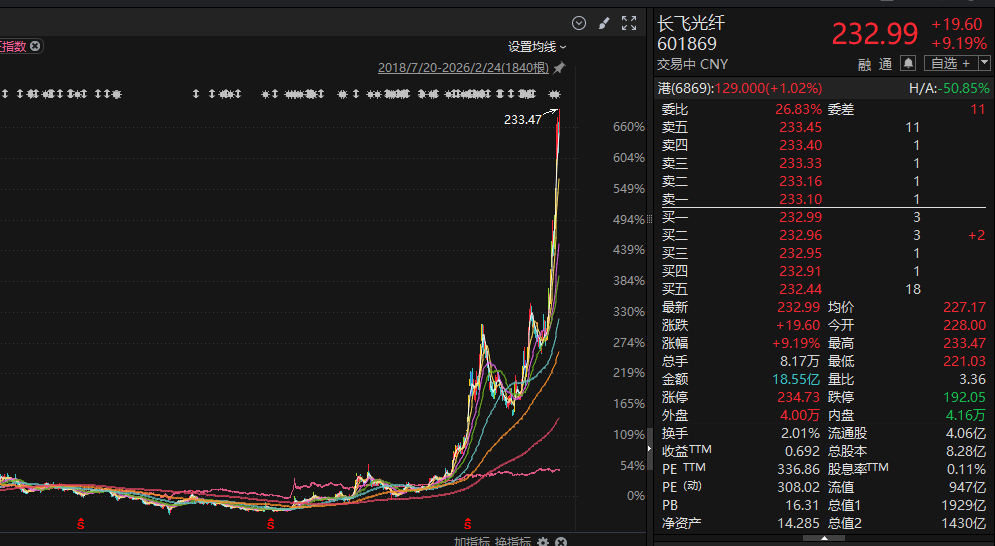
机构称中国市场G.652.D单模光纤价格创下近七年新高,长飞光纤再创新高丨盘中线索
2 1 Shi Ji Jing Ji Bao Dao· 2026-02-24 02:14
Group 1 - The optical fiber sector is experiencing a strong upward trend, with Changfei Fiber reaching new highs [1] - The demand for high-performance optical fibers and cables is surging due to the global AI wave, leading to unprecedented needs for low latency and high bandwidth [3] - The average price of G.652.D single-mode optical fiber in China reached 35 yuan per core kilometer in January 2026, marking a nearly seven-year high, with a monthly increase of over 75% [3] Group 2 - The optical fiber industry is confirmed to be in a price-up cycle, with increasing prices driven by heightened demand from overseas markets [4] - Major domestic clients are expected to accept price increases, benefiting leading companies in the optical fiber and cable sector [4] - Recommendations include Changfei Fiber, Hengtong Optic-Electric, and Zhongtian Technology, as these companies are likely to benefit from the price surge and improved profitability [4]


LPR连续9个月按兵不动 存量与增量政策集成效应将持续显现
2 1 Shi Ji Jing Ji Bao Dao· 2026-02-24 02:12
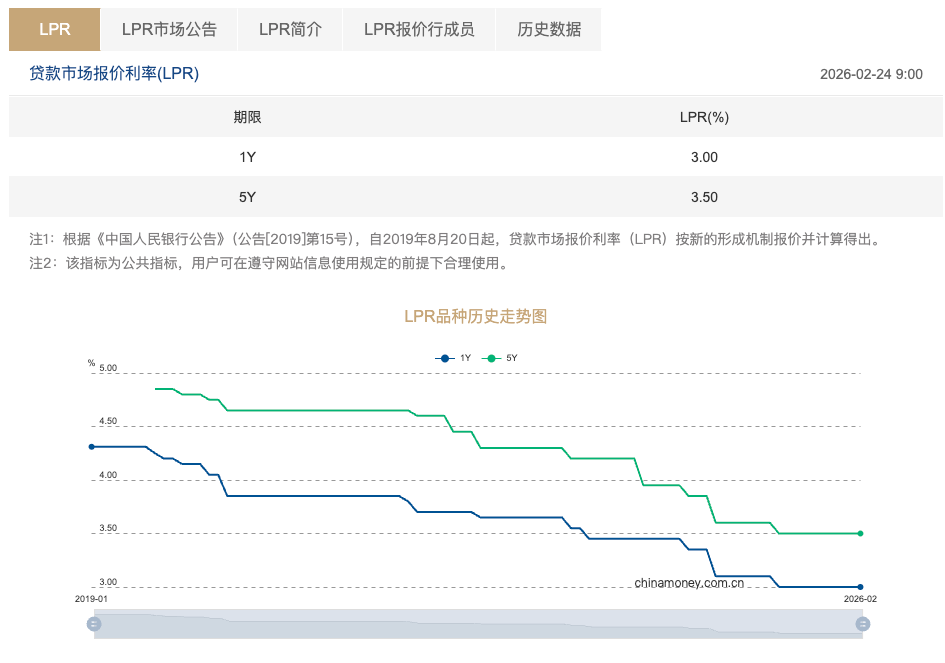
Core Viewpoint - The latest Loan Prime Rate (LPR) remains unchanged at 3.00% for the one-year term and 3.50% for the five-year term, marking nine consecutive months of stability since the last reduction in May 2025 [1][3] Group 1: LPR Stability - The LPR's stability aligns with market expectations, as the policy interest rate has remained stable, indicating no changes in the pricing basis for LPR [1][3] - The net interest margin of commercial banks has been at a historical low of 1.42%, reducing the incentive for banks to lower the LPR [1][3] Group 2: Economic Context - The LPR's unchanged status is attributed to strong export performance and rapid development in high-tech manufacturing, which have helped the economy withstand external pressures and achieve growth targets [3] - The central bank has introduced a package of structural monetary policies to support key sectors like technology and small enterprises, suggesting a period of observation for monetary policy [3] Group 3: Monetary Policy Impact - Since the second half of 2018, there have been 18 reductions in the reserve requirement ratio, leading to a significant decrease in loan interest rates, saving borrowers over 6 trillion yuan annually [4] - China's monetary policy remains relatively loose compared to tightening measures in other major economies, with personal mortgage rates nearing levels seen during zero-interest periods in developed countries [4]
关税、AI双重“暴击”,三大股指全线大跌|美股一线
2 1 Shi Ji Jing Ji Bao Dao· 2026-02-24 02:08
Group 1: Market Impact - The U.S. stock market experienced a significant decline, with the S&P 500 index falling by 1.04% to 6837.75 points, the Nasdaq composite dropping by 1.13% to 22627.27 points, and the Dow Jones Industrial Average decreasing by 1.66% to 48804.06 points on February 23 [1] - Concerns over tariffs and AI developments have contributed to market volatility, leading to a trend of "sell first, ask questions later" among investors [1] Group 2: Tariff Policy - The Biden administration is focusing on extending tariff measures rather than expediting refunds, implementing a temporary global 15% tariff for 150 days while utilizing traditional tools to build new tariff barriers [1][3] - The uncertainty surrounding U.S. tariff policies is negatively affecting market risk appetite, with analysts indicating that the Supreme Court ruling does not signal a trade easing [3] Group 3: AI Developments and Company Impact - Anthropic's AI programming tool "Claude Code" aims to modernize legacy systems using COBOL, which is critical for IBM's business, leading to a significant drop in IBM's stock by over 13%, marking its largest single-day decline since 2000 [2] - The introduction of "Claude Code Security" by Anthropic, which scans for security vulnerabilities, has also negatively impacted stock prices of various cybersecurity companies [2] Group 4: Economic Outlook - The U.S. economy showed signs of cooling, with a projected annualized quarterly growth rate of 1.4% for Q4 2025, attributed to tariff policies and government shutdowns [4] - Despite a 2.2% overall growth in 2025, the economic situation appears unstable, with a 45% chance of recession predicted due to slow job growth and rising consumer defaults [5]
钛白粉概念持续走强,金浦钛业涨停
2 1 Shi Ji Jing Ji Bao Dao· 2026-02-24 02:03
Group 1 - The titanium dioxide sector is experiencing a strong upward trend, with Jinpu Titanium Industries hitting the daily limit increase [1] - Other companies in the sector, such as Anada, Titan Chemical, and Longbai Group, are also seeing significant gains [1]

盘中线索丨光纤概念股持续走强,机构称中国市场G.652.D单模光纤价格创下近七年新高
2 1 Shi Ji Jing Ji Bao Dao· 2026-02-24 02:01
Core Viewpoint - The optical fiber sector is experiencing significant growth, driven by unprecedented demand for high-performance optical fibers and cables due to the global AI wave and the need for low latency and high bandwidth [1] Industry Summary - Optical fiber concept stocks are on the rise, with companies like Hangzhou Dianzi, Tianfu Communication, Hengtong Optic-Electric, Changjiang Communication, Fenghuo Communication, Tongguang Cable, and Huamai Technology seeing substantial gains [1] - According to Huatai Securities, the price of G.652.D single-mode optical fiber in the Chinese market is expected to reach a seven-year high of 35 yuan per core kilometer by January 2026, with a monthly increase of over 75% in January alone [1] - Guotai Junan Securities indicates a confirmed upward trend in the optical fiber industry's pricing cycle, with prices of scattered fibers rising significantly due to increased overseas demand for G657A2 and reduced supply of G652D, leading to longer delivery times [1] - Anticipation of price increases is supported by upcoming procurement from telecom and mobile operators, as well as heightened pre-Spring Festival inventory demands, suggesting that major domestic clients are likely to accept price hikes [1] - The sector is expected to benefit from the price surge, with leading domestic optical fiber and cable manufacturers like Yangtze Optical Fiber, Hengtong Optic-Electric, and Zhongtian Technology poised to gain from the explosive demand and price trends [1]


宁德时代、奇瑞汽车合资成立新能源科技公司
2 1 Shi Ji Jing Ji Bao Dao· 2026-02-24 01:39
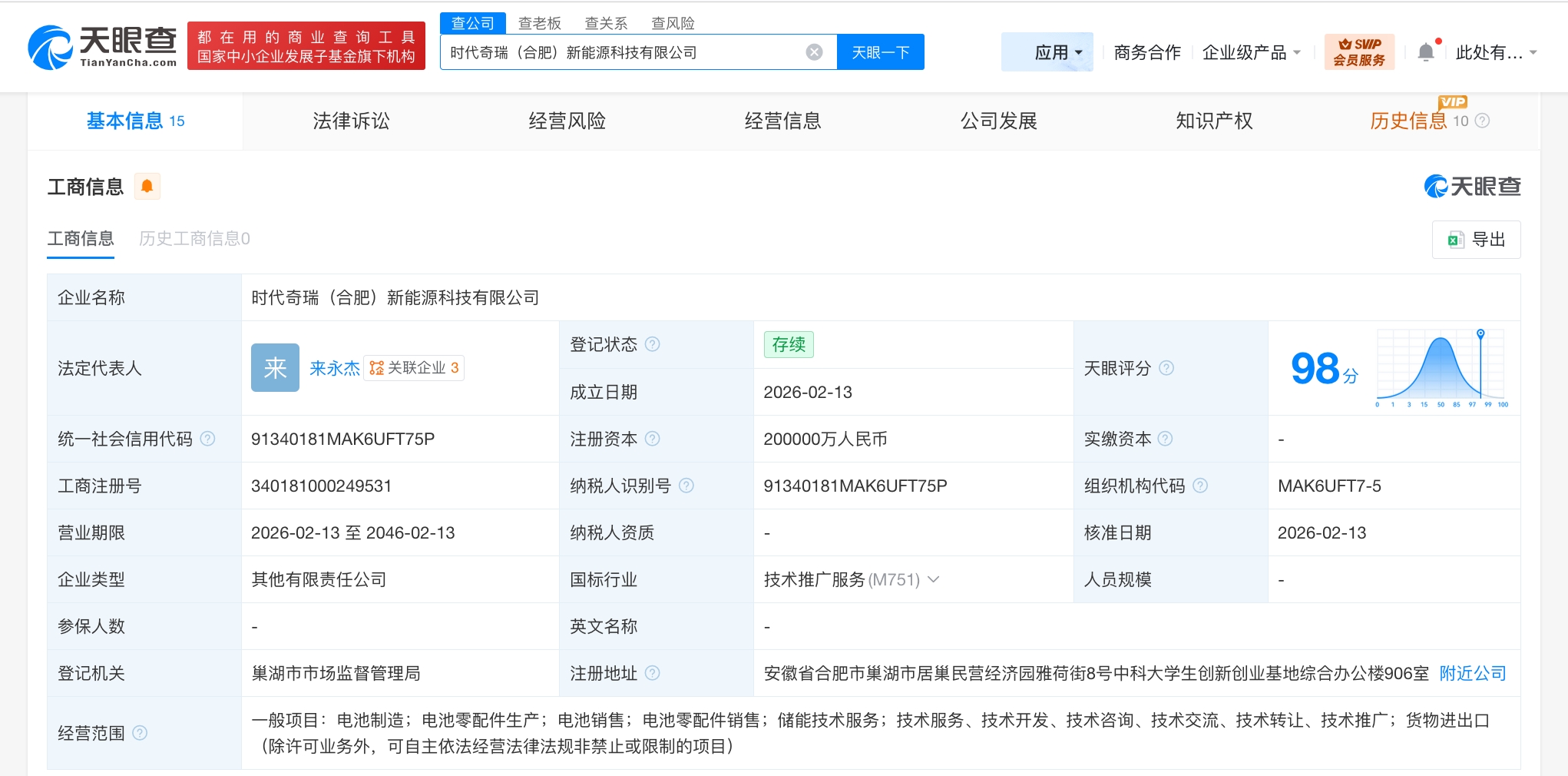
Core Viewpoint - A new company, Times Chery (Hefei) New Energy Technology Co., Ltd., has been established with a registered capital of 2 billion RMB, focusing on battery manufacturing and related services, co-owned by CATL, Chery Automobile, and Chery Commercial Vehicle [1][2]. Group 1: Company Information - The legal representative of Times Chery is Lai Yongjie [1]. - The company was registered with a capital of 2 billion RMB and is located in Hefei, Anhui Province [2]. - The business scope includes battery manufacturing, battery component production, battery sales, energy storage technology services, and various technical services [1][2]. Group 2: Shareholder Information - The shareholders of Times Chery include CATL, Chery Automobile Co., Ltd., and Chery Commercial Vehicle (Anhui) Co., Ltd. [1][2]. - CATL is a publicly listed company in both A-shares and Hong Kong stocks [2].

春晚机器人引爆港股 一文锁定A股核心产业链(附股)
2 1 Shi Ji Jing Ji Bao Dao· 2026-02-24 00:30
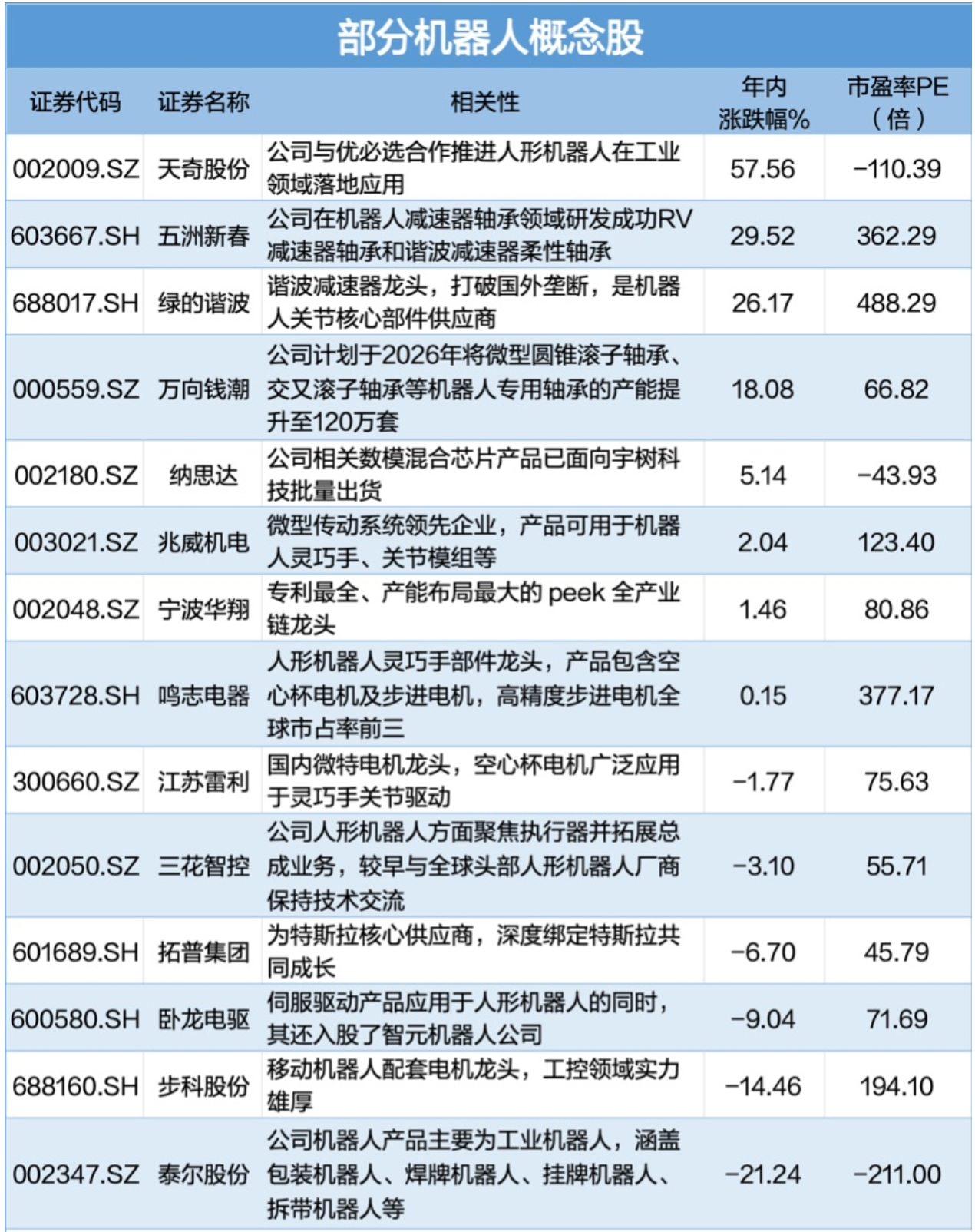
Core Viewpoint - The robot concept sector in the Hong Kong stock market has shown significant growth, driven by the visibility and popularity of robots showcased during the 2026 CCTV Spring Festival Gala, indicating a shift towards commercialization and public acceptance of robotics technology [1][2][3]. Group 1: Market Performance - The robot concept sector (887755.WI) rose by 1.76% on February 23, with notable gains from ASMPT (5.27%) and Huahong Semiconductor (4.83%) [1]. - On February 20, despite a general market decline, robot stocks surged, with Yujian (21.4% increase) and Sutech (9.24% increase) leading the gains [1]. - E-commerce platforms experienced explosive growth in robot product sales, with Douyin reporting a 1680% increase in GMV and a 655% increase in order volume from February 16 to 18 [3]. Group 2: Technological Advancements - The Spring Festival Gala featured advanced robotics, including Utree Technology's G1 and H2 humanoid robots performing complex stunts, showcasing the capabilities of modern robotics [2]. - The event marked a significant step for the industry, indicating a transition from laboratory development to mainstream visibility and application [2]. Group 3: Industry Outlook - Analysts from Guohai Securities highlighted the potential for humanoid robots to create a market space larger than that of automobiles, suggesting a pivotal investment opportunity as the industry evolves [4]. - Dongwu Securities noted that Tesla's Optimus robot is set for large-scale production in 2026, indicating a tightening supply chain and potential growth for leading domestic players like Utree and Zhiyuan [4]. Group 4: Company Highlights - Sutech announced a profit forecast of at least 60 million RMB for Q4 2025, marking its first quarterly profit and signaling a new phase in its business development [3]. - Yujian has initiated mass production of its Atom humanoid robots, indicating a shift towards large-scale application in various scenarios [3]. Group 5: Stock Performance - Notable stocks in the robot sector include: - Tianqi Co. (57.56% increase) for its collaboration with Ubiquity in humanoid robot applications [5]. - Wuzhou New Spring (29.52% increase) for its success in developing domestic harmonic reducers [5]. - Green's Harmonic (26.17% increase) as a core supplier of robotic joint components [5].

测评7个手机智能体:点一杯奶茶,意味着交付40%高敏权限
2 1 Shi Ji Jing Ji Bao Dao· 2026-02-24 00:23
Core Insights - The rise of intelligent agents signifies a shift from machines merely chatting to machines performing tasks on behalf of users, with a notable focus on local deployment rather than cloud-based solutions [1][2] - The increasing integration of intelligent agents into personal devices raises concerns about privacy and the extent of permissions required for their operation [2][19] Group 1: Intelligent Agent Development - Intelligent agents like Doubao are being embedded in smartphones, allowing them to perform various tasks such as ordering food and playing games [3][4] - A significant number of permissions are required for these agents, with many devices exceeding 100 system permissions, which is notably higher than typical applications [5][6] Group 2: Permission and Privacy Concerns - Approximately 40% of the permissions requested by mobile intelligent agents are classified as high-sensitivity, including access to precise location and reading messages [7][10] - The use of accessibility permissions allows intelligent agents to bypass standard security measures, raising concerns about potential misuse and privacy violations [10][12] Group 3: Security Measures and User Awareness - Companies like Doubao and OPPO have begun to publish AI privacy and security white papers, focusing on user awareness and control over sensitive operations [24][25] - The need for transparent usage guidelines and the importance of logging AI operations have been emphasized to ensure accountability and traceability [25][29] Group 4: Data Handling and Cloud Risks - The process of data transmission to the cloud remains controversial, with concerns about sensitive information being exposed during this process [29][30] - Current intelligent agents struggle with effectively identifying and protecting sensitive information, highlighting a gap in privacy protection capabilities [30][32]


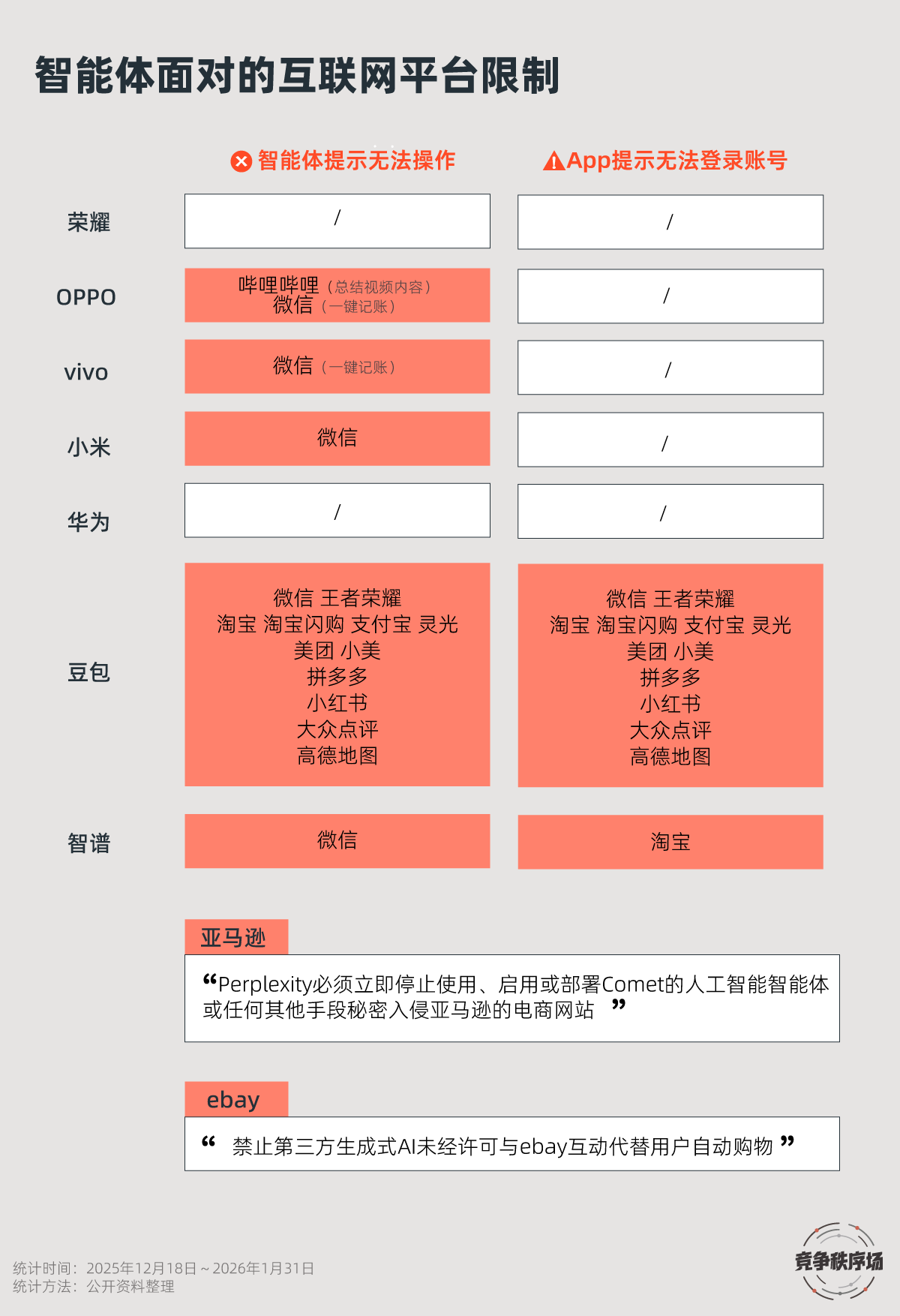
豆包新机进入倒计时,智能体和App“战”到哪一步了?
2 1 Shi Ji Jing Ji Bao Dao· 2026-02-24 00:20
Core Insights - The launch of the "Doubao Mobile Assistant" by ByteDance and ZTE Nubia has sparked significant controversy, particularly due to restrictions imposed by major apps like WeChat and Alipay, which prevent the assistant from fully functioning [1][3] - The ongoing negotiations between ByteDance and hardware manufacturers highlight the challenges of integrating AI assistants into mobile devices, with concerns over system-level permissions and the potential impact on existing AI strategies of phone manufacturers [8][9] - The industry consensus indicates that a viable revenue-sharing model for mobile assistants has yet to be established, complicating the path to commercial agreements among stakeholders [7] Group 1: Market Dynamics - The Doubao Mobile Assistant sold out quickly at a price of 3499 yuan, but faced immediate operational challenges due to app restrictions [1] - ByteDance's initial attempts to partner with major phone manufacturers were unsuccessful, as companies were reluctant to relinquish control over their AI strategies [9] - Recent developments suggest a shift in attitude among app developers, with some agreeing to a "ceasefire" to allow for normal operations of the Doubao assistant [12] Group 2: Technical and Strategic Challenges - The need for system-level permissions for AI assistants poses a significant barrier, as manufacturers are hesitant to grant such access to third-party developers [8][9] - The complexity of integrating AI capabilities into mobile devices raises concerns about performance, battery life, and user experience, which are critical factors for consumers [10][17] - The industry is exploring various cooperation models, including A2A (Application-to-Application) frameworks, to facilitate smoother interactions between AI assistants and apps [11] Group 3: Regulatory and Competitive Landscape - The situation mirrors past conflicts in the tech industry, such as the 3Q War, highlighting ongoing tensions over platform boundaries and competitive practices [13] - The concept of "interoperability" is emerging as a potential framework for resolving disputes, with calls for fair access to system-level capabilities for all developers [14][15] - The need for a unified regulatory approach is emphasized, as stakeholders seek to establish clear rules that balance innovation with user privacy and data control [16][18]