COBOL

Search documents
IBM Stock Plunges on AI Threat From Anthropic: Time to Rethink?
ZACKS· 2026-03-02 15:30
Core Viewpoint - IBM's stock has dropped 20.6% in the last three months, underperforming the industry growth of 12.8%, primarily due to the emergence of AI tools that threaten its legacy business model [1][8]. Company Performance - The decline in IBM's stock was largely triggered by Anthropic's announcement of its Claude Code tool, which can modernize legacy COBOL systems, a critical component of IBM's mainframe ecosystem [1][8]. - IBM has historically relied on maintaining and upgrading COBOL environments for revenue, but the introduction of AI-driven solutions may erode this competitive advantage [5][7]. Competitive Landscape - The introduction of Claude Code poses a risk to IBM's Consulting segment by potentially reducing the need for specialized legacy service providers, which could compress pricing power [2][7]. - IBM faces stiff competition from Amazon Web Services and Microsoft Azure, leading to increased pricing pressure and declining profitability [9]. Strategic Adjustments - IBM is implementing significant job cuts, particularly in India, to reduce operating costs and focus on high-margin AI and software sectors [10]. - Despite challenges, IBM is expected to benefit from demand for hybrid cloud and AI solutions, which could drive growth in its Software and Consulting segments [11][12]. Technological Developments - IBM's watsonx platform is positioned as a core technology for its AI capabilities, offering tools to enhance productivity and manage AI workflows responsibly [13]. - The acquisition of HashiCorp is expected to strengthen IBM's capabilities in managing complex cloud environments, complementing its existing portfolio [12]. Earnings Estimates - Recent earnings estimates for IBM have shown an upward trend, with projections for 2026 increasing by 1.1% to $12.37 and for 2027 by 1.8% to $13.30, indicating positive sentiment regarding the company's growth potential [14].



美股全线受挫,微软特斯拉暴跌,软件外包云计算领跌,中概股小跌
Sou Hu Cai Jing· 2026-02-24 23:55
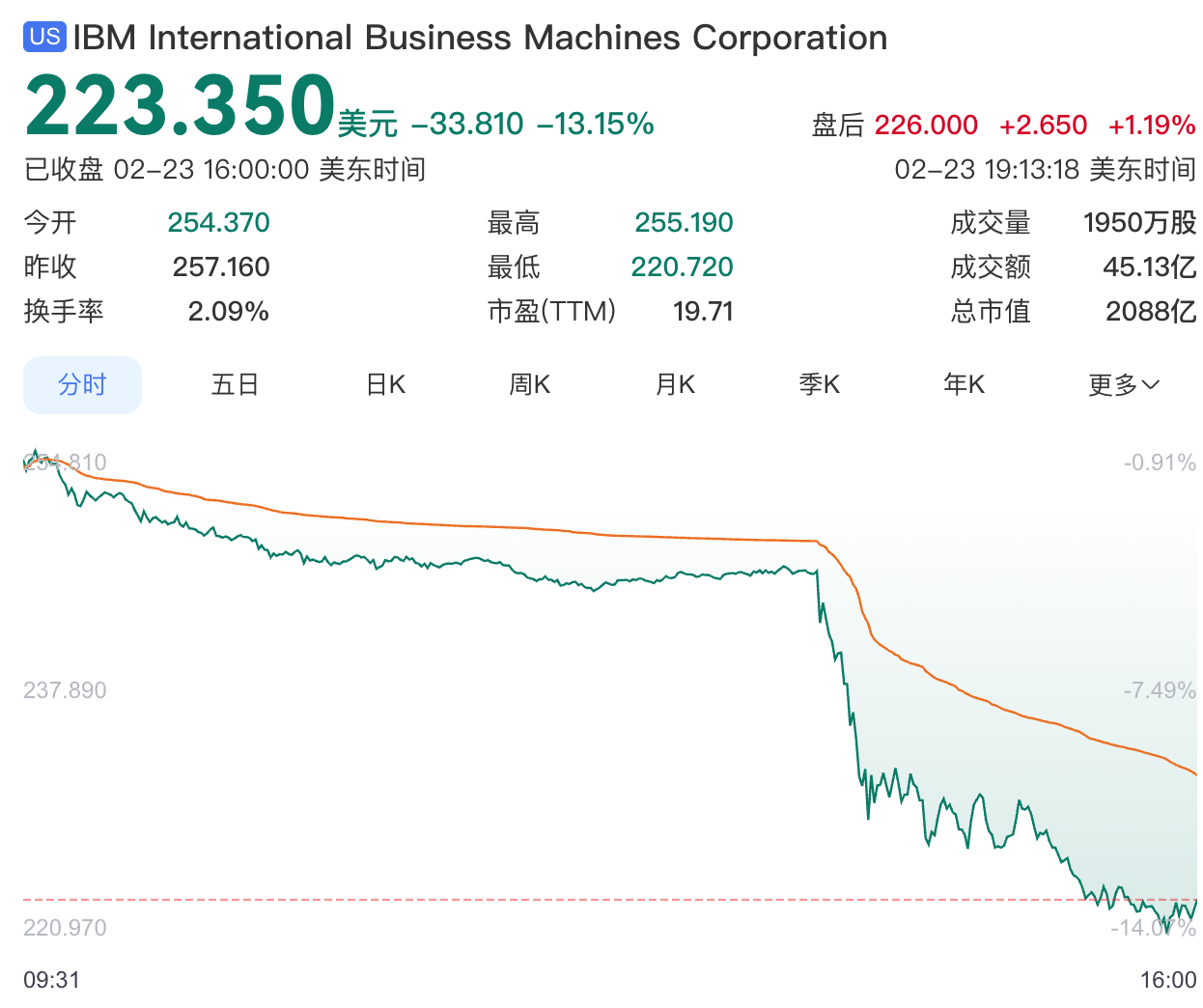
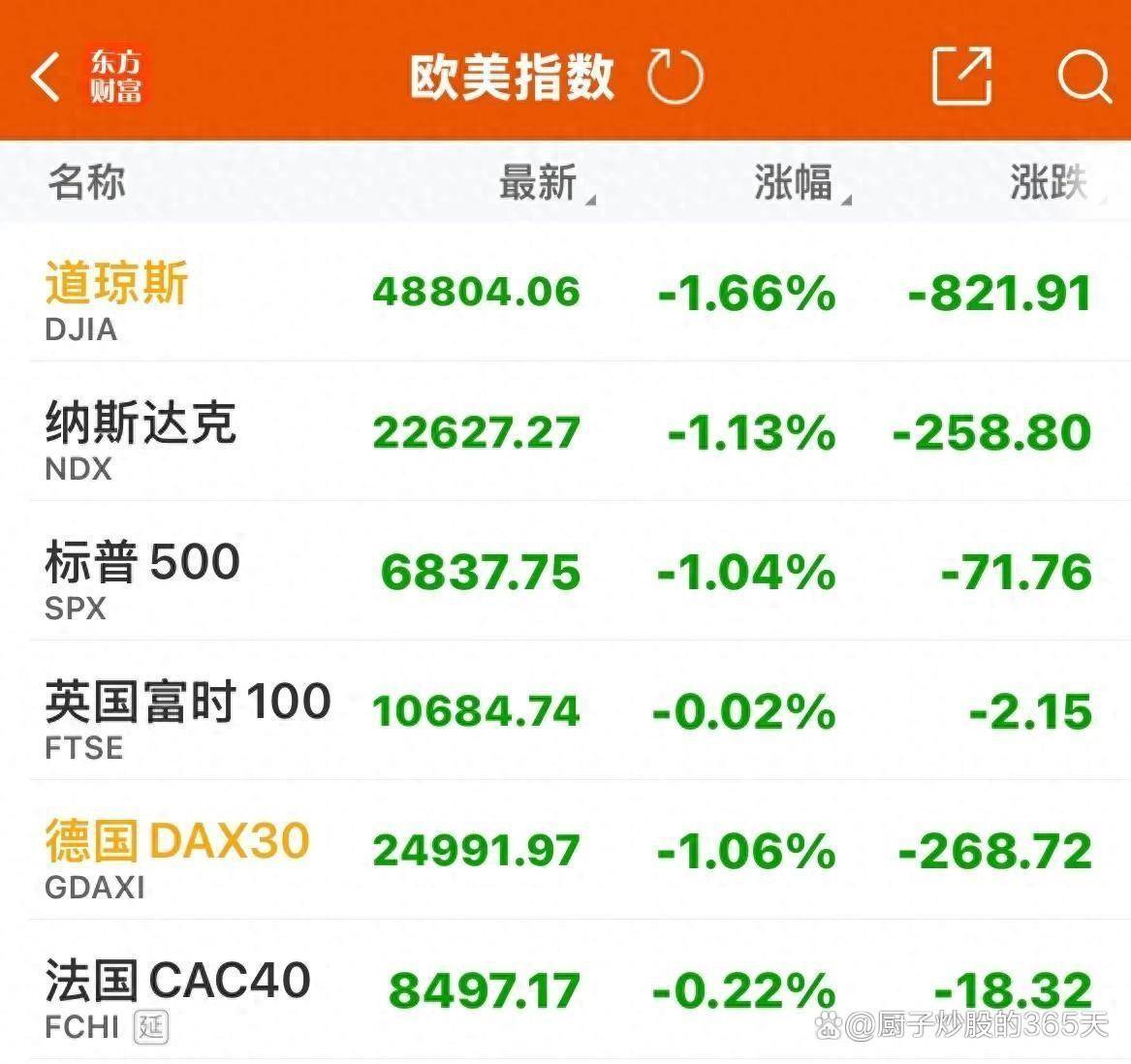
Market Overview - On February 24, 2026, U.S. stock markets experienced a significant drop, with all three major indices falling over 1%. The Dow Jones Industrial Average dropped by 821.91 points, closing at 48,804.06, a decline of 1.66%. The S&P 500 fell by 71.76 points to 6,837.75, down 1.04%. The Nasdaq Composite also declined by 258.80 points, closing at 22,627.27, a drop of 1.13% [1][2]. Sector Performance - The software services, information technology services, and financial sectors were heavily impacted, while precious metals and non-ferrous metals sectors showed resilience, indicating a shift of funds from high-risk assets to traditional safe havens like gold. The price of gold reached a critical level of $5,200 per ounce, with a daily increase of over 2% [2]. Company-Specific Impact - International Business Machines Corporation (IBM) faced a catastrophic decline, with its stock price plummeting by 13.15%, marking its largest single-day drop since March 2020. This decline was attributed to advancements in artificial intelligence, particularly a new capability from the startup Anthropic that modernizes the COBOL programming language, which is crucial for many legacy systems [3][4][5]. AI Disruption - The introduction of AI tools like Claude Code threatens traditional business models reliant on outdated technologies, as they can significantly reduce the time and resources needed for modernizing legacy systems. This has raised concerns about IBM's future, as it is a major provider of COBOL systems [5][6]. Broader Technology Sector Trends - Other major tech companies also saw declines, with Microsoft down 3.21%, Tesla dropping over 3%, and Amazon falling 2.30%. However, Nvidia and Apple managed to stay slightly positive, indicating a selective investment approach within the tech sector [8][9]. Chinese Stocks Performance - The Nasdaq Golden Dragon China Index fell by 0.95%, showing resilience compared to U.S. indices. However, individual stocks exhibited significant volatility, with declines in cloud computing and online travel sectors. Notably, NIO, a Chinese electric vehicle company, surged by 4.34% due to strong operational data [10][22]. Global Market Reaction - European markets followed the U.S. trend, with major indices like the DAX and CAC40 closing lower. The global market exhibited interconnectedness, with panic selling in the U.S. quickly affecting European stocks [13].



IBM Lost $31 Billion in 1 Day on AI Fears. Should You Buy the Dip?
Yahoo Finance· 2026-02-24 20:33
Core Viewpoint - IBM's stock has faced significant pressure due to concerns that AI technologies could disrupt its COBOL-based systems, leading to a sharp decline in share price and market capitalization [1][2]. Group 1: Stock Performance - IBM's share price fell over 13% in a single trading session, resulting in a loss of approximately $31 billion in market capitalization [1]. - Following the sell-off, IBM's stock saw a modest recovery, increasing by 2.7% as of 3 p.m. ET, but is still down roughly 22% year-to-date [1]. - Despite the recent decline, IBM's stock has appreciated by 76% over the last three years and is currently valued at about 18.5 times this year's expected earnings [5]. Group 2: Business Concerns - Investors are increasingly worried that AI tools, particularly those from companies like Anthropic, could modernize COBOL systems, which may impact IBM's mainframe business [2][4]. - Mainframe sales accounted for 23% of IBM's overall revenue last year, while mainframe-related software represented approximately 29% of total software sales [4]. Group 3: Company Response - In response to concerns, IBM emphasized that while translating COBOL is straightforward, the more complex tasks involve data architecture redesign and maintaining transaction processing integrity [3]. - IBM has been proactive in integrating AI into its operations, as evidenced by the launch of its watsonX Code Assistant for Z mainframes two years ago [3].
IBM股价重挫 AI冲击软件业震波未止
Bei Jing Shang Bao· 2026-02-24 15:23
Core Viewpoint - IBM's stock price has significantly dropped due to concerns over the impact of artificial intelligence (AI) on its core business, particularly in relation to COBOL systems, following the announcement of Anthropic's Claude Code tool [1][4][5] Group 1: Stock Performance - On February 23, IBM's stock closed at $223.35, down 13.15%, marking its largest drop since 2000 [4] - The cumulative decline for IBM in February reached 27%, the largest monthly drop since at least 1968 [4] - The market is experiencing a broader downturn, with major tech stocks also falling over 1% [4][6] Group 2: AI Impact on Software Industry - Anthropic's Claude Code tool can automate much of the analysis work related to COBOL, raising concerns about the future of IBM's mainframe business [4][5] - Approximately 95% of ATM transactions in the U.S. utilize COBOL, making it a target for AI disruption [4] - The software industry is facing increasing pressure from AI advancements, leading to postponed debt issuance plans among software companies [7] Group 3: Market Reactions and Predictions - Concerns over AI's potential to disrupt the software industry have led to a significant sell-off in software stocks [8] - Analysts suggest that the current panic may be an overreaction, as AI could enhance existing software companies rather than replace them [8][9] - The market is expected to see a gradual realization of AI-related risks, particularly affecting low-rated credit sectors by 2026-2027 [7] Group 4: Future of Software Companies - Companies that adapt to AI advancements are likely to thrive, while those that fail to keep pace may fall behind [10] - The integration of AI functionalities into existing software is anticipated, enhancing customer value [10] - The software industry must embrace AI-driven solutions and focus on differentiated technologies to maintain competitiveness [10]

AI Scare Back in the Market: ETFs That Stayed Steady
ZACKS· 2026-02-24 14:00
Core Insights - Concerns about the disruptive impact of artificial intelligence led to a significant selloff in delivery, payments, and software stocks, with IBM experiencing its steepest decline in 25 years, dropping 13.2% on February 23, 2026 [1][3] Market Reactions - The SPDR Dow Jones Industrial Average ETF Trust (DIA) lost approximately 1.6%, while the State Street SPDR S&P 500 ETF Trust (SPY) retreated by 1%, and the Invesco QQQ Trust, Series 1 (QQQ) slumped over 1.2% on the same day [2] - Other companies such as DoorDash, American Express, KKR, and Blackstone each saw declines of at least 6%, with Uber, Mastercard, Visa, Capital One, and Apollo Global Management also experiencing sharp losses [4] Industry Analysis - A bearish report from Citrini Research highlighted potential risks AI poses to various industries, contributing to investor unease [3] - Risk analyst Nassim Nicholas Taleb warned that the software sector might face increasing volatility and potential bankruptcies due to structural risks associated with the AI boom [5] - Citrini Research suggested that dominant delivery services could be challenged by cheaper AI-driven alternatives, and AI agents might help consumers avoid transaction fees from payment processors like Mastercard and Visa [5][6] Sector Performance - The VanEck Oil Services ETF (OIH) gained 0.8% on February 23, 2026, and rose 2.8% over the past week, benefiting from a rally in oil prices due to U.S.–Iran tensions [8] - The Breakwave Tanker Shipping ETF (BWET) jumped 6% on February 23, 2026, as global shipping stocks rose due to increased freight rates from disruptions in major trade routes [9] - The iShares Genomics Immunology and Healthcare ETF (IDNA) was up 2.7% on February 23, 2026, and has increased 16% this year, driven by strong performance in biotechnology stocks [10] Investment Strategies - The AdvisorShares Ranger Equity Bear ETF (HDGE) gained 2.39% on February 23, 2026, as it seeks capital appreciation through short sales of domestically traded equity securities amid the market downturn [12]

Bargain Hunting May Contribute To Initial Rebound On Wall Street
RTTNews· 2026-02-24 13:58
Market Overview - Major U.S. index futures indicate a slightly higher open, suggesting a potential recovery from the previous session's sell-off, which saw the Dow reach its lowest closing level in a month [1][3] - The Dow dropped 821.91 points (1.7%) to 48,804.06, the Nasdaq fell 258.80 points (1.1%) to 22,627.27, and the S&P 500 declined 71.76 points (1.0%) to 6,837.75 [4] Trade and Tariff Concerns - Renewed trade uncertainty arose following the U.S. Supreme Court's decision to strike down most of President Trump's global tariffs, leading to a sell-off on Wall Street [4][6] - Trump announced plans to raise worldwide tariffs to 15% from 10%, claiming he does not need congressional approval for this action [5][6] - The European Commission expressed concerns over the U.S. tariff situation, stating it is "not conducive" to fair transatlantic trade [7] Company-Specific Developments - Nvidia's upcoming quarterly results are highly anticipated, with potential implications for the market, particularly regarding AI-related concerns [2][3] - IBM shares plummeted by 13.2% after Anthropic's Claude announced COBOL capabilities, impacting IBM's core business area [8][9] - Financial stocks performed poorly, with the KBW Bank Index and NYSE Arca Securities Broker/Dealer Index dropping 4.4% and 3.4%, respectively [9] Commodity and Currency Markets - Crude oil futures increased by $0.83 to $67.14 per barrel, while gold futures fell by $70 to $5,155.60 per ounce [11] - The U.S. dollar strengthened against the yen and euro, trading at 156.04 yen and $1.1769 against the euro [11] Asian Market Reactions - Asian stocks mostly ended higher, with the belief that a uniform 15% tariff could benefit some Asia-Pacific economies [12] - China's Shanghai Composite Index rose by 0.9% to 4,117.41, while Hong Kong's Hang Seng Index fell by 1.7% [14][15] European Market Performance - European stocks showed a lackluster performance amid trade uncertainty and AI disruption concerns, with the German DAX Index down by 0.1% and the French CAC 40 Index up by 0.2% [19][20] - Spanish telecom giant Telefonica rose nearly 2% after reporting core profit growth, while French company Edenred soared 7% after exceeding profit estimates [21]


Why Anthropic is behind IBM stock's 13% plummet
Finbold· 2026-02-24 11:03
Core Viewpoint - International Business Machines (IBM) is experiencing significant stock pressure, with February potentially being its worst month in over 50 years, primarily due to competition from AI advancements by Anthropic [1][2]. Group 1: Stock Performance - IBM's stock dropped 13.15% following Anthropic's announcement, marking the company's worst trading day in the 21st century with a closing price of $224.50 [1][2]. - The stock's decline is attributed to concerns over the company's reliance on COBOL, a programming language that is becoming increasingly obsolete due to a shortage of developers [3][4]. Group 2: COBOL and Developer Bottleneck - COBOL is critical for IBM's operations, facilitating large-scale transactions across various sectors, yet the number of developers proficient in it is diminishing as new programmers favor languages like Python and Java [4][5]. - Reports indicate that hundreds of billions of lines of COBOL code are in use daily, but the institutional knowledge is fading as the original developers retire [5][7]. Group 3: AI's Role in Modernization - Anthropic claims its AI technology can modernize COBOL infrastructure, potentially allowing teams to update their codebases in quarters instead of years, which poses a threat to IBM's traditional business model [8][9]. - Despite the potential benefits of AI in modernization, IBM's long-term business outlook remains under pressure due to these technological advancements [8].

IBM shares sink 13%, record steepest drop in 25 years after Anthropic says AI can modernise COBOL
The Economic Times· 2026-02-24 05:50
Core Viewpoint - IBM shares experienced a significant decline of 13.2%, closing at $223.35, marking the largest single-day drop since October 18, 2000, primarily due to concerns over AI-led disruption in the IT sector and the potential modernization of COBOL systems using Anthropic's Claude Code tool [1][6]. Company Summary - IBM's stock fell sharply after Anthropic announced that its Claude Code tool could modernize COBOL, a programming language critical to IBM's mainframe systems, which handle approximately 95% of ATM transactions in the US [2][6]. - The decline in IBM's shares reflects broader market fears regarding the impact of AI on traditional IT roles and systems, leading to a selloff in IT stocks globally [6]. Industry Summary - The IT sector has seen a notable downturn, with the Nifty IT index in India dropping over 3% in a single day and more than 20% over the past month, driven by fears of AI disruption [6]. - Other IT companies, including Coforge and Persistent Systems, also faced declines of more than 5%, while major players like Infosys and TCS saw drops of up to 4% following Anthropic's comments on COBOL modernization [6]. - Cybersecurity firms, such as CrowdStrike and Datadog, experienced stock declines as investors assessed the implications of Anthropic's new security tool on the industry [6].

Anthropic Claude Code tool impact: IBM share price crashes most in 25 years; may see biggest monthly fall in almost 60 years
The Times Of India· 2026-02-24 05:00
Core Viewpoint - IBM's share price has significantly declined due to concerns that advancements in artificial intelligence, particularly tools like Anthropic's Claude Code, could disrupt the company's legacy technology business model [2][5]. Group 1: Stock Performance - IBM's stock dropped as much as 13% during intraday trading, marking its steepest single-day fall since March 2020 [3][5]. - Following this decline, IBM shares are down 26% for February, positioning them for their largest monthly percentage decline since at least 1968, according to Bloomberg data [3][5]. Group 2: Impact of AI on Legacy Technology - The majority of mainframe computers running COBOL, an aging programming language, are produced by IBM, making the company particularly vulnerable to AI advancements [4][5]. - Anthropic's Claude Code tool can automate the traditionally labor-intensive process of updating COBOL systems, raising concerns about the future demand for IBM's mainframe services [5][6]. - Investors are increasingly worried that AI-driven tools could enable users to create their own applications, potentially reducing reliance on established software offerings and impacting revenue growth, profit margins, and pricing power for legacy technology firms [4][6]. Group 3: Broader Market Context - The software sector has faced challenges this year, with a leading software-focused exchange-traded fund declining 27% so far, on track for its steepest quarterly drop since the 2008 financial crisis [4][6]. - The market pressure has intensified following the launch of new AI-driven tools from companies like Anthropic, OpenAI, and Alphabet Inc., contributing to a broader sell-off in technology stocks [4][6].


AI冲击下IBM跌超13%,创25年来最大跌幅
Xin Lang Cai Jing· 2026-02-24 04:27
Group 1 - IBM's stock closed at $223.35, marking a decline of 13.15%, the largest drop since 2000. The cumulative decline in February has reached 27%, the largest monthly drop since at least 1968 [2] - Concerns about IBM's mainframe business have arisen following the announcement by AI company Anthropic regarding its Claude Code product, which automates much of the research and analysis work related to the COBOL programming language [2] - COBOL, a programming language dominant in business data processing since the late 1950s, is crucial for payment processing and retail transaction systems, which are core to IBM's business [2] Group 2 - IBM's Q4 2025 earnings report revealed revenue of $19.69 billion, a 12% year-over-year increase. Software revenue was $9.03 billion, up 14%, and consulting revenue was $5.35 billion, up 3.4% [4] - The core driver of IBM's performance was the software division, which accounted for 45.8% of total revenue and had a high gross margin of 85.0%, significantly enhancing overall profitability [4] - The infrastructure segment, boosted by strong sales of IBM's latest mainframes, generated revenue of $5.13 billion, exceeding average expectations [4]