
Jing Ji Guan Cha Bao

Search documents
心理困境不是“病了”,而是“被卡住了”
Jing Ji Guan Cha Bao· 2026-02-12 01:48
Core Perspective - Acceptance and Commitment Therapy (ACT) presents a revolutionary viewpoint that individuals are not "ill" but rather "stuck," emphasizing a new understanding of human psychology and the roots of distress [1][11]. Human Psychological Needs - Human mental health relies on the fulfillment of core needs such as deep social connections, meaningful activities, and experiences of autonomy and competence, which are essential for psychological balance [1][2]. - When these core needs are unmet, individuals may fall into ineffective behavioral patterns, leading to psychological distress [1][2]. Insights from Addiction Research - A classic experiment with rats demonstrated that those in socially isolated environments resorted to substance abuse, while those in enriched environments did not, highlighting the importance of social connection for mental health [2]. - Social isolation can cause significant psychological harm, as evidenced by the severe consequences of solitary confinement [2]. Relationship Framework - The disconnection from core needs is not a disease but a misalignment between the individual and their environment, akin to gears being stuck in the wrong position [3][4]. - ACT's terminology shift from "illness" to "stuck" reflects a fundamental change in treatment philosophy, focusing on the interaction between individuals and their environments [3][4]. Psychological Flexibility - ACT emphasizes the importance of psychological flexibility, which allows individuals to adjust their thoughts and behaviors in response to various stimuli while maintaining their values [6][8]. - The goal of ACT is not to eliminate negative thoughts or emotions but to help individuals change their relationship with these experiences and their interaction with the environment [6][8]. Six Core Processes of ACT - ACT identifies six core processes to cultivate psychological flexibility: acceptance, cognitive defusion, present-moment awareness, self-as-context, values clarification, and committed action [7][8]. - These processes work together to help individuals break free from rigid psychological patterns and move out of a "stuck" state [7][8]. Humanistic Approach - ACT embodies a humanistic approach, rejecting the dichotomy of "us versus them," and positions therapists as fellow travelers rather than distant experts [9][10]. - Therapists respect the values and choices of clients, understanding that meaningful change must stem from the individual's own value judgments [9][10]. Real-Life Applications - Many individuals unconsciously view their psychological struggles through a "sick" lens, leading to avoidance and self-criticism [10][11]. - By reframing these struggles as being "stuck," individuals can focus on adjusting their relationships and breaking rigid patterns, which is the core insight of ACT [11][12].
今日看点|国新办将举行《现代化首都都市圈空间协同规划(2023—2035年)》有关情况新闻发布会
Jing Ji Guan Cha Bao· 2026-02-12 00:57
Group 1 - The National Development and Reform Commission will hold a press conference on the "Modern Capital Metropolitan Area Spatial Coordination Plan (2023-2035)" [1] - The Ministry of Commerce will hold a press conference to introduce recent key work in the business sector [2] - A total of 9 companies will have their restricted shares unlocked today, with a total unlock volume of 209 million shares, amounting to a market value of 2.644 billion yuan [3] Group 2 - 13 companies have disclosed stock repurchase progress, with 5 companies announcing new repurchase plans and 3 companies reporting on the implementation of their repurchase plans [4] - The highest repurchase plan amount disclosed is 100 million yuan by Chuzhou Dongfeng, followed by 927,200 yuan by Baiyang Co., and 635,400 yuan by Yanzhou Energy [4] - The highest repurchase amounts implemented include 141 million yuan by Beiyinmei, 60.89 million yuan by Yingfeng Co., and 18.61 million yuan by Huitai Medical [4] Group 3 - The U.S. January existing home sales annualized total data will be released [5]

京津冀协同发展十余年,为何还需“首都都市圈”?
Jing Ji Guan Cha Bao· 2026-02-11 10:47
Core Viewpoint - The approval of the "Modern Capital Urban Circle Spatial Coordination Plan (2023-2035)" marks a significant step in the development of urban agglomerations in China, particularly focusing on the integration of Beijing, Tianjin, and Hebei, covering an area of approximately 42,000 square kilometers [1][4]. Urban Circle Development - The formation of urban circles is a natural outcome of core city development, necessitating collaboration with surrounding areas to alleviate constraints and drive growth [2][6]. - The capital urban circle is designed with a structure of "one core, two wings, dual cities, and multiple points," with Beijing as the core and Xiong'an New Area and the Beijing sub-center as the wings [2][3]. Spatial Structure - The capital urban circle features a "multi-layer" nested structure, including the Beijing Plain New City, ecological conservation areas, commuting circles, functional circles, and industrial collaboration circles [3][4]. - The commuting circle covers approximately 27,000 square kilometers, focusing on the synergy between residence and work [3]. Economic Context - The Beijing-Tianjin-Hebei region's GDP surpassed 11.5 trillion yuan in 2024, marking a 2.1-fold increase since 2013, alongside significant progress in the deconcentration of non-capital functions from Beijing [5][6]. - The capital urban circle's area is the largest among the 20 approved national urban circles, with a total area of 42,000 square kilometers, although the actual area suitable for development is much smaller due to ecological zones [4][5]. Strategic Focus - The new plan represents a shift from merely alleviating "big city problems" to becoming a core area and key engine for the coordinated development strategy of Beijing-Tianjin-Hebei [4][6]. - The focus is on optimizing and enhancing the capital's functions while ensuring effective resource radiation to surrounding areas, particularly in the context of emerging industries driven by technological advancements [6][7]. Inter-City Collaboration - The relationship between the capital urban circle and the newly approved Shijiazhuang urban circle is characterized by tight interaction and cooperation based on industrial division of labor [10][11]. - The development of node cities like Langfang is crucial for effectively integrating and leveraging innovation resources from the core area [11][12]. Challenges and Opportunities - The capital urban circle faces challenges in achieving a balance between commuting and functional areas, necessitating both hard infrastructure and soft institutional coordination [12]. - The ongoing development disparities within the Beijing-Tianjin-Hebei region highlight the need for targeted strategies to enhance connectivity and resource distribution [12].
2026重塑营销与商业的十大趋势
Jing Ji Guan Cha Bao· 2026-02-11 08:22
Core Insights - The narrative around AI has shifted from merely a story of "capabilities" to one of "operational models" as evidenced by discussions at major events like CES and the Davos Forum Group 1: Trends Reshaping Marketing - The collapse of professional identity will precede organizational restructuring, as AI rapidly erodes the "middle layer" of marketing organizations, leading to role confusion and a loss of confidence among marketing professionals [1] - AI is no longer an abstract concept, yet planning within marketing organizations remains stagnant, treating AI as a mere tool upgrade rather than a transformative force [2] - Brands will passively inherit ethical risks as marketing departments become the first line of defense against ethical dilemmas posed by AI interactions [3] Group 2: Challenges in AI Adoption - Many companies will stagnate in the "medium trap" of AI maturity, where tools increase but workflows and productivity remain unchanged, allowing "native AI" competitors to gain an advantage [4] - The market will be flooded with AI-generated creative content, leading to a devaluation of "good ideas" as the abundance of content diminishes its perceived value [5][6] - Answer Engine Optimization (AEO) and Generative Engine Optimization (GEO) will disrupt traditional traffic discovery mechanisms, as AI-mediated answers replace search-driven discovery [7] Group 3: Strategic Shifts in Marketing Leadership - Smart marketers will transition from "discrete tools" to "interconnected workflows," managing AI systems in a coordinated manner rather than treating them as separate tools [8] - The quality of leadership will become the most significant performance variable, as leaders' judgment will differentiate success in the AI era [9] - CMOs will be compelled to make fewer but more challenging strategic bets, focusing on critical decisions regarding automation and human involvement [10] Group 4: Emerging Risks and Opportunities - Uneven AI capabilities will create new "invisible failure modes," where over-reliance and under-trust coexist within organizations, leading to quiet and inconsistent failures [11]
国博武王墩大展,感受楚文明的宏大与瑰丽
Jing Ji Guan Cha Bao· 2026-02-11 08:22
Core Insights - The exhibition showcases the archaeological findings from the Wuwangdun tomb, the largest known royal tomb of the Chu state, highlighting the artistic and craftsmanship excellence of the late Warring States period [1][2] Group 1: Exhibition Highlights - The centerpiece of the exhibition is a massive bronze ding, the largest discovered from the Chu state, surpassing the famous "Zhu Ke Ding," symbolizing the authority and aesthetic values of the era [2] - A notable artifact is the spherical bronze urn, the first of its kind found in archaeological digs, featuring intricate cloud and phoenix feather patterns, reflecting a sense of beauty and symmetry [3] Group 2: Artifacts Overview - The exhibition includes a variety of artifacts such as stone vessels, bronze vessels for rituals, and decorative items, showcasing the rich material culture of the Chu state [4][5] - Specific items include a bronze gui for food offerings, a bronze mirror, and various jade ornaments, indicating the complexity and sophistication of Chu burial practices [4][5]
奂熹说税|企业筹建期发给员工的工资,怎么缴个税?
Jing Ji Guan Cha Bao· 2026-02-11 07:47
Core Viewpoint - The article discusses the tax obligations for employees during the preparatory phase of a company, emphasizing the need for personal income tax (PIT) compliance even if the business has not yet completed its registration process [1][2]. Tax Compliance Requirements - Companies that have completed their business registration must also complete tax registration and are required to declare and pay personal income tax for employees [1]. - If a company has not yet registered but pays salaries, it is still obligated to withhold personal income tax at the time of payment, regardless of its registration status [1][2]. Implications for Employees - For employees, as long as the preparatory phase does not cross into a new tax year, their personal income tax obligations will not be affected [3]. - However, if the preparatory phase is prolonged, employees may face issues with social insurance contributions, which could affect their ability to purchase property or settle in certain areas due to gaps in social insurance records [3]. Practical Solutions - To mitigate potential issues during a lengthy preparatory phase, companies may consider temporarily placing employee labor relations under the existing companies of shareholders or other entities, allowing for service provision until the new company is fully registered [3]. - The article suggests that the process of business and tax registration has become more efficient, typically taking one to two weeks, and encourages companies to complete these registrations promptly to avoid complications [3].
还没讲完的“莫干山会议”(上)
Jing Ji Guan Cha Bao· 2026-02-11 06:40
Core Viewpoint - The Mogan Mountain Conference, held in September 1984, is recognized as a significant event in the history of China's economic reform, marking a pivotal moment for young economists to discuss and contribute to economic policy and theory [1][2][3] Group 1: Conference Background and Significance - The conference was initiated by ten organizations, including the Economic Daily and the Zhejiang Provincial Social Science Academy, and is considered a groundbreaking event in the history of economic reform in China [1][3] - The conference's outcomes were acknowledged by national leaders, with some ideas incorporated into the decisions of the Third Plenary Session of the 12th Central Committee of the Communist Party of China [1][2] Group 2: Key Discussions and Outcomes - A major topic of discussion was the "dual-track pricing system," which emerged during the transition from a planned economy to a market economy, and was later criticized for causing inflation and economic chaos [2][3] - The dual-track pricing system was later re-evaluated positively in the 1990s, with international economists recognizing it as a creative strategy for economic transformation [3] Group 3: Organizers and Participants - The main organizers of the conference were identified as Zhu Jiaming, Huang Jiangnan, Zhang Gang, and Liu Youcheng, who played crucial roles in its planning and execution [4][5] - The conference attracted significant attention from various government departments and media, indicating its importance in the political and academic landscape of the time [6][7] Group 4: Conference Proceedings and Reactions - The conference was marked by active participation from young economists, with a focus on discussing major theoretical and practical issues related to economic reform [8][9] - The event was characterized by a spirit of open discussion and collaboration, with participants encouraged to share their insights and suggestions for reform [8][9] Group 5: Historical Context and Legacy - The Mogan Mountain Conference is viewed as a milestone in the history of China's economic reform, with its discussions and outcomes continuing to resonate in contemporary economic discourse [10][11] - The conference's legacy is reflected in the ongoing recognition of its contributors and the impact of their ideas on China's economic policies [12][13]
七年崛起 哈啰顺风车缔造千亿级“五环外奇迹”的奥秘
Jing Ji Guan Cha Bao· 2026-02-11 03:45
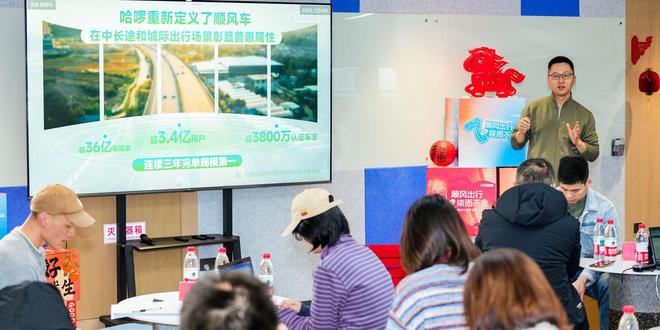
Core Insights - The article highlights the remarkable growth of Hello's ride-sharing service, which has achieved profitability since its inception and is projected to reach a transaction scale of 100 billion yuan by 2028, marking it as the second major segment in the transportation industry after ride-hailing [2][6][12]. Group 1: Business Model and Growth - Hello's ride-sharing service has maintained a consistent annual growth rate of 40%, contributing to the industry's approach towards a trillion-yuan scale [2][6]. - The service has successfully identified and addressed the unmet travel needs of users in lower-tier cities, offering a cost-effective alternative to traditional ride-hailing services [4][5]. - Hello's innovative "car owner PK model" has redefined the order allocation process, improving matching efficiency and reducing the use of external software by two-thirds [8][9]. Group 2: Market Position and Strategy - Hello's entry into the market during a downturn for competitors like Didi has positioned it as a catalyst for healthy competition in the ride-sharing sector [4][6]. - The company has shifted 60%-70% of its orders to intercity travel, avoiding direct competition with ride-hailing services and addressing the "last mile" issue in traditional intercity travel [5][6]. - The open platform strategy allows Hello to integrate with major traffic platforms, enhancing customer acquisition at a low cost and solidifying its market position [10]. Group 3: Future Vision and Expansion - Hello aims to build an intelligent intercity travel system parallel to high-speed rail networks, targeting a market size in the trillions [12][13]. - The company plans to enhance user density and expand into central regions of China, while also addressing new demands from users accustomed to ride-hailing services [15]. - Future growth will be driven by deepening service scenarios, such as intercity travel and pet transportation, and broadening user demographics to include younger and older groups [15][16].
心理学上说,先去做,做成一堆烂泥再慢慢改
Jing Ji Guan Cha Bao· 2026-02-11 01:31
(原标题:心理学上说,先去做,做成一堆烂泥再慢慢改) 别等完美了再开始:心理学告诉你,粗糙的第一步才是捷径。 你是否也有过这样的经历? 想写一篇文章,对着空白文档琢磨半天,改来改去迟迟不敢下笔,最后不了了之; 想培养运动习惯,纠结选哪种运动方案,等装备齐全、计划详尽,却早已没了最初的动力; 想学习一项新技能,非要等到"有空了""准备充分了"才启动,可"完美的时机"永远在明天。 我们总被"万事俱备,只欠东风"的执念困住,却忘了一个残酷的真相:完美的准备从来不存在,只 有"先开始",才有"后来的完美"。 最近看到一段话,戳中了无数人的内耗:"先去做,做出一堆烂泥,然后你再慢慢改。" 这句话看似直白,实则暗合了心理学上著名的行为触发效应(Behavioral Trigger Effect) 。 心理学家BJ·福格在"行为设计学"中提出的核心理论,指当一个人主动发起一个微小、低门槛的行为 后,该行为会像一个"开关",触发大脑的认知加工机制,自动激活与目标相关的思维路径、资源储备和 行动惯性,进而推动后续行为的持续发生,甚至自发优化。 简单来说,只要你迈出第一步,哪怕只是粗糙的尝试,大脑就会从"犹豫观望"模式切换到"解 ...
想让孩子情绪稳定,内核越来越强大,要经常跟他说这6句话
Jing Ji Guan Cha Bao· 2026-02-11 01:31
(原标题:想让孩子情绪稳定,内核越来越强大,要经常跟他说这6句话) "教育的目的,是让孩子学会掌控自己的情绪,并在风暴中找到方向。" 但很多孩子,内心脆弱,情绪不稳定,考试错几道题就崩溃大哭,被老师批评就自我否定,遇到一点挫 折就打退堂鼓。 如何养出一个内核强大的孩子呢? 心理学研究表明: 父母的语言模式会直接影响孩子的大脑发育和情绪调节能力。 那些内核强大、情绪稳定的孩子背后,往往有一套来自父母的"语言养育系统"。 这并不是什么高深的技巧,只是几句简单的话,但却很有力量。 经常对孩子说这几句话,能帮孩子建立安全感,成为情绪稳、底气足的人。 01"你很棒,但没人是完美的,犯错是成长的一部分" 很多孩子写错字就撕本子,说自己'太笨了',陷入自我否定。 儿童心理学中的"容错教育"指出: 孩子对"完美"的执念,本质是害怕不被认可。 父母经常对孩子说这句话,能帮孩子区分"行为失误"和"自我价值",让他明白犯错不可怕,谁都会犯 错,能接纳自己的不完美才会更从容。 教育专家说: "允许孩子犯错,是给他成长的勇气。" 02"你不必什么都懂,但要勇敢问为什么" 很多孩子课堂上不敢举手提问,遇到不懂的知识点也藏着掖着,生怕被同 ...