价格双轨制

Search documents
还没讲完的“莫干山会议”(上)
Jing Ji Guan Cha Bao· 2026-02-11 06:40
Core Viewpoint - The Mogan Mountain Conference, held in September 1984, is recognized as a significant event in the history of China's economic reform, marking a pivotal moment for young economists to discuss and contribute to economic policy and theory [1][2][3] Group 1: Conference Background and Significance - The conference was initiated by ten organizations, including the Economic Daily and the Zhejiang Provincial Social Science Academy, and is considered a groundbreaking event in the history of economic reform in China [1][3] - The conference's outcomes were acknowledged by national leaders, with some ideas incorporated into the decisions of the Third Plenary Session of the 12th Central Committee of the Communist Party of China [1][2] Group 2: Key Discussions and Outcomes - A major topic of discussion was the "dual-track pricing system," which emerged during the transition from a planned economy to a market economy, and was later criticized for causing inflation and economic chaos [2][3] - The dual-track pricing system was later re-evaluated positively in the 1990s, with international economists recognizing it as a creative strategy for economic transformation [3] Group 3: Organizers and Participants - The main organizers of the conference were identified as Zhu Jiaming, Huang Jiangnan, Zhang Gang, and Liu Youcheng, who played crucial roles in its planning and execution [4][5] - The conference attracted significant attention from various government departments and media, indicating its importance in the political and academic landscape of the time [6][7] Group 4: Conference Proceedings and Reactions - The conference was marked by active participation from young economists, with a focus on discussing major theoretical and practical issues related to economic reform [8][9] - The event was characterized by a spirit of open discussion and collaboration, with participants encouraged to share their insights and suggestions for reform [8][9] Group 5: Historical Context and Legacy - The Mogan Mountain Conference is viewed as a milestone in the history of China's economic reform, with its discussions and outcomes continuing to resonate in contemporary economic discourse [10][11] - The conference's legacy is reflected in the ongoing recognition of its contributors and the impact of their ideas on China's economic policies [12][13]
刚性出厂价成历史,茅台拿回定价权|品牌新事
Sou Hu Cai Jing· 2026-01-18 07:00
Core Viewpoint - The article discusses the recent reforms by Kweichow Moutai aimed at addressing the long-standing "dual pricing" system that has led to significant price discrepancies between the official and market prices of its products, particularly the Flying Moutai [2][4]. Group 1: Pricing and Market Dynamics - Kweichow Moutai's products have experienced a "dual pricing" phenomenon, with the factory price for the 53-degree 500ml Flying Moutai (referred to as "Pu Moutai") being around 1,000 yuan, while market prices have peaked near 3,000 yuan [2]. - The company has introduced a series of market-oriented reforms to combat speculation and restore brand value, including the launch of the "Pu Moutai" on the iMoutai platform [2][4]. - The new pricing mechanism aims to replace the rigid factory price with a market-driven dynamic pricing system, allowing for more transparent and flexible pricing directly to consumers [9][10]. Group 2: Reform Strategy - The reform plan, approved by Kweichow Moutai's board, outlines a comprehensive strategy to reshape the company's operational model, channel layout, and pricing mechanisms [4][5]. - The product system will adopt a "pyramid" structure, with Flying Moutai at the base, followed by premium and cultural series, and lower-tier products as supplements [8][9]. - The operational model will transition from traditional self-sale and distribution to a multi-faceted approach that includes consignment and agency sales, transforming distributors into service providers [9][10]. Group 3: Long-term Vision and Brand Value - The reforms are designed to realign the brand's value away from speculation and towards genuine consumer demand and cultural recognition [16]. - By focusing on direct consumer engagement and data accumulation, Kweichow Moutai aims to enhance its understanding of market needs and drive product innovation [17]. - The company seeks to establish a sustainable growth model that emphasizes market share, brand loyalty, and consistent cash flow, moving away from speculative pricing strategies [18].



茅台新帅上任66天,放了个大招
Xin Lang Cai Jing· 2026-01-06 06:40
Core Viewpoint - The launch of the "Flying Moutai" on the "i Moutai" platform signifies Moutai's return to being a consumer product, focusing on direct sales to consumers and enhancing market control [2][25][31]. Group 1: Market Strategy and Changes - Moutai's chairman, Chen Hua, emphasized a consumer-centric approach and market-oriented transformation as a response to challenges in the liquor industry, including stagnant sales and inventory issues [4][20]. - The "i Moutai" platform, operational since May 2022, will now sell the core product, "Flying Moutai," directly to consumers at a price of 1499 yuan per bottle, which was previously not available on the platform [2][18]. - The rapid sell-out of "Flying Moutai" on the platform, with thousands of consumers accessing it, indicates strong demand and market excitement [2][18]. Group 2: Financial Implications - Selling "Flying Moutai" directly to consumers increases Moutai's profit margin by 330 yuan per bottle compared to the price sold to distributors [7][23]. - The previous dual pricing system created significant arbitrage opportunities, with retail prices often exceeding 2500 yuan, leading to speculation and hoarding by resellers [7][23]. - The new strategy aims to regain pricing power and control over the market, reducing the influence of resellers and ensuring more products reach consumers [7][24]. Group 3: Consumer Engagement and Market Dynamics - The introduction of purchase limits on the "i Moutai" platform aims to prevent hoarding and ensure fair access for consumers, with a limit of 6 bottles per person per day [25][31]. - Moutai's shift towards direct consumer engagement is expected to reduce the financial speculation surrounding its products, allowing the brand to return to its core identity as a consumer good [25][26]. - The company is also focusing on expanding its consumer base and creating new consumption scenarios to drive sustainable growth in the future [26][30]. Group 4: Distributor Relations and Market Evolution - Chen Hua's statements at a recent distributor conference highlighted the need for distributors to adapt to a changing market, moving away from traditional profit models [30][31]. - The cancellation of the distribution model for non-standard products is intended to alleviate financial burdens on distributors and encourage them to engage more actively in the market [30][31]. - The future landscape for Moutai distributors is expected to see significant differentiation, with some focusing on service-oriented models while others may concentrate on high-end products [31][32].

“i茅台”上架1499元的飞天茅台,对经销商的冲击有多大?
Xin Lang Cai Jing· 2026-01-04 12:26
Core Viewpoint - The launch of the 1499 yuan Feitian Moutai on the "i Moutai" app has led to a significant shift in the market dynamics, ending the era where distributors could easily profit without effort, as Moutai regains pricing power and reduces speculation by resellers [1][27][39]. Group 1: Product Launch and Market Response - The "i Moutai" app officially launched the 1499 yuan Feitian Moutai on January 1, 2026, with a daily limit of 12 bottles per user, leading to rapid sellouts for four consecutive days [2][25]. - Over 100,000 users successfully purchased the product within the first three days, indicating strong consumer demand despite the challenges faced by resellers [2][26]. - The app's inventory was quickly depleted, with consumers reporting difficulties in securing purchases, highlighting the product's appeal [2][26]. Group 2: Changes in Pricing Strategy - Moutai has shifted to a market-responsive pricing strategy, moving away from the previous distribution model that allowed for significant price markups by distributors [5][28]. - The official factory price for Feitian Moutai is 1169 yuan, while the official retail price is set at 1499 yuan, contrasting sharply with the previous market prices that often exceeded 2000 yuan [29]. - This pricing strategy aims to eliminate the "dual pricing" system that previously allowed for inflated market prices due to speculation and hoarding by resellers [29][30]. Group 3: Impact on Distributors - The era where distributors could profit effortlessly by merely obtaining allocations has ended, as Moutai emphasizes service quality and operational capabilities in its distributor evaluation [4][41]. - Distributors are now encouraged to adapt by providing value-added services such as delivery and customer maintenance, shifting their role from mere resellers to service providers [41][42]. - Moutai plans to reduce the number of distributors while expanding direct sales channels, indicating a strategic move to regain control over market pricing and consumer data [35][36]. Group 4: Future Opportunities for Distributors - Moutai is introducing a new revenue stream for distributors through the sale of aged Moutai, with prices for different years of Feitian Moutai set to offer higher premiums [21][43]. - Distributors will need to engage in market education to promote the value of aged products, requiring a more professional approach to sales [45]. - The transition to a service-oriented model for distributors reflects a broader industry trend towards transparency and consumer engagement [41][45].
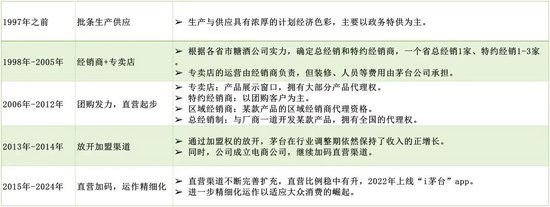
如果茅台只卖499,谁买?
Sou Hu Cai Jing· 2026-01-01 07:37
Core Viewpoint - The launch of the new 53% vol 500ml Flying Moutai at a price of 1499 yuan marks a significant shift in Moutai's marketing strategy towards a more market-oriented approach, aiming to stabilize prices and reduce speculation in the market [1][3][8]. Group 1: Product Launch and Sales Strategy - The new Flying Moutai was officially launched on January 1, 2026, through the "i Moutai" app, with a daily purchase limit of 12 bottles per person [1][3]. - Sales began at 9 AM, with stock selling out in less than 30 seconds, indicating high demand and consumer interest [3][11]. - The decision to not release the 2025 production of Flying Moutai is seen as a strategy to preserve price space for existing products in the market [8]. Group 2: Market Dynamics and Pricing - Moutai has historically operated under a dual pricing system, leading to significant price discrepancies between official prices and actual market prices, with some consumers paying up to 2000 yuan above the official price [8]. - The price of Moutai has been on a downward trend, dropping from a peak of 2750 yuan in 2024 to around 1780 yuan by December 2025 [8]. - The introduction of a fixed price of 1499 yuan for Flying Moutai aims to counteract speculative trading and establish a more rational market for consumers [11][13]. Group 3: Consumer Behavior and Market Perception - The current consumer base includes individuals treating Moutai as an investment product, which complicates the purchasing landscape [11]. - There are concerns that if Moutai were priced at 499 yuan, it could signal a decline in brand value, emphasizing the importance of maintaining price integrity [13]. - The collaboration between manufacturers and platforms to stabilize prices suggests a move towards a more sustainable consumption market for Moutai [13].
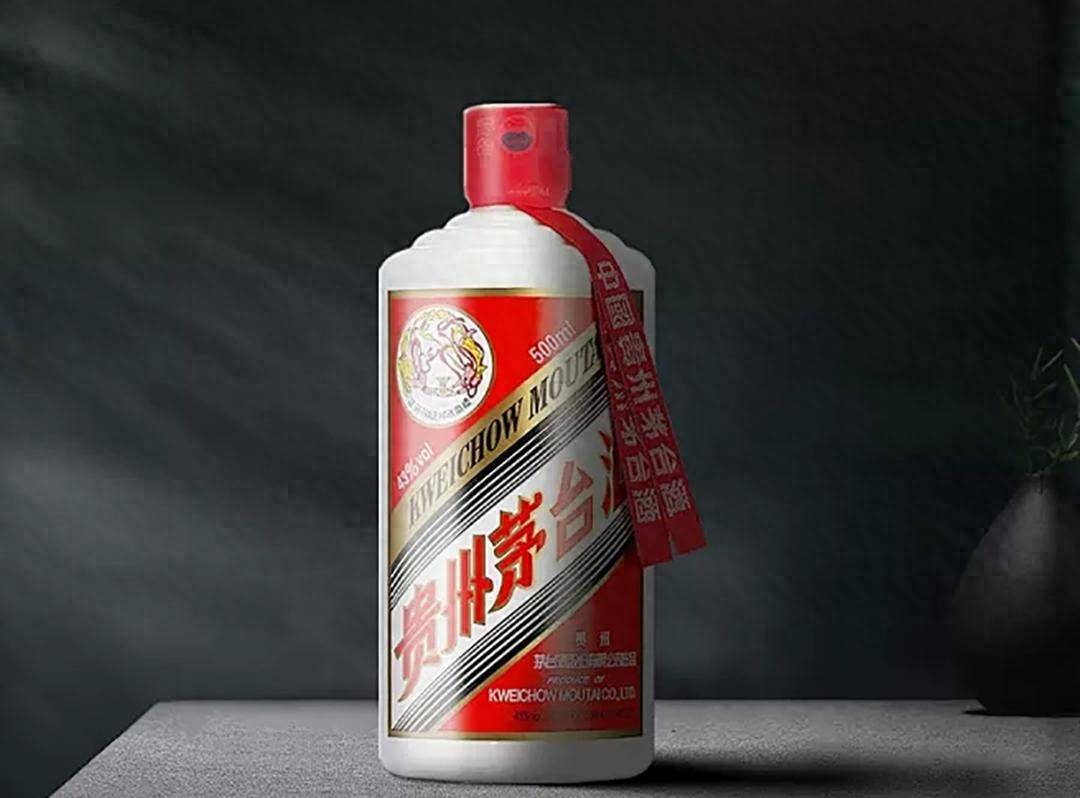
能源局长掌舵茅台首考:1499元指导价与3000元市场价的博弈战
Sou Hu Cai Jing· 2025-10-25 17:04
Core Viewpoint - The appointment of Chen Hua as the new Party Secretary of Moutai Group highlights the urgent need to address the persistent price disparity between the market price and the official price of Moutai liquor, which has significant implications for both government policy and market dynamics [1][4]. Group 1: Price Disparity Issues - The market price of Moutai has exceeded 3000 yuan, while the official price remains at 1499 yuan, creating a significant price gap that needs resolution [1]. - The dual pricing system reflects a conflict between Moutai's status as a state-owned enterprise, which must maintain a political price, and its perception in the capital market as a high-yield financial product [4][10]. - The supply-demand imbalance is evident, with Moutai's production capacity limited to approximately 56,000 tons of base liquor, translating to less than 100 million bottles available for sale, against a backdrop of high demand from middle-class families and financial speculation [4][5]. Group 2: Channel and Distribution Challenges - The existing distribution system, established during the Yuan Renguo era, continues to contribute to price instability, with remaining distributors engaging in practices that inflate prices [5]. - Despite the implementation of an RFID traceability system, issues such as price discrepancies of 200-300 yuan per bottle between regions persist, leading to the emergence of a "scalper" market [6]. Group 3: Potential Solutions and Strategies - Chen Hua's experience in the coal industry may provide innovative approaches to enhance Moutai's production efficiency and address pricing issues, including the adoption of IoT monitoring and a price-controlled distribution system [8]. - Historical attempts at price control have varied in effectiveness, with past management strategies leading to either channel chaos or market disruption, indicating the need for a balanced approach to reform [9]. Group 4: Key Questions for Future Management - Chen Hua faces critical questions regarding the adaptation of coal mining management practices to the liquor industry, the mobilization of government resources to combat market speculation, and the balance between price control and brand value [10]. - The valuation of Moutai, with a market capitalization of 2.1 trillion yuan and a price-to-earnings ratio of 35, underscores the complexity of enforcing price reductions without risking capital flight [10]. Group 5: Broader Industry Implications - The ongoing price reform at Moutai serves as a test case for the pricing elasticity of state-owned luxury goods, with potential implications for the broader high-end consumer goods market in China [11].
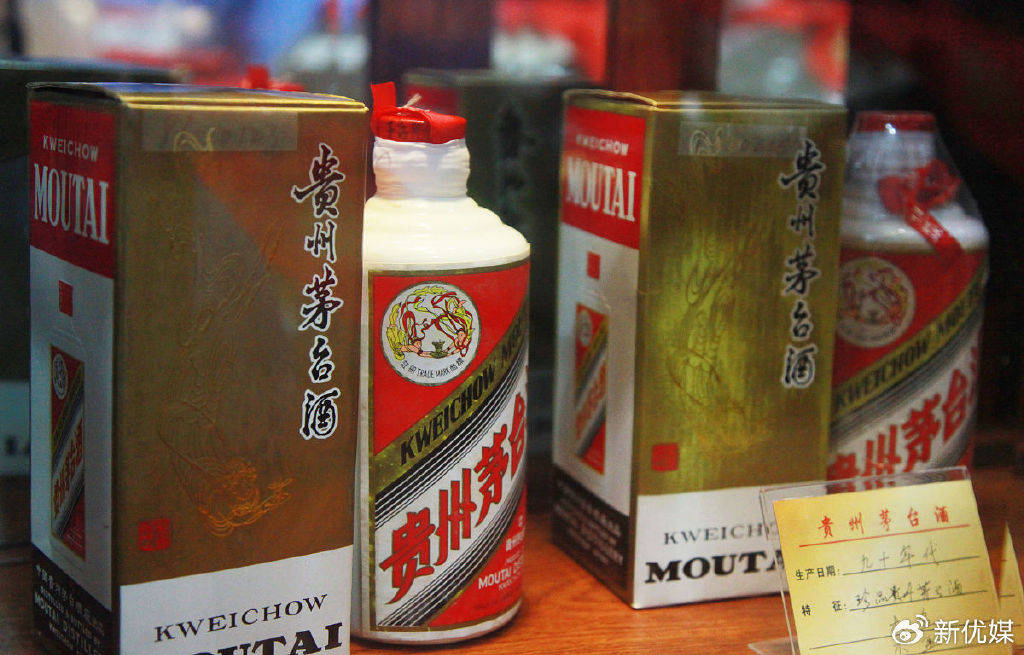
飞天茅台跌破2000元引热议
Huan Qiu Wang· 2025-07-03 07:31
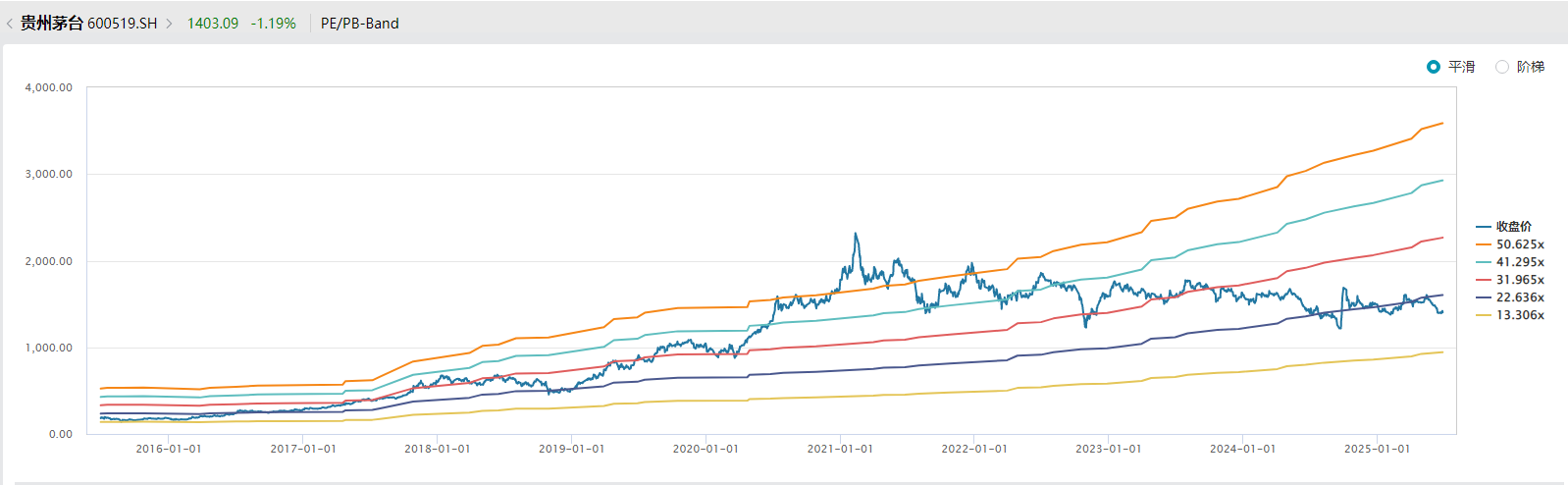
Core Viewpoint - The recent decline in the market price of Feitian Moutai below 2000 yuan has raised concerns about the performance of Kweichow Moutai (600519), with its stock price down 6.24% this year to around 1400 yuan per share, underperforming the market [1][3] Price Dual-Track System and Channel Reform - The price dual-track system refers to the significant difference between the factory price and the market price of Feitian Moutai, with the factory price remaining at 969 yuan per bottle while market prices soared above 3000 yuan per bottle from 2018 to November 2023 [3] - Kweichow Moutai has initiated channel reforms since 2020, reducing the number of distributors by 346, which is a rare occurrence in the company's history [3] - In November 2023, the factory price of Feitian Moutai was raised to 1169 yuan per bottle to capture more profit [3] Direct Sales and Revenue Growth - The proportion of direct sales in Kweichow Moutai's revenue has significantly increased, with direct sales revenue rising from 72.49 billion yuan in 2019 to 749 billion yuan in 2024, accounting for 43% of total revenue [4] - The company has successfully transformed its marketing strategy and increased factory prices over five years [4] Impact on Distribution and Other Products - The "allocation" business, where distributors are required to purchase other products alongside Feitian Moutai, has been significantly impacted by the price drop [5] - The market price of other products like the premium Moutai has also weakened, with prices dropping below the factory price, leading to losses for distributors [6] Financial Performance and Valuation - Despite challenges, Kweichow Moutai reported a revenue of 514 billion yuan in Q1, a year-on-year increase of 10.67%, and a net profit of 268 billion yuan, up 11.56% [7] - The company's price-to-earnings ratio has fallen to 10.2, below 75% of the historical levels over the past decade, indicating a low valuation [7] Market Reactions and Future Outlook - Market reactions to the price drop are polarized, with some investors worried about long-term performance while others view the price correction as a normalization [8] - Kweichow Moutai is conducting market research to stabilize confidence, emphasizing the need to adapt to changing consumer trends and enhance brand trust [8] - There are differing opinions on when the price of Feitian Moutai will stabilize, with some analysts predicting a rebound during traditional consumption peaks, while others foresee continued low prices due to economic pressures [9]
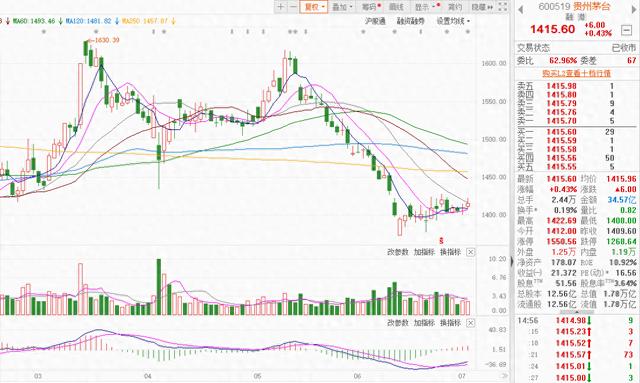
财说| 飞天茅台市场价跌破2000,对贵州茅台的业绩有多大影响?
Xin Lang Cai Jing· 2025-07-03 00:14
Core Viewpoint - Guizhou Moutai's stock price has underperformed the market this year, with a decline of 6.24% while the Shanghai Composite Index has risen by 2.16% [1] Price Dynamics - The market price of the core product, Feitian Moutai, has dropped below 2000 yuan per bottle, with the factory price now at 1169 yuan per bottle [1] - The price disparity between the factory price and market price has created a "dual-track" pricing system, benefiting distributors significantly [2] - The factory price of Feitian Moutai was previously 969 yuan per bottle from 2018 to 2023, with market prices peaking over 3000 yuan per bottle in 2021 [2] Channel Reform - Guizhou Moutai is undergoing a channel reform to reduce reliance on distributors, having cut the number of distributors by 346 in 2020 [2][3] - The company has shifted focus to direct sales, with direct sales revenue increasing from 72.49 billion yuan in 2019 to 749 billion yuan in 2024, representing a significant rise in total revenue share [3] Impact of Price Decline - The decline in Feitian Moutai prices has also affected the sales of other products like Moutai 1935, which has seen its market price drop to 650 yuan per bottle, below its factory price of 798 yuan [7] - The overall sales of Moutai 1935 reached nearly 10 billion yuan in 2023, indicating its emergence as a market hit despite the price drop [6] Valuation Metrics - Following the stock price decline, Guizhou Moutai's valuation has reached the lower end of its 10-year valuation range, currently at a price-to-earnings ratio of 10.2, compared to a historical average of 15 [8] - In the first quarter of this year, Guizhou Moutai reported revenue of 514 billion yuan, a year-on-year increase of 10.67%, and a net profit of 268 billion yuan, up 11.56% [9]
我的铁矿贸易生涯——矿市倒爷的沉浮岁月
对冲研投· 2025-04-22 12:34
以下文章来源于一个人的八卦 ,作者木精灵zjs 一个人的八卦 . 闲来无事聊八卦,忙时有事稍后看。你若亦有八卦事,欢迎随时来分享。 文 | 木精灵zjs 来源 | 一个人的八卦 编辑 | 杨兰 审核 | 浦电路交易员 倒爷一词,出现于上世纪80年代,流行于上世 纪80年代中后期至90年代初期。 在从计划经济转向市场经济的过程中,尤其是在价格双轨制时代,一些人利用计划内商品和计划外商品的价格差,在市 场上倒卖有关商品进行盈利,被人们戏称为倒爷。 倒爷的本质就是倒卖价格差,利用信息差和渠道差,最终实现价格差。这其实也是所有贸易的本质。我觉得倒爷两字, 能很形象地形容贸易商,所以今天就拿来借用一下,来形容一下我们铁矿贸易商。 从我2009年加入铁矿行业至今,已经15个年头。这期间,伴随着铁矿市场的巨大波动,以及铁矿市场交易模式的慢慢 走向成熟,铁矿市场格局的改变,倒爷们也经历了从风光无限到彷徨迷茫到步入困境的发展历程。 01 风光时刻 在矿圈,根据实力的强弱,倒爷总体可以分为两类。 第一类有很强的经济实力,能自己从国外进口铁矿或者请代理商进口铁矿,或者能从进口方先把铁矿自己买下来囤在手 里,等价格合适时机再出货。这 ...
我的铁矿贸易生涯——矿市倒爷的沉浮岁月
对冲研投· 2025-04-22 12:34
Core Viewpoint - The article discusses the evolution of the iron ore trading market in China, highlighting the transition from a profitable environment for traders to a challenging landscape due to increased market transparency and competition. Group 1: Historical Context - The term "倒爷" (trader) emerged in the 1980s, referring to individuals profiting from price differences in a transitioning economy [1] - The iron ore trading market has seen significant fluctuations and changes in trading models over the past 15 years, impacting traders' fortunes [1][2] Group 2: Trading Dynamics - Traders can be categorized into two groups: strong traders with significant capital who import directly, and weaker traders who rely on small amounts of capital and short-term contracts [2] - The port of Rizhao is a key hub for iron ore trading, with its strategic location allowing easy access to various steel mills [2][3] Group 3: Market Conditions Pre-2013 - Before 2013, the iron ore market was characterized by a lack of transparency, allowing traders to profit significantly from information asymmetry [8][9] - Traders could easily mark up prices, often earning substantial profits of 20-30 RMB per ton [10][11] Group 4: Impact of Futures Market - The listing of iron ore futures on the Dalian Commodity Exchange in October 2013 marked a turning point, leading to increased market transparency and changing pricing dynamics [14][15] - Post-listing, the pricing of iron ore became more volatile, with effective quotes often lasting only minutes [16] Group 5: Market Downturn - From 2014 to 2015, the iron ore market faced a severe downturn, with prices dropping nearly 70% due to oversupply and declining steel demand [17][19] - The Platts 62% iron ore index fell from 117 USD to a low of 38.6 USD, leading to significant losses for many traders [19][25] Group 6: Current Market Challenges - The iron ore trading environment has become increasingly difficult, with profits shrinking and competition intensifying [30][32] - The market is now characterized by a higher concentration of players, with only a few large companies remaining in the trading space [33][34] Group 7: Future Outlook - The industry is expected to transition from a high-profit era to a low-profit environment, with increasing supply and decreasing demand for iron ore [35][36]