
Zhong Guo Fa Zhan Wang

Search documents
从悬脉到云诊,上海电信推动传统中医数智转型
Zhong Guo Fa Zhan Wang· 2025-09-08 06:02
"智能问诊"正逐渐普及。 中国经济导报、中国发展网讯 记者缪晓琴报道 在数字化浪潮的推动下,中医——这一最具传统色彩的 医疗方式,也正在被重新定义。如果有一天,当你走进医院,第一个迎接你的不是医生,而是一位虚拟 的AI助手,将会是怎样的体验? 这样的场景,已在现实中出现。传统中医正与现代科技的深度对话,悄然重塑"望闻问切"的内涵。曾经 依赖个人经验的诊疗环节,如今被转化为可视化、可量化的智能结果;曾经耗时的就诊流程,如今变得 高效而顺畅;曾经流传于书本与口耳之间的名医智慧,如今通过AI的放大效应,正惠及更多患者。 古老"四诊"与数字化融合 "您好,我是AI医生助手,将帮助医生提前收集您的病情信息,请认真回答。" 随着一连串问题的展开——"请问您是初诊还是复诊?""您哪里不舒服?持续多久了?""是否有慢性病 史?"——患者仅需在手机上花费几分钟,即可完成8至10个关键问答。系统立即生成包含主诉、病史、 过敏史、家族史等内容的完整报告。等到患者真正走进诊室时,医生早已对其病情了然于心。 在龙华医院以及全国数十家医疗机构,这样的"智能问诊"正逐渐普及。它不仅缩短了诊疗流程,更让医 生能将有限的时间与精力聚焦在关键环 ...
1—7月山东规上工业增加值同比增长7.8%,高于全国1.5个百分点
Zhong Guo Fa Zhan Wang· 2025-09-05 09:09
Core Insights - Shandong Province's industrial value-added output increased by 7.8% year-on-year from January to July, surpassing the national average by 1.5 percentage points, with 35 out of 41 industrial sectors showing growth, resulting in a growth rate of 85.4% [1] - The equipment manufacturing sector saw a significant increase of 12.5%, with major industries such as electronics, automotive, and electrical machinery growing by 19.7%, 16.1%, and 12.1% respectively [1] - High-tech manufacturing also demonstrated robust growth, with a year-on-year increase of 10.5%, indicating a strengthening of new growth drivers [1] Policy Measures - The Shandong Provincial Industrial and Information Technology Department has implemented 18 supportive measures for enterprises and a 2025 action plan for industrial economy, focusing on resolving issues, providing services, and promoting development [2] - The third batch of policy measures includes targeted support for struggling industrial enterprises, promoting green transformation, enhancing AI applications, and expanding financial service channels [2] - A work plan for stabilizing industrial growth has been developed, emphasizing three key lists: a "billion-yuan incremental project list," a "billion-yuan production enterprise list," and a "standardization cultivation list" for small and micro enterprises [2] Industry Focus - The strategy to curb decline focuses on four major industries: refining, steel, electrolytic aluminum, and coking, with tailored strategies for each to enhance production efficiency and support transformation projects [3] - Additionally, six sectors experiencing a decline in value-added output, including paper, furniture, and cultural products, will receive intensified monitoring and support to facilitate recovery [3] - The approach to address external trade pressures includes initiatives to expand international markets and stabilize supply chains, alongside efforts to enhance enterprise expectations through improved service platforms [3]
山东推出2025年第三批促进经济稳健向好、进中提质政策清单
Zhong Guo Fa Zhan Wang· 2025-09-05 09:07
Group 1 - The Shandong provincial government has introduced a third batch of policy measures aimed at promoting economic stability and quality improvement across various sectors, including services, industry, construction, and cultural tourism [1][2] - A total of 2 billion yuan will be allocated to support new enterprises and key projects in high-end and high-quality service sectors, with an additional 1 billion yuan planned for the second half of the year to bolster service industry development [1][2] - The government aims to enhance consumer spending by implementing a trade-in program for consumer goods and providing incentives for cities that effectively promote healthy real estate market development [1] Group 2 - The government is focused on accelerating project construction by addressing resource constraints and ensuring that policy-driven funding reaches enterprises and projects promptly [2] - Special attention will be given to the issuance and utilization of local government bonds, with a target to complete all issuances by the end of October [2] - Measures will be taken to allow energy consumption indicators from closed coal power projects to be repurposed for new key projects in other industries [2] Group 3 - The government is enhancing support for struggling industries by expanding the coverage of interest subsidies for technology transformation loans to all 16 cities in the province [3] - Financial institutions are encouraged to innovate and provide targeted financial products to alleviate financing difficulties for enterprises [3] - Logistics costs will be reduced through extended subsidies for new shipping routes and support for the construction and operation of inland new energy vessels [3]
吉林:离境退税政策落地实施
Zhong Guo Fa Zhan Wang· 2025-09-05 08:53
Core Points - Jilin Province will implement a tax refund policy for outbound travelers starting September 1, 2025, aimed at boosting tourism, expanding inbound consumption, and optimizing the international business environment [1] - The tax refund policy allows outbound travelers to receive a refund of the value-added tax (VAT) on personal items purchased at designated stores, with refund amounts typically ranging from 8% to 9% of the product price [1] - The policy is expected to enhance Jilin's attractiveness as a shopping destination, driving growth in various sectors such as dining, accommodation, and transportation [1] Implementation Details - The first three designated tax refund ports are Changchun Longjia International Airport, Yanji Chaoyangchuan International Airport, and Hunchun Port, chosen for their high traveler flow and adequate infrastructure [1] - China Bank Jilin Branch has been appointed as the exclusive tax refund agency, providing multilingual services and various refund methods at dedicated windows in the designated ports [1][2] - Over 50 merchants have been approved as the first batch of tax refund stores, covering 19 cities and counties, including well-known local and foreign brands to meet diverse shopping needs [2] Coordination and Efficiency - A joint meeting system led by the Finance Department, involving multiple agencies such as taxation, commerce, culture, tourism, and customs, has been established to ensure smooth policy implementation [2] - The tax refund process has been digitized through a unified information management system, enhancing efficiency and reducing operational risks [2] - Training for staff at tax refund stores and agencies has been conducted to ensure travelers understand the process and can receive refunds quickly [2] Strategic Importance - The implementation of the tax refund policy reflects Jilin's commitment to national consumption promotion and foreign trade stabilization policies, marking a significant step in service industry reform and the development of a comprehensive tourism framework [3] - The policy aims to improve the business environment, expand the tourism service system, and enhance the internationalization of consumption in Jilin, thereby increasing competitiveness in the global tourism market, particularly for attracting tourists from neighboring countries like Russia, South Korea, and Japan [3]
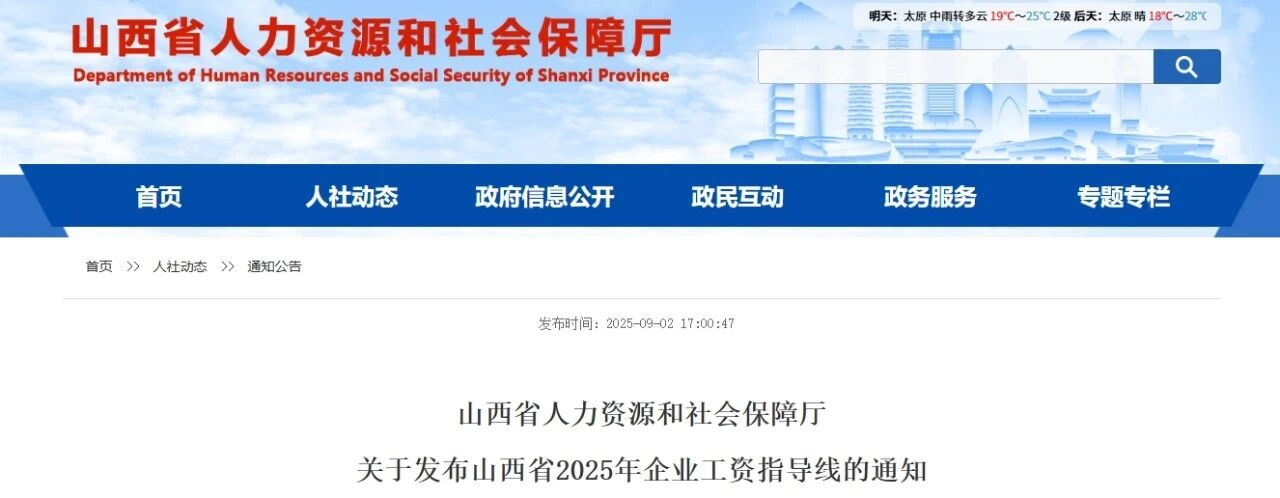
山西发布2025年企业工资指导线
Zhong Guo Fa Zhan Wang· 2025-09-05 08:53
Core Points - The 2025 wage guidance line for enterprises in Shanxi Province has been established, with a baseline growth rate of 6.5%, an upper limit of 9.0%, and a lower limit of 4.0% [3][4] - The guidance applies to all urban enterprises in Shanxi Province and is effective from January 1 to December 31, 2025 [3] - Enterprises are encouraged to negotiate wages based on their economic performance and productivity, aligning wage increases with the guidance line [3][4] Summary by Sections - **Wage Growth Guidelines** - The baseline wage growth for 2025 is set at 6.5%, with a maximum of 9.0% and a minimum of 4.0% [3] - **Applicability and Duration** - The wage guidance applies to all urban enterprises in Shanxi Province, effective for the entire year of 2025 [3] - **Implementation and Negotiation** - Enterprises should conduct collective wage negotiations considering their economic performance, productivity, and the guidance line [3][4] - **Special Considerations for Enterprises** - Well-performing enterprises can set wage increases around the baseline; those with strong economic growth may exceed the baseline; struggling enterprises may set increases below the lower limit after necessary consultations [4] - **Regulations for State-Owned Enterprises** - State-owned enterprises must adhere to specific regulations regarding wage increases, particularly if their average wages exceed double the national average [4]

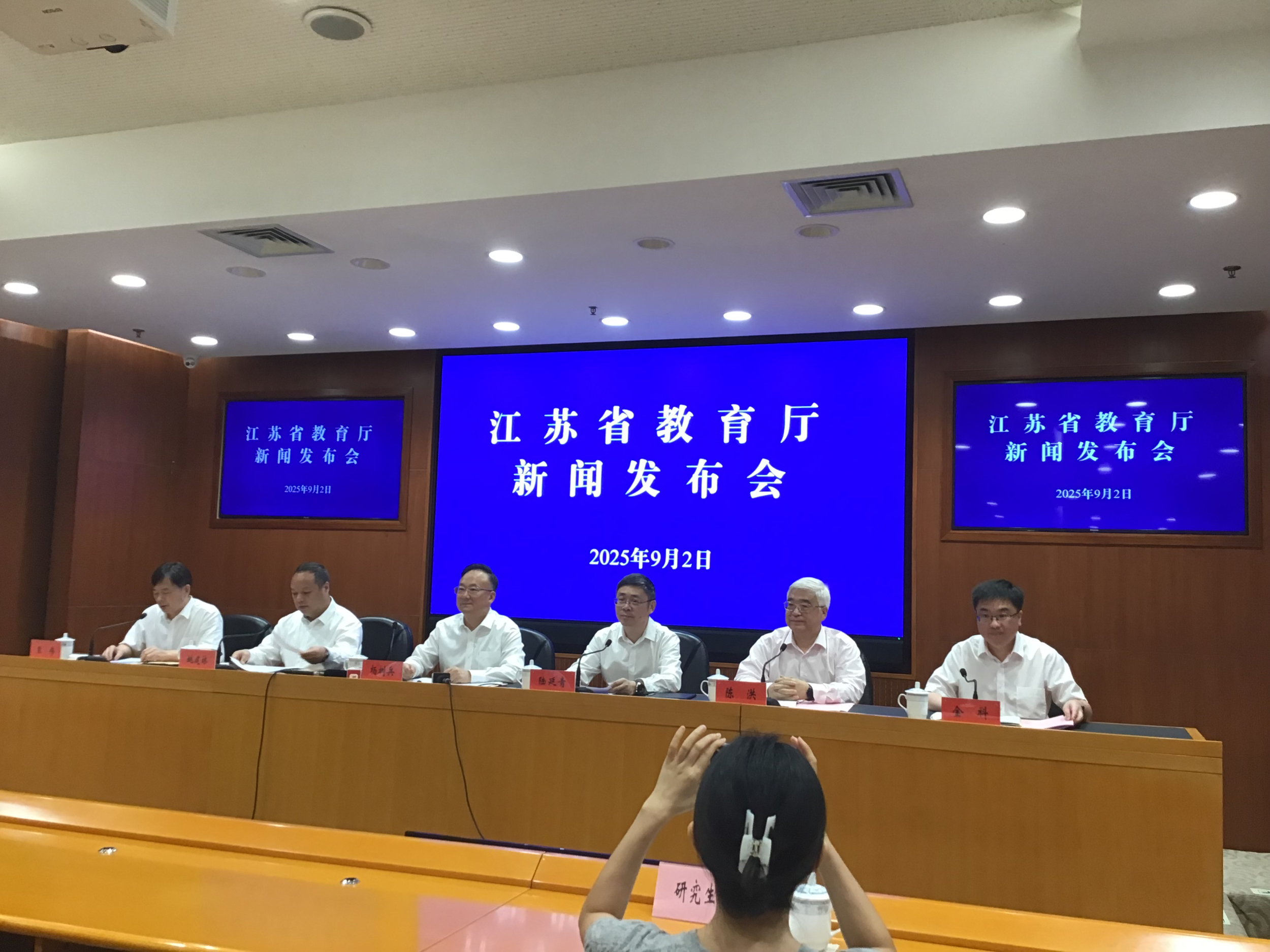
江苏省启动高校学科专业设置调整优化改革 服务国家战略与区域发展
Zhong Guo Fa Zhan Wang· 2025-09-05 08:33
Core Viewpoint - Jiangsu Province is implementing a comprehensive reform of higher education discipline and major structures to align with national and regional development strategies, aiming to enhance the quality of talent cultivation [3][4]. Group 1: Reform Background - The adjustment and optimization of disciplines and majors are essential to serve national strategies, respond to industrial innovation, and promote high-quality development in higher education [4]. - Jiangsu has rich educational resources and a strong industrial foundation, but faces issues such as misalignment between professional settings and industrial needs, prominent homogenization, and lagging interdisciplinary construction [4]. Group 2: Main Goals and Key Actions - By 2027, over 85% of newly added majors in Jiangsu's universities will belong to urgently needed fields, with a target of 60% for degrees in science, engineering, agriculture, and medicine [5]. - By 2030, the goal is to achieve full coverage of disciplines related to Jiangsu's "1650" modern industrial system, establishing a robust academic framework to support a strong educational, technological, and talent province [5]. - Four key actions will be prioritized: 1. Urgent discipline layout action, establishing a dual empowerment mechanism between industry demand and academic supply [5]. 2. Excellence enhancement action for discipline classification, focusing on top disciplines, foundational disciplines, emerging interdisciplinary fields, and cultural heritage disciplines [6]. 3. Talent cultivation model update action, promoting the establishment of specialized colleges and an honors education system [6]. 4. Deepening reform of discipline and major development mechanisms, innovating collaborative and project-based training models [6]. Group 3: Support Measures and Next Steps - Jiangsu will strengthen the leadership of the Provincial Education Work Leading Group, enhance departmental collaboration, and ensure policy support while holding universities accountable [7]. - The next steps include phased implementation of reform pilots, strengthening process management, and ensuring smooth execution of reforms [7].
山东兖州:工业经济量质齐升彰显发展热度
Zhong Guo Fa Zhan Wang· 2025-09-05 06:14
Core Insights - The industrial economy in Yanzhou District, Jining City, Shandong Province, has shown robust growth with a 10.4% increase in industrial added value and a total industrial output value of 44.41 billion yuan in the first seven months of the year [1] - The district has implemented significant investment projects in technological transformation and digital upgrades, with a total investment of 455 billion yuan in 113 projects and 108 billion yuan in 137 digital transformation projects [1][2] - The district's industrial investment in technological upgrades reached 7.7 billion yuan, marking a 25.5% increase, reflecting the positive impact of national policies supporting digital transformation and green upgrades [2] Industrial Development - Yanzhou District is focusing on key industrial chains, including automotive parts, coal power, specialized equipment, salt chemicals, agricultural products, and modern medicine, to enhance industrial resilience and vitality [2] - The district has established a "total chain leader" work system to facilitate collaboration among upstream and downstream enterprises, aiming to uncover new opportunities for industrial development [2] - A total of 47 enterprise issues have been identified, with 36 resolved, and 1,529 acres of land indicators allocated to support local businesses [2] Technological Innovation - The district has prioritized industrial economy as a "number one project," emphasizing digital transformation, low-carbon integration, and coordinated upgrades across various industries [3] - Specific projects are being implemented to strengthen the industrial base, with a focus on rubber chemicals, paper packaging, equipment manufacturing, and health food sectors [3] - Several enterprises have been recognized for their innovation capabilities, with 9 companies selected for the 2025 Shandong Province Enterprise Technology Innovation Project [2]

“真金白银”42项支持政策 山东推动服务业高质量发展出实招
Zhong Guo Fa Zhan Wang· 2025-09-05 03:30
Core Viewpoint - Shandong Province has developed a set of measures to promote high-quality development in the service industry, focusing on six areas with 42 targeted initiatives aimed at enhancing service consumption and optimizing the service industry structure [1][2]. Group 1: Policy Measures - The measures are tailored for key sectors including wholesale and retail, transportation, finance, and real estate, aiming to unlock service consumption potential and enhance non-profit services [1]. - The government emphasizes a "one industry, one policy" approach to ensure effective implementation and support for key enterprises and projects [1][2]. Group 2: Economic Performance - In the first half of the year, the service sector's added value grew by 5.8%, outpacing the regional GDP growth by 0.2 percentage points, indicating a strengthening contribution to economic growth [2]. - The revenue of large-scale service enterprises increased by 5.7% from January to June, with nine out of ten major industry categories experiencing growth [2]. Group 3: Future Initiatives - The provincial development and reform commission will focus on implementing the measures, monitoring key sectors, and addressing weaknesses to ensure the service industry's sustained improvement [3]. - Plans include nurturing high-end productive services in areas such as artificial intelligence, technology research, and modern logistics, with a goal of establishing around 30 leading enterprises and 20 innovation centers by year-end [3][4]. Group 4: Support for Enterprises - The government will provide one-on-one tracking services for high-growth enterprises to resolve urgent issues and promote stable operations [4]. - There are plans to accelerate the construction of 854 key modern service projects, with an aim to complete around 370 by the end of the year [4].
山东临朐:医疗机构放射诊疗“一件事” 赋能民营医院高质量发展
Zhong Guo Fa Zhan Wang· 2025-09-05 03:30
Group 1 - The core viewpoint is that the implementation of an efficient approval model for radiological diagnosis in Linqu County has significantly improved the processing time for medical institutions to obtain necessary licenses [1] - The new model integrates multiple approval processes into a single streamlined procedure, reducing the number of required submissions by 66.7%, the amount of application materials by 80%, and the approval time by 90% [1] - The initiative aims to enhance the efficiency of health sector approvals and facilitate the rapid upgrade of radiological diagnosis licenses for medical institutions [1] Group 2 - Linqu County's Administrative Approval Service Bureau is focused on implementing a "one matter, one time" integrated service reform to reduce the administrative burden on businesses and individuals [2] - The bureau plans to continue optimizing business processes and enhancing data sharing to facilitate more cross-departmental and cross-level government services [2] - The goal is to achieve a win-win situation in terms of approval service efficiency and satisfaction for businesses and the public [2]
聚焦稳定经济增长 山东推出2025年第三批促进经济稳健向好、进中提质政策清单
Zhong Guo Fa Zhan Wang· 2025-09-05 03:30
Group 1: Economic Policies and Support Measures - The Shandong provincial government has introduced a third batch of policy measures aimed at promoting economic stability and quality improvement across various sectors, including services, industry, construction, and cultural tourism [1][2] - A total of 2 billion yuan will be allocated to support new enterprises and key projects in high-end and high-quality service industries, with an additional 1 billion yuan planned for the second half of the year to bolster service sector development [1][2] - The government aims to enhance consumer spending by utilizing funds for trade-in programs and incentivizing cities to implement housing upgrades, with financial support for cities that effectively promote healthy real estate market development [1] Group 2: Project Construction and Investment - The government is focused on accelerating project construction by addressing resource constraints and ensuring that policy-driven funding reaches enterprises and projects quickly [2] - There is a commitment to expedite the issuance of local government special bonds, with a target to complete all issuances by the end of October [2] - New energy consumption indicators for "two high" projects will be more flexible, allowing for the repurposing of energy consumption indicators from closed coal power projects to support new key projects in other industries [2] Group 3: Support for Enterprises - The government is expanding financial support for struggling industries by broadening the coverage of interest subsidies for technology transformation loans to all 16 cities in the province [3] - Logistics costs will be reduced through extended subsidies for new shipping routes, with a total subsidy of 2 million yuan this year and an increase to 3 million yuan next year [3] - Measures are being taken to assist companies facing operational difficulties, including targeted support for raw material supply, financial credit, and market expansion, as well as optimizing bankruptcy restructuring services [3]