Hua Xia Shi Bao

Search documents
建中心、送福利、做帮扶,花小猪联合400余家渠道生态合作伙伴升级司机服务
Hua Xia Shi Bao· 2025-12-17 05:55
Core Insights - The article discusses the recent Flower Pig Channel Ecosystem Partner Conference held in Kunming, focusing on collaboration and service development in the transportation industry [1] Group 1: Partnership and Growth - Flower Pig has established partnerships with over 400 channel ecosystem partners and built more than 100 offline driver service centers to provide training on order-taking skills and safety standards [3][5] - The company emphasizes the importance of driver support, offering various benefits such as birthday gifts, health check-ups, and movie tickets to enhance drivers' sense of belonging [5][6] - The number of core drivers has increased significantly by 30%, indicating a positive growth trend in the driver ecosystem [6] Group 2: Service and Safety - Flower Pig aims to provide a transparent, stable, respectful, and mutually beneficial ecosystem for driver service companies and agents, which are crucial for regional operations and service extension [7] - The company has implemented safety measures including background checks, regular inspections, and emergency response features to ensure passenger and driver safety [9][10] - Looking ahead to 2026, Flower Pig plans to further enhance platform capabilities and resource investment to improve services for both passengers and drivers [10]


沐曦股份最高涨超750%!中一签暴赚40万元,比摩尔线程还牛,知名大佬浮盈百亿
Hua Xia Shi Bao· 2025-12-17 05:05
Core Insights - Muxi Co., Ltd. has officially listed on the A-share market on December 17, 2023, with an issue price of 104.66 yuan per share, becoming the "second domestic GPU stock" and "the second most expensive new stock of the year" [1] - On its first trading day, the stock price surged, reaching a maximum increase of over 750%, peaking at 895 yuan, with a market capitalization exceeding 350 billion yuan [1] - The stock's initial subscription rate was significantly lower than that of its competitor, Moer Technology, indicating a higher difficulty in obtaining shares [1] Subscription and Allocation - The offline allocation of Muxi Co., Ltd. was heavily concentrated among Class A institutions, which accounted for 85.83% of the total effective subscription amount, with a final allocation share of 98.04% of the offline issuance total [2] - Among the top institutional investors, Yifangda received 1.94 million shares (approximately 203 million yuan), followed by Southern Fund with 1.86 million shares (approximately 195 million yuan) [2] Company Background and Financials - Muxi Co., Ltd. was founded in September 2020 and is a rare "full-stack GPU" design and production company in China, focusing on high-performance general-purpose GPU chips and solutions [3] - The company has reported losses since its inception, with projected revenues of 426,400 yuan, 53.02 million yuan, and 743 million yuan for 2022 to 2024, while net losses are expected to be 777 million yuan, 871 million yuan, and 1.409 billion yuan respectively [3] - As of the first three quarters of 2025, the company achieved a revenue of 1.236 billion yuan but still reported a net loss of 346 million yuan [3]
人形机器人走向大众?宇树科技首发应用商店,行业生态“暗战”浮出水面
Hua Xia Shi Bao· 2025-12-17 04:59
Core Insights - The article discusses the challenges and advancements in the humanoid robot market, particularly focusing on the efforts of companies like Yushu Technology and Zhiyuan Robotics to lower the technical barriers for users [3][9][10] Group 1: Market Demand and User Experience - Many sellers on second-hand platforms are offloading humanoid robots due to high technical barriers, indicating that widespread adoption of humanoid robots in daily life is still a distant goal [3][6] - Yushu Technology has launched its first humanoid robot application store, allowing users without professional knowledge to operate robots, while Zhiyuan Robotics has introduced the "Lingchuang" platform to encourage user participation in robot development [3][6][9] - The current application store from Yushu Technology is in public testing, offering only three actions for its G1 humanoid robot, which reflects the limited initial offerings available to users [5][7] Group 2: Development Platforms and Ecosystem - The development of platforms like Yushu Technology's application store and Zhiyuan Robotics' "Lingchuang" is driven by the market demand for secondary development of humanoid robots [9][10] - The platforms aim to bridge the gap between developers and ordinary users, allowing for easier access to robot programming and customization [9][10] - Experts suggest that the success of these platforms hinges on building a robust ecosystem that combines hardware and software, similar to successful models seen in companies like Apple and NVIDIA [10][11] Group 3: Challenges and Future Outlook - Despite the advancements, the hardware sales of humanoid robots have not reached a critical mass, making the software offerings seem less essential in the current market [11] - The article emphasizes that the primary challenge remains in expanding the user base for humanoid robots, as a larger user base is necessary for a thriving software ecosystem [11]


尘埃落定!苏伊士最新发声“还是要留在中国”,将加大工业领域技术研发
Hua Xia Shi Bao· 2025-12-17 04:25
Core Viewpoint - Suez Group has decided to retain and increase its investment in the Chinese market, despite previous rumors of selling its water assets in China valued at approximately $2 billion [2][3]. Group 1: Company Strategy - Suez Group's Asia Senior Vice President, Sun Minghua, confirmed that the company will focus on enhancing its technological research and development in the industrial sector as part of its strategic transformation in China [2][4]. - The new CEO, Xavier Girre, emphasized Suez's commitment to the Chinese market during a recent visit to China, where he participated in the China-France Entrepreneurs Committee meeting and signed new cooperation agreements with partners in Jiangsu and Shandong provinces [2][3]. Group 2: Market Context - Suez has been operating in China since 1975 and has established a presence in over 30 major cities and regions [3]. - The company has undergone restructuring in recent years, including divesting some solid waste assets while retaining its core water assets [4]. Group 3: Industry Challenges - The environmental industry in China has faced difficulties in recent years, with the average revenue of the top 50 environmental companies declining by 3.91% year-on-year to 7.536 billion yuan [6]. - Only 24 out of the top 50 companies reported revenue growth, indicating a challenging market environment [6]. Group 4: Future Development Directions - Suez aims to explore new development directions in the industrial sector, focusing on project management and resource recovery [7]. - Recent collaborations in Shandong and Jiangsu align with this strategy, including a strategic cooperation memorandum with Shandong Public Utilities and a new industrial water plant project in Jiangsu with an investment of approximately 440 million yuan [7].

终止汽车“价格战”乱象,汽车行业将迎“价格合规指南”,比亚迪、小鹏、北汽、长城等车企纷纷表态
Hua Xia Shi Bao· 2025-12-17 04:24
Core Viewpoint - The Chinese automotive industry is experiencing intense competition, particularly in the electric vehicle sector, leading to a "price war" that has prompted the National Market Supervision Administration to draft the "Automotive Industry Pricing Behavior Compliance Guidelines" to establish a fair competitive environment and promote high-quality development [2][4]. Group 1: Price War and Its Impact - The automotive market has undergone four major price wars in the past three years, with over 90% of mainstream brands participating and an average price reduction of 15%, with some models seeing discounts exceeding 30% off the official price [3]. - As of mid-2025, the proportion of automotive dealers reporting losses rose to 52.6%, an increase of 8.3 percentage points year-on-year, with 74.4% of dealers selling vehicles below cost, leading to direct economic losses [3]. - The industry's profit margin has declined from 7.8% in 2017 to 4.3% in 2024, with a further drop to 4.1% in the first four months of this year, representing a nearly 60% decrease compared to the 10.2% margin during the industry's peak in 2012 [3][4]. Group 2: Regulatory Response - The newly introduced guidelines require companies to establish pricing strategies based on production costs and market demand, implementing comprehensive price management across the entire supply chain [4]. - The guidelines explicitly outline nine scenarios of "selling below cost" and seven types of price fraud, providing clear legal boundaries for companies and addressing the core issues of the ongoing price war [4][6]. Group 3: Industry Response and Future Outlook - Major automotive companies, including BYD and Xpeng Motors, have quickly expressed support for the guidelines, committing to optimize their pricing management systems and ensure compliance [5]. - The "National Subsidy" policy is set to continue through 2026, with a significant increase in funding for consumer goods replacement, indicating a strong governmental push to stimulate consumption and promote industry upgrades [6][7]. - The automotive industry has seen a revenue increase of 7.9% and profit growth of 4.4% in the first ten months of this year, with profit margins recovering to 4.4%, suggesting a shift away from aggressive price competition [7][8]. - The production and sales of new energy vehicles have also shown significant growth, with a year-on-year increase of 31.4% and 31.2% respectively, further enhancing China's market share in the global electric vehicle sector [8].



2025年全国制造业百强县榜单发布,晋江冲进前三|快讯
Hua Xia Shi Bao· 2025-12-17 03:46
Core Insights - The report by Jixia Think Tank reveals the top 100 counties (cities) in China's manufacturing competitiveness for 2025, highlighting the significant scale effects and industrial capabilities of leading clusters [2][3]. Group 1: Manufacturing Competitiveness Rankings - The top ten counties (cities) in manufacturing competitiveness are Kunshan, Jiangyin, Jinjiang, Zhangjiagang, Cixi, Changshu, Feixi, Changsha, Zhijiang, and Shenmu [2][4]. - The report indicates that the top 100 counties (cities) are distributed across 16 provinces, with Jiangsu leading with 23 entries, followed by Zhejiang with 18, and Shandong with 15, collectively accounting for 56 entries [2][3]. Group 2: Economic Contributions - The combined GDP of the top 100 manufacturing counties (cities) reached 13.39 trillion yuan, representing 9.93% of the national total, a slight decrease of 0.02 percentage points from the previous year [3]. - The total output value of above-scale manufacturing in these counties (cities) was 16.13 trillion yuan, accounting for 13.77% of the national total, which is an increase of 0.03 percentage points year-on-year [3]. Group 3: Growth Dynamics and Innovation - The growth rate of industrial added value in the top 100 counties (cities) was 9.66%, significantly higher than the national average of 5.8% [3]. - The proportion of high-tech manufacturing enterprises in these counties (cities) reached 4.27%, with an average of 32 invention patents granted per ten thousand people, both metrics exceeding national averages [3]. Group 4: Evaluation Framework - The competitiveness evaluation system for the top 100 manufacturing counties (cities) includes five primary indicators: development foundation, growth momentum, industrial scale, enterprise efficiency, and innovation capability [3].

7天6板大牛股来袭,东百集团年内股价翻倍,谁在疯狂追捧?
Hua Xia Shi Bao· 2025-12-17 01:49
Core Viewpoint - Dongbai Group has experienced a significant stock price surge, becoming a focal point in the retail sector due to strong performance, solid business layout, and improving operational data [1][2]. Stock Performance - Since early December, Dongbai Group's stock price has entered a strong upward trend, achieving six consecutive limit-up days within seven trading days, with a total increase of over 75% [2]. - As of December 16, the stock price reached 17.59 yuan per share, with a market capitalization exceeding 15 billion yuan and a trading volume of 23.26% [1][2]. Market Drivers - The stock price surge is attributed to multiple favorable factors, including positive signals from the Ministry of Commerce regarding the retail sector and a focus on high-quality development during the 14th Five-Year Plan [1][2]. - The retail industry's recovery expectations have been bolstered by the National Retail Innovation Development Conference, where officials emphasized the importance of the retail sector in fostering domestic demand [2][5]. Fund Flow - Significant capital inflow has been observed, with net inflows on December 5, 8, 9, 10, and 11 amounting to 5.27 billion yuan, 1.69 billion yuan, 337.2 million yuan, 287.6 million yuan, and 373.2 million yuan respectively [2][3]. Trading Activity - The trading volume of Dongbai Group has shown notable fluctuations, with turnover rates reaching peaks of 27.83% and 23.26% on December 15 and 16, indicating a new round of trading activity [3]. Industry Context - The retail sector as a whole is experiencing a robust recovery, with several companies, including Hongqi Chain and Baida Group, also seeing significant stock price increases [5][6]. - Analysts attribute the retail sector's growth to a combination of policy support and low valuation levels, creating a conducive environment for rapid valuation recovery [6]. Financial Performance - Dongbai Group's revenue and net profit for the first three quarters of 2025 were reported at 1.359 billion yuan and 88 million yuan, reflecting year-on-year growth of 2.34% and 3.04% respectively [7]. - The company has maintained a stable profitability despite fluctuations in revenue, focusing on innovation and optimizing consumer experiences [7].

业绩稳中向好,郑州银行金融动能持续赋能区域发展
Hua Xia Shi Bao· 2025-12-17 01:42
在外部环境复杂演变与行业竞争不断深化的背景下,作为长期扎根河南的地方法人银行,郑州银行持续 彰显出稳健的经营韧性与发展活力,充分依托本地化机构的区位与服务优势,为区域内高质量发展与治 理效能提升精准输送金融资源。 零售业务增长动能的持续增强,得益于该行着力构建的以"市民管家、融资管家、财富管家、乡村管 家"为核心的全场景零售金融服务体系。通过打通医保、社保等民生服务场景,提升客户黏性;聚焦小 微企业融资需求,提高融资效率;提供定制化财富管理方案,满足多样化资产配置需要;推动金融服务 向县域延伸,扩大服务覆盖范围。从产品创新到场景融合,从渠道拓展到服务升级,逐步形成了可持续 的零售业务增长模式。 信贷供给稳步扩大 精准滴灌实体经济 今年以来,郑州银行持续以聚焦主业、服务实体为导向,不断强化对实体经济的金融支持,信贷投放保 持平稳增长。截至9月末,全行发放贷款及垫款总额4067.17亿元,较上年末上升4.91%,信贷资源持续 流向经济社会发展的重点环节。 该行紧密围绕"7+28+N"重点产业链群、"三个一批"重大项目,强化对先进制造业、城市更新等关键领 域的融资支持;持续推进小微企业融资协调机制落地,深入开展"千 ...
雅居乐的“生死2个月”:遭“赌王之子”清盘呈请 债务重组能否破局
Hua Xia Shi Bao· 2025-12-16 20:08
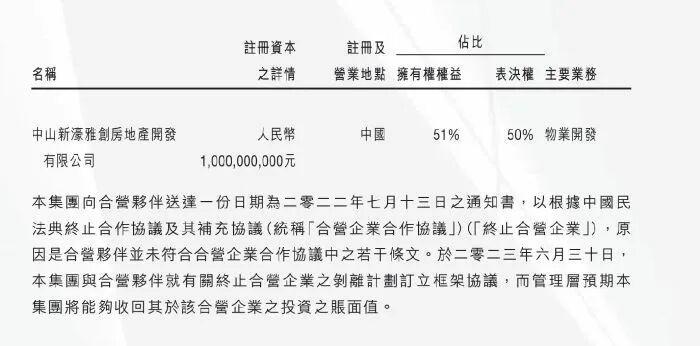
Core Viewpoint - The recent court petition for liquidation against Agile Group Holdings Limited highlights the company's escalating debt crisis, which has been exacerbated by its previous public default on dollar bond interest payments. The company asserts that the petition will not significantly impact its core operations, but it adds pressure to its ongoing debt restructuring efforts [2][4]. Group 1: Debt Crisis and Liquidation Petition - Agile Group has received a liquidation petition from New Macau (Zhongshan) Enterprise Management Co., involving a total debt amount of approximately $18.59 million and HK$2.23 million [2]. - The company has publicly acknowledged its previous default on dollar bond interest payments since May 2024, marking a shift from hidden risks to visible crises [10]. - The liquidation petition is seen as a judicial manifestation of the debt disputes following the company's public default, adding complexity to its debt restructuring process [2][4]. Group 2: Stock Price Impact - Following the announcement of the liquidation petition, Agile Group's stock price plummeted by 18% in a single day, closing at HK$0.31, with a subsequent drop to HK$0.28, marking a cumulative decline of over 57% from its opening price of HK$0.74 at the beginning of the year [3][4]. - The stock price decline reflects market concerns regarding the company's credit risk and the potential for further financial instability [3][4]. Group 3: Debt Structure and Financial Health - As of the end of 2024, Agile Group's short-term borrowings surged to RMB 38.33 billion, while cash and bank balances stood at only RMB 7.19 billion, with nearly half of that being restricted funds, indicating severe liquidity pressure [10][11]. - The company reported a total debt of RMB 149.56 billion, with a debt ratio of 127.7%, significantly exceeding industry safety thresholds [11]. - Agile Group's operational revenue fell by 35.8% year-on-year to RMB 13.57 billion, and despite a reduction in net losses, the company has accumulated a total net loss of RMB 51.08 billion over the past three years [11][12]. Group 4: Future Outlook and Restructuring Efforts - The upcoming court hearing on February 25, 2026, is critical for Agile Group, as it represents a "life-or-death" window for the company to negotiate a debt restructuring plan that is acceptable to creditors [13][14]. - The company is actively seeking to negotiate with creditors and aims to reach a consensus on restructuring terms, despite the challenges posed by the liquidation petition [4][10]. - Agile Group's ability to navigate its debt crisis will depend on its capacity to balance debt reduction with operational sustainability amid a sluggish market recovery [14].
「机器人+」人形机器人走向大众?宇树科技首发应用商店,行业生态“暗战”浮出水面
Hua Xia Shi Bao· 2025-12-16 14:32
Core Viewpoint - The development of humanoid robots is hindered by high technical barriers, necessitating the creation of platforms that simplify user interaction and encourage broader adoption [2][4][6]. Group 1: Humanoid Robot Platforms - Yushu Technology has launched its first humanoid robot application store, allowing users without professional knowledge to operate robots, which is crucial for wider adoption [2][3]. - The application store currently offers three actions for the G1 humanoid robot, which can be easily deployed by users, significantly lowering the operational threshold [3]. - ZhiYuan Robotics has introduced the "LingChuang" platform, enabling users to create robot content without coding, thus promoting user participation in robot development [4]. Group 2: Market Demand and Challenges - The current market demand for humanoid robots is not strong enough to make application stores a primary source of revenue, as hardware sales have not reached critical mass [2][8]. - Users have reported difficulties in utilizing humanoid robots effectively due to a lack of technical knowledge, leading to resale of these products [4][6]. - Experts suggest that the success of these platforms relies on building a robust ecosystem, which is currently challenged by low hardware sales and limited consumer market [7][8]. Group 3: Ecosystem Development - The establishment of development platforms by Yushu Technology and ZhiYuan Robotics is aimed at creating a comprehensive ecosystem for humanoid robots [6][7]. - Historical examples from other tech industries indicate that successful integration of hardware and software is essential for building a sustainable ecosystem [7]. - The growth of software ecosystems is heavily dependent on the scale of hardware adoption, which remains a significant hurdle for the humanoid robot industry [8].