Hua Xia Shi Bao

Search documents
「机器人+」人形机器人走向大众?宇树科技首发应用商店,行业生态“暗战”浮出水面
Hua Xia Shi Bao· 2025-12-16 14:32
Core Viewpoint - The development of humanoid robots is hindered by high technical barriers, necessitating the creation of platforms that simplify user interaction and encourage broader adoption [2][4][6]. Group 1: Humanoid Robot Platforms - Yushu Technology has launched its first humanoid robot application store, allowing users without professional knowledge to operate robots, which is crucial for wider adoption [2][3]. - The application store currently offers three actions for the G1 humanoid robot, which can be easily deployed by users, significantly lowering the operational threshold [3]. - ZhiYuan Robotics has introduced the "LingChuang" platform, enabling users to create robot content without coding, thus promoting user participation in robot development [4]. Group 2: Market Demand and Challenges - The current market demand for humanoid robots is not strong enough to make application stores a primary source of revenue, as hardware sales have not reached critical mass [2][8]. - Users have reported difficulties in utilizing humanoid robots effectively due to a lack of technical knowledge, leading to resale of these products [4][6]. - Experts suggest that the success of these platforms relies on building a robust ecosystem, which is currently challenged by low hardware sales and limited consumer market [7][8]. Group 3: Ecosystem Development - The establishment of development platforms by Yushu Technology and ZhiYuan Robotics is aimed at creating a comprehensive ecosystem for humanoid robots [6][7]. - Historical examples from other tech industries indicate that successful integration of hardware and software is essential for building a sustainable ecosystem [7]. - The growth of software ecosystems is heavily dependent on the scale of hardware adoption, which remains a significant hurdle for the humanoid robot industry [8].



7天6板大牛股来袭,东百集团年内股价翻倍,谁在疯狂追捧?|掘金百分百
Hua Xia Shi Bao· 2025-12-16 14:32
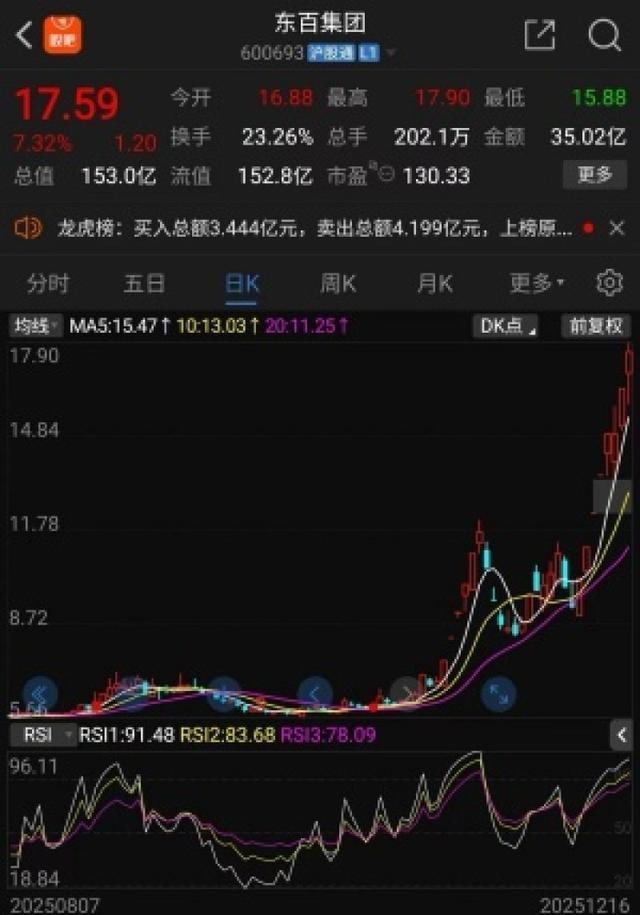
Core Viewpoint - Dongbai Group has demonstrated a remarkable stock performance in the retail sector, driven by strong business fundamentals and favorable market conditions, attracting significant market attention [2][3][4]. Group 1: Stock Performance - Since early December, Dongbai Group's stock price has entered a strong upward trend, achieving six consecutive limit-up days within seven trading days, with a cumulative increase of over 75% [4][6]. - As of December 16, the stock price reached 17.59 yuan per share, with a total market capitalization exceeding 15 billion yuan and a trading volume turnover rate of 23.26% [3][4]. Group 2: Market Drivers - The surge in Dongbai Group's stock is attributed to multiple favorable factors, including positive signals from the Ministry of Commerce regarding the retail sector's development and the emphasis on retail as a key area for cultivating a complete domestic demand system during the 14th Five-Year Plan [3][4][8]. - The retail sector is experiencing a strong recovery, with many stocks in the sector seeing significant gains, indicating a new growth cycle driven by policy support and consumer recovery trends [7][8]. Group 3: Fund Flows - Main capital inflows have been significant, with net inflows on December 5, 8, 9, 10, and 11 amounting to 5.27 billion yuan, 1.69 billion yuan, 337.2 million yuan, 287.6 million yuan, and 373.2 million yuan respectively [4][5]. - The turnover rate of Dongbai Group's shares has shown significant fluctuations, reflecting changes in market trading sentiment, with rates reaching peaks of 27.83% and 23.26% on December 15 and 16 [5]. Group 4: Financial Performance - Dongbai Group's revenue and net profit for the first three quarters of 2025 were 1.359 billion yuan and 88 million yuan, respectively, showing year-on-year growth of 2.34% and 3.04% [10]. - The company has maintained a stable profitability despite fluctuations in revenue, with a focus on innovation and optimizing consumer experiences [10].

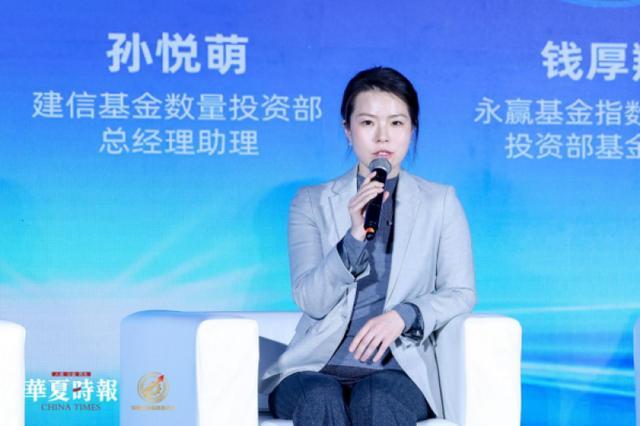
建信基金孙悦萌:以“三层框架”与“客户场景”应对结构性行情,风控需权衡赔率与胜率|2025华夏机构投资者年会
Hua Xia Shi Bao· 2025-12-16 12:03
Core Viewpoint - The article discusses the investment management philosophy and risk control methods shared by Sun Yuemeng, an assistant general manager and fund manager at CCB Fund, during the 19th Huaxia Institutional Investor Annual Conference. The focus is on a disciplined investment framework that adapts to structural market changes and emphasizes matching product delivery with client needs [2][3]. Group 1: Investment Management Framework - The investment approach is divided into three layers: macro asset allocation adjustments, adjustments at the terminal industry level, and fund selection adjustments [3]. - The team emphasizes a disciplined adjustment strategy, particularly in response to structural market changes expected by 2025, with tactical adjustments made on a monthly basis [3]. - Sun Yuemeng provides an example of maintaining a balanced style while making marginal adjustments based on market conditions, aiming for a higher cost-performance ratio and better holding experience for clients [3][4]. Group 2: Client-Centric Product Delivery - The team adheres to two main principles: first, product delivery must match the "scenario-based needs" of clients, such as prioritizing holding experience in retirement products [4]. - The second principle involves a "layered and systematic quantitative framework" that integrates various factors like asset allocation, industry style, duration, and fund selection into a cohesive delivery system [4]. Group 3: Risk Control Strategies - In terms of risk control amid market volatility, the team focuses on balancing odds and win rates, particularly in public fund products where tools are limited [5]. - The team utilizes a cost-performance indicator commonly used in fixed income plus investments, which is more aligned with an "odds model" rather than a "win rate model" [5]. - Strategic decisions are informed by a framework that anchors on cost-performance while tactical adjustments are made based on macro factors to mitigate unexpected losses [5]. Group 4: Future Market Outlook - Looking ahead, Sun Yuemeng suggests that market styles may become more balanced, advocating for macro asset allocation as an anchor and balanced styles as a guiding principle in wealth management [5].
前11个月全国固定资产投资下降2.6%,发改委要求多措并举促进投资止跌回稳
Hua Xia Shi Bao· 2025-12-16 11:24
Core Viewpoint - The fixed asset investment in China has shown a continuous decline, with a year-on-year decrease of 2.6% in the first 11 months of the year, prompting government initiatives to stabilize and promote investment recovery [2][6]. Investment Trends - Fixed asset investment (excluding rural households) reached 444,035 billion yuan, with a notable decline in private investment by 5.3% year-on-year [2]. - The narrow infrastructure investment saw a year-on-year decline of 9.7%, while the broad infrastructure investment decreased by 11.9% [3]. - Manufacturing investment showed a year-on-year growth of 1.9%, although it decreased by 0.8 percentage points compared to the previous month [4]. Government Initiatives - The Central Economic Work Conference emphasized the need to "stop the decline and stabilize investment," with plans to implement various measures to support investment recovery [6]. - New policy financial tools amounting to 500 billion yuan are expected to stimulate investment, particularly in infrastructure and manufacturing sectors [5][7]. - The government aims to optimize fiscal spending and enhance the effectiveness of investment through various initiatives, including increasing central budget investments and managing local government special bonds [6][7]. Sector-Specific Insights - The construction and installation engineering sector experienced a cumulative year-on-year decline of 6.4%, while equipment and tool purchases increased by 12.2%, contributing positively to overall investment growth [4]. - High-tech industries within the manufacturing sector maintained robust investment growth, indicating a shift towards modernization and competitiveness [4][7]. - The investment in electricity, heat production, and supply grew by 12.5%, while internet services and water transport investments increased by 20.7% and 8.9%, respectively [4].
独角兽沉浮录:60亿元估值崩塌之后,沪江网校能否涅槃?
Hua Xia Shi Bao· 2025-12-16 10:28
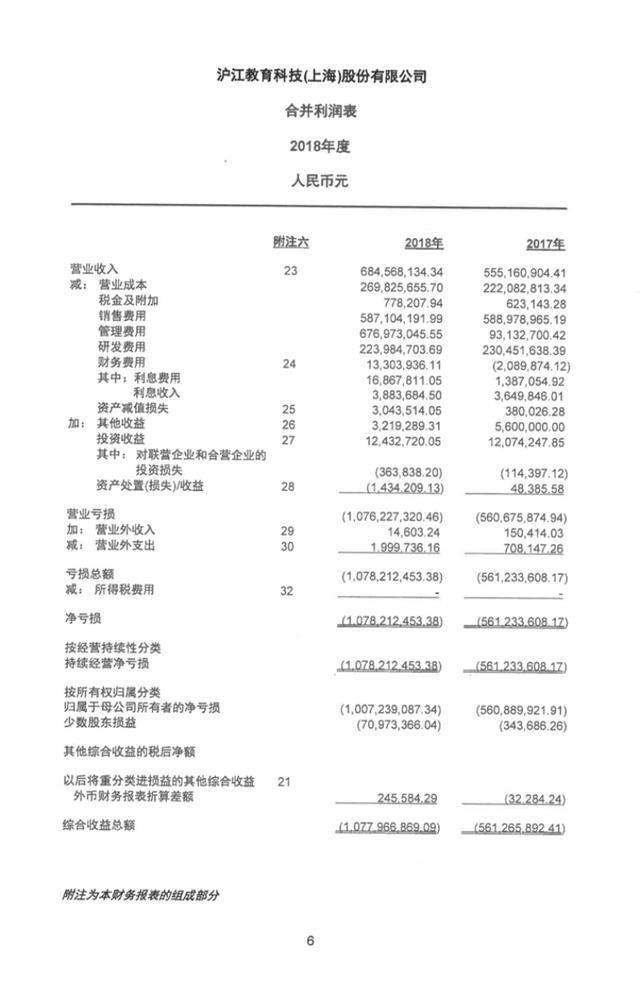
| | 附注六 | 2018年 | 2017年 | | --- | --- | --- | --- | | 壁业收入 | 23 | 684,568,134.34 | 555,160,904.41 | | 减:营业成本 | | 269,825,655.70 | 222,082,813,34 | | 税金及附加 | | 778,207.94 | 623,143.28 | | 销售费用 | | 587,104,191,99 | 588,978,965.19 | | 管理费用 | | 676,973,045.55 | 93,132,700.42 | | 研发费用 | | 223,984,703,69 | 230,451,638.39. | | 财务费用 | 24 | 13,303,936.11 | (2,089,874.12) | | 其中:利息费用 | | 16,867,811.05 | 1,387,054.92 | | 利息收入 | | 3,883,684.50 | 3,649,846.01 | | 资产减值损失 | 25 | 3.043.514.05 | 380,026.28 | | 加:其他收益 | 26 | ...
汇丰银行旗下一村镇银行解散,部分存贷款业务由汇丰中国重庆分行承接
Hua Xia Shi Bao· 2025-12-16 10:19
本报(chinatimes.net.cn)记者张萌 卢梦雪 北京报道 日前,国家金融监督管理总局重庆监管局正式批复,同意重庆荣昌汇丰村镇银行解散事宜。 据悉,该行由香港上海汇丰银行有限公司(下称"汇丰银行")独资设立,成立于2010年11月29日,注册 资本6000万元。与多数村镇银行通过"吸收合并"或"重组整合"等方式实现结构性重组不同,重庆荣昌汇 丰村镇银行此次为直接解散实现市场化退出。 根据批复内容,该行在申请解散前,已将存续的相关存贷款业务转让给汇丰银行(中国)(下称"汇丰 中国")重庆分行,实现存贷款业务基本清零。 据悉,在此次解散后,汇丰银行在内地仍有11家村镇银行,而这些机构在2024年均处于亏损状态。对于 未来如何处置剩余村镇银行,本报记者于12月15日尝试联系汇丰中国采访,但截至发稿尚未获回应。 退出银行的相关业务已先行处理 记者查阅汇丰村镇银行官网可查财务数据发现,自2019年起,该行已连续六年陷入亏损。自2019年至 2024年净亏损分别为535.95万元、462.26万元、450.78万元、406.47万元、490万元和585.87万元。在此 期间,该行有5年营业收入尚不足业务及管理费 ...


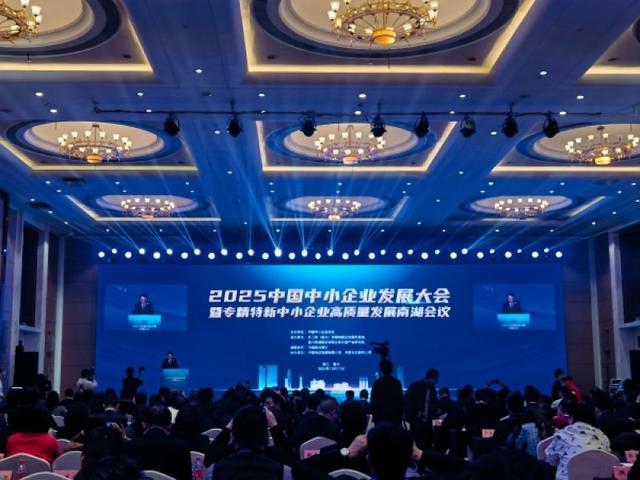
政策锚定高质量发展,“十五五”时期民营企业破局关键是走专精特新之路
Hua Xia Shi Bao· 2025-12-16 10:06
Group 1 - The core viewpoint of the articles emphasizes the importance of the private economy in China's new development stage and the government's commitment to creating a fair competitive environment for all market entities, especially private enterprises [2][3]. - The Central Economic Work Conference highlighted the need to eliminate unreasonable market access restrictions and hidden barriers, aiming to correct issues like "involution" and local protectionism [2]. - Liu Xin, Deputy Director of the Private Economy Development Bureau, stated that since the 18th National Congress, the development of the private economy has received significant attention from President Xi Jinping, providing essential guidelines for its growth [2]. Group 2 - Zhejiang Province is recognized for its effective support of small and medium-sized enterprises (SMEs), with plans to enhance the SME service system during the 14th Five-Year Plan period [3]. - Jiaxing City aims to achieve a GDP of 760 billion yuan in 2024, with a growth rate of 5.6%, and has established a comprehensive cultivation system for specialized and innovative SMEs [5]. - Jiaxing has nurtured 243 national-level "little giant" enterprises, ranking fifth among prefecture-level cities in China, and has implemented supportive policies for SMEs [5]. Group 3 - The traditional cost advantages in manufacturing are diminishing, and companies must focus on research and brand creation to survive, as emphasized by Huang Lihong, Chairman of the UN Globalization Strategy and ESG Foundation [6]. - Companies are encouraged to adopt differentiated paths for growth, exploring new markets and attracting long-term capital [6]. - The integration of advanced technologies like cloud computing and IoT is crucial for SMEs to enhance resilience and efficiency in production processes [7]. Group 4 - China Construction Bank is addressing the financing challenges faced by small and micro enterprises by innovating evaluation systems and creating a comprehensive service ecosystem [8]. - The bank's digital inclusive finance model aims to improve the accessibility of financing for SMEs, focusing on their diverse needs throughout their lifecycle [8]. - The collaborative efforts among various stakeholders are aimed at exploring new paths for high-quality development of SMEs in China [8].
84家农信机构被合并,贵州农商联合银行获准开业,茅台集团位列第三大股东
Hua Xia Shi Bao· 2025-12-16 06:31
Core Viewpoint - Guizhou Rural Commercial Bank has officially been established with a registered capital of 10.458 billion yuan, marking a significant step in the reform of rural financial institutions in Guizhou province [2][3]. Group 1: Establishment and Capital Structure - The bank's registered capital is 10.458 billion yuan, with 12 founding shareholders [3]. - The largest shareholder is the Guizhou Provincial Finance Department, contributing 1.572 billion yuan, holding a 15.032% stake [5]. - Guizhou Financial Holding Group is the second largest shareholder with an investment of 6.886 billion yuan, representing a 65.844% stake [5]. - The third largest shareholder is Kweichow Moutai Group, which invested 1 billion yuan for a 9.562% stake, alongside Qiansheng State-owned Assets Management, which also holds a 9.562% stake [5]. Group 2: Management Structure - The bank's board and executive team have been approved, with Yang Song as the chairman and Yang Hongjun as the president [5]. - The executive team consists of four vice presidents: Li Li, Zhang Jinlu, Chen Jie, and Feng Wanhua, all of whom have transitioned from the Guizhou Provincial Association [5]. Group 3: Regulatory Approval and Operational Timeline - The approval document was dated December 9, 2025, and the bank is required to commence operations within six months of obtaining its business license [6]. - The establishment of Guizhou Rural Commercial Bank is part of a broader reform initiative that has been included in the Guizhou provincial government work report for three consecutive years [6]. Group 4: Ongoing Reforms in Rural Financial Institutions - The establishment of city-level unified legal person rural commercial banks is progressing in various regions of Guizhou, including Guiyang, Liupanshui, and Bijie [10]. - The Guizhou rural credit system comprises 84 rural commercial banks and has seen deposits exceed 922.9 billion yuan and loans surpass 709.5 billion yuan [7]. - The central economic work conference emphasized the need to deepen reforms in small and medium-sized financial institutions, which aligns with the ongoing restructuring efforts in Guizhou [7]. Group 5: Future Prospects and Strategic Importance - The formation of city-level rural commercial banks is viewed as an innovative measure to optimize management systems and enhance capital strength [9]. - This strategy aims to ensure the sustainability of rural financial institutions, thereby improving their ability to serve rural areas effectively [9].

11月70城二手房价普降,上海、合肥、沈阳新房价格飘红,市场筑底进行时
Hua Xia Shi Bao· 2025-12-16 05:29
Core Viewpoint - The real estate market in China is experiencing a continued decline in housing prices, with significant drops in both new and second-hand residential properties across major cities, indicating a challenging environment for developers and investors [3][5][9]. Group 1: Housing Price Trends - In November, new residential property prices in first-tier cities fell by 0.4% month-on-month, with declines in Beijing, Guangzhou, and Shenzhen of 0.5%, 0.5%, and 0.9% respectively [5]. - Second-hand residential prices in first-tier cities decreased by 1.1% month-on-month, with Beijing seeing a drop of 1.3% [5][6]. - Year-on-year, new residential prices in first-tier cities dropped by 1.2%, with Beijing, Guangzhou, and Shenzhen experiencing declines of 2.1%, 4.3%, and 3.7% respectively [7]. Group 2: Investment and Development Data - From January to November, real estate development investment totaled 78,591 billion yuan, a year-on-year decrease of 15.9%, with residential investment down by 15.0% [9]. - The area under construction for real estate projects fell by 9.6%, while new construction area decreased by 20.5% [9]. - The sales area of new residential properties from January to November was 78,702 million square meters, down 7.8% year-on-year, with sales revenue declining by 11.1% [9][10]. Group 3: Market Dynamics and Future Outlook - The increase in second-hand housing listings has led to a trend of "price for volume," indicating a growing supply and increasing difficulty in property sales [8]. - The real estate development climate index has dropped to 91.90, reflecting ongoing challenges in the market [10]. - Experts suggest that while core cities may see some stabilization in prices due to resilient demand, the overall market remains in a phase of bottoming out and consolidation [10].

从“零和博弈”到“生态共建”,吉利开放共享全球最大安全中心
Hua Xia Shi Bao· 2025-12-16 05:12
Core Viewpoint - The automotive industry is undergoing a transformation as the focus shifts from parameters like range and intelligence to safety, driven by tightening global safety regulations and the complexities introduced by smart technologies [2][3] Group 1: Industry Transformation - Global safety regulations are tightening rapidly, with new standards like the EU's general safety regulations and China's upcoming "zero tolerance" battery standards [2] - The traditional concept of "collision safety" is evolving into a more comprehensive notion of "full-domain safety," addressing data security, algorithm ethics, and expected functionality [2][3] Group 2: Geely's Global Full-Domain Safety Center - Geely has launched a Global Full-Domain Safety Center with an investment exceeding 2 billion yuan, covering approximately 45,000 square meters, and setting five Guinness World Records, including the largest automotive safety testing laboratory [2][3] - The center will be open to the entire industry, sharing key safety patents for free, indicating a shift from competitive advantage to a public asset for industry advancement [2][6] Group 3: Addressing Safety Challenges - The center serves as a systematic verification platform to tackle current and future global automotive safety challenges, addressing multi-dimensional risks associated with electric vehicles and smart technologies [3][4] - It features the world's largest collision testing area and an indoor simulation lab capable of replicating 264 scenarios, enhancing the ability to test under extreme conditions [3] Group 4: Compliance and Cost Efficiency - The center provides essential infrastructure to help automotive companies navigate compliance challenges in global markets, covering 27 categories of tests aligned with major safety regulations [4] - This capability significantly reduces the costs and time associated with compliance, supporting the globalization strategy of Geely and the broader Chinese automotive industry [4] Group 5: Evolution of Safety Concepts - Geely's "Full-Domain Safety 2.0" framework categorizes safety into life safety, health safety, property safety, and privacy safety, introducing the concept of "public safety" [5] - The center includes specialized labs for digital safety and health analysis, reflecting the industry's shift towards a broader understanding of safety [5] Group 6: Strategic Shift in Competition - Geely's decision to open the safety center represents a significant shift in competitive logic from zero-sum games to ecosystem co-construction, positioning itself as an organizer of industry standards [6][7] - By collaborating with various institutions to publish a white paper on smart vehicle safety, Geely aims to create a unified framework for safety technology development [7] Group 7: Long-term Vision and Industry Impact - The initiative addresses internal safety concerns among consumers and aims to elevate the overall safety standards of the industry, fostering a positive cycle of competition [8] - Externally, it positions Chinese automakers as leaders in global automotive safety technology, moving beyond mere compliance to actively shaping safety standards [8][9]