
Zhong Guo Neng Yuan Wang

Search documents
欧洲可再生能源并网难问题加剧(关注)
Zhong Guo Neng Yuan Wang· 2026-02-05 03:13
Core Insights - The report highlights the increasing issue of renewable energy curtailment in Europe, with technical curtailment expected to exceed 10 terawatt-hours (TWh) in 2024 and approach 22 TWh by 2030 in the UK, Spain, and Italy [1][2] Group 1: Renewable Energy Capacity and Investment - Over the past decade, Europe's renewable energy installed capacity has grown by 150%, with projections indicating a tripling of capacity from 2026 to 2050 [1] - To support the ongoing expansion of renewable energy, approximately €600 billion in new investments will be needed by 2030, with total investments required to reach €1.5 trillion by 2050 to meet climate goals and replace fossil fuel generation [1] Group 2: Approval and Market Challenges - The slow progress in grid connection approvals is contributing to rising levels of renewable energy curtailment, with some projects facing approval delays of up to 10 years despite EU regulations mandating a two-year approval process [2] - The number of renewable energy projects awaiting grid connection approval in Europe exceeds 1,000 gigawatts (GW) [2] Group 3: Pricing and Auction Challenges - Power Purchase Agreements (PPAs) remain the primary means for renewable energy projects to connect to the grid, but PPA prices have dropped below €40 per megawatt-hour (MWh) for solar in Germany and Spain [3] - Auction challenges have emerged, particularly for offshore wind projects, with recent auctions in Germany, the Netherlands, and Denmark failing to attract bidders, and only one bid received in Lithuania's latest auction [3] - Factors such as supply chain pressures, policy uncertainty, and poorly designed auction mechanisms are undermining investor confidence [3]
“十四五”时期,我国生态环境治理成绩亮眼
Zhong Guo Neng Yuan Wang· 2026-02-05 03:08
Core Insights - The "14th Five-Year Plan" period has seen significant achievements in ecological environment governance, with a focus on reducing major pollutant emissions and enhancing the green and low-carbon transformation of industrial structures [3][4]. Group 1: Major Projects and Emission Reduction - A total of 24,000 ecological environment governance projects have been planned and implemented, leading to a substantial decrease in emissions of nitrogen oxides, volatile organic compounds, chemical oxygen demand, and ammonia nitrogen [4]. - The cumulative completion of production capacity reductions includes 940 million tons of crude steel, 470 million tons of cement clinker, 360 million tons of coking capacity, and 1.7 billion kilowatts of coal-fired power units undergoing ultra-low emission transformations [4]. Group 2: Environmental Tax and Financial Policies - The total amount of environmental protection tax collected during the "14th Five-Year Plan" period is nearly 120 billion yuan, with companies benefiting from tax reductions exceeding 80 billion yuan for meeting pollution discharge standards and other environmental initiatives [7]. - Financial support mechanisms for green development have been established, including a project promotion mechanism for "Beautiful China," which guides social capital towards green and low-carbon sectors [8]. Group 3: Urban and Rural Environmental Infrastructure - Urban wastewater treatment capacity has been enhanced to 23.4 million cubic meters per day, with a total of 534,000 kilometers of sewage pipeline networks [5]. - In rural areas, 110,000 administrative villages have completed environmental remediation, with the rural domestic sewage treatment rate doubling to 55% compared to the end of the "13th Five-Year Plan" [5]. Group 4: Risk Control and Pollution Management - A total of 124 major projects for soil pollution source control have been implemented, and the capacity for hazardous waste disposal has reached 22 million tons per year, a 60% increase since 2020 [6]. - Significant progress has been made in the management of tailings and heavy metal pollution, with over 1,800 tailings pollution remediation projects completed in the Yangtze River Economic Belt and nearly 400 in the Yellow River Basin [6].

以产能调控等手段破除光伏“内卷”
Zhong Guo Neng Yuan Wang· 2026-02-05 03:08
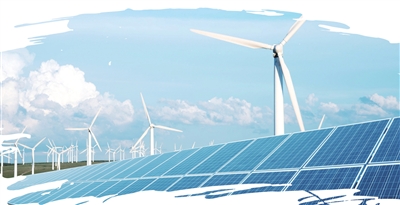
本报讯日前,工信部召开光伏行业企业家座谈会,听取重点企业及光伏行业协会对"反内卷"工作的意见 建议,研究部署推进光伏行业治理工作。 会议强调,"反内卷"是当前光伏行业规范治理的主要矛盾,各部门要加强协同、同向发力,综合运用产 能调控、标准引领、质量监督、价格执法、防范垄断风险、知识产权保护、促进技术进步等手段,以市 场化、法治化手段共同推动光伏行业回归良性竞争、理性发展的轨道。光伏行业协会要积极履行职能, 依法依规推进行业自律,创新方式方法,坚决破除行业"内卷式"竞争。 中国光伏产业在规模、产业链布局、技术与应用等领域长期领跑全球。"十四五"时期,国内光伏制造业 产值从2021年7500亿元迅速升至2023年的1.75万亿元,2024年仍保持在万亿规模。2025年中国风电、光 伏并网装机规模创历史新高,首次超过18亿千瓦,其中光伏发电装机容量12亿千瓦,以35.4%的同比增 幅领先。 不过,在高速扩张同时,国内光伏产业阶段性供需错配、低价无序竞争等问题凸显,行业"内卷"严重。 同年8月19日,工信部等六部门联合召开光伏产业座谈会,强调通过加强产业产能调控、遏制低价无序 竞争、规范产品质量、支持行业自律等方式, ...
我国风电光伏装机首超18亿千瓦,相当于约82个三峡电站
Zhong Guo Neng Yuan Wang· 2026-02-05 02:21
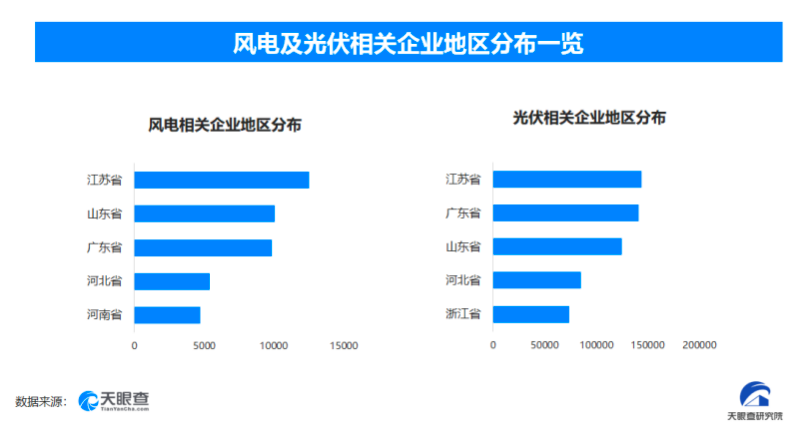
截至2025年底,我国太阳能发电装机容量达12亿千瓦,风电装机容量6.4亿千瓦,风电光伏累计装机首次超18亿千 瓦,相当于约82个三峡电站。在这一全球瞩目的绿色能源建设浪潮中,产业链上涌现出大量设备制造、工程建设和 运营服务企业。 对于项目投资方、业主或采购方而言,在选择供应商或合作伙伴时,核实其工商信息以确认资质,并利用天眼风险 功能筛查其是否存在重大合同纠纷、安全环保行政处罚或法律诉讼记录,已成为保障项目质量、工期及长期稳定运 行的基础风控手段。 我国风电光伏装机规模连续10余年稳居全球第一,占全球风光总装机近一半,近十年推动全球风光发电成本大幅下 降,为全球减碳作出巨大贡献。 我国电力需求体量巨大,"双碳"目标下,传统产业转型和新兴产业升级为风电光伏提供海量应用场景。从大型地面 电站到分布式光伏,从海上风电到"光伏+",多样化场景的开拓,高度依赖于持续的技术创新与专业的项目开发、 运营团队。 无论是企业引进高端技术人才,还是投资者评估一个项目公司的执行能力,通过任职信息与主要人员查询,了解其 核心技术骨干、项目管理核心成员的行业背景、项目经验及专业资质,已成为判断其能否胜任复杂场景、实现高效 运营的关键 ...
北京举办AI+能源发展大会 共探产业融合路
Zhong Guo Neng Yuan Wang· 2026-02-05 02:00
Core Viewpoint - The integration of energy transition and digital intelligence is crucial for building a strong energy nation and promoting high-quality development in the energy industry, especially in the context of the "14th Five-Year Plan" [1] Group 1: Event Overview - The AI + Energy Development Conference was held in Beijing on January 30-31, focusing on the deep integration of AI and the energy industry [1] - The conference gathered over 300 representatives from government departments, energy companies, innovative enterprises in the industry chain, and academic experts to discuss development consensus and practical paths [1] Group 2: Organizers and Collaborators - The event was co-hosted by several organizations, including China Energy News, China Energy Conservation Association, and others, highlighting a collaborative effort in the energy sector [1] - Various supporting organizations participated, such as the China Energy Conservation Association's Energy Saving and Carbon Reduction Technology Promotion Committee and others, indicating a broad coalition for energy transformation [1] Group 3: Initiatives Launched - The conference initiated several activities, including the AI + Energy Green Industry Tour and the unveiling of the Zhongguancun (Haidian) AI Digital Energy Industrial Park [1] - The establishment of the National Zero Carbon Park Creation Expert Guidance Committee by the Zhongguancun Guolian Green Industry Service Innovation Alliance was also announced, aiming to gather collective efforts for achieving carbon neutrality [1]
AI应用爆点频出,算力链重回主线
Zhong Guo Neng Yuan Wang· 2026-02-04 11:10
国信证券近日发布电子行业周报:过去一周上证下跌0.44%,电子下跌2.51%,子行业中半导体下跌 0.90%,电子化学品下跌5.87%。同期恒生科技、费城半导体、台湾资讯科技下跌1.38%、上涨0.51%、 上涨0.55%。过去一周,由Clawdbot所引致的对于"AI智能体正加速场景落地"的预期成为市场热点,同 时,国内互联网大厂陆续启动"红包大战"争抢大模型流量入口。 以下为研究报告摘要: 核心观点 AI应用爆点频出,海外算力链重回主线。过去一周上证下跌0.44%,电子下跌2.51%,子行业中半导体 下跌0.90%,电子化学品下跌5.87%。同期恒生科技、费城半导体、台湾资讯科技下跌1.38%、上涨 0.51%、上涨0.55%。过去一周,由Clawdbot所引致的对于"AI智能体正加速场景落地"的预期成为市场热 点,同时,国内互联网大厂陆续启动"红包大战"争抢大模型流量入口。在此背景下,算力资源不单单成 为军备竞赛的着力点,更是在各类AI应用试水过程中逐步成为"卖方型市场",成为AI应用的核心预算约 束,算力链有望在强业绩支撑下重回科技投资主线,继续推荐:澜起科技、胜宏科技(300476)、工业 富联(6 ...
国网晋中供电分公司:岁首锚定安全航向 党建护航守牢安全线
Zhong Guo Neng Yuan Wang· 2026-02-04 10:41
Core Viewpoint - The company has initiated a comprehensive annual safety production work plan, emphasizing the integration of party building and safety production to achieve the core goals of "zero accidents, zero violations" [1][2]. Group 1: Safety Measures - The company has launched targeted measures to address key risks in the power grid operation, focusing on the inspection and renovation of aging distribution lines and overloaded transformers, with a plan to establish a hidden danger ledger by the end of the first quarter [2]. - Emergency plans have been improved to address peak winter loads and adverse weather, including organizing special drills for ice prevention and pollution flashover, ensuring that emergency teams and materials are always in a state of readiness [2]. - An innovative "grid + localized" joint defense mechanism has been implemented to prevent external damage, establishing real-time information reporting channels between power supply stations and local units, and enhancing risk monitoring through drone inspections and intelligent image recognition technology [2]. Group 2: Personnel Safety Management - The company mandates strict adherence to safety briefings and risk identification for operations, promoting the use of mobile terminals for on-site supervision and remote inspections [2]. - For high-risk operations such as live working and high-altitude tasks, a "dual-responsibility" system and upgraded approval processes have been implemented, integrating the creation of party member safety pioneer positions to ensure protective measures are effectively executed [2]. Group 3: Future Directions - The company aims to transform the deployment into concrete actions and daily habits for frontline employees, building a comprehensive responsibility system and rigid assessment mechanism led by party building to strengthen the safety production control network [3]. - This initiative is intended to provide a more solid and reliable power guarantee for the high-quality development of the regional economy and society [3].
云南陆良:带电增容“零停电” 暖心护航幸福年
Zhong Guo Neng Yuan Wang· 2026-02-04 08:34
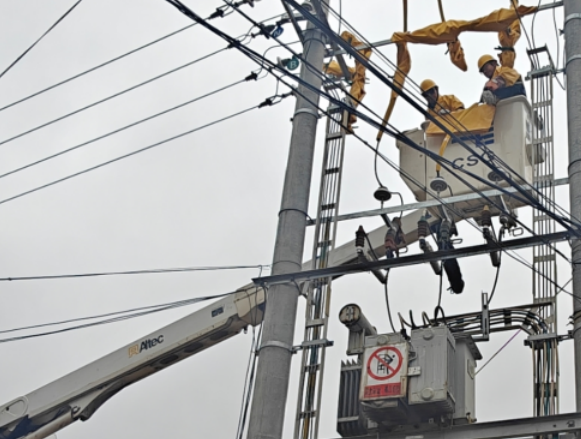
Core Viewpoint - The article highlights the successful upgrade of a transformer in Xiangshuidaba Village, Yunnan Province, which significantly improves the power supply capacity and reliability for local residents during the winter peak demand period [1][2]. Group 1: Project Overview - The Southern Power Grid Yunnan Qujing Lu Liang Power Supply Bureau implemented an innovative "live working + crane installation + emergency power supply" model to upgrade a 160 kVA transformer to a 250 kVA unit [1]. - This upgrade addresses the issue of transformer overload, enhancing the power supply reliability for the community during the winter and the upcoming Spring Festival [2]. Group 2: Community Impact - Residents expressed relief and satisfaction with the new transformer, noting that previous winter power supply issues have been resolved, allowing them to use high-power appliances without concern [2]. - The upgrade is seen as a "warm power gift" for the villagers, ensuring stable electricity supply during the cold season [2]. Group 3: Technical Execution - The old transformer had been in service for many years, and with the increasing use of high-power appliances, the demand for electricity had risen significantly, especially during winter [5]. - The Lu Liang Power Supply Bureau utilized a data monitoring system to identify the overload issue and developed a plan for live capacity enhancement without interrupting power supply [5][7]. Group 4: Operational Efficiency - The upgrade process was completed in just a few hours, maintaining power supply throughout the operation, which is a significant improvement over traditional methods that often require extended outages [7]. - Since 2025, the Lu Liang Power Supply Bureau has conducted 2,832 live working operations, achieving a non-power outage operation rate of 96.23%, significantly improving power supply reliability [7]. Group 5: Future Plans - As the Spring Festival approaches, the Lu Liang Power Supply Bureau plans to continue monitoring transformer loads and addressing overload risks to ensure reliable power supply for the community [8].
聚势共创·2026天合绿建生态伙伴大会圆满举行,引领BIPV迈向生态共创新阶段
Zhong Guo Neng Yuan Wang· 2026-02-04 08:10
2026年1月28日,天合绿建在江苏常州隆重举行"聚势共创.2026天合绿建生态伙伴大会"。本次大会汇聚了来自全国各地的生态伙伴,共同回顾2025年,展望 2026年,携手推进BIPV光伏建筑一体化产业的规模化、高质量发展。 迎接机遇:聚焦BIPV,共话行业趋势与技术创新 据2024—2025年全球建筑现状报告数据显示,建筑领域占全球碳排放约34%,是实现"双碳"目标的关键突破口。在政策与市场的双重驱动下,BIPV正从"鼓 励"走向"强制":欧盟已出台分阶段强制安装时间表,美国加州也将光伏系统纳入新建建筑标准。中国更是积极出台相关政策,鼓励BIPV光伏建筑一体化的 安装与应用。基于行业深度洞察,天合绿建副总经理胡港生表示,天合绿建将以"渠道合作2.0"为策略目标,通过多场景响应、技术赋能与市场推广等手 段,全面支持渠道伙伴开拓市场,储备案例,提升影响力,与合作伙伴共创业务跃迁成果。 会议伊始,天合绿建总经理牛勇在欢迎致辞中表示:"过去一年,在行业变革与市场挑战交织的背景下,大家携手并肩,开拓尝试,突破创新,共同书写了 在BIPV领域的一段历程,虽然不易,但仍是具有重要意义的沉淀。回首2025,对天合绿建而言是 ...

天合绿建落户吴江开发区,助推长三角光伏建筑一体化发展
Zhong Guo Neng Yuan Wang· 2026-02-04 08:10
Group 1 - Trina Solar signed an agreement with Wujiang District to advance the Trina Green Building project in Wujiang Development Zone [1] - The project is led by Trina Green Building (Shanghai) Photovoltaic Technology Co., Ltd., a subsidiary of Trina Solar, which was founded in 1997 and became the first solar storage company listed on the Sci-Tech Innovation Board in 2020 [1] - Wujiang District is positioned as an ideal location for green low-carbon demonstration projects, aligning with the ecological and green development goals of the Yangtze River Delta integration [1] Group 2 - The signing ceremony included representatives from Trina Solar, Wujiang District, and Oriental State-owned Assets, highlighting collaboration among multiple stakeholders [2] - The project aims to explore new models and standards for integrating photovoltaics with green buildings, urban renewal, and industrial park development [1] - Trina Solar expressed gratitude for the support from Wujiang District and aims to create a benchmark project that combines aesthetics, efficiency, technology, and cultural depth [1]

