
Zhong Guo Chan Ye Jing Ji Xin Xi Wang

Search documents
洽客科技陈宇翔荣膺“深圳企业家精神脊梁奖” 引领创新启新程
Zhong Guo Chan Ye Jing Ji Xin Xi Wang· 2025-08-26 07:28
Core Viewpoint - Chen Yuxiang, Chairman of Shenzhen Qiaoke Technology Co., Ltd., received the "Shenzhen Entrepreneurial Spirit Backbone Award," highlighting the company's significant role in promoting technological innovation in Shenzhen and nationwide [1][3]. Group 1: Company Achievements - Qiaoke Technology has been recognized for its contributions to internet technology development and e-commerce innovation under Chen Yuxiang's leadership [1][2]. - The company emphasizes continuous investment in research and development to achieve breakthroughs in key technological areas [2][3]. - The integration of party organization construction into the company's development has provided strong organizational support and motivation for technological innovation [2]. Group 2: Future Plans - Qiaoke Technology aims to maintain its leading position in the market by adhering to an innovation-driven development strategy [3][4]. - The company plans to deepen collaboration with industry peers to elevate the technological innovation landscape in Shenzhen and across the country [3][4]. - There is a commitment to fulfilling social responsibilities while contributing to the economic development of Shenzhen [3].
“轴”转五洲“承”运四海 小轴承插上腾飞翅膀“转”出大市场
Zhong Guo Chan Ye Jing Ji Xin Xi Wang· 2025-08-26 07:25
Core Insights - The bearing industry in China, particularly in Liaocheng, Shandong Province, is a significant contributor to the national economy, generating over 50 billion yuan annually, accounting for one-tenth of the national market [1] - The transformation of the bearing industry from trade to manufacturing has been marked by the establishment of a comprehensive industrial cluster in three towns, focusing on manufacturing, logistics, and component processing [2][4] - The local government has implemented measures to address environmental challenges, leading to the establishment of seven bearing parks and a focus on digital transformation within the industry [5][6] Group 1 - The bearing market in Liaocheng is characterized by a vast array of over 7,000 types of bearings, creating a "bearing universe" that supports various industrial applications [1] - The local industry has evolved from simple trade to sophisticated manufacturing, with companies like Cai Meigui's leading in asymmetric roller bearings, achieving national sales leadership [2][3] - The region has seen the establishment of over 5,000 bearing-related enterprises, employing more than 200,000 individuals in production and sales [4] Group 2 - The introduction of the "Blue Sky Defense War" plan in 2018 has posed challenges for local bearing companies, leading to the closure of 314 firms due to environmental regulations [4] - The establishment of an industrial chain task force has facilitated the construction of standardized factories and improved environmental compliance, enhancing competitiveness [4] - Digital integration has become a key strategy for traditional industries, with over 5,000 companies transitioning to cloud-based operations, resulting in significant transaction volumes [5][6] Group 3 - The "Belt and Road" initiative has provided new opportunities for the bearing industry, with local companies increasing their international presence through trade promotion associations and exhibitions [7][8] - The establishment of the Luwest International Land Port has improved logistics efficiency, reducing transportation costs by 15% to 20% and streamlining customs processes for exporters [8] - Daily freight services from the land port connect Liaocheng to global markets, enhancing the export capabilities of local bearing manufacturers [8]
北京发布科技赋能文化"揭榜挂帅"榜单中国
Zhong Guo Chan Ye Jing Ji Xin Xi Wang· 2025-08-26 07:21
Core Insights - Beijing's relevant departments have jointly released the 2025 "Science and Technology Empowering Culture" project list, aiming to leverage advanced technology for cultural industry support [1][2] - The initiative is guided by the "Beijing Action Plan for Innovation and Development in the Cultural Sector (2025-2027)" and focuses on collaboration across various sectors [1] Group 1: Project Characteristics - The project list is driven by the real technological needs of key cultural institutions, including the National Grand Theatre and the National Library, addressing issues like fixed interactive tour modes and lack of immersive experiences [2] - Advanced technologies such as artificial intelligence, Internet 3.0, and virtual reality will be utilized to enhance visitor experiences through systems like smart tour guides and AI-assisted interactive theaters [2] - The initiative aims to create benchmark application scenarios that exemplify the "Beijing model" of technology empowering culture, promoting its application across the city and nationwide [2]
科技创新赋能文化发展 山西发布15个文化科技融合发展案例
Zhong Guo Chan Ye Jing Ji Xin Xi Wang· 2025-08-26 07:18
Group 1 - The seventh Shanxi Cultural Industry Expo was held in Taiyuan, showcasing the integration of culture and technology through 15 selected cases, including archaeological projects and digital cultural heritage initiatives [1] - The cases highlight the application of digital and intelligent methods, modern technology, and cutting-edge techniques in various fields such as production, consumption, dissemination, and protection of Shanxi's culture [1] - Ten typical cases of cultural and technological integration were presented, including the "3D hyper-realistic digital person" of Hua Mulan and the first AIGC (Artificial Intelligence Generated Content) full-process animated film in China [1] Group 2 - The "Hua Mulan digital person" project developed by Datong Daily Media Group stands out, utilizing natural language processing and knowledge graph technologies for urban cultural tourism promotion [2] - The government emphasizes the need to seize opportunities from the financial technology revolution and industrial transformation, promoting the integration of culture and technology to enhance cultural heritage protection and foster new business models [2]
牧场奶仓布局长三角 茉酸奶品牌2.0抢滩西湖
Zhong Guo Chan Ye Jing Ji Xin Xi Wang· 2025-08-26 06:47
Core Insights - The opening of the new "Moo Milk Barn" store in Hangzhou marks a significant step in the brand's 2.0 upgrade strategy, showcasing a vibrant atmosphere and attracting a large number of consumers [1][2][4] - The store emphasizes an immersive experience that combines "natural organic + barn aesthetics," enhancing consumer engagement and brand recognition [2][3][6] - The brand's focus on product quality, organic ingredients, and innovative space design reflects a strategic shift towards health-conscious and experiential consumption trends [5][6][7] Product and Experience Innovation - The Moo Milk Barn offers a diverse product matrix, including organic yogurt series and baked goods made with high-quality ingredients, catering to various consumer preferences [2][4] - The store's design features a unique "barn-style" aesthetic, creating a relaxing environment that contrasts with traditional store layouts, thus enhancing the overall consumer experience [3][4] - The brand's commitment to using organic milk sourced from natural farms and optimizing its global fruit supply chain underlines its focus on quality and sustainability [4][5] Market Expansion Strategy - The brand's strategic location choices in high-end commercial areas of the Yangtze River Delta indicate a targeted approach to capturing affluent consumer segments [4][6] - The expansion from Shanghai to Jiangsu and now to Zhejiang demonstrates a clear growth trajectory, with the Hangzhou store serving as a potential launchpad for replicating the Moo Milk Barn model in other major cities [6][7] - The brand aims to transition from a focus on traffic acquisition to deepening value creation, emphasizing quality, experience, and brand loyalty in a competitive market [5][6]
健合集团赋能特食产业,以标准化引领健康消费升级
Zhong Guo Chan Ye Jing Ji Xin Xi Wang· 2025-08-26 06:28
Core Viewpoint - The "Special Food Festival - New Consumption Industry Development Conference" held in Beijing focuses on the new consumption trends in the special food industry, emphasizing technological innovation, market trend analysis, and industry self-discipline to promote high-quality development and sustainability in the sector [1] Group 1: Industry Trends and Standards - The nutrition and health industry is entering a "new golden age," with a critical need to meet consumer demands and help them identify quality nutrition products [2] - The lack of universal nutritional supplementation standards for children aged 0-18 years is a significant issue, prompting the establishment of a quantitative system for nutritional supplementation tailored to different age groups [2] - The conference initiated the "Quality Nutrition Benchmark Leadership" proposal to foster a trustworthy, standardized, and innovative industry environment [3] Group 2: Company Initiatives and Contributions - The company, as a leader in the global high-end nutrition and health industry, actively participates in discussions and proposes industry development suggestions [1] - The company promotes the "Three Truths" standard (true quality, true effectiveness, true safety) through its Swisse brand, aiming to build consumer trust and support the standardization of the special food industry [2] - The company is committed to the construction of group standards and aims to enhance the nutritional health industry by collaborating with industry peers to meet market demands with precise solutions [3]
一场文化出海的战略深潜:中文在线短剧业务国内塑精品、海外拓蓝海
Zhong Guo Chan Ye Jing Ji Xin Xi Wang· 2025-08-26 06:22
Core Insights - The core viewpoint of the articles emphasizes the growth and transformation of Chinese online content, particularly in the short drama sector, driven by innovative business models and strategic international expansion [1][5][7] Financial Performance - In the first half of 2025, the company reported revenue of 556 million yuan, representing a year-on-year growth of 20.40% [1] - The short drama market in China is projected to reach 634 billion yuan by 2025, with a user base of 662 million by the end of 2024 [1] Industry Trends - The short drama industry is evolving from a "fast-moving consumer product" to a "new mainstream content" [1] - The National Radio and Television Administration has emphasized the importance of high-quality content in the short drama sector, advocating for a focus on premium production [2] Strategic Initiatives - The company has shifted its strategy from "copyright distribution" to "content production," establishing a dedicated short drama department and a self-produced drama team [3] - Successful short dramas have achieved significant viewership, with titles like "A Piece of Cloth" surpassing 2 billion views within 20 days [3] Content Ecosystem - The company supports over 5.6 million content resources and 4.5 million authors through platforms like 17K Novel Network, facilitating the adaptation of web literature into short dramas [4] - The introduction of AI tools has enhanced production efficiency, with over 100 AI-generated dramas produced in the first half of 2025 [4] International Expansion - The company is focusing on overseas markets, with the newly launched FlareFlow platform showing a user revenue growth of over 500% within three months [5] - The strategy includes building local teams in target markets to ensure culturally relevant content while leveraging AI for cross-cultural storytelling [6] Conclusion - The short drama industry is experiencing a shift towards high-quality content, with the company positioning itself as a leader in both domestic and international markets [7] - The evolving consumer habits and demand for cross-cultural narratives present significant opportunities for growth in the global content landscape [7]

走进敷尔佳智慧工厂,解码国货美妆背后的科技力
Zhong Guo Chan Ye Jing Ji Xin Xi Wang· 2025-08-26 03:56
Core Insights - China has become the world's second-largest cosmetics consumer market, driven by rising economic levels and increasing consumer demand for better living standards [1] - Domestic cosmetic brands are leveraging smart manufacturing, scientific innovation, and proprietary ingredients to reshape the market landscape traditionally dominated by international brands [1] Company Overview - Fulejia's Northern Beauty Valley industrial base covers over 100,000 square meters and includes R&D quality inspection centers, medical device workshops, and fully automated warehouses, representing a model of "smart factories" in Harbin [3] - The company emphasizes product innovation and R&D as its core production force, adhering to high standards across the R&D, production, and finished product stages [3][6] - Fulejia conducts comprehensive testing on its products, including clinical efficacy tests, safety evaluations, and stability assessments under various environmental conditions, ensuring high product quality [3][6] Production Process - The production process is fully automated, utilizing a control system that minimizes human intervention risks and ensures compliance with GMP standards through features like automatic cleaning and online sterilization [4] - All raw materials and packaging undergo rigorous testing upon arrival, and both semi-finished and finished products are subject to quality control checks throughout the production process [6] R&D and Innovation - Fulejia collaborates with several universities and research institutions, including Harbin Institute of Technology and Sichuan University, to enhance its R&D capabilities and develop new products [6] - The company has established a comprehensive R&D system and talent cultivation mechanism, integrating internal and external resources to drive continuous innovation [6] Product Range and Market Position - Fulejia offers over sixty specialized skin care products, including medical dressings and functional skin care items, and has developed proprietary cosmetic ingredients [7] - The company has transitioned from a pharmaceutical background to become a leader in medical dressings, showcasing its commitment to technology, efficacy, and quality [7]

首个“快消新锐品牌榜单”揭示品牌成功密码,赛道机会、人群运营成关键
Zhong Guo Chan Ye Jing Ji Xin Xi Wang· 2025-08-26 03:27
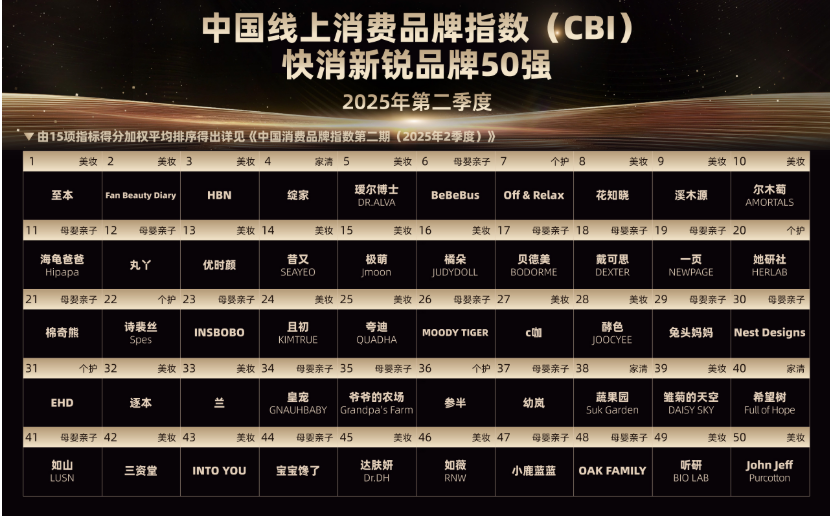
Core Insights - The report released on August 20 highlights the "China Online Consumption Brand Index" (CBI) and the "Global Brand China Online Top 500" (CBI500), focusing on emerging brands in the fast-moving consumer goods (FMCG) sector [1] - A new ranking of 50 emerging brands in the FMCG sector was established, emphasizing innovation and the potential of new brands [2] Group 1: Emerging Brands Performance - The beauty sector had the highest number of new brands on the list, with brands like Zhi Ben, Fan Beauty Diary, and HBN leading the rankings [1] - In the mother and baby category, 18 brands were included, such as BeBeBus and HaiGuiBaBa, while Off & Relax, She Yan She, and Spes ranked high in personal care [1] Group 2: Evaluation Criteria - The new ranking system for emerging brands includes five evaluation dimensions: market opportunity, novelty, brand awareness, reputation, and customer loyalty, with market opportunity weighted at 20% [2] - High-value consumer groups and their purchasing behavior are crucial for brand growth, indicating that brands must shift from "traffic thinking" to "user lifecycle management" [3] Group 3: Market Trends and Strategies - Emerging brands are focusing on both functional and emotional value, with strategies that include product innovation and enhanced consumer experiences [3] - The majority of the 50 ranked brands are domestic, indicating a strong trend of entrepreneurship and innovation in China's FMCG sector, primarily concentrated in first-tier cities like Shanghai, Hangzhou, and Guangzhou [4] Group 4: Investment Potential - The report suggests that brands with strong innovation capabilities and high user engagement are becoming focal points in the capital market, as seen with rising stock prices of brands like Lao Pu Huang Jin and Pop Mart [4] - The CBI ranking system serves as a quantitative tool for assessing brand growth potential, providing valuable insights for investment and brand development in the consumer goods market [4]
人工智能下半场 智能体技术重构安全生态
Zhong Guo Chan Ye Jing Ji Xin Xi Wang· 2025-08-26 03:23
Core Insights - Artificial intelligence (AI) is recognized as a strategic force driving a new wave of technological revolution and industrial transformation, marking a new phase in its development characterized by "technical breakthroughs, scenario implementation, and safety assurance" [1] - The integration of AI with the real economy is becoming increasingly evident, with significant innovations and advancements in AI technology [2] - The rise of intelligent agents (AI agents) is transforming industries and enhancing productivity, leading to a fundamental change in human-computer interaction [2][7] Group 1: AI Development and Integration - AI technology is rapidly evolving, with collective breakthroughs in the field and deeper integration with the real economy [2] - The combination of AI and security is becoming tighter, enhancing network security through proactive and adaptive technological tools [2] - The development of large models is ushering in an era of intelligence, driving high-quality development across various sectors [2] Group 2: Security Risks and Challenges - The rapid advancement of AI technology is accompanied by increasing cybersecurity risks, with hackers leveraging AI to enhance their capabilities [4] - There is a growing complexity in governance and security challenges, necessitating a focus on innovation and the integration of AI with security measures [3][4] - The emergence of new security threats requires a proactive approach to enhance response capabilities and safeguard digital infrastructure [4][5] Group 3: Recommendations for Industry Players - Private enterprises are encouraged to align with national strategies, promote open innovation, and build a governance system that fosters responsible AI development [3] - Collaboration among various stakeholders, including government, industry, academia, and research, is essential to create a robust AI and security ecosystem [10][12] - Emphasis on building a reliable and efficient AI infrastructure is crucial for supporting the development of AI applications with business value [9][11] Group 4: Future Directions and Innovations - The evolution of AI agents is seen as a key to overcoming existing limitations in AI applications, transitioning from mere thinking capabilities to actionable tasks [7][8] - There is a need for continuous innovation in AI technology and architecture to enhance efficiency and accessibility while ensuring sustainable development [11] - International collaboration is vital to address global challenges in AI and digital security, focusing on ethical guidelines and data sharing [12]