
Zhong Guo Chan Ye Jing Ji Xin Xi Wang

Search documents
人工智能下半场 智能体技术重构安全生态
Zhong Guo Chan Ye Jing Ji Xin Xi Wang· 2025-08-26 03:23
Core Insights - Artificial intelligence (AI) is recognized as a strategic force driving a new wave of technological revolution and industrial transformation, marking a new phase in its development characterized by "technical breakthroughs, scenario implementation, and safety assurance" [1] - The integration of AI with the real economy is becoming increasingly evident, with significant innovations and advancements in AI technology [2] - The rise of intelligent agents (AI agents) is transforming industries and enhancing productivity, leading to a fundamental change in human-computer interaction [2][7] Group 1: AI Development and Integration - AI technology is rapidly evolving, with collective breakthroughs in the field and deeper integration with the real economy [2] - The combination of AI and security is becoming tighter, enhancing network security through proactive and adaptive technological tools [2] - The development of large models is ushering in an era of intelligence, driving high-quality development across various sectors [2] Group 2: Security Risks and Challenges - The rapid advancement of AI technology is accompanied by increasing cybersecurity risks, with hackers leveraging AI to enhance their capabilities [4] - There is a growing complexity in governance and security challenges, necessitating a focus on innovation and the integration of AI with security measures [3][4] - The emergence of new security threats requires a proactive approach to enhance response capabilities and safeguard digital infrastructure [4][5] Group 3: Recommendations for Industry Players - Private enterprises are encouraged to align with national strategies, promote open innovation, and build a governance system that fosters responsible AI development [3] - Collaboration among various stakeholders, including government, industry, academia, and research, is essential to create a robust AI and security ecosystem [10][12] - Emphasis on building a reliable and efficient AI infrastructure is crucial for supporting the development of AI applications with business value [9][11] Group 4: Future Directions and Innovations - The evolution of AI agents is seen as a key to overcoming existing limitations in AI applications, transitioning from mere thinking capabilities to actionable tasks [7][8] - There is a need for continuous innovation in AI technology and architecture to enhance efficiency and accessibility while ensuring sustainable development [11] - International collaboration is vital to address global challenges in AI and digital security, focusing on ethical guidelines and data sharing [12]
数智化浪潮下的汽车产业变革 还需突破“三座大山”
Zhong Guo Chan Ye Jing Ji Xin Xi Wang· 2025-08-26 03:23
Core Insights - The automotive industry is undergoing a significant transformation driven by digital technologies and artificial intelligence, focusing on electrification, intelligence, connectivity, and sharing [1][2] - A recent forum highlighted the consensus among industry leaders on the need for collaboration to elevate China's automotive industry within the global value chain [2] Group 1: AI and Digital Transformation - AI is reshaping production relationships and lifestyles across various industries, with an estimated economic impact of $22.3 trillion by 2030, accounting for 3.7% of global GDP [3] - Huawei aims to enhance service capabilities through "AI for Service" and create conditions for agile innovation in new business applications [3][4] - The automotive sector is transitioning from "mobile machinery" to "mobile computing centers," necessitating a complete reconstruction of production relationships and business models [4] Group 2: Challenges in Digital Transformation - The automotive industry faces three major challenges: restructuring ICT technology architecture, transforming ICT operation systems, and upgrading ICT personnel skills [5][6] - The demand for computing power is growing exponentially due to the need for processing large amounts of data in intelligent driving [6] - Data security and ethical standards are critical challenges, with the automotive sector generating terabytes of user behavior and vehicle condition data daily [7] - There is a significant talent gap in the industry, requiring professionals who understand both automotive engineering and AI algorithms [8] Group 3: Collaborative Solutions - The forum reached a consensus on the need for practical collaboration to establish data circulation rules and build shared platforms for data flow [8] - Huawei has already provided services to over 8,000 manufacturing enterprises in China, helping automotive companies achieve their goals through comprehensive solutions [9] - The transition to digitalization is essential for survival, driving the shift from linear supply chains to networked ecosystems, with new business models emerging rapidly [9]
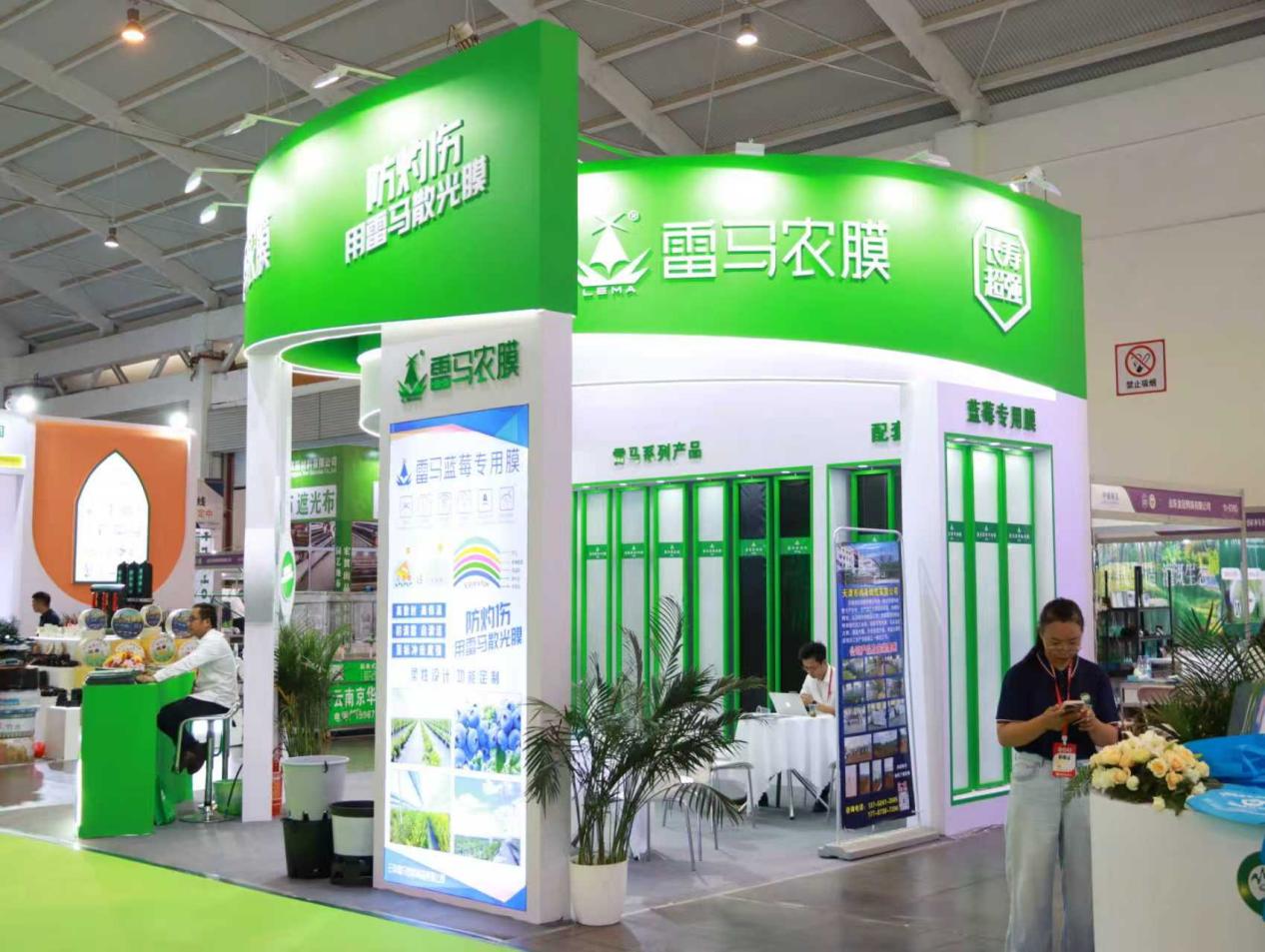
雷马散光膜亮相2025西南农资博览会,系列农膜产品赋能绿色农业发展
Zhong Guo Chan Ye Jing Ji Xin Xi Wang· 2025-08-26 02:08
Core Insights - The 22nd Southwest Agricultural Materials Expo was held in Kunming, focusing on technology-driven agricultural innovation and development [1][3] - Yunnan Leima Plastic Products Co., Ltd. showcased its innovative agricultural film products, particularly emphasizing its light scattering technology to address crop sunburn issues [1][5] Group 1: Event Overview - The expo featured over 1,800 brand enterprises and attracted nearly 80,000 visitors from key agricultural regions in China and international procurement teams from South Asia and Southeast Asia [3] - The exhibition area expanded by 30% compared to the previous year, exceeding 90,000 square meters [3] Group 2: Product Highlights - Leima's light scattering film technology effectively transforms direct light into soft, uniform scattered light, achieving over 92% light transmittance while preventing sunburn damage [7] - The company presented a range of specialized products, including blueberry-specific films and protective nets, designed to enhance agricultural productivity and address specific crop needs [7][11] Group 3: Market Positioning - Leima has over 20 years of experience in the agricultural film industry, focusing on creating value for users through specialized, precise, and personalized services for economic crop cultivation [8] - The blueberry-specific film integrates multiple functions such as drip condensation reduction, high insulation, and self-cleaning, significantly improving environmental control in facility agriculture [8][9] Group 4: Strategic Implications - Leima's product matrix aligns closely with crop requirements, showcasing its diversified approach in modern agricultural covering materials [11] - The company aims to support the modernization of agriculture in the Southwest region, promoting high-quality and sustainable development through its core focus on sunburn prevention and precise matching solutions [13]

湖南发明专利拥有量超12.8万件 高价值专利增长22.54%
Zhong Guo Chan Ye Jing Ji Xin Xi Wang· 2025-08-26 00:53
Group 1 - The core viewpoint of the articles highlights the significant growth in intellectual property (IP) in Hunan Province, with a notable increase in patent ownership and trademark registrations, indicating a robust innovation environment [1][2] - As of June 2025, Hunan Province has 128,403 invention patents, a year-on-year increase of 14.14%, and the number of invention patents per 10,000 people has risen to 19.64, reflecting a growth of 14.65% [1] - The effective trademark registrations reached 1,289,530, showing an 8.11% increase compared to the previous year [1] Group 2 - Strategic emerging industries are the core contributors to high-value patents, with Hunan Province holding 51,700 high-value invention patents, a 22.54% increase year-on-year [2] - Among these, strategic emerging industries account for 33,200 effective invention patents, representing 64.22% of the total high-value patents in Hunan [2] - The new generation information technology industry leads with 42.02% of the strategic emerging industry patents, with 80.37% concentrated in Changsha [2] Group 3 - Hunan Province has implemented actions to enhance IP protection and internationalization, with 299 PCT international patent applications filed in the first half of 2025, marking a 37.79% increase [1] - The province has also advanced the knowledge property transformation and service system, helping enterprises utilize IP financing exceeding 2 billion yuan [2] - The establishment of IP operation centers and the promotion of university-enterprise cooperation have strengthened the integration of production, education, and research [2]
云南石屏拓展豆制品全产业链
Zhong Guo Chan Ye Jing Ji Xin Xi Wang· 2025-08-26 00:49
Group 1 - The history of Shiping tofu spans over 600 years, recognized for its unique production technique and included in the national geographical indication products and intangible cultural heritage list of Yunnan Province [1] - Shiping County aims to become a national center for soybean product research and deep processing, focusing on expanding the brand and industry scale while enhancing the value chain and creating job opportunities [1][2] - Three soybean product industrial parks have been established in Shiping County to promote industrial agglomeration and develop a standardized, branded, and high-end industry [1][2] Group 2 - The local government has enacted the "Soybean Product Industry Development Regulations" to standardize production and business operations, and a dedicated task force has been established to ensure the healthy development of the industry [2] - With the rapid growth of e-commerce and logistics, Shiping frozen tofu products are increasingly available in major supermarkets and online platforms, leading to a noticeable increase in market share and orders [2] - A company in Shiping has launched a new product, the tofu hot pot platter, which combines traditional flavors with modern dining needs, achieving sales of 100,000 boxes and generating a revenue of 3 million yuan in the first half of the year [2] Group 3 - Shuaihong Tofu Company has produced over 9,000 tons of frozen tofu skewers in the first half of the year, with last year's revenue reaching 120 million yuan, showcasing the convenience and versatility of frozen tofu products [3] - The Shiping tofu industry has expanded its product range from 4-6 types before 2010 to over 100 types today, with the total industry chain output value exceeding 6 billion yuan last year, providing employment for over 17,000 people [3]
今年前7个月,福建省虾及其制品出口规模居全国第一
Zhong Guo Chan Ye Jing Ji Xin Xi Wang· 2025-08-26 00:49
Core Insights - Fujian Province is a major seafood export region in China, with strong growth in shrimp and its products, accounting for a significant share of the province's seafood exports [1] Export Performance - In the first seven months, Fujian Province exported shrimp and its products worth 5.47 billion yuan, representing a year-on-year growth of 18.3%, leading the nation in export scale [1] - The main export market for Fujian's shrimp products is Asia, which accounts for 71.2% of the total export value during the same period [1] - Exports to ASEAN countries reached 2.44 billion yuan, making up 44.5% of the total shrimp exports from Fujian [1] - Mexico is the largest single market outside Asia, with exports amounting to 820 million yuan, which is 15% of the total shrimp exports from Fujian [1] Product Composition - The majority of exports are shrimp products, totaling 5.14 billion yuan, with a growth rate of 19.1%, constituting 93.9% of the total shrimp and its products exported [1] - Private enterprises are the main contributors to the export of shrimp and its products, exporting 5.43 billion yuan, which is a growth of 25.8% and accounts for 99.2% of the total exports [1]
山东滨州多措并举赋能商用厨具产业提质增效
Zhong Guo Chan Ye Jing Ji Xin Xi Wang· 2025-08-26 00:49
Core Viewpoint - The commercial kitchenware industry in Binzhou, Shandong Province, is thriving, with over 2,800 enterprises producing kitchenware that holds a 42.5% market share in China and exports to over 60 countries and regions [1] Group 1: Industry Development - The Binzhou commercial kitchenware sector is supported by a comprehensive risk management system, which includes a risk consultation mechanism involving multiple regulatory bodies to identify and mitigate potential risks [1][2] - The local market supervision bureau has implemented a "day-to-day control, weekly inspection, and monthly scheduling" approach to ensure product quality and safety, resulting in a 15% increase in the supervision pass rate and a 12% decrease in quality violation cases [2] Group 2: Quality and Safety Measures - In 2024, the market supervision bureau focused on the quality safety of gas appliances, inspecting 2,130 businesses and identifying 230 quality issues, while guiding 396 enterprises to fulfill their quality safety responsibilities [3] - The bureau has organized various training sessions to enhance the capabilities of industry personnel, including intellectual property protection and safety training, which has improved risk management awareness and quality standards among workers [4] Group 3: Innovation and Standards - The bureau encourages leading kitchenware companies to participate in the formulation of national standards and has established 17 group standards that exceed national and industry standards [4] - Binzhou kitchenware enterprises hold 1,268 valid patents, including 46 invention patents, and have facilitated 32 instances of intellectual property pledge financing amounting to 170 million yuan [4]
中国上市公司法律合规风险指数报告发布
Zhong Guo Chan Ye Jing Ji Xin Xi Wang· 2025-08-26 00:31
Core Insights - The overall legal compliance risk for Chinese listed companies in 2024 is stable but shows significant tiered differences, with a slight increase in the risk index compared to the previous year [1][2] - The legal compliance risk index for state-controlled listed companies has notably increased, indicating a growing trend in risk [1][2] Summary by Categories Legal Compliance Risk Index - The legal compliance risk index for Chinese listed companies in 2024 is reported at 25.917, a 1.35% increase from the previous year [1] - The index for state-controlled listed companies is 25.711, reflecting a 7.05% year-on-year increase [1] Characteristics of Legal Compliance Risk - The number of one-star (most dangerous) and five-star (safest) companies has increased, while the number of four-star (relatively safe) companies has decreased significantly [2] - Key factors contributing to the rise in risk include non-standard reports, industry structure, restricted assets, and frequency of violations [2] - There is a clear correlation between regional risk indices and economic development status [2] - Macroeconomic conditions and policies have a significant impact on industry risk levels [2] Importance of Legal Compliance - Legal compliance risk is described as the "lifeline" for sustainable development of enterprises, emphasizing the need for a systematic and dynamic risk prevention system [2] - The health of listed companies is crucial for the overall economy, as they are considered the cornerstone of the capital market [2]
短期内钢市以震荡偏强为主
Zhong Guo Chan Ye Jing Ji Xin Xi Wang· 2025-08-26 00:28
Price Index Overview - The China Steel Price Index (CSPI) for the week of August 11-15 is 95.46 points, reflecting a slight week-on-week increase of 0.07 points or 0.07% [1] - The long product price index decreased to 96.95 points, down 0.17 points or 0.18% week-on-week, while the flat product price index increased to 94.23 points, up 0.25 points or 0.26% week-on-week [1] Regional Price Trends - In North China, the steel price index rose to 94.41 points, up 0.29 points or 0.31% week-on-week [2] - The Northeast region saw a slight decline of 0.01 points to 93.63 points, while East China experienced a decrease of 0.13 points to 96.61 points [2] - The Central South region's index decreased by 0.03 points to 97.44 points, whereas Southwest and Northwest regions saw increases of 0.18 points and 0.50 points, respectively [2] Price Changes by Product - All eight major steel product prices decreased compared to the end of the previous month, with the largest drop in galvanized sheets and the smallest in hot-rolled sheets [3] - Specific price changes include: high-line steel at 3460 CNY/ton (down 0.65%), rebar at 3262 CNY/ton (down 0.52%), and cold-rolled sheets at 4029 CNY/ton (down 0.09%) [3] Cost Factors - The average import price of iron ore in July was 94.41 USD/ton, up 1.53 USD/ton or 1.65% month-on-month [4] - Domestic iron concentrate prices increased to 877 CNY/ton, up 5 CNY/ton or 0.58% [4] - Coking coal prices rose to 1364 CNY/ton, up 58 CNY/ton or 4.43%, while coke prices increased to 1427 CNY/ton, up 91 CNY/ton or 6.81% [4] Market Demand and Supply - Demand remains weak, particularly for construction steel, during the off-season [5] - Steel production has slightly decreased, while fuel prices for steelmaking have shown minor increases, providing some support to steel prices [5] - The market is expected to remain stable with a slight upward bias in the short term [5]
我国家电产品碳足迹管理体系建设迈出关键一步
Zhong Guo Chan Ye Jing Ji Xin Xi Wang· 2025-08-26 00:23
Group 1 - The first national standard for product carbon footprint in the home appliance industry, titled "Quantification Methods and Requirements for Greenhouse Gas Product Carbon Footprint of Room Air Conditioners" (GB/T46027-2025), has been officially released, marking a significant step in the establishment of a carbon footprint management system for home appliance products in China [1] - The standard was jointly developed by Midea Air Conditioning and the China Household Electrical Appliances Research Institute, providing a scientific and unified standard for the accurate and comparable disclosure of carbon footprint results [1] - The standard outlines the purpose and scope of carbon footprint quantification for room air conditioners, detailing operational quantification methods and reporting requirements, thus offering a standardized approach for carbon footprint accounting [1] Group 2 - Midea Air Conditioning was the first in the industry to release a carbon footprint and carbon reduction assessment report for air conditioning products in 2022, with over 50 key models across five categories receiving carbon footprint certification from authoritative third-party organizations [2] - The company's solid research and development practices have laid a strong foundation for leading the formulation of national standards, and Midea is actively participating in the development of international standards, contributing "Chinese wisdom" on the global standardization stage [2] - Midea plans to use the promotion and application of the new standard and national carbon labeling pilot as a starting point to enhance the green and low-carbon development level of the industry and supply chain through technological innovation and standard leadership [2]
