
Zhong Guo Chan Ye Jing Ji Xin Xi Wang

Search documents
派安盈公布2025年第二季度财报:交易量近210亿美元,非利息营业收入创新高
Zhong Guo Chan Ye Jing Ji Xin Xi Wang· 2025-08-08 07:24
Core Insights - Payoneer reported a robust growth in Q2 2025, with transaction volume increasing by 11% year-over-year to nearly $21 billion [1] - The company's revenue reached $261 million, reflecting a 9% year-over-year growth, driven primarily by small and medium-sized enterprises (SMEs) [1] - Payoneer's CEO highlighted the strong performance of non-interest revenue, which grew by 16% year-over-year, showcasing the effectiveness of the company's business model and execution [1] Financial Performance - Transaction volume increased by 11% year-over-year, reaching nearly $21 billion [1] - Revenue for the quarter was $261 million, up 9% year-over-year [1] - Revenue from SME clients was $183 million, a growth of 18% year-over-year [1] - B2C e-commerce platform revenue was $116 million, an 8% increase year-over-year [1] - B2B business revenue grew by 37% to $58 million [1] - Checkout processing revenue surged by 86% to $9 million [1] Market Strategy - Payoneer launched the "Global Empowerment" market initiative to support Chinese sellers in expanding into the U.S. and other global markets [2] - The company aims to enhance its service offerings and resources to help Chinese enterprises optimize their global supply chain and business operations [2] - Payoneer is celebrating its 20th anniversary in 2025 and plans to strengthen its local services while connecting global trade resources [2] Company Overview - Payoneer is a fintech company founded in 2005, focused on enabling SMEs to conduct transactions and grow in the global market [3] - The company's mission is to allow anyone, anywhere to participate in the global digital economy [3] - Payoneer has established a comprehensive financial platform to facilitate cross-border trade for millions of SMEs, particularly in emerging markets [3]

美宜佳28周年庆!门店破4万,战略专家记豪五年深度赋能品牌进化
Zhong Guo Chan Ye Jing Ji Xin Xi Wang· 2025-08-08 07:20
摘要:美宜佳迎来28周年庆,视觉战略顾问记豪助力焕新品牌形象,开启便利零售视觉化、年轻化新篇 章。 7月25日,美宜佳40000店暨28周年庆发布会暨答谢晚宴主会场在东莞隆重举行,全国十多个区域同步设 立分会场。大会现场,众多政府领导、品牌厂商、加盟伙伴及平台服务商齐聚一堂,共同见证这一意义 非凡的发展里程碑。 从1997年第一家门店起步,到如今覆盖全国数百座城市的万店网络,美宜佳用28年时间书写了一部深耕 社区、专注便利的中国零售创业史诗。从1.0到6.0的店型迭代,从"敢闯敢干"到"精耕细作",美宜佳始 终坚守"开好店、经营好店、服务好客户"的初心,持续推进标准化建设与经营效能提升。在中国连锁经 营协会最新发布的《2024年中国连锁TOP100》榜单中,美宜佳表现尤为亮眼:以37,943家门店和558.88 亿元的年销售额,成功跻身全国连锁品牌十强,成为唯一进入TOP10的便利店企业,且排名相比去年再 进一步。截至2025年7月底,美宜佳全国门店总量已超40000家。本次发布会全面呈现了美宜佳在数字化 转型、生态共创等关键维度的阶段性成果与未来方向。 发布会现场提到,美宜佳未来将聚焦STD、PLUS、PR ...
SuperX首发全栈式多模型一体机,开创多模态智能体协同新纪元
Zhong Guo Chan Ye Jing Ji Xin Xi Wang· 2025-08-08 07:17
Core Insights - Super X AI Technology Limited has launched a multi-model integrated machine that pre-installs OpenAI's latest large language models, GPT-OSS-120B and GPT-OSS-20B, and allows for the download of other popular open-source models, marking a significant innovation in AI products [1][2] - The new product aims to redefine AI infrastructure standards with features such as "plug-and-play," multi-model integration, and scenario penetration, catering to various enterprise sizes and needs [1][3] Product Features - The multi-model integrated machine supports various models including reasoning, general, multi-modal, language synthesis/recognition, embedding, re-ranking, and text-to-image models, enabling deep integration with application scenarios [3] - It facilitates complex business applications, such as directly locating video segments based on text descriptions and supports over 60 pre-set scenario intelligent agents [3][4] - The machine offers cloud collaboration and caching capabilities, allowing users to access the latest global models without delay [3] Market Positioning - SuperX's integrated machine addresses challenges in AI deployment, such as data security, cost control, and technical adaptation, providing a comprehensive enterprise-level generative AI platform [4][5] - The pricing for the new AI server B200 standard and cluster versions is set at $500,000 and $4 million respectively, while the AI workstation standard and flagship versions are priced at $50,000 and $250,000 [5] Industry Impact - The demand for large AI models is experiencing exponential growth across various sectors including education, research, healthcare, finance, automotive, and general industry, positioning SuperX to achieve significant economic benefits and further product development [5] - The CTO of SuperX emphasizes that multi-model collaboration is a crucial step towards achieving AGI, aiming to build an ecosystem for intelligent agent developers in collaboration with industry clients [6]
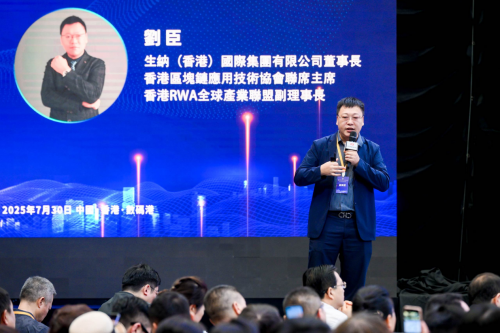
链上数据是 Web3 与 RWA 发展的核心驱动力
Zhong Guo Chan Ye Jing Ji Xin Xi Wang· 2025-08-08 06:59
Group 1 - The core argument presented is that on-chain data is a crucial driver for the development of Web3 and Real World Assets (RWA) [1][3] - Data has evolved from being a mere information carrier to an essential production factor in the decentralized era of Web3.0, emphasizing the importance of data security, authenticity, and traceability [3][5] - The development of Web3.0 is categorized into four stages: conceptual emergence (2008-2014), foundational building, validation, and the current stage of scenario expansion, with a clear goal of reducing technical barriers for widespread application [5][7] Group 2 - On-chain data addresses trust issues in the traditional asset tokenization process, ensuring asset authenticity and reducing cross-chain collaboration costs, thus facilitating efficient circulation of RWAs within a compliance framework [7] - The quality of data directly impacts the accuracy of AI models, and on-chain data analysis can effectively verify the authenticity of AI decisions [7] - The company has developed a one-stop data on-chain system, professional analytical tools, and a conference promotion platform to assist enterprises in transitioning from Web2.0 to Web3.0, supporting the development of RWA projects [7]


海底捞破局火锅红海,“千店千面”战略探索标准化与个性化平衡点
Zhong Guo Chan Ye Jing Ji Xin Xi Wang· 2025-08-08 06:47
Core Insights - The restaurant market is undergoing iterative upgrades, with increasingly diversified consumer demands leading to a consensus among dining enterprises for refined layouts [1] - Haidilao has launched a new premium store in Beijing, focusing on Cantonese-style hot pot with high-quality seafood and Wagyu beef, enhancing the dining experience through a more sophisticated environment and service [1] - The company is decentralizing decision-making to frontline stores, allowing for differentiated operations while maintaining standardized service quality, achieving a "thousand stores, thousand faces" approach [2] Company Strategy - Haidilao is expanding its personalized service offerings through initiatives like the "Joyful Banquet" for customized dining experiences tailored to various important gatherings [1] - The new premium store features trained staff with backgrounds in high-end hospitality, aiming to provide a refined dining experience that meets consumer expectations for customization [1] - The company is balancing standardization and differentiation to maintain brand warmth while catering to the ceremonial needs of niche markets [2]

江西税务:为重大项目提供全周期服务
Zhong Guo Chan Ye Jing Ji Xin Xi Wang· 2025-08-08 00:45
Core Insights - Jiangxi province has a construction machinery operating rate of 61.33%, ranking ninth nationally and second in the central region, with 1,825 new projects initiated, indicating a construction boom [1] - The Jiangxi tax authority has implemented a "project manager" mechanism to provide comprehensive support for 7,274 projects with investments exceeding 1 billion yuan, facilitating the entire project lifecycle from initiation to production [1] Group 1: Project Initiation - The Jiangxi tax authority's pre-inspection services have been crucial for companies like Ganneng Co., which is investing approximately 10 billion yuan in a major clean coal power project [2] - A dedicated "project manager" team was formed to assist with complex tax issues, creating a tailored "Enterprise Growth File" for Ganneng Co. [2] - The tax authority has established a dynamic management mechanism for major projects, ensuring a response within 48 hours of receiving registration information [3] Group 2: Construction Phase - A comprehensive risk prevention system has been developed by the Jiangxi tax authority, utilizing big data to monitor and manage tax risks throughout the project lifecycle [4] - The system includes quarterly scans and annual assessments to identify and address potential tax compliance issues, as demonstrated by the experience of Yichun Jinchang Construction Engineering Co. [4] - The "project manager" team employs a model of policy guidance and corrective reminders to help companies rectify non-compliance issues promptly [4] Group 3: Production Phase - The Jiangxi tax authority has created a "policy finder" model to ensure that tax benefits reach businesses promptly, with over 180 advanced smart factories established in the province by 2025 [5] - Jiangxi 92 Salt Industry Co. has invested over 50 million yuan in upgrading its smart factory, receiving tailored tax guidance from the "project manager" [5] - Hu Yidao Industrial Co. benefited from a comprehensive tax benefit map, which helped the company achieve an annual output value exceeding 40 million yuan, with 80% of its products successfully entering international markets [6]
上半年甘肃省白银市清洁能源发电量突破30亿千瓦时
Zhong Guo Chan Ye Jing Ji Xin Xi Wang· 2025-08-08 00:45
Core Viewpoint - In the first half of this year, Baiyin City in Gansu Province achieved a record high clean energy generation of 30.58 billion kilowatt-hours, marking a year-on-year increase of 29.86% and accounting for 30.31% of the total power generation [1] Group 1: Clean Energy Development - Baiyin City has accelerated the development of renewable energy resources, leveraging its abundant wind and solar resources under the guidance of the "dual carbon" goals [1] - The clean energy installed capacity reached 3.6 million kilowatts by the end of June, representing 47.66% of the total installed capacity within the grid [1] - From January to June, renewable energy generation was 27.23 billion kilowatt-hours, reflecting a year-on-year growth of 35.96% [1] Group 2: Infrastructure and Support - The State Grid Baiyin Power Supply Company has been enhancing the planning and construction of the power grid to support renewable energy development [1] - A "one-stop" service system has been established to facilitate early grid connection and power generation for renewable energy projects [1] - A specialized flexible team has been formed to assist in the application of power prediction technology, helping users adjust their electricity consumption [1] Group 3: Future Prospects - Ongoing construction of supporting renewable energy projects in the Longdong area is expected to increase the grid-connected installed capacity to 4 million kilowatts in the second half of the year [1] - The State Grid Baiyin Power Supply Company aims to continuously improve grid connection service quality and contribute to the green energy transition and the achievement of "dual carbon" goals [1]
宁夏出台葡萄酒要素市场化配置体制机制政策文件
Zhong Guo Chan Ye Jing Ji Xin Xi Wang· 2025-08-08 00:45
Core Viewpoint - Ningxia has issued the first national policy document regarding the market-oriented allocation mechanism for the grape and wine industry, marking the comprehensive launch of the pilot zone for the open development of the grape and wine industry [1][2] Group 1: Implementation Plan - The implementation plan focuses on establishing multiple systems, including financing, circulation, custody, risk management, evaluation management, and digital certification for the wine industry [1] - It aims to explore digital certification for various resource elements that currently lack property rights, promoting the formation of effective assets [1] - The plan emphasizes the enhancement of data collection across all stages of wine production, including planting, brewing, storage, sales, and circulation, to improve market-oriented data conversion capabilities [1] Group 2: Market-Oriented Allocation - The pilot zone will utilize land, capital, ecology, data, talent, technology, and brand as key elements to address three major bottlenecks: stable long-term operation of vineyards, financing for wineries, and product sales [2] - A market-oriented service model for the transfer of land use rights for grape planting will be implemented, addressing issues related to lease renewals and rental fee determinations [2] - Financial institutions are encouraged to develop market-oriented financial products that align with the development of the wine industry, increasing the supply of effective financial services [2] Group 3: Risk Management - The Ningxia wine region will establish a risk supervision system for resource elements, creating a high-quality development directory for wine businesses and improving the industry credit system [2] - The plan encourages the involvement of guarantee institutions to support loan financing for wine businesses through risk sharing and empowerment [2]
2025世界智能汽车大会前瞻:车企黑科技重塑未来出行
Zhong Guo Chan Ye Jing Ji Xin Xi Wang· 2025-08-08 00:42
Group 1 - The 2025 World Intelligent Vehicle Conference will showcase disruptive technological innovations in the smart vehicle sector, focusing on near-complete autonomous driving solutions, immersive smart cockpit experiences, and integrated vehicle-road-cloud ecosystems [1] Group 2 - The conference will highlight breakthroughs in high-level autonomous driving technology, with several automakers presenting near Level 5 fully autonomous driving solutions using multi-sensor fusion for real-time centimeter-level 3D environment modeling [2] - A new AI decision-making system based on deep reinforcement learning will be demonstrated, capable of handling complex scenarios such as predicting pedestrian intentions at unregulated intersections and utilizing vehicle-road collaboration to identify obscured traffic signals in adverse weather [2] - "Swarm intelligence" technology will be showcased, allowing multiple autonomous vehicles to coordinate and improve road traffic efficiency by over 30% [2] Group 3 - The smart cockpit is undergoing a revolutionary transformation with features like flexible rollable screens extending across the windshield, AR-HUD integrating navigation with real-world conditions, and holographic interactive assistants using light field technology for gesture and gaze recognition [3] - Emotional engines utilizing biosensors will monitor driver and passenger heart rates and expressions to automatically adjust ambient lighting, scents, and seating positions [3] Group 4 - The theme of "vehicle-road-cloud integration" will present a vision of future transportation, where vehicles communicate in real-time with traffic signals and roadside units using 5G-V2X technology [3] - The conference will introduce a "cloud-based digital twin" system, where each vehicle has a mirrored model in the cloud, allowing AI to predict and manage urban traffic flow based on real-time data from millions of vehicles [3] - The 2025 World Intelligent Vehicle Conference signifies a new era of safer, more efficient, and user-friendly transportation, celebrating technological advancements and human mobility [3]
四川推出质量基础设施赋能重点产业建圈强链新举措
Zhong Guo Chan Ye Jing Ji Xin Xi Wang· 2025-08-08 00:42
Core Viewpoint - Sichuan Province's Market Supervision Administration has introduced nine innovative measures to enhance quality infrastructure, focusing on key industrial chains to strengthen supply chain quality and competitiveness [1][2][3]. Group 1: Quality Measurement and Standards - The administration will upgrade measurement standards in key sectors such as low-altitude economy, photovoltaics, and new energy vehicles, including the establishment of new calibration standards [1]. - Efforts will be made to involve enterprises in the formulation of advanced group standards and enhance participation in standardization activities, particularly in artificial intelligence and new energy sectors [1][2]. Group 2: Inspection and Certification - The administration plans to support the development of quality inspection institutions and establish national and provincial quality inspection centers for lithium battery materials and power generation equipment [2]. - New services for green certification and carbon footprint evaluation will be accelerated, particularly for small and micro enterprises, to promote high-quality development [2]. Group 3: Digital Quality Management - A significant highlight is the push for digitalization in quality management, aiming to enhance efficiency and effectiveness across all aspects of enterprise quality management [2][3]. Group 4: Integrated Quality Services - The administration will promote a one-stop service model for quality infrastructure, addressing quality challenges in pilot and small-scale testing phases [3]. - Collaborative efforts will be made across various departments to enhance quality across the supply chain, focusing on common quality issues in measurement, standards, certification, and inspection [4]. Group 5: Brand and Competitive Advantage - Initiatives will be taken to enhance brand competitiveness through the promotion of "Tianfu Famous Products" and the establishment of group standards for these products [3][4]. - The administration will implement policies to support quality innovation in leading enterprises and promote quality management practices [3][5].