
Guo Ji Jin Rong Bao

Search documents
70亿营收跻身乳企前十,认养一头牛如何穿越品控暗礁?
Guo Ji Jin Rong Bao· 2026-01-26 06:55
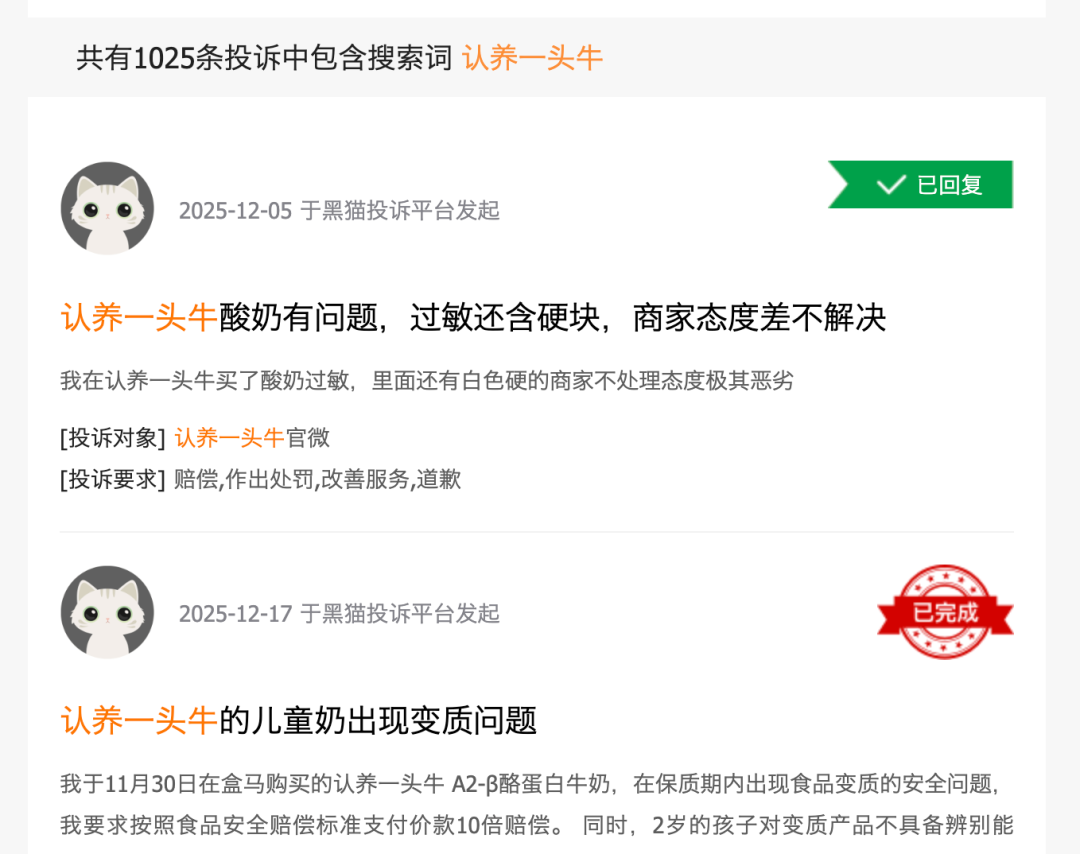
Core Insights - The company "Renyang Yitou Niu" projects revenue exceeding 7 billion yuan in 2025, representing a growth of approximately 40% from over 5 billion yuan in the previous year, showcasing impressive performance for a brand established less than a decade ago [1] - The company has positioned itself among the top ten in the national dairy industry, despite the current oversupply phase affecting overall industry performance [1] - The appointment of actress Zhao Liying as the brand's first spokesperson indicates the company's ambition to transition from an e-commerce-driven brand to a national brand [1] Financial Performance - The marketing expenses of the company increased significantly from 71 million yuan in 2019 to 414 million yuan in 2021, with a compound annual growth rate of 140%, which has contributed to revenue growth from less than 900 million yuan to over 2.5 billion yuan during the same period [6] - The company aims for 70 billion yuan in revenue, marking a new milestone and presenting new challenges [6] Product Quality and Safety Concerns - Food safety and quality control issues have emerged as potential obstacles for the company's growth, with numerous complaints regarding product quality, including spoilage and packaging issues [2] - The company has faced criticism for previously relying on third-party production before establishing its own milk sources, which has raised concerns about product authenticity [4] - Recent consumer feedback highlighted issues with product expiration dates, indicating a need for improved quality control measures [4] Market Position and Strategy - The company has established ten modern dairy farms in regions such as Hebei, Heilongjiang, and Inner Mongolia, achieving a self-sufficiency rate of over 95% for its milk sources [4] - The company has successfully dominated the e-commerce milk sales rankings during major shopping events, such as "Double Eleven," through substantial advertising investments [5] - In addition to traditional dairy products, the company is expanding into the competitive infant formula market, which demands higher quality control standards [7]

品年味、购年礼、享年趣!首届浦东中国年味节将启动
Guo Ji Jin Rong Bao· 2026-01-26 04:11
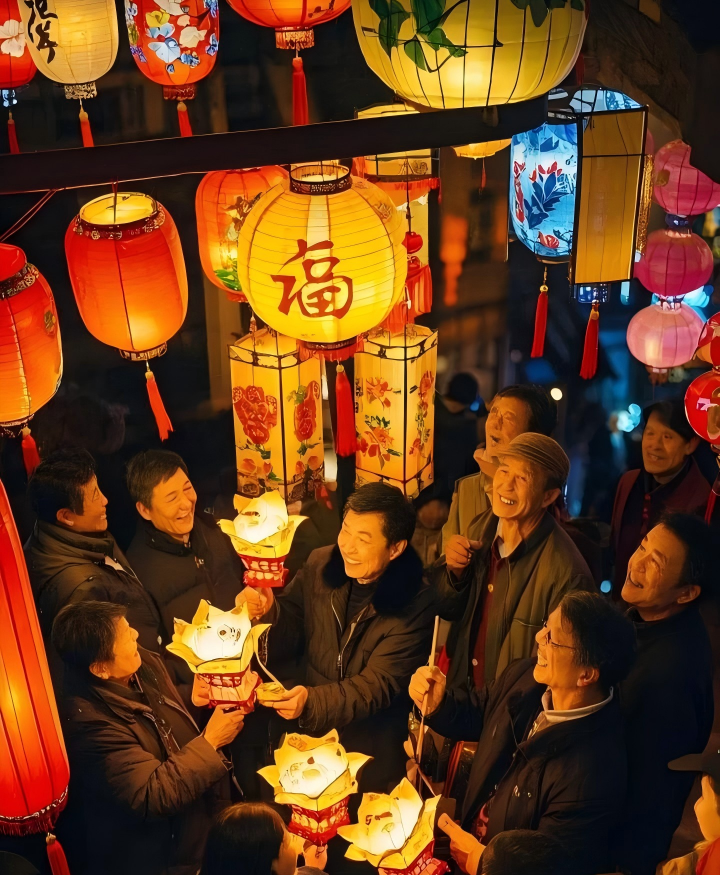
当陆家嘴的摩天光影遇见千年流淌的年味,一场属于中国红的东方浪漫,即将点亮上海最国际的风 景线。记者从浦东新区获悉,1月31日至2月9日,首届浦东中国年味节将在陆家嘴滨江登场,邀请大家 共赴一场"在世界地标,品中国年味"的时尚新春盛宴。 本次活动将全国各地非遗精粹、特色年礼与传统表演,荟萃于陆家嘴现代建筑画卷之间,特设"年 味长街""年礼新选""年趣工坊""年韵现场""年景打卡"五大主题体验区,旨在打造浦东首创的中国年节庆 IP与文化品牌,以当代语汇诠释传统年味,构建欢庆中国年的"浦东样板"。 走进纪录片生活节展区,不仅能品尝来自苏州的协顺兴定胜糕、选购吴江游礼的春晚同款红围巾, 打卡限定艺术装置,发布动态还可加赠哔哩哔哩纪录片定制行李牌。此外,现场特设哔哩哔哩大会员新 春专属活动,大会员到场即可领取福利,更有趣味集章挑战等大会员们来参与。 除了天南地北的年味,活动现场也将唤醒专属于上海的年味记忆。山林大红肠的鲜香饱满、丁义兴 枫泾丁蹄的浓醇酥烂、长春食品商店的经典味道、高桥松饼的酥层如雪……这些散落在弄堂深处的上海 老底子滋味,都将在陆家嘴滨江畔一一重现。 此外,沪语电影《菜肉馄饨》剧组携独家周边来到现场,与 ...
全国首个跨省域高新区更名
Guo Ji Jin Rong Bao· 2026-01-26 04:11
全国首个跨省域高新区命名获批。 近日,上海市政府网站发布《上海市人民政府 江苏省人民政府 浙江省人民政府关于同意长三角生态绿色一体化发展示范区跨省域高新技术产业开发区 命名为长三角青吴嘉高新技术产业开发区的批复》。 作为全国首个跨省域高新区,此次命名获批标志着其迈入规范化发展新阶段,更意味着长三角一体化发展进入"打破行政壁垒、共建产业生态"的全新阶 段,具有里程碑式意义。 江苏吴江区2024年实现GDP产值2660.09亿元,以丝绸纺织、电子信息、装备制造、新材料为四大千亿级主导产业,专精特新"小巨人"企业数量居苏州 市首位,民营经济活力突出。 浙江嘉善县2025年GDP可比增长5.8%,总量首次突破千亿元大关。该县坚持生态优先、产业升级,推动制造业向"智造"转型,获评国家级绿色园区,聚 焦数字经济与高端装备领域,与青浦、吴江形成产业互补、协同发力的发展格局,为高新区高质量发展筑牢根基。 2025年7月,长三角生态绿色一体化发展示范区联合招商会在嘉善举行。示范区跨省域高新区内的青浦园区、吴江园区、嘉善园区3个分园揭牌。《长三 角生态绿色一体化发展示范区一体化营商环境优化提升行动方案(2025—2027年)》发 ...
5万亿之城如何挑大梁、做尖兵?
Guo Ji Jin Rong Bao· 2026-01-26 01:29
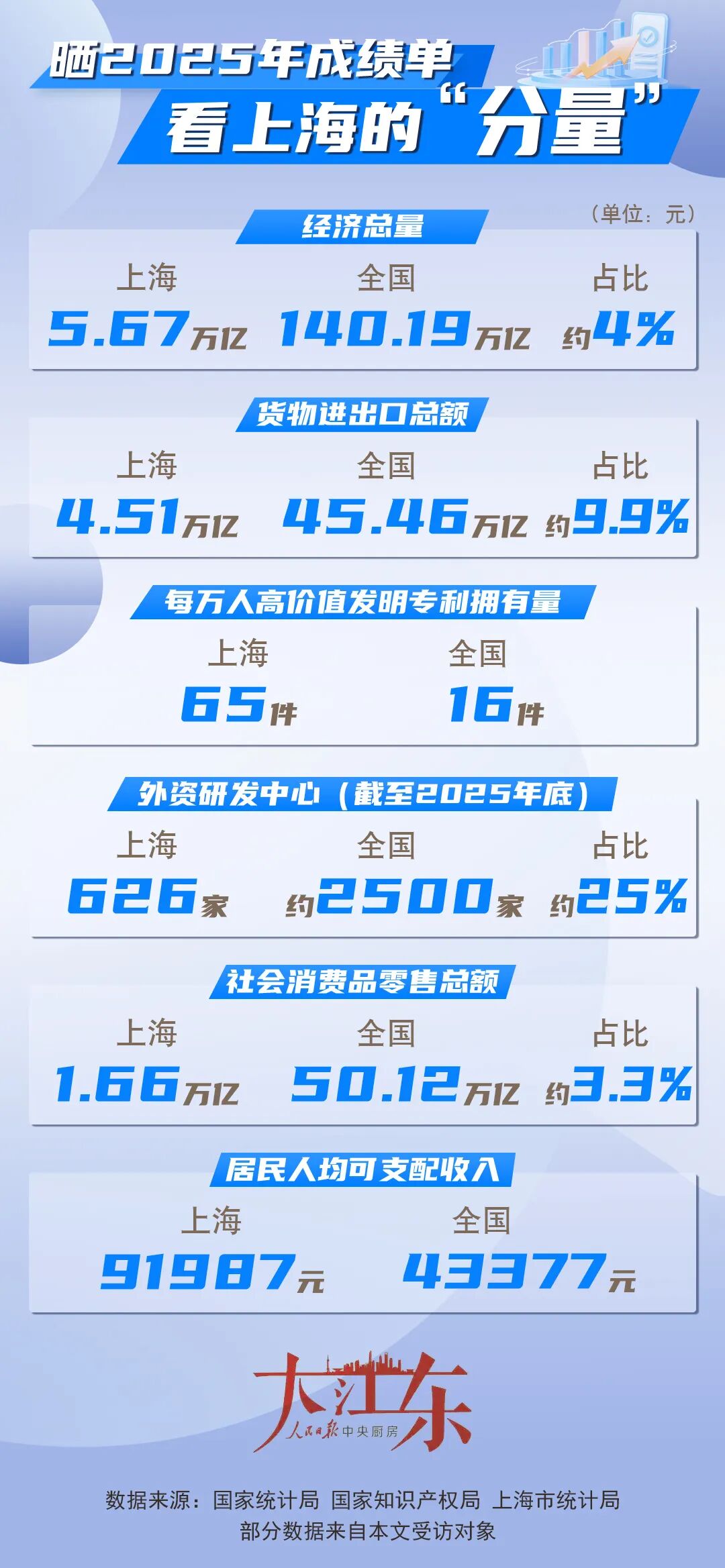
你追我赶,奋勇争先。中国经济正在开启"十五五"新征程。 山东,全省GDP过10万亿元。这个北方经济大省,成为继广东、江苏之后,第三个10万亿元的省份; 北京,在上海之后,也闯进了"5万亿元城市俱乐部"; 上海,从2021年GDP总量站上4万亿元,到成为全国首个5万亿之城,再到2025年全市生产总值增长5.4%左右,高于全国平均增速0.4个百分点…… 一图看上海的"分量" "上海的'GDP贡献',实质是为中国式现代化提供了系统性解决方案的'样本'" 大江东:从"十四五"期间表现来看,上海哪些经济指标反映出"经济大省挑大梁"的作用?为全国贡献了什么?我们常把"苏浙鲁粤"放在一起比较,上海作 为直辖市,在经济贡献和高质量发展方面,与其他几个省份、城市有何不同? 李湛:在面临经济下行压力增加之时,上海对全国的经济增长起到了很好的支撑作用。这5万亿元的"含新量"和"含金量"都很高。人工智能、集成电路、 生物医药三大先导产业工业总产值同比增长9.6%;工业战略性新兴产业增长6.5%,其中新能源产业增长12.9%。第三产业占比已接近80%,增速达6%。这 些结构性的优化,说明上海的发展动力已更多地转向创新驱动。 上海挑大梁 ...
彩讯股份拟发可转债募资14.6亿,砸向AI
Guo Ji Jin Rong Bao· 2026-01-25 22:10
Core Viewpoint - The company, CaiXun Co., Ltd. (300634.SZ), plans to issue convertible bonds to raise up to 1.46 billion yuan, with all funds directed towards AI-related projects, aiming to build a comprehensive AI ecosystem [1][4]. Group 1: Fundraising and Project Focus - The total amount of 1.46 billion yuan will be allocated to three major projects, focusing on "computing power infrastructure + platform + industry applications" [1][4]. - The fundraising amount represents approximately 42.7% of the company's total assets as of Q3 2025 [1]. - The construction of the AI computing center is the primary focus, accounting for over 70% of the total fundraising, with an investment of 1.035 billion yuan planned [4]. Group 2: Industry Context and Competition - The construction of AI computing centers is described as a capital-intensive "arms race" within the industry [5]. - Major telecom operators and leading internet companies in China have already invested heavily in large-scale computing clusters [6]. - CaiXun's revenue of 1.341 billion yuan ranks it 39th in the industry, raising concerns about its competitive position with the planned fundraising [7]. Group 3: Project Details and Development Plans - The AI computing center project aims to deploy computing servers and storage devices, targeting a total computing power scale of approximately 12,000 P, with a construction period of two years [4]. - The company plans to invest 131 million yuan in upgrading the Rich AIBox platform, which serves as a "incubator" for intelligent agents, with a three-year development cycle [8]. - An additional investment of 294 million yuan is earmarked for the development of enterprise-level AI applications, focusing on vertical industry implementations, also with a three-year timeline [9]. Group 4: Market Dynamics and Challenges - The AI application market is highly competitive, with major players like Alibaba Cloud and Baidu Smart Cloud dominating due to their model and platform advantages [11]. - The company must establish technological differentiation or deep understanding of existing advantageous industries to avoid homogenization and achieve scalable commercial success [11]. - The company is also exploring investments in embodied intelligence, including the development of underlying control system software and investments in a humanoid robot company [12][13].

神话褪色,陈小群遭遇“滑铁卢”
Guo Ji Jin Rong Bao· 2026-01-25 21:59
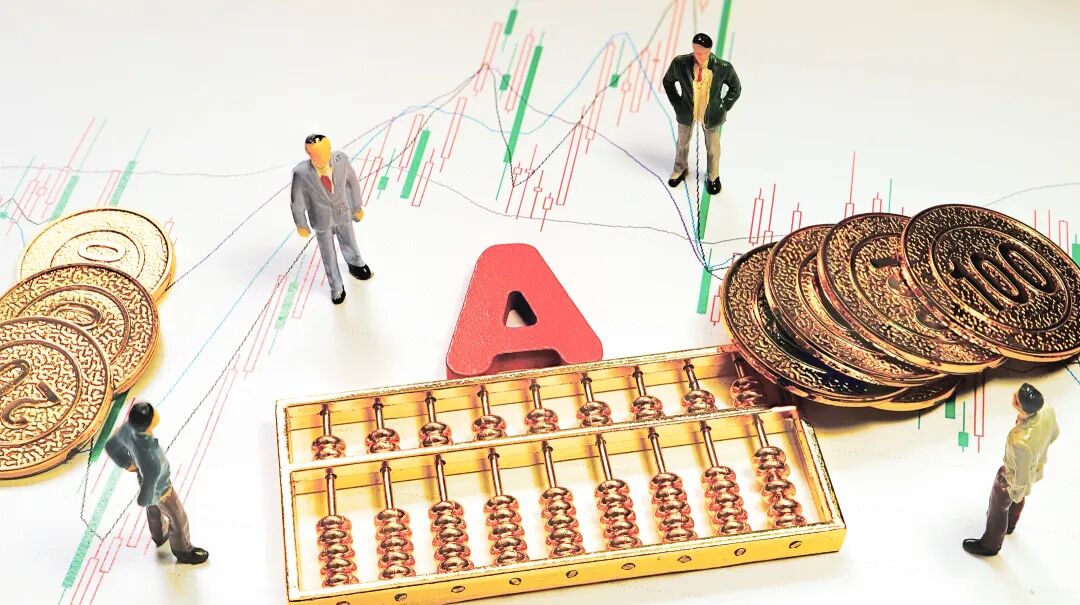
1月15日他追了三维天地,结果当天被套,16日早盘割肉,大亏10个点,然后看到华胜天成低开滑向跌停,接着向上反弹,于是觉得机会来了,立即买 入,又套着了…… 股民"老虎"这两天有点烦。 与此同时,交易所也在行动。1月16日晚间,深交所表示,近期"*ST铖昌"股价出现严重异常波动,公司停牌核查并发布风险提示公告,1月16日复牌后股 价继续涨停,部分投资者在交易该股过程中,存在影响股票交易正常秩序的异常交易行为,依规对相关投资者采取了暂停交易等自律监管措施。 也就是说,监管层给市场过度炒作、操纵市场上了紧箍咒。 "老虎"的烦来自于对顶级游资陈小群席位溢价的信仰。前段时间,只要陈小群买入的股票,要么一字涨停,要么持续涨停,一时间陈小群成了许多股民追 捧的市场"领袖"。"老虎"之所以买入三维天地,因为他看到中国银河证券股份有限公司大连黄河路证券营业部(陈小群常用席位)买了4600万元,后来陈 小群说,这不是他买的,于是三维天地随后下跌,老虎只好割肉止损。1月16日,"老虎"觉得新机会来了,因为华胜天成可是陈小群重仓股,觉得只要他 在,股票就能反弹甚至拉地天板。结果他变成了接盘侠:龙虎榜显示,1月16日,中国银河证券股 ...

股价“抢跑”!这家风电巨头发起关联交易,拟跨界“太空光伏”
Guo Ji Jin Rong Bao· 2026-01-25 21:59
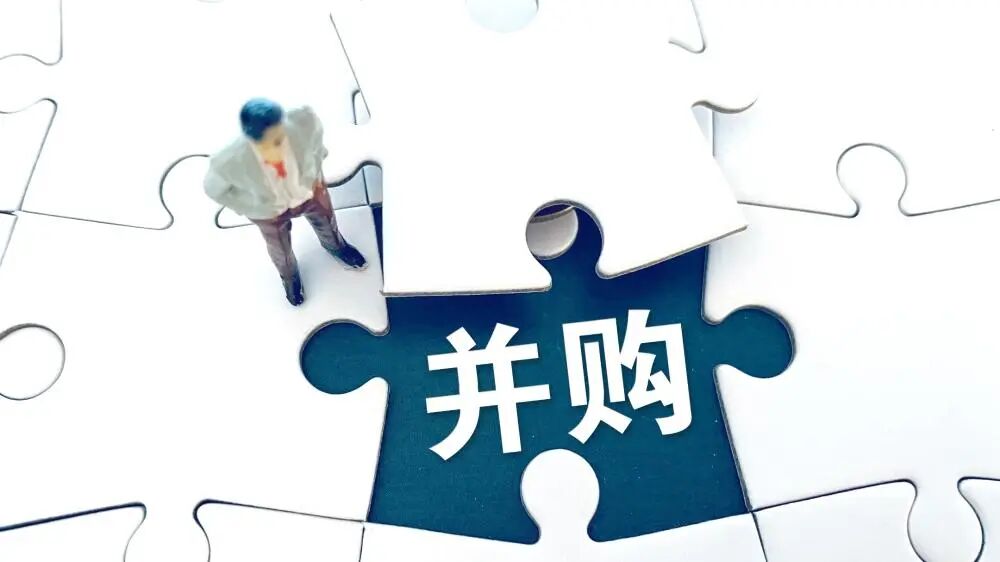
日前,风电巨头明阳智慧能源集团股份公司(下称"明阳智能",601615.SH)发布公告,拟通过发行股份及支付现金方式,收购中山德华芯片技术有限 公司(下称"德华公司")的控制权。公司股票自1月13日起停牌,预计停牌时间不超过10个交易日。 值得注意的是,因交易对方为公司董事张超全资持有,且张超为公司实际控制人近亲属,故本次交易构成关联交易。 另外,在公告发布当天,明阳智能股价涨停收盘于19.68元/股,创下近一年多新高。拉长时间看,1月6日至12日的5个交易日内,其股价区间累计涨幅 高达33.6%,这种明显的"抢跑"行情,引发了市场对信息保密度的关注。 关联交易 就本次的收购标的来看,德华公司成立于2015年8月,注册资本9432万元。其经营范围覆盖半导体外延片、芯片、组件、系统及相关产品的设计、研 发、生产、销售及技术服务。 不过,公司并非传统意义上的通用芯片企业,而是一家专注于高端化合物半导体光电芯片的"专精特新"企业,其核心业务与当前资本市场热点"太空光 伏"概念高度契合。 事实上,德华公司并非一家完全独立的第三方公司,其诞生与"明阳系"资本密切相关。 资料显示,德华公司最初是由明阳智能与其控股股东明阳 ...

特朗普威胁:征收100%关税
Guo Ji Jin Rong Bao· 2026-01-25 04:05
同一天,卡尼在其官方社交媒体账号上展示了一段40多秒的视频,回顾了他近期访问中国、卡塔尔以及 出席世界经济论坛年会相关活动的情况,并表示他正在加强伙伴关系、实现贸易多元化并吸引投资,为 加拿大争取更大的经济和战略利益。 美国总统特朗普1月24 日威胁称,如果加拿大与有关国家"达成协议",将对进入美国的加拿大商品征收 100%的关税。 在特朗普对加拿大发出新一轮关税威胁后,加拿大总理卡尼24日号召该国民众"购买国货",以应对外部 威胁。 卡尼在其个人社交媒体上发布一段事先录制好的视频。卡尼在视频里说:"鉴于我们的经济正在经受来 自国外的威胁,加拿大人做出了选择:专注于我们能够掌控的事情。" 尽管没有直接提及美国,但卡尼重申将推动实施"购买国货"政策。他指出:"我们无法控制其他国家的 行为。但我们可以成为自己最好的客户。我们将购买加拿大产品,我们将用加拿大产品来建设国家。" 当地时间1月9日,美国最高法院表示,当天不会就特朗普政府关税案作出裁决。特朗普政府2025年上台 后援引美国《国际紧急经济权力法》,以不经过国会批准、直接颁布行政令的方式出台一系列加征关税 措施。美国联邦最高法院此前宣布,将在本月9日就关税政 ...
上海国际金融中心一周要闻回顾(1月19日—1月25日)
Guo Ji Jin Rong Bao· 2026-01-25 04:05
Group 1 - The Shanghai Municipal Party Committee has approved the proposal for the 15th Five-Year Plan, emphasizing the enhancement of the international financial center's competitiveness and influence, with specific deployments for building a global RMB asset allocation center and risk management center [1] - The Shanghai financial system work meeting highlighted the importance of party organization coverage in the financial sector and shared progress on the coverage of non-public financial enterprises [2] - The "Action Plan to Enhance the Commodity Level of Nonferrous Metals" was released, aiming to strengthen the linkage between futures and spot markets [3] Group 2 - The Shanghai Financial Regulatory Bureau issued the "Action Plan for High-Quality Development of Pension Finance," proposing 20 measures to build a pension management system with Shanghai characteristics [5] - The first delivery of the futures contract for coated printing paper was successfully completed, with a total delivery volume of 1,840 tons and a delivery amount of nearly 7.6 million yuan [6] - The Shanghai Asset Management Association announced ten major initiatives for building a global asset management center by 2025, reflecting innovative achievements in the sector [8] Group 3 - The Shanghai Futures Exchange announced adjustments to the margin ratios and price limits for copper, aluminum, gold, and silver futures, effective from January 22, 2026 [9] - The Shanghai International Energy Exchange is seeking public opinion on revising its risk control management rules, with feedback due by January 28, 2026 [10] - HSBC China has launched its first local public fund custody business, providing custody services for a fund managed by E Fund Management [11] Group 4 - The launch of the "Intelligent Reporting and Review Project for Ship Insurance Certificates" by PICC Shanghai and the Shanghai Maritime Bureau marks a shift towards online and intelligent processes in insurance certificate review [12] - The Construction Bank has introduced a new RMB structured deposit product in the free trade zone, successfully facilitating two offshore enterprises in managing their funds [13] - The first batch of technology innovation convertible bonds was successfully issued, providing low-cost long-term funding for tech enterprises [14] Group 5 - Shanghai Securities has received approval for its sponsorship business qualification, marking a significant breakthrough in its core business license layout [15] - The successful implementation of the first domestic credit certificate electronic document submission business by the Bank of Communications Shanghai branch represents a new financial service breakthrough [16] - Three branches of Shanghai Rural Commercial Bank have been recognized as the first batch of green branches in Shanghai, promoting sustainable finance [17] Group 6 - The People's Bank of China is focusing on creating a favorable monetary and financial environment to support high-quality economic development [19] - The minimum down payment ratio for commercial property loans has been adjusted to no less than 30% to adapt to changes in the real estate market [20] - The State Administration of Financial Supervision has issued new regulations to standardize the administrative licensing process for financial institutions [24] Group 7 - The China Securities Regulatory Commission has expanded the range of futures market products available for foreign investors, adding 14 new futures options [29] - The CSRC has approved the registration of options for 20 rubber, low-sulfur fuel oil, and international copper, ensuring a smooth launch and operation of these products [30] - Longqi Technology has completed its "A+H" listing, marking a significant milestone in its capital market strategy [31]
特朗普:谈判“进展顺利”,美国将取得格陵兰岛美军基地所在区域“主权”
Guo Ji Jin Rong Bao· 2026-01-25 01:46
特朗普2025年上任以来多次扬言要得到丹麦自治领地格陵兰岛,特朗普1月22日表示,不会为获得 格陵兰岛支付任何费用,美国将取得对这一地区的"全面准入权限"。 丹麦外交大臣拉斯穆森21日表示,自己愿意当面告诉美国总统特朗普,丹麦不会就格陵兰岛主权归 属进行谈判。他重申,美国不会得到格陵兰岛,"这是底线"。22日,丹麦首相弗雷泽里克森发表声明 称,丹麦可以就政治、安全、投资、经济等一切问题进行谈判,但不能就主权问题进行谈判,只有丹麦 和格陵兰岛才能就涉及自身的事务做出决定。 来源:综合央视新闻报道 当地时间1月24日,美国总统特朗普表示,美国预计将获得对格陵兰岛上美军基地所在区域的"主 权",并称相关谈判"进展顺利","我们会得到想要的一切"。 据悉,这不涉及美国全面接管格陵兰,而是使包括皮图菲克太空基地在内的美军设施成为美国主权 控制区域。格陵兰方面已明确表示反对,称主权问题是"不可逾越的红线"。 ...