Chang Jiang Shang Bao

Search documents
河南两集团重组将催生5500亿能源巨头 旗下5家A股公司3家股价强势涨停
Chang Jiang Shang Bao· 2025-09-28 23:18
Core Viewpoint - The strategic restructuring of two major energy groups in Henan, namely Pingmei Shenma Group and Henan Energy Group, is set to create a new energy giant with total assets of approximately 552.14 billion yuan, positioning it as a significant player in the coal and chemical energy sector in China [2][6][7]. Group 1: Company Overview - Pingmei Shenma Group and Henan Energy Group are both controlled by the Henan Provincial State-owned Assets Supervision and Administration Commission and have undergone previous industrial restructurings [3][4]. - As of June 2025, Pingmei Shenma Group and Henan Energy Group reported total assets of 288.48 billion yuan and 263.65 billion yuan, respectively [6][10]. - The combined revenue for both groups in 2024 was approximately 290 billion yuan, with Pingmei Shenma Group generating 168.84 billion yuan and Henan Energy Group 121.05 billion yuan [5][6]. Group 2: Strategic Importance - The restructuring aims to enhance the quality of operations and create a nationally influential energy giant, reflecting a shift from "scale expansion" to "quality improvement" in the state-owned enterprise sector [7][10]. - The merger is expected to optimize capital and asset structures, increase industry concentration, and improve overall competitiveness, which is crucial for sustaining growth in the current market environment [9][10]. Group 3: Market Reaction - Following the announcement of the strategic restructuring, stock prices of three listed companies under these groups, including Yicheng New Energy and Shima Shares, experienced a surge, with some reaching the daily limit [11].


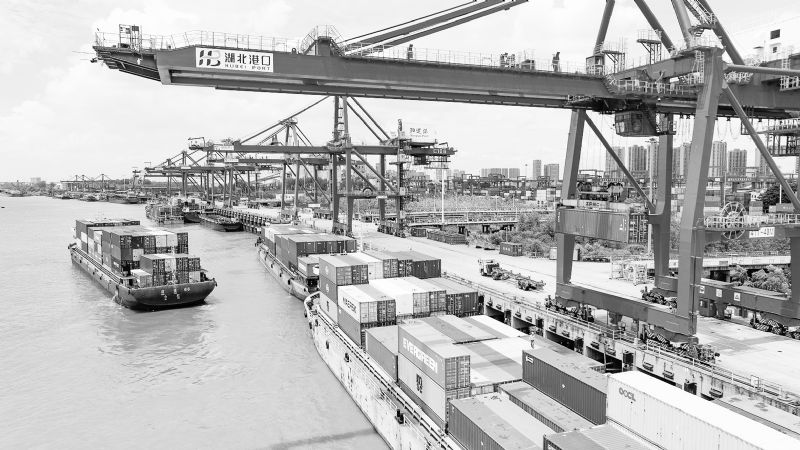
湖北加快打造新时代“九州通衢” “十四五”外贸进出口年均增长13.2%
Chang Jiang Shang Bao· 2025-09-28 23:10
Core Insights - Hubei province is focusing on high-level opening up and enhancing its role as a market hub, with significant progress in trade and investment during the "14th Five-Year Plan" period [2][3][4] Trade and Economic Growth - Hubei's total retail sales increased from 1.8 trillion yuan in 2020 to 2.53 trillion yuan in 2024, with an average annual growth of 8.9% [3] - The province's import and export values have consistently crossed the thresholds of 500 billion, 600 billion, and 700 billion yuan from 2021 to 2024, achieving an average annual growth of 13.2% [3][4] - In the first eight months of 2025, Hubei's import and export growth reached 27.3%, the highest in Central China [3] Consumption and New Growth Drivers - The implementation of consumption upgrade policies has driven over 160 billion yuan in consumption, with significant growth in sectors like home appliances and new energy vehicles [3] - Online retail sales surged by 92.6% compared to the end of the "13th Five-Year Plan" [3] Foreign Trade and Market Expansion - Exports to countries involved in the Belt and Road Initiative increased by 131% compared to the end of the "13th Five-Year Plan," accounting for 53.3% of total exports [4] - The number of enterprises engaged in import and export activities rose to 9,570, with 14 enterprises exceeding 10 billion yuan in import and export value [4] Investment and Infrastructure Development - Hubei attracted 325 Fortune Global 500 companies, leading Central China in investment [5] - The province has established a comprehensive open platform system, including six comprehensive bonded zones and four bonded logistics centers [7] Logistics and Transportation - Hubei's logistics capabilities have been enhanced with the approval of the Huahu Airport as a comprehensive import port and the establishment of multiple international freight routes [7] - The province's highway network has surpassed 8,000 kilometers, achieving a significant milestone ahead of the "14th Five-Year Plan" targets [8]

吉宏股份前三季净利预增超55% 手握13亿资金双轮驱动加速出海
Chang Jiang Shang Bao· 2025-09-28 23:09
Core Viewpoint - Jihong Co., Ltd. has released positive news regarding its financial performance, with significant growth expected in net profit for the first three quarters of 2025, driven by its cross-border social e-commerce and packaging businesses [2][3]. Financial Performance - For the first three quarters of 2025, Jihong Co. anticipates a net profit attributable to shareholders of between 209 million and 222 million yuan, representing a year-on-year increase of 55.00% to 65.00% [3]. - The company expects a net profit excluding non-recurring gains and losses of between 200 million and 214 million yuan, reflecting a growth of 65.72% to 76.86% compared to the previous year [3]. - In Q3 2025, the projected net profit is between 90.6 million and 104 million yuan, with a year-on-year growth of 45.40% to 67.01% [3]. Business Growth - Jihong Co. has achieved substantial growth in both its cross-border social e-commerce and packaging sectors, with the former showing a revenue increase of 52.91% to 2.116 billion yuan in the first half of 2025 [5]. - The packaging business generated 1.115 billion yuan in revenue, marking a 10.04% increase year-on-year [5]. - The company has established itself as a leader in the Chinese paper packaging market and is a significant player in the cross-border social e-commerce sector [5]. Market Expansion - Jihong Co. successfully listed on the Hong Kong Stock Exchange in May 2025, becoming the first A+H listed company in the cross-border social e-commerce and fast-moving consumer goods packaging sectors [6]. - The company reported that its revenue from overseas markets reached 2.274 billion yuan in the first half of 2025, a year-on-year increase of 57.36%, highlighting the importance of international markets for its growth [6]. Shareholder Returns - The company has actively engaged in share buybacks and dividend distributions to enhance shareholder returns, repurchasing 4.0507 million shares for a total of 61.12 million yuan [4]. - Jihong Co. distributed cash dividends totaling 59.7571 million yuan for the 2024 fiscal year and plans to distribute 79.6685 million yuan for the first half of 2025, which is 67.43% of the net profit attributable to shareholders [4]. Research and Development - Jihong Co. maintains a research and development expense ratio of over 2%, with R&D expenses exceeding 1 billion yuan from 2021 to 2024 [6]. - In the first half of 2025, R&D expenses increased by 5.51% to 67.39 million yuan, contributing to the company's innovation-driven growth strategy [6]. Financial Health - As of June 2025, Jihong Co. reported total assets of 4.065 billion yuan and a debt-to-asset ratio of 34.43% [7]. - The company experienced a significant increase in net cash flow from operating activities, rising by 377.80% to 183 million yuan [7].

复星医药拟12.6亿卖资产加码创新药 发力科创三年半研发投入199.6亿
Chang Jiang Shang Bao· 2025-09-28 23:08
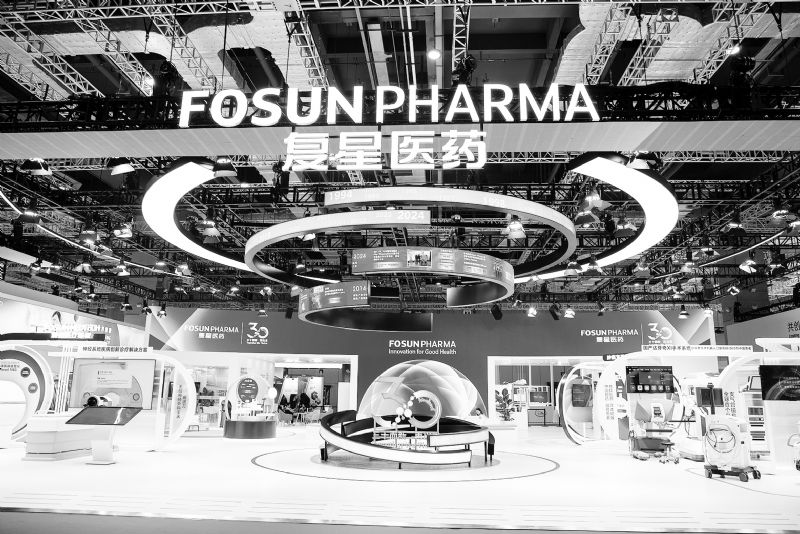
Core Viewpoint - Fosun Pharma is divesting non-core assets to focus on its innovative drug business, with plans to transfer 100% equity of Shanghai Clon to a special fund for 1.256 billion yuan, using the proceeds to enhance investment in innovative drugs [2][5][7]. Group 1: Asset Disposal and Focus on Core Business - Fosun Pharma has signed agreements to dispose of over 2 billion yuan in non-core assets since 2025, including a recent sale of 1.24 million USD for a stake in Unicorn II and 26.54 million yuan for a stake in Shanghai Rehabilitation [7][11]. - The company aims to optimize its asset structure and accelerate cash flow by exiting non-strategic assets, as stated by Chairman Chen Yuqing [7][8]. Group 2: Investment in Innovative Drugs - Fosun Pharma's R&D investment totaled 173.76 billion yuan over the past three years, with 25.84 billion yuan spent in the first half of 2025, bringing the total R&D investment to 199.6 billion yuan over three and a half years [10][11]. - The company has received approvals for four innovative drugs with five indications in the first half of 2025, including treatments for high phosphorus levels in dialysis patients and various cancers [10][11]. Group 3: Financial Performance - In the first half of 2025, Fosun Pharma reported a net profit of 1.702 billion yuan, a year-on-year increase of 38.96%, despite a 4.63% decline in total revenue to 19.514 billion yuan [3][11]. - The revenue from innovative drugs reached 4.3 billion yuan, reflecting a 14.26% increase compared to the previous year, which helped mitigate the impact of centralized procurement on generic drugs [4][11].
尹同跃厚积薄发锻造车企出海冠军 奇瑞汽车“上岸”加力追赶新能源
Chang Jiang Shang Bao· 2025-09-28 23:08
Core Viewpoint - Chery Automobile successfully listed on the Hong Kong Stock Exchange on September 25, raising approximately HKD 9.145 billion, marking the largest IPO for a car company in Hong Kong in 2025 [1][4] Group 1: Company Background and Development - Chery Automobile was founded by Yin Tongyue in 1995, starting from a small team in Wuhu, and has grown into a global automotive group [2][3] - The company has been the top exporter of Chinese passenger cars for 22 consecutive years, showcasing its leadership in the international market [1][5] Group 2: IPO Journey - The IPO journey faced multiple challenges, including complex equity relationships and external economic factors, delaying previous attempts in 2004, 2008, and 2016 [3][4] - The successful IPO in 2025 is seen as a significant milestone for Chery, providing necessary capital for its transformation and growth [1][4] Group 3: Financial Performance - Chery's revenue has shown significant growth, with figures of CNY 926.18 billion in 2022, CNY 1,632.05 billion in 2023, and CNY 2,698.97 billion in 2024, alongside net profits of CNY 58.06 billion, CNY 104.44 billion, and CNY 143.34 billion respectively [7] - The company’s overseas revenue reached CNY 1,008.97 billion in 2024, accounting for 37.4% of total revenue, with total sales reaching 2.6039 million units, a year-on-year increase of 38.4% [6][7] Group 4: Strategic Focus and Challenges - Chery is focusing on innovation and technology, with R&D investments projected to increase from CNY 4.128 billion in 2022 to CNY 10.544 billion in 2024 [5][6] - Despite strong sales growth, Chery faces challenges in the new energy vehicle sector, with a significant portion of revenue still coming from traditional fuel vehicles [7][8] - The company aims to enhance its high-end market presence, but struggles with the performance of its core brand, Exeed, and its collaboration with Huawei [8][9]
赣锋锂业子公司拟引战增资25亿 股价上涨“A+H”市值重回千亿
Chang Jiang Shang Bao· 2025-09-28 23:08
Core Viewpoint - Ganfeng Lithium is taking strategic actions to enhance its integrated lithium ecosystem amid signs of market recovery, including a capital increase of up to 2.5 billion yuan for its subsidiary, Ganfeng Lithium Battery Technology [1][2][3] Group 1: Company Actions - Ganfeng Lithium plans to introduce investors for a capital increase in Ganfeng Lithium Battery, with a total amount not exceeding 2.5 billion yuan [1][3] - The capital increase is aimed at strengthening Ganfeng Lithium's integrated strategy across the lithium ecosystem, with potential plans for Ganfeng Lithium Battery to go public within three years [2][7] - The capital increase will be priced at 3 yuan per 1 yuan of registered capital, and Ganfeng Lithium will waive its preemptive rights for this increase [3][4] Group 2: Financial Performance - Ganfeng Lithium has faced significant financial pressure due to market volatility, reporting a loss of 2.074 billion yuan in 2024, marking its first annual loss since 2007 [2][10] - For the first half of 2025, the company reported a loss of 531 million yuan, although this represents a 30% reduction in losses compared to the same period last year [2][11] - Revenue for 2024 and the first half of 2025 was 18.906 billion yuan and 8.376 billion yuan, respectively, reflecting year-on-year declines of 42.66% and 12.65% [10] Group 3: Market Position and Strategy - Ganfeng Lithium is recognized as a leading global lithium enterprise, possessing unique industrial technologies for lithium extraction from brine, ore, and recycling [9] - The company has established a vertically integrated business model that spans upstream lithium resource development, midstream lithium compound processing, and downstream lithium battery manufacturing and recycling [9][10] - Ganfeng Lithium's stock has seen a significant increase of approximately 56% since the beginning of 2025, with its total market capitalization exceeding 100 billion yuan [2][11]

湖北文旅商体消费市场蓬勃发展 超千场活动打造缤纷“双节”假期
Chang Jiang Shang Bao· 2025-09-28 23:07
Core Insights - The dual celebration of National Day and Mid-Autumn Festival in 2025 creates an 8-day "super long golden week," presenting significant opportunities to boost consumption and expand domestic demand [1] Group 1: Economic Impact - In the first eight months of 2025, Hubei received 662 million tourists, generating a total tourism revenue of 692.86 billion yuan, reflecting year-on-year growth of 14.26% and 15.85% respectively [1] - The total retail sales of consumer goods in Hubei reached 1.724 trillion yuan, growing by 5.7%, which is 1.1 percentage points higher than the national average [1] - Retail sales of sports and entertainment products in Hubei increased by 63.8% to 8.267 billion yuan, surpassing the national growth rate of 43.2% [1] Group 2: Cultural and Tourism Activities - Hubei's cultural tourism system has launched a series of diverse cultural tourism activities under the theme "Meet Autumn in Hubei," including over 600 high-quality performances and 50 themed art exhibitions during the dual festival [2] - The province's museums plan to host 416 exhibitions and 223 themed activities for the National Day and Mid-Autumn Festival [2] - A promotional campaign titled "Let's Go to Hubei" will feature 100 must-visit spots and various travel routes, including moon-viewing and rural tourism [2] Group 3: Night Economy and Ticket Promotions - Hubei will host over 260 events in 11 national-level cultural tourism night consumption clusters, expecting a footfall of over 12.5 million [3] - The "Ticket Economy" initiative allows visitors to exchange tickets for various benefits, enhancing the overall experience [3] - The province will offer over 50 packages for concerts and music festivals, promoting a vibrant night economy [3] Group 4: Sports and Fitness Initiatives - Hubei's sports system will enhance the supply of sports events, including the 2025 Wuhan Tennis Open and the Hubei Digital Sports Games, with upgraded event tickets serving as "city experience passes" [4] - New business models such as sports consumption seasons and night sports consumption will be promoted, integrating online and offline experiences [4] - The province plans to organize 29 sports events and 2 consumption season activities, focusing on community engagement and public sports service [5]
美晨科技虚增利润6.58亿将被ST 四年半亏37.75亿前实控人套现26亿
Chang Jiang Shang Bao· 2025-09-28 23:06
Core Viewpoint - Meicheng Technology (300237.SZ) is facing severe operational difficulties and is set to be designated as ST due to financial fraud involving inflated revenue and profits from 2014 to 2018 [2][3][4]. Financial Fraud Details - The China Securities Regulatory Commission (CSRC) has issued a notice indicating that Meicheng Technology inflated its revenue by 1.438 billion yuan and profits by 658 million yuan during the period from 2014 to 2018 [2][4]. - Specific inflated figures include: - 2014: Revenue inflated by 23.66 million yuan (2.06% of reported revenue), profit inflated by 22.93 million yuan (17.91% of reported profit) - 2015: Revenue inflated by 373 million yuan (20.67%), profit inflated by 189 million yuan (75.64%) - 2016: Revenue inflated by 726 million yuan (24.60%), profit inflated by 260 million yuan (49.78%) - 2017: Revenue inflated by 216 million yuan (5.53%), profit inflated by 117 million yuan (15.49%) - 2018: Revenue inflated by 101 million yuan (2.88%), profit inflated by 69.49 million yuan (15.58%) [4]. Regulatory Actions - The Shandong Securities Regulatory Bureau plans to impose a fine of 600,000 yuan on Meicheng Technology and a total of 2.3 million yuan on 12 responsible individuals [5]. - A 10-year market ban is proposed for Guo Bofeng, who is implicated in the financial fraud [6]. Company Financial Status - Meicheng Technology has not achieved profitability, with cumulative losses of 3.775 billion yuan from 2021 to the first half of 2025 [2][10]. - As of June 30, 2025, the company has a debt-to-asset ratio of 97.61%, with only 40.41 million yuan in cash and interest-bearing liabilities amounting to 2.818 billion yuan [12]. Previous Management Actions - The former actual controllers, Zhang Lei and Li Xiaonan, have collectively cashed out over 2.624 billion yuan before the financial issues surfaced [8][10]. - They executed share transfers and market sales, including a significant transaction in July 2016 where Li Xiaonan sold 33.92 million shares for 333 million yuan [9][10]. Ongoing Legal Issues - Meicheng Technology is currently involved in 11 lawsuits, each exceeding 10 million yuan, totaling approximately 340 million yuan [11].

中际旭创市值飙升年内增3200亿 王伟修之子套现2亿大股东拟减持
Chang Jiang Shang Bao· 2025-09-28 23:06
Core Viewpoint - The major shareholder of Zhongji Xuchuang plans to reduce its stake in the company amid a significant increase in stock price, raising concerns about potential market reactions and future performance [1][2][3]. Shareholder Actions - The controlling shareholder, Shandong Zhongji Investment Holding Co., intends to sell up to 5.5 million shares, representing 0.49% of the total share capital, within three months due to personal funding needs [1][2]. - The controlling shareholder currently holds approximately 127 million shares, accounting for 11.42% of the total share capital [2]. - Other shareholders, including the son of the actual controller, have also been actively reducing their stakes, with significant amounts cashed out in recent months [6]. Stock Performance - Since the beginning of 2025, Zhongji Xuchuang's stock price has surged over 236.31%, reaching a closing price of 413.70 yuan per share on September 26, 2025 [3][4]. - The stock has experienced a remarkable increase of 520.24% from a low of 66.70 yuan per share in April 2025 [4]. Market Context - The optical module market is experiencing rapid growth, driven by strong demand from AI applications and cloud service providers [8]. - Major tech companies are expected to increase their capital expenditures significantly, indicating a robust market environment for optical modules [8]. - The global market for optical modules is projected to grow at a compound annual growth rate of 22% from 2024 to 2029 [8]. Company Performance - Zhongji Xuchuang has shown impressive revenue growth, with operating income increasing from 96.42 billion yuan in 2022 to 238.62 billion yuan in 2024, and net profit rising from 12.24 billion yuan to 51.71 billion yuan during the same period [9]. - In the first half of 2025, the company achieved operating income and net profit of 147.89 billion yuan and 39.95 billion yuan, respectively, reflecting year-on-year growth of 36.95% and 69.40% [9]. - The company continues to invest heavily in research and development, with expenditures increasing from 7.92 billion yuan in 2022 to 13.33 billion yuan in 2024 [9].

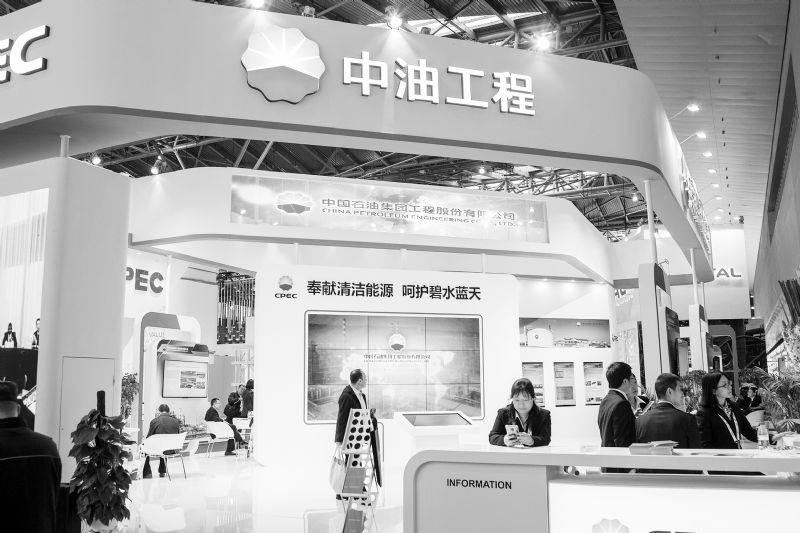
中油工程斩获180.3亿海外大单 国际市场新签合同额增9.86%
Chang Jiang Shang Bao· 2025-09-28 23:06
Core Viewpoint - China Oil Engineering (中油工程) has secured significant overseas contracts, indicating strong international market performance despite a decline in domestic contract signings [2][3][9]. Group 1: Recent Contracts - On September 26, China Oil Engineering announced an EPC contract with Iraq's Basra Oil Company for a seawater pipeline project, valued at $2.524 billion (approximately 18.032 billion RMB) [2][3]. - In the past three months, the company has signed four major overseas contracts totaling 35.38 billion RMB, with three of these projects located in Iraq [6][5]. - The contract for the Iraq seawater pipeline project has a duration of 54 months, which includes 42 months for design, procurement, and construction, followed by 12 months for operation and maintenance training [3][4]. Group 2: Financial Performance - In the first half of 2025, China Oil Engineering reported a total revenue of 36.287 billion RMB, a year-on-year increase of 12.18%, while net profit was 470 million RMB, down 10.87% [9]. - The company achieved a new contract signing amount of 125.076 billion RMB in 2024, marking a 14.39% year-on-year increase, with domestic contracts accounting for 70.32% and international contracts for 29.68% [8]. - In the first half of 2025, the new contract amount from the international market was 23.182 billion RMB, representing a year-on-year growth of 9.86% [9]. Group 3: Market Position and Strategy - China Oil Engineering's business model encompasses the entire value chain of engineering construction, providing comprehensive solutions to clients [3]. - The company has been enhancing its collaboration with international energy firms, such as Total Energy, to solidify its position in the global energy engineering services market [9][10]. - The company plans to raise 5.913 billion RMB through a private placement to fund oil and gas storage and transportation projects and to supplement working capital [10].