
Chang Jiang Shang Bao

Search documents
药明康德上市以来股东累套现400亿 实控人方大举套现百亿引市场警惕
Chang Jiang Shang Bao· 2025-12-21 23:17
Core Viewpoint - The unusual phenomenon of 18 shareholders collectively reducing their stakes in WuXi AppTec (603259.SH) raises market concerns, as these shareholders are associated with the company's actual controller, Ge Li [1][2][5]. Group 1: Shareholder Reduction - From November 26 to December 17, 18 shareholders reduced their holdings by a total of 29.51 million shares, representing 0.989% of the company's total share capital on the announcement date [1][5]. - Cumulatively, these shareholders have reduced approximately 41.34 million shares, resulting in a cash-out of around 3.8 billion yuan [1][6]. - The actual controller and related parties have previously engaged in significant cash-outs, totaling over 10.28 billion yuan since the company's IPO [8][9]. Group 2: Financial Performance - In 2025, WuXi AppTec's revenue and net profit saw substantial growth, with a net profit exceeding 12 billion yuan in the first three quarters, marking an over 80% year-on-year increase [3][11]. - Despite the impressive financial performance, the company's R&D investment has decreased, with a 13.42% reduction in the first three quarters of 2025 compared to the previous year [4][15]. - The company reported a significant increase in investment income, primarily due to the sale of shares in WuXi AppTec's subsidiary, contributing approximately 4.35 billion yuan to the net profit for 2025 [14].

浙商俞发祥600亿文旅帝国临大考 涉百亿金融产品兑付或能平稳渡劫
Chang Jiang Shang Bao· 2025-12-21 23:17
Core Viewpoint - A financial product redemption crisis exceeding 10 billion yuan has pushed Yu Faxiang, the actual controller of Xiangyuan Cultural Tourism, to the brink of collapse [1][8]. Group 1: Financial Crisis - On December 16, 2023, it was announced that all shares held by Yu Faxiang and Xiangyuan Holdings were judicially frozen due to the inability to redeem multiple financial products guaranteed by them [1]. - The Zhejiang Financial Assets Exchange Center reported that a significant amount of funds related to these financial products, amounting to over 10 billion yuan, faced default [5][20]. - The crisis has exposed Yu Faxiang's financial risks, with total assets of approximately 60 billion yuan against liabilities of 40 billion yuan, indicating a precarious financial situation [1][5]. Group 2: Company Background - Yu Faxiang, aged 55, has built a cultural tourism empire with total assets exceeding 60 billion yuan, spanning various sectors including tourism, infrastructure, and marine parks [1]. - The company has been heavily reliant on capital operations, with a history of aggressive financial strategies that have led to significant leverage [18]. - The company has faced challenges due to a downturn in the real estate market, which has strained its cash flow and financial stability [1][19]. Group 3: Government Intervention - A support task force organized by the local government has entered Xiangyuan Holdings to manage risk and protect investor interests [21]. - The task force aims to assess the company's operational status and categorize assets for targeted assistance in addressing debt risks [21]. Group 4: Regulatory Issues - In October 2023, the China Securities Regulatory Commission initiated an investigation into Yu Faxiang for alleged violations of information disclosure laws, which has further complicated the company's financial standing [6]. - The Zhejiang Financial Assets Exchange Center's cancellation of trading qualifications has severely restricted the company's financing options, exacerbating its liquidity issues [19].


魏应州家族抱团创业缔造686亿快消巨头 康师傅两大业务下滑魏宏丞接棒临挑战
Chang Jiang Shang Bao· 2025-12-21 23:16
Core Viewpoint - The announcement of CEO Chen Yingrang's retirement and the appointment of Wei Hongcheng as the new CEO marks a significant shift in leadership at Master Kong, indicating a return of the Wei family to control after 11 years of professional management [1][6]. Leadership Transition - Wei Hongcheng, a member of the controlling Wei family and son of founder Wei Yingzhou, will take over as CEO effective January 1, 2026 [1][6]. - This transition signifies the end of the professional manager era at Master Kong, which has been in place for over a decade [6][7]. Business Performance Challenges - Master Kong's core businesses, instant noodles and beverages, experienced revenue declines in the first half of 2025, with sales down 2.5% and 2.6% respectively [8]. - The company reported a total revenue of 40.092 billion yuan, a decrease of 2.7% year-on-year, while net profit increased by 20.5% to 2.271 billion yuan [8]. - The beverage segment, which had seen consistent growth, faced a revenue decline of 2.6% to 26.359 billion yuan in the first half of 2025, raising concerns about the sustainability of its growth [7][8]. Historical Context - The Wei family began their entrepreneurial journey in 1958 with the establishment of Dingxin Oil Factory, leading to the eventual creation of Master Kong [2]. - The company successfully listed on the Hong Kong Stock Exchange in 1996 and has been recognized as one of Asia's top 50 listed companies by Forbes since 2008 [2]. Family Dynamics and Strategy - The Wei brothers maintained strong family cohesion, pooling resources into a family fund to support collective expenses, which has been crucial for the company's stability [3]. - Wei Yingzhou had been preparing for the succession of his sons since 2013, indicating a long-term strategy for family leadership [4][5]. Market Trends and Competition - The company faces internal challenges with a declining number of distributors and retail outlets, alongside external pressures from evolving consumer preferences towards healthier and more personalized products [7]. - The rise of alternative food options such as ready-to-eat meals and the decline of the "no-sugar tea" trend pose additional risks to Master Kong's market position [7].


东方电缆陆海并进在手订单227亿 经营现金流净额稳增资产负债率45%
Chang Jiang Shang Bao· 2025-12-21 23:15
Core Viewpoint - Dongfang Cable has secured new contracts totaling approximately 3.125 billion yuan, significantly enhancing its order backlog and ensuring stable operations for the company [1][2]. Group 1: New Contracts and Order Backlog - Dongfang Cable and its subsidiary, Ningbo Haicable Research Institute, have received multiple bid notifications, with a total contract value of about 3.125 billion yuan [1][2]. - As of October 23, 2025, the company's order backlog stands at approximately 19.551 billion yuan, which, when combined with the new contracts, totals nearly 22.676 billion yuan, more than double the projected revenue for 2024 [1][5]. - The new contracts represent 34.37% of the company's audited revenue for 2024 [4]. Group 2: Business Segments and Market Position - The new contracts are categorized into three main areas: green transmission facilities, power renewable energy, and deep-sea technology [3][4]. - In green transmission facilities, Dongfang Cable won contracts totaling approximately 0.955 billion yuan [3]. - In the renewable energy sector, the company secured contracts worth about 2.062 billion yuan, including a significant project valued at 1.9 billion yuan for high-voltage submarine cables [3][4]. Group 3: Financial Performance and Stability - Dongfang Cable's profitability has remained stable, with net profits around 1 billion yuan annually from 2021 to 2024 [1][9]. - The company reported a revenue of 9.093 billion yuan in 2024, reflecting a year-on-year growth of 24.38%, and a net profit of 1.008 billion yuan, a slight increase of 0.81% [8]. - As of September 2025, the company's debt-to-asset ratio was 45.13%, and it achieved a net operating cash flow of 0.323 billion yuan, marking a continuous increase [9]. Group 4: Research and Development - Dongfang Cable has transitioned from a single product manufacturer to a comprehensive solution provider, enhancing its competitiveness [6]. - The company has consistently invested in R&D, with expenditures exceeding 200 million yuan annually from 2021 to 2023, and reaching 308 million yuan in 2024 [9].


首批生物制造中试平台名单发布 湖北4家平台入选数量居全国第一
Chang Jiang Shang Bao· 2025-12-21 23:13
生物制造是一种新兴的生产技术,通过生物过程来合成或加工产品,与传统的化学或物理制造方法相 比,具有绿色、高效、可再生等特点,在医药、食品、化工等领域应用前景广阔。2025年,中国政府工 作报告将生物制造、量子科技、具身智能、6G等产业列入重点发展的未来产业。 工信部提到,各地工业和信息化主管部门要指导列入名单的平台聚焦相应服务领域,持续加大资源投入 力度,强化软硬件建设和专业人才培养,不断提升平台对外开放和中试服务水平;同时合理确定服务价 格并严格按照已公示标准及范围收费,认真履行知识产权保护等责任和义务,不得无故拒绝其他单位和 个人的中试服务需求。指导有生物制造中试服务需求的单位和个人,按名单列明的单位名称、服务领 域、地址、联系方式等信息,向相关平台寻求中试服务。 同时,各地工业和信息化主管部门要组织列入名单的平台按照《制造业中试平台重点方向建设要点 (2025版)》《储备中试平台基本条件和管理要求》等填报有关信息,推荐符合条件的平台进入工信部中 试平台储备库,纳入制造业中试平台梯度培育体系。 湖北正加速迈向全国生物制造产业高地。 近日,工业和信息化部办公厅印发生物制造中试能力建设平台名单(第一批),43 ...

东湖高新2.96亿出售湖北数据集团股权 继续推进数字科技转型加速资源整合
Chang Jiang Shang Bao· 2025-12-21 23:12
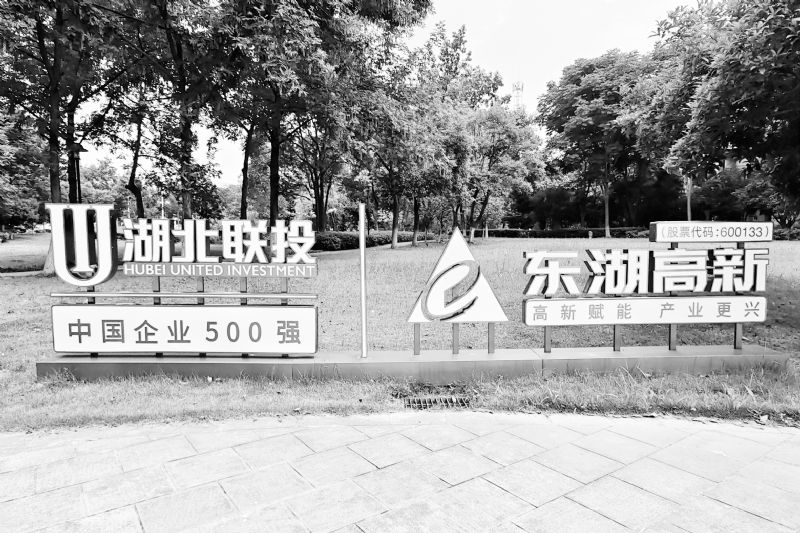
长江商报消息 ●长江商报记者 李璟 配合湖北大数据产业整合需求,东湖高新(600133.SH)出让手中股权。 根据东湖高新日前发布的公告,公司全资子公司武汉东湖高新数科投资有限公司(简称"高新数科")与湖北联投 集团有限公司(简称"湖北联投")签署协议,以2.96亿元转让所持湖北数据集团有限公司(简称"湖北数据集 团")30%股权。交易完成后,东湖高新不再持有湖北数据集团股份。此次转让,旨在优化公司资产结构,聚焦主 业发展。 长江商报记者注意到,自剥离工程建设业务板块之后,东湖高新一直谋求发展新出路,并将数字科技业务视为未 来战略发展方向之一,试图寻找新的业绩增长点。 东湖高新强调,本次湖北数据集团的股份转让,不会影响公司向数字科技领域转型的战略方向,公司将继续推进 数字科技板块的发展战略。 时隔一年出售湖北数据集团 东湖高新出售湖北数据集团事宜敲定。 2025年4月份完成。 公告显示,12月18日,东湖高新全资子公司高新数科与公司间接控股股东湖北联投签订《股权转让协议》。经双 方协商一致,高新数科将其持有的湖北数据集团30%股权以2.96亿元的价格转让给湖北联投,转让价款分两笔支 付。交易完成后,公司将不再 ...

2025武汉投促会签约金额超千亿 多家行业领军企业宣布投资布局
Chang Jiang Shang Bao· 2025-12-21 23:12
Group 1 - The 2025 Wuhan Investment Promotion Conference was held, attracting around 240 representatives from Fortune 500 companies, multinational corporations, and technology innovation firms, showcasing strong confidence in Wuhan's development potential [1][2] - A total of 160 industrial projects were signed at the conference, with a total investment amount of 110.97 billion yuan, covering various sectors including artificial intelligence, new generation information technology, health and biomanufacturing, digital economy, optoelectronic information, and intelligent connected vehicles [1][2] - Wuhan's research capabilities have improved, ranking 8th globally in the "Nature Index - Research Cities," an increase of 5 positions since 2020 [2] Group 2 - The conference featured 38 projects with investments exceeding 1 billion yuan, totaling 81.3 billion yuan, and included 56 projects signed on stage, with 48 industrial projects amounting to 61.62 billion yuan [2] - Wuhan has established and is constructing 7 major technological infrastructures, with 41 national key laboratories, ranking among the top in the country [2][3] - By 2025, the number of high-tech enterprises in Wuhan is expected to exceed 17,000, which is 2.72 times the number in 2020 [3] Group 3 - Leading companies are increasing investments in Wuhan, with Uniscope Group planning to enhance its focus on the city by investing in a global high-end medical equipment innovation manufacturing base [4] - Aptiv, a global automotive technology leader, is making its fourth investment in Wuhan, establishing a manufacturing plant and R&D center for electric distribution systems, expected to be operational by the second half of 2026 [4] - The AI sector is also seeing significant developments, with Zero One Technology planning to establish a data element industry base in Wuhan, leveraging the city's strong talent pool and industrial foundation [5]
互联网平台定价规则2026年4月实施 七章29条护航平台经济高质量发展
Chang Jiang Shang Bao· 2025-12-21 23:12
Core Viewpoint - The newly released "Internet Platform Pricing Behavior Rules" aims to establish a regulatory framework for pricing practices on internet platforms, ensuring market fairness and consumer rights protection [1][2]. Group 1: Regulatory Framework - The "Behavior Rules" consist of 7 chapters and 29 articles, delineating the pricing conduct boundaries for platform operators and internal operators [1][2]. - The rules will be implemented on April 10, 2026, allowing operators time to adjust to the new regulations [1][3]. Group 2: Protection of Operators and Consumers - The rules enhance the protection of internal operators' autonomy in pricing, prohibiting unreasonable restrictions or conditions imposed by platform operators [3][6]. - Consumer rights are reinforced through the implementation of clear pricing standards, promoting transparency in dynamic and differential pricing, and regulating automatic payment services [3][4]. Group 3: Pricing Competition Standards - The rules specify standards for identifying unfair pricing practices, including predatory pricing, price discrimination, and collusion, while addressing issues like "big data price discrimination" [7]. - Platform operators are prohibited from spreading false price increase information, manipulating prices, or misleading consumers regarding pricing conditions [7]. Group 4: Compliance and Implementation - Platform operators are required to conduct self-assessments against the regulatory requirements and refine their internal compliance systems accordingly [3][4]. - There is an emphasis on educating internal operators about the new rules to foster a fair and orderly competitive environment [4].
50城获中央财政补助 消费“三新”试点全面启动
Chang Jiang Shang Bao· 2025-12-21 23:12
Core Viewpoint - The Ministry of Commerce and the Ministry of Finance have issued a notification to implement pilot programs for new consumption formats, models, and scenarios in 50 cities, with significant financial support allocated to enhance consumer spending and stimulate economic growth [1][2]. Group 1: Financial Support and Implementation - The pilot program will provide financial subsidies of 400 million yuan for super-large cities, 300 million yuan for large cities, and 200 million yuan for other cities over a two-year implementation period [1][2]. - A competitive evaluation process was conducted, resulting in the selection of 50 cities, including Beijing, Shanghai, and Wuhan, to participate in the pilot program [2]. Group 2: Objectives and Strategic Directions - The initiative aims to combine consumer promotion with improving living standards, positioning local authorities as leaders in reforming consumption systems [2]. - The program focuses on three core areas: enhancing the first-release economic service system, innovating diverse service consumption scenarios, and promoting cross-industry collaborations with well-known IPs [4]. Group 3: Innovation and Development - The policy encourages the establishment of multi-level product launch platforms and supports innovative product showcases in various sectors, including fashion and electronics [4]. - It promotes the integration of digital technologies like AI and the metaverse with cultural and tourism sectors to create new consumption scenarios [4]. - The initiative also supports the development of night economy zones and the optimization of shopping centers to enhance consumer experiences [4]. Group 4: Cross-Industry Collaborations - The notification encourages collaborations between quality consumer resources and well-known IPs, leveraging digital entertainment and cultural heritage to create immersive shopping experiences [5]. - It aims to foster local cultural characteristics by integrating traditional resources with modern consumption trends, promoting new flagship stores and products [5].
前11月国家铁路发送货物37.27亿吨 旅客发送量42.8亿人次创同期新高
Chang Jiang Shang Bao· 2025-12-21 23:12
Core Insights - The China National Railway Group reported a total freight volume of 3.727 billion tons from January to November 2025, marking a year-on-year increase of 2.7% [1] - The number of passengers transported by rail reached 4.28 billion, a 6.6% increase year-on-year, setting a historical record for the same period [4] Freight Transportation - The China-Europe (Asia) freight trains operated a total of 31,200 trains, reflecting a 9.0% year-on-year growth [1][3] - The railway sector signed logistics contracts totaling 1.4 billion tons, with a significant increase in intermodal transport, sending 15.78 million TEUs, up 15.4% year-on-year [2] - Key commodities transported included 1.064 million tons of cotton, up 31.8%, and increases in smelting materials and grain by 8.5% and 10.0%, respectively [1] Passenger Transportation - The average daily operation of passenger trains was 11,258, a 7.1% increase year-on-year [4] - New services were introduced to cater to group travel needs, including themed trains for events and tourism [4] - Cross-border passenger services were enhanced, with significant numbers of travelers on international routes, including 28.94 million on the Guangzhou-Shenzhen-Hong Kong high-speed rail [4] Infrastructure Investment - The railway sector completed fixed asset investments of 753.8 billion yuan, a 5.9% increase year-on-year, contributing to economic development [5]