Qian Zhan Wang

Search documents
新疆路测谍照曝光!小米汽车第三款车型来了:车长超5米2,续航有望突破1500公里【附新能源汽车行业市场分析】
Qian Zhan Wang· 2025-10-15 07:41
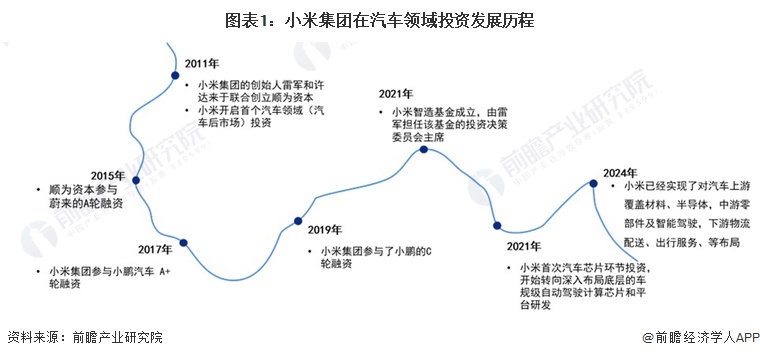
Core Insights - Xiaomi's automotive division is gaining attention with the testing of its third model, the YU9, which is a large SUV with a length exceeding 5.2 meters and a wheelbase of approximately 3.1 meters [1] - The YU9 is expected to feature an 80 kWh battery, with a pure electric range exceeding 400 km and a comprehensive range potentially surpassing 1500 km, alongside a 0-100 km/h acceleration time of around 5 seconds [1] - Xiaomi's automotive business reported revenue of 20.6 billion yuan in Q2 2025, with a gross margin of 26.4%, surpassing Tesla [3] Group 1: Model Development - The YU9 is positioned as Xiaomi's first range-extended vehicle, featuring a flat space of 2.2 meters when the third row is folded down, suitable for camping [1] - The vehicle is expected to include advanced driving features with a laser radar system, continuing the technology used in the SU7 model [1] - Xiaomi's CEO Lei Jun and key executives are actively involved in the YU9's development, indicating that the model is nearing the end of its R&D phase, with a planned release in 2026 [2] Group 2: Strategic Investments - Xiaomi has strategically invested in over 60 companies in the automotive supply chain since 2015, including NIO, Xpeng, and CATL, to acquire necessary technology and expertise [2] - The company has spent 11 billion yuan on acquisitions and investments in key technology firms to enhance its capabilities in electric vehicles [2] Group 3: Production Capacity - Xiaomi's factory in Beijing is ramping up production, with an annual capacity of 200,000 vehicles expected to increase to 420,000 by 2025 [3] - The SU7 model has already achieved over 220,000 deliveries since its launch, maintaining a leading position in the mid-to-large electric sedan market [3] - Predictions indicate that Xiaomi's monthly production capacity could exceed 60,000 units by the end of the year, providing ample supply for the YU9 upon its launch [3] Group 4: Market Trends - The demand for electric vehicles in China is rapidly increasing, with the total number of electric vehicles reaching 24.72 million by mid-2024 [5] - The wholesale sales of new energy passenger vehicles in China reached 10.446 million units from January to September 2025, marking a 32% year-on-year increase [5] - Industry experts predict that by 2030, the penetration rate of new energy vehicles in China could reach 70% [6]

董明珠:格力拥有近14万项专利技术,全部自主开发,很自豪能为特斯拉提供数控机床服务【附数控机床行业市场分析】
Qian Zhan Wang· 2025-10-14 08:47
Core Insights - Gree Electric's Chairman Dong Mingzhu emphasized the importance of innovation and core technology for the company's development, stating that Gree has nearly 140,000 proprietary patents, all developed in-house [2] - Gree has successfully developed over 100 types of CNC machine tools, which not only meet its manufacturing needs but also serve various external sectors, including providing services to Tesla [6] - The CNC machine tool industry in China has seen significant growth, with the market size increasing from 326 billion yuan in 2020 to 382.5 billion yuan in 2022, and is expected to exceed 600 billion yuan by 2029 [6] Company Research - Gree Electric's R&D investment reached 6.529 billion yuan in 2021, marking a year-on-year increase of 5.07% [3] - The company has received 99 significant awards at national, provincial, and industry levels, and has applied for a total of 96,626 domestic and international patents, including 49,549 invention patents [2] - Gree Electric is recognized as the first home appliance company in China to have over 10,000 invention patents authorized [2] Industry Analysis - The CNC machine tool sector is considered the "mother machine" of the industry, with its development directly impacting the overall strength of the manufacturing sector in China [6] - The growth of the CNC machine tool industry is supported by national industrial policies and increasing market demand, leading to unprecedented development opportunities [6] - Gree's diversification into CNC machine tools represents a strategic shift, leveraging 30 years of manufacturing capabilities, patent systems, and management experience to enter higher technology barrier industries [8]


重磅消息!工信部公开征求意见:拟全面提高车企智能化要求和生产准入门槛【附新能源汽车行业发展趋势】
Qian Zhan Wang· 2025-10-14 08:38
Core Viewpoint - The Chinese government is enhancing the regulatory framework for the automotive industry, particularly focusing on the production and product admission requirements for new energy vehicles (NEVs), aiming to improve safety, management efficiency, and support for leading enterprises [2][3]. Group 1: Regulatory Changes - The Ministry of Industry and Information Technology is soliciting public opinions on revised admission requirements for vehicle production enterprises and products, emphasizing improvements in safety and management [2]. - The revisions include raising the standards for intelligent and connected capabilities, as well as production admission thresholds, to strengthen product safety and after-sales service [2]. - New requirements for group management have been added to enhance the efficiency of admission management and resource utilization in the industry [2]. Group 2: Market Growth - The NEV market in China has experienced explosive growth, with a penetration rate reaching 58.37% in September 2025, indicating that nearly 6 out of every 10 passenger cars sold are NEVs [3]. - The penetration rate has significantly increased from 1.42% in January 2018 to 31.6% in 2023, with projections for further growth to 40.3% in 2024 [3]. Group 3: Technological Innovation - The automotive industry is undergoing a deep transformation centered on electrification and intelligence, with a focus on technological innovation as a key driver for enhancing the competitiveness of NEVs [6]. - Future trends in the NEV sector will increasingly emphasize the application of emerging technologies such as artificial intelligence, smart vehicles, vehicle networking, autonomous driving, and cloud computing [6]. Group 4: Industry Insights - Industry leaders emphasize that the first phase of NEVs is focused on electrification, while the next phase will center on intelligence, which is seen as a critical competitive area [8]. - The penetration rate of L2 and above assisted driving vehicles is expected to exceed 55% in the first half of 2024, indicating rapid advancements in automotive intelligence [8].
前瞻全球产业早报:深圳支持车内全无人测试
Qian Zhan Wang· 2025-10-13 01:59
Group 1 - Shenzhen's transportation authority has released a draft for public consultation regarding the management of intelligent connected vehicle road testing, which includes support for fully unmanned testing scenarios and reduced application costs [2] - BYD has responded to rumors about the discontinuation of the Song PLUS model, stating that the Hai Si 06 is its successor, indicating a normal product transition [3] - China's self-developed early warning meteorological system "Mazu" has been successfully implemented in multiple countries, marking a significant advancement in global meteorological governance [4] Group 2 - The first integrated wind-solar-storage system for substations in China has been successfully put into operation, showcasing advancements in energy storage technology and its integration with urban distribution networks [6] - China has become a global leader in the industrial robotics sector, with nearly 300,000 industrial robots expected to be installed in 2024, and an operational stock exceeding 2 million units [7] - Hong Kong seniors are increasingly choosing to settle in mainland cities within the Greater Bay Area, with a reported 40% increase in the number of Hong Kong residents aged 65 and above moving to Guangdong province over the past decade [8] Group 3 - Xiaomi has maintained its position as the top smartphone seller in China for two consecutive weeks, achieving a market share of 21.2% during the recent Golden Week [9] - China Eastern Airlines has announced that all domestic "Air Express" flights on wide-body aircraft will offer free Wi-Fi starting October 11 [10] - The 2025 Best Inventions list by TIME magazine includes products from various companies, highlighting innovations from firms like Huawei, BYD, and NVIDIA [11] Group 4 - A recent HSBC survey indicates that over half of wealthy entrepreneurs are considering relocating abroad, with Singapore being the most preferred destination [12] - Researchers at ETH Zurich have developed a DNA search engine named MetaGraph, which efficiently retrieves vast amounts of information from public biological databases [13] - Elon Musk has criticized OpenAI, claiming it operates on falsehoods and misuses charitable funds for its own profit [14] Group 5 - Tesla has reportedly paused the production of its second-generation humanoid robot due to significant technical challenges in achieving human-like dexterity [15][16] - The Universal Postal Union has reported a significant decline in international postal package volumes sent to the U.S. since the suspension of tax-exempt imports, with a 70.7% drop noted [17] - Samsung has been ordered to pay $445.5 million for infringing on patents related to 4G, 5G, and Wi-Fi technologies [18] Group 6 - Intel has announced that its advanced manufacturing process, Intel 18A, has entered early production and is on track for mass production in Arizona by the end of the current quarter [19] - Didi Chuxing has secured a Series D funding round totaling 2 billion yuan, with investments from various funds and automotive groups [19] - The Hong Kong IPO market has seen significant activity this year, with insurance companies participating as cornerstone investors in multiple listings [20]

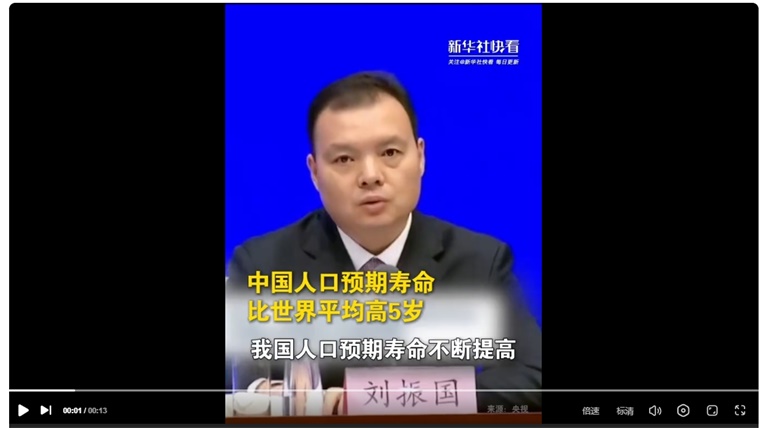
民政部副部长刘振国:中国人口预期寿命提高至79岁,比世界平均水平高了5岁【附养老产业市场分析】
Qian Zhan Wang· 2025-10-12 07:14
Core Insights - The life expectancy in China is projected to reach 79 years during the 14th Five-Year Plan, an increase of 1.07 years from 2020, surpassing the global average by 5 years [1] - The aging population is rapidly increasing, with projections indicating that by the end of 2024, the population aged 60 and above will reach 310 million, accounting for 22% of the total population [3] - The elderly population is expected to grow significantly, with the proportion of those aged 65 and above reaching 15.6% by 2024 [3] Aging Population Trends - The aging trend in China is characterized by both absolute growth in the elderly population and structural changes, with the population aged 60 and above reaching 264 million in 2020, representing 18.7% of the total population [3] - The period from 2021 to 2040 is predicted to be a "high-speed growth period" for the aging population, leading to increased healthcare burdens due to chronic diseases [3] - The prevalence of chronic diseases among those aged 65 and above has consistently exceeded 50% from 2013 to 2018, with a 15.3% increase over five years [3] Elderly Care Demand - The demand for elderly care is growing, but the current care structure in China, based on the "9073" model, is not fully developed, with home care accounting for 96% of the market, community care at 3%, and institutional care at 1% [4] - The existing elderly care market is unable to meet the increasing needs of the elderly population [4] Growth of the Elderly Care Industry - The Chinese elderly care market reached 13 trillion yuan in 2022 and is expected to exceed 19.5 trillion yuan by 2029, driven by the aging trend and the awakening of middle-class awareness regarding elderly care [8] - There is a shift in elderly care from basic living assistance to personalized health management and integrated services, reflecting the rising expectations for quality elderly care [8] Policy and Technological Integration - The transition from family-based care to socialized elderly care is underway, with calls for policy support, a layered service system, precise service content, and the integration of smart technology [10] - The "Smart Health and Elderly Care Industry Development Action Plan (2021-2025)" has been issued, emphasizing the strategic importance of smart elderly care [10] - Digital technologies are reshaping the elderly care industry, with applications such as health monitoring devices, AI for resource matching, and VR for enhancing cultural experiences for the elderly [10]
于东来:胖东来对标的是世界顶级公司,我想让顾客生活更方便美好,而不是挣了多少钱【附超市行业市场分析】
Qian Zhan Wang· 2025-10-12 02:24
Core Insights - The founder of Pang Donglai, Yu Donglai, aims to elevate the supermarket industry by benchmarking against top global companies like Google, Amazon, and Apple, focusing on enhancing customer convenience and well-being rather than merely profit [2][8] - Pang Donglai operates under a "Three High Model" which emphasizes high salaries, high benefits, and high service quality, setting a new standard in the retail sector [2][4] - The company has successfully transformed 11 stores for other retailers, resulting in sales increases of 4 to 9 times and customer traffic growth of 6 times, showcasing its effective management practices [3][4] Company Overview - Pang Donglai was established in 1997, headquartered in Xuchang, Henan Province, with a registered capital of 56.6 million RMB, and operates across various sectors including supermarkets, electronics, and logistics [2][3] - The company has not expanded its physical stores outside the province but has become a mentor for national retail enterprises, providing management standards and operational guidance [2][3] Financial Performance - In 2024, Pang Donglai reported nearly 17 billion RMB in revenue, over 600 million RMB in taxes, and 800 million RMB in profit, with an average employee monthly income exceeding 9,000 RMB [4] - The founder initially projected a profit of 20 million RMB for 2023 but ended up achieving 140 million RMB, indicating strong business performance [4] Industry Context - The Chinese supermarket industry is undergoing significant changes, with traditional hypermarkets facing declining foot traffic and the rise of community discount stores and membership-based models [4][6] - Supermarkets accounted for 12.7% of China's commodity circulation channels in 2021, but the hypermarket model is under pressure, while regional leaders like Pang Donglai thrive through localized operations and customer loyalty [4][6] Future Outlook - The supermarket industry is expected to see further consolidation through mergers and acquisitions, with market concentration increasing [6] - By 2028, the market size of the Chinese supermarket industry is projected to grow at a compound annual growth rate of 2%, reaching 3.55 trillion RMB [6]

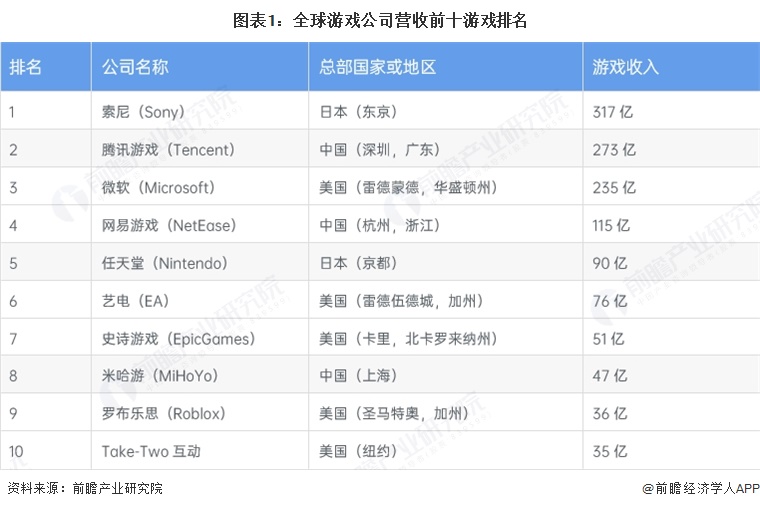
2025年游戏行业全球前十企业竞争分析 中国游戏公司占3成【组图】
Qian Zhan Wang· 2025-10-11 07:53
Core Insights - The article highlights the competitive landscape of the global gaming industry, emphasizing the significant presence of Chinese companies among the top earners, particularly Tencent, NetEase, and miHoYo [2][3][5]. Group 1: Global Gaming Revenue Rankings - In the top ten global gaming companies by revenue, the United States holds five positions, China has three, and Japan has two [2]. - Tencent ranks second with a revenue of $27.3 billion, driven by popular IPs like "Honor of Kings" and significant overseas revenue growth [3][5]. - NetEase ranks fourth with $11.5 billion, showcasing strong performance from titles like "Where Winds Meet" [3][5]. - miHoYo ranks ninth with $3.8 billion, with over 70% of its revenue coming from international markets, primarily from "Genshin Impact" [2][3]. Group 2: Market Concentration in China - The Chinese gaming market is highly concentrated, with the top two companies, Tencent and NetEase, holding a combined market share of 78% as of 2025 [9]. - Tencent's market share is projected to reach 50%, while NetEase's is expected to be 28% [7]. Group 3: New Game Strategies - Tencent has the largest new game pipeline with 35 upcoming titles, covering various genres including shooting, MMO, and open-world games [12][13]. - NetEase follows with 28 new titles, focusing on genres like action RPGs and historical strategy games [12][13]. - miHoYo has a more limited pipeline with only 2 upcoming titles, primarily in the CRPG and life simulation genres [12][13].


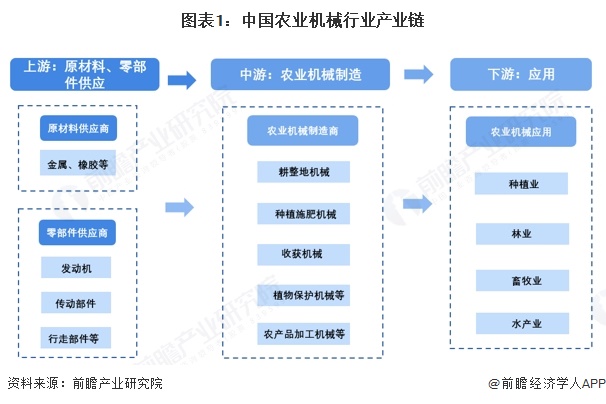
【干货】农业机械行业产业链全景梳理及区域热力地图
Qian Zhan Wang· 2025-10-11 07:08
Core Insights - The article provides a comprehensive overview of the agricultural machinery industry in China, detailing the industry chain, key players, and investment trends. Industry Chain Overview - The agricultural machinery industry chain in China consists of upstream raw material suppliers (steel, non-ferrous metals, rubber) and component manufacturers (engines, transmission parts, walking parts), midstream machinery manufacturers, and downstream applications in agriculture, forestry, animal husbandry, and aquaculture [1][2]. Key Players - Major companies in the agricultural machinery manufacturing sector include Jifeng Technology, Xingguang Agricultural Machinery, Yituo Co., Linhai Co., and Zoomlion [1][2]. Regional Distribution - Agricultural machinery listed companies are primarily located in Jiangsu, Zhejiang, and Chongqing, with Jiangsu having the highest concentration of companies such as Linhai Co. and Yueda Investment. Upstream component suppliers are mainly found in Shandong and Anhui, while downstream planting companies are concentrated in Heilongjiang and Jiangsu [6]. Business Focus and Performance - Companies are focusing on tractors and harvesters, with Yituo Co. and Jifeng Technology leading in revenue from agricultural machinery in 2024. In terms of gross margin, Xinyan Co. and Yijia Co. have higher levels. Yituo Co. and Linhai Co. also report high production and sales volumes [8][9]. Investment Trends - Chinese agricultural machinery companies are enhancing competitiveness through subsidiaries, capital increases, and mergers. Notable investment activities include: - Zoomlion plans to accelerate R&D in high-end agricultural machinery and expand into domestic markets [10]. - Xiamen Agricultural Machinery launched an IPO to fund projects in smart production and agricultural machinery technology [10]. - Jifeng Technology is entering the renewable energy sector through a joint venture [10]. - Yueda Investment is investing in photovoltaic projects to boost its renewable energy business [10]. - Linhai Co. is increasing investment in agricultural machinery through its subsidiary [10].




厨房小家电线上销售渠道抖音电商占比约25%
Qian Zhan Wang· 2025-10-11 01:28
Core Insights - The Chinese kitchen small appliance industry is experiencing a shift in sales dynamics, with online sales showing growth while offline sales are declining [1][2] Online Sales Performance - The online retail sales of kitchen small appliances are projected to reach approximately 47.8 billion yuan in 2024, reflecting a year-on-year growth of 1.7%. In the first quarter of 2025, online sales are estimated at around 12.8 billion yuan [1] Offline Sales Performance - The offline retail sales of kitchen small appliances are expected to be about 13 billion yuan in 2024, continuing a downward trend since 2020 due to changes in shopping behavior caused by the pandemic. The first quarter of 2025 sees offline sales at only 2.4 billion yuan [2] Channel Sales Distribution - In the online channel, professional e-commerce remains the primary sales avenue, with Douyin e-commerce accounting for approximately 25% of kitchen small appliance sales. In the offline channel, large chain stores and regional chains represent 36% and 27% of sales, respectively [3] Future Outlook - The kitchen small appliance industry is anticipated to develop in three key areas: 1. Continued policy benefits with national subsidies for products like rice cookers and blenders expected to manifest post-2025 2. Accelerated channel transformation with instant retail emerging as a new growth engine, catering to consumer demand for quick delivery 3. Innovation focusing on niche scenarios and user-friendly designs to capture specific consumer needs, allowing brands to differentiate themselves in a competitive market [4]
里程碑时刻!比亚迪第1400万辆新能源汽车下线,王传福将新车赠予巴西总统【附比亚迪企业分析】
Qian Zhan Wang· 2025-10-10 08:40
Core Insights - BYD's 14 millionth electric vehicle was officially launched in Brazil, marking a significant milestone in the company's overseas expansion efforts [2] - The construction of the new plant in Brazil took only 15 months, showcasing BYD's rapid growth and production capabilities [2] - BYD's sales performance in the first three quarters of 2025 has been outstanding, with a total of 3.26 million vehicles sold, achieving 71% of its annual target [2] Group 1: Production and Expansion - BYD's new plant in Bahia, Brazil, is one of its largest overseas production bases, with an annual planned capacity of 150,000 vehicles [2] - The time taken to reach 14 million vehicles is significantly shorter than previous milestones, indicating accelerated growth [2] - The company has maintained a leading position in the domestic market, with a market share of 31.7% in 2022 [3] Group 2: Market Performance - In the first three quarters of 2025, BYD achieved a global market share of approximately 13.7%, surpassing Tesla for four consecutive quarters [2] - BYD's overseas sales have exceeded 700,000 units by September 2025, significantly surpassing the total for 2024 [2] - The company has established itself as a leading brand in various international markets, including Europe and Southeast Asia [2] Group 3: Innovation and Recognition - BYD's Seagull model was recognized in TIME magazine's list of the best inventions of 2025, highlighting its innovative capabilities [3] - The company has successfully penetrated multiple international markets, securing significant orders for electric buses in countries like Hungary, Colombia, and Finland [5][7]