Qian Zhan Wang

Search documents
重磅消息!中科院突破固态电池核心技术:可承受2万次弯折,能量密度有望提升86%【附固态电池行业市场分析】
Qian Zhan Wang· 2025-10-10 06:22
Core Insights - A breakthrough in solid-state battery technology has been achieved by a research team from the Chinese Academy of Sciences, addressing key challenges such as high interfacial impedance and low ionic conductivity [2] - Solid-state batteries are considered the "holy grail" of next-generation energy storage due to their high energy density and safety [2][3] - The new design concept of "molecular-scale interfacial integration" has been proposed, leading to the development of novel materials that enhance ionic transport and energy storage capabilities [2] Group 1: Technological Advancements - The research introduces a new material that integrates ethoxy groups and short sulfur chains within the polymer backbone, significantly improving ionic conductivity and reducing interfacial contact issues [2] - Experimental results show that the integrated flexible battery can withstand 20,000 bending cycles, and when used as a polymer electrolyte in composite cathodes, it achieves an energy density increase of 86% [2] Group 2: Industry Context - Solid-state batteries have been in research since the 1970s but have gained renewed focus due to the increasing demand for higher energy density and safety following lithium resource shortages [4] - Major automotive companies like Chery, CATL, and SAIC plan to implement solid-state batteries in their vehicles by 2026-2027, with energy densities exceeding 400 Wh/kg [4] Group 3: Market Implications - The breakthrough is expected to disrupt the long-standing dominance of Western countries in solid electrolyte materials, creating a unique advantage for China in the global market [5] - The commercialization of solid-state batteries is anticipated to begin around 2027-2028, with mass production feasible by 2030, potentially revolutionizing the electric vehicle market [5]

突破1.2亿度!国庆中秋假期高速新能源汽车充电量创新高,日均较平日增长2.59倍【附充电桩行业市场分析】
Qian Zhan Wang· 2025-10-10 06:06
Core Insights - The rapid growth of electric vehicle (EV) ownership in China is highlighted by a record 5.169 million charging sessions and over 123 million kilowatt-hours of charging during the recent National Day holiday, marking a 2.59 times increase in daily charging compared to regular days and a 45.73% increase from the previous year [2] - The market penetration of EVs has risen from 27.6% in 2022 to 31.6% in 2023, with projections indicating that by January-November 2024, this figure could reach 40.3% [2] - The number of charging infrastructure has significantly increased, with 3.288 million new charging stations added in 2024, representing a 19.8% year-on-year growth, bringing the total to over 11.884 million [5] Charging Infrastructure - The availability and efficiency of charging stations are crucial for enhancing user confidence and expanding the EV market, as they need to be as accessible and reliable as traditional gas stations [5] - The Ministry of Industry and Information Technology plans to achieve a 1:1 ratio of electric vehicles to charging stations by 2030, estimating that the number of charging stations will reach 80 million by that year [6] User Experience and Market Dynamics - The increase in charging volume during holidays without significant negative feedback indicates improved supply-demand matching and enhanced user experience [9] - The future of the EV industry is expected to be characterized by smarter charging networks, faster charging technologies, and vehicle-to-grid (V2G) interactions, leading to a more sustainable and efficient transportation system [9]
2025年全球汽车座椅行业发展现状及趋势概况 全球汽车座椅行业市场规模约为941亿美元【组图】
Qian Zhan Wang· 2025-10-10 04:09
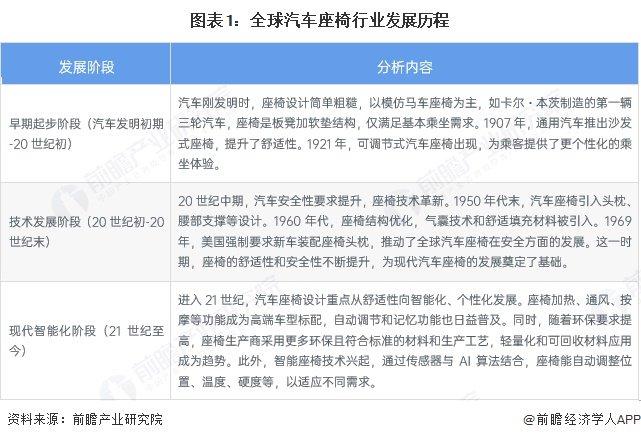
Core Insights - The global automotive seat industry is projected to reach a market size of approximately $94.1 billion in 2024, with a compound annual growth rate (CAGR) of 3.9% expected from 2025 to 2030, leading to an estimated market size of over $118.6 billion by 2030 [9][12]. Industry Development Stages - The automotive seat industry has evolved through three main stages: 1. **Early Stage (Automobile Invention to Early 20th Century)**: Initial designs were rudimentary, mimicking horse-drawn carriage seats, with basic comfort features introduced [2]. 2. **Technological Development Stage (Early 20th Century to Late 20th Century)**: Innovations included headrests and airbags, significantly enhancing safety and comfort [2]. 3. **Modern Intelligent Stage (21st Century to Present)**: Focus has shifted towards smart and personalized features, with the integration of AI and eco-friendly materials becoming prevalent [2][4]. Regional Market Dynamics - The Asia-Pacific region dominates the automotive seat market, accounting for approximately 41% of the market share in 2024. Key players include international suppliers like Faurecia and Johnson Controls, as well as local companies such as Huayu Automotive [4]. - North America holds about 28% of the market share, with Tier 1 suppliers like Adient and Lear leading the market through comprehensive service offerings and partnerships with local automakers [4]. Trade Flow - Major trade flows in the automotive seat industry involve exports from China and Mexico, with China being a primary exporter to the US and Japan, while Mexico exports mainly to the US, Japan, and Canada [7].
【投融资视角】启示2025:中国售电公司投融资及兼并重组分析(附投融资事件、产业基金和兼并重组等)
Qian Zhan Wang· 2025-10-10 03:21
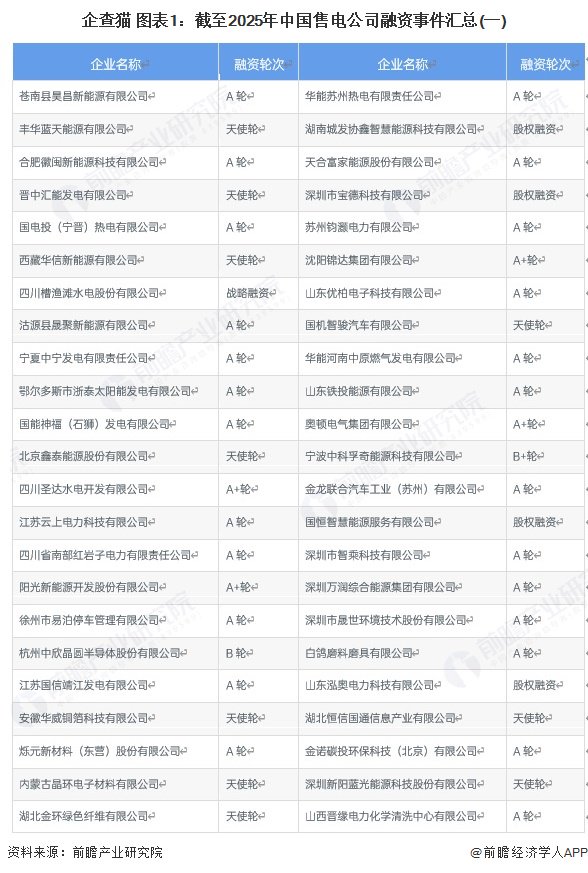
Group 1: Financing Status of Power Sale Companies - As of August 2025, approximately 91 power sale companies in China are in the financing stage [1] - The financing rounds for these companies are primarily concentrated in A rounds and earlier stages, indicating a prevalence of startups in the industry [5] - The regional distribution of financing shows Guangdong Province at 19%, Jiangsu at 15%, and Shandong at 10%, with other provinces below 10% [7] Group 2: Investment Status of Power Sale Companies - The majority of external investments by power sale companies are concentrated in Hebei and Hunan provinces, with 30 and 24 companies respectively [13] - The industry layout for investments shows that 78% of investments are in the electricity, heat, gas, and water production and supply sector, while 7% are in scientific research and technical services [17] Group 3: Mergers and Acquisitions - The current trend in mergers and acquisitions among power sale companies is primarily horizontal mergers [18] - Notable transactions include the acquisition of shares in various energy projects, such as the investment in the Dadu River hydropower development project by Guodian Power Development Co., with a transaction amount of 91,961 million yuan [20] - Other significant transactions include investments in nuclear power and renewable energy projects, which align with the companies' strategies for low-carbon transformation and compliance with national energy policies [20][24]



前瞻全球产业早报:ChatGPT每周用户超8亿,OpenAI要做应用生态
Qian Zhan Wang· 2025-10-09 11:13
Group 1 - Tesla has launched a budget version of Model Y with a starting price of $39,990, which is approximately 11% cheaper than the previous starting price [2] - Chinese researchers have developed a new type of flexible battery that can be bent over 20,000 times without affecting performance, providing a new solution for enhancing solid-state lithium battery performance [2] Group 2 - The Hong Kong government has officially launched a "Mainland Enterprises Going Global Task Force" to support mainland companies in expanding into international markets [4] - The city of Wenzhou will suspend its automobile replacement subsidy policy starting from October 10, 2025, as part of the implementation of national and provincial policies [4] Group 3 - During the first five days of the National Day holiday, inbound tourists using Alipay increased their spending by nearly 40% compared to the same period last year, with retail spending rising over 200% [5] - Xiaomi's 17 series sales have increased by over 20% compared to the same period last year, with the Pro series exceeding expectations [5] Group 4 - The OECD's TALIS 2024 report shows that Shanghai's junior high school teachers rank highly in various indicators compared to OECD developed countries [6] - Shenzhen's drone cargo flights reached 548,000 in the first eight months of the year, marking a 57% year-on-year increase [6] Group 5 - Trump announced a 25% tariff on imported medium and heavy trucks starting November 1, 2025, following a previous announcement regarding heavy trucks [10] - Boeing plans to significantly increase the production of the 737 MAX to 42 aircraft per month by October, with further increases planned for 2026 [13] Group 6 - Aston Martin has issued a profit warning, predicting a decline in wholesale sales and abandoning plans for positive free cash flow in the second half of 2025 [10] - Eli Lilly announced a $1 billion investment in India to expand its manufacturing footprint, focusing on key therapies for diabetes and cancer [11] Group 7 - The well-known American pharmacy chain Rite Aid announced the closure of its last 89 stores, marking the end of over 60 years of operation [12] - Faraday Future has finalized its plan for localized production and assembly of the FX Super One in the U.S. [15] Group 8 - Apple is seeking a new leader for its AI department, looking externally to fill the position [16] - OPEC+ plans to further increase oil production starting in November [17]

【投资视角】启示2025:中国生物医用材料行业投融资及兼并重组分析(附投融资事件、产业基金和兼并重组等)
Qian Zhan Wang· 2025-10-09 09:08
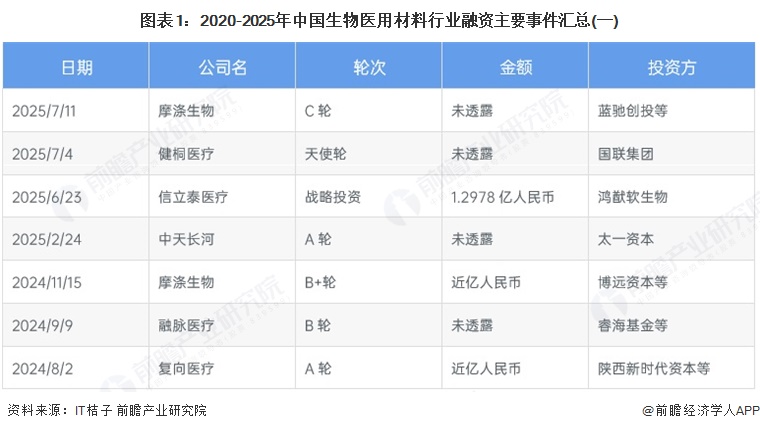
Group 1: Core Insights - The article discusses the financing status and trends in the biomedical materials industry in China from 2020 to 2025, highlighting significant investment events and the overall investment landscape [1][5][19]. Group 2: Financing Events Summary - A summary of major financing events in the biomedical materials industry from 2020 to 2025 is provided, detailing various companies, funding rounds, amounts, and investors [2][3][4]. - Notable financing events include: - Xintai Medical received 129.78 million RMB in strategic investment on June 23, 2025 [2]. - SupiraMedical raised 40 million USD in a D round on November 22, 2023 [3]. - Multiple companies, such as MoDi Bio and Rongmai Medical, have engaged in various funding rounds, indicating a vibrant investment environment [2][3][4]. Group 3: Financing Scale Analysis - The financing scale in the biomedical materials manufacturing industry shows a trend of "initial rise, peak, and subsequent adjustment," with financing occurrences peaking at 13 in 2021 and dropping to 4 in the first half of 2025 [5]. - The total financing amount reached a peak of 5.473 billion RMB in 2021, followed by a significant decline to 201 million RMB in the first half of 2025 [5]. Group 4: Financing Rounds Analysis - Since 2020, early-stage financing rounds have dominated, with A rounds being the most active at 15 occurrences, followed by angel rounds at 9 [7]. - Early-stage rounds (angel, Pre-A, A, and A+ rounds) accounted for over 60% of total financing events, indicating a preference for investing in early-stage companies [7]. Group 5: External Investment Landscape - The primary regions for external investments by major biomedical materials companies in China are Beijing and Shanghai, with 30 and 25 investments, respectively [10]. - The industry investment layout shows that scientific research and technical services account for 42%, manufacturing for 23%, and wholesale and retail for another 23% [11]. Group 6: Mergers and Acquisitions - The mergers and acquisitions market in the biomedical materials sector is characterized by continuous growth, with horizontal mergers being the primary focus, supported by policy incentives and industry demands [12]. - Recent notable transactions include: - SINOCERA's acquisition of DEKEMA for 10.21 million RMB, enhancing its product layout in the dental field [15]. - The acquisition of SPIDENT by SINOCERA for 704 million RMB, aimed at expanding its presence in the dental medical field [15]


智慧交通产业招商清单:中国移动、海信网络科技、千方科技等最新投资动向
Qian Zhan Wang· 2025-10-09 04:38
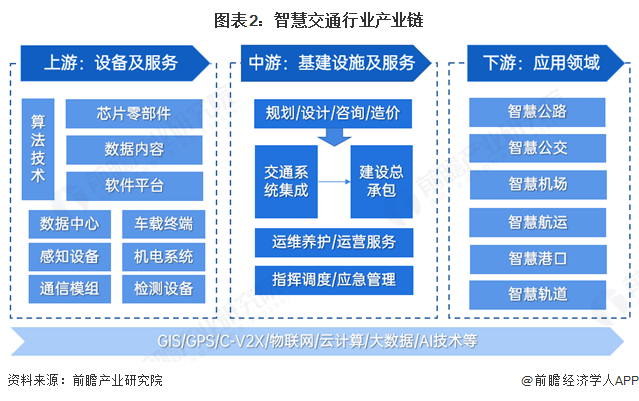
Core Insights - The traditional transportation system is facing unprecedented challenges due to urbanization and increased travel demand, leading to issues like traffic congestion, environmental pollution, and safety accidents, which hinder urban development and quality of life [1] - Smart transportation offers more than just technological upgrades; it aims to systematically restructure the transportation ecosystem, achieving over 30% improvement in traffic efficiency in cities like Beijing and Shenzhen through AI algorithms [1] - The smart transportation industry is characterized by a competitive landscape with multiple strong players, particularly evident in the 2024 urban intelligent transportation market, which is dominated by three major groups: mobile (China Mobile), telecom (China Telecom), and rail (China Railway) [3][5] Industry Overview - The smart transportation industry encompasses a wide range of segments and is supported by various core technologies and resource advantages, leading to a diversified development pattern [3] - The industry value chain includes upstream components such as algorithm design, chip parts, data content, data centers, software platforms, onboard terminals, sensing devices, electromechanical systems, communication modules, and detection equipment, while the midstream focuses on infrastructure and services [1] Market Dynamics - The competitive landscape has created a unique ecosystem where communication companies dominate the data transmission layer, infrastructure groups control the physical layer, and specialized companies like Hisense and Yihualu establish differentiated barriers at the application layer [5] - Local governments are encouraged to attract smart transportation companies to enhance urban traffic management, alleviate congestion, improve residents' travel experiences, and promote regional economic transformation [5] Key Players - Notable leading companies in the smart transportation sector include Hisense Network Technology, China Mobile, China Telecom, and various specialized firms that have emerged as competitive players in the market [7][9] - Hisense Network Technology, established in December 2000, is a leading provider of urban intelligent transportation system integration solutions and has successfully applied its products and solutions in 12 countries globally [7][9] Market Growth - The smart transportation market in China has seen significant growth, with the total market size increasing from 97.3 billion yuan in 2016 to 236.7 billion yuan in 2023, reflecting the ongoing advancement in intelligent transportation applications [13] - The industry is expected to continue its rapid growth phase, driven by advancements in big data, machine learning, and AI technologies [11][15]

年产值超千亿元!宁德时代洛阳基地二期项目正式投产,年产能增加 30GWh【附宁德时代企业分析】
Qian Zhan Wang· 2025-10-07 08:45
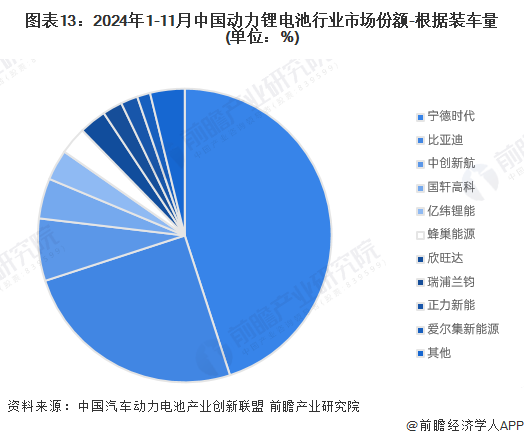
Core Insights - CATL's Luoyang base phase II project has officially commenced production, enhancing its global manufacturing footprint and aligning with "lighthouse factory + zero-carbon factory" standards [1] - The phase II project includes 3 cell production lines and 10 PACK production lines, expected to increase annual capacity by 30GWh, contributing to an anticipated annual output value exceeding 100 billion yuan once fully operational [1] - CATL maintains a dominant position in the global battery market, with a significant market share in both automotive and energy storage sectors, outperforming competitors [3][6] Company Developments - The Luoyang base's phase I project has achieved a cumulative output value exceeding 10 billion yuan since its production began in November 2024 [1] - Construction progress for phases III and IV is ongoing, with 60% and 25% completion respectively, indicating a strong commitment to expanding production capabilities [1] - CATL's strategic focus on building "lighthouse factories" aims to reduce unit costs through scale and intelligent production while adhering to global carbon neutrality trends [6] Market Position - In the automotive battery sector, CATL leads with over 5% market share, significantly ahead of competitors like BYD and Zhongchuang Xinhang, which have less than 5% [1] - In the energy storage battery market, CATL holds over 33.5% market share, reinforcing its leadership position [3] - As of February 2023, over 18 million vehicles globally are equipped with CATL batteries, showcasing strong market recognition and trust in its products [3]

2025年中国水下机器人产业供应链十大代表性企业:天海防务、亚星锚链、鳍源科技、潜行创新、蔚海明祥……
Qian Zhan Wang· 2025-10-07 08:03
Core Insights - The underwater robotics industry is increasingly recognized as a key component in marine development, driven by government support and strategic initiatives [2][39] - The industry has established a complete value chain, from upstream technology development to downstream applications across various sectors [3][39] Industry Development - The Chinese government prioritizes the underwater robotics sector in its "14th Five-Year Plan," providing funding and favorable policies to promote technological innovation [2][39] - Coastal provinces like Guangdong, Shanghai, Jiangsu, and Zhejiang have become hubs for underwater robotics companies, benefiting from economic and marine resource advantages [5][36] Market Structure - The underwater robotics market in China is segmented into consumer-grade, industrial-grade, and military-grade products, with notable companies in each category [7][39] - The market is expected to grow significantly, with projections indicating a market size of approximately 74.74 billion yuan by 2030, reflecting a compound annual growth rate of 28.3% from 2025 to 2030 [39][40] Key Players - Leading companies in the underwater robotics sector include: - Tianhai Defense, known for its AUV and ROV capabilities, with a revenue of 3.945 billion yuan in 2024 [10] - Yaxing Anchor Chain, the largest anchor chain manufacturer globally, with a production capacity of 200,000 tons [13] - Qiyuan Technology, specializing in underwater AI solutions and holding over 150 global patents [16] - Qianxing Innovation, a leading global player in underwater robotics with a strong R&D team [18] - Deep Blue Technology, focusing on underwater intelligent equipment and solutions [21] Market Trends - The global underwater robotics market is projected to reach $7.85 billion by 2024, with North America being the largest market [33][34] - China's underwater robotics market is expected to reach $2.35 billion by 2024, making it the second-largest market globally [34] - The industry is entering a high-growth phase, driven by advancements in AI, 5G, and new materials, enhancing product intelligence and operational capabilities [40]


【干货】电感器件行业产业链全景梳理及区域热力地图
Qian Zhan Wang· 2025-10-06 06:09
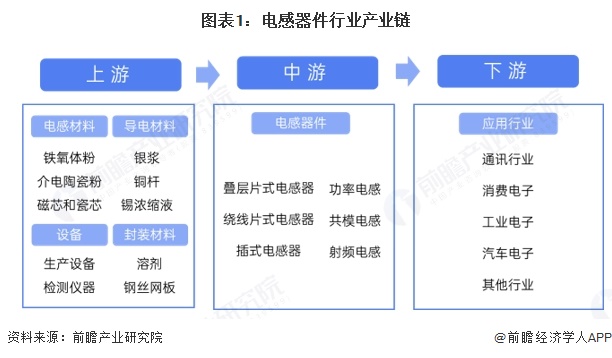
Core Insights - The article provides a comprehensive overview of the inductor component industry, detailing its supply chain, key players, and recent investment trends in China [1][2][12]. Industry Overview - The inductor component industry supply chain consists of upstream materials (ferrite powder, dielectric ceramic powder, magnetic cores, conductive materials), midstream manufacturing (various types of inductors), and downstream applications in electronics, automotive, and communication sectors [1][2]. - Major upstream suppliers include Hengdian East Magnetic, Suzhou Good, and Yunnan Copper, while midstream manufacturers include domestic firms like Sunlord Electronics and MPS Technology, and international players like TDK and Murata [2]. Regional Distribution - Guangdong and Zhejiang provinces are the primary hubs for inductor component companies in China, with 6,850 and 6,390 firms respectively as of August 2025 [5]. - Representative companies in Guangdong include Fenghua Advanced Technology and Sunlord Electronics, while Zhejiang features Yuhang Electronics and Baide Electronics [7]. Key Players and Financials - Notable companies in the industry and their revenue from inductor-related businesses include: - Sunlord Electronics: Revenue of 58.52 billion, accounting for 99.23% of total business [10] - MPS Technology: Revenue of 17.53 billion, accounting for 55.64% [10] - Fenghua Advanced Technology: Revenue of 48.66 billion, accounting for 98.51% [10] - Keleke: Revenue of 38.99 billion, accounting for 83.08% [10] Investment Trends - Recent investments in the inductor sector include: - Alu Technology plans to invest 450 million in a new high-end integrated inductor project in Huizhou, expected to yield a post-tax internal rate of return of 23.34% [13]. - Fenghua Advanced Technology is expanding production capacity for integrated inductors and laminated inductors to meet market demand [12][13]. - Sunlord Electronics has completed a project in Dongguan, projected to become the largest passive component manufacturing base globally, with an expected annual output value of 4.5 billion [13].