Qian Zhan Wang

Search documents
超硬材料产业招商清单:中兵红箭、力量钻石、四方达等最新投资动向【附关键企业名录】
Qian Zhan Wang· 2025-07-25 06:23
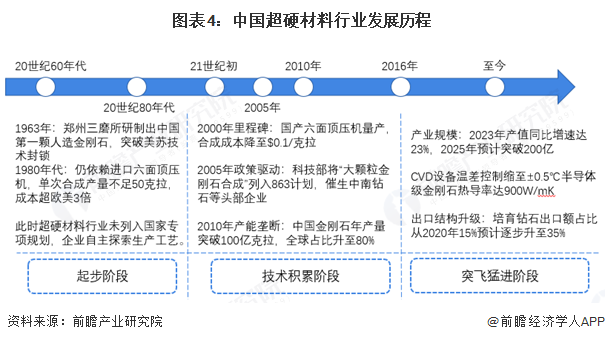
Core Insights - The superhard materials industry is crucial for modern manufacturing, involving the research, production, and application of synthetic diamonds and cubic boron nitride (CBN) [1][3] - China's superhard materials industry has evolved from breaking technological barriers to dominating the mid-to-low-end market, with industrial diamond production accounting for over 95% of global output in 2023 [1][4] - The industry is strategically important for national high-end manufacturing and technology independence, with goals set for 2025 to maintain a 95% global production share of basic materials and achieve over 30% localization of high-end products [3][4] Industry Development - The superhard materials industry in China has formed a closed-loop ecosystem from upstream domestic substitution to midstream monopoly and downstream application explosion [4] - Upstream: High-purity graphite and catalyst agents are supplied at scale, with 100% localization of six-sided press machines, while semiconductor-grade CVD equipment remains reliant on imports [4] - Midstream: China has achieved a global monopoly in industrial diamonds, cultivated diamonds, and cutting tools, with cultivated diamonds expected to penetrate new markets worth hundreds of billions by 2025 [4] - Downstream: Applications have expanded from traditional machining to high-end fields like semiconductor wafer cutting and quantum computing [4] Government Support and Market Dynamics - Local governments are prioritizing the superhard materials industry for investment attraction, offering incentives, land resources, and establishing industrial parks [5] - Collaboration with universities and research institutions is emphasized to promote integrated development and provide technical support [5] - The industry has seen the emergence of competitive leading enterprises, supported by favorable policies and market dynamics [5] Key Enterprises - Notable companies in the superhard materials sector include: - Zhongbing Hongjian Co., Ltd. with a registered capital of 139,255.89 million RMB, focusing on smart ammunition and superhard materials technology [9][11] - Henan Huanghe Whirlwind Co., Ltd. with a registered capital of 144,218.45 million RMB, recognized for its technological innovation [5] - Henan Sifangda Superhard Materials Co., Ltd. with a registered capital of 48,590.883 million RMB, known for its industry standards [5] Challenges and Future Outlook - Despite its global dominance, the industry faces structural challenges, including a low capacity utilization rate of 60% and a talent gap exceeding 30,000 in high-end fields [13][15] - The reliance on imports for core equipment, particularly in semiconductor-grade CVD technology, is a critical issue that needs addressing [15] - Initiatives are underway to establish talent training bases and enhance domestic production capabilities, aiming for a 30% localization rate in high-end CVD equipment by 2025 [15]


2025年中国奶酪行业细分产品现状 再制奶酪占据主导地位【组图】
Qian Zhan Wang· 2025-07-25 05:13
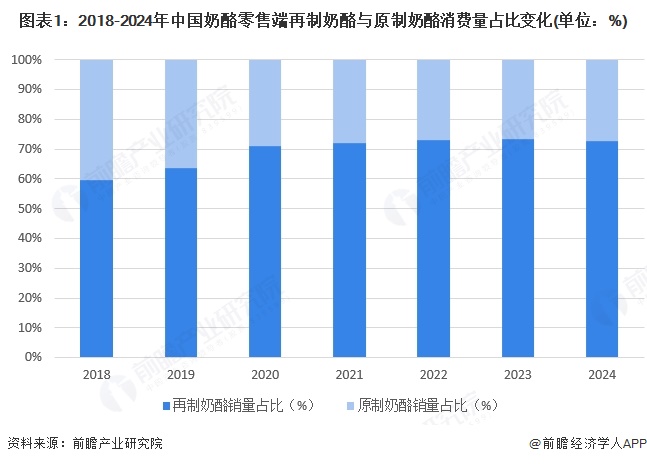
Core Insights - The Chinese cheese market is experiencing a shift towards processed cheese, with a significant preference for softer and richer flavors among consumers [1][6] - The retail sales of processed cheese have increased to 73.4% from 2017 to 2023, indicating a growing trend towards this product type [1] - The market for processed cheese is projected to reach 9.8 billion yuan in 2024, with a year-on-year growth of 4.2% [11] Processed Cheese Market - Processed cheese, also known as reconstituted cheese, is made from one or two types of natural cheese and is characterized by its mild flavor and longer shelf life [6] - The market for processed cheese is expected to see a compound annual growth rate (CAGR) of 17.7% from 2018 to 2024, with a market size of 3.7 billion yuan in 2024 [5][11] - The product categories in the processed cheese segment include spreadable processed cheese and other forms such as cheese sticks and processed cheese shreds [7] Natural Cheese Market - Natural cheese, often referred to as original cheese, is categorized into hard and soft cheeses, with hard cheese containing 49%-56% moisture and high nutritional value [2] - The market for natural cheese is growing, but at a slower pace compared to processed cheese, with a projected market size of 3.7 billion yuan in 2024, reflecting an 8.8% year-on-year growth [5]
【冰箱】行业市场规模:2024年中国冰箱行业市场规模约1600亿元 零售市场均价达3670元/台
Qian Zhan Wang· 2025-07-25 04:32
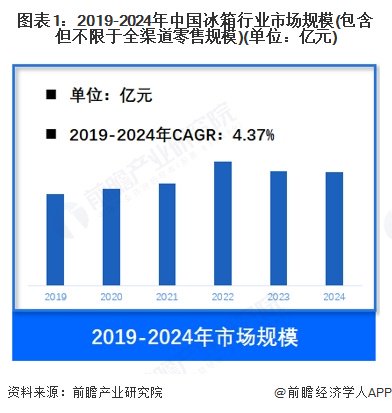
Core Insights - The Chinese refrigerator industry is projected to reach a market size of approximately 160 billion yuan in 2024, with a compound annual growth rate (CAGR) of 4.37% over the past five years [1] - China leads the world in both refrigerator production and export volume, with Haier maintaining the top global sales position for 17 consecutive years [1] Market Trends - The average retail price of refrigerators in China is expected to exceed 3,670 yuan per unit in 2024, driven by rising prices of raw materials, increased adoption of high-end products, and the integration of smart technologies [2] - The market is witnessing a growing share of high-end and built-in refrigerators, contributing to the overall price increase [2] Competitive Landscape - The domestic refrigerator market features numerous leading manufacturers, including Haier, Midea, and Rongsheng, with specific strategic initiatives outlined as follows [3]: - **Haier**: Continues to lead in global retail volume, plans to launch an AI-powered refrigerator in 2025, and has received design awards for its innovative preservation technology [5] - **Midea**: Reports a 45% year-on-year increase in retail sales for its high-end brand COLMO, with a focus on smart and energy-efficient technologies [5] - **Rongsheng**: A core brand under Hisense, plans to introduce a new series of preservation refrigerators in 2025, emphasizing energy-saving and advanced preservation features [5] - **Other Brands**: Companies like Meiling and Eason Ping are also expanding their market presence with innovative products and significant growth in overseas sales [5]




2025年中国供应链金融行业产品现状 多样产品为企业提供多元化融资方案【组图】
Qian Zhan Wang· 2025-07-25 03:14
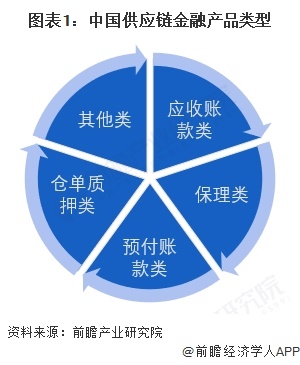
Core Insights - The article discusses the diverse types of supply chain finance products in China, emphasizing their role in enhancing liquidity for enterprises through various financing solutions [1][3]. Product Types - Supply chain finance products are categorized into four main types: accounts receivable financing, prepayment financing, inventory financing, and others, aimed at revitalizing enterprise liquidity [1][3]. - Accounts receivable financing involves transferring receivables to a financial institution for funding, which includes comprehensive services like receivables management and bad debt guarantees [3][4]. - Prepayment financing is primarily used for downstream financing of core enterprises, with two main business models: "first invoice then payment" and "warehouse receipt financing" [8][10]. - Inventory financing is divided into inventory financing and warehouse receipt financing, with the latter further categorized into standard and ordinary warehouse receipts [10]. Specific Product Details - **Recourse Factoring**: A type of factoring where the factor has the right to reclaim funds from the financing party if receivables cannot be collected [4]. - **Leasing Factoring**: Provides financing based on receivables from leasing companies, similar to a "re-factoring" service [4]. - **Accounts Receivable Pledge Financing**: Involves pledging accounts receivable as collateral for short-term loans, requiring notification to core enterprises for confirmation [6]. - **Standard Warehouse Receipt Financing**: Involves using standard warehouse receipts as collateral, primarily for commodities like soybeans, copper, and aluminum [10]. - **Ordinary Warehouse Receipt Financing**: Utilizes ordinary warehouse receipts for financing, requiring clear ownership of the pledged goods [10]. Industry Impact - Supply chain finance plays a crucial role in promoting economic development by helping enterprises activate their liquid assets, including receivables, prepayments, and inventory [3].




DeepSeek月均下载量暴跌72.2%!周鸿祎:梁文锋不屑于做APP,他把技术全都开源免费【附大模型行业市场分析】
Qian Zhan Wang· 2025-07-25 01:34
Core Insights - DeepSeek's monthly average downloads significantly dropped from 81.13 million in Q1 2025 to 22.59 million in Q2 2025, a decline of 72.2% [2] - The decline is attributed to user diversion to other applications that have integrated DeepSeek's open-source model, with 59.2% of lost users switching to Baidu App and 38.6% to Doubao App [2] - Major companies like Alibaba, ByteDance, and Baidu have launched cheaper competing APIs, further squeezing DeepSeek's market space [2] Company Overview - DeepSeek, developed by Deep Seek (Hangzhou) Technology Co., is an open-source AI product known for its low cost and high performance, with a training cost of only $6 million using 2048 NVIDIA H800 GPUs [3] - Despite the drop in downloads, DeepSeek's open-source strategy has contributed significantly to the industry's development [3] Industry Context - The AI model cost in China is significantly lower than that of international giants, with DeepSeek-R1's inference cost being about one-thirtieth of OpenAI's operational cost [5] - As of April 2024, approximately 305 large models have been launched in China, with 254 of them having over 1 billion parameters [4] Competitive Landscape - Baidu's Wenxin model 4.5 and X1 have been released, with the former outperforming GPT-4.5 in several tests and having an API call price only 1% of GPT-4.5's [5] - The competitive landscape includes various models such as Alibaba's Tongyi Qianwen, ByteDance's Doubao model, and others, each with unique features and pricing strategies [6] Technological Impact - AI technologies represented by DeepSeek are becoming core drivers of industry innovation, enhancing data integration, multi-modal analysis, and complex scenario simulation [7] - The lightweight nature, performance improvements, and rapid cost reductions of large models are accelerating their development and application in new industrialization [9]


前瞻全球产业早报:12月18日海南自贸港全岛封关
Qian Zhan Wang· 2025-07-24 12:10
Group 1 - Volant Aviation has signed a tripartite cooperation agreement with Pan Pacific and China Aviation Technology International Engineering Company to procure 500 units of VE25-100 eVTOL, valued at $1.75 billion, marking the largest international order for Chinese high-grade passenger eVTOLs to date [2] Group 2 - Alibaba is set to launch its first self-developed AI glasses this week, featuring basic functionalities such as voice assistant, music playback, phone calls, real-time translation, and meeting minutes [3] Group 3 - Mitsubishi Motors has officially severed its joint venture with Shenyang Aerospace Mitsubishi Motors Engine Manufacturing Co., effectively exiting the Chinese automotive production market after 40 years [4] Group 4 - The Hainan Free Trade Port is scheduled to officially start its closure on December 18, 2025 [4] Group 5 - A report circulated that starting July 20, fuel vehicles would be completely banned from ride-hailing platforms in Beijing; however, the source was unverified and subsequently retracted [5] Group 6 - Quark Health's large model has successfully passed the written assessment for 12 core disciplines of chief physician in China, becoming the first large model to achieve this milestone [6] Group 7 - Li Auto has completed the adjustment of payment terms for direct suppliers to a 60-day period, with monthly payments scheduled twice [7] Group 8 - 360 Group's founder Zhou Hongyi announced a shift towards domestic chip procurement, primarily sourcing products from Huawei despite acknowledging the gap with NVIDIA [7] Group 9 - China National Nuclear Corporation announced the completion of the preliminary design for the country's first fourth-generation commercial fast reactor, CFR1000, which is ready for approval [8] Group 10 - Huawei has launched the Pura80 digital version, which is available for pre-sale at a starting price of 4,699 yuan, approximately 800 yuan lower than the previous generation [9] Group 11 - SenseTime is reportedly establishing an independent company focused on embodied intelligence, with a core team including its chief scientist and former head of JD's research institute [10] Group 12 - Zhiyuan Robotics has listed its quadruped robot D1 ULTRA on its official website, designed for specialized applications with a maximum running speed of 3.7 meters per second [11] Group 13 - Sales of moissanite jewelry from China have surged by 20 times on AliExpress, indicating a shift in consumer preference from traditional diamonds [11] Group 14 - Saudi Arabia's largest supermarket chain, Othaim, has joined AliExpress to expand its "hourly delivery" service [11] Group 15 - Stellantis is recalling over 121,000 vehicles in the U.S. due to potential issues with headrests that may not lock properly, increasing the risk of injury during collisions [12] Group 16 - Japan plans to utilize its local dealer network to assist in the sales of American cars [13] Group 17 - Tesla's vehicle registrations in California fell to 41,138 units in Q2, representing a year-on-year decline of 21.1%, marking the seventh consecutive quarter of decline [14] Group 18 - The European Commission is considering a partnership with Japan to jointly mine rare earth elements [15] Group 19 - OpenAI has reached a strategic partnership with the UK government to accelerate AI infrastructure development and attract private investment, building on a £674 million sovereign AI project [16] Group 20 - Surpine has completed a multi-million Pre-A financing round, backed by the Jiebai Consumer Fund [17] Group 21 - Amazon has confirmed plans to acquire wearable device startup Bee AI, which focuses on wearable voice devices [18] Group 22 - Mindray Medical is reportedly considering a secondary listing in Hong Kong, aiming to raise at least $1 billion [19] Group 23 - The three major A-share indices closed mixed, with the Shanghai Composite Index up 0.01% and the Shenzhen Component Index down 0.37% [20] Group 24 - The Hang Seng Index rose by 1.62%, while the Hang Seng Tech Index increased by 2.48% [20] Group 25 - The onshore RMB against the USD closed at 7.1610, appreciating by 146 points from the previous trading day [21] Group 26 - European stocks opened higher, with Germany's DAX index up 1.18% and France's CAC40 index rising by 1.23% [21] Group 27 - Domestic commodity futures closed mixed, with coking coal futures hitting the limit up, while lithium carbonate fell over 4% [21] Group 28 - The Nikkei 225 index closed up 3.51% at 41,171.32 points [22] Group 29 - The KOSPI index in South Korea closed up 13.83 points, a 0.44% increase, at 3,183.77 points [22]

预见2024:《2024年中国电石行业全景图谱》(附市场现状、竞争格局和发展趋势等)
Qian Zhan Wang· 2025-07-24 09:10
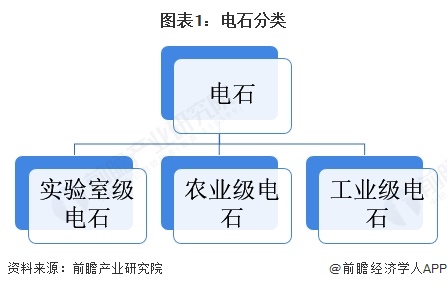
Industry Overview - Calcium carbide, primarily used for producing acetylene and acetylene-based chemical products, is defined as a key component in organic synthesis [1] - The industry can be categorized into industrial-grade, agricultural-grade, and laboratory-grade calcium carbide based on preparation methods and applications [1] Industry Chain Analysis - The upstream of the calcium carbide industry includes raw materials such as lanthanum, coke, and limestone, while the midstream focuses on calcium carbide manufacturing [2] Industry Development History - The calcium carbide industry in China has evolved from its inception in the late 19th century to a robust sector, with significant technological advancements and challenges such as environmental pollution and overcapacity [5] Policy Background - The industry faces stringent regulations aimed at promoting green development, with policies limiting new capacity and encouraging the use of calcium carbide slag in cement production [9][10] Current Industry Status - China's calcium carbide production capacity decreased and then increased from 2020 to 2023, reaching 41.64 million tons in 2023, a 1% year-on-year growth [14] - The capacity utilization rate was approximately 68.5% in Q4 2023, indicating a relatively low level of operational efficiency [14] - The production volume of calcium carbide exceeded 20 million tons in 2023, with a year-on-year growth rate of 49.1% [15] - The apparent consumption of calcium carbide in 2023 was around 19.55 million tons, reflecting a 46.44% year-on-year increase [17] - The market size of the calcium carbide industry in 2023 was approximately 59.64 billion yuan, showing a recovery trend after a decline from 2018 to 2023 [18] Competitive Landscape - Major domestic producers include ST Zhongtai, Xinjiang Tianye, and Ordos, with ST Zhongtai holding the largest capacity at 2.6 million tons, accounting for 6.2% of national capacity [21] - The Northwest region is the most concentrated area for calcium carbide production, representing 55.1% of total capacity [23] Future Development Outlook - The market size is projected to exceed 61 billion yuan by 2029, with a stable growth rate of 4% annually from 2024 to 2029 [27] - The demand for calcium carbide will be supported by the steady development of the PVC industry and continuous optimization of supply and demand [29]
一文带你了解中国雅江集团对西藏经济冲击 雅江工程如何重塑西藏产业生态与民生格局
Qian Zhan Wang· 2025-07-24 08:42
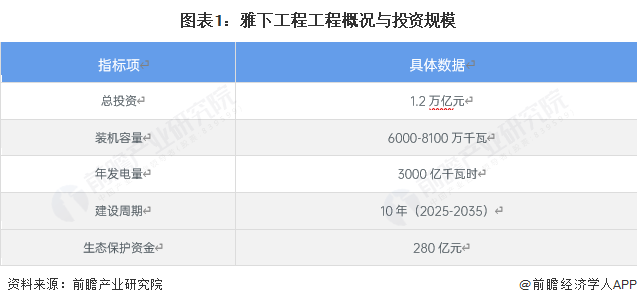
Core Insights - The article highlights the significance of the Yarlung Tsangpo River downstream hydropower project by Yajiang Group in Tibet, which is set to be the largest hydropower project globally, utilizing a unique underground construction method to minimize ecological disruption [1][2][4]. Project Overview - The Yajiang project is a key component of China's "West-to-East Power Transmission" strategy, with a planned total installed capacity of 60-81 million kilowatts and an annual electricity generation of approximately 300 billion kilowatt-hours, sufficient to meet the annual electricity needs of 300 million people [2][4]. - The project involves a total investment of approximately 1.2 trillion yuan, with a construction period expected to last 10-12 years, aiming for phased production between 2035 and 2040 [7]. Economic Impact - The project is projected to significantly boost Tibet's GDP, with an estimated increase of 1.8 percentage points due to the total investment of 1.2 trillion yuan [9]. - During the construction phase, the project is expected to create between 50,000 to 100,000 jobs, with peak employment reaching around 200,000 [13][14]. Employment and Income Growth - The Yajiang project is anticipated to create substantial employment opportunities, with direct job creation during the construction phase and long-term positions in operation and maintenance [16]. - The project is expected to enhance local residents' income, with rural disposable income growth projected to exceed 10% due to direct employment and skills training initiatives [17][19]. Industry Development - The project is expected to drive the growth of the local construction materials industry, with significant demand for aggregates, special cement, and steel during the construction phase [24]. - The establishment of a clean energy system in Tibet, centered around hydropower, is anticipated to support the development of high-energy-consuming industries such as aluminum production and data centers [28][31]. Tourism Integration - The integration of infrastructure projects with tourism initiatives is expected to enhance the development of Tibet's third industry, with innovative models combining engineering and tourism [34][38]. - The anticipated increase in tourism revenue, driven by improved infrastructure and the completion of the hydropower project, is projected to contribute significantly to the local economy [38].
2025年中国物联网芯片代表性企业分析 泰凌微:无线物联网芯片引领者
Qian Zhan Wang· 2025-07-24 08:28
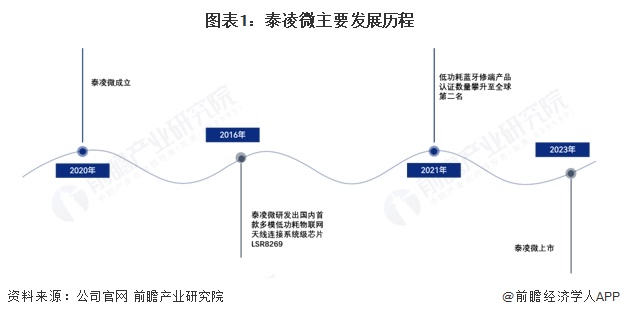
Core Insights - The article highlights that 泰凌微 (TaiLing Micro) is one of the most comprehensive companies in the global wireless IoT chip market, focusing on the research, design, and sales of low-power wireless IoT chips [1][2]. Company Overview - 泰凌微 was established in June 2010 and specializes in integrated circuit design, particularly in wireless IoT system-level chips [1]. - The company has a diverse product range supporting various applications, including smart retail, consumer electronics, smart home, smart healthcare, logistics, and audio entertainment [1]. Business Focus - The primary business of 泰凌微 is the development, design, and sales of low-power wireless IoT chips, focusing on technologies such as low-power Bluetooth, dual-mode Bluetooth, Zigbee, Matter, and WiFi [2]. - The company plans to embrace AI trends in 2024 by integrating edge AI with low-power wireless IoT chips, launching multiple series of chips and software development tools [2]. Product Adoption - 泰凌微's products are adopted by numerous leading domestic and international brands, including Google, Amazon, Xiaomi, Logitech, Lenovo, and Sony [5]. Production and Sales Data - In 2024, 泰凌微's IoT chip production is expected to reach 442 million units, a year-on-year increase of 51.84%, while sales are projected to be 425 million units, up 36.85% [7]. Technological Advancements - 泰凌微 has achieved several domestic firsts in technology, including the launch of a multi-mode low-power IoT chip with a peak current of 1mA and the first company to pass Bluetooth 6.0 high-precision positioning standard certification [10]. - The company is a leading supplier of Zigbee chips in China and has a strong competitive position in both local and international markets [8]. Core Technologies - The company has developed a comprehensive technology and product series for Zigbee communication protocols, supporting various standards [11]. - 泰凌微's latest generation of RF transceivers can support multiple communication modes, which is significant for the coexistence of Zigbee and Thread networks [11]. Future Directions - 泰凌微 is set to launch a machine learning and AI development platform, TLEdgeAI-DK, which will support mainstream local AI models, paving the way for future AI edge applications [11].

一文带你了解中国雅江集团产业链全景 超级工程加速产业链协同发展
Qian Zhan Wang· 2025-07-24 07:46
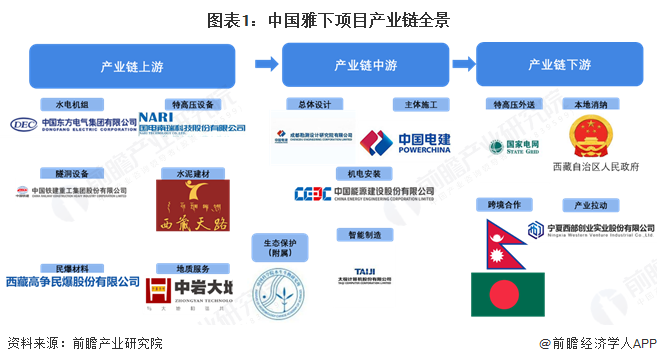
Core Insights - The article discusses the comprehensive development of the Yarlung Tsangpo River downstream hydropower project, led by China Yajiang Group, with a total investment of 1.2 trillion yuan and a planned capacity of 60 million kilowatts, aiming for an annual power generation of 300 billion kilowatt-hours [1][6]. Upstream Industry - The upstream high-end equipment manufacturing sector exhibits a multi-dimensional competitive landscape, with Dongfang Electric holding a 45% market share in the turbine sector, expected to capture over 40% of the turbine and auxiliary equipment value for the Yajiang project, translating to an order size exceeding 28 billion yuan [3][5]. - In the tunnel boring machine (TBM) sector, China Railway Construction occupies a dominant position with a 50% market share, anticipated to secure orders for 25 hard rock TBMs, accounting for 45%-68% of the total orders, with a median value of 3.675 billion yuan [3][5]. - The peak delivery period for high-end equipment is projected between 2028 and 2035, which will have a long-term stimulating effect on the industry chain [3][5]. Midstream Industry - The design and construction of hydropower projects face significant technical barriers and high industry concentration, with the Yajiang project expected to generate design contracts worth 24 billion yuan, based on a 2% design fee of the total investment [6][9]. - China Power Construction, as a leading player in global hydropower engineering, is expected to undertake over 50% of the main engineering volume for the Yajiang project, leveraging its expertise in complex geological engineering [8][9]. Downstream Industry - The Yajiang Group's electricity transmission primarily relies on "Tibetan electricity transmission," with over 70% of power sent out through ±1100 kV UHVDC technology, which allows for efficient long-distance transmission with losses below 10% [11][12]. - The investment in supporting transmission projects is estimated to exceed 240 billion yuan, contributing to a significant market opportunity in the UHV sector [12][14]. Supporting Services - The ecological restoration aspect of the Yajiang Group's operations focuses on smart monitoring technologies and ecological benefit transformation mechanisms, establishing a comprehensive ecological monitoring network [15][16]. - The fish species enhancement project has successfully bred rare fish species, contributing to biodiversity and receiving international recognition for its ecological restoration model [16][17].