Qian Zhan Wang

Search documents
前瞻全球产业早报:我国部署建设10个国家数据要素综合试验区
Qian Zhan Wang· 2025-07-28 12:18
Group 1 - Chery Automobile clarifies that its collaboration with JSW Group in India is limited to parts supply and does not involve technology transfer [2] - Tesla's future is not solely dependent on electric vehicle sales, as Elon Musk encourages investors to focus on the company's autonomous taxi and robotics business [3] - Haidilao opens its first premium store in China, featuring high-quality ingredients and an enhanced dining experience [4] Group 2 - The State Administration for Market Regulation has suspended 8,756 CCC certificates for power banks and battery manufacturers due to non-compliance [11] - BYD officially launches its new mid-size SUV, the Sea Lion 06, with prices ranging from 139,800 to 163,800 yuan [12] - The second quarter smartphone shipment in China reached 68.96 million units, a year-on-year decline of 4.0% [10] Group 3 - Ceconomy AG confirms that it is in deep discussions with JD.com regarding a potential acquisition, with an offer price of €4.60 per share, valuing the company at approximately €2.2 billion [9] - NewPrinces agrees to acquire Carrefour's Italian business for nearly €1 billion, expected to complete by the end of Q3 [15] - Intel plans to implement a 15% workforce reduction, aiming to reduce its global employee count to approximately 75,000 by the end of the year [16]


北方超南方,第一省换位!一文说清申报单项冠军有哪些奖励政策?
Qian Zhan Wang· 2025-07-28 08:57
Core Viewpoint - Shandong Province has become the leader in the number of national-level manufacturing single champion enterprises, surpassing Zhejiang, with a total of 238 such enterprises as of last year [1][2]. Group 1: Characteristics of Shandong's Champion Enterprises - Shandong's manufacturing single champion enterprises focus on key technologies in traditional industries such as energy and machinery, with notable companies including Weichai Heavy Machinery and Taishan Steel [2]. - The province is also making strides in emerging industries like new information technology and new materials, with companies such as Zhenghai Magnetic and Debang Technology leading the way [2]. Group 2: Incentives and Support for Champion Enterprises - Shandong has implemented a reward policy since 2016, offering 2 million yuan for selected champion demonstration enterprises and 1 million yuan for nurturing enterprises, with local governments providing additional rewards [2]. - Other provinces also offer support, with Shenzhen providing up to 200,000 yuan for national-level champions and 100,000 yuan for municipal-level champions [3][4]. Group 3: Benefits of Being a Champion Enterprise - Champion enterprises receive various policy supports, including financial aid, tax incentives, and market development assistance [5]. - They are seen as key players for future listings on capital markets, making it easier for them to attract financial capital [6]. - Banks offer low-interest loans and special credit limits to champion enterprises, significantly reducing their financing costs [7]. - The title enhances brand influence and product recognition, serving as a quality assurance for the enterprises [8]. Group 4: Support from Research Institutions - Professional research institutions like Qianzhan Industry Research Institute assist enterprises in gathering market information and preparing application materials for champion status [9][17].
2025年中国生猪养殖经营效益分析 2024年生猪养殖景气度向上【组图】
Qian Zhan Wang· 2025-07-28 07:27
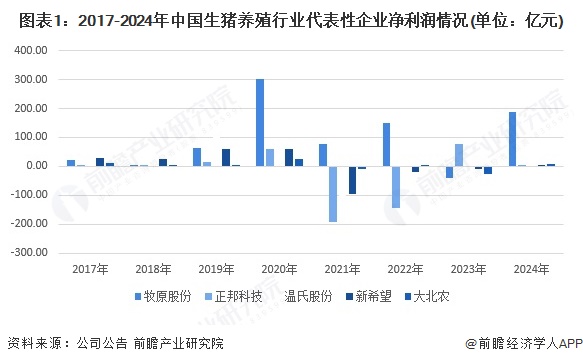
Group 1 - The Chinese pig farming industry has experienced significant capacity expansion since 2020, leading to oversupply and sustained low prices, resulting in continuous losses for most pig farming companies, with only Zhengbang Technology remaining profitable in 2023. However, overall profitability is expected to improve in 2024, with net profits turning positive for most companies [1] Group 2 - Since March 2021, the net profit level of large-scale pig farming in China has fluctuated significantly, remaining in a loss state from early 2023 until September 2023, when it turned profitable. It is projected that net profits will decline again until April 2025, reaching 86 yuan per head [2] Group 3 - The net profit of free-range pig farming in China has shown a similar trend to that of large-scale farming. The lowest net profit was recorded in June 2021 at -665 yuan per head, while the highest was in October 2022 at 1246 yuan per head. By April 2025, the net profit for free-range farming is expected to be 50 yuan per head [4] Group 4 - The cost of large-scale pig farming in China has been on a downward trend since March 2021, decreasing from 2884 yuan per head to 2033 yuan per head by April 2025, indicating effective cost control [8] Group 5 - Similarly, the cost of free-range pig farming has also decreased from 2971 yuan per head in March 2021 to 2123 yuan per head by April 2025, reflecting good cost management [9]



【干货】2025年压缩空气储能产业链全景梳理及区域热力地图
Qian Zhan Wang· 2025-07-28 03:11
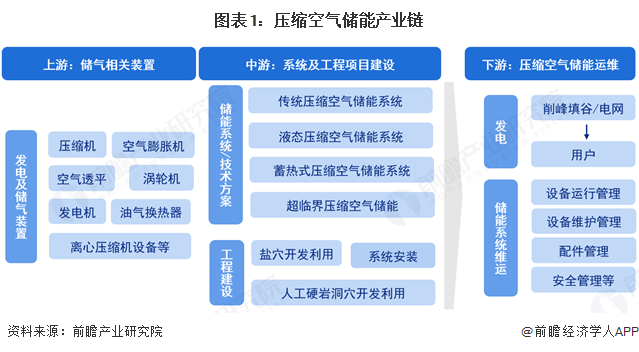
Industry Overview - The compressed air energy storage (CAES) industry chain consists of upstream equipment manufacturing, midstream engineering and system construction, and downstream system operation [1][2] - Upstream includes production of air compressors, expanders, turbines, and generators, while midstream focuses on energy storage systems and technical solutions [1][2] Key Companies - Major upstream companies include Shanghai Electric, Dongfang Electric, and Harbin Electric Group for air turbine and heat exchanger production; Shangu Group and Shengu Group for compressors [2] - Midstream construction firms like China Storage National Energy and the Institute of Engineering Thermophysics of the Chinese Academy of Sciences are recognized for their extensive experience and international project scale [2] Regional Distribution - As of May 2025, there are 448 companies and research institutions in China related to CAES, with the highest concentration in Beijing (75), followed by Jiangsu (53) and Zhejiang (30) [5] - The industry is primarily located in economically developed eastern coastal regions and energy-rich provinces, facilitating technology exchange and resource integration [8] Market Applications - CAES has seen commercial applications, notably the world's first non-combustion CAES power station in Jiangsu, operational since May 2022, which compresses air in salt caverns during low demand and releases it for power generation during peak demand [2]
重磅消息!瑞普生物获得国内首个经济动物用mRNA疫苗临床批件【附动物疫苗行业市场分析】
Qian Zhan Wang· 2025-07-27 04:00
Core Viewpoint - Tianjin Reap Bio-Tech Co., Ltd. has received clinical trial approval for its mRNA vaccine for porcine epidemic diarrhea virus (RPS1903), marking a significant advancement in the domestic animal vaccine sector [2] Company Summary - The mRNA vaccine is the first of its kind for economic animals in China, indicating that the company has developed a mature veterinary mRNA vaccine research platform, which will help expand its product line and development space [2] - The vaccine demonstrates a 98.7% success rate in immunization during preclinical trials, significantly outperforming traditional vaccines, which have an 85.3% success rate [3] - The mRNA vaccine utilizes advanced delivery technology and can potentially encode multiple pathogen antigens, laying the groundwork for the development of multivalent vaccines [3] Industry Summary - The animal vaccine market in China reached a size of $2.5 billion in 2022, remaining stable compared to 2021, but saw a slight decline to $2.373 billion in 2023, indicating a structural upgrade trend in the industry [3] - The market is expected to exceed $3.8 billion by 2029, with a compound annual growth rate (CAGR) of 6.8%, driven by the commercialization of African swine fever vaccines and increased penetration of pet vaccines [5] - The development of new vaccine technologies, such as mRNA and genetically engineered vaccines, is providing more efficient and safer solutions for animal disease prevention and control [3]


【最全】2025年中硼硅玻璃行业上市公司全方位对比(附业务布局汇总、业绩对比、业务规划等)
Qian Zhan Wang· 2025-07-27 03:58
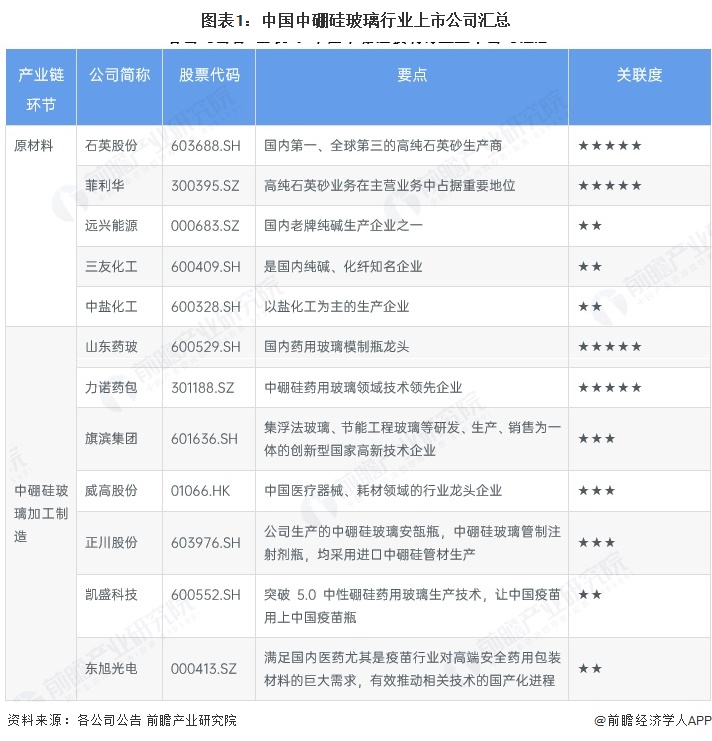
Group 1: Industry Overview - The main listed companies in the borosilicate glass industry include Shandong Pharmaceutical Glass, Linuo Pharmaceutical Packaging, Qibin Group, Weigao Group, and Zhengchuan Co., Ltd. [1] - The number of A-share listed companies in the borosilicate glass sector is relatively small, with key players being Shandong Pharmaceutical Glass, Linuo Pharmaceutical Packaging, Qibin Group, and Zhengchuan Co., Ltd. [1] Group 2: Financial Performance - In 2024, the projected revenue for Shandong Pharmaceutical Glass from borosilicate glass-related businesses is 51.30 billion yuan, Linuo Pharmaceutical Packaging is 10.81 billion yuan, and Qibin Group is 156.49 billion yuan [2]. - The revenue contribution of borosilicate glass-related businesses to total revenue is significant, with Shandong Pharmaceutical Glass at 51.38%, Linuo Pharmaceutical Packaging at 43.24%, and Zhengchuan Co., Ltd. at 52.85% [5]. Group 3: Production and Sales Metrics - In 2024, Shandong Pharmaceutical Glass and Zhengchuan Co., Ltd. have production and sales rates close to 100%, while Linuo Pharmaceutical Packaging's rate is below 90% [6]. - The gross profit margin for Shandong Pharmaceutical Glass is notably high, while Linuo Pharmaceutical Packaging and Zhengchuan Co., Ltd. have margins around 22%-23% [6]. Group 4: Business Layout and Strategy - The borosilicate glass industry is concentrated in the eastern coastal regions of China, particularly in Jiangsu Province [2]. - Leading companies like Shandong Pharmaceutical Glass and Linuo Pharmaceutical Packaging are expanding capacity and integrating the supply chain to accelerate domestic substitution in the borosilicate glass market [8]. Group 5: Future Plans - Shandong Pharmaceutical Glass aims to increase its production capacity to 5 billion units per year by 2025, with a target export ratio of 20%-25% [9]. - Linuo Pharmaceutical Packaging plans to achieve a production capacity of 63,000 tons per year by 2025, covering all specifications from 5ml to 500ml [9]. - Qibin Group is investing 780 million yuan to build two production lines for borosilicate glass, expected to be operational by 2025 with an annual capacity of 100,000 tons [9].




【行业深度】洞察2025:中国文旅融合行业竞争格局及市场份额(附市场集中度、企业竞争力等)
Qian Zhan Wang· 2025-07-26 03:10
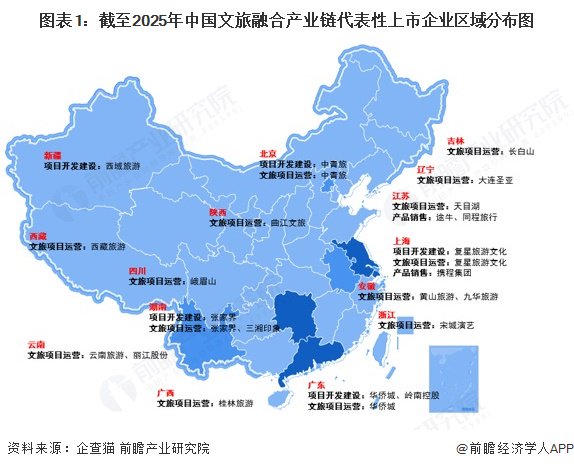
Group 1: Regional Competitive Landscape - The cultural tourism integration industry in China is predominantly concentrated in Guangdong, Anhui, Jiangsu, and Shanghai, with Guangdong having notable listed companies such as Overseas Chinese Town and Lingnan Holdings [1] Group 2: Brand Rankings - The "2024 China Cultural Tourism Group Brand Communication Power Top 100" list includes Ctrip Group, China Youth Travel Service, Haichang Ocean Park, China Duty Free Group, Qujiang Cultural Tourism, and Overseas Chinese Town Group in the top ten [4][6] Group 3: Market Share and Revenue - In 2024, the total revenue of listed companies in China's cultural tourism integration industry reached 351.306 billion yuan, with the top three companies being China Duty Free Group, Overseas Chinese Town, and Tongcheng Travel, collectively accounting for over 45% of the market [7] Group 4: Market Concentration - The market concentration in the cultural tourism integration industry is high, with the top ten companies accounting for 82.93% of the market share, CR3 at 46.73%, and CR5 at 66.89% [9] Group 5: Competitive Dynamics - The cultural tourism market is becoming increasingly competitive, with many companies entering the sector. Government policies are supporting the development of cultural tourism integration, indicating significant growth potential. The threat of new entrants is high, while the threat of substitutes is low. The bargaining power of suppliers is weak, and consumer bargaining power is also limited due to fixed pricing of products like tickets and accommodations [12]


连续两天大跳水!金饰价格跌破1000元/克【黄金首饰市场分析】
Qian Zhan Wang· 2025-07-26 02:29
Group 1 - Domestic gold jewelry prices have generally declined, with prices per gram dropping to around 1000 yuan, influenced by fluctuations in international gold prices [2] - As of July 25, 2025, gold consumption in China reached 505.205 tons, a year-on-year decrease of 3.54%, with gold jewelry consumption down by 26% [2] - The Chinese gold jewelry market is one of the largest globally, with a market size in the hundreds of billions of yuan, and traditional jewelry products still dominate the market, accounting for over 60% [3] Group 2 - China and India are the largest consumers of gold jewelry globally, each accounting for approximately 32% of global demand in 2022 [4] - The shift in gold consumption patterns in China is driven by the rise of the "female economy," with women accounting for 95% of gold purchases in self-wearing scenarios [5] - Economic experts predict that gold prices are likely to remain weak in 2025 unless significant global economic disruptions occur [8]

美团宣布:拼好饭推出“百万亮厨”计划,将联合20万商家打造透明开放标杆【附外卖行业市场分析】
Qian Zhan Wang· 2025-07-25 09:33
Group 1 - Meituan has launched the "Million Bright Kitchen" initiative to enhance transparency in food delivery by collaborating with 200,000 merchants to showcase real kitchen environments through live videos and images [2] - The initiative aims to upgrade 1 million kitchens to transparent standards, with nearly 300,000 merchants already participating and a target of reaching 1 million by the end of the year [2] - Meituan's operational staff conducts daily inspections of kitchen environments and service standards, focusing on stores with deeper locations, less experience, and higher user complaints [2] Group 2 - The Chinese food delivery market is dominated by Meituan and Ele.me, holding over 90% market share, with Meituan at 68.2% and Ele.me at 25.4% as of mid-2020 [3] - The food delivery market in China reached a scale of 1.1 trillion yuan in 2022, with a compound annual growth rate exceeding 20% from 2018 to 2022 [4] - The number of food delivery users in China grew to 520 million in 2022, a 26.83% increase from 2018 [4] Group 3 - Tsinghua University professor Liu Dacheng suggests that the future of food delivery will integrate into urban infrastructure, leveraging technology to enhance the relationship between people, goods, and locations [5] - Meituan's CEO Wang Xing believes that instant retail will be a key development direction for the food delivery industry, focusing on rapid delivery and convenient shopping to meet consumer demands [8]


全球50%AI开发者在中国!英伟达黄仁勋:我们输掉了5G,绝不能再让计算产业重蹈覆辙【附人工智能行业市场分析】
Qian Zhan Wang· 2025-07-25 07:04
Core Viewpoint - The CEO of Nvidia, Jensen Huang, stated that the U.S. has suffered a complete defeat in the 5G era and emphasized the need to avoid repeating this failure in the computing industry, while expressing optimism about the potential for the U.S. to regain leadership in 6G, which will be driven by AI [2]. Group 1: U.S. AI and 5G Challenges - The U.S. has lost its leading position in the telecommunications industry, particularly in 5G technology, due to failures in technology, policy, and strategy [2]. - Approximately 50% of AI developers globally are based in China, highlighting a significant challenge for the U.S. in maintaining its leadership in AI [2]. - Huang advocates for the U.S. to promote its technology stack as the global standard rather than restricting technology exports [2]. Group 2: China's AI Development - China has emerged as the largest holder of AI patents globally, accounting for 60% of the total, indicating strong growth in its AI sector [4]. - Representative companies in China's AI industry include Huawei, iFlytek, Tencent, Baidu, SenseTime, and Cambricon [4]. - The market size of China's core AI industry reached 578.4 billion RMB in 2023, with a compound annual growth rate of 20.38% over five years [6]. Group 3: AI Model Development in China - As of Q1 2024, China ranks second to the U.S. in the number of AI models published, with a total of 478 models [7]. - China's early investments in AI have established a solid foundation for the development of large models, creating a comprehensive research and development capability [7]. Group 4: Technology Competition - The competition between the U.S. and China in technology has entered a phase of "full-factor competition," where leadership is determined by the ability to build inclusive and autonomous technology ecosystems [10].