Qian Zhan Wang

Search documents
2025年中国纺织行业进出口现状分析:贸易金额持续顺差
Qian Zhan Wang· 2025-05-14 04:15
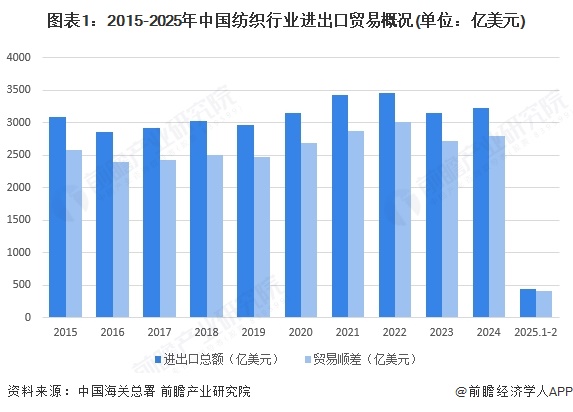
Textile Industry Overview - The textile industry in China has a wide range of products, with import and export statistics categorized under the HS codes specified by the World Customs Organization [1] - The total import and export value of the textile industry in China has shown significant fluctuations from 2015 to 2024, with a notable decline in trade scale in 2023 [2] Import Situation - From 2015 to 2024, the import value of China's textile industry fluctuated between 21 billion to 28 billion USD, peaking at 27.73 billion USD in 2021, a 20.2% increase year-on-year [4] - The textile imports have been on a downward trend from 2022 to 2024, with a significant drop of 58.1% in the first two months of 2025 compared to the same period last year [4] Export Situation - The export scale of China's textile industry has remained substantial, consistently around 300 billion USD over the past decade, increasing from 262.87 billion USD in 2016 to 323.34 billion USD in 2022, with a compound annual growth rate of 3.51% [8] - In 2023, exports to major markets such as the US, EU, and Japan decreased by 9.2%, but are projected to rebound to 301.10 billion USD in 2024, a 2.5% increase year-on-year [11] - The export value in the first two months of 2025 was 42.88 billion USD, reflecting a 4.9% decline compared to the same period in 2024 [11] Price Trends - The price index for imported textile products has shown fluctuations, with a maximum variation of less than 10% from 2015 to 2024, and a 2.47% decrease in 2024 compared to the previous year [6] - The export price index for textile products has also experienced volatility, with a notable increase of 10.27% in December 2022, while the index for 2024 was recorded at 94.03, indicating a decline for two consecutive years [12]


日本三大车商4月在华新车销量出炉:丰田销量增20.8%,本田暴跌40.8%【附新能源汽车行业市场分析】
Qian Zhan Wang· 2025-05-14 03:28
Group 1: Sales Performance of Japanese Automakers - In April, Toyota's new car sales in China increased by 20.8% year-on-year, reaching 142,800 units, marking three consecutive months of growth, driven by its focus on hybrid and electric vehicles [2] - In contrast, Honda's sales in China fell by 40.8% to 43,689 units, while Nissan's sales decreased by 15.7% to 46,295 units, with Honda experiencing a 15-month consecutive decline and Nissan a 13-month decline [2] - Nissan plans to cut 21,000 jobs, which is 15% of its total workforce, and will close three factories, acknowledging that management errors, particularly in electric vehicle strategy, contributed to its current challenges [2] Group 2: Global Electric Vehicle Market Trends - The global electric vehicle transition is an unstoppable trend, with traditional automakers in Europe, such as Volkswagen and Mercedes-Benz, accelerating their electrification efforts to secure a competitive position [3] - Tesla leads the U.S. market, driving technological advancements in electric vehicles and expanding its global presence, setting a benchmark for the industry [3] - In China, BYD is recognized as a leading electric vehicle manufacturer, with significant advancements in technology and product offerings [5] Group 3: Market Share and Industry Position - In 2022, China's market share of new energy vehicles reached 24.4%, the highest globally, followed by Europe at 17.3%, while India and Japan lag behind [7] - BYD's chairman emphasized that China's new energy vehicle sector is approximately 3 to 5 years ahead globally in terms of technology and product development, advocating for open innovation and international collaboration [9] - The challenges faced by Japanese automakers in the electrification transition serve as a warning for the global automotive industry, highlighting the need for timely strategic adjustments and increased investment in new energy and smart technologies [9]




2024年中国硅钢行业细分产品现状 无取向硅钢占主导【组图】
Qian Zhan Wang· 2025-05-13 07:41
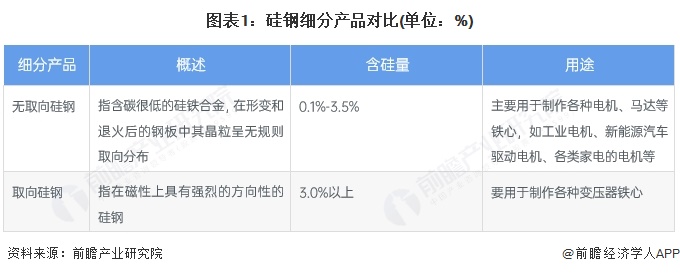
Core Viewpoint - The Chinese silicon steel market is experiencing growth, with non-oriented silicon steel dominating production, accounting for 82% of the total output in the first half of 2024, while oriented silicon steel is also on the rise [1][3]. Group 1: Production and Market Trends - In the first half of 2024, China's silicon steel production reached 7.802 million tons, with non-oriented silicon steel production at 6.417 million tons and oriented silicon steel at 1.385 million tons [1]. - The total silicon steel production for 2024 is projected to exceed 15 million tons, maintaining a dominant share for non-oriented silicon steel [1]. - From 2019 to 2023, non-oriented silicon steel capacity increased from 10.96 million tons to 13.71 million tons, with a compound annual growth rate (CAGR) of 7.4% [3]. - Oriented silicon steel production grew from 1.78 million tons in 2019 to 2.96 million tons in 2023, with a forecast of 3.18 million tons for early 2024 [5]. Group 2: Company Developments - Major companies in the non-oriented silicon steel sector include Baosteel, Ansteel, and Taiyuan Iron & Steel, with Baosteel leading with a capacity of over 2 million tons, including 1 million tons of high-grade products [7]. - In the oriented silicon steel market, Baosteel also leads with a capacity of 1.16 million tons, while Wanfeng Electric is noted as the top private enterprise in this segment [7]. - Baosteel's production capabilities include a significant focus on high-grade and thin specifications, with ongoing expansions planned by companies like Shagang and New Steel [7][9].




【投资视角】启示2025:中国水泥行业投融资及兼并重组分析(附投融资事件汇总和兼并重组等)
Qian Zhan Wang· 2025-05-13 07:17
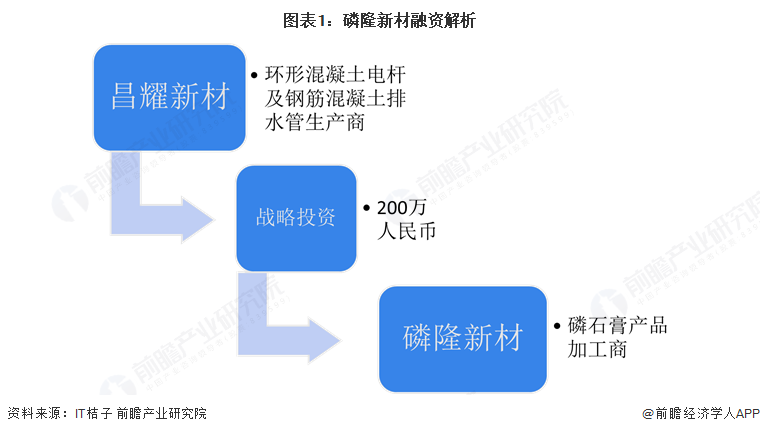
Group 1 - The core viewpoint of the article highlights the recent trends in financing and mergers in the Chinese cement industry, focusing on green development and international expansion [10][25]. - Since 2021, there have been limited financing events in the domestic cement industry, with three notable cases involving companies like Hubei Phosphor Long New Materials and Zhejiang Tianzao Environmental Protection Technology [1][4][5]. - The financing events reflect a growing emphasis on green technologies and recycling within the cement sector, driven by stricter environmental regulations and the need for sustainable practices [2][10]. Group 2 - The article outlines a trend towards increased internationalization in the cement industry, with companies like Jidong Cement making strategic acquisitions to expand into overseas markets, particularly in Africa [7][10]. - The average merger and acquisition (M&A) transaction value in the cement industry ranges from 200 million to 2 billion yuan, with significant deals like Tianshan Materials' acquisition of China United Cement Group for 98.142 billion yuan [14][20]. - The frequency of mergers and acquisitions has increased, with Jidong Cement being the most active participant in the sector, indicating a consolidation trend aimed at enhancing market competitiveness [20][23]. Group 3 - The financing and M&A activities in the cement industry are characterized by a focus on green and low-carbon initiatives, as well as a recovery of investor confidence despite market challenges [10][25]. - The article notes that the number of overseas M&A events has been limited but is showing signs of growth, with two notable transactions expected in 2024 [18][20]. - The overall trend indicates that the cement industry is maturing, with a shift towards horizontal acquisitions to expand scale and improve operational efficiency [25].

【行业深度】洞察2025:中国机器狗行业竞争格局及市场份额(附市场集中度、市场份额、企业优势分析等)
Qian Zhan Wang· 2025-05-13 06:56
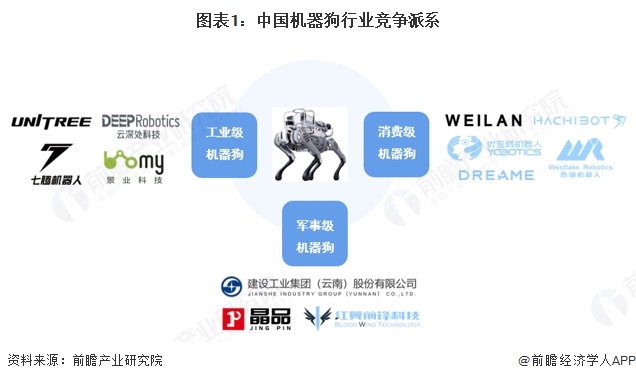
Core Insights - The Chinese quadruped robot (machine dog) industry is characterized by high market concentration, with leading companies dominating both sales volume and revenue [6][9]. - The industry is rapidly evolving, with significant competition among key players, and a diverse range of applications for machine dogs across various sectors [10][12]. Group 1: Industry Competition - The machine dog industry in China is segmented based on different applications, leading to varied competition among companies [1]. - Major companies in the industry include Yushu Technology, Blue Sky Intelligence, and Cloud Deep Technology, with Yushu Technology holding a market share of 66.46% in sales volume and 42.74% in sales revenue in 2023 [6]. - The market concentration is high, with the top three companies (CR3) accounting for 84.7% of sales volume and 70.4% of sales revenue [9]. Group 2: Market Share and Concentration - In 2023, the market share of the top five companies (CR5) reached 92.1% in sales volume and 79.1% in sales revenue, indicating a strong oligopoly in the market [9]. - The industry is primarily concentrated in the eastern and central regions of China, with significant representation from Zhejiang, Beijing, and Jiangsu [3]. Group 3: Business Layout of Companies - Companies are actively developing machine dog products through direct development, investment in research teams, and partnerships with leading firms [10]. - The majority of machine dog companies are focusing their operations in the East China region, while some, like Zhongjian Technology and Hanwang Technology, have a significant portion of their business overseas [12][13]. - Notable products include multi-functional quadruped robots for various applications such as reconnaissance, transportation, and disaster rescue [12]. Group 4: Competitive Landscape - The industry faces high competitive pressure due to rapid technological advancements and the concentration of leading firms [10]. - The supply of upstream components is dominated by a few foreign companies, giving them strong bargaining power over domestic manufacturers [10]. - The threat of new entrants is significant as the government promotes the development of the smart robotics industry, lowering entry barriers for new players [10].
2025年中国润滑油行业进出口现状分析:贸易逆差金额逐渐缩小
Qian Zhan Wang· 2025-05-13 06:47
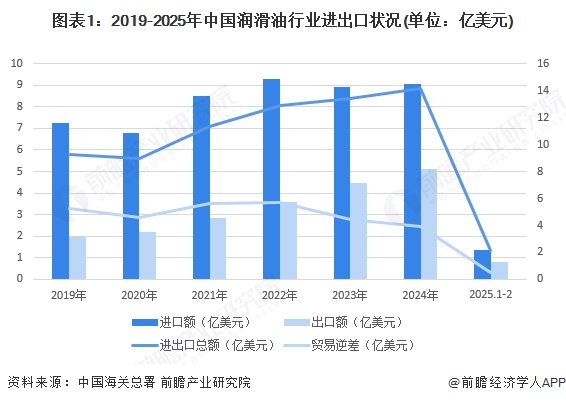
转自:前瞻产业研究院 行业主要上市公司:中国石油(601857);中国石化(600028);康普顿(603798);龙蟠科技(603906);中晟高科 (002778);统一股份(600506)等 本文核心数据:中国润滑油进出口金额;中国润滑油进出口量;中国润滑油进出口均价 1、润滑油行业进出口总况 润滑油相关的海关编码为"润滑油,不含有生物柴油",HS编号是"27101991"。 近年来中国润滑油行业进出口情况逐年增长,中国润滑油行业下游相关产业的迅速发展,对于润滑油的 需求量越来越大,行业进出口额持续稳定增长。 海关数据显示,2024年中国润滑油行业产品进出口总额14.17亿美元,同比上升5.73%,反映润滑油进出 口规模逐渐扩大,其中进口额9.04亿美元,同比上升1.44%;出口额为5.13亿美元,同比上升14.36%。贸 易逆差为3.91亿美元,同比下降11.54%,反映中国对润滑油需求依赖进口支持,但近两年来依赖程度有 所减缓。 2025年前两个月,中国润滑油行业产品进出口总额2.15亿美元,贸易逆差为0.55亿美元。 2、润滑油进口情况 2019-2024年,中国润滑油进口金额整体呈现波动增长趋势 ...




【全网最全】2025年中国电线电缆行业上市公司全方位对比(附业务布局汇总、业绩对比、业务规划等)
Qian Zhan Wang· 2025-05-13 06:40
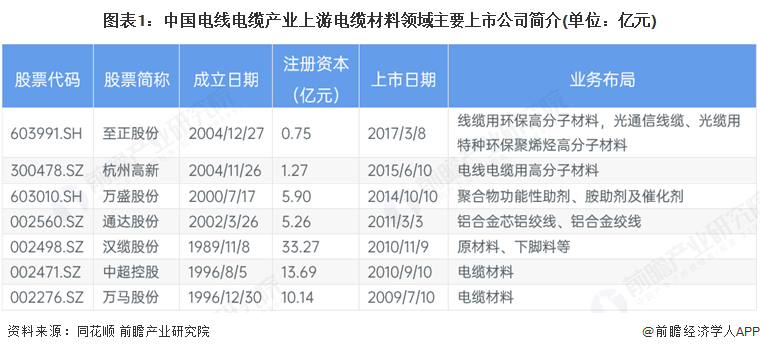
Group 1 - The article provides a comprehensive overview of the wire and cable industry, highlighting key listed companies and their business layouts [1][2][3] - Major listed companies in the wire and cable sector include Baosheng Co., Far East Co., Qifan Cable, and others, with a focus on their business operations and financial performance [2][3][6] - The industry is characterized by a significant presence in Jiangsu and Zhejiang provinces, with Baosheng Co. being a representative enterprise [3] Group 2 - Baosheng Co. leads the industry with a revenue of 354.44 billion yuan in the first three quarters of 2024, reflecting a year-on-year growth of 5.36% [6][9] - Other companies like Far East Co. and Qifan Cable reported revenues ranging from 106 billion to 185 billion yuan, with Jingda Co. showing a notable growth rate of 22.38% [6][9] - The profitability of these companies varies, with Baosheng Co. having a relatively low net profit of 0.25 billion yuan despite its large revenue [6][9] Group 3 - The article discusses the business performance of various companies, indicating that Baosheng Co. has a dominant market position with 96.22% of its revenue coming from wire and cable operations [9][10] - Companies like Jingda Co. and Dongfang Cable have shown strong revenue growth rates of 27.35% and 24.27%, respectively, indicating robust development [9][10] - The article also notes that some companies, such as Qifan Cable and Sun Cable, experienced revenue declines of -3.55% and -14.38%, respectively, suggesting operational challenges [10] Group 4 - The article outlines the business plans of major companies in the wire and cable industry for 2024, emphasizing innovation and market expansion [14][16] - Baosheng Co. focuses on technological and business model innovation to enhance competitiveness, while Far East Co. is investing in smart manufacturing and digital production systems [14][16] - Other companies like Qifan Cable and Jingda Co. are also adapting their strategies to address market changes and explore new opportunities in clean energy and other sectors [14][16]


【女装】行业市场规模:2024年全球女装行业市场规模约9400亿美元 女性睡衣、内衣市场占比约25%
Qian Zhan Wang· 2025-05-13 04:09
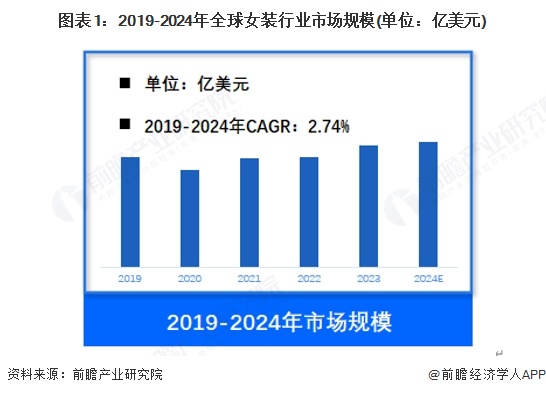
转自:前瞻产业研究院 行业主要上市公司:安奈儿(002875)、森马服饰(002563)、朗姿股份(002612)、泰慕士(001234)等; 本文核心数据:全球女装行业市场规模 2024年全球女装行业市场规模约9400亿美元 女装是女士服装的简称,适合女士身形穿着的衣物统称为女装。女装是服装产业的重要组成部分,不同 时代的女装在颜色、样式、造型、风格上不同,女装服饰的变迁跟其他品类的服装一样,是特定时代发 展的缩影。2024年全球女装行业市场规模约9400亿美元,近五年行业复合增速2.74%。 细分产品市场 女装是服装行业中市场最活跃、需求最复杂、容量最大的子行业,涵盖了连衣裙、衬衫、外套、裤子、 裙装等多个细分领域。Statista数据显示,2024年女性睡衣、内衣市场和女式T恤市场是全球女装行业最 大的两个细分产品市场,占比分别达到25%和24%。 产业竞争 全球女装领先企业主要有Zara、Gucci、LVMH等,企业具体布局情况如下: | 企业名称 | 所属国家 | 布局情况 | | --- | --- | --- | | Zara41 | 西班牙( | Zara 是西班牙的快时尚品牌,以快速更新的款 ...



前瞻全球产业早报:国内首个具身智能康复示范基地落地上海
Qian Zhan Wang· 2025-05-13 01:50
Group 1 - The Chinese automotive industry, particularly domestic brands, will not be affected by the US tariffs as their exports to the US are minimal and they do not sell in the US market [2] - The market share of Chinese domestic brands in Russia remains high at 55%, indicating limited pressure from export reductions [2] Group 2 - Jack Ma attended the 21st "Ali Day" event, encouraging Alibaba employees to maintain their entrepreneurial spirit and continue innovating [3] Group 3 - The Chinese Academy of Traditional Chinese Medicine released evaluation standards for large-scale pre-trained models in the field of traditional medicine, establishing a quantitative assessment system [4] Group 4 - In April 2025, the national industrial producer price index decreased by 2.7% year-on-year and 0.4% month-on-month, with the average for January to April showing a 2.4% decline compared to the previous year [4] - In April 2025, the national consumer price index decreased by 0.1% year-on-year, with urban prices stable and rural prices down by 0.3% [5] Group 5 - The first "embodied intelligent rehabilitation demonstration base" was established in Shanghai, focusing on the application of intelligent robots in rehabilitation medical scenarios [6][7] Group 6 - China Energy Construction Corporation launched the first "hundred-megawatt" flywheel energy storage project in Shanxi, marking a significant development in energy storage technology [8] Group 7 - Apple announced price reductions for the iPhone 16 Pro and Pro Max models, with the Pro Max dropping by $160 and the Pro by $176, likely in preparation for the upcoming 618 shopping festival [9] Group 8 - The "AIDA Mediterranean" cruise ship made its inaugural voyage from Shenzhen, with plans to operate unique routes covering Hong Kong, Japan, Vietnam, and the Philippines [10] Group 9 - The first intelligent inspection robot for freight railways was deployed in Hebei, enhancing the smart capabilities of China's freight railway system [11] Group 10 - Japanese beef exports to the US are facing challenges due to increased tariffs, with one company potentially needing to raise prices by over 50% if tariffs are implemented [12] - India is willing to reduce its average tariff gap with the US from nearly 13% to below 4% to negotiate a trade agreement with the Trump administration [13] Group 11 - The negative effects of US tariff policies are impacting American agriculture, with large agricultural companies reporting difficulties in product exports and imports of essential supplies [15] Group 12 - Panasonic announced plans to cut 10,000 jobs globally, including 5,000 in Japan, and will terminate unprofitable business lines [16] Group 13 - Tesla has halted the sale of the extended battery pack for the Cybertruck, refunding customers who had previously paid a deposit [17] Group 14 - The mobility service brand of SAIC Motor, Xiangdao Mobility, completed a C-round financing of over 1.3 billion yuan, marking a significant milestone [18] - The domestic exoskeleton robot technology platform company, Aoshark Intelligent, completed a multi-million yuan B-round financing to accelerate the mass production of consumer-grade exoskeleton robots [18] Group 15 - Wuxi Yelong Precision Machinery Co., Ltd. withdrew its IPO application after more than a year of being on hold [19] - Hangzhou Tongshifu Cultural (Group) Co., Ltd. submitted an IPO application to the Hong Kong Stock Exchange, with 招银国际 as the sole sponsor [20]






6.9万亿!刚刚,又一个彻底引爆中国经济的行业出现了
Qian Zhan Wang· 2025-05-13 01:41
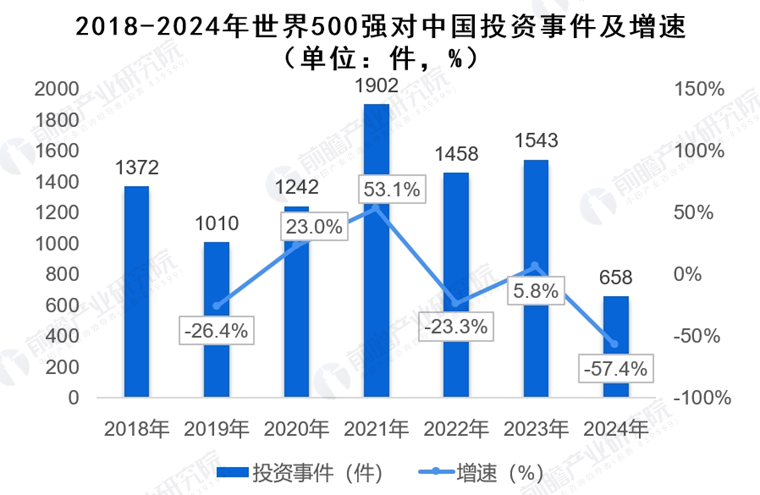
Core Insights - The global economic landscape is undergoing significant changes, with geopolitical tensions, supply chain restructuring, technological breakthroughs, and accelerated green transitions reshaping the economy. China remains a focal point for multinational capital investment [1] - The year 2025 is identified as a critical juncture for the global economic cycle and for China to achieve its "14th Five-Year Plan" goals. The investment choices of Fortune Global 500 companies reflect confidence in China's development prospects and the restructuring of global industrial value chains [1] - A forthcoming report from the Forward Industry Research Institute will analyze the investment characteristics of Fortune Global 500 companies in China, providing a framework for understanding uncertainties and identifying future opportunities [1] Group 1: Investment Trends - Fortune Global 500 companies have shown fluctuating investment patterns in China over recent years, with a notable decline in 2019 due to escalating global trade conflicts. However, confidence returned in 2021, reaching a peak, before a downturn in 2024 due to global economic decline [1][2] - The investment landscape from 2018 to 2024 indicates a shift from "factor-driven" to "innovation-driven" economic models in China, highlighting the emergence of new productive forces reshaping global supply chains [2][4] - The semiconductor industry has consistently ranked first in investment from 2020 to 2023, reflecting China's successful strategy for technological self-reliance. The renewable energy sector has also surged from fifth place in 2019 to first in 2023, demonstrating the explosive potential of green productivity under the "dual carbon" goals [3][4] Group 2: Sectoral Dynamics - The automotive industry has maintained a strong position due to the new energy revolution, while AI has remained in the top five for five consecutive years. The emergence of robotics in 2024 indicates a shift towards "intelligent manufacturing" in China [4][23] - Investment in high-tech sectors like AI shows a preference for downstream applications, with 45.8% of investments focused on general and industry-specific applications, while upstream investments in AI chips remain relatively low at 23.3% [4][6] - The semiconductor industry has seen a significant focus on design, which accounts for 34%-43% of the investment chain, while semiconductor manufacturing has increased to about 12% since 2021 [6][8] Group 3: Emerging Opportunities - The aerospace sector is experiencing rapid growth, with a 32% increase in investment events, significantly outpacing other industries. The delivery of C919 aircraft has quadrupled in 2023, indicating a ramp-up in production capacity [13][15] - The commercial aerospace industry is projected to reach a market size of 6.9 trillion RMB by 2030, with a compound annual growth rate of approximately 20% [20][22] - The report highlights four key trends: long-term strategic investments in China, concentration in semiconductor, AI, and automotive sectors, predominance of domestic enterprises in investments, and a shift towards early-stage investments with larger capital scales [22][24] Group 4: Strategic Implications - Fortune Global 500 companies are increasingly viewing the Chinese market as a strategic priority, driven by its vast consumer base, talent resources, and stable policy environment [22][24] - The investment logic of these companies has evolved from market expansion and technology acquisition to a focus on technological collaboration, green transformation, and ecosystem development [24][25] - The report emphasizes the importance of understanding industry dynamics and leveraging local insights to enhance investment attractiveness in China [28]