Di Yi Cai Jing Zi Xun

Search documents
券商单日转融资借入超百亿,正常现象还是释放新信号?
Di Yi Cai Jing Zi Xun· 2025-11-30 12:04
Core Viewpoint - On November 25, securities firms borrowed over 11.43 billion yuan through transfer financing from China Securities Finance Corporation, significantly higher than the usual borrowing amounts of several billion or occasionally tens of billions [1][2]. Group 1: Borrowing Details - On November 25, the borrowing consisted of 5 billion yuan through competitive bidding and 6.43 billion yuan through re-borrowing, with 8.11 billion yuan repaid on the same day [1][2]. - The borrowing scale on November 25 was notably higher than previous instances, such as 8.16 billion yuan on November 11 and 7.25 billion yuan on October 28 [2][3]. - The borrowing pattern indicates that Tuesdays tend to see higher borrowing amounts, likely due to the competitive bidding schedule [3][4]. Group 2: Market Context - The increase in borrowing is attributed to year-end financial pressures and the need for some smaller securities firms to secure funds for margin trading [1][5]. - As of November 27, the total margin trading balance reached 2.472 trillion yuan, accounting for 2.6% of the A-share market's circulating value, with a financing balance of 2.455 trillion yuan [5][6]. - The margin trading market has shown an upward trend, with a historical high of 2.5066 trillion yuan reached on October 29 [5][6]. Group 3: Industry Trends - The monthly financing amounts have been increasing since May, peaking at 6.095 trillion yuan in September, followed by a decrease in October [6]. - The number of new margin trading accounts has also been on the rise, with over 1.539 million accounts reported by the end of October [6]. - Some securities firms have raised their margin trading limits, while others have tightened their leverage ratios, indicating a mixed approach to risk management in the current market environment [6][7].
晓数点丨券商12月金股出炉:这些股获力挺,看好顺周期等方向
Di Yi Cai Jing Zi Xun· 2025-11-30 04:09
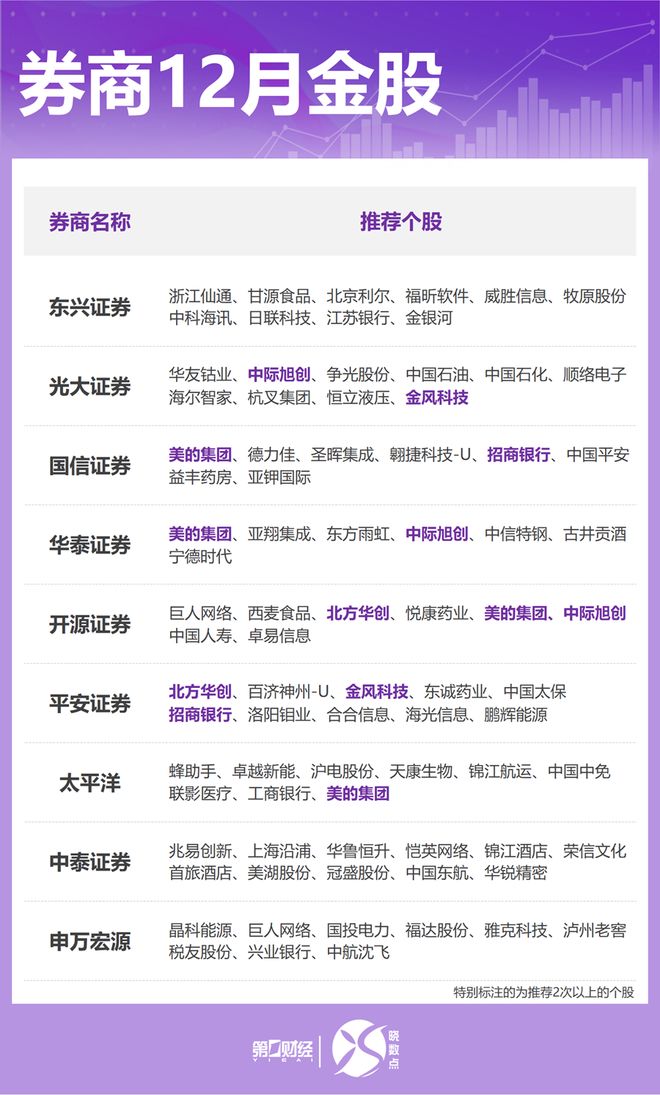
Core Viewpoint - The A-share market experienced a volatile adjustment in November, with the Shanghai Composite Index falling by 1.67%, the Shenzhen Component Index by 2.95%, and the ChiNext Index by 4.23% [1] Group 1: Stock Recommendations - Multiple brokerages have released their investment portfolios for December, covering various sectors including finance, information technology, and consumer goods [1] - Notable stocks recommended by brokerages include Midea Group, which received recommendations from four brokerages, and Zhongji Xuchuang, which was recommended by three [3] - Other recommended stocks include Zhejiang Xiantong, Ganyuan Food, and Beijing Lier from Dongxing Securities; Huayou Cobalt, Zhongji Xuchuang, and China Petroleum from Everbright Securities; and Meituan, Delijia, and China Ping An from Guosen Securities [2] Group 2: Market Trends and Insights - Brokerages suggest that the A-share market may primarily experience a period of consolidation, with a focus on cyclical sectors, consumption, and manufacturing [5] - According to Xinyu Securities, the recovery of Chinese assets is supported by enhanced competitiveness, the release of new economic momentum, clear policy transformation, and stable economic fundamentals [6] - Shenyin Wanguo anticipates that the end-of-year policy window may validate the "policy bottom," supporting economic growth in 2026, with cyclical assets likely forming the basis for the spring market [6] - Suggestions for investment include focusing on high-dividend, low-volatility assets, and sectors such as basic chemicals and industrial technology [6]




央行等三部门重磅发布:取消“个人存取现金超5万元需登记”规定
Di Yi Cai Jing Zi Xun· 2025-11-29 09:00
Core Viewpoint - The People's Bank of China, the National Financial Regulatory Administration, and the China Securities Regulatory Commission jointly released the "Management Measures for Customer Due Diligence and Customer Identity Information and Transaction Record Keeping" on November 28, which will take effect on January 1, 2026, emphasizing a risk-based approach to customer due diligence in financial institutions [2][4]. Group 1: Regulatory Changes - The requirement for individuals to register the source of funds for cash withdrawals exceeding 50,000 yuan has been removed, aligning with the previous draft [3]. - Financial institutions are now required to conduct customer due diligence based on the risk profile of the customer and the nature of the transactions, avoiding measures that do not match the level of money laundering risk [4][5]. Group 2: Risk-Based Approach - The new regulations advocate for a risk-based approach, allowing simplified measures for low-risk customers while enforcing stricter due diligence for high-risk situations [5][6]. - For example, pension withdrawals from social security accounts are considered low-risk, requiring only basic identity verification without additional documentation [6]. - Conversely, unusual transaction patterns, such as a sudden influx of large transfers into a student's account, will trigger enhanced scrutiny and investigation by the bank [7]. Group 3: Implementation and Impact - The management measures aim to balance the need for financial security with the convenience of financial services, promoting a more tailored approach to customer interactions [7].

深交所总工程师喻华丽:围绕六大领域落实“AI+”战略
Di Yi Cai Jing Zi Xun· 2025-11-29 02:09
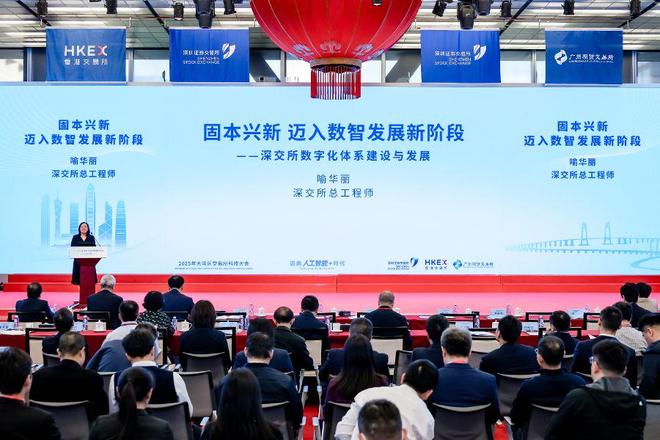
Core Insights - The Shenzhen Stock Exchange (SZSE) is focusing on integrating "Artificial Intelligence +" into its core business areas during the 14th Five-Year Plan period, with a clear path outlined for its implementation [1][7]. Group 1: AI Integration and Regulatory Framework - SZSE aims to build an intelligent regulatory system covering risk monitoring, trading risks, and company supervision through "AI+" [1]. - The exchange plans to enhance service quality for investors and listed companies using intelligent tools [1]. Group 2: Digital Infrastructure and Platform Development - During the 14th Five-Year Plan, SZSE has targeted the creation of an internationally leading digital system, focusing on four pillars: digital infrastructure, digital platforms, digital capabilities, and digital ecosystems [3]. - The exchange has developed a hybrid cloud system centered around Group Cloud, Regulatory Cloud, Shenzhen Cloud, and Public Cloud, aiming to provide high-standard cloud infrastructure services [3]. Group 3: Collaborative Ecosystem and Innovation - SZSE is strengthening collaboration with industry institutions through various platforms, including financial technology centers and data security laboratories, to build an efficient industry innovation ecosystem [4]. - The exchange has implemented a closed-loop innovation approach, emphasizing regulatory technology needs and addressing actual business pain points [6]. Group 4: Future Directions and Strategic Goals - Looking ahead to the 15th Five-Year Plan, SZSE will focus on six key areas: building intelligent computing infrastructure, implementing cloud applications, deepening AI integration, enhancing application architecture, advancing intelligent innovation research, and strengthening governance [7]. - The exchange aims to create a world-class trading platform supported by robust digital and intelligent frameworks through systematic advancement in these six areas [7].
芝商所创纪录宕机引发“拉网线”传言,白银多空决战打响?
Di Yi Cai Jing Zi Xun· 2025-11-29 00:25
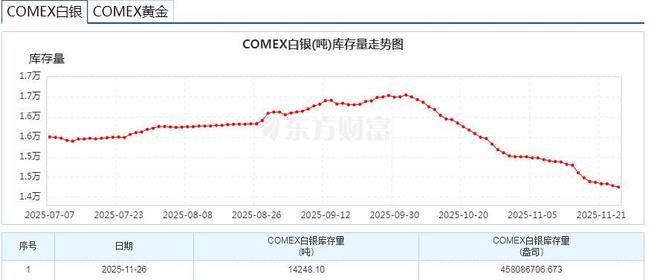
Core Points - The Chicago Mercantile Exchange (CME) experienced a significant system failure, halting trading across global forex, commodities, and stock futures markets for nearly 11 hours, marking the longest outage in recent years [1][3] - The outage was caused by a cooling system issue at the CyrusOne data center in Chicago, affecting major brokers like Saxo Bank, XTB, and eToro, which suspended trading services [2][3] - Following the resumption of trading, silver prices surged to a historic high, raising speculation about the potential impact on the market dynamics of precious metals [1][7] Group 1: System Failure Details - CME's system failure was first reported on its website at 9:40 PM ET, with the outage lasting until 8:30 AM ET the next day [2][3] - This incident is considered a significant blemish for CME, highlighting the importance of market structure and the interconnectedness of various markets [3] - The average daily trading volume for derivatives at CME was reported at 26.3 million contracts in October [4] Group 2: Market Reactions and Speculations - The timing of the outage coincided with silver futures reaching above $54, leading to rampant speculation on social media regarding a connection between the outage and silver price movements [5][7] - There were concerns about liquidity, as the bid-ask spread for silver surged from around $1 to over $20 during the outage, indicating extreme volatility [5][6] - Post-outage, COMEX silver futures rose over 6%, nearing a 100% increase year-to-date, while silver inventories at COMEX dropped nearly 14% from late September [7][9] Group 3: Broader Market Implications - The silver market is currently under pressure due to industrial demand, particularly in solar panel production, with a backwardation structure indicating short-term supply constraints [9] - Potential risks include the U.S. government's inclusion of silver in a critical minerals list, which could lead to tariffs and exacerbate global supply issues [9] - CME's response to the volatility included raising margin requirements for COMEX silver futures, a move aimed at curbing speculative trading [10]
五连阳!美股主要股指收官11月,英特尔牵手苹果大涨10%,黄金创16年纪录
Di Yi Cai Jing Zi Xun· 2025-11-29 00:25
Market Overview - The three major U.S. stock indices closed higher, with the Dow Jones Industrial Average rising nearly 300 points, reflecting strong market sentiment towards a potential interest rate cut by the Federal Reserve in December [1][4] - The 10-year U.S. Treasury yield has rebounded, returning to 4%, indicating a shift in investor sentiment towards riskier assets [1][4] - The holiday shopping season has commenced, with Salesforce estimating online sales on Thursday to reach $8.6 billion, a 6% increase from the previous year [5] Weekly Performance - The Dow Jones increased by over 3% this week, while the Nasdaq and S&P 500 indices rose nearly 4% [2] Stock Performance - Notable tech stocks showed mixed results, with Meta up 2.2%, Amazon up 1.8%, and Microsoft up 1.3%, while Nvidia fell by 1.8% [3] - Intel surged over 10% following analyst predictions of upcoming shipments of Apple's entry-level M-series processors [3] - Oracle declined by 1.5% amid reports of plans to raise $38 billion in loans for OpenAI-related agreements [3] Commodity Performance - International oil prices experienced slight fluctuations, with WTI crude oil down 0.17% at $58.55 per barrel and Brent crude down 0.22% at $63.20 per barrel [6] - Precious metals performed well, with COMEX gold futures rising 3.40% to $4,218.30 per ounce, marking a monthly increase of 28.09%, the highest since February 2009 [6]


美股科技股普涨,存储芯片板块领涨
Di Yi Cai Jing Zi Xun· 2025-11-28 14:52
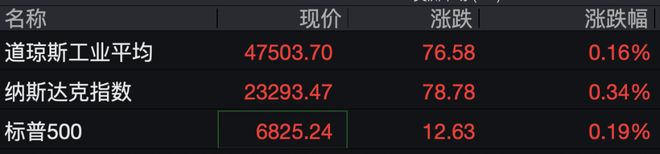
Market Performance - On November 28, US stock indices opened higher, with the Dow Jones up 0.16%, Nasdaq up 0.34%, and S&P 500 up 0.19% [1] - The current price of the Dow Jones Industrial Average is 47,503.70, with an increase of 76.58 points [2] - The Nasdaq index stands at 23,293.47, rising by 78.78 points [2] - The S&P 500 index is at 6,825.24, gaining 12.63 points [2] Sector Performance - Technology stocks mostly rose, with Google and Amazon both increasing by approximately 1% [2] - The storage chip sector led the gains, with SanDisk rising over 4%, Micron Technology up 2.8%, and Western Digital up 2% [2] Chinese Stocks - Chinese concept stocks generally performed well, with BaWang Tea up over 4% and Pony.ai up more than 3% [2] - Canadian Solar saw a decline of nearly 2% [2]



现货白银创历史新高,黄金加速上涨
Di Yi Cai Jing Zi Xun· 2025-11-28 14:46
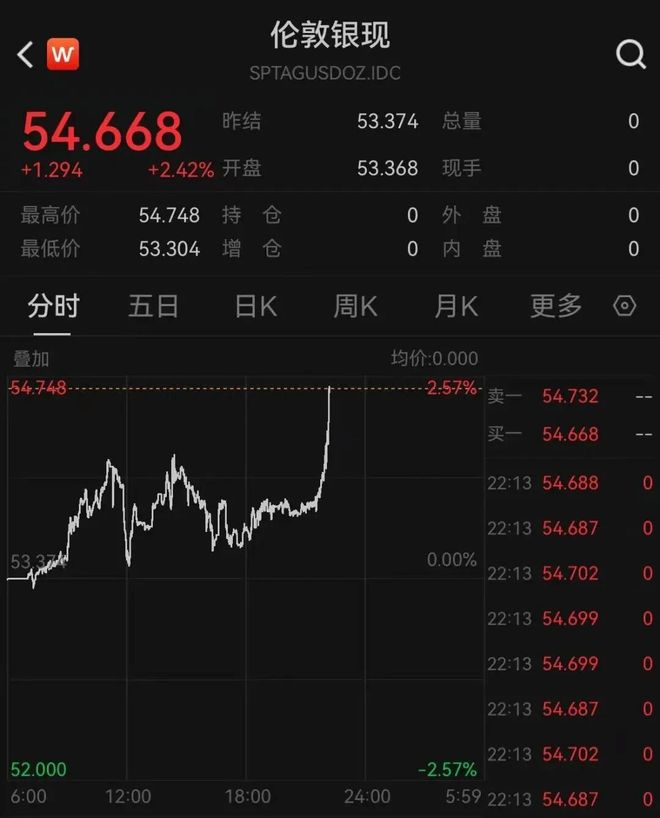
编辑 | 钉钉 11月28日晚间,现货白银涨超2%,报54.668美元/盎司,创历史新高;上期所沪银期货涨超2.5%,刷新 历史新高。 现货黄金同样加速走高,日内涨0.82%,现报4191.03美元/盎司。 ...
AI赋能金融监管:深交所智能监测系统找到多项违法违规线索
Di Yi Cai Jing Zi Xun· 2025-11-28 14:32
Core Insights - The Shenzhen Stock Exchange (SZSE) has developed advanced technologies for monitoring abnormal trading behaviors, addressing the complexities of modern market activities [2][3][4] - The "Intelligent Monitoring and Detection Technology for Abnormal Trading Behaviors in Securities Markets" project has successfully completed its implementation phase, enhancing regulatory capabilities [2][3] - The industry regulation model aims to improve the accuracy and completeness of regulatory responses, leveraging AI to address the challenges of traditional methods [7][8] Group 1: Intelligent Monitoring Technologies - The project has produced three core technologies: investor trading behavior classification, insider trading detection, and a securities market simulation system [2][3][4] - The investor trading behavior classification technology utilizes a comprehensive label system to analyze trading behaviors across six dimensions, significantly improving the precision of investor profiling [3] - The insider trading detection technology employs a large-scale trading behavior graph to identify suspicious trading patterns, enhancing regulatory efficiency and transitioning to a proactive monitoring approach [4] Group 2: Securities Market Simulation System - The securities market simulation system integrates historical trading data to create parameterized behavioral models, allowing for the simulation of various trading strategies [5][6] - This system addresses the limitations of traditional empirical research by providing tools for risk assessment and strategy validation, thus shortening the development cycle for trading strategies [6] Group 3: Industry Regulation Model - The industry regulation model, developed in collaboration with Huawei, aims to enhance the understanding and accuracy of regulatory inquiries through an intelligent Q&A platform [7][8] - The platform has been deployed for internal use and is being trialed by regulatory and market institutions, showing significant improvements in response accuracy and completeness [7][8] - The model serves as a pilot for future task models in the industry, supporting various regulatory functions and contributing to the legal foundation of the capital market [8]
芝商所全平台交易停摆,致黄金、白银、铜等价格陷入“横盘僵局”
Di Yi Cai Jing Zi Xun· 2025-11-28 14:15
Core Insights - CME Group experienced a trading halt across its platforms due to a cooling failure at a third-party data center, impacting key commodity prices like gold, silver, and copper [2][3] - Prior to the outage, COMEX silver futures reached a historic high of $54.6 per ounce, while COMEX gold futures surged to $4227 per ounce [2] - The outage lasted over 8 hours, leading to a significant loss of liquidity in the futures market [3] Group 1: Impact of the Outage - The cooling issue at CyrusOne data center prevented global traders from operating through the Globex system, exposing institutions relying on this platform for hedging and speculation to unmanageable risk [3] - The immediate consequence of the outage was a drastic reduction in market liquidity, with OTC spreads widening significantly [3] - The outage affected not only commodities but also forex, U.S. Treasury, and stock index futures, with CME's EBS forex platform also pausing trading [3] Group 2: Market Reactions and Expectations - Analysts noted that a significant portion of the recent rise in gold prices was driven by investor positioning for an anticipated low interest rate environment, with an 85% probability of a Fed rate cut in December according to CME's FedWatch tool [3] - The macroeconomic environment continues to support precious metal prices, as the dollar is experiencing its worst week since late July, enhancing the appeal of dollar-denominated assets like gold [3] - Market participants are currently limited to off-exchange operations, which may increase price volatility risks until trading resumes [4]