
Zhong Guo Dian Li Bao

Search documents
粤港澳大湾区抽水蓄能在运规模突破千万千瓦
Zhong Guo Dian Li Bao· 2025-10-15 06:33
笔者从中国南方电网有限责任公司了解到,10月2日,"十四五"粤港澳大湾区首个抽水蓄能工程——梅 州抽水蓄能电站(以下简称"梅蓄电站")二期工程第二台机组投产发电,推动大湾区在运抽水蓄能规模 突破1000万千瓦,达到1028万千瓦,接近全国在运总量的六分之一,较"十三五"末增长40%,在运规模 和发展增速均位居世界四大湾区之首。与此同时,广东也成为我国首个抽水蓄能在运规模、调节能力分 别超过1000万千瓦和2000万千瓦的经济大省。 抽水蓄能装备向高端化升级 在位于广州的我国首座抽水蓄能多厂站集控中心内,中控平台实时控制着大湾区6座抽水蓄能电站的启 停,这种"一人多站"的运行集约化模式不仅把设备的控制效率提高2~3倍,还把过去"一座电站调节一地 电源"转化为"多座电站集中服务区域电力系统"。 而在与该集控中心仅"一墙之隔"的我国首个抽水蓄能人工智能数据平台,算力正高效运转。通过接入大 湾区33台抽水蓄能机组的40多万个信息数据,平台600套算法模型和9400多个算法对机组运行状态实时 分析,帮助运维人员足不出户地对机组设备进行"远程体检"。 "目前,平台在机器自主学习的驱动下,已迭代至第三代,替代超95%的设备 ...
科技引领电力装备 高端化、智能化、绿色化发展
Zhong Guo Dian Li Bao· 2025-10-14 06:55
Core Viewpoint - The Chinese government emphasizes the importance of self-sufficiency in energy and has introduced new requirements for high-quality energy development, focusing on the transition from resource control to equipment manufacturing and supply capabilities in the power sector [1] Group 1: Current State of Power Equipment Industry - The power equipment industry in China has evolved from "following" to "running together" and has achieved "leading" positions in multiple fields through independent innovation and the assimilation of foreign technologies [2] - Significant advancements have been made in core technologies, with projects like the Shandong Yuncheng 630℃ ultra-supercritical thermal power demonstration project achieving world-leading coal consumption and efficiency levels [2] - China has established a comprehensive power equipment industry system that supports domestic energy transition and plays a crucial role in global green and low-carbon energy development [2] Group 2: Challenges Facing the Power Equipment Industry - The industry faces three main challenges: a gap in high-end equipment technology to meet green energy transition needs, reliance on imports for some core components and materials, and insufficient digital intelligence capabilities [3] - These challenges hinder the high-quality development of the power equipment sector [3] Group 3: Future Directions and Guidelines - The "Guiding Opinions" provide a scientific blueprint for the high-quality development of power equipment, focusing on enhancing equipment technology levels, developing key components, and promoting digital and green advancements [4][5][6] - The guidelines emphasize the need for improved quality and efficiency in power equipment, particularly as the energy structure shifts from coal to renewable sources [4] - There is a strong push for the large-scale application of energy storage equipment to address the volatility of renewable energy and ensure grid stability [5] Group 4: Digital and Green Transformation - The digital transformation of power equipment is essential for modernizing the industry and enhancing operational efficiency through technologies like digital twins and predictive maintenance [6][7] - The "Guiding Opinions" advocate for a comprehensive approach to green development, addressing challenges related to waste management and resource security throughout the equipment lifecycle [7][8] Group 5: Implementation and Innovation Ecosystem - To implement the guidelines effectively, the industry must strengthen the innovation ecosystem, encouraging enterprises to take on comprehensive innovation responsibilities [8] - Establishing industry self-regulation mechanisms is crucial to prevent homogenization and unhealthy competition, ensuring a structured development environment [8]
国家电网、南方电网首次开展跨经营区电力现货交易
Zhong Guo Dian Li Bao· 2025-10-14 04:38
据悉,此次跨区现货交易的顺利落地,得益于一套科学高效的协同机制。国家电网先组织华东各省申报用电需求,汇总形成量价曲线传 递至南方区域电力现货交易平台;南方电网基于需求信息完成市场出清,精准确定成交时段与电量,全流程无缝衔接,实现电力资源"按 需调配、精准输送"。 记者了解到,这场"跨省合作"早有铺垫。2022年,国家发展改革委、国家能源局出台指导意见,明确加快构建统一开放、竞争有序的电 力市场体系;同年云霄直流投运,福建与广东电网实现互联互通,国家电网和南方电网两大电网至此拥有互联互通"硬件基础"。 10月13日,国家电网与南方电网突破经营区域界限,首次以现货交易形式实现跨区电力调配。南方电网180万千瓦清洁电力通过云霄直流 通道驰援长三角地区,总交易电量达4230万千瓦时,这标志着我国电力统一大市场联通机制全面达成,为电力资源跨区域高效流动按 下"加速键"。 据悉,此次交易中浙江、上海是交易中的主要购电方。数据显示,10月13日浙江、上海最大成交电力分别为180万千瓦(12时)和90万千 瓦(14时)。今年夏天,浙江全社会最高负荷超1.31亿千瓦;进入10月,罕见持续高温让用电负荷"连连冲高",全省最高负荷 ...


国家发改委公开征求意见
Zhong Guo Dian Li Bao· 2025-10-14 03:17
Core Points - The article discusses the implementation of a draft regulation aimed at establishing minimum consumption targets for renewable energy and a responsibility weight system for renewable energy power consumption in China, in line with the Energy Law of the People's Republic of China [1][2][3] Group 1: Renewable Energy Consumption Targets - The minimum consumption target for renewable energy refers to the proportion of renewable energy consumed by energy users in their total energy consumption [3] - The targets are divided into two categories: minimum targets for renewable energy electricity consumption and non-electric consumption [3] - The electricity consumption target includes all types of renewable energy generation, while the non-electric consumption target includes renewable heating, hydrogen production, and biofuels [3] Group 2: Implementation and Monitoring - The State Council's energy authorities will determine key energy-consuming industries and set specific minimum consumption targets and transition periods, with ongoing monitoring and evaluation [4] - The annual targets for renewable energy electricity consumption and non-electric consumption will be issued by the State Council's energy authorities, with provincial energy departments responsible for implementation [6][12] - Compliance with the minimum consumption targets will be verified using renewable energy green power certificates [5][9] Group 3: Responsibility Weight for Renewable Energy Consumption - The responsibility weight for renewable energy consumption is defined as the proportion of renewable energy consumed in each provincial region relative to the total electricity consumption [8] - The State Council's energy authorities will conduct unified calculations of the responsibility weights for each province and issue them annually [11] - Provincial energy departments will develop implementation plans to ensure the stable utilization of wind and solar power [12] Group 4: Evaluation and Accountability - The State Council's energy authorities will conduct quarterly monitoring and annual evaluations of the implementation of the minimum consumption targets and responsibility weights [10][11] - Enterprises that fail to meet the minimum consumption targets will be required to make up the shortfall through green certificate trading or other market-based methods within three months [12][13] - Non-compliance may result in increased scrutiny and potential penalties for the responsible enterprises [12][13]
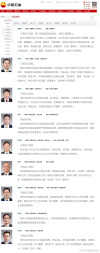
宋大勇任中国石油党组成员、副总经理
Zhong Guo Dian Li Bao· 2025-10-13 08:46
集团公司董事、党组副书记 段良伟 股份公司非执行董事 正高级工程师。 【中国石油副总经理任职】近目,中国石油天然气集团有限公司官网"集团高层"一栏显示,宋大勇现已 担任中石油集团党组成员、副总经理。(中国石油天然气集团有限公司)#电力快讯# 投资者 ~ 股份公司 | @ English Pyc 中国石油 首页 关于我们 新闻中心 信息公开 业务中心 产品与服务 环境与社会 胆非中心 CNPC在全面 关于 周心怀 段良伟 周 松 任立新 弱 雷 张道伟 陈东升 宋大勇 集团简介 蛋事合 戴厚良 集团公司董事长、党组书记 股份公司董事长 集团高层 组织机构 正高级工程师。第十四届全国政协委员,中国工程院院士。 主营业务 曾任中国石化扬子石油化工公司副经理,扬子石油化工股份有限公司董事、副总 投资者关系 经理、副董事长、总经理、董事长、党委常委,中国石化股份公司财务副总监、副 党群建设 总裁、董事、高级副总裁、财务总监、副董事长、总裁、董事长,中国石化集团公 品牌形象 司党组成员、总经理、董事、党组副书记、董事长、党组书记等职务。 集团公司董事、总经理、党组副书记 周心怀 正高级工程师。 曾任中国海洋石油东海石油管 ...

中国煤科:聚力创新驱动 推动煤炭行业高质量发展
Zhong Guo Dian Li Bao· 2025-10-10 08:32
Core Viewpoint - Since the "14th Five-Year Plan," China Coal Science and Technology Group (China Coal Science) has focused on high-quality development through innovation-driven strategies, enhancing its technological capabilities, and supporting national energy security [2][7]. Group 1: Focus on Technological Independence and Innovation - China Coal Science has established a comprehensive innovation system, emphasizing the integration of product development and research, with a three-tiered R&D structure [3][4]. - The company has invested over 10 billion in R&D over the past five years, achieving a continuous growth of over 40% in authorized patents [5][6]. - It has built over 20 national-level research platforms and developed several internationally leading scientific devices, enhancing its research and testing capabilities [4][5]. Group 2: Service to National Strategic Needs - The company has strengthened its technological support for national energy supply, leading the construction of intelligent coal mines and significantly improving safety and efficiency in coal mining [7]. - It has contributed to a 65% reduction in the coal mining fatality rate, showcasing its commitment to safety and emergency response [7]. - China Coal Science has pioneered clean coal utilization technologies, supporting the development of high-value chemical products and promoting ecological protection [8]. Group 3: Modern Industrial System Development - The company is accelerating its digital transformation, achieving a 93% adoption rate of digital design tools and a 60% digitization rate of production equipment [9]. - It has invested significantly in emerging industries, with over 63% of its annual investment directed towards new strategic industries in 2024 [10]. - China Coal Science has developed several new industries, including mining robots and geothermal energy, enhancing its industrial influence [10].
节后第一天 大涨!
Zhong Guo Dian Li Bao· 2025-10-10 05:14
Core Viewpoint - The A-share power equipment sector has experienced a significant surge following the National Day holiday, driven by a global uptrend in power equipment demand due to energy structure transformation and increasing electricity needs [1]. Group 1: Market Performance - After the National Day holiday, A-share power equipment and electrical grid sectors collectively strengthened, with companies like Shanghai Electric, Rongfa Nuclear Power, and TBEA hitting the daily limit, while China XD Electric and Pinggao Electric also saw positive performance [1]. - During the holiday period, the Hong Kong power equipment sector had already shown signs of performance improvement [1]. Group 2: Industry Trends - Analysts believe that the global power equipment demand is entering an upward cycle, supported by the continuous accumulation of new energy grid connection projects such as wind and solar power [1]. - The rapid development of AI technology is significantly increasing the demand for quality energy usage in data centers, thereby boosting investment needs in the power distribution and utilization sector [1]. Group 3: Policy and Forecast - In September, the National Energy Administration and other departments issued a "Work Plan for Stable Growth in the Power Equipment Industry (2025-2026)," projecting an average annual revenue growth rate of around 6% for traditional power equipment by 2026, while new energy equipment revenues are expected to remain stable [1]. - The urgent need for grid upgrades and the overseas "power shortage" situation present opportunities for Chinese power equipment companies with technological and production advantages to expand internationally [1]. Group 4: Export Performance - According to customs data, China's power equipment exports remained stable, with an overall export value increasing by 25.23% year-on-year in August, and a cumulative growth of 34.60% from January to August [1]. Group 5: Future Investment Outlook - CITIC Construction Investment predicts that global grid investment may exceed $400 billion by 2025, with sustained high demand. AI is expected to strongly drive global electricity demand growth, significantly increasing the demand for supporting electrical equipment, providing opportunities for Chinese companies to secure large orders worth billions [2].




国庆高速充电量再破纪录,保障升级
Zhong Guo Dian Li Bao· 2025-10-09 13:00
Core Insights - The average daily charging volume for new energy vehicles (NEVs) on national highways from October 1 to October 8 increased by over 45% year-on-year, reaching a historical high [1] Charging Volume and Usage - A total of 5.169 million charging sessions were recorded, with a charging volume of 123 million kilowatt-hours during the specified period [1] - The average daily charging volume during the National Day holiday was 15.359 million kilowatt-hours, which is 2.59 times higher than regular days and represents a 23.61% increase compared to the May Day holiday this year [1] - Compared to the same holiday last year, the charging volume increased by 45.73% [1] Infrastructure and Service Improvements - The National Energy Administration organized efforts to enhance monitoring and service levels for charging facilities, including the deployment of temporary charging equipment and additional personnel for guidance [1] - Future plans include further strengthening the construction of charging infrastructure to meet the charging needs of NEVs during major holidays [1]
库布齐基地特高压外送通道启动建设推动沙戈荒治理与新能源开发
Zhong Guo Dian Li Bao· 2025-10-07 10:14
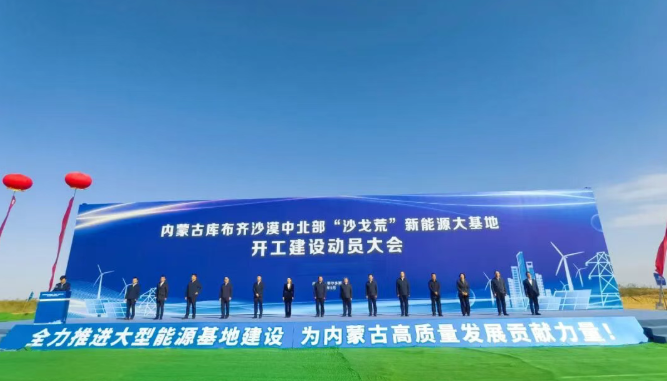
Core Insights - The construction of the Kubuqi Base ultra-high voltage transmission channel officially commenced on September 29, marking the full implementation phase of the largest sand and desert wind and solar power base in China's 14th Five-Year Plan [1][3] - Once completed, the Kubuqi Base is expected to deliver approximately 36 billion kilowatt-hours of electricity annually to the Beijing-Tianjin-Hebei region, with 60% of this energy coming from clean sources [1][3] Project Details - The transmission channel utilizes ±800 kV ultra-high voltage direct current technology, starting from Dalad Banner in Ordos, Inner Mongolia, passing through Shanxi Province, and ending in Cangzhou, Hebei Province, covering a total length of 699 kilometers [3] - The Kubuqi Base project plans to construct 8 million kilowatts of solar power and 4 million kilowatts of wind power, along with 4 million kilowatts of supporting coal power and 5 million kilowatt-hours of new energy storage facilities [3] Environmental and Ecological Impact - The project adheres to the principle of "ecology first, sand control as the main focus," employing a comprehensive management model of "power generation on panels, restoration below panels, and planting between panels" [3] - A three-tier protective system has been established, including high vertical sand barriers, grass grids, and ecological restoration beneath solar panels, creating a three-dimensional ecological barrier that achieves dual benefits of power generation and sand control [3] - To date, approximately 300,000 acres of desertified land have been treated, with expectations to exceed 1.5 million acres by the end of the 15th Five-Year Plan, resulting in an estimated annual electricity generation of nearly 140 billion kilowatt-hours, saving about 42 million tons of standard coal and reducing carbon dioxide emissions by approximately 100 million tons [3]
技术革新驱动光伏行业迈向新生态
Zhong Guo Dian Li Bao· 2025-10-03 04:06
Core Viewpoint - The 2025 Photovoltaic Industry Technology Innovation Conference highlighted the need for technological breakthroughs and industry self-discipline as key drivers for the sustainable development of China's photovoltaic industry, which is transitioning from scale expansion to technology-driven growth [1][2]. Group 1: Industry Trends - China's photovoltaic industry has shifted from being a latecomer to a global leader, emphasizing the importance of independent innovation and original technology for maintaining its competitive edge [2]. - The industry is experiencing a transformation where various battery technologies, including TOPCon, HJT, BC, and perovskite, are developing concurrently, indicating a diverse technological landscape [2][3]. - The focus on technological differentiation is replacing the previous emphasis on scale, with companies possessing core technologies able to maintain profitability even during industry downturns [3]. Group 2: Technological Innovations - Heterojunction technology (HJT) is witnessing significant cost reductions, making it competitive with TOPCon technology due to innovations like silver-coated copper technology and steel plate printing [2]. - Perovskite technology is recognized for its high photoelectric conversion efficiency and diverse application scenarios, positioning it as a commercially viable technology with strong potential for supporting global green energy development [2]. Group 3: Industrial Application and Standards - The conference addressed the importance of industrial application for new technologies, emphasizing that successful commercialization requires reliable long-term performance and a robust quality verification system [4]. - Current monitoring and certification systems are criticized for their homogeneity and outdated standards, necessitating the development of a more comprehensive empirical certification system to keep pace with technological advancements [4]. Group 4: Global Competitiveness - China's photovoltaic industry, which holds over 80% of the global market, must establish a precise measurement and certification system to ensure fair trade practices and reduce risks in international markets [5]. - Experts advocate for a shift in focus from scale dividends to value dividends, promoting technological progress and lifecycle emissions management to empower the industry [5]. Group 5: Future Outlook - The photovoltaic industry is urged to restore healthy profitability and move away from internal competition, with a dual focus on technological breakthroughs and industry self-discipline as pathways to sustainable development [5]. - Signs of recovery in stock prices indicate that companies committed to "technological innovation, cost control, and long-termism" are likely to gain a competitive advantage in the new cycle [5].