
Xin Hua Ri Bao

Search documents
改造酵母菌成“降解工厂” 把塑料垃圾“吃干榨净”
Xin Hua Ri Bao· 2025-12-16 21:49
Group 1 - The core idea of the article is the innovative approach to plastic waste management through genetic engineering of yeast, enabling it to efficiently decompose plastic into valuable chemical raw materials at room temperature and pressure [1][2] Group 2 - The main component of plastic waste is polyethylene terephthalate (PET), which is difficult to decompose due to the inefficiency and instability of natural enzymes [1] - The research team utilized a natural yeast called "Tropical Pichia" and engineered it to function as a high-efficiency "mobile degradation factory" [1] - The decomposition of PET typically requires two enzymes: PETase to cut large plastic pieces and MHETase to further break down the fragments into final products, which are terephthalic acid and ethylene glycol [1] - The team created an "integrated self-assembled multi-enzyme display platform" by precisely fixing the two enzymes on the yeast cell surface, enhancing the degradation efficiency [1] Group 3 - In experiments, 10 grams of yeast and 20 grams of plastic bottle fragments were placed in a 5-liter bioreactor, and under mild conditions, the plastic was completely decomposed into monomers within a week [2] - This research not only provides a new tool for plastic waste management but also presents a pathway towards a "plastic circular economy" [2] - Future plans include enabling the yeast to not only decompose plastic but also directly convert the decomposition products into more valuable bio-based chemicals [2]
“单人成军”究竟怎么“成”?探访江苏首个AIGC视频领域OPC公司
Xin Hua Ri Bao· 2025-12-16 13:58
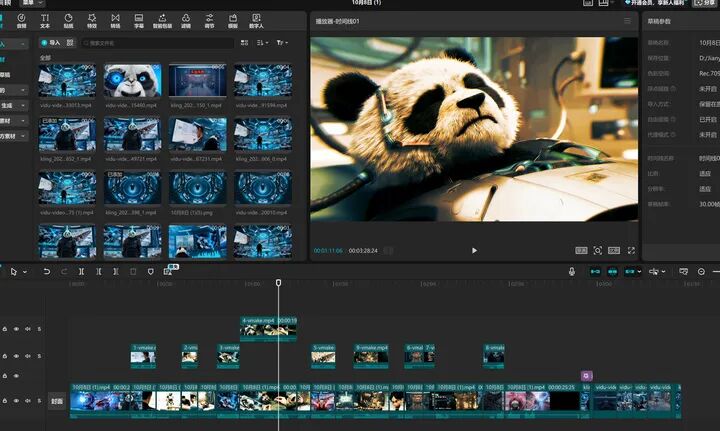
Core Insights - The article discusses the emergence of the One Person Company (OPC) model in Jiangsu, which promotes a new entrepreneurial paradigm leveraging artificial intelligence (AI) to enhance efficiency and reduce operational costs [1][7][11] Group 1: OPC Model and Implementation - The OPC model allows individuals to operate as a single entity supported by AI tools, enabling efficient collaboration and task management within small teams [3][5] - Suzhou Huazong AI Technology Co., Ltd. is the first AIGC video field OPC in Jiangsu, successfully obtaining its business license and transitioning from informal to formal operations [1][4] - The company utilizes a unique operational model where each member is multi-skilled, allowing for rapid project completion, exemplified by the production of an AI animation in just 28 days [4][9] Group 2: Community and Policy Support - Jiangsu cities like Nanjing, Suzhou, and Wuxi are rapidly developing OPC communities, integrating resources, policy support, and technical services to foster entrepreneurship [7][8] - The government provides various incentives, including rent-free office space and talent subsidies, which significantly reduce startup costs and enhance operational efficiency [6][8] - The establishment of these communities is seen as a crucial factor in overcoming common entrepreneurial challenges, such as high operational costs and resource access [6][11] Group 3: Business Growth and Future Prospects - Suzhou Huazong has established a profitable business model focusing on corporate promotional videos and AI-generated content, with competitive pricing and quick turnaround times [9][10] - The company plans to expand its offerings into various sectors, including film and gaming, while also collaborating with educational institutions to nurture future talent in the OPC model [10][11] - The overall growth of the OPC ecosystem in Jiangsu reflects a broader trend of integrating AI technology into various industries, creating new economic opportunities [11]

江苏出台21项措施全方位推动游艇业发展
Xin Hua Ri Bao· 2025-12-16 09:29
Core Viewpoint - The Jiangsu government has introduced measures to promote the yacht industry, emphasizing its integration with high-end manufacturing, leisure tourism, and quality consumption, aiming for high-quality development with 21 specific initiatives outlined in the policy [1] Group 1: Development Focus - The measures prioritize enhancing public consumption and diverse scenarios, allowing yacht clubs to conduct rental trials for yachts with up to 12 people, and supporting the development of eco-tourism and water sports products [2] - The policy encourages local yacht manufacturers to expand into external markets and develop new consumer spaces through participation in events like the Sanya International Yacht Show [2] Group 2: Supply and Demand Enhancement - To boost the yacht industry's core competitiveness, the measures call for optimization in industrial design and core component development, including electric yacht integration and smart navigation systems [2] - The initiative aims to strengthen the entire manufacturing chain, focusing on the mass production of small to medium-sized yachts and promoting clean energy yacht manufacturing [2] Group 3: Infrastructure and Safety Measures - The measures propose significant optimizations in the inspection of imported yachts and the establishment of yacht support facilities and service centers to create a robust infrastructure [3] - Emphasis is placed on ecological safety and multi-departmental regulatory collaboration to ensure environmental protection while promoting yacht industry growth [3] Group 4: Regional Advantages - Jiangsu's unique geographical advantages, including extensive water resources and a strong shipbuilding industry, provide a solid foundation for yacht industry development [4] - The province has registered 574 yachts and 8 yacht clubs, with around 100 companies involved in yacht manufacturing and related services, indicating significant growth potential [4] Group 5: Streamlining Processes - The government is working to expedite yacht registration and inspection processes, allowing for smoother operations and greater accessibility for yacht owners [4][5] - Initiatives include simplifying documentation requirements for imported yachts and enabling easier registration for out-of-province yacht owners [4] Group 6: Cross-Industry Integration - The policy aims to integrate the yacht industry with tourism and sports, promoting new consumption scenarios and encouraging the development of combined products like "yacht + tourism" and "yacht + events" [7] - The government plans to support the introduction of national and international water sports events, enhancing the visibility of local yacht-related activities [8]
新能源车出海新辟通道 沪皖江海联运新航线开航
Xin Hua Ri Bao· 2025-12-16 09:29
Core Insights - The launch of the "Wuhu-Shanghai" export route for new energy vehicles (NEVs) marks a significant development in the logistics and transportation sector, enhancing the connectivity between Anhui and Shanghai [1] Group 1: Route and Operations - The "Hailong Yongshun" container ship successfully transported newly manufactured NEVs from Wuhu Port to Shanghai Yangshan Phase III terminal, establishing a new maritime transport channel for NEVs [1] - A daily operation model has been introduced, with two scheduled sailings from Wuhu: one to Yangshan Port and another to Waigaoqiao Port, reducing transit time from 5-6 days to 2.5-3 days [1] Group 2: Efficiency and Cost Savings - The new route employs an innovative "one box system" for water-to-water transshipment, which streamlines the regulatory process and allows for "one box all the way" transport [1] - This system can save 48 to 96 hours in declaration time and reduce costs by 2,000 to 3,000 yuan per standard container [1]
创新海域管理模式助推海洋经济高质量发展
Xin Hua Ri Bao· 2025-12-16 00:30
Core Insights - The "Dongtai City Xingdong Investment 210 MW Fish-Solar Complementary Centralized Power Generation Project" has been recognized as a pioneering case in the innovative management of marine resources, marking a shift from flat to three-dimensional utilization of marine space [1][2] - The project exemplifies a win-win model of "one sea area, two outputs," combining solar power generation with ecological fish farming, thereby ensuring long-term rights for different operational entities [1][2] Group 1 - The project covers an area of approximately 267 hectares in the Dongtai coastal economic zone, utilizing a layered rights allocation model to clearly define marine usage rights above and below water [1][2] - The project has achieved significant comprehensive benefits, generating a total of 190 million kWh of electricity since its grid connection at the beginning of the year, with a projected total output of 6.57 billion kWh over its lifecycle [2] - The project is expected to save approximately 79,000 tons of standard coal annually and reduce carbon dioxide emissions by about 218,000 tons, contributing positively to regional energy structure optimization and carbon neutrality goals [2] Group 2 - The Dongtai Natural Resources and Planning Bureau has established a joint office and synchronized review mechanism with agriculture, rural affairs, and ecological environment departments to enhance approval efficiency [2] - The project employs modern technologies such as geographic information systems, remote sensing monitoring, and drone photography for precise delineation of marine usage areas and dynamic supervision [2] - Future plans include deepening marine management reforms and exploring additional integrated development models, such as "offshore wind power + aquaculture" and "marine tourism + ecology," to contribute to high-quality marine economic development [3]
江苏张家港为青年科技人才双创提供量身服务
Xin Hua Ri Bao· 2025-12-16 00:04
Core Viewpoint - Zhangjiagang is actively supporting young technology talents in innovation and entrepreneurship through tailored services and resources, including free incubation spaces and financial support [2][3][4]. Group 1: Support for Young Technology Talents - Zhangjiagang has established incubation spaces, including the Dongdu International Talent Port, offering at least 12 months of free office space to young technology talents [2]. - Projects recognized under the Zhangjiagang Leading Talent Program can receive customized support for up to three years, including factory space [2][3]. - The city aims to attract at least 150 high-level innovative young talents and reserve 100 national-level young talents over the next three years [4][5]. Group 2: Incubation and Development - The first batch of "zero-rent" incubators in Zhangjiagang covers five industrial parks, releasing nearly 17,000 square meters of incubation space [4]. - The Dongdu Talent Port focuses on high-end talent projects, while other parks target specific sectors like medical devices and research commercialization [4]. - Successful projects, such as the Red Chapter (Suzhou) Technology Co., have shown significant early success, with over 6 million yuan in orders and projected sales of 20 million yuan by 2026 [1][3]. Group 3: Strategic Industry Focus - The selected teams for the "zero-rent" incubators primarily come from strategic emerging industries such as new energy, new materials, and low-altitude economy, aligning with Zhangjiagang's development needs [3]. - Companies like Zhuoshij Aviation and Suzhou Aerospace Xingrui have made significant advancements, including a 100 million yuan investment in drone production and over 27 million yuan in financing for high-temperature materials [3].
省社科联九届十次常务理事会会议在宁召开
Xin Hua Ri Bao· 2025-12-15 23:54
会议审议省社科联第九届理事会工作报告(征求意见稿)。省社科界第九次代表大会以来,省社科联始 终坚持以习近平新时代中国特色社会主义思想为指导,认真落实中央关于繁荣发展哲学社会科学的工作 要求,紧扣省委省政府重大战略部署,团结带领全省广大社科工作者奋力推进高水平社科强省建设,哲 学社会科学事业呈现蓬勃发展的良好态势,取得了一系列标志性的社科成果,为江苏经济社会发展、全 国社科大局做出了重要贡献。今后五年,全省社科界要立足于高标准建设社科强省目标,用中国理论解 读中国实践,在研究解决事关党和国家全局性、根本性、关键性的重大问题上拿出真本事、取得好成 果,为加快构建中国哲学社会科学自主知识体系、奋力谱写"强富美高"新江苏现代化建设新篇章作出新 的更大贡献。 本报讯 (记者 杨丽) 12月15日,省社科联九届十次常务理事会会议在南京召开。省社科联主席曲福田 主持会议。 会议还听取关于《江苏省哲学社会科学界联合会章程(修订草案)》(征求意见稿)的意见建议。审议 通过有关人事任免调整情况,增补王成斌同志为省社科联九届理事会副主席。 ...
加速推进南京国际科技创新中心建设
Xin Hua Ri Bao· 2025-12-15 23:47
Core Insights - The article emphasizes the need for Jiangsu, particularly Nanjing, to enhance its innovation capabilities and establish itself as a global technology innovation center, as outlined in the 20th National Congress and the 14th Provincial Congress [1] Group 1: Innovation Strategy - Jiangsu aims to leverage technology innovation to drive new productivity during the 14th Five-Year Plan, with Nanjing ranked 9th in the 2024 Global Innovation Index by WIPO [1] - Nanjing possesses significant technological resources and industrial foundations but faces challenges such as a lack of strategic innovation platforms and insufficient funding for innovation transformation [1] Group 2: Infrastructure Development - The establishment of the Zijinshan Laboratory as a national laboratory is prioritized, with a focus on spatial planning and resource allocation to support high-end innovation platforms [2] - A systematic approach is being developed to create a cluster of major national scientific infrastructure, ensuring land supply and financial support at both provincial and municipal levels [2] Group 3: Industry Innovation Landmarks - Nanjing is exploring the creation of "6G City" to lead in 6G technology and related industries, aiming to establish impactful innovation brands [3] - Support is being provided for key industrial clusters such as robotics and innovative pharmaceuticals to enhance their competitiveness and international influence [3] Group 4: Collaborative Innovation Ecosystem - A comprehensive innovation engine is being developed, drawing on successful models from other cities to create a collaborative ecosystem centered around the Zijinshan Science City [4] - Mechanisms for cross-regional collaboration and resource sharing are being established to facilitate the integration of education, finance, and industry [4] Group 5: Infrastructure Support - There is a focus on addressing the hardware needs of major research facilities, including optimizing underground utilities and transportation [5] Group 6: Innovation and Investment Synergy - The government is acting as a facilitator to connect top resources with local industries, enhancing the capacity for technology transfer and commercialization [6] - Initiatives are being taken to strengthen the role of enterprises in innovation, promoting collaboration between leading companies and research institutions [6] Group 7: Capital Investment Strategies - A dual approach of government and market-driven investment is being implemented to support technology innovation, including the establishment of venture capital funds [7] - Efforts are being made to attract national venture capital headquarters and financial institutions to enhance the capital landscape for technology startups [7]
南通市光学瞄准镜器材商会成功换届
Xin Hua Ri Bao· 2025-12-15 23:47
Group 1 - The core viewpoint of the news is the successful re-election of Wang Yongjun as the president of the Nantong Optical Sight Equipment Chamber of Commerce, highlighting Nantong's position as the world's largest optical sight production base, contributing over 70% of China's production, which itself accounts for about 90% of global output [1] - The optical sight industry in Nantong has been growing quietly since its inception in 1990, with the first production line established by Yin Zhuhua at Sam's Electric Company [1] - The Chamber of Commerce was established in December 2014 to facilitate industry development and information exchange, with Yin Zhuhua serving as the honorary president [1] Group 2 - The Chamber of Commerce has become a guiding force for member enterprises, promoting political awareness and party spirit through various educational activities, and has been recognized as a "Four Good Chamber of Commerce" in Jiangsu Province [2] - The optical sight industry in Nantong has formed a complete industrial cluster with over 120 member companies, an annual output value of nearly 3 billion yuan, and approximately 30,000 employees, contributing to local economic prosperity [2] - Member companies consume over 5,000 tons of aluminum and more than 1,500 tons of copper annually, providing stable employment for local farmers [2] Group 3 - The Chamber of Commerce has taken the initiative to establish industry standards to enhance the international competitiveness of the optical sight industry, addressing the lack of unified standards that previously hindered industry communication and export [3] - In July 2019, the first industry group standard for civilian optical sights was published in Nantong, marking a significant achievement for the industry and allowing local companies to gain a stronger foothold in the market [3] - The implementation of these standards has led to the rapid development of leading companies in the industry, attracting world-class enterprises to establish operations in Nantong [3] Group 4 - The focus on technological innovation has led member companies to enhance product quality and develop new technologies, such as laser ranging and GPS positioning, increasing product value [4] - The global optical industry is experiencing a dual opportunity for technological innovation and market restructuring, prompting the Chamber of Commerce to establish collaborative mechanisms for research and production [4] - Over the next five years, the Chamber will prioritize brand enhancement, talent cultivation, and the growth of young entrepreneurs to build an internationally renowned optical sight industry cluster [4]
构建银发人才“代际知识转移”新模式
Xin Hua Ri Bao· 2025-12-15 23:43
Core Viewpoint - The article emphasizes the importance of leveraging retired university teachers as a valuable resource for knowledge transfer, which can enhance the development of younger faculty and contribute to the modernization of higher education governance in the context of China's talent strategy [1]. Group 1: Value of Knowledge Transfer - The transfer of knowledge from retired teachers serves as a "booster" for the development of young faculty, providing not only technical skills but also the transmission of values and academic culture [2]. - Retired teachers act as role models in research and education, helping to instill a strong academic ethos and guiding younger scholars in their professional journeys [2][3]. Group 2: Educational Impact on Students - The experience and expertise of retired teachers create a rich environment for students, ensuring continuity in academic traditions and providing innovative insights for their learning paths [3]. - This intergenerational knowledge transfer is crucial for cultivating students' moral values and comprehensive qualities, acting as a bridge between past and future educational practices [3]. Group 3: Innovation in Talent Utilization - The process of knowledge transfer from retired teachers transforms their accumulated experience into new intellectual resources, fostering innovation and optimizing talent allocation within universities [4]. - This approach not only enhances the academic foundation of institutions but also supports their cultural development and strategic goals in education and research [4]. Group 4: Mechanisms for Knowledge Transfer - Establishing institutional mechanisms like "Silver Wisdom Think Tank" and "Blue-Green Classroom" can formalize the knowledge transfer process, integrating retired teachers' expertise into university curricula and research initiatives [5]. - These mechanisms promote intergenerational interaction and prevent knowledge fragmentation, becoming essential practices in university governance [5]. Group 5: Digital and Cultural Support - Utilizing digital technologies to create platforms for knowledge transfer can enhance the effectiveness of intergenerational collaboration, breaking down communication barriers [6]. - Cultural initiatives, such as academic honor days and collaborative projects, are necessary to foster a supportive environment for knowledge sharing, ensuring that the transfer process is meaningful and engaging [7].