
Bei Jing Wan Bao

Search documents
银杏浓烈似金,松柏深翠如墨!京城这景色太美了
Bei Jing Wan Bao· 2025-11-12 08:32
来源:北京日报客户端 如遇作品内容、版权等问题,请在相关文章刊发之日起30日内与本网联系。版权侵权联系电话:010- 85202353 (流程编辑:u028) 转自:北京日报客户端 ...
中关村如何继续做创新的领头羊?
Bei Jing Wan Bao· 2025-11-12 07:45
Core Insights - Zhongguancun is recognized as a leading hub for technological innovation in China, maintaining its top position among 178 national high-tech zones, with nearly 10 trillion yuan in total revenue, accounting for about one-sixth of the national high-tech zone revenue [1] Innovation Results Transformation - In 2024, Zhongguancun's invention patent authorization per 10,000 employees reached 174.7, which is 1.8 times that of 2020, highlighting the need for effective transformation of these innovations [1] - The traditional innovation results transformation chain is evolving, requiring a shorter process that includes both concept and value validation to assess commercial viability earlier [2] Integration and Collaboration - Major industry players are beginning to vertically integrate to control the development of the industry, as seen with OpenAI's establishment of its own infrastructure [2] - New flexible research institutions are needed to bridge the gap between research and industry demands, as traditional research institutions may not align with current industry needs [2] Talent Development and Education - Zhongguancun boasts a concentration of top-tier talent due to the presence of leading universities and research institutions, which is crucial for technological innovation [4] - There is a need for educational reforms to align talent development with the actual demands of technological innovation and industry transformation [4][5] Encouraging Innovation and Risk-Taking - The importance of enterprises as innovation leaders is increasing, as they are better positioned to address market needs and connect various resources [6] - A supportive environment that encourages risk-taking and tolerates failure is essential for fostering innovation [6] Competitive Positioning - Zhongguancun is rapidly closing the gap with Silicon Valley and Cambridge in terms of talent systems, innovation atmosphere, and reform measures, particularly in the artificial intelligence sector [7]


中关村示范区去年总收入近10万亿
Bei Jing Wan Bao· 2025-11-12 02:38
Core Insights - Zhongguancun Demonstration Zone ranked first among 178 national high-tech zones, with total revenue nearing 10 trillion yuan, accounting for approximately one-sixth of the national high-tech zone total revenue [1] - The area has evolved from an "electronic street" to a "multi-park" zone, indicating significant growth and an increasingly vibrant atmosphere for innovation and entrepreneurship [1] - The number of invention patents authorized per 10,000 employees in Zhongguancun reached 174.7 in 2024, which is 1.8 times that of 2020, highlighting a substantial increase in innovation output [1] Innovation and Talent Development - The transformation of innovation results into practical applications remains a challenge, necessitating a shorter conversion chain from technology discovery to industrialization [1] - Zhongguancun boasts a concentration of top-tier talent, with leading universities and research institutions located in the area, which is seen as a core advantage for technological innovation [1] - There is a need for educational institutions to adapt talent cultivation to meet the real demands of technological innovation and industrial transformation, moving away from traditional training systems [1] Future Industry and Education - The future industry is entering a growth phase, requiring a large number of skilled talents to support its development [1] - New educational institutions like Beijing Zhongguancun Academy and Shanghai Chuangzhi Academy have been established to focus on cultivating talents in artificial intelligence, breaking traditional boundaries in teaching and research [1] - By June 2025, Beijing Zhongguancun Academy plans to enroll 600 doctoral students and establish six joint laboratories and research centers, indicating a proactive approach to talent development [1]
中企参与开发全球储量最大铁矿
Bei Jing Wan Bao· 2025-11-11 23:28
Core Insights - The Simandou iron ore project in Guinea, which is the largest undeveloped iron ore deposit globally, is set to commence production, with an initial annual output of 120 million tons, significantly impacting the global iron ore supply landscape [1][2] - Chinese companies, including China Aluminum and China Baowu, are involved in the development of the Simandou project, which has an estimated iron ore reserve of 4.4 billion tons and a total estimated reserve of 5 billion tons [1][2] Group 1 - The Simandou iron ore has a high grade of approximately 66%, which is significantly above the average of major iron ores worldwide, leading to higher smelting efficiency and reduced metallurgical coal consumption [1] - The project faced challenges in infrastructure development due to natural obstacles, but Chinese companies managed to recover a six-month delay in the construction of the Maribaya port and a modern railway system [2] - The commencement of the Simandou project will enhance the security of China's steel raw material supply chain, reducing reliance on iron ore imports from Australia and Brazil, thus diversifying supply sources [2]

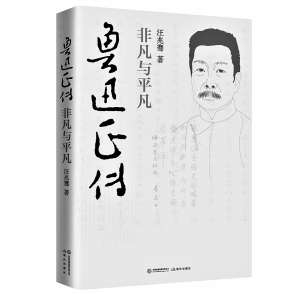
两位新文化领军人物默契作战
Bei Jing Wan Bao· 2025-11-11 06:18
Group 1 - The core viewpoint of the articles revolves around the literary and ideological contributions of Lu Xun and Hu Shi during the New Culture Movement, highlighting their mutual support and differing focuses on criticism and construction [2][3][6] - Lu Xun's "A Madman's Diary" serves as a profound critique of societal norms and reflects his complex worldview, portraying the struggles of an individual against the oppressive darkness of society [2] - Hu Shi's "Ibsenism" emphasizes the importance of individualism and personal development, advocating for the liberation of personal character and the courage to confront societal evils [3] Group 2 - The interaction between Lu Xun and Hu Shi illustrates a collaborative effort in the New Culture Movement, where both figures aimed to challenge traditional values and promote progressive ideas [6] - Lu Xun's response to Hu Shi's ideas on morality, particularly regarding the concept of chastity, introduces a new moral framework that prioritizes mutual benefit and the elimination of unnecessary suffering [5] - The publication of Hu Shi's and Lu Xun's works in "New Youth" signifies a pivotal moment in Chinese literature, marking a shift towards modern thought and the questioning of established norms [4][5]
织就“百千”锦绣图 振兴乡村万象新
Bei Jing Wan Bao· 2025-11-11 06:15
Core Insights - The "Hundred Villages Demonstration, Thousand Villages Revitalization" project aims to cultivate demonstration villages that reflect the capital's standards and characteristics, promoting comprehensive rural revitalization in the capital city [1][2] Group 1: Project Overview - In 2023, the city launched the "Hundred Villages Demonstration, Thousand Villages Revitalization" initiative, with a goal to establish 100 demonstration villages by 2027 that are strong in industry, beautiful in rural landscape, and prosperous for farmers [2] - The project includes the creation of demonstration areas and aims to improve over 3,000 existing villages by addressing shortcomings and promoting revitalization [2] Group 2: Case Studies of Revitalization - Water Yuzui Village, known for its historical significance, is undergoing transformation post-disaster, leveraging the project to develop new tourism and hospitality offerings, including a French-style inn and wellness facilities [5][6][7] - Zhouzhuangzi Village has embraced e-commerce and live streaming, with over 300 local residents becoming live streamers, significantly boosting local employment and economic activity [9][10][11] - Longtou Village is revitalizing its cultural heritage through a lantern workshop, enhancing local craftsmanship and creating job opportunities for residents [13][14][15] - Yaoshuigou Village is restoring its ancient fortress, improving infrastructure and aesthetics, which is expected to enhance tourism and local business [17][18][19] Group 3: Community Engagement and Development - Dongtai Village is focusing on creating a warm and culturally rich community, integrating agriculture, culture, and tourism, while encouraging local youth to participate in village development [22][23][24][25]
白铁山上寻千年古刹
Bei Jing Wan Bao· 2025-11-11 06:15
Core Points - Lingyue Temple, located on the majestic Bai Tie Mountain, has recently reopened after extensive restoration, preserving its original appearance as much as possible [1][10] - The temple features architectural elements from various dynasties, including Tang, Yuan, Ming, and Qing, showcasing the craftsmanship and historical significance of ancient Chinese architecture [3][5] - The temple has undergone multiple renovations throughout its history, with records indicating significant repairs during the Yuan and Qing dynasties, contributing to its status as a well-preserved cultural heritage site [7][9][10] Architectural Features - Lingyue Temple's main hall, the Daxiong Baodian, is built in a prestigious architectural style known as the "wudian" roof, which is characterized by its four sloping sides and central ridge, typically reserved for important structures [5] - The temple's construction includes unique features such as the "cross hands" structure from the Yuan dynasty, which is rare in existing ancient buildings [4][5] - The temple's courtyard is paved with aged bricks, and the intricate details of the construction reflect the high level of craftsmanship from ancient builders [4][6] Historical Significance - Lingyue Temple is considered a "living fossil" of ancient Chinese architecture due to its well-preserved wooden structure and historical integrity [8][10] - The temple has a rich history, with records dating back to the Tang dynasty, and has been a significant site for Buddhist practices and community gatherings [7][9] - The surrounding area, including the establishment of the Zhaitang village, evolved from the temple's presence, highlighting the cultural and historical impact of Lingyue Temple on local communities [11][12]

立冬“菜篮子”备好“当家菜” 北京新发地大白菜日交易量约1000吨
Bei Jing Wan Bao· 2025-11-10 08:19
Core Insights - The supply of cabbage in Beijing's Xinfadi market is abundant, with over 1,000 tons available on the day of the winter solstice, leading to a price increase compared to last year [1] - Pork supply has also increased, with 2,299 pigs listed, a 20% rise from the previous year, while prices have decreased by 25% [1] Group 1: Cabbage Market Dynamics - Cabbage remains a staple winter vegetable in Beijing, with daily transactions around 1,000 tons and an average price of 0.6 yuan per jin, up from 0.45 yuan per jin last year [1] - The overall vegetable supply in Xinfadi market is stable, maintaining over 19,000 tons, with a weighted average price of approximately 3.6 yuan per kilogram, slightly higher than last year's 3.2 yuan per kilogram [1] Group 2: Seasonal Supply and Storage - As winter approaches, merchants in Xinfadi market are increasing their stock of durable vegetables, with at least 100,000 tons of such vegetables stored in the surrounding Hebei region to ensure supply stability [2] - The market anticipates that vegetable prices will gradually return to levels seen in previous years as southern vegetables begin to arrive in Beijing [2]
京城“菜篮子”备好过冬“当家菜”
Bei Jing Wan Bao· 2025-11-10 08:19
Core Insights - The supply of cabbage in the Xinfadi market is abundant, with over 1,000 tons available on the day of the winter solstice, leading to a price increase compared to the same period last year [1] - The market has seen a 20% increase in the supply of pork, with 2,299 pigs listed, while prices have decreased by 25% [1] Group 1: Cabbage Supply and Pricing - Cabbage remains a staple winter vegetable in Beijing, with daily transactions maintaining around 1,000 tons and an average price of 0.6 yuan per jin, up from 0.45 yuan per jin last year [1] - The overall vegetable supply in the Xinfadi market is stable, with a daily volume exceeding 19,000 tons and an average price of approximately 3.6 yuan per kilogram, slightly up from 3.2 yuan per kilogram last year [1] - Other root vegetables such as potatoes (1,050 tons), carrots (1,120 tons), white radishes (980 tons), and round cabbages (950 tons) contribute to the stability of vegetable supply [1] Group 2: Future Price Expectations - It is anticipated that vegetable prices will gradually return to levels seen in previous years as southern vegetables begin to enter the Beijing market [2] - The Xinfadi market has increased the stock of durable vegetables, with at least 100,000 tons stored in the surrounding Hebei region to ensure supply stability [2]
判词之妙寸心知
Bei Jing Wan Bao· 2025-11-10 07:55
Core Viewpoint - The article explores the literary and historical significance of ancient Chinese judicial writings, particularly focusing on the beauty and depth of 判词 (judicial verdicts) from various dynasties, highlighting their role in blending legal reasoning with literary expression [1][4][10]. Group 1: Historical Development of 判词 - The earliest 判词 can be traced back to the late Western Zhou period, showcasing a blend of narrative and commentary [4]. - During the Tang Dynasty, 判词 evolved to emphasize literary quality, with officials like 颜真卿 producing renowned verdicts that combined legal judgment with poetic expression [5][6]. - The Song Dynasty marked a shift towards plain language in 判词, breaking away from the rigid parallelism of earlier styles, as exemplified by 王回's innovative use of prose [6][10]. Group 2: Notable Examples of 判词 - 颜真卿's verdict in a divorce case is celebrated for its eloquence and moral reasoning, serving as a model for future judicial writings [5][11]. - In the Song Dynasty, a case involving a minor theft was resolved with a succinct and impactful verdict that highlighted the cumulative nature of small thefts, demonstrating the cleverness of the judge [7][8]. - The Ming and Qing Dynasties saw a flourishing of 判词, with officials crafting verdicts that were not only legally sound but also artistically rich, such as 方国珍's poetic judgment in a case involving a monk [10][11][12]. Group 3: Cultural and Literary Significance - The 判词 of ancient China are considered treasures of both legal culture and literary heritage, reflecting the intellectual and artistic achievements of their time [13]. - The blending of legal reasoning with literary aesthetics in 判词 serves to educate and influence societal values, making them exemplary works of moral and cultural instruction [5][12][13].
