
Bei Jing Qing Nian Bao

Search documents
无人机空投利器狩猎,该管管了
Bei Jing Qing Nian Bao· 2025-11-22 04:25
Core Viewpoint - The rise of drone hunting in China poses significant ecological and safety risks, as the technology is being misused for illegal hunting of livestock and protected wildlife, necessitating urgent regulatory measures [1][2][3] Group 1: Technology and Misuse - Drones originally designed for agriculture and surveying are being repurposed into "aerial guns" equipped with thermal imaging and metal arrows, making it easy to hunt at night [1] - The availability of "airdrop arrows" for as little as 25 yuan on e-commerce platforms, with no qualifications required for purchase, highlights the low barrier to entry for this dangerous activity [1][2] Group 2: Legal and Regulatory Challenges - The use of drones for hunting has already violated multiple laws, including property damage and illegal hunting, but there is currently no nationwide ban on drone-mounted hunting tools [2][3] - The overlapping responsibilities of various regulatory bodies, such as wildlife protection and public safety, create regulatory gaps that complicate enforcement [2][3] Group 3: Recommendations for Action - It is essential for national authorities to classify drone-mounted projectiles as prohibited hunting tools and to implement strict source control measures, including real-name registration and purpose review for drones and their components [3] - Establishing a cross-departmental collaboration mechanism among forestry, public security, and market regulation agencies is crucial for effective monitoring and enforcement against these new threats [3]
以一往无前的奋斗姿态扎实推进各项事业
Bei Jing Qing Nian Bao· 2025-11-20 18:40
Core Points - The meeting commemorated the 110th anniversary of Hu Yaobang's birth, emphasizing the importance of learning from his spirit and work style [1][4] - Xi Jinping highlighted Hu Yaobang's significant contributions to the party and the nation, portraying him as a loyal communist warrior and a great revolutionary [2][7] - The speech called for all party members to emulate Hu's commitment to ideals, practical approaches, and dedication to the people [3][13] Group 1: Hu Yaobang's Contributions - Hu Yaobang was recognized for his unwavering commitment to communism and his significant role in the socialist revolution and modernization efforts [2][7] - His emphasis on practical approaches and the importance of adapting Marxism to Chinese conditions was noted as a key contribution [10][11] - Hu's advocacy for reform and opening up was highlighted as essential for advancing socialist modernization [12][11] Group 2: Call to Action for Party Members - Xi Jinping urged party members to maintain a strong commitment to ideals and to actively participate in the modernization of China [9][15] - The importance of serving the people and ensuring their well-being was stressed, with a call to enhance public satisfaction and security [13][14] - Party members were encouraged to uphold integrity and resist corruption, following Hu Yaobang's exemplary conduct [14][15]
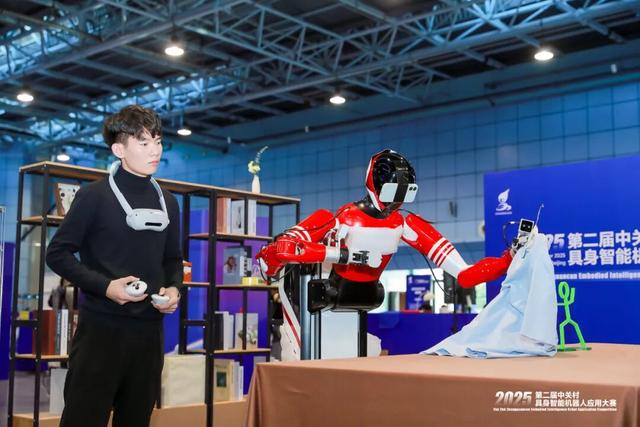
倒咖啡、叠衣服、拿快递、捡垃圾……“实干派”机器人:劳动最光荣
Bei Jing Qing Nian Bao· 2025-11-20 16:15
Core Insights - The 2025 Second Zhongguancun Embodied Intelligent Robot Application Competition showcased 99 teams with practical robots, marking a shift from mere demonstrations to real-world applications, which has garnered market interest [1][4][6] - Beijing is positioning itself as a leader in the embodied intelligence industry, with 57 specialized small giant enterprises and 33 approved surgical robot registrations, aiming to cultivate a trillion-yuan industry cluster by 2027 [3][4][18] Competition Highlights - The competition emphasized practical applications, featuring robots performing tasks like folding clothes and serving coffee, reflecting a focus on utility rather than just technical prowess [4][6] - A total of 54 teams received awards across three main tracks: model capability, scene application, and industrial ecology, highlighting the vibrant development of the robotics industry in Haidian District [14][15][18] Technological Advancements - The concept of embodied intelligence involves robots that not only possess advanced cognitive abilities but also physical dexterity, enabling them to perform tasks effectively in various environments [6][10] - Innovations such as remote operation technology allow robots to be controlled from a distance, making them suitable for hazardous environments, thus enhancing their practical utility [7][8][10] Industry Development - The competition serves as a catalyst for integrating technology, capital, market, and talent, facilitating the transition from prototypes to market-ready products [11][14] - Haidian District has established a robust innovation ecosystem, with over 1,900 related enterprises and significant policy support, including subsidies for AI model development and dedicated innovation parks [18][19]


打卡北京文化金名片!国家大剧院原创话剧《金中都》走进金中都公园
Bei Jing Qing Nian Bao· 2025-11-20 04:48
Core Viewpoint - The National Grand Theatre's original play "Jin Zhong Du" is set to showcase the historical evolution of Beijing from a northern stronghold to a capital city, with performances scheduled from December 13 to 22 [1] Group 1 - The play "Jin Zhong Du" is part of the National Grand Theatre's "Beijing Capital Trilogy," which will also include "Yuan Da Du" and "Forbidden City" [1] - The historical exhibition at the Jin Zhong Du Park highlights the period from 1153, when Jin Zhong Du was established, to 1215, when it fell [1] - The media preview event featured historical consultant Li Jianping, who provided insights into the play's historical context [1]

数字时代如何破解“伪适老”困局
Bei Jing Qing Nian Bao· 2025-11-19 06:59
Core Insights - The article highlights the inadequacies of "senior modes" in apps, which are intended to assist elderly users but often end up complicating their experience instead [1][2] - It emphasizes the need for a fundamental shift in design philosophy, advocating for a user-centric approach that genuinely addresses the needs of older adults [2][3] Group 1: Design Issues - Current "senior modes" often retain intrusive advertising and marketing content, undermining their intended purpose of providing a user-friendly experience for the elderly [1] - Many apps still feature large text and simplified interfaces, but fail to eliminate distracting elements like pop-up ads and low-quality content [1][2] - The design process for these modes is often superficial, treating them as mere modifications rather than comprehensive solutions tailored to the elderly [2] Group 2: Business and Regulatory Recommendations - Internet companies are criticized for prioritizing short-term commercial interests over genuine social responsibility in their approach to senior-friendly designs [1] - There is a call for regulatory bodies to establish clear standards and enforcement mechanisms to ensure that "senior modes" do not include intrusive advertisements or misleading download prompts [2] - Companies are urged to simplify user interactions, minimize advertising presence, and enhance the overall safety and usability of digital environments for older users [2] Group 3: Community and Family Support - Families are encouraged to invest time in educating elderly relatives about digital safety and assist them in managing their devices [3] - Community initiatives, such as digital literacy classes for seniors, are suggested to help bridge the technology gap and empower older adults [3] - The article advocates for a balanced approach that respects the needs of slower adopters of technology, ensuring they have access to digital services without unnecessary complications [3]
查处非机动车酒驾并非小题大做
Bei Jing Qing Nian Bao· 2025-11-19 05:40
Core Viewpoint - The article emphasizes the importance of treating non-motorized vehicle drunk driving with the same seriousness as motor vehicle drunk driving, highlighting that all traffic participants should adhere to the same safety standards [1][2][3]. Regulatory Changes - Beijing's traffic management has expanded drunk driving checks to include electric bicycles and bicycles, addressing a long-standing regulatory blind spot [2][3]. - The legal framework allows for warnings or fines ranging from 5 to 50 yuan for non-motorized vehicle drivers found to be under the influence [2]. Public Awareness and Education - There is a significant public misconception that drunk driving on non-motorized vehicles is not a serious offense, indicating a need for increased awareness and education regarding traffic laws [4]. - The approach to enforcement for non-motorized vehicles is more focused on education rather than strict penalties, with police advising riders below the drunk driving threshold to push their bikes home [4]. Safety Statistics - In 2023, there were 88 fatal accidents in Beijing involving drunk driving of non-motorized vehicles, accounting for 11.4% of such incidents, often resulting in single-vehicle accidents [3]. Future Directions - The article advocates for a shift in traffic management to include all participants equally, promoting the idea that non-motorized vehicles should be treated with the same regulatory scrutiny as motor vehicles [4]. - It suggests enhancing public education on the dangers of drunk riding and integrating non-motorized vehicle drunk driving records into personal traffic credit systems for long-term accountability [4].
20项重点任务助力科技成果在京落地
Bei Jing Qing Nian Bao· 2025-11-18 19:20
Core Viewpoint - The "Beijing Action Plan for Promoting the Transformation of Scientific and Technological Achievements (2025-2027)" aims to establish an efficient and vibrant transformation system for scientific and technological achievements by 2027, targeting the creation of 1,000 cooperation platforms, 5,000 technology development cooperation projects, and the incubation of 3,000 technology-based enterprises and 600 specialized and innovative enterprises [1][2]. Group 1: Key Aspects of the Action Plan - The Action Plan focuses on three stages: achieving, assisting, and landing scientific and technological results, with efforts concentrated on five key areas [1]. - It includes 20 key tasks divided into five parts: promoting the transfer of scientific and technological achievements, emphasizing the role of enterprises, stimulating market vitality, enhancing service quality, and improving public service capabilities [2][3]. Group 2: Promotion of Technology Transfer - The plan aims to deepen the reform of technology transfer policies, implement key policies such as the empowerment of job-related scientific achievements, and promote the establishment of a mechanism for technology transfer within research units [1][2]. - It encourages the establishment of enterprise-led cooperation platforms and the creation of joint laboratories and research centers [2]. Group 3: Enhancing Public Service Capabilities - The plan emphasizes the need for a robust service mechanism to connect supply and demand, with a focus on creating a high market-oriented and flexible technology transfer service institution [2]. - It proposes the establishment of a collaborative mechanism between city and district levels to support early-stage growth and continuous development of enterprises [2]. Group 4: Market Vitality and Financial Support - The plan aims to expand the team of technology managers and integrate them into the city-level talent support policy system [2]. - It seeks to build a financial service system for technology transfer, encouraging more state-owned and social capital to invest in early-stage, small, long-term, and hard technology projects [2]. Group 5: Quality of Service and International Cooperation - The establishment of the Zhongguancun International Technology Transaction Center is planned to serve as a one-stop comprehensive service platform for technology transfer [3]. - The plan also promotes collaboration in technology transfer within the Beijing-Tianjin-Hebei region and aims to enhance international technology transfer and cooperation [3].
禁摩区开绿色通道,执法者的共情最动人
Bei Jing Qing Nian Bao· 2025-11-18 10:32
Core Points - The article highlights a recent incident where a police officer allowed a man to pass through a restricted area to attend his mother's funeral, demonstrating a balance between strict law enforcement and human compassion [1][2][3] - The enforcement of traffic regulations is essential for public safety, but flexibility in applying these rules can enhance the perception of law enforcement among the public [2][3] Summary by Sections Enforcement Philosophy - The essence of law enforcement is effective governance rather than mere punishment, focusing on warming the hearts of the public [2] - The police officer's empathetic response illustrates the importance of understanding individual circumstances rather than strictly adhering to procedures [2][3] Public Trust and Compliance - Building trust through empathetic enforcement can lead to greater public adherence to rules, as seen in the incident where the officer's understanding fostered a positive relationship with the community [2][3] - The incident reflects a broader shift in law enforcement philosophy towards a more flexible and compassionate approach, moving away from rigid rule enforcement [2][3] Balance of Rules and Humanity - The article argues that human considerations do not undermine the rigidity of rules; rather, they enhance public respect for the law when applied thoughtfully [3] - The combination of strict regulations and human empathy is essential for the law to resonate with the public, ensuring that enforcement is both effective and compassionate [3]
“组团出海”助AI企业切入全球赛道
Bei Jing Qing Nian Bao· 2025-11-18 08:26
Core Viewpoint - The article highlights the increasing importance of international expansion for Chinese AI companies as domestic competition intensifies, with the establishment of the "Zhongguancun AI Enterprises Overseas Service Port" to support this initiative [1][2]. Group 1: Overview of the Overseas Service Port - The Overseas Service Port aims to provide comprehensive support for AI companies before and after their international expansion, including policy consultation, compliance training, and resource linkage [1]. - The service system addresses key pain points for companies, offering one-stop solutions for unfamiliar policies and practical issues once they are overseas [1]. Group 2: Key Institutions Involved - Four institutions have been designated as the first batch of service providers, each bringing unique strengths: - Zhongguancun Jinggangao Youth Innovation Center focuses on cross-border incubation and has successfully assisted several AI companies in establishing a presence in Hong Kong [2]. - China Development Group has established 20 global innovation network nodes and is facilitating market expansion in ASEAN through partnerships [2]. - Beijing Tsinghua Chuangxin Incubator operates over 200 incubators globally and is launching international tech cooperation projects with Singapore [2]. - Zhongguancun Science City Company is developing overseas accelerators and is advancing its Dubai liaison office to support AI companies entering the Middle East [2]. Group 3: Collaborative Expansion Model - The article notes a shift from individual efforts to collaborative ecosystems among companies, with Beijing leveraging Guangxi as a hub for ASEAN market entry [3]. - Companies like Zhipu AI and Data堂 are successfully exporting technology and products to multiple ASEAN countries, marking a transition from technology export to industrial chain output [3].
北京开启新篇章!12部门一把手发声
Bei Jing Qing Nian Bao· 2025-11-18 03:53
Economic Development - The Beijing Municipal Committee's 13th Plenary Session emphasized the importance of deepening reforms and optimizing the business environment to enhance economic vitality [1] - The city aims to achieve a higher level of open economy and promote the complementary development of various ownership economies [1] Technological Innovation - Beijing plans to accelerate the development of a global technology innovation center, focusing on original innovation and key core technology breakthroughs [2][3] - The city will implement a technology achievement transformation system to support the development of new productive forces [3] Education and Talent Development - The education system will focus on integrating education, technology, and talent development, enhancing the quality of education from basic to higher levels [4][5] - There will be an emphasis on cross-disciplinary training to cultivate innovative talents that meet the needs of the capital's economic and social development [5] Digital Economy - Beijing aims to become a global benchmark city for the digital economy, focusing on high-precision industries and modern service sectors [7][8] - The city plans to develop emerging industries such as artificial intelligence and green advanced energy, targeting trillion-level industry clusters [8] Social Welfare - The city will prioritize employment as a key aspect of people's livelihoods, implementing policies to enhance job creation and social security systems [9][10] - There will be a focus on expanding social insurance coverage and improving the social security system to ensure reliable support for residents [10] Environmental Sustainability - Beijing is committed to building a beautiful city by enhancing pollution prevention and promoting green transformation in production and lifestyle [11][12] - The city aims to improve ecological quality and create a harmonious living environment through sustainable practices [12] Transportation Infrastructure - The transportation system will focus on building a modern, integrated transportation network that prioritizes public transport and optimizes travel efficiency [13][14] - Strategies will be implemented to enhance logistics efficiency and support the high-quality development of urban logistics [14][15] Urban-Rural Integration - The city will promote balanced urban-rural development and implement rural revitalization strategies to enhance agricultural productivity and rural living conditions [16] - Emphasis will be placed on modern agriculture and improving rural governance to ensure sustainable development [16] Cultural Development - Beijing aims to enhance its cultural influence by promoting public cultural services and fostering innovation in the cultural industry [17][18] - The city will focus on developing diverse tourism products and enhancing cultural tourism experiences [18] Health and Well-being - The city plans to improve its healthcare system and promote public health services to enhance the well-being of its residents [19][20] - There will be a focus on providing equitable and high-quality healthcare services across all demographics [20] Heritage Protection - Efforts will be made to strengthen the protection and transmission of historical and cultural heritage, ensuring the preservation of Beijing's unique cultural identity [21][22] - The city will enhance public cultural services and promote the development of a museum city [22] Urban Greenery - Beijing is working on a plan to develop a garden city, enhancing urban green spaces and improving the quality of public parks [23] - The city aims to create a harmonious integration of production, living, and ecological spaces through innovative landscaping [23]
