AI科技大本营

Search documents
图灵奖得主杨立昆:中国人并不需要我们,他们自己就能想出非常好的点子
AI科技大本营· 2025-06-02 07:24
Core Viewpoint - The current large language models (LLMs) are limited in their ability to generate original scientific discoveries and truly understand the complexities of the physical world, primarily functioning as advanced pattern-matching systems rather than exhibiting genuine intelligence [1][3][4]. Group 1: Limitations of Current AI Models - Relying solely on memorizing vast amounts of text is insufficient for fostering true intelligence, as current AI architectures struggle with abstract thinking, reasoning, and planning, which are essential for scientific discovery [3][5]. - LLMs excel at information retrieval but are not adept at solving new problems or generating innovative solutions, highlighting their inability to ask the right questions [6][19]. - The expectation that merely scaling up language models will lead to human-level AI is fundamentally flawed, with no significant advancements anticipated in the near future [19][11]. Group 2: The Need for New Paradigms - There is a pressing need for new AI architectures that prioritize search capabilities and the ability to plan actions to achieve specific goals, rather than relying on existing data [14][29]. - The current investment landscape is heavily focused on LLMs, but the diminishing returns from these models suggest a potential misalignment with future AI advancements [18][19]. - The development of systems that can learn from natural sensors, such as video, rather than just text, is crucial for achieving a deeper understanding of the physical world [29][37]. Group 3: Future Directions in AI Research - The exploration of non-generative architectures, such as Joint Embedding Predictive Architecture (JEPA), is seen as a promising avenue for enabling machines to abstractly represent and understand real-world phenomena [44][46]. - The ability to learn from visual and tactile experiences, akin to human learning, is essential for creating AI systems that can reason and plan effectively [37][38]. - Collaborative efforts across the global research community will be necessary to develop these advanced AI systems, as no single entity is likely to discover a "magic bullet" solution [30][39].



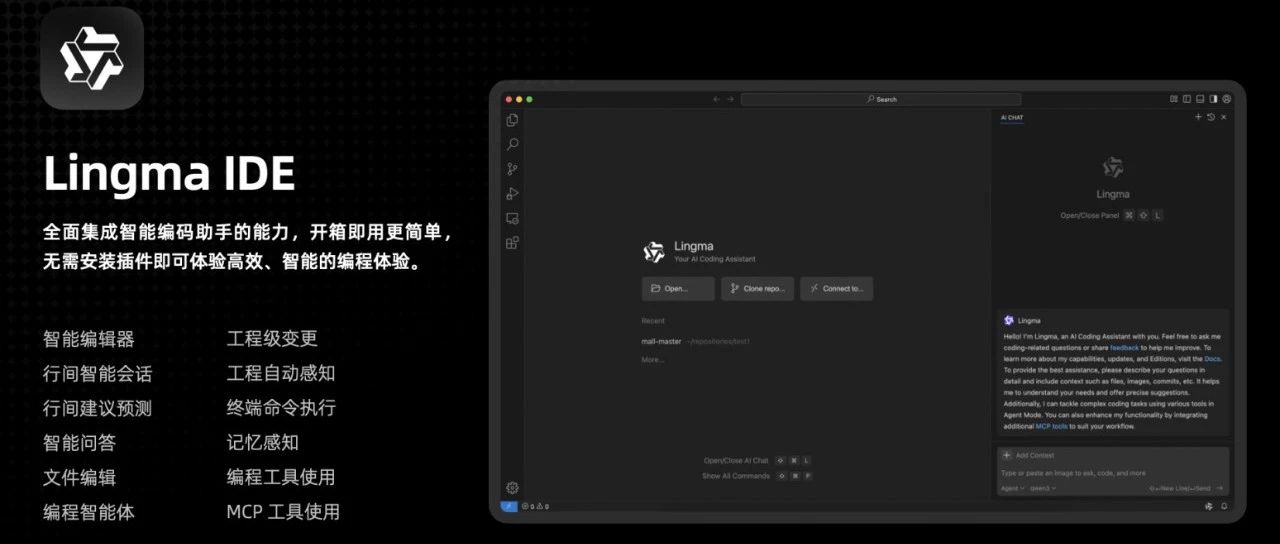
阿里云发布通义灵码 AI IDE,深度适配千问 3 大模型、新增编程智能体,可调用 3000+ MCP 服务
AI科技大本营· 2025-05-30 06:12
Core Viewpoint - Alibaba Cloud has launched its first AI-native development environment tool, Tongyi Lingma AI IDE, which is deeply integrated with the latest Qwen 3 model and offers various features to assist developers in coding tasks [1][3]. Group 1: Product Features - Tongyi Lingma AI IDE supports the powerful open-source model Qwen 3 and the MCP protocol, enabling rapid development of intelligent applications [3]. - The IDE includes features such as long-term memory, inline suggestion prediction, and inline conversation capabilities tailored for development scenarios [3][4]. - The intelligent agent mode allows developers to describe coding tasks, enabling the IDE to autonomously perform engineering perception, code retrieval, and tool invocation, thus completing coding tasks end-to-end [3]. Group 2: Use Cases and Applications - The integration with over 3,000 MCP services allows developers to quickly deploy solutions for various scenarios, such as creating a travel guide webpage in 10 minutes without writing code [3]. - The inline suggestion prediction feature helps developers efficiently complete code writing by dynamically predicting the next code modification based on current changes [3]. Group 3: Evolution of AI Coding - The evolution of AI-assisted programming is categorized into three stages: 1. Initial stage focused on chat-based Q&A and simple code completion, requiring significant human intervention [5]. 2. Increased automation in collaborative programming, where AI can complete more coding tasks with minimal instructions [5]. 3. High automation and self-validation, where AI can autonomously write, test, and optimize code, functioning like a junior engineer [5]. - The industry is transitioning from the first to the second stage, with products like Tongyi Lingma showcasing attempts towards end-to-end automated programming [5].

78%主创跳槽!Llama 14名作者只剩3人,Meta最强开源模型团队大溃散引争议
AI科技大本营· 2025-05-30 06:12
整理 | 屠敏 出品 | CSDN(ID:CSDNnews) AI 人才争夺战愈演愈烈,就算是顶级大厂,如果没有"护城河",也留不住人。 据外媒 Business Insider 最新消息,曾在开源大模型圈子里一度领跑的 Meta,如今正面临严重的 人才流失。在 Llama 模型最初的 14 位核心作者中,已有 11 位离职。有的自立门户,有的跳槽去了 竞争对手。 这波"出走潮"也让外界再次把目光投向 Meta。毕竟他们曾豪赌元宇宙,四年"烧掉"450 亿美元,却 被直指至今几乎未见显著成效。现在 AI 项目也出问题了,不少人开始质疑:Meta 还行不行?为什 么留不住顶尖 AI 人才?它的创新能力,还能支撑它在这场 AI 竞赛中跑多远? Llama 论文的 14 位作者,已有 11 人离开 Meta 回头看 2023 年那篇引发轰动的 Llama 论文,共署名 14 位研究者。短短两年,Meta 只留下了其中 三位:研究科学家 Hugo Touvron、研究工程师 Xavier Martinet 和项目负责人 Faisal Azhar。 论文地址: https://arxiv.org/pdf/2302.13 ...

DeepSeek R1 迎来小更新大升级,性能直逼 OpenAI o3!
AI科技大本营· 2025-05-29 08:05
整理 | 苏宓 出品 | CSDN(ID:CSDNnews) 昨日,DeepSeek 悄然发布了其 R1 大模型的最新版本—— DeepSeek-R1-0528 ,目前已开启公 测。 一贯低调的 DeepSeek 在此番发布时,并未附带详细的技术说明,只是在官方微信社群中告知用 户,"DeepSeek R1 模型已完成小版本试升级",大家可以自行前往官方网页、APP、小程序进行测 试。 Hugging Face 地址:https://huggingface.co/deepseek-ai/DeepSeek-R1-0528 但从用户体验反馈来看,本次名曰"小更新"也依然带来了不小的实质性改进,尤其是 在推理和输出 方面。具体来看,新版的 DeepSeek R1: 推理能力增强: 模型在"思维链"(Chain-of-Thought)推理方面表现更为结构化,逻辑性更 强。 我注意到新版 R1 的一个显著变化是……它在编程方面更强了!!但它却在一些(未知的)演绎推理 挑战上失败了……这些题它以前可是能答对的!!另一个明显的变化是,现在它在推理时会体现出差 异性,而且会用用户的母语思考,不再像以前那样只用英文。" 不过, ...
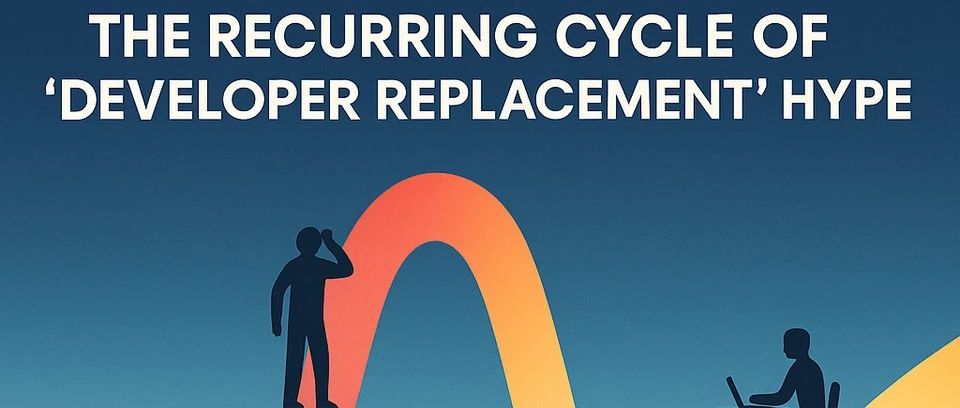
又要取代程序员了?这锅轮到 AI 背了
AI科技大本营· 2025-05-29 08:05
本文带我们回顾了技术变革中反复出现的"取代"幻想——从 NoCode 到云再到AI——揭示了一个反直觉但深刻的事实: AI 并不会消灭程序员,只会提升真正懂系统架构的人的市场价值。 "AI 会取代程序员"这个论调,忽视了一个根本认知误区: 代码不是资产,而是一种负债。 整理| 梦依丹 出品丨AI 科技大本营(ID:rgznai100) "AI 会取代程序员吗?"这个问题从笔者入行以来就从未停下来过,似乎每隔几年就会被重新炒热一次——从 NoCode 革命、云计算浪潮,到如今的 AI 编程助手,每一波技术创新都曾高举"去程序员化"的大旗。但历史一次次地证明,技术并不真正取代人,而是放大了"人"的能力差距——优秀者被放 大,平庸者被边缘化。 这篇文章作者 Danilo 提出了一个非常有意思的比喻: AI 代码助手就像是给木匠配备了一台数控机床(CNC)。 传统的木匠依靠手工和经验打造家具,而 CNC 机床则可以自动、高效地切割和打磨材料,大幅提升产能——但关键是,只有真正懂得设计与工艺的木 匠,才能做出真正精美的作品。 同样,在 AI 加持之下: 换句话说,AI 不是削弱了开发者的重要性,而是拉高了对开发者的要求 ...
30 年 FAANG 大神被 C++ Bug “虐”4年,竟被Claude Opus 4一招解决!
AI科技大本营· 2025-05-28 12:43
Core Viewpoint - Anthropic's Claude Opus 4 is claimed to be the "world's strongest programming model," with a notable case of solving a long-standing bug faced by an experienced developer, ShelZuuz, showcasing its capabilities [1][2]. Group 1: Bug Resolution Case - ShelZuuz, a developer with over 30 years of C++ experience, struggled with a "white whale bug" for four years, which was a rendering error triggered under specific conditions [2][3][4]. - The bug was introduced during a code refactor of a 60,000-line project, leading to a silent failure that was difficult to reproduce and diagnose [4][5]. - After attempting various methods without success, ShelZuuz used Claude Opus 4, which identified the root cause of the bug in just a few hours, significantly faster than previous attempts [6][9]. Group 2: AI Capabilities and Limitations - Claude Opus 4's approach involved analyzing both old and new code versions, automatically identifying key differences and dependencies that were overlooked during the refactor [7][9]. - Despite successfully solving the bug, ShelZuuz emphasized that Claude Opus 4 functions more like a capable junior developer rather than a replacement for experienced engineers [10][12]. - The AI requires substantial guidance and oversight, akin to managing a junior programmer, rather than functioning autonomously [12][13]. Group 3: Cost Efficiency - The subscription cost for Claude Opus 4 is $100 per month, which is significantly lower than the cost of hiring a senior engineer, estimated at around $25,000 for 200 hours of work [13]. - This highlights the potential of AI to enhance development efficiency and reduce costs in the software engineering field [13].

谷歌 CEO 皮查伊万字专访:AI 正重塑搜索引擎、Web 乃至整个互联网
AI科技大本营· 2025-05-28 12:43
Core Insights - Google is transitioning to an "AI-first" strategy, moving beyond exploratory phases to a more assertive implementation of AI technologies across its product lines [2][3][4] - The introduction of AI Mode is set to redefine search experiences, transforming them from simple link retrieval to real-time, customized interactions [3][4][21] - Google emphasizes that the web is not dying but evolving, with AI enhancing the connection between users and content creators [3][4][22] AI Transformation - The AI transformation is described as a platform-level leap rather than just a functional upgrade, indicating a comprehensive restructuring of product logic [3][4] - AI is expected to significantly enhance creativity and productivity across various sectors, benefiting both developers and content creators [6][16] Search Experience Redefinition - The future of search is envisioned as a real-time interactive experience, challenging the traditional search box and link list model [3][4] - AI Mode will generate interactive charts and mini-apps, fundamentally changing how users engage with search results [2][3] Web Ecosystem Impact - The web is undergoing a transformation rather than a decline, with Google asserting its commitment to driving traffic to creators [3][4][22] - The number of web pages has increased by 45% over the past two years, indicating a growing content landscape despite concerns about AI-generated content [22][23] AI Tools and Services - AI tools are being integrated into various industries, including healthcare, where they enhance efficiency and user experience [10][12][14] - The development of AI-driven coding tools and video creation applications is rapidly advancing, showcasing the potential for widespread adoption [9][10] Competitive Landscape and Regulation - Google welcomes competition but maintains that search integrity must not yield to political pressures, emphasizing its commitment to neutrality [4][39] - The company is aware of ongoing antitrust scrutiny and is focused on maintaining its foundational technologies while innovating [38][39] Future of AI and Robotics - The next significant platform shift is anticipated to occur when AI integrates with robotics, leading to transformative changes in various sectors [41][42] - AI is viewed as a universal technology that will reshape multiple business areas, including search, YouTube, and cloud services [16][41]


微软 CEO 萨提亚·纳德拉:智能体即产品,SaaS 已死?
AI科技大本营· 2025-05-27 12:20
Core Insights - Microsoft CEO Satya Nadella emphasizes a paradigm shift in software and intelligence driven by AI, predicting that AI-driven agent networks will reshape the future of enterprise software and integrate with SaaS [1][3] Group 1: Software and Technology Stack Reconstruction - Nadella advocates for a complete rethinking of the technology stack from first principles to accommodate AI workloads, indicating that even traditional architectures need redesigning for AI [3][5] - The infrastructure layer, particularly Azure, is being upgraded to function as "AI factories" to support the demands of AI applications like ChatGPT and Copilot [4][5] - The software application layer is expected to collapse and merge into intelligent agents, with traditional SaaS applications needing to adapt to become backend components in this new architecture [5][8] Group 2: Responsible AI and Inclusive Future - Companies will own the intellectual property of AI agents, which should be integrated into existing IT management frameworks, ensuring compliance with data protection regulations [5][12] - Nadella believes that as the cost of intelligence approaches zero, it will lead to economic growth and sustainable prosperity, particularly in high-risk sectors like healthcare [5][16] - The future of computing architecture will blur the lines between determinism and non-determinism, necessitating an understanding of the "physical principles of intelligence" for managing complex systems [5][20] Group 3: Transformation of Microsoft 365 - Microsoft 365 is evolving into three distinct modes: a new interface for AI interactions, a collaborative environment through Teams, and an immersive work state that integrates AI assistance into everyday tasks [7][13] - The integration of AI into Microsoft 365 is expected to enhance its value significantly, as intelligent features become embedded across all layers of the platform [13] Group 4: Future of SaaS Companies - SaaS companies must adapt to the emerging intelligent agent network, supporting protocols like MCP to remain relevant in a landscape where their applications will serve as just one of many backend components [9][10] - The shift towards intelligent agents means that traditional SaaS applications may require radical transformation to fit into the new ecosystem [10][11] Group 5: Sustainability and Energy Consumption - The tech industry currently accounts for about 2% to 3% of global energy consumption, and as it grows, it must secure social permission by demonstrating tangible societal value [19] - Microsoft aims to maximize economic prosperity through efficient energy use, focusing on creating significant social value in critical areas like healthcare and education [18][19]


ChatGPT 评估员工绩效,评得是真能力吗?
AI科技大本营· 2025-05-27 12:20
Core Viewpoint - The article argues that relying on AI for key management tasks, such as performance evaluations, may lead to a decline in essential managerial skills, rather than being a step forward in efficiency [1][2][3]. Group 1: The Role of AI in Management - AI is seen as a tool that can assist but should not replace the cognitive functions of a manager [8][9]. - Over-reliance on AI for management tasks can hinder personal growth and skill development, as it removes the opportunity for practice and learning [6][13]. - Effective management requires deep engagement and personal judgment, which AI cannot replicate [23][25]. Group 2: Performance Evaluation Insights - Writing performance evaluations is not inherently difficult; it reflects the manager's growth and understanding of their role [4][5]. - Performance evaluations should be viewed as a developmental exercise for managers, not just a task to complete [7][18]. - AI can be useful for repetitive tasks like resume screening and compliance reminders, but it should not be used for nuanced evaluations that require human insight [19][21]. Group 3: Community Reactions and Concerns - There is a widespread concern that AI may exacerbate existing issues in performance evaluation systems, which are often seen as arbitrary and politically motivated [25][26]. - Critics argue that AI could make poor management practices more efficient, rather than improving the quality of evaluations [25][26]. - Some believe that while AI can assist in structuring information, it should not replace the manager's ability to observe and make judgments about their team [25][26].

两年内打造AI软件工程师!OpenAI Codex 作者解密人机结对编程新模式
AI科技大本营· 2025-05-26 10:14
Core Insights - The article discusses the evolution of AI from being a mere tool to becoming an autonomous software engineer capable of coding, testing, and optimizing independently [1][3] - OpenAI's Codex project aims to create an intelligent software engineer that can complete complex tasks autonomously, marking a significant shift in software development practices [3][10] Group 1: Codex Project Overview - Codex is not just a coding model; it is designed to independently complete software engineering tasks and work autonomously for extended periods [3][10] - The project was inspired by the potential of AI models to access terminals, leading to the vision of equipping AI with its own dedicated computing resources [3][6] - OpenAI predicts that within the next two years, a fully autonomous software engineer will be developed [3][10] Group 2: Development and Testing - The Codex team has conducted numerous experiments to grant AI models terminal access, which has proven to be a game-changer in realizing AGI [6][7] - The team emphasizes the importance of safety and security when allowing AI to operate within user environments [7][49] - The Codex CLI was developed to enhance user safety while enabling the AI to perform tasks autonomously [7][8] Group 3: User Interaction and Experience - The interaction between humans and AI in coding is evolving, with developers now working alongside AI as partners rather than just tools [3][5] - The Codex model is designed to understand and follow coding styles without explicit instructions, making it more efficient for developers [15][31] - Users are encouraged to adopt a mindset of collaboration with AI, treating it as a partner that can handle multiple tasks simultaneously [44][45] Group 4: Best Practices and Recommendations - Developers are advised to create modular code and utilize code review practices to enhance the AI's performance [24][25] - The use of agents.md files is recommended to guide the AI in understanding project-specific instructions and requirements [21][30] - Emphasizing the importance of good architecture in software development, the article suggests that human developers still play a crucial role in design and innovation [25][36]