起点锂电

Search documents
华冠科技中标头部客户项目 整线平台能力再获验证
起点锂电· 2025-07-27 07:28
Core Viewpoint - The recent project win by Huaguan Technology for a leading client's square aluminum shell battery cell intelligent assembly line demonstrates the company's advanced capabilities in the assembly and integration of high-end energy storage battery products [2] Group 1: Technical Integration Upgrade - The project involves the automation assembly of multiple structural components including bare cells, connection pieces, top covers, aluminum shells, and sealing nails, covering over thirty critical processes [4] - Key processes include preheating, hot pressing, pressure measurement, X-Ray inspection, ultrasonic pre-welding, laser welding, and various testing procedures, all integrated into a complete intelligent production unit [4] - Huaguan Technology's advanced manufacturing technology research institute optimized several key processes, achieving a laser welding speed of 300mm/s with a yield rate of over 99.5% for connection pieces [4] Group 2: Management Coordination Enhancement - The project has a tighter delivery schedule compared to industry standards, requiring enhanced rapid response and organizational coordination [6] - A composite team covering project management, technical implementation, and supply chain coordination was organized to ensure orderly execution of key processes [6] - The project team includes experienced engineers and technicians, ensuring a "24-hour response" mechanism for quick project delivery and customer assurance [6] Group 3: Strategic Layout Extension - The rapid advancement of square aluminum shell battery cells in the power and large-scale energy storage sectors demands higher stability, precision, and consistency from manufacturing processes [7] - This project not only showcases Huaguan Technology's complete closed-loop capability from R&D to delivery but also strengthens its core advantages in the high-end lithium battery manufacturing segment [7] - The company aims to continue enhancing lithium battery manufacturing capabilities, adhering to its mission of making manufacturing more precise [7]


应对换电痛点问题 小安科技车·电·柜一体化解决方案“出击”
起点锂电· 2025-07-27 07:28
Core Insights - The two-wheeler battery swapping industry is poised for significant growth by 2025, driven by supportive government policies and a clear demand from B-end riders, with an estimated daily battery swapping demand of at least 26 million times based on 13 million riders [2] - The penetration rate of battery swapping among the 400 million electric two-wheelers in China could reach 10%, indicating a long-term market potential of over 40 million vehicles [2] Group 1: Industry Opportunities - Local governments in cities like Shenzhen, Shanghai, Guangzhou, and Nanjing have introduced policies to support the development of battery swapping models, marking a shift towards "swapping as the primary method, with charging as a supplement" [2] - The B-end market shows a mature business model with clear demand, while the C-end market is driven by safety concerns and the need for convenient battery usage [2] Group 2: Challenges in Battery Swapping - The battery swapping model faces two main challenges: safety and operational efficiency [7] - Hardware design issues include the use of deformable plastic materials for battery swapping cabinets, which can lead to overheating and safety hazards in extreme weather conditions [8] - Operational challenges stem from the high costs associated with maintenance and the inefficiencies in fault detection and repair processes, with maintenance costs accounting for 22% of total operational costs [10] Group 3: Solutions and Innovations - The company proposes a "proactive + passive" dual solution to address safety issues, including an active water firefighting system that monitors battery temperatures and a passive system that activates in case of emergencies [12] - The integration of real-time monitoring and predictive maintenance technologies has significantly improved fault detection rates and reduced repair times, enhancing operational efficiency [13] - The company aims to create a safer and more reliable battery swapping solution through high-quality products and services, addressing the competitive landscape in the industry [15] Group 4: Industry Trends - The electric two-wheeler battery swapping industry is transitioning towards more intelligent and refined development, driven by advancements in technology and manufacturing [16]
百亿锂电上市企业筹划易主!
起点锂电· 2025-07-26 06:29
Core Viewpoint - Jiangte Motor (002176.SZ) is undergoing a potential change in control, which may impact its operations and strategic direction, amidst ongoing challenges in the lithium market [2][4]. Group 1: Control Change and Company Announcements - On July 21, Jiangte Motor announced a stock suspension due to plans for a change in control, with no formal agreements signed yet [2][4]. - The company’s wholly-owned subsidiary, Yichun Yinli New Energy, will initiate a comprehensive production halt for maintenance starting July 25, lasting approximately 26 days [4][6]. Group 2: Financial Performance and Market Context - As of the suspension date, Jiangte Motor's total market capitalization reached 13.207 billion yuan [3]. - The company has faced continuous losses in 2023 and 2024, with projected revenues of 2.103 billion yuan in 2024, a decline of 24.86%, and a net loss of 319 million yuan [8]. - The lithium market has seen a significant drop in carbonate prices, impacting Jiangte Motor's profitability, despite growth in its motor segment [8][9]. Group 3: Industry Position and Resource Control - Jiangte Motor is a leading player in lithium extraction from mica, holding over 100 million tons of lithium resources [7]. - The company has been actively acquiring mining rights and enhancing production capabilities in Yichun, known as "Asia's Lithium Capital" [7]. - In 2020, Jiangte Motor attempted to bring in Ganfeng Lithium as a major shareholder but failed to reach an agreement [6]. Group 4: Strategic Responses to Market Conditions - The maintenance halt is aimed at reducing production costs and ensuring the safe operation of production equipment, reflecting a common strategy among leading firms to optimize operations during market downturns [6][9]. - Recent trends indicate a potential rebound in lithium carbonate prices, which may provide some support to the market, although uncertainties remain for companies like Jiangte Motor [9].

行业首届户储及便携式储能电池技术论坛定档9月26日,深圳举办!
起点锂电· 2025-07-26 06:29
Group 1: Core Insights - The global household energy storage market is projected to reach 180 GWh by 2030, representing a 547% increase from 2024, with China accounting for 75% of shipments in 2024 [1] - The portable energy storage market is expected to grow to 28 million units by 2030, a 156% increase from 2024, driven by outdoor economy development and emergency power needs due to conflicts and extreme weather [2] - The top 10 companies in the global household energy storage market include Huawei, BYD, and Airo Energy, while the portable energy storage market leaders include EcoFlow, BLUETTI, and Jackery [3][3] Group 2: Event Overview - The 2025 Peak Forum on Household and Portable Energy Storage Battery Technology will be held on September 26, 2025, in Shenzhen, focusing on high safety and building a new ecosystem [4][7] - The forum aims to gather over 600 decision-makers from key enterprises and reach more than 20,000 professionals online [6][7] - The agenda includes discussions on safety challenges, technology breakthroughs, and market trends in both household and portable energy storage [9] Group 3: Key Topics and Discussions - The forum will cover over 30 core topics, including the design of multi-level safety protection systems for household energy storage and the application of solid-state batteries in portable storage [6][9] - Key discussions will also focus on the impact of new national standards on portable energy storage systems and the safety challenges faced by the industry [9] - The event will feature insights into the future of energy storage technology, including advancements in battery materials and safety protocols [4][9]

2025首届硫化物全固态电池国际峰会暨展览会议程重磅公布,定档11月8日广州举办!
起点锂电· 2025-07-26 06:29
Group 1 - The core viewpoint of the article emphasizes the rapid development and commercialization of sulfide all-solid-state battery technology, highlighting its potential to surpass traditional liquid lithium batteries in energy density and safety [2][3][4]. - The energy density of sulfide all-solid-state batteries is projected to increase from 350 Wh/kg in 2025 to 500 Wh/kg by 2030, with a compound annual growth rate of 7.4% [2]. - The commercialization timeline has accelerated, with large-scale production expected in 2026, one year earlier than initially planned, indicating significant technological breakthroughs [2][5]. Group 2 - The article discusses the core value of technological breakthroughs in commercializing sulfide all-solid-state batteries, including supply chain security, cost reduction, and expanded application scenarios [3][4]. - Local production of lithium sulfide can reduce dependence on Japanese and Korean materials, alleviating price pressures and pushing electrolyte costs towards the target of $100/kg [3]. - The high safety characteristics of these batteries make them suitable for specialized fields such as aviation and military applications [3]. Group 3 - The article outlines the alignment of policy support and market demand, with China's strategic plans explicitly supporting solid-state battery research and development [4]. - The European Union's "Battery 2030+" initiative prioritizes the sulfide route, indicating a strong international focus on this technology [4]. - The expected market window from 2025 to 2030 is identified as a critical phase for the transition of sulfide batteries from laboratory to mass production, with a projected global market size of $20 billion by 2030 and a compound annual growth rate exceeding 45% [5]. Group 4 - The article details advancements in sulfide electrolyte materials, including breakthroughs in ionic conductivity and stability, which are crucial for high-performance batteries [6][7]. - The ionic conductivity of sulfide electrolytes has reached levels comparable to liquid electrolytes, with ongoing improvements through rare earth element doping [6]. - Innovations in manufacturing processes, such as mechanochemical methods, have significantly reduced energy consumption and costs associated with electrolyte production [6]. Group 5 - The article highlights challenges in interface stability and large-scale manufacturing, including the development of advanced coating techniques to enhance battery life and performance [7][8]. - The introduction of dry electrode processes and multi-layer packaging solutions addresses the sensitivity of sulfide batteries to moisture and oxygen, facilitating industrialization [7][8]. - Thermal management strategies, including the use of Li₃N membranes, are discussed as essential for enhancing safety and performance under high-temperature conditions [8][9]. Group 6 - The event mentioned in the article, the 2025 International Summit and Exhibition on Sulfide All-Solid-State Batteries, aims to gather industry leaders to discuss technological advancements and commercialization strategies [10][12]. - The summit will feature the release of a comprehensive roadmap for sulfide all-solid-state battery technology, providing strategic guidance for the industry [10][12]. - Various specialized forums will address key topics such as manufacturing challenges, material breakthroughs, and the future of solid-state battery technology [11][13].

超高镍三元材料“突围”锂电下半场竞赛!
起点锂电· 2025-07-26 06:29
Group 1 - The core viewpoint of the article emphasizes the clear direction of upgrades and iterations in cathode materials for lithium batteries, particularly focusing on lithium iron phosphate (LFP) and nickel-cobalt-manganese (NCM) systems, driven by market demands for high performance and long cycle life [2][4] - The upgrade paths for lithium iron phosphate materials include self-renewal through technology to enhance packing density and formula adjustments to create manganese-based cathode materials, with lithium manganese iron phosphate and lithium-rich manganese-based materials being popular directions [2][4][5] - Data from the 起点研究院 (SPIR) indicates that in May 2025, the installation volume of lithium iron phosphate power batteries exceeded 80% of the total, with a total installation volume of 227 GWh from January to May, highlighting the growing dominance of LFP batteries [2][12] Group 2 - The development path for high-nickel NCM materials is confirmed, focusing on three main aspects: high nickel content, high voltage, and single crystal structures, which enhance energy density and reduce costs [4][5][6] - High-nickel NCM materials are categorized into four levels based on nickel content, with ultra-high nickel materials exceeding 90% nickel content, such as Ni90, Ni95, and Ni98 [8][9] - The domestic production capacity of ultra-high nickel NCM materials is accelerating, with companies like 容百科技 (Rongbai Technology) and 巴莫科技 (Bamo Technology) leading the market, as evidenced by a 170% increase in shipments of ultra-high nickel products in 2024 [10][11][30] Group 3 - The demand for ultra-high nickel NCM materials is driven by four major end markets: electric vehicles, 3C digital products, low-altitude flying, and robotics, with electric vehicles maintaining a steady market share of around 18.5% for NCM batteries [12][13][14] - In the 3C digital sector, high-end devices require batteries with high discharge rates and endurance, leading to increased demand for ultra-high nickel NCM materials [14][15] - The robotics market is expected to see significant growth, with humanoid robots requiring batteries with energy densities above 300 Wh/kg, where ultra-high nickel NCM materials provide a competitive advantage [15][16] Group 4 - The mass production of large cylindrical batteries is accelerating the shipment of ultra-high nickel NCM materials, with companies like 宁德时代 (CATL) and 亿纬锂能 (EVE Energy) leading the development of high-nickel cylindrical batteries [20][21] - The market for large cylindrical batteries is projected to grow significantly, with an expected annual compound growth rate of 38.6% from 2024 to 2030 [22] - Solid-state batteries are also a key technology for ultra-high nickel materials, with major companies planning to integrate ultra-high nickel cathodes into their solid-state battery designs [24][25] Group 5 - The competitive landscape for ultra-high nickel NCM materials is dominated by leading companies in China, which holds over 60% of the global market share, with major players including 容百科技, 巴莫科技, and 当升科技 [27][28][29] - 容百科技 is projected to achieve a sales volume of 120,000 tons of NCM materials in 2024, with a significant increase in the share of ultra-high nickel products [30] - 巴莫科技 and 当升科技 are also expanding their production capacities and partnerships, indicating a robust growth trajectory in the ultra-high nickel segment [31][33]
超百亿!楚能与科达利签署电池精密结构件长期供货协议!
起点锂电· 2025-07-26 06:29
Core Viewpoint - The strategic cooperation agreement between Chuangneng New Energy and Keda Li signifies a long-term procurement partnership exceeding 10 billion yuan in battery precision structural components, reflecting both companies' commitment to mutual benefits and resource integration [2][3]. Group 1 - The agreement aims to establish a comprehensive and in-depth strategic collaboration in the field of battery precision structural components, moving beyond traditional procurement models [2]. - Both companies will set up a joint product research and development laboratory and specialized project teams to focus on optimizing product performance, enhancing manufacturing efficiency, controlling costs, and upgrading quality and safety [2]. - This partnership is seen as a significant milestone in deepening mutual trust and securing future collaboration, providing Chuangneng with a stable supply of critical materials for capacity release [2]. Group 2 - The cooperation reflects Chuangneng's optimistic outlook on the long-term development of the lithium battery industry and its commitment to building a stable, technology-driven, and value-sharing supply chain ecosystem [3]. - Chuangneng plans to continue collaborating with more supply chain partners to empower industrial innovation and shape a core paradigm for high-quality development in the new energy sector [3].
5年出货300万组 换电电池“一哥”重磅发布新品
起点锂电· 2025-07-26 06:29
Core Viewpoint - The article discusses the current state and future potential of soft-pack batteries in the electric vehicle (EV) market, particularly in the two-wheeler and battery swapping sectors, highlighting their advantages and ongoing developments despite a declining market share [1][2][26]. Group 1: Battery Types and Market Dynamics - Square batteries dominate the market, while cylindrical batteries are experiencing a resurgence due to advancements in technology [1]. - Soft-pack batteries are facing challenges in market share, with their installation volume in the domestic power battery market dropping to less than 1% from January to May this year [1]. - Despite these challenges, soft-pack batteries retain advantages in lightweight design, heat dissipation, and adaptability, leading companies to explore new applications [2]. Group 2: Challenges in Battery Swapping - Five key pain points in battery swapping products have been identified: offline battery issues, wide vehicle power variations, uncontrollable vehicle conditions, high battery turnover rates, and all-weather operational requirements [5][6][8]. - Companies like Huichuang New Energy are addressing these pain points through innovative PACK solutions that enhance product reliability and performance [9][10]. Group 3: Huichuang New Energy's Innovations - Huichuang New Energy has developed a modular design for their PACK solutions, focusing on protecting battery cells and Battery Management Systems (BMS) [10][12]. - The company has introduced two new product series, with energy densities of 195Wh/kg for cells and 145Wh/kg for PACKs, covering voltage ranges of 48V, 60V, and 72V, and capacities from 20Ah to 100Ah [19]. Group 4: Market Position and Future Outlook - Huichuang New Energy, a subsidiary of Ganfeng Lithium, has shipped over 3 million units in the past five years and is positioned as a leader in the two-wheeler battery swapping market [21][24]. - The company has established partnerships with major players in the market and is expected to continue increasing its market share in the soft-pack battery segment [26].
50.8 亿!佛塑科技收购河北金力
起点锂电· 2025-07-25 10:34
Group 1 - The core viewpoint of the article is that Foshan Fospower Technology Co., Ltd. plans to acquire 100% of Jinli Co., Ltd. through a combination of issuing shares and cash payment, with a total transaction value of 5.08 billion yuan, of which 4.68 billion yuan will be paid in shares and 400 million yuan in cash [2][3] - Following the completion of this transaction, Jinli Co., Ltd. will become a subsidiary of Foshan Fospower Technology [3] - Foshan Fospower Technology, as a key listed platform under Guangxin Group, focuses on strategic emerging industries such as new energy and electrical engineering, and has established itself as a leader in the new materials industry in Foshan [3] Group 2 - Jinli Co., Ltd. specializes in the research, production, and sales of lithium battery wet separators, with a strong competitive advantage in the wet separator field due to its comprehensive product layout, quality customer resources, and robust R&D capabilities [3]


四大因素引发碳酸锂暴涨40%
起点锂电· 2025-07-25 10:34
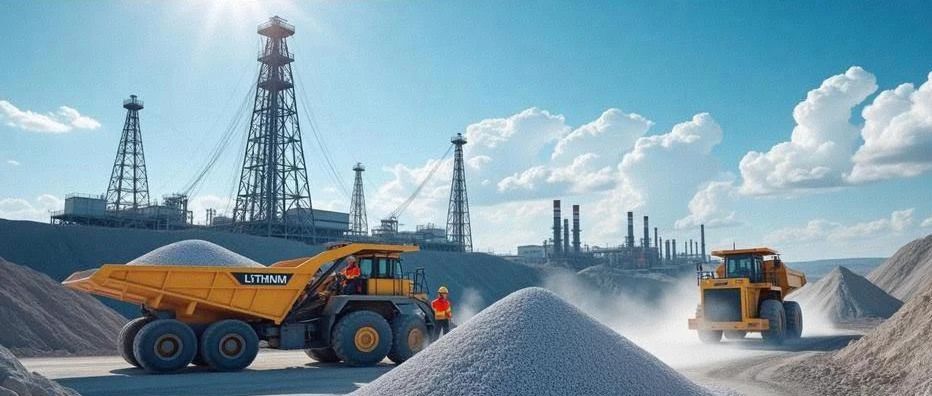
Core Viewpoint - The price of lithium carbonate has surged by 40%, reaching around 80,000 yuan per ton, driven by various factors in the industry [1][3]. Group 1: Reasons for Price Recovery - The industry is experiencing a reversal of internal competition, with lithium carbonate being sold below cost, leading manufacturers to demand price stabilization. A collaborative effort between supply and demand sides is essential to escape the current predicament [3]. - Downstream demand is growing, particularly in power and energy storage batteries, with leading companies significantly increasing their capacity utilization. In the first half of the year, China's lithium battery production reached 720 GWh, a year-on-year increase of over 60% [3]. - The current price of lithium carbonate is unsustainable as it is below production costs. A return to a rational price range of 100,000 to 150,000 yuan is likely necessary for stable profitability and normal production and R&D activities [3][6]. - Stricter compliance reviews for lithium mines are limiting short-term production capacity. Recent policies have been implemented to restore order in the industry, with significant potential impacts on global supply [4][5]. Group 2: Future Price Expectations - The current trend indicates that lithium carbonate prices are expected to revert to a reasonable range of 100,000 to 150,000 yuan [6].