
起点锂电

Search documents
10GWh锂电池研发制造基地二期项目开工
起点锂电· 2025-12-21 06:15
Group 1 - The core viewpoint of the article highlights the significant expansion of Pylon Technologies with the groundbreaking of its 10GWh lithium battery R&D and manufacturing base in Hefei, Anhui Province, which is a crucial part of its global manufacturing strategy [3] - The first phase of the project has successfully established a production team of over 1,000 people, steadily increasing capacity and validating the company's product technology and manufacturing strength [3] - The second phase of the project is a comprehensive upgrade aimed at expanding advanced capacity and strengthening industrial layout to better meet market demand, alongside a new 2GWh energy storage battery and integration project that has been officially signed [3] Group 2 - The article also mentions advancements in the energy storage sector, including next-generation energy storage cell technologies from companies like Rongjie Energy, which focuses on large capacity, high efficiency, and long cycle life [4] - Leading Intelligent is redefining mass production standards for all-solid-state batteries, indicating a shift towards more innovative battery technologies [4] - Desay Battery is introducing proactive safety measures that redefine energy safety paradigms through real-time perception and intelligent response technologies [4]



融捷能源:下一代储能电芯技术,向大容量、高效率、长循环演进
起点锂电· 2025-12-20 07:04
Core Viewpoint - The presentation by Liu Wen from Rongjie Energy at the 2025 Starting Point Lithium Battery Industry Annual Conference highlights the current state and challenges of the household energy storage industry, while showcasing the company's technological solutions and future development paths for energy storage cells [6][16]. Industry Overview - The household energy storage industry presents significant advantages in reducing electricity costs, enhancing emergency backup capabilities, and achieving autonomous energy management, but it faces challenges such as battery consistency, capacity management issues, high installation and maintenance costs due to complex system integration, and safety and reliability risks [6][7]. Technological Solutions - Rongjie Energy has developed a diverse matrix of energy storage cells, including 72Ah, 100Ah, 102Ah, 280Ah, 314Ah, and 588Ah, to meet various application needs. The 72Ah and 102Ah cells can achieve over 6000 cycles at a 1C rate, while the 314Ah cell targets long-life requirements with up to 9000 cycles at 0.5C [9][10]. Next-Generation Energy Storage Cell Technology - The evolution of energy storage cells is moving towards larger capacities (over 500Ah), higher energy efficiency (from 93% to over 96%), and longer cycle life (from 8000 to 12000 cycles). Industry standards are transitioning from early adaptations of power battery standards to dedicated mandatory standards like GB 44240-2024 [12][13]. Cost Reduction Strategies - To address market demands for high safety and low costs, Rongjie Energy focuses on reducing initial investment and operational costs. The company has improved the packing density of cathode materials from 2.4 g/cm³ to 2.6 g/cm³, enhancing energy density [13][14]. Conclusion - Liu Wen's presentation outlines a clear evolution blueprint for Rongjie Energy's household storage products, addressing current pain points and future demands. The company is driving advancements in safety, longevity, and cost-effectiveness through material innovation, process optimization, and system integration, thereby reconstructing the energy storage value chain [16].

德赛电池 系统和算法总监 闫垚锋:主动安全-重新定义能源安全范式-基于实时感知与智能响应的下一代技术方案
起点锂电· 2025-12-20 07:04
Core Viewpoint - The article emphasizes the importance of proactive safety measures in the energy storage industry, highlighting the limitations of traditional passive safety approaches and introducing a comprehensive proactive safety technology system developed by Desay Battery [2][3][6]. Group 1: Importance of Proactive Safety - The current industry safety measures, such as the "seven layers of protection," are largely reactive, addressing issues only after they arise, which is inadequate for the hidden risks in energy storage [2][3]. - Proactive safety technology aims to shift the focus from reactive to preventive measures, allowing for early detection and intervention of potential risks [3][6]. Group 2: Development of Proactive Safety Technology - The proactive safety technology system is developed in three phases: identifying monitoring needs from accident cases, integrating AI and EMS modules for initial solutions, and optimizing for large-scale production [9][10]. - The system is designed to provide a "7+1" full-chain proactive safety framework, enhancing traditional safety measures with additional capabilities for early warning and intelligent response [11]. Group 3: Key Features of the Technology - The technology includes AI cells that monitor internal pressure and temperature, allowing for real-time detection of internal degradation and potential risks [13]. - The system integrates various data points, including internal gas pressure and temperature, to create a comprehensive monitoring network that enhances safety management [15]. Group 4: Value to Customers - The proactive safety system offers several benefits, including early warnings, precise maintenance suggestions, and a shift from passive to active safety management, significantly improving overall safety and reliability [19][21]. - The technology is backed by over 80 domestic and 10 international patents, ensuring a robust intellectual property barrier and compliance with high industry standards [22]. Group 5: Future Collaboration and Industry Impact - The company advocates for open collaboration to drive industry progress, offering customizable solutions that can adapt to various energy storage applications [24]. - The goal is to build a shared energy storage safety database to enhance safety standards and foster innovation within the industry [24].

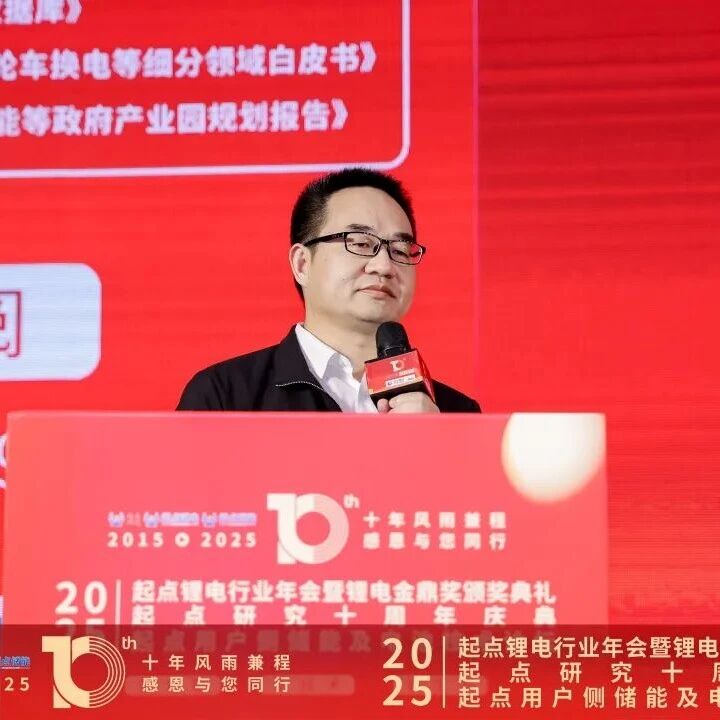
清陶云能 市场总监 盛健:瓦特和比特——AI时代绿色数据中心的储能电池需求
起点锂电· 2025-12-20 07:04
Core Viewpoint - The article discusses the importance of energy storage and battery technology in the context of the AI era, emphasizing the need for green data centers and efficient energy solutions to meet carbon reduction goals [2][6][29]. Group 1: Industry Trends and Challenges - The rapid growth of AI and data technologies is leading to an increase in data center power consumption, projected to reach 525.76 billion kWh by 2030, accounting for 2.4% of total social electricity consumption [6][8]. - Data centers face three main challenges: reliance on grid power leading to uncontrollable carbon emissions, inefficiencies in traditional power supply architectures, and excessive redundancy in power configurations [8][9][10]. Group 2: Solutions and Innovations - Solutions to these challenges include regional collaborative development to enhance green energy usage, the adoption of high-voltage direct current (HVDC) architectures to improve power efficiency, and integrating energy storage systems to optimize redundant configurations [9][10][11][15]. - The article highlights the role of solid-state lithium batteries in addressing these challenges, particularly in enhancing safety and efficiency in energy storage applications [21][28]. Group 3: Company Positioning and Advantages - The company, QingTao Energy, has developed semi-solid lithium iron phosphate batteries that are commercially viable and have been implemented in projects like the Inner Mongolia energy storage project [21][32]. - The advantages of lithium batteries include high energy density, compact size, and intelligent features that allow for precise monitoring of battery health, making them suitable for data center applications [26][23]. - The company emphasizes the importance of safety in energy solutions, particularly in the context of data centers and energy storage systems, ensuring that all innovations are grounded in safety considerations [29][30].
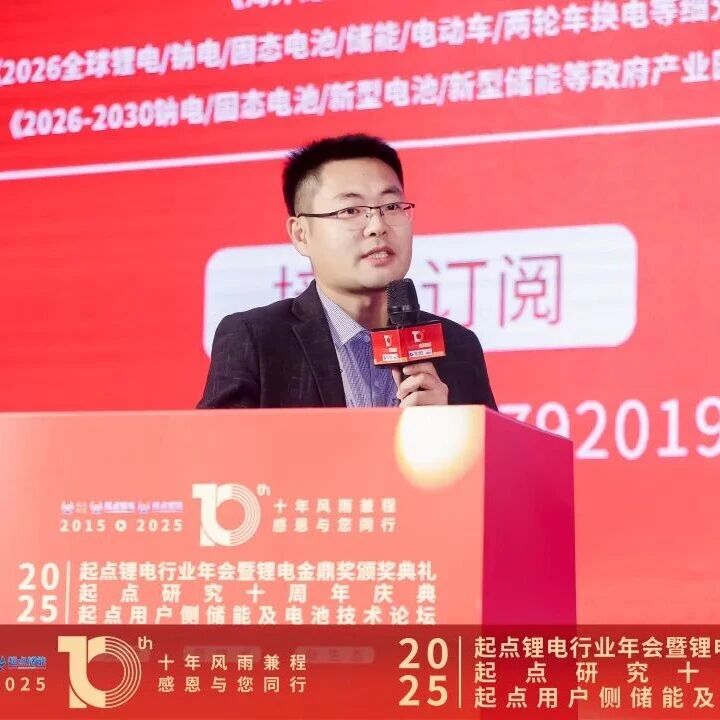
易事特 光储充事业部总经理 马强:易事特风光储充一体化赋能 “AI+新能源”产业创新发展
起点锂电· 2025-12-20 07:04
Core Viewpoint - The article discusses the integration of AI and renewable energy in the context of energy transformation and storage solutions, highlighting the importance of data centers and energy management in supporting the growth of AI-driven industries [3][11]. Industry Background - The energy sector is undergoing a transformation driven by AI and the dual carbon goals of 3060, with new policies guiding the renewable energy landscape [3]. - AI's growth is closely linked to energy demand, particularly in data centers, which require stable power supply to support their operations [3]. Company Solutions - The company offers modular data center solutions, including edge computing and large-scale data centers, to meet diverse energy needs [5]. - It provides comprehensive energy solutions for AI, including distributed and centralized wind power, and various solar energy applications [6]. - The company has developed a full range of charging solutions, including AC and DC charging stations, and energy storage systems for residential and commercial use [7]. Market Applications - The company targets high-energy-consuming industries with commercial energy storage solutions that leverage peak and valley price arbitrage [6]. - It has established a presence in international markets, particularly in residential energy storage, which is gaining traction in regions like Australia and Europe [8]. Innovative Products - The company has introduced a mobile energy storage robot that autonomously charges vehicles, enhancing efficiency and reducing the need for human intervention [9]. - It is a pioneer in the industrialization of microgrids, integrating renewable energy sources and optimizing energy management through intelligent platforms [9]. Collaboration and Investment - The company offers various collaboration models, including equipment supply, EPC integration, and investment in energy projects, allowing clients to benefit from energy management contracts without upfront costs [10].


弘正储能 广东公司营销总监 王睛武:工商业储能在华南地区的应用趋势
起点锂电· 2025-12-20 07:04
Core Viewpoint - The article discusses the trends and challenges in commercial energy storage in South China, emphasizing the impact of recent policies on market dynamics and the necessity for diversified revenue models in the energy storage sector [6][9]. Group 1: Market and Policy Trends - The core drivers of trends in commercial energy storage are market dynamics and policy changes, particularly the introduction of the 136 document, which marks the beginning of a fully market-oriented pricing era for new energy [6]. - The 1192 document has elevated the necessity of energy storage from an optional to a mandatory component, presenting challenges for system integrators in the commercial energy storage sector [6]. Group 2: Challenges Faced - The end of the single-scenario era due to the 136 document requires diversified revenue assurance strategies for energy storage systems [6]. - There is a growing concern regarding the safety of energy storage systems, including the need for timely after-sales service and low operational costs [7]. - Increasing demands for interaction with electricity trading platforms and Virtual Power Plant (VPP) platforms present additional challenges for energy storage providers [8]. Group 3: Future Changes in Energy Storage - By 2026, commercial energy storage manufacturers are expected to focus on minimizing lifecycle costs while ensuring safety and accommodating multiple scenarios [9]. - The industry is shifting from a "two charge, two discharge" model to a "one charge, one discharge" model with longer storage durations, which will facilitate peak-valley arbitrage and other needs [9]. - The introduction of larger battery cells may lead to a rapid replacement of existing cells, potentially reducing system costs [9]. Group 4: Digitalization and System Integration - The future of energy storage will require a strong digital capability, aiming to provide a product-as-a-service model that integrates full lifecycle management through smart cloud platforms [11]. - Key characteristics for competitive energy storage players include high efficiency, lifecycle management capabilities, and the ability to handle multiple interactions and scenarios [18]. - The 5S system product view emphasizes simplicity, intelligence, speed, safety, and sustainability in energy storage solutions [21]. Group 5: Specific Applications and Innovations - The article highlights specific applications such as renewable energy consumption, voltage management, and user-side solutions, all driven by digitalization to achieve functions like peak-valley arbitrage and capacity management [28]. - The company emphasizes the importance of AI algorithms for battery state estimation and market trading strategies, which can enhance efficiency by 10% compared to fixed charging and discharging strategies [29].
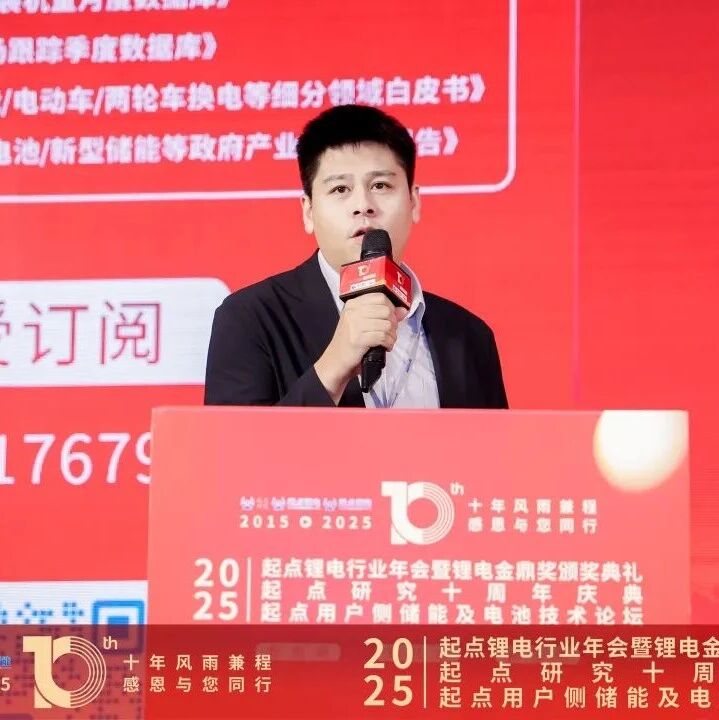
先导智能 营销总经理 叶正平:破界·精工 定义全固态电池量产新标准
起点锂电· 2025-12-20 07:04
Core Viewpoint - The article discusses the advancements in solid-state battery technology, emphasizing its importance in the energy storage sector and the need for efficient mass production standards [5][10]. Group 1: Event Overview - The 2025 User-Side Energy Storage and Battery Technology Forum was held on December 19, focusing on commercial, portable, and residential energy storage solutions, as well as AIDC storage batteries [2]. - The event featured over 800 attendees and aimed to analyze technological breakthroughs, safety challenges, and value chain restructuring in the energy storage industry [2]. Group 2: Solid-State Battery Insights - Solid-state batteries are highlighted as a crucial direction for future energy storage, offering significant improvements in safety and energy density compared to traditional batteries [5][6]. - The manufacturing process for solid-state batteries differs greatly from traditional liquid or semi-solid batteries, requiring an estimated 80% to 90% update in production lines [7]. Group 3: Production Challenges and Innovations - The presentation outlined the challenges in solid-state battery production, including issues with electrode alignment and material fragility, which can lead to low yield rates [8]. - A new stacking solution was introduced, achieving a production efficiency of 0.35 seconds per piece, which is an 85-fold improvement over competitors [9][10]. - The company aims to address the "impossible triangle" of precision, yield, and efficiency in solid-state battery production through innovative techniques [10]. Group 4: Company Profile - The company has been a leader in the new energy equipment sector for 26 years, holding the largest market share globally and serving over 25 countries [12].

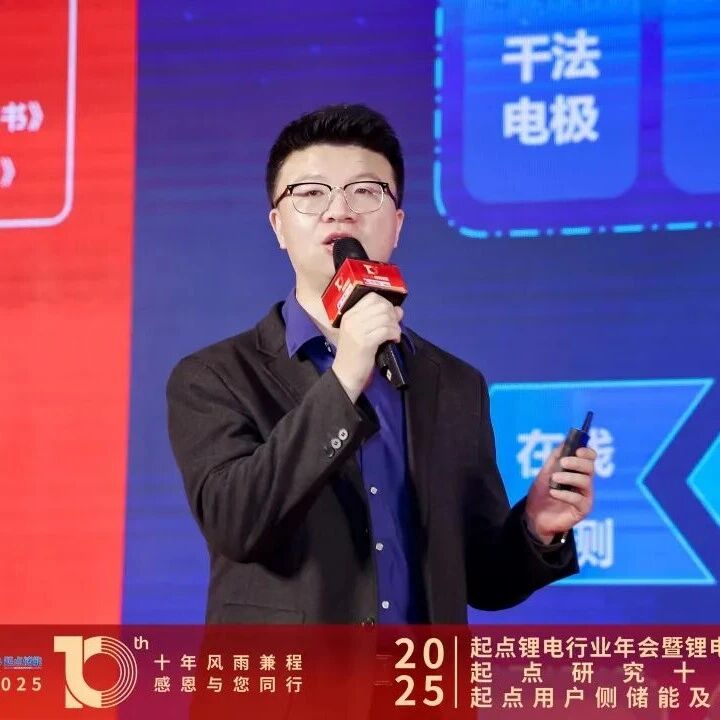
星翼能源 总经理 范良明:破局工商业储能:以“车规级”理念构建高价值储能系统
起点锂电· 2025-12-20 07:04
Core Viewpoint - The article discusses the evolution of commercial energy storage from focusing on installation scale to emphasizing revenue value, highlighting the need for high-value and reliable energy storage systems based on automotive-grade standards [6]. Group 1: Industry Trends - Commercial energy storage is undergoing a significant transition from 2022 to 2025, with many past investment projects yielding lower-than-expected returns due to issues with system performance and reliability [6]. - The market currently faces challenges with equipment failures and underperformance, necessitating innovations in safety, efficiency, and lifespan [6]. Group 2: Technological Innovations - The company has developed a self-researched CTP liquid cooling solution that enhances safety, reliability, consistency, and lifespan of energy storage products, with a shift towards liquid cooling systems expected to gain traction by late 2024 [7]. - The design of battery packs utilizes a modular and non-modular structure, reducing component complexity and system costs [7]. Group 3: Operational Strategies - The company employs a 100% Depth of Discharge (DOD) discharge strategy, which, through refined control, can increase daily revenue by 5% to 10% compared to typical 90% or 95% DOD strategies [8]. - A proprietary energy management system allows for real-time monitoring of the energy storage system's operational status and revenue, enhancing overall investment returns [7]. Group 4: Project Examples and Collaborations - The company has implemented a 430 kWh energy storage system in Guangzhou, which has operated continuously for four months, emphasizing the importance of equipment stability for maximizing revenue [7]. - The company has established numerous commercial energy storage projects across various regions, collaborating with major enterprises and investing in its own facilities [11]. Group 5: Future Vision - The company aims to create an open and collaborative industry chain, integrating research, production, sales, investment, and operation within the energy storage ecosystem, leveraging its 2 GWh super factory in Jiangxi to provide high safety and efficiency solutions [12].
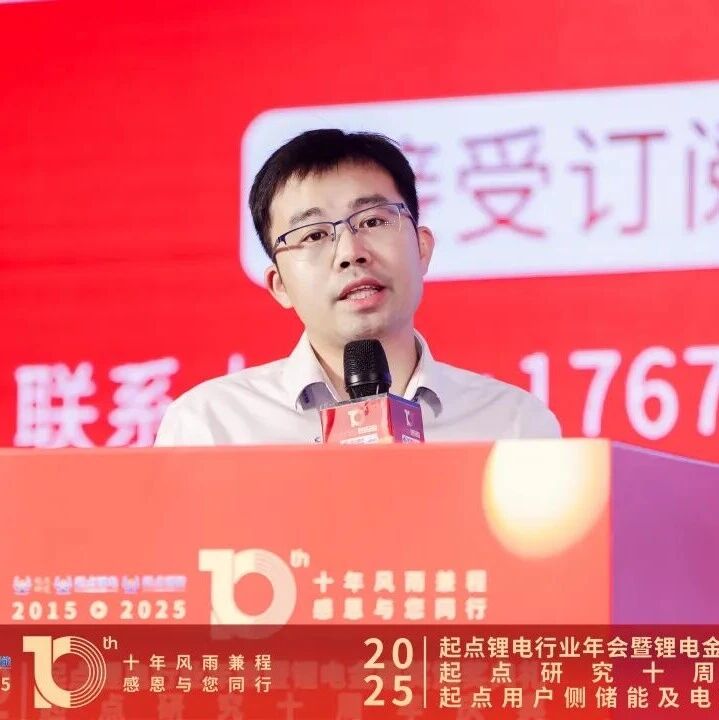
海辰储能 林日:大电芯时代 户用储能直流侧技术重构与成本突破
起点锂电· 2025-12-19 12:17
Core Viewpoint - The article discusses the rapid development of the energy storage industry, particularly focusing on household energy storage and the transition to larger battery cells, emphasizing the cost reduction and technological advancements in this sector [1][5][9]. Group 1: Market Overview - The energy storage industry is experiencing significant growth, with household storage showing high long-term growth potential despite short-term challenges such as regional tensions and energy price fluctuations [5]. - In North America, frequent power outages have made battery capacity a key factor for safety, while in Australia, generous subsidy policies are driving the household storage market, leading users to opt for larger systems of 30-40 kWh [5]. - The trend indicates that household storage batteries are evolving from mere devices to energy assets that can be owned by everyone [5]. Group 2: Battery Cell Development - Battery cell capacities have evolved from early models of 20Ah and 50Ah to the more commonly used 100Ah, with larger cells like 280Ah and 314Ah now being applied at scale in household storage [5][6]. - Larger battery cells offer higher energy density, significantly reducing the cost per watt-hour and overall system costs, which is crucial for users with limited installation space [5][7]. - The current focus is on 314Ah cells, which have shown a 30% reduction in cost per watt-hour compared to 100Ah cells, and a 25% decrease in lifecycle electricity costs for users [7]. Group 3: Cost and Technical Challenges - The primary driver for the transition to larger battery cells is cost reduction, as the current 100Ah cells face limited cost-cutting opportunities due to mature material systems and optimized processes [6]. - Smaller cells lead to more connection points and increased complexity in battery management systems (BMS), raising maintenance and after-sales costs [6]. - The 314Ah cells are expected to pave the way for even larger capacities, such as 587Ah, which will further enhance cost efficiency and system integration [7]. Group 4: Company Initiatives - The company, 海辰储能, established in 2019, has four production bases globally and focuses on the development of large battery cells for energy storage, with products ranging from 218Ah to over 1000Ah [8]. - The company is actively promoting the application of large battery cells in both household and portable energy storage solutions, aiming to meet daily power needs in regions with weak power infrastructure [7][8]. - The ultimate goal of household storage is to achieve energy equity, with a call for continuous optimization of costs and technology to enable more users to enjoy energy freedom [9].
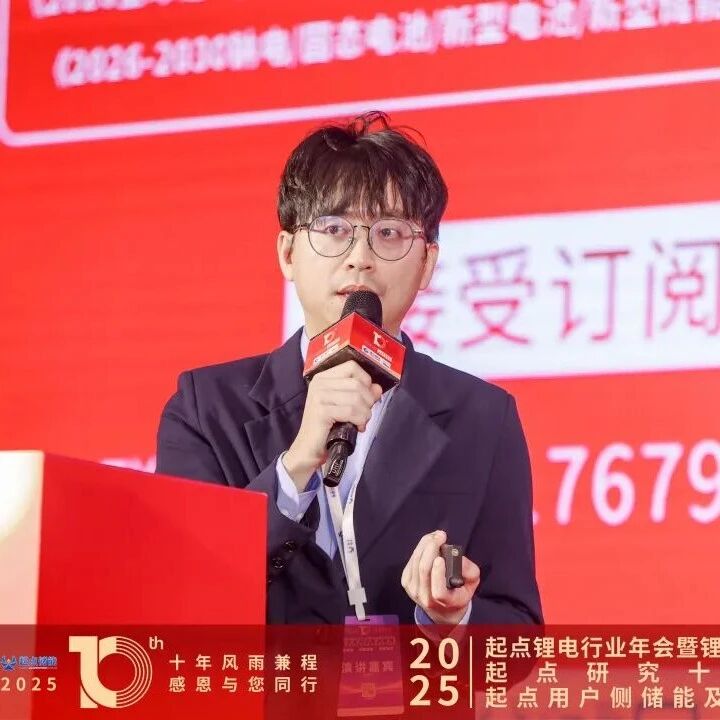
北测新能源 事业部总经理 赵庆利:强制性国标GB 44240-2024z专家解读
起点锂电· 2025-12-19 12:17
Core Viewpoint - The article discusses the introduction of China's first mandatory national standard for energy storage batteries, GB 44240-2024, which will be implemented on August 1, 2025, focusing on safety requirements for lithium batteries in energy storage applications [6][5]. Group 1: Overview of the Forum - The 2025 User-Side Energy Storage and Battery Technology Forum was held in Shenzhen, attracting over 800 attendees to discuss key topics such as commercial energy storage, portable energy storage, and safety challenges in the industry [1]. Group 2: Introduction of GB 44240-2024 - GB 44240-2024 is the first mandatory national standard for energy storage batteries in China, differing from previous recommended standards [5][6]. - The standard aligns closely with international standards, with 80% similarity to European standards, and is primarily focused on safety considerations [6]. Group 3: Certification Process - The certification process for GB 44240 involves application, type testing, initial factory inspection, and post-certification supervision, with a certification cycle of five to six weeks, compared to six months for the previous GB/T 36276 standard [7]. - The standard requires different certification units for battery cells, modules, and systems based on their specifications and configurations [7]. Group 4: Testing Requirements - The standard outlines rigorous testing requirements for battery cells, including safety, environmental, and thermal runaway tests, with specific procedures and conditions for each test [11][19]. - Testing includes various conditions such as low pressure, temperature cycling, vibration, and overcharging, ensuring that batteries do not catch fire or explode under stress [13][15][17]. Group 5: Labeling and Documentation - Batteries must have clear labeling indicating safety usage lifespan and unique coding for traceability in case of incidents [22]. - The certification is valid for five years, with annual factory audits required, and any changes in product design or safety parameters must be reported for certification updates [8][26].
