芯世相

Search documents
20年芯片采购,我的一些思考和成单经验
芯世相· 2025-09-25 07:36
Core Viewpoint - The article discusses the challenges faced by sales and procurement professionals in the chip distribution industry, emphasizing the need for effective strategies to identify genuine opportunities and manage client relationships to enhance sales performance [1][2][10]. Group 1: Sales Challenges - Sales professionals often encounter clients who inquire about prices without making purchases, leading to frustration and wasted efforts [1][10]. - There is a common issue where salespeople provide numerous quotes but fail to secure any orders, indicating a need for better client assessment [10][12]. - The article highlights the importance of understanding the true value and potential of clients rather than blindly quoting prices [10][12]. Group 2: Procurement Issues - Procurement professionals face pressure from competitors who can match or undercut their pricing, creating a challenging environment for securing orders [2][20]. - There is a lack of alternative sourcing channels beyond well-known platforms, which limits procurement options [2][20]. - The article points out that procurement teams often struggle with high workloads and insufficient orders, leading to dissatisfaction [2][20]. Group 3: Personal Experience and Insights - The author shares a personal journey from a procurement background to entrepreneurship, highlighting the evolution of skills and knowledge gained over years in the industry [3][4][5]. - The transition from traditional procurement roles to establishing a new business model in the chip distribution sector is discussed, emphasizing the importance of adapting to market changes [5][6]. - The author reflects on the significance of time management and data analysis in improving procurement efficiency and decision-making [4][6]. Group 4: Course Offerings - A course titled "Chip Distribution Money-Making Practical Camp" is introduced, focusing on practical strategies for identifying opportunities and managing risks in sales [9][22]. - The course aims to teach participants how to analyze client needs, understand market dynamics, and navigate the complexities of the chip distribution landscape [9][22]. - Specific topics include customer classification, negotiation tactics, and risk management strategies to enhance sales outcomes [9][22].


突破宽带信号分析瓶颈!芯片研发新工具来了
芯世相· 2025-09-25 07:36
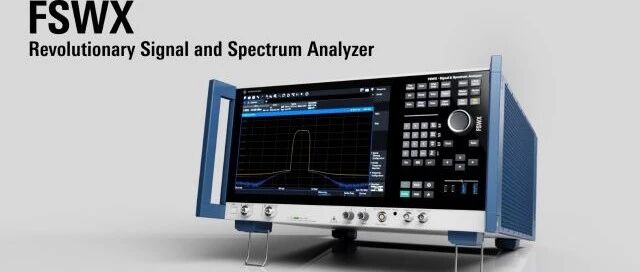
Core Viewpoint - The article discusses the challenges faced by current spectrum analyzers in meeting the demands of modern RF applications, highlighting the innovative features of the new FSWX spectrum analyzer from Rohde & Schwarz, which utilizes a multi-input port architecture and cross-correlation technology to enhance measurement capabilities and address existing limitations in wideband signal analysis [1][25]. Group 1: Challenges in Current Spectrum Analyzers - Modern RF applications require higher data rates, wider modulation bandwidths, and higher-order modulation schemes, which current devices struggle to meet due to insufficient dynamic range in wideband and high-power testing [1]. - Traditional methods like IQ averaging and cross-correlation signal processing are used to overcome these limitations, but they have their own constraints, such as the need for signal repeatability in IQ averaging [1][2]. Group 2: Innovative Features of FSWX - The FSWX spectrum analyzer features a pioneering multi-receive path architecture that effectively reduces mirror frequency interference and spurious signals, supporting modern wireless communication standards and radar applications without the need for external power splitters [3][27]. - Cross-correlation technology enhances measurement capabilities, allowing for results that traditional spectrum analyzers cannot achieve, particularly in phase noise measurements [6][7]. Group 3: Performance Enhancements - The FSWX can accurately measure phase noise, which is critical for modern communication applications, ensuring optimized performance of oscillators and synthesizers [7][9]. - The analyzer's multi-path architecture allows for faster detection of hidden spurious signals without compromising resolution bandwidth, significantly improving measurement speed [9][10]. Group 4: Overcoming Technical Limitations - The FSWX utilizes a filter bank for pre-selection, providing wider bandwidth and flatter frequency response compared to traditional YIG filters, thus enhancing dynamic range and measurement accuracy [12][15]. - The combination of filter banks and multi-path receiver structures allows for effective detection of spurious signals while maintaining measurement speed [13][14]. Group 5: Applications in Radar and Communication - The FSWX is designed to simplify the testing setup for phased array antennas, which are crucial in aerospace, mobile communications, and automotive radar applications [17][19]. - It enables independent configuration of local oscillator frequencies and input gain parameters, allowing for precise monitoring of radar signals affected by strong communication signals [19][21]. Group 6: Conclusion - The FSWX spectrum analyzer represents a significant advancement in addressing the limitations of contemporary signal and spectrum analyzers, offering enhanced dynamic range, measurement speed, and simplified testing configurations for emerging technologies [25][27].
7份料单更新!出售TI、ST、美信等芯片
芯世相· 2025-09-25 07:36
Core Insights - The article discusses the challenges of managing excess inventory in the semiconductor industry, highlighting the financial burden of storage and capital costs associated with unsold materials [1] - It promotes a service called "Chip Superman," which has served 21,000 users and offers rapid inventory clearance solutions [6] Group 1: Inventory Management - Excess inventory of 100,000 units incurs monthly storage and capital costs of at least 5,000, leading to a potential loss of 30,000 after six months [1] - The article emphasizes the difficulty in promoting and selling excess materials, suggesting that companies can seek assistance from Chip Superman for better pricing and faster transactions [1][7] Group 2: Inventory Offerings - Chip Superman has a smart warehouse of 1,600 square meters, with over 1,000 stock models and a total inventory of 50 million chips valued at over 100 million [6] - A list of available excess materials for sale is provided, including various brands and models, with quantities ranging from 960 to 105,000 units [4] Group 3: Purchase Requests - The article includes a request for specific components, indicating demand for certain models from brands like TI, LITEON, and ST, with quantities ranging from 3,000 to 50,000 [5] Group 4: Market Context - The article references broader market trends, including potential price increases from major manufacturers like TI and signs of recovery in the semiconductor sector based on recent financial reports [8]



美光业绩大涨,明年的HBM即将售罄!
芯世相· 2025-09-24 04:07
Core Viewpoint - Micron Technology's Q4 FY2025 earnings report exceeded Wall Street expectations, signaling positive momentum for AI investments and investors [2][5]. Financial Performance - Micron reported Q4 revenue of $11.3 billion, a 46% year-over-year increase, surpassing analyst expectations of $11.15 billion [2]. - Adjusted operating income reached $3.955 billion, up 126.6% year-over-year, with an adjusted gross margin of 45.7%, a 9.2 percentage point increase from the previous year [2]. - Adjusted earnings per share were $3.03, exceeding market estimates of $2.84 [2]. Business Segment Performance - The cloud memory business, Micron's largest segment, generated $4.54 billion in sales, a 34% quarter-over-quarter increase and a 214% year-over-year increase [2]. - The core data center business saw sales of $1.57 billion, a 3% quarter-over-quarter increase but a 23% year-over-year decline [2]. - Mobile and client segment revenue was $3.76 billion, up 16% quarter-over-quarter and 25% year-over-year [2]. - Automotive and embedded segment revenue reached $1.43 billion, a 27% quarter-over-quarter increase and a 17% year-over-year increase [2]. Product Type Breakdown - DRAM revenue was $9 billion, a 27% quarter-over-quarter increase, accounting for approximately 79% of total revenue [4]. - NAND revenue was $2.3 billion, a 5% quarter-over-quarter increase, making up about 20% of total revenue [4]. Future Outlook - Micron's CEO indicated that the company is well-positioned to benefit from the expected multi-trillion dollar global investment in AI over the coming years [6]. - For Q1 FY2026, Micron expects revenue between $12.2 billion and $12.8 billion, exceeding analyst estimates of $11.9 billion [6]. - Adjusted earnings per share are projected to be between $3.60 and $3.90, significantly higher than the market forecast of $3.05 [6]. Competitive Landscape - Micron is one of the top three memory manufacturers globally, competing with SK Hynix and Samsung, the latter of which is lagging in the AI sector [7]. - Micron's DRAM chips are essential for both personal computers and AI data centers, with high bandwidth memory (HBM) products being critical for AI infrastructure [7]. Market Position and Demand - Demand from Nvidia accounts for 16% of Micron's annual revenue, and Samsung's underperformance in the AI sector is enhancing Micron's market position [8]. - Micron's stock has risen approximately 97% this year, outperforming the average 18% increase of the "Magnificent Seven" tech giants [8]. - Analysts predict that the DRAM market will grow by 83% in 2024, reaching $95 billion, with Micron holding a 35% market share [9].


4份料单更新!出售TI、东芯、华邦等芯片
芯世相· 2025-09-23 06:54
Core Insights - The article discusses the challenges and opportunities in managing excess inventory of electronic components, highlighting the financial burden of holding unsold stock and the potential for liquidation through discount sales [1][2]. Group 1: Inventory Management - A significant amount of excess inventory, specifically 100,000 units, incurs monthly storage and capital costs of at least 5,000, leading to a potential loss of 30,000 if held for six months [1]. - The company offers a platform for selling excess inventory quickly, claiming transactions can be completed in as little as half a day [2][9]. Group 2: Product Listings - The article provides a detailed list of available electronic components for sale, including brands, models, years, and quantities, indicating a diverse inventory aimed at attracting buyers [5][6]. - Notable items include 50,000 units of ADI's ADBMS2950WCCSZ-RL and 114,268 units of 东芯's FMND2G08U3D-IA, showcasing the scale of available stock [5][6]. Group 3: Demand and Supply - The company is actively seeking to purchase specific components, indicating a proactive approach to inventory replenishment and market responsiveness [7]. - The presence of a large inventory, with over 5,000,000 chips valued at over 100 million, suggests a robust supply chain and operational capacity [8]. Group 4: Service and Quality Assurance - The company has served 21,000 users, emphasizing its established market presence and customer base [9]. - An independent laboratory in Shenzhen ensures quality control for each component, enhancing trust and reliability in the products offered [8].

假芯片有哪几类,如何避坑?
芯世相· 2025-09-23 06:54
我是芯片超人花姐,入行20年,有50W+芯片行业粉丝。 有很多不方便公开发公众号的, 关于芯片买卖、关于资 源链接等, 我会分享在朋友圈 。 扫码加我本人微信 通常情况下,企业会根据终端产品的生产计划,按需采购所需数量的 芯片 。然而,受需求的急剧 增长或供给端情况变化的影响,可能会出现无法确保所需数量的局面。此时,为了维持终端产品的 生产,必须尽可能多、尽可能快地采购 芯片 。 在这种情况下,通过已有合同的正规渠道购买正品往往很困难。 当然,为了规避风险,企业通常 会准备多个安全的采购渠道,并分别确认库存和供货可能性。但当所有渠道都无法采购时,就不得 不通过各种方式去寻找 芯片 。 与过去不同,如今互联网上信息繁多,只要一搜索就会发现多个供应商声称有库存。然而,这些供 应商大多没有过往交易记录,难以判断其库存是否为正品。而且,这类供应商通常不会公开详细信 息,只能凭有限的信息做出采购决策。在一边继续寻找可靠渠道的同时,交货期限却越来越紧迫。 即便多次联系原有渠道也没有进展,最终不得不冒险从信息不足的供应商处采购,结果买到的 芯 片 却被证实是假货。 就这样, 当市场供需失衡时, 假芯片 的买卖往往会大幅增加 ...

摩尔线程IPO本周上会 ;传三星跟进涨价;SSD价格开始反弹…一周芯闻汇总(9.15-9.21)
芯世相· 2025-09-22 04:27
Key Points - The article discusses significant developments in the semiconductor industry, including IPOs, partnerships, and market trends [6][7][8][9][10][11][12][14][15][18][19][21]. Group 1: Major Events - Moer Thread's IPO on the Sci-Tech Innovation Board is scheduled for September 26, 2025 [14]. - Nvidia's CEO Jensen Huang announced a partnership with Intel to integrate Nvidia's AI with Intel's CPUs, involving a $5 billion investment from Nvidia [14]. - STMicroelectronics has abandoned its layoff plans at the Agrate factory in Italy, focusing on a €5 billion investment strategy [15]. - Samsung is expected to raise prices for DRAM and NAND Flash products by 15% to 30% and 5% to 10%, respectively, indicating a bullish market cycle [18]. Group 2: Market Trends - The global wafer fab equipment market is projected to reach $184 billion by 2030, with a CAGR of approximately 4.6% from 2024 to 2030 [12]. - The top 10 semiconductor equipment manufacturers are expected to generate over $64 billion in revenue in the first half of 2025, reflecting a year-on-year growth of about 24% [12]. - The SSD market is experiencing a rebound in prices due to rising demand and upcoming shopping events like Double 11 [19]. Group 3: Company Developments - MediaTek has completed the design tape-out of its first flagship SoC chip using TSMC's 2nm process, expected to enter mass production by the end of next year [16]. - AI chip startup Groq has raised $750 million in a new funding round, achieving a post-money valuation of $6.9 billion [16]. - OmniVision has confirmed its entry into Nvidia's supply chain, supporting the NVIDIA DRIVE AGX Thor ecosystem [16]. Group 4: Industry Insights - Foreign investment in Chinese semiconductor companies is increasing, with many foreign institutions conducting research on leading firms like SMIC [11]. - The semiconductor industry is entering a golden development period, particularly in the fields of "hard technology" and AI [11].



10份料单更新!出售TI、英飞凌、ON等芯片
芯世相· 2025-09-22 04:27
Core Viewpoint - The article discusses the challenges and opportunities in managing excess inventory of electronic components, highlighting the need for effective promotion and sales strategies to mitigate financial losses from storage and capital costs. Group 1: Inventory Management - A significant amount of obsolete inventory, totaling 100,000 units, incurs monthly storage and capital costs of at least 5,000, leading to a potential loss of 30,000 over six months if not addressed [1] - The company offers a platform for selling excess inventory quickly, claiming transactions can be completed in as little as half a day [2][8] Group 2: Inventory Listings - The article lists various electronic components available for sale, including: - TI MCT8329A1IREER (3,000 units) - ADI ADBMS2950WCCSZ-RL (50,000 units) - Multiple models from Infineon, ON Semiconductor, and others, with quantities ranging from 200 to 63,000 [5][6] - The total inventory value is reported to exceed 100 million, with 5 million units available across over 1,000 models [8] Group 3: Demand for Components - The company is actively seeking to purchase specific components, including: - QORVO QPL9058TR7 (15,000 units) - VISHAY IHLP2020BZEK100M11 (20,000 units) - Shengte SX1261IMLTRT (20,000 units) [7] Group 4: Market Context - The article references broader market trends, including potential price increases from major manufacturers like TI and signs of recovery in the semiconductor industry, as indicated by recent financial reports from over 30 semiconductor companies [10]

全球硬件大爆款,生于中国
芯世相· 2025-09-20 01:06
Core Viewpoint - The article discusses the rise of Chinese hardware companies, emphasizing their global ambitions and innovative approaches, particularly in the context of the success of companies like DJI and Plaud AI, which have redefined the perception of Chinese manufacturing and entrepreneurship in the global market [5][10][71]. Group 1: Globalization and Innovation - Plaud AI, founded in Shenzhen in 2021, aims to be a global company from day one, reflecting a shift in mindset among young entrepreneurs who now see global markets as essential for success [6][15]. - The article highlights the optimism and courage of new entrepreneurs in the face of global uncertainties, drawing parallels to the past decade's evolution in the Chinese manufacturing landscape [8][9]. - DJI's emergence as a leader in the consumer drone market has inspired a new generation of hardware entrepreneurs, showcasing the potential for high-quality, innovative products from China [10][11][12]. Group 2: The Impact of Supply Chain - The article emphasizes the strength of China's supply chain, which has enabled rapid prototyping and production, allowing companies to bring innovative products to market quickly [43][44]. - The success of companies like DJI and others is attributed to their ability to leverage local supply chains for high-quality components, which has significantly reduced production costs and time [48][49]. - The evolution of the supply chain has allowed for the emergence of new product categories, such as intelligent lawn mowers and AI toys, which cater to global consumer demands [35][56]. Group 3: Investment Landscape - The investment landscape for hardware startups has shifted dramatically, with more investors willing to back innovative hardware projects, reflecting a growing confidence in the potential for high returns [68][69]. - The article notes that early-stage investors like Li Zexiang and Gao Bingqiang have played a crucial role in supporting hardware startups, providing them with the necessary resources to innovate and grow [62][63]. - The changing perception of hardware investments has led to increased competition among investors, with many now actively seeking opportunities in the hardware sector [68][70].

聊聊我眼中的1-8月芯片市场行情
芯世相· 2025-09-19 04:19
Core Viewpoint - The semiconductor industry is experiencing a recovery phase, with significant sales growth anticipated in the coming quarters, driven by demand from various sectors including industrial and automotive markets [3][14]. Group 1: Market Signals and Trends - In October of the previous year, early signals of recovery were noted when PCB manufacturers like Jingwang Electronics and Shennan Circuit reported full capacity [3]. - Following the election of a new political leader, there was a surge in inventory purchases as companies anticipated market changes, leading to increased demand [3]. - Global semiconductor sales peaked in mid-2022 and have shown signs of recovery since Q4 2024, with sales rebounding above previous highs [3][5]. Group 2: Company Performance and Pricing Dynamics - Companies in the chip distribution sector reported significant performance improvements, with some experiencing a doubling of orders, particularly for ADI and Microchip products [5]. - TI's price adjustments affected approximately 66,000 models, representing about 76% of its total offerings, indicating a strategic move to influence market pricing [6]. - Despite TI's price increases, the overall market did not experience a widespread price surge, suggesting a cautious approach from manufacturers [6]. Group 3: Memory Market Insights - The memory market has seen substantial price increases, with Micron's prices doubling from January to March and again from March to May [10][12]. - There is a growing trend of memory manufacturers attempting to control prices through production adjustments, which has led to a more volatile market environment [12]. - The demand for small capacity eMMC has surged, with sales reported to be twice that of the previous year, indicating a strong recovery in the memory segment [10]. Group 4: Capacity and Supply Chain Dynamics - Domestic wafer fabs are reportedly operating at full capacity, with significant demand noted even when the downstream market appears stable [13][14]. - The supply chain is experiencing delays and shortages, particularly for domestic brands, while overseas markets are not facing the same level of pressure [14]. - The semiconductor industry is expected to see a delayed transmission of recovery signals to distributors and end-users, as the supply chain is complex and lengthy [14].