阿尔法工场研究院

Search documents
84岁“鞋王”被儿孙围堵逼宫?一封流传控诉信揭秘家族权斗细节
阿尔法工场研究院· 2025-05-11 10:12
Core Viewpoint - The recent controversy surrounding the leadership of Qindao Double Star, particularly the alleged power struggle involving Wang Hai and his family, has brought the company back into the public eye, raising questions about its governance and future direction [2][3][4]. Group 1: Leadership and Governance Issues - Wang Hai, the 84-year-old president of Qindao Double Star, claims he has been threatened and physically restrained by his son and daughter-in-law in an attempt to seize control of the company [4][6]. - The authenticity of Wang Hai's public letter, which details these allegations, is disputed, with company representatives stating it may be fake [3][4]. - Wang Hai remains a significant figure in the company, despite his family members holding a majority of shares, with his daughter-in-law Xu Ying owning approximately 45.569% [7][15]. Group 2: Company History and Market Position - Qindao Double Star, originally established in 1921, has a rich history in the footwear industry, once dominating the market with thousands of retail outlets [13][14]. - The company has faced challenges in recent years, including a decline in brand relevance and market share, particularly as it caters primarily to older demographics [18]. - The brand's value is reported at 49.2 billion, but specific financial data has not been disclosed, raising concerns about transparency [18]. Group 3: Financial Performance and Challenges - Qingdao Double Star has been struggling financially, with reported losses of approximately 1.76 billion over the past six years, and a cumulative loss exceeding 3 billion in net profit [19]. - The company attributes its financial difficulties to external market competition and ongoing construction of its factory in Cambodia, while competitors have managed to remain profitable [19]. - The company is attempting to alleviate its financial strain through acquisitions, such as the proposed purchase of South Korea's Kumho Tire, which may increase its debt burden [19][20].



专家访谈汇总:世界开始重新定义“军工强国”
阿尔法工场研究院· 2025-05-11 10:12
Group 1: Military Technology and Exports - The price of acrylonitrile and lithium hexafluorophosphate has slightly decreased, indicating a potential pause in short-term inventory replenishment in the new energy chemical sector [3] - The use of Chinese-made J-10C fighter jets by Pakistan to shoot down an Indian Rafale jet enhances the international influence of China's military products, positively impacting market sentiment in the defense sector [3] Group 2: Synthetic Protein Market - The synthetic protein market in China is projected to exceed 15 billion yuan by 2025 and reach 68 billion yuan by 2030, with a compound annual growth rate of 37.2%, transitioning from laboratory innovation to commercialization driven by policy and cost breakthroughs [4] - Three main technological paths—microbial protein, cell-cultured meat, and fermented protein—are clearly defined, shifting synthetic protein from a niche choice for vegetarians to a structural supply reconstruction under food safety and carbon neutrality contexts [4] - Technological advancements have significantly reduced the cost of microbial protein and cell-cultured meat, with microbial protein costs dropping from 800 yuan/kg to 48 yuan/kg, and cell-cultured meat costs decreasing by 92% since 2020, indicating a sustainable growth foundation for the industry [4] - The next five years are critical for the synthetic protein industry, characterized by a "technology route elimination race and business model competition," necessitating investors to develop a comprehensive understanding of the industry's evolution to secure long-term returns [4] Group 3: Digital Economy and ETFs - In the first four months of 2025, China's total exports reached 8.39 trillion yuan, reflecting a year-on-year growth of 7.5%, indicating strong overall export performance [5] - Digital economy ETFs are focused on state-owned enterprise digital transformation, presenting long-term investment potential as a core allocation tool in the new infrastructure and data element combination [5] Group 4: Technology Innovation Bonds - The People's Bank of China and the China Securities Regulatory Commission have jointly issued a document to support equity investment institutions in raising funds through technology innovation bonds, expanding their use to private equity fund investments [6] - The issuance of technology innovation bonds has exceeded 16 billion yuan, demonstrating high market participation and strong funding demand [6]
巴菲特的老搭档,买下了斯凯奇
阿尔法工场研究院· 2025-05-08 14:46
以下文章来源于涌流商业 ,作者李伟 涌流商业 . 关注有价值的产业资讯 作者 | 李伟 来源 | 涌流商业 导 语:最近4年,斯凯奇收入的复合增长率为12%,仅次于lululemon,比耐克、阿迪达斯、安 德玛更快。 知名投资集团 3G Capital有了新动作,将运动品牌斯凯奇Skechers纳入旗下。 5月5日,双方宣布了这一涉资94.2亿美元的交易。斯凯奇1999 年上市,是全球最大的鞋类公司之 一,2024 年销售额为89.7 亿美元。斯凯奇将退市成为私营公司。 此前3G Capital最知名的一笔交易,是与沃伦·巴菲特(Warren Buffett)一道,合并了食品巨头卡夫 Kraft和亨氏Heinz。早年,3G Capital还撮合了AmBev和Interbrew的合并,后来又收购了Anheuser- Busch,全球最大啤酒商AB InBev由此诞生。 如今,沉寂了三年半之后,3G Capital再次操盘重大交易。 3G Capital将以每股63美元的价格收购斯凯奇全部已发行股本,定价是过去15天加权平均股价溢价 30%。持有约60%投票权的股东已书面同意该交易,因此,其他股东无需采取进一步行 ...

昔日“亚马逊三杰”之一,到底败在谁的手里?
阿尔法工场研究院· 2025-05-08 14:46
Core Viewpoint - The decline of ZEBRA, once a leading player in cross-border e-commerce, is attributed to internal conflicts, management issues, and a failure to adapt to changing market conditions, leading to significant financial losses for its parent company, Xinghui Co., Ltd [2][3][11]. Financial Performance - Xinghui Co., Ltd reported a revenue of 1.51 billion yuan for 2024, a year-on-year decrease of 7.13%, with a net profit attributable to shareholders of -460 million yuan, marking a staggering increase in losses of over 504% year-on-year [2][3]. - ZEBRA's cross-border e-commerce business saw a revenue decline of 37.32%, now accounting for only 33.54% of total revenue, indicating its role as a financial burden for Xinghui [3][11]. Historical Context - ZEBRA was acquired by Xinghui Co., Ltd in 2018 for 1.53 billion yuan, promising profit targets of 108 million yuan, 145 million yuan, and 190 million yuan for the years 2018 to 2020, which it exceeded during the initial years [4][6]. - The rapid growth of ZEBRA was halted by a significant account suspension event in 2021, resulting in the closure of 367 stores and freezing of approximately 32.23 million yuan in funds [6][11]. Management Issues - Internal conflicts between ZEBRA's founding team and Xinghui's management have led to lawsuits and a breakdown in collaboration, further exacerbating ZEBRA's decline [3][9]. - The management transition from ZEBRA's original team to Xinghui's leadership resulted in a lack of understanding of the cross-border e-commerce landscape, leading to ineffective strategies and missed opportunities [9][10]. Market Dynamics - The shift in the e-commerce landscape towards compliance and brand building has rendered ZEBRA's previous reliance on a high-volume, low-margin business model unsustainable [10][24]. - ZEBRA's failure to pivot towards a brand-focused strategy has left it vulnerable to market pressures, particularly as competitors have successfully adopted more refined operational strategies [11][24]. Legacy and Future - Despite ZEBRA's decline, former executives have launched new brands, collectively referred to as the "ZEBRA system," which continue to leverage the supply chain expertise and market knowledge gained during their time at ZEBRA [13][19]. - These new brands are focusing on niche markets and brand development, indicating a potential continuation of ZEBRA's legacy in a different form [22][24].


光伏行业重写竞争规则,这家公司如何逆周期前行?
阿尔法工场研究院· 2025-05-08 14:46
Core Viewpoint - Tongwei Co., Ltd. is leveraging its technological moat, financial resilience, and globalization strategy to navigate the cyclical challenges in the photovoltaic industry, representing a microcosm of China's photovoltaic industry's transformation and providing a "Chinese solution" for global energy transition [1][28]. Group 1: Financial Performance - In the first quarter of 2025, Tongwei reported a revenue of 159.33 billion yuan, a year-on-year decline of 18.58%, while the full-year revenue for 2024 was 919.94 billion yuan, down 33.87% year-on-year [3][9]. - Despite the overall industry downturn, Tongwei's core product sales continued to grow, with high-purity crystalline silicon sales reaching 467,600 tons, a year-on-year increase of 20.76%, maintaining a 30% market share in China and ranking first globally [7]. - The company’s solar cell sales reached 87.68 GW in 2024, up 8.70% year-on-year, marking the eighth consecutive year of leading global cell shipments with a market share of approximately 14% [7]. Group 2: Technological Innovation - Tongwei is focusing on cost reduction and innovation as dual engines to counteract the industry's price war, optimizing processes and introducing key technologies to enhance market competitiveness [11][10]. - The company has made significant advancements in technology, with its TNC2.0 module achieving a front power of 682.8 watts and a conversion efficiency of 25.28%, setting new records in the industry [13][14]. - Tongwei's R&D investment exceeded 11 billion yuan over the past three years, with a total of 2,675 patents authorized, positioning the company favorably for upcoming technological iterations [17]. Group 3: Financial Resilience - Tongwei maintained a positive cash flow from operating activities in 2024, with total monetary funds and trading financial assets amounting to approximately 40 billion yuan by the end of the first quarter of 2025, a 77.20% increase from the beginning of the year [20][21]. - The company initiated a share repurchase plan in April 2024, repurchasing 102 million shares for 2.008 billion yuan, marking one of the largest repurchase cases in the photovoltaic industry that year [22]. Group 4: Globalization Strategy - In 2024, Tongwei expanded its overseas market presence, achieving a 98.76% year-on-year increase in overseas sales, with new product certifications in 16 regions and significant orders from countries like Saudi Arabia and Poland [25][26]. - The company has established partnerships with leading distributors in Europe and is actively pursuing opportunities in the Middle East and Africa, including a supply agreement for a 1.175 GW project in Saudi Arabia [26][27]. Group 5: Industry Context - The photovoltaic industry is undergoing a transition from chaotic growth to high-quality development, with leading companies like Tongwei restructuring their competitive advantages during this cyclical adjustment [27]. - The combination of increasing industry concentration and policy guidance is expected to amplify the advantages of leading enterprises in the future [29].

专家访谈汇总:SpaceX挑战者股价一年翻6倍
阿尔法工场研究院· 2025-05-08 14:46
Group 1: Communication Industry Overview - The AI-driven computing network construction, along with 5G/6G and computing infrastructure going global, is expected to provide growth opportunities for equipment manufacturers, with a rapid recovery in performance anticipated [3] - The global aviation communication market is projected to reach $28 billion in 2024 and exceed $45 billion by 2030, with a compound annual growth rate (CAGR) of 10.2% [4] - Investment in technology-leading companies, particularly in the 5G ATG and satellite communication sectors, such as Huawei, ZTE, and Galaxy Aerospace, is expected to yield significant returns [4] - Equipment manufacturers with strong technical capabilities and domestic advantages, like CETC Aviation Electronics, and leaders in operational services, such as China Civil Aviation Communication Network Company, will benefit from market demand growth [4] - By 2028, the commercialization of satellite and 5G hybrid networking is expected to greatly enhance the speed and stability of aviation communication, driving market development [4] Group 2: Rocket Lab and SpaceX Comparison - Rocket Lab has gained significant attention in the investment community, with its stock price soaring up to 7 times in six months, but faced a decline after being targeted by short-sellers in February 2025 [3] - Rocket Lab focuses on the small and medium rocket market, catering to the needs of large-scale satellite constellations like Starlink, in contrast to SpaceX [3] - The company is gradually vertically integrating its business model from rocket launches to satellite platform applications, aiming to become an end-to-end space service provider like SpaceX [5] - Despite Rocket Lab's strong performance in the small rocket sector, delays in research and launch site construction may postpone the "Neutron" launch, putting pressure on capital markets [5] - SpaceX relies on its Starlink and rocket launch services, with Starlink expected to be a key growth driver, particularly in the development of supersonic aircraft that may replace private jets [5] - Relativity Space, utilizing 3D printing technology to simplify rocket manufacturing processes and compress supply chains, could emerge as a significant competitor in the future [5] Group 3: Tesla's Vision-Based Approach - Elon Musk emphasizes that Tesla can simulate human visual processing capabilities through extensive real-world data training, deeming LiDAR as an "expensive crutch" that is unnecessary [4] - Tesla's technology approach provides a clear advantage in hardware costs, particularly in reducing onboard hardware expenses, enhancing its competitive pricing in the global market [4] - LiDAR can detect potential obstacles without relying on object recognition, offering greater visibility and safety in low-light or complex scenarios compared to pure vision solutions [4] - Companies like Ideal Auto and Huawei argue that LiDAR is better suited for complex road conditions in regions like China, especially under low visibility conditions, providing more reliable automatic emergency braking (AEB) functionality [4] - Tesla bets on an "algorithm-driven" model, addressing all perception and decision-making issues in autonomous driving through AI and data training, focusing on lowering hardware costs and simplifying system structures [4] - Domestic automakers, such as Ideal and Huawei, prefer a "hardware-driven" model, opting for a multi-sensor fusion approach that includes LiDAR, cameras, and millimeter-wave radar to ensure safety redundancy in various complex and extreme scenarios [4] Group 4: Apple's AI Search Initiative - Apple plans to introduce AI-driven search capabilities for its Safari browser, which could pose a serious challenge to Google's dominance, particularly regarding Google's reliance on search ad revenue from iPhone users [7] - Apple executives have hinted at reassessing their partnership with Google, especially concerning the default search engine arrangement, in light of ongoing antitrust litigation [7] - Despite Google's claims of increasing search volume, analysts suggest that losing exclusive access to Apple devices could significantly impact Google's revenue, as advertisers may shift to alternative search engines [7] - In 2023, Google launched an "AI mode" on its search page and expanded its "AI overview" feature to boost ad sales and maintain its leadership in the search engine market [7] - Research indicates that traffic for generative search engines like ChatGPT has surged, with weekly search volumes exceeding 1 billion in April, highlighting their market potential [7] - Google pays approximately $20 billion annually to Apple to be the default search engine on Safari, accounting for 36% of its search ad revenue generated through Safari [7] - The U.S. Department of Justice's antitrust case against Google may accelerate competition and transformation in the market [7]
交了罚款还能挣钱?难怪药企“热衷”参与垄断
阿尔法工场研究院· 2025-05-08 14:46
Core Viewpoint - The article highlights the challenges in enforcing antitrust laws in the pharmaceutical industry, where the profits from monopolistic practices often outweigh the penalties for violations [1][5][19]. Summary by Sections Antitrust Violations and Penalties - Xianju Pharmaceutical was fined 195 million yuan for its involvement in a monopoly case concerning dexamethasone phosphate raw materials [1]. - In another case, three pharmaceutical companies colluded to raise the price of methacholine injection by 11 to 21 times, resulting in a total penalty of approximately 223 million yuan [2][5]. - The enforcement of antitrust laws in China's pharmaceutical sector has been historically lenient, with the revised Antitrust Law in 2022 introducing personal liability for executives, but actual penalties remain low compared to the profits gained from such practices [5][19]. Price Manipulation and Market Impact - The price of methacholine injection surged from 2-3 yuan to over 30 yuan per unit over a few years, before being included in a national procurement list at a price below 1 yuan [6][11]. - The sales revenue for methacholine injection exceeded 1 billion yuan in 2023, with one company holding over 69% market share [7][16]. - The article discusses how the collusion among companies not only inflated prices but also led to drug shortages, adversely affecting patients who rely on these medications [9][10]. Mechanisms of Collusion - The collusion involved explicit agreements among companies to raise prices and divide markets, which is described as a "composite monopoly agreement" [12][14]. - The article notes that such practices are not uncommon in the industry, with multiple companies engaging in similar behaviors over the years [13][14]. Enforcement Challenges - The difficulty in calculating illegal gains and the limited resources of enforcement agencies hinder effective implementation of antitrust laws [5][16]. - The penalties imposed often do not reflect the scale of the illegal profits, leading to a perception that the risks of engaging in monopolistic practices are low [15][16]. - The introduction of personal liability for executives is a step towards improving enforcement, but the effectiveness of this measure remains to be seen [18][19].

专家访谈汇总:低空经济概念,最值得买的不是飞行器
阿尔法工场研究院· 2025-05-07 11:57
Group 1: Low Altitude Economy - The low altitude economy in China is rapidly developing, with record highs in the number of aircraft and flight hours, but structural issues such as policy mechanisms, airspace management, and talent shortages remain constraints [1] - Data indicates that low altitude economic flight activities have a solid foundation for large-scale commercialization, with the industry entering a growth phase and significant market space in infrastructure and service sectors [1] - Currently, the industry is in the early stages of "infrastructure-platform-rules" construction, with technology companies in communication, navigation, data services, airspace digitization, and air traffic control automation positioned in a value gap [1] Group 2: Aerospace and Defense Sector - On May 7, the aerospace and defense sector surged significantly, with the sector index rising by 5.82% due to major project breakthroughs and ongoing policy support, indicating a clear return of funds to high-growth sectors with strong policy expectations and order fulfillment logic [2] - As the "14th Five-Year Plan" approaches its conclusion, military equipment deliveries are peaking, and the government is intensifying signals for aerospace and military investment, leading to accelerated order fulfillment across the industry chain and expectations for a "compensatory growth window under low base conditions" [2] - The aerospace sector is expanding from traditional military applications to new productive forces, including smart manufacturing, AI empowerment, and domestic material substitution, creating a closed-loop growth logic from technological breakthroughs to market expansion [2] - Companies like AVIC High-Tech, Aileda, and Tianhe Defense are showing significant technological breakthroughs in core areas such as composite materials and air traffic control, with advantages in order growth, valuation recovery, and policy support [2] - Investors are advised to focus on mid-term opportunities in segments such as large aircraft, commercial aerospace, unmanned equipment, and air traffic control systems, and consider military ETFs for bottom-fishing and tactical positioning [2] Group 3: A-Share Military Stocks - A-shares experienced a strong rally in military stocks, driven by favorable policies such as interest rate cuts, with significant capital inflow into defense and agriculture sectors, indicating a return to "safe line + policy support" investment strategies [3] Group 4: Cross-Border Financial Development - Chongqing is advancing financial openness and innovation, with cross-border RMB settlement volume expected to grow by 37% year-on-year by the end of 2024, and a financing balance exceeding 600 billion yuan, establishing itself as a leading cross-border financial hub in the Midwest [4] - The city has developed a financial ecosystem characterized by multiple pilot policies, strong innovation capabilities, and regional influence, with initiatives like railway bill pledge financing and technology cross-border loans enhancing its financial services [4] - Chongqing is building a cross-border data circulation platform to facilitate the internationalization of financial infrastructure, enhancing its influence in financial technology along the "Belt and Road" initiative [4] Group 5: Inner Mongolia's Economic Growth - Inner Mongolia is projected to achieve a GDP growth rate of 5.8% in 2024, entering the "first growth echelon" nationally, with a strong performance driven by the transformation from resource dividends to industrial dividends [5] - The region is establishing a modern industrial system focused on new energy, rare earth technology, cloud computing, green manufacturing, and agricultural technology, serving as a model for high-quality transformation [5] - Key cities like Hohhot and Horinger New District are becoming national computing power hubs, with significant server installations and competitive green energy pricing [5]
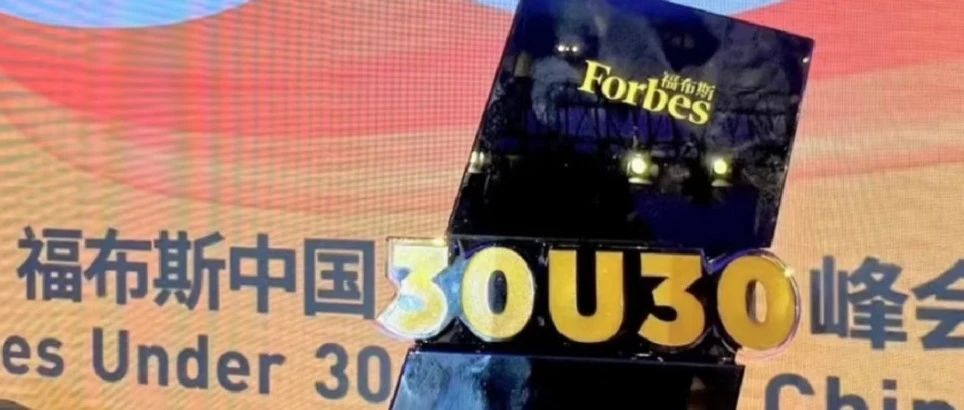
8万就能上福布斯?“30岁以下精英”如今成了中介批发生意
阿尔法工场研究院· 2025-05-07 11:57
Core Viewpoint - The article discusses the commercialization and questionable credibility of prestigious youth awards like Forbes' "30 Under 30" and the Forbes Global Alliance, highlighting how these accolades have become accessible through financial means rather than merit alone [4][6][30]. Group 1: Forbes "30 Under 30" and Its Implications - The "30 Under 30" list has expanded beyond its original intent, with many individuals claiming to be part of the list without meeting the actual criteria, leading to a dilution of its prestige [8][15]. - The selection process for the Forbes U30 list involves a nomination system that lacks stringent criteria, allowing for a wide range of individuals to be included, often based on social media presence rather than substantial achievements [18][20]. - There are claims that financial contributions can significantly increase the chances of being nominated, with some individuals reportedly paying for media coverage to enhance their visibility [20][22]. Group 2: Commercialization of Awards - The article reveals that the Forbes Global Alliance requires a membership fee of 88,000 yuan for entry, which raises questions about the integrity of such memberships being labeled as prestigious [30][31]. - The rise of intermediaries offering services to secure spots on these lists for a fee indicates a shift towards a pay-to-play model, undermining the original purpose of recognizing genuine talent [23][25]. - The commercialization of these awards has led to a perception that they are more about financial capability than actual accomplishments, with some individuals using these accolades as marketing tools [40][41]. Group 3: Broader Cultural Context - The phenomenon of young individuals achieving recognition through awards like Forbes U30 reflects a societal pressure to succeed at a young age, often leading to shortcuts and unethical practices [40][42]. - The article contrasts the aspirations of ordinary individuals with the seemingly unattainable achievements of those on these lists, highlighting a growing disconnect between societal expectations and reality [43].
AI 玩具创业者疯了:退货率30%,又遭遇卷王华强北
阿尔法工场研究院· 2025-05-07 11:57
Core Viewpoint - The article discusses the current state of the AI toy industry, highlighting the initial excitement and subsequent challenges faced by entrepreneurs in this space, particularly regarding product development and market acceptance [2][8][21]. Group 1: Market Trends - Over the past year, an increasing number of young individuals view "AI toy" entrepreneurship as a viable career path, with many expressing interest in creating AI toys for international markets [3][4]. - AI toys have gained significant attention at tech exhibitions, attracting large crowds and interest from both consumers and industry players [4][9]. Group 2: Product Development Challenges - Despite the influx of investment and talent from major tech companies, few teams have successfully launched market-ready products, with many facing delays due to unmet expectations in voice model development [8][19]. - The majority of AI plush toys currently available are priced around 400-500 yuan, focusing on basic functionalities like chatting and storytelling, but customer feedback indicates significant issues such as complex interactions and poor connectivity [8][12]. Group 3: Competitive Landscape - The emergence of numerous AI toy technology solution providers has intensified competition, with lower-cost products from manufacturers in Huaqiangbei quickly saturating the market, often at prices around 100 yuan [9][10][22]. - The rapid decrease in technical barriers for AI hardware development has led to a surge in new competitors, with many companies now able to produce AI toys at significantly lower costs [22][24]. Group 4: Future Outlook - The article suggests that the AI toy market is still in its early stages of product definition, with potential for future growth in "emotional technology" that focuses on enhancing companionship and interaction rather than just showcasing AI capabilities [24][25]. - Long-term success in the AI toy industry may depend on the ability to build strong brand identities and cultural content around products, which remains a significant challenge for many companies [25].