Z Potentials

Search documents
深度|被字节收购后再创业:硅谷100天,写在Aibrary正式上线前
Z Potentials· 2025-08-07 03:12
Core Viewpoint - The article discusses the challenges and opportunities in the AI startup landscape, emphasizing the need for a shift from traditional metrics like Product-Market Fit (PMF) to a focus on continuous value delivery and user outcomes in the AI tools sector [4][5][9]. Group 1: Product-Market Fit and Value Creation - The concept of PMF is being misused in the AI tools market, where subscription models do not equate to actual value realization for users [5][6]. - Many AI tools are currently catering to early adopters, leading to a potential revenue decline as user budgets stabilize [6]. - A new model of value creation is emerging, where continuous value delivery is essential for long-term user retention and growth [7]. Group 2: Outcome vs. Output - The traditional B2B model focuses on selling products, while the new paradigm emphasizes creating outcomes for customers [9]. - AI products should not just provide capabilities but should ensure users achieve tangible results, integrating customer success mechanisms into the product [9][10]. Group 3: AI Evaluation Systems - Finding PMF is just the beginning; the real challenge lies in building effective AI evaluation systems that understand user behavior and measure performance [10]. - The shift from a waterfall model to a discovery-based approach allows for rapid iteration and testing, enhancing collaboration and reducing development time [12][13]. Group 4: AI-Native Organizations - AI-native organizations are reshaping management paradigms, reducing the need for middle management and promoting a flatter organizational structure [14]. - The traditional management theories are becoming obsolete as AI tools enhance decision-making and execution efficiency [14]. Group 5: Human-AI Collaboration - The "1+N" model promotes collaboration between humans and multiple AI agents, enhancing productivity and efficiency [17]. - New roles are emerging within teams, such as "Product Owners" and "Infrastructure Builders," to better leverage AI capabilities [18]. Group 6: Lifelong Learning in the AI Era - The future of education is shifting from content delivery to feedback-driven learning, emphasizing continuous improvement and personal growth [22][25]. - The design of effective feedback mechanisms is crucial for creating a closed-loop learning system that fosters individual development [25]. Group 7: The Unique Value of Humans - In a world where AI can replicate knowledge and skills, the unique human perspective and creativity become invaluable [26]. - The ultimate goal of education should be to help individuals become unique and irreplaceable, leveraging their personal experiences and insights [26].


速递|OpenAI“造富海啸”:5000亿估值惊世一跃!员工持股锁定AI军团
Z Potentials· 2025-08-07 03:12
图片来源: Unsplash OpenAI 正就一项潜在股票出售计划进行早期谈判,该计划涉及以约 5000 亿美元估值向现任及前任员工出售股份,知情人士透露。这一估值意味着这家人 工智能领军企业的价值实现了巨大飞跃。 知情人士称,公司计划进行一笔价值数十亿美元的二次股票发售。消息人士表示,包括 Thrive Capital 在内的现有投资者已接洽 OpenAI ,有意购买部分员 工持股。 若交易达成, OpenAI 的账面估值将提升约三分之二。 此前在软银集团领投的 400 亿美元融资轮中,其估值已达 3000 亿美元,使其成为全球最大私营企业之一。 最新进展紧随上周消息 ——据知情人士透露,这家初创公司已从投资财团超额认购约五倍,提前完成了 400 亿美元融资中的第二期 83 亿美元募资。该人 士表示, OpenAI 成功提前锁定了这笔资金。 美国主要初创企业常通过协商员工股份出售来奖励和留住人才,同时吸引外部投资者。据知情人士透露,由山姆 ·奥特曼执掌的公司正试图利用投资者需 求,为员工提供反映公司增长流动性的机会。 近几个月来, OpenAI 多名研究团队成员被 Meta 挖走,后者正为其 " 超级智能 ...

速递|AI视频生成竞赛:Runway估值50亿融资5亿美元,Luma计划融资11亿美元
Z Potentials· 2025-08-07 03:12
Core Insights - The article discusses the fundraising efforts of AI startups like Runway and Luma AI, which are generating video content for Hollywood studios and amateur filmmakers, seeking significant capital injections to expand their operations [3][5]. Group 1: Runway's Fundraising and Valuation - Runway is negotiating to raise approximately $500 million at a pre-money valuation of at least $5 billion, reflecting a 67% increase from its previous funding round [3]. - The company has previously raised $545 million from investors including Google and Nvidia [4]. - If the new valuation is achieved, it would imply a valuation of 55 times its annualized revenue, which is higher than some AI application companies but lower than model developers like OpenAI [8]. Group 2: Revenue and Growth Projections - As of June, Runway's annualized revenue exceeded $90 million, up from a projected $70 million by the end of 2024 [7]. - Runway forecasts its annualized revenue to reach $265 million by the end of 2025, although achieving this target may be challenging given its current growth rate [8]. Group 3: Competitive Landscape - The video AI industry is becoming increasingly competitive, with startups like Runway and Luma competing against tech giants such as Google and OpenAI, which have released updated video generation models in the past nine months [10]. - Runway's software has been utilized in film productions, including "Everything Everywhere All at Once," and has established partnerships with major studios like Lionsgate [11]. Group 4: Market Expansion and New Applications - These startups are also exploring new markets, such as generating video game scenes and simulating robot training environments [6]. - Luma AI, a younger competitor, is seeking to raise at least $1.1 billion at a pre-money valuation of at least $3.2 billion, which is nearly 13 times its early 2024 valuation [5].

Z Potentials|对话AskSia:当大模型能答满分高考题,教育的未来该拼什么?
Z Potentials· 2025-08-06 02:40
AI大模型浪潮汹涌澎湃,00后创业者正一步步走上创业舞台,成为这场技术革新的主心骨。身处这股技术新浪潮之中的Celine和Kejin,两个刚走出校园里 的年轻人瞄准的是AI教育。 作为从应试教育中一路披荆斩棘走出来的Celine,选择做教育的原因简单直接。"我不喜欢应试教育的套路,"她坦率地说,"它忽略了学习的真正意义。"所 以她决定用创业的方式,通过AI能让教育更加贴近人性,让学习变得更有趣、更有效。创业的念头从Kejin在武汉大学读书期间就被种下了,大学期间,他 参加了创新创业班,身边充满了各种梦想和故事,像雷军这样的学长也影响着他。本科毕业后,Kejin放弃了心仪的名校offer,毅然决然投身AskSia创业, 想用AI改变教育。 2023年,当大模型答题正确率还停留在10%左右时,大多数人还难以想象AI与教育能走多远。甚至有人质疑这只是"捷径"或"作弊"的工具。那时,仍在校园 中的Celine和Kejin开始尝试从自己最熟悉的群体——大学生——出发,探索AI教育产品的新可能。AskSia的故事,正是从这样的探索开始。他们共同创立 的AskSia,目标不是做另一个拍照搜题工具或资料生成器,而是打造一个真 ...

深度|继宇树科技之后,人形机器人“千台俱乐部”再添猛将:松延动力半年订单破亿,两年六轮融资狂飙突进
Z Potentials· 2025-08-05 02:59
Core Viewpoint - The humanoid robot industry is witnessing significant developments, particularly with the rapid growth and funding of "Songyan Power," which has completed multiple financing rounds and achieved substantial commercial orders [2][3][4]. Group 1: Financing and Market Position - "Songyan Power" has successfully completed its A++ round of financing, raising several hundred million yuan, led by Jinpu Capital and supported by various notable institutions [2]. - The company has achieved a total of six financing rounds, indicating strong market confidence in its potential and capabilities [2]. - In the first half of this year, "Songyan Power" secured over 2,000 commercial orders, with a total contract value expected to exceed 100 million yuan, making it the second company in China to surpass the "thousand-unit sales" threshold [3]. Group 2: Commercialization Strategy - The founder, Jiang Zheyuan, has set clear goals for the company, aiming to ensure production and delivery efficiency, with a target of delivering 10,000 units next year [4]. - The company has established a new production base in Beijing to meet the increasing order volume, achieving a stable delivery capacity of several hundred units per month [4]. - "Songyan Power" strategically targets clear cash flow scenarios such as research education and cultural tourism before expanding into more complex areas like elderly care and industrial inspection [4]. Group 3: Team and Technical Advancements - The core team of "Songyan Power" consists of talented individuals from top universities, with founder Jiang Zheyuan being a notable figure who left his PhD program to pursue entrepreneurship [6][8]. - The company has made significant technological breakthroughs, including the ability to perform complex movements like continuous backflips and high-speed running, positioning itself at the forefront of the industry [6][8]. - "Songyan Power" recently showcased its capabilities by achieving second place in a humanoid robot marathon, demonstrating the robot's stability and reliability in complex terrains without external assistance [8]. Group 4: Data and Future Vision - The company emphasizes the importance of diverse real-world data for developing generalized embodied intelligence, which is crucial for the future of humanoid robots [10][11]. - "Songyan Power" is working on a data collection plan to build a future data ecosystem, aiming to address the challenges of insufficient data accumulation [11][12]. - The company envisions a future where the form of household robots will be determined by their mobility, navigation, and operational capabilities, rather than fixed shapes [13][14].

速递|10亿美金挑战DeepSeek,红杉、光速资本押注,Reflection AI开源模型守塔
Z Potentials· 2025-08-05 02:59
Core Insights - Reflection AI, a startup founded by former Google DeepMind researchers, is negotiating over $1 billion in funding to develop open-source large language models, competing with companies like DeepSeek, Mistral, and Meta [1] - The company has raised $130 million in venture capital from investors such as Lightspeed Venture Partners and Sequoia Capital, with a previous valuation of $545 million [1] - The founders aim to position Reflection AI as a leading provider of open-source AI models in the U.S., driven by the rising popularity of Chinese AI models [1] Funding and Valuation - Reflection AI is in discussions for a funding round exceeding $1 billion, with specific valuation details yet to be disclosed [1] - The company has successfully raised $130 million in its previous funding round, achieving a valuation of $545 million [1] Product Development - Reflection AI has been developing a programming assistant named Asimov, which analyzes enterprise data to generate relevant application code [3] - The product has launched a preview version and is beginning to generate revenue from enterprise clients [3] Market Dynamics - The demand for AI models in the Chinese market is driving Reflection AI's expansion into open-source AI model development [3] - Open-source models are seen as more cost-effective and flexible compared to proprietary models, allowing companies to fine-tune models for specific business processes [4] Competitive Landscape - As of now, no open-source models in the top 30 rankings on LMArena are developed by U.S. companies, highlighting a competitive gap [3] - Meta, a prominent open-source AI developer, is restructuring its AI business after its latest model underperformed compared to DeepSeek [2] Cost of AI Model Training - Training AI models is expensive, with OpenAI projecting to spend over $7 billion on model training this year, potentially reaching $17 billion by 2026 [5]

速递|全球科技四巨头在AI竞赛中,今年预计投入超3440亿美元
Z Potentials· 2025-08-04 05:51
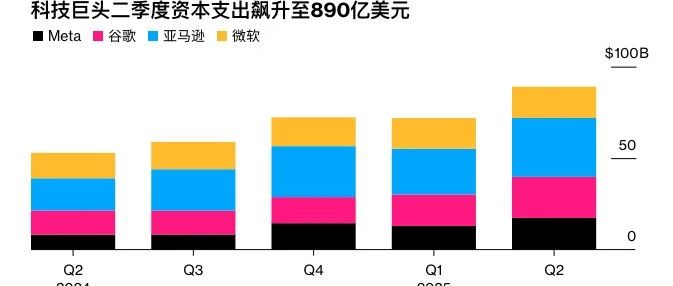
Core Insights - The article emphasizes the significant capital expenditures by major tech companies driven by the fear of missing out on AI advancements, with Microsoft, Amazon, Alphabet, and Meta collectively planning to spend over $344 billion this year [1][2][4]. Group 1: Capital Expenditure Plans - Microsoft set a record with $24.2 billion in capital expenditures last quarter and plans to invest over $30 billion this quarter [1]. - Amazon's spending reached $31.4 billion, nearly double from the same period last year, and it intends to maintain this investment level [1]. - Alphabet raised its capital expenditure guidance to $85 billion for the year [1]. - Meta adjusted its 2025 capital expenditure forecast upward, anticipating faster cost growth next year [1]. Group 2: AI Investment Focus - A significant portion of the capital expenditures will be allocated to data centers necessary for running AI models, with cloud computing capital expenditures reportedly doubled due to AI [2]. - Executives from these companies stressed the urgency of investing to gain a competitive edge in AI [4]. - Meta's CEO highlighted that strong performance in advertising was largely due to AI technology enhancing their advertising system's efficiency and revenue [5]. Group 3: Market Reactions - Meta's stock rose over 8% following its earnings report, attributed to exceeding sales expectations and optimistic revenue forecasts [5][7]. - In contrast, Amazon's stock fell by 8.1% after disappointing cloud sales, raising concerns about the value of its substantial spending [7]. - Alphabet's stock remained stable despite increasing its capital expenditure forecast by $10 billion, with the CEO stating that these investments are essential to meet customer demand [7]. Group 4: Competitive Landscape - Microsoft linked its AI investments directly to a 39% sales growth in its Azure cloud computing division, indicating a strong return on investment [7]. - Analysts noted that if Google wants to keep pace with competitors, it has no choice but to invest heavily in AI infrastructure and application development [7]. - Apple's capital expenditure plans, while smaller compared to its peers, still showed a nearly 45% increase to $9.47 billion in real estate, plant, and equipment investments, primarily driven by AI investments [7][8].




速递|OpenAI的“红色警报”成真?智谱AI上半年营收增长四倍
Z Potentials· 2025-08-04 05:51
Core Viewpoint - Zhipu AI, an artificial intelligence model developer based in Beijing, has experienced a remarkable revenue growth of four times in the first half of this year, attracting attention from OpenAI [2][3]. Business Performance - Zhipu AI's revenue last year was only $42 million, but the strong growth in the first half of this year indicates a rapid acceleration in AI applications within China [3]. - The release of the R1 model by DeepSeek in January has sparked significant interest from local governments and enterprises in utilizing AI [3]. - Zhipu AI is focusing on developing affordable models and commercial AI services to compete with American AI companies, as traditional enterprise clients in China have been reluctant to pay for software [3]. Market Expansion - The company is intensifying its efforts to expand into Southeast Asia and Africa, regions where Chinese companies like Huawei have already established a presence in telecommunications and critical infrastructure [4]. - Despite being placed on a trade blacklist by the U.S. government, which limits access to American technology, Zhipu AI continues to sell its models and services to U.S. clients, although attracting them has become more challenging [5][6]. Product Development - Zhipu AI is shifting its focus from merely selling AI models to providing services that help clients customize and integrate AI into their businesses [6]. - The company recently launched GLM-4.5, a new open-source large language model designed for AI applications, which can be deployed at a relatively low cost for enterprise and government clients [6]. Strategic Vision - The CEO of Zhipu AI believes that the AI wave presents significant opportunities for all countries, not just China and the U.S. [5]. - Zhipu AI aims to assist overseas clients in building their own AI capabilities, despite the challenges posed by U.S. restrictions [5][9]. - The company has raised over $1.5 billion since its establishment in 2019, with backing from state-owned funds and prominent venture capital firms [7].

深度|Perplexity CEO:为什么决定做Comet浏览器?我们需要自己的客户端,并控制我们自己的命运
Z Potentials· 2025-08-04 05:51
Core Viewpoint - Perplexity AI has developed the Comet browser to compete with Google and enhance user experience by integrating AI capabilities directly into the browsing process, aiming to provide a more personalized and efficient online experience [3][10][20]. Group 1: Development Motivation - The decision to create the Comet browser stemmed from the observation that most user queries are conducted through browser search bars, with Google handling approximately 15 billion queries daily, a significant portion of which comes from Chrome and Safari [3][4]. - The historical context of Google's rise, particularly through the Google Toolbar, illustrates the importance of controlling the browsing experience to avoid dependency on other platforms like Microsoft [4][7]. - The need for a dedicated client was emphasized due to challenges faced with existing browser extensions and the desire to maintain control over user data and experience [7][15]. Group 2: AI Integration and User Experience - Comet aims to leverage AI agents to perform complex tasks that traditionally require significant time and effort, such as conducting research across multiple platforms and managing schedules [8][9]. - The browser is designed to enhance user productivity by allowing AI to assist in everyday tasks, thereby providing a competitive edge for small business owners and individuals [9][19]. - The integration of AI within the browser is seen as a necessary evolution to keep pace with advancements in AI technology and user expectations [10][19]. Group 3: Competitive Landscape - Perplexity AI positions itself against Google by challenging the sustainability of Google's advertising model, suggesting that AI agents could disrupt traditional ad spending by providing more efficient alternatives for users [20][21]. - The company believes that Google's reliance on advertising revenue could be undermined as users increasingly turn to AI for decision-making, potentially reducing the effectiveness of Google AdWords [21][36]. - Perplexity AI's strategy focuses on creating a subscription-based model for AI services, which could provide a more stable revenue stream compared to ad-based models [36][39]. Group 4: Privacy and Data Management - Comet emphasizes user privacy by ensuring that data remains on the client side, with no sensitive information like passwords or credit card details being stored on external servers [15][40]. - The company advocates for a zero-retention policy, allowing users to control their data and delete any information they do not wish to retain [40][41]. - This approach contrasts with other AI services that may store user data on their servers, highlighting a commitment to user security and privacy [15][40]. Group 5: Future Vision and AI's Societal Impact - The long-term vision for Comet includes the potential for AI to filter out low-quality content and enhance the browsing experience by providing valuable insights and summaries [22][23]. - The company acknowledges the societal implications of AI, particularly the potential for job displacement, while also emphasizing the need for individuals to adapt and leverage AI to remain competitive in the workforce [43][44]. - Perplexity AI aims to empower users by providing tools that enhance productivity and free up time for personal pursuits, thereby redefining the relationship between humans and technology [43][44].

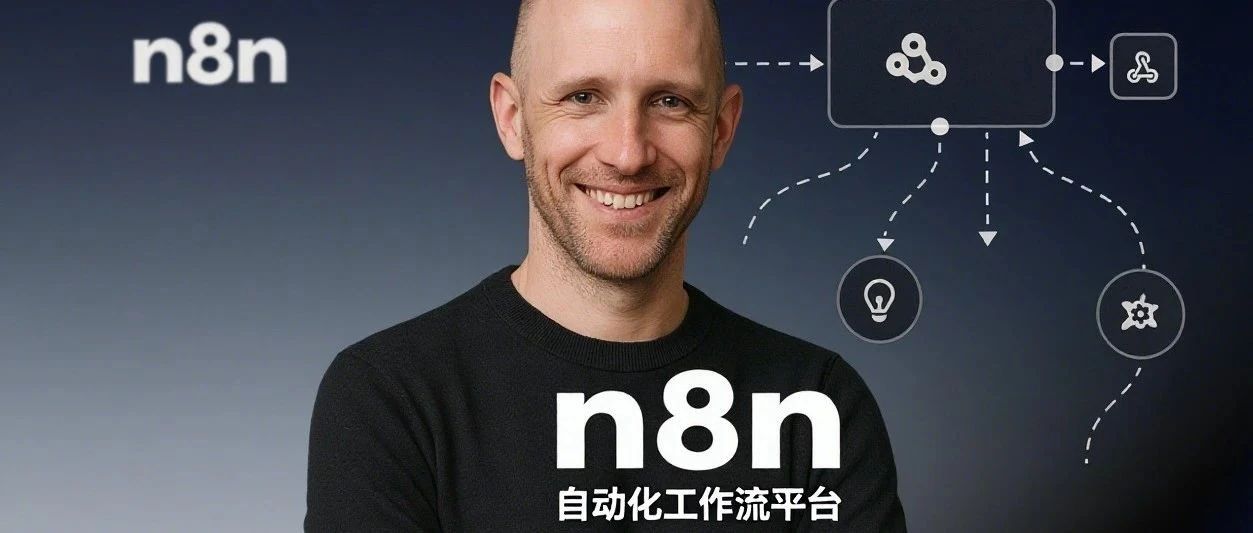
Z Product|2.7亿美金估值,n8n如何用“工作流+Agent”的混合范式撬动自动化市场?
Z Potentials· 2025-08-03 03:18
Core Insights - n8n is an open-source workflow automation platform founded in June 2019, aiming to address traditional automation pain points such as cost, privacy, and customization [3][5] - The platform has integrated over 400 third-party applications and has surpassed 230,000 active users, including over 3,000 enterprise users, with an ARR growth of 5 times [5][10] - n8n's unique pricing model charges based on complete workflow execution rather than per task, significantly reducing costs for complex automation [8][30] Group 1: Company Overview - n8n was launched in October 2019 and quickly gained traction, receiving 5,000 GitHub stars within five months and completing a $1.5 million seed round led by Sequoia [3][5] - The platform's user base has grown to over 230,000, with a code repository ranking in the top 50 on GitHub, reflecting its popularity and community engagement [5][10] - The company has raised nearly $80 million across three funding rounds, with the latest round in March 2025 raising €55 million, valuing the company at €250 million [41] Group 2: Product Features and Differentiation - n8n offers a "visual + code" low-code platform, allowing users to build workflows through drag-and-drop as well as custom code integration, ensuring data control and self-hosting capabilities [10][11] - The platform addresses three major pain points in the automation market: high costs associated with per-operation billing, data privacy concerns, and lack of customization [10][12] - n8n's community-driven approach has led to rapid development and contribution, with over 3,859 existing workflow templates available for users [8][36] Group 3: Market Position and Competitive Landscape - Unlike traditional SaaS platforms like Zapier, which charge based on task volume, n8n's model is based on workflow execution, making it more cost-effective for users with complex automation needs [15][30] - The platform is positioned as a "workflow + Agent" solution, gradually evolving to incorporate AI capabilities while maintaining a strong engineering focus [4][21] - n8n's target audience ranges from non-technical users to professional developers and mid-sized enterprises, catering to diverse automation needs [12][15] Group 4: Founder and Team - Jan Oberhauser, the founder and CEO of n8n, has a rich background in technology and entrepreneurship, previously working in visual effects and real-time collaboration applications [34][36] - The n8n team consists of around 80 members from diverse backgrounds, emphasizing transparency, trust, and community orientation [39][41] - The company culture is heavily influenced by its community-driven model, which is seen as a core competitive advantage [36][39]