中关村储能产业技术联盟

Search documents
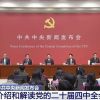
中共中央新闻发布会:加快新能源发展,推动氢能和核聚变能成为新的经济增长点
中关村储能产业技术联盟· 2025-10-24 11:55
Core Insights - The most significant outcome of the 20th Central Committee's Fourth Plenary Session is the approval of the "Suggestions on Formulating the 15th Five-Year Plan for National Economic and Social Development" [3] Group 1: Economic Development Strategy - The "15th Five-Year Plan" emphasizes the importance of innovation and nurturing new industries, with a target for the "three new" economy's contribution to GDP exceeding 18% by 2024 [5] - The plan aims to develop strategic emerging industries such as new energy, new materials, aerospace, and low-altitude economy, which are expected to create several trillion-yuan markets [5] - Future industries like quantum technology, biomanufacturing, hydrogen energy, nuclear fusion energy, brain-computer interfaces, embodied intelligence, and sixth-generation mobile communication are identified as new economic growth points [5]

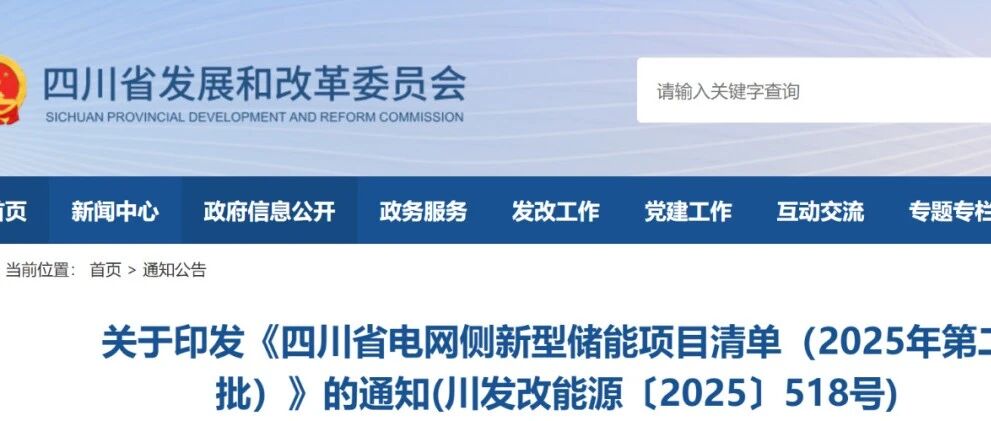
3.5GW/7.4GWh!四川2025年第二批电网侧储能项目清单发布
中关村储能产业技术联盟· 2025-10-24 11:55
Core Viewpoint - The Sichuan Provincial Development and Reform Commission has released a list of new energy storage projects for the grid side, including 35 projects with a total capacity of 3.45GW/7.425GWh, focusing on various technologies such as lithium iron phosphate and vanadium flow batteries [2][6]. Project Overview - The 35 projects are distributed across seven regions, with Chengdu having the highest number of projects (13) totaling 1.2GW/2.6GWh, followed by Dazhou, Luzhou, Meishan, and Zigong with four projects each [3]. - The projects involve a mix of state-owned enterprises, local enterprises, and private companies, with the highest number of applications coming from private firms [2][6]. Technology and Capacity - The majority of the projects utilize lithium iron phosphate technology, accounting for 2.3GW/4.6GWh, followed by vanadium flow technology at 300MW/1.2GWh, and mixed storage technologies [2][6]. - Specific project capacities include various configurations, such as 100MW/200MWh and 50MW/100MWh, with a focus on enhancing the power system's regulation capabilities [8][10]. Implementation and Management - The provincial authorities emphasize the need for project owners to accelerate implementation based on market principles and ensure safety and compliance during construction [6][7]. - Projects that do not commence substantial construction within one year of the notification will be removed from the project list [6].
AI如何重塑电力交易?飔合科技筑牢资产收益韧性
中关村储能产业技术联盟· 2025-10-23 09:27
Core Insights - The article emphasizes the rapid growth of renewable energy in China, with the share of renewable energy generation capacity increasing from approximately 40% at the beginning of the 14th Five-Year Plan to around 60% currently, indicating a significant shift towards green energy [4]. - The electricity market is evolving towards quantitative trading, with price prediction being a critical area of focus. The goal is to optimize models to identify certainties amidst uncertainties, thereby supporting risk-controlled returns [8]. Industry Developments - The integration of high proportions of renewable energy has led to a surge in dynamic data, exacerbating fragmentation due to differing provincial regulations. Traditional decision-making methods relying on static data are becoming inadequate [6]. - The reliance on big data and AI technologies to enhance operational efficiency in the electricity market has become a central topic of interest [7]. Technological Advancements - The SISI AI model developed by the company focuses on key areas such as price prediction, market analysis, and intelligent strategies, significantly improving business efficiency and trading accuracy [9]. - The company has been involved in AI prediction algorithm development since 2017, transitioning from linear regression to deep learning techniques by 2022, achieving high accuracy in price predictions across multiple provinces [8]. Company Overview - Established in 2022, the company focuses on the electricity market, providing efficient, transparent, and reliable trading products and services for renewable energy asset management [10]. - The company operates a trading center in Beijing, serving as a data, decision-making, and trading hub for the national market [10].

中国共产党第二十届中央委员会第四次全体会议公报:加快建设新型能源体系
中关村储能产业技术联盟· 2025-10-23 09:27
文 | 新华社 中国共产党第二十届中央委员会第四次全体会议公报 (2025年10月23日中国共产党第二十届中央委员会第四次全体会议通过) 中国共产党第二十届中央委员会第四次全体会议,于2025年10月20日至23日在北京举行。 出席这次全会的有,中央委员168人,候补中央委员147人。中央纪律检查委员会常务委员会委员和有关方面负责同志列席会议。党的二十大代表中 部分基层同志和专家学者也列席了会议。 全会由中央政治局主持。中央委员会总书记习近平作了重要讲话。 全会听取和讨论了习近平受中央政治局委托所作的工作报告, 审议通过了《中共中央关于制定国民经济和社会发展第十五个五年规划的建议》。 习 近平就《建议(讨论稿)》向全会作了说明。 全会充分肯定党的二十届三中全会以来中央政治局的工作。一致认为,中央政治局认真落实党的二十大和二十届历次全会精神,坚持稳中求进工作 总基调,完整准确全面贯彻新发展理念,统筹推进"五位一体"总体布局,协调推进"四个全面"战略布局,统筹国内国际两个大局,统筹发展和安 全,进一步全面深化改革,扎实推动高质量发展,推进社会主义民主法治建设,加强宣传思想文化工作,切实抓好民生保障和生态环境保护, ...

杭州微电网推广卡在哪?企业意愿不强
中关村储能产业技术联盟· 2025-10-23 07:23
Core Viewpoint - The construction of smart microgrids in Hangzhou faces challenges such as weak corporate willingness, a single profit model, an incomplete market mechanism, and significant safety risks [2][3][7]. Group 1: Current Status and Challenges - Hangzhou's power supply reliability exceeds 99.998%, ensuring sufficient electricity supply and quality, leading companies to prioritize economic returns when investing in photovoltaic and energy storage systems [2][7]. - The current microgrid users in Zhejiang primarily rely on photovoltaic "self-use and surplus electricity online" and energy storage "peak-valley price difference" to save energy costs [2][7]. - The existing market mechanism is not fully developed, with microgrid users mainly depending on limited profit models, and other services like frequency regulation and system backup are not included in market transactions [7][9]. Group 2: Supportive Policies and Technical Standards - National and provincial policies encourage the construction of smart microgrid projects, including the "Action Plan for Accelerating the Construction of a New Power System (2024-2027)" and local implementation opinions that provide financial incentives for photovoltaic projects [4][5]. - Since 2016, over twenty national standards related to microgrids have been released, with ongoing revisions and the establishment of a comprehensive standard system covering various aspects of microgrid development [5]. Group 3: Pilot Projects and Future Directions - Several pilot projects have been initiated in Hangzhou, including the West Lake Aerospace Zero Carbon Smart Energy Center and other integrated demonstration projects [6]. - Future work will focus on identifying key application scenarios, optimizing development strategies based on pilot project experiences, and enhancing policy coordination to support microgrid development [9][10].

宁德时代三季度储能出货约36GWh!587Ah 产品占比会逐步提升
中关村储能产业技术联盟· 2025-10-23 07:23
Core Viewpoint - The article highlights the strong financial performance of CATL in Q3 2025, with significant growth in revenue and net profit, driven by the increasing demand for energy storage and battery products in various sectors, including data centers and electric vehicles [2][9]. Financial Performance - In the first three quarters of 2025, CATL achieved a revenue of 283.07 billion yuan, a year-on-year increase of 9.28%, and a net profit attributable to shareholders of 49.03 billion yuan, up 36.2% [2]. - For Q3 2025 alone, the revenue was 104.2 billion yuan, reflecting a 12.9% year-on-year growth, while the net profit reached 18.55 billion yuan, marking a 41.21% increase [2][9]. Product and Market Strategy - CATL reported a total shipment of nearly 180 GWh for power and energy storage in Q3, with energy storage accounting for approximately 20% of the total [3][9]. - The company is accelerating the production of its 587Ah energy storage cells, which are designed to balance energy density, safety, and longevity, anticipating an increase in the product's market share [4][11]. Industry Trends - The energy storage business model is maturing, with growing economic viability and rapid demand growth both domestically and internationally, particularly driven by the expansion of AI data centers that require stable green power sources [5][11]. - The safety and reliability of large-scale energy storage systems are critical, with a focus on achieving a failure rate of PPB (parts per billion) to ensure long-term operational safety [6][11]. Inventory and Supply Chain - The increase in inventory by 8 billion yuan is attributed to the expansion of business scale and preparations for future deliveries, with inventory turnover days remaining stable, indicating normal operational flow [8][10]. Sodium Battery Development - CATL's sodium-ion battery has advantages in low-temperature performance, carbon footprint, and safety, and is being developed for various applications, including passenger and commercial vehicles [7][10].


用户侧储能装机环比下降,投资回报不确定性增加
中关村储能产业技术联盟· 2025-10-23 07:23
Core Insights - The user-side energy storage market shows a year-on-year increase in newly installed capacity, with a notable growth in the number and scale of registered projects compared to the same period last year [2][9][10] - High energy-consuming industries such as metallurgy, chemicals, and textiles account for over 70% of the installed capacity, indicating a strong demand for carbon reduction and supply assurance [5][10] - The peak-valley price difference in certain regions of Guangdong remains above 1 yuan/kWh, providing significant arbitrage opportunities for energy storage [12][16] User-side Energy Storage Data - In September, the newly installed user-side energy storage capacity reached 243.56 MW and 488.22 MWh, representing a year-on-year increase of 38% and 18%, respectively, but a month-on-month decrease of 41% and 46% [4][17] - The commercial application dominates the user-side energy storage market, accounting for over 95% of the installations, with high energy-consuming enterprises driving the demand [5][8] Regional Distribution - The newly installed projects are primarily concentrated in Jiangsu, Zhejiang, and Guangdong, with Jiangsu having the largest installed capacity, accounting for nearly half of the national total [8][10] - Zhejiang leads in the number of newly registered projects, while Guangdong shows significant growth in both project scale and number [9][10] Price and Investment Returns - The peak-valley price difference in 15 provinces exceeds 0.7 yuan/kWh, with seven provinces surpassing 1 yuan, particularly in Guangdong, which has a high potential for price arbitrage [12][16] - Frequent adjustments to time-of-use electricity pricing policies introduce uncertainty regarding investment returns for user-side energy storage projects [3][16] Overall Market Trends - The total newly installed capacity for new energy storage projects in September reached 3.08 GW and 9.08 GWh, with year-on-year increases of 166% and 200%, respectively [17] - The third quarter saw a total of 9.16 GW and 25.52 GWh of newly installed capacity, indicating a robust growth trajectory for the year [17]
走进中关村科技园区房山园暨储能产业链智能升级沙龙活动预通知
中关村储能产业技术联盟· 2025-10-23 07:23
Core Insights - The energy storage industry is transitioning from a phase of scale expansion to a critical period of high-quality development, focusing on production quality improvement, product design upgrades, and optimization of trading methods [2] - Technologies such as AI deep learning, digital twins, and industrial internet platforms are enhancing automation in battery cell assembly, optimizing system integration processes, and enabling real-time energy consumption monitoring [2] - The integration of big data, blockchain, and intelligent algorithms is facilitating real-time processing of trading data, digital asset rights confirmation, and market pricing model construction [2] Event Details - The event theme is "Cross-border Integration, Collaborative Evolution: Building a New Intelligent Landscape for the Entire Energy Storage Chain" [3] - Scheduled for October 31, 2025, at the Zhongguancun Science Park, Fangshan Garden [3] - The event will host approximately 80 participants [4] Organizational Structure - Organized by the Zhongguancun Energy Storage Industry Technology Alliance and the Fangshan District Science and Technology Committee [4] - Supported by companies such as Beijing Haibo Sichuang Technology Co., Ltd. and New Source Intelligent Storage Energy Development (Beijing) Co., Ltd. [4] Event Features - Policy support from the Beijing Municipal Science and Technology Commission and local government to provide service backing for the industry [4] - Discussions on the application of AI deep learning, digital twins, and industrial internet platforms in energy storage production, system integration, and energy consumption monitoring [4] - Exploration of intelligent management models for the entire lifecycle of energy storage products, enhancing safety, reliability, and resource utilization efficiency [4] Agenda Overview - The agenda includes various thematic reports from industry experts on topics such as intelligent manufacturing solutions for energy storage systems and the application of industrial AI in production assembly [5] - A factory visit is scheduled for invited participants [5] Registration Information - The event is free of charge, with participants responsible for their own transportation costs [6] - Interested parties are invited to register by October 26, 2025 [6]

367亿元!中国电建前三季度新签新型储能项目142个
中关村储能产业技术联盟· 2025-10-22 08:19
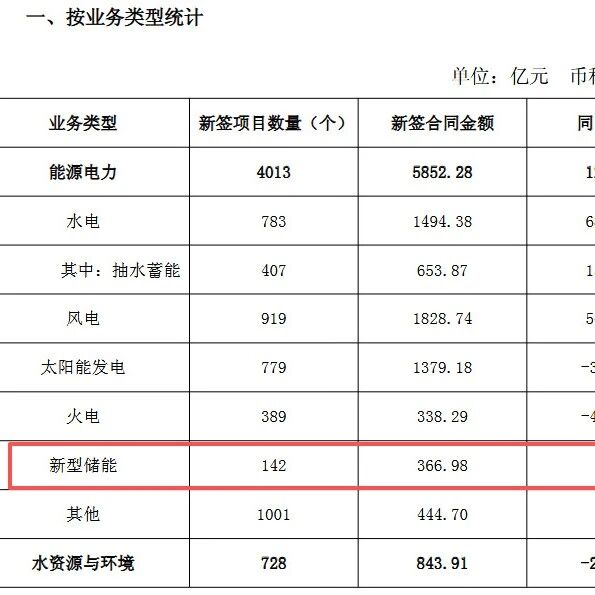
Core Insights - China Power Construction Corporation (CPCC) reported significant growth in new contracts for energy storage projects, with 142 new projects signed and a total contract value of 36.698 billion yuan for the period from January to September 2025 [2][3]. Group 1: Business Performance - The total number of new projects signed in the energy sector reached 4,013, with a contract value of 58.5228 billion yuan, reflecting a year-on-year increase of 12.89% [3]. - Hydropower projects saw 783 new contracts worth 14.9438 billion yuan, marking a substantial year-on-year increase of 68.82% [3]. - Wind power projects accounted for 919 new contracts valued at 18.2874 billion yuan, with a year-on-year growth of 54.67% [3]. - Solar power projects experienced a decline, with 779 new contracts worth 13.7918 billion yuan, down 33.36% year-on-year [3]. - Thermal power projects also faced a decrease, with 389 new contracts valued at 3.3829 billion yuan, down 46.25% year-on-year [3]. - New energy storage projects totaled 142, with a contract value of 36.698 billion yuan, indicating a stable performance [3]. Group 2: Major Contracts - Notable new energy storage projects include: - Hetian Bangjin 500MW/2000MWh independent energy storage project with a total contract value of 1.78 billion yuan [4]. - Uzbekistan Nukus Phase II 200MW+100MWh wind-storage project with a contract value of 1.539 billion yuan [4]. - Dengkou 1 million kW/4 million kWh power-side independent energy storage project with a contract value of 1.295 billion yuan [4]. - Tongliao Wanma New Energy Technology Co., Ltd. 500,000 kW/200,000 kWh grid-side storage project with a contract value of 1.108 billion yuan [4].

天津新能源上网电价新政:2026年全面入市,市场交易规则如何变?
中关村储能产业技术联盟· 2025-10-22 08:19
Core Viewpoint - The article discusses the implementation plan for the market-oriented reform of renewable energy grid prices in Tianjin, aiming to promote high-quality development of renewable energy and align with national policies on green and low-carbon development [8][9][29]. Group 1: Existing Projects - Mechanism electricity scale for existing projects is linked to the current guaranteed renewable energy electricity scale, with annual proportions set from the project's commissioning year until December 31, 2025 [3][15]. - The mechanism electricity price for existing projects will follow the current non-market electricity price policy, approximately at 0.3655 yuan per kilowatt-hour [4][15]. - The execution period for existing projects starts from January 1, 2026, and ends based on the project's lifespan or 20 years, whichever is earlier [4][15][39]. Group 2: Incremental Projects - The mechanism electricity scale for incremental projects will be appropriately linked to the existing non-market electricity ratio, with the possibility of applying for a scale lower than the total grid electricity [5][17]. - The bidding upper limit for mechanism electricity price is set at 0.32 yuan per kilowatt-hour [6][17]. - The execution period for incremental projects is initially set at 10 years [7][17]. Group 3: Market Participation and Pricing Mechanism - From January 1, 2026, all renewable energy projects in Tianjin will enter the electricity market, with prices determined through market transactions [10][33]. - Renewable energy projects can choose to participate directly in the market or act as price takers, with distributed projects allowed to aggregate for market participation [12][34]. - A sustainable pricing settlement mechanism will be established to address the volatility of renewable energy prices, providing compensation when market prices fall below the mechanism price [13][37]. Group 4: Differentiation of Projects - Projects commissioned before June 1, 2025, are classified as existing projects, while those commissioned on or after that date are classified as incremental projects [14][38]. - The mechanism electricity scale, price, and execution period for existing projects are designed to ensure stability in revenue [15][39]. - Incremental projects will undergo a bidding process to determine their mechanism electricity scale and price, with specific rules for participation and adjustments [21][41]. Group 5: User Impact - Residential and agricultural electricity prices will remain unaffected by the reform, while commercial users will benefit from increased competition and more electricity supply options [26].