国家能源局

Search documents
上海合作组织成员国元首理事会关于能源可持续发展的声明
国家能源局· 2025-09-02 03:50
Core Viewpoint - The Shanghai Cooperation Organization (SCO) member states emphasize the need for energy security and market stability while promoting a fair energy transition tailored to national conditions, aiming to enhance the well-being of their people and protect the environment [2][3]. Group 1: Practical Cooperation - Member states call for the expansion of practical cooperation in the energy sector, including the implementation of joint projects for new energy infrastructure and upgrading existing facilities based on mutual benefits [2]. Group 2: Technological Innovation - There is a push for cooperation in technological innovation, focusing on the development and application of advanced energy technologies, and encouraging research by SCO member state scientific institutions [4]. Group 3: Capacity Building - The member states aim to strengthen cooperation in professional talent training, creating favorable conditions for the exchange of experiences, knowledge, best practices, and technological achievements in the energy sector [5]. Group 4: High-Level Joint Research - The Chinese side has proposed the implementation of high-level joint research projects in the energy sector by 2030, including seminars and training programs, to address global energy agenda issues and promote a fair and sustainable energy development model [6].


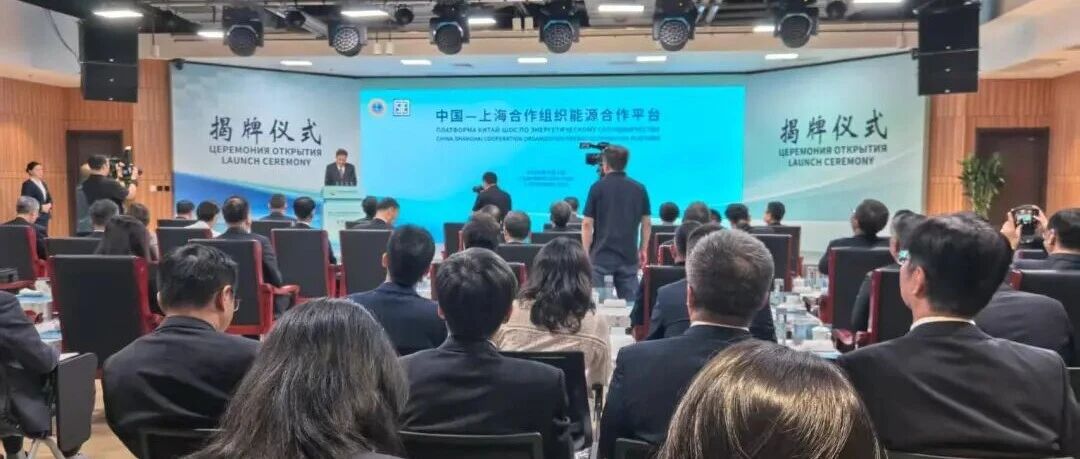
央视新闻丨中国-上海合作组织能源合作平台揭牌仪式在北京举办
国家能源局· 2025-09-02 03:14
Group 1 - The core viewpoint of the article highlights the establishment of the China-Shanghai Cooperation Organization (SCO) Energy Cooperation Platform, which aims to enhance regional energy collaboration and drive economic development [2] - Since taking over the rotating presidency of the SCO in July last year, Chinese enterprises have signed, commenced, and put into operation over 160 projects in the electricity and renewable energy sectors, and over 60 projects in oil and gas, with a total investment amounting to approximately 380 billion yuan [4] - The National Energy Administration plans to further leverage the platform to deepen practical exchanges and cooperation in the energy sector with SCO member states, expand new opportunities for clean energy collaboration, and enhance regional energy governance capabilities [4]
媒体报道丨我国海上稠油热采累计产量突破500万吨
国家能源局· 2025-09-02 01:49
Core Viewpoint - The article discusses the recent trends and developments in the industry, highlighting key statistics and potential growth areas for investment opportunities [2] Group 1 - The industry has seen a significant increase in revenue, with a reported growth of 15% year-over-year, reaching a total of 200 billion [2] - Market demand is shifting towards sustainable practices, with 60% of consumers indicating a preference for eco-friendly products [2] - Investment in technology has surged, with companies allocating 25% more budget towards digital transformation initiatives compared to the previous year [2] Group 2 - The competitive landscape is evolving, with the top five companies now holding 70% of the market share, indicating a trend towards consolidation [2] - Regulatory changes are impacting operational strategies, with new policies expected to reduce costs by 10% for compliant companies [2] - Emerging markets are becoming increasingly important, contributing to 30% of the overall growth in the sector [2]

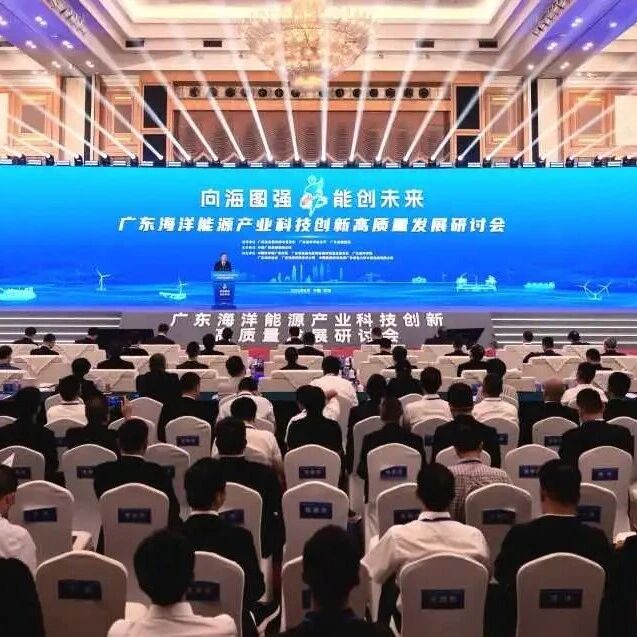
媒体报道丨广东海洋能源产业科技创新高质量发展研讨会在深圳举行
国家能源局· 2025-09-02 01:49
Core Viewpoint - The Guangdong Marine Energy Industry Technology Innovation High-Quality Development Seminar highlights Guangdong's achievements in marine energy development and aims to explore new technologies, models, and business formats for high-quality development in the marine energy sector [2][4]. Group 1: Government and Policy Support - Guangdong is accelerating the transformation of marine resource advantages into development advantages, aiming to inject new momentum into the high-quality development of the economy and society [4]. - The provincial government has made the construction of a strong marine province a key breakthrough in its strategic deployment [4]. Group 2: Industry Growth and Achievements - By 2024, Guangdong's marine production value is expected to exceed 2 trillion yuan, with traditional marine industries' added value reaching 680 billion yuan, a year-on-year increase of 7.5% [6]. - The emerging marine industries' added value is projected to reach 41.1 billion yuan, with a year-on-year growth of 8.3% [6]. - The offshore wind power industry has seen a tenfold increase in installed capacity, reaching 12.51 million kilowatts, making Guangdong the leader in the nation [6]. Group 3: Technological Innovations - Guangdong has established a comprehensive offshore wind power industry chain, including research, manufacturing, installation, operation, and testing [6]. - Innovative projects such as the "Fuxi No. 1" wind-fishing integration platform and the world's first 11,000-meter ultra-deepwater drilling vessel have been launched [8]. - The province is also pioneering in hydrogen energy with large-scale electrolysis projects and exploring synergies between offshore wind power and hydrogen production [8]. Group 4: Collaborative Initiatives - Several strategic cooperation projects were signed during the seminar, including partnerships for green ship fuel production and offshore wind power-driven hydrogen production technology [10]. - The establishment of the Greater Bay Area Green Ship Fuel Industry Innovation Consortium reflects Guangdong's leadership in energy technology innovation and industrial collaboration [10]. Group 5: Future Directions - The National Energy Administration emphasizes the importance of developing marine energy for energy security and transition, with Guangdong playing a crucial role in offshore wind power development [11]. - The focus on innovative development models such as "energy-fishing-tourism" and "wind-hydrogen-methanol-shipping" showcases the potential for a restructured marine industry ecosystem [9].

能源高质量发展专家谈丨规划引领“十四五”能源高质量发展迈出坚实步伐
国家能源局· 2025-09-01 10:29
Core Viewpoint - The article emphasizes the importance of the "14th Five-Year Plan" for high-quality energy development in China, highlighting the strategic direction set by the central government for energy transformation and the establishment of a modern energy system [2]. Group 1: Energy Supply Chain Resilience and Security - The "14th Five-Year Plan" focuses on enhancing energy security, emphasizing the need for domestic energy production and diversified supply to mitigate risks [3]. - Energy production capacity has significantly increased, with a total primary energy production growth exceeding 22%, reaching 4.98 billion tons of standard coal by 2024 [3]. - The annual crude oil production reached 213 million tons, and natural gas production increased by over 13 billion cubic meters annually, showcasing the resilience of the energy supply system [3]. Group 2: Green and Low-Carbon Energy Transition - The article highlights the necessity of a green energy transition as a response to climate change and a driver for sustainable development [4]. - Non-fossil energy consumption proportion is projected to reach 19.8% by 2024, an increase of 3.9 percentage points from 2020, while coal consumption proportion is expected to decrease to 53.2% [5]. - The energy sector has achieved a cumulative reduction in energy intensity of 11.6% over the first four years of the "14th Five-Year Plan" [5]. Group 3: Coordinated Development of Energy Across Regions - The article discusses the need for optimizing energy development layouts to address imbalances in energy supply and demand across urban and rural areas [7]. - The construction of large clean energy bases in the western regions has progressed, with the "West-to-East Power Transmission" capacity exceeding 300 million kilowatts [7]. - The establishment of the world's largest charging infrastructure system, with a total of 16.7 million facilities, supports the widespread adoption of electric vehicles [7]. Group 4: Modernization of the Energy Industry Chain - The article stresses the importance of innovation in enhancing the energy industry's modernization and competitiveness [8]. - China has achieved significant advancements in nuclear power technology and is a leading global supplier of photovoltaic components and wind power key parts [9]. - The energy sector has made breakthroughs in unconventional oil and gas exploration and development, contributing to the modernization of the energy industry [9]. Group 5: Continuous Release of Energy High-Quality Development Vitality - The article outlines the need for deepening energy market reforms to stimulate market vitality and establish a modern energy market structure [10]. - The implementation of the Energy Law has strengthened the legal foundation for energy development, with over 60% of electricity consumption now determined by market transactions [11]. - New energy business models and technologies, such as microgrids and virtual power plants, are emerging, promoting the transition to a new energy system [11]. Group 6: Expanding High-Level Energy Opening-Up - The article emphasizes the importance of international cooperation in energy to enhance global energy governance [12]. - China's energy imports remain diversified and stable, with significant international cooperation projects established in over 100 countries [13]. - The country has strengthened its influence in global energy governance, participating in key international energy meetings and establishing regional energy cooperation platforms [13]. Conclusion - The "15th Five-Year Plan" is positioned as a critical period for achieving socialist modernization and initiating the construction of a new energy system, with a focus on high-quality energy development [14].

习近平在“上海合作组织+”会议上的讲话(全文)
国家能源局· 2025-09-01 09:36
Core Viewpoint - The article emphasizes the importance of enhancing global governance through cooperation, equality, and multilateralism, particularly in the context of the Shanghai Cooperation Organization (SCO) [2][3][4]. Group 1: Global Governance Initiatives - The proposal for a more just and equitable global governance system is highlighted, advocating for equal participation and decision-making for all countries regardless of their size or power [2][3]. - The need to adhere to international law and principles, ensuring that international rules are applied uniformly without double standards, is stressed [2][3]. - The promotion of multilateralism and the strengthening of the United Nations' role in global governance are emphasized, opposing unilateral actions [3][4]. Group 2: Economic Cooperation and Development - The article outlines China's commitment to sharing market opportunities and implementing high-quality economic cooperation initiatives with SCO member states [5]. - Plans for establishing cooperation platforms in energy, green industries, and digital economy are mentioned, along with specific projects in renewable energy [5]. - The importance of promoting inclusive economic globalization and regional cooperation is reiterated, with a focus on dismantling barriers and fostering integration [4][5]. Group 3: Cultural and Humanitarian Initiatives - The article discusses the significance of cultural exchanges and mutual understanding among SCO member states, aiming to foster harmonious coexistence [5][6]. - Humanitarian efforts, such as medical assistance and health screenings for member countries, are outlined as part of the commitment to shared values [5][6]. Group 4: Commitment to Justice and Fairness - The article calls for collective action to uphold international fairness and justice, opposing hegemonism and advocating for true multilateralism [6]. - Support for expanding cooperation with various multilateral mechanisms to maintain international economic order and improve global governance is expressed [6].

中国—上海合作组织国家能源合作交出亮眼“成绩单”
国家能源局· 2025-09-01 07:25
Core Viewpoint - China, during its presidency of the Shanghai Cooperation Organization (SCO), has emphasized practical cooperation in the energy sector, leading to significant multilateral and bilateral exchanges among SCO member states and achieving notable energy cooperation outcomes [2][5]. Group 1: International Energy Cooperation - The SCO Energy Ministers' meeting held in Ningbo, Zhejiang, on June 26-27, 2025, saw participation from representatives of nearly 20 SCO countries, marking a significant breakthrough in the "SCO+" energy cooperation mechanism [4]. - The meeting resulted in the release of a promotional video showcasing major achievements in regional energy cooperation and the "China-SCO Renewable Energy Cooperation Report 2024," which outlines the current status and future prospects of renewable energy collaboration [4]. Group 2: Project Signings and Financials - During the presidency, China engaged in 163 electricity and renewable energy projects with SCO countries, with a total signed amount exceeding 330 billion RMB, and a total installed capacity of over 77 GW [6]. - The projects included 61 oil and gas projects and 5 coal projects, with investments in oil, gas, and coal amounting to approximately 44.5 billion RMB, establishing a comprehensive "signing-starting-production" framework [6]. Group 3: Renewable Energy Development - By the end of 2024, the installed capacity of renewable energy generation in SCO countries reached 2.31 billion kW, which is 14.5 times that at the organization's inception, accounting for about 50% of the global total [8]. - In 2024, SCO countries added 42 million kW of renewable energy capacity, representing 72% of the global new installations, with China contributing 96 million kW to cooperative projects [8].
习近平在上海合作组织成员国元首理事会第二十五次会议上的讲话(全文)
国家能源局· 2025-09-01 07:09
Core Viewpoint - The Shanghai Cooperation Organization (SCO) has achieved significant milestones over the past 24 years by adhering to the "Shanghai Spirit" of mutual trust, mutual benefit, equality, consultation, respect for diverse civilizations, and seeking common development [3][4]. Group 1: Achievements and Contributions - The SCO has established a military trust mechanism in border areas, promoting cooperation and friendship among member states [3]. - The organization has successfully initiated the "Belt and Road" cooperation, with a trade volume exceeding $2.3 trillion ahead of schedule, and has developed a comprehensive international transportation network of nearly 14,000 kilometers [3]. - The SCO has created a long-term friendly cooperation treaty, enhancing people-to-people exchanges and cooperation across various sectors, including local governments, media, think tanks, women, and youth [3]. Group 2: Future Directions - The SCO aims to maintain unity while respecting differences among member states, enhancing strategic communication, and collectively shouldering the responsibility for regional peace and development [5][6]. - The organization emphasizes mutual benefit and win-win cooperation, focusing on high-quality development strategies, trade facilitation, and collaboration in energy, infrastructure, green industries, digital economy, and technology innovation [5][6]. - The SCO promotes openness and inclusivity, encouraging cultural exchanges and economic cooperation among member states to create a harmonious and prosperous environment [6]. Group 3: China's Role and Initiatives - China has invested over $84 billion in SCO member states and has achieved a bilateral trade volume exceeding $500 billion annually [8]. - The country plans to implement 100 "small but beautiful" livelihood projects in member states, provide 2 billion RMB in aid, and double the number of scholarships for SCO students [8]. - China aims to establish 10 "Luban Workshops" in member countries over the next five years, offering training opportunities for 10,000 individuals [8].

习近平:弘扬伟大抗战精神,向着中华民族伟大复兴的光辉彼岸奋勇前进
国家能源局· 2025-08-31 14:13
Core Viewpoint - The article emphasizes the significance of the Chinese People's War of Resistance Against Japanese Aggression as a pivotal moment in the history of the Chinese nation, highlighting its role in achieving national independence and contributing to global peace efforts [3][4][6]. Group 1 - The Chinese People's War of Resistance Against Japanese Aggression is portrayed as a monumental chapter in the struggle for independence and freedom, showcasing the resilience and unity of the Chinese people [3][4][8]. - The war opened the Eastern Front of the global anti-fascist struggle, marking a significant contribution to the world peace movement [3][8]. - The sacrifices made by the Chinese people during the war, estimated at over 35 million casualties, are underscored as a testament to their commitment to national survival and global peace [38][44]. Group 2 - The article highlights the role of the Communist Party of China as a central force in the victory of the war, emphasizing its leadership in uniting various factions and maintaining a consistent anti-invasion stance [10][11]. - The spirit of resistance and patriotism developed during the war is described as a valuable cultural asset that continues to inspire the Chinese people in their pursuit of national rejuvenation [12][23]. Group 3 - The article discusses the historical context of Japanese militarism and its aggressive actions, including the Nanjing Massacre, which resulted in the deaths of approximately 300,000 Chinese civilians [14][15]. - The importance of remembering and educating future generations about the war and its lessons is emphasized, advocating for a collective memory that honors the sacrifices made [19][36]. Group 4 - The article calls for the promotion of the great spirit of resistance and patriotism through various educational and commemorative activities, aiming to strengthen national identity and unity [19][20]. - It stresses the need for international recognition of the Chinese People's War of Resistance Against Japanese Aggression's role in the global anti-fascist war, advocating for collaborative historical research and narrative sharing [19][20].

焦点访谈丨非凡“十四五” 走出能源高质量发展之路
国家能源局· 2025-08-31 13:26
Core Viewpoint - The article discusses the recent trends and developments in the industry, highlighting key statistics and potential growth areas for companies involved in this sector [2] Group 1 - The industry has seen a significant increase in revenue, with a reported growth of 15% year-over-year, reaching a total of 200 billion [2] - Companies are focusing on innovation and technology integration to enhance operational efficiency and customer engagement [2] - Market competition is intensifying, with new entrants disrupting traditional business models and forcing established companies to adapt [2] Group 2 - Consumer demand is shifting towards sustainable and eco-friendly products, prompting companies to adjust their strategies accordingly [2] - Investment in research and development has increased by 20%, indicating a strong commitment to future growth and adaptation [2] - Regulatory changes are impacting operational practices, requiring companies to stay compliant while maintaining profitability [2]