水皮More

Search documents
下马威 | 谈股论金
水皮More· 2026-02-13 09:27
Market Overview - A-shares experienced a collective decline on the last trading day before the holiday, with the Shanghai Composite Index falling by 1.26% to 4082.07 points, the Shenzhen Component Index down 1.28% to 14100.19 points, and the ChiNext Index decreasing by 1.57% to 3275.96 points [3] - The trading volume in the Shanghai and Shenzhen markets was only 1.9991 trillion, a decrease of 161.9 billion compared to the previous day [3] Impact of External Markets - The significant drop in U.S. stocks, driven by fears surrounding AI, led to a negative sentiment in the A-share market, with major institutions not stepping in to support the market [5] - The catalyst for the U.S. market decline was a small logistics company's announcement of an AI software that could quadruple delivery efficiency, causing a sell-off in the logistics sector [5] AI Technology Concerns - The market is currently grappling with the unpredictable impacts of AI technology across various industries, leading to a preemptive risk-averse behavior among investors [5] - While AI is expected to enhance productivity and reduce costs, it poses potential threats to certain intermediary sectors, although it is not expected to cause catastrophic damage [6] A-share Market Dynamics - The A-share market has seen excessive speculation around AI-related stocks, with a notable example being the market's initial positive interpretation of ByteDance's Seedance 2.0, which may actually lower industry barriers and reduce future funding and labor needs in the film industry [6] - The market's reaction to AI advancements reflects a duality, recognizing both the productivity benefits and the potential disruptions, particularly concerning employment [6] Trading Data Insights - On the trading day, 3687 stocks declined while only 1463 stocks rose, with a median market drop of 0.77% and a net outflow of 69 billion from major funds [7] - The decline was primarily driven by heavyweight stocks in sectors like coal, electricity, and major banks, which collectively contributed to the market downturn [7] Future Outlook - The Hang Seng Technology Index showed a smaller decline than expected, indicating potential support levels for tech stocks despite the broader market's challenges [9] - As AI applications continue to gain traction and public acceptance, there is potential for a rebound in the Hang Seng Technology Index, warranting further observation [9]


声声慢 | 谈股论金
水皮More· 2026-02-12 10:11
Market Overview - A-shares showed mixed performance today, with the Shanghai Composite Index slightly up by 0.05% closing at 4134.02 points, while the Shenzhen Component rose by 0.86% to 14283.00 points, and the ChiNext Index increased by 1.32% to 3328.06 points [3] - The total trading volume in the Shanghai and Shenzhen markets reached 2.16 trillion, an increase of 159.8 billion compared to the previous day [3] Sector Performance - Technology stocks were the main driving force in today's market, with notable performances from companies like Cambrian (up nearly 4%) and CATL (up 2.14%) [4] - The software sector in the U.S. has seen a significant decline of nearly 40% this year, a trend that is also affecting Hong Kong and A-share markets, although A-shares have not yet experienced panic selling [5] - The consumer sector, including film, dining, and food and beverage, is experiencing a normal pullback after a pre-holiday surge [8] Individual Stock Movements - The stock performance of "Yizhongtian" showed significant divergence, with Tianfu Communication rising by approximately 14%, while New Yisheng and Zhongji Xuchuang faced declines [4] - The recent listing of "Dian Ke Lantian," touted as the "first commercial aerospace stock," has seen its price drop from 80.88 yuan to 57.5 yuan over three days, indicating a significant short-term adjustment [8] Capital Flow - The market saw a net outflow of approximately 7 billion from main funds, with fluctuations in northbound capital, which showed signs of buying at lower levels but ultimately ended with an outflow of 1.8 billion [7] - The number of stocks rising versus falling was notably uneven, with 2038 stocks up and 3129 down, indicating a broader market correction [7] Conclusion - The overall market sentiment remains cautious, with technology stocks leading the charge while other sectors, particularly large financials and consumer stocks, are under pressure [7][8]

弱平衡 | 谈股论金
水皮More· 2026-02-11 09:13
Market Overview - The A-share market showed mixed performance today, with the Shanghai Composite Index rising by 0.09% to close at 4131.99 points, while the Shenzhen Component Index fell by 0.35% to 14160.93 points, and the ChiNext Index dropped by 1.08% to 3284.74 points [3] - The total trading volume in the Shanghai and Shenzhen markets was 200.12 billion, a decrease of 123.7 billion compared to the previous day [3] Stock Performance - ST Lifan, facing mandatory delisting due to continuous financial fraud, experienced a remarkable seven consecutive trading days of gains, with its stock price soaring from 0.86 yuan to 3.33 yuan per share, despite regulatory interventions [4] - The stock exhibited extreme volatility, with a trading range of 34% and a significant drop of 14% before closing up by 5% [4] Market Trends - The phenomenon of speculative trading is not isolated, as micro-cap stocks have shown a tendency to reach new highs despite regulatory measures aimed at cooling the market. This has led to a wave of redemptions in broad-based ETFs, negatively impacting blue-chip stocks [5] - The overall market showed slight fluctuations, with approximately 3000 stocks declining and 2000 stocks rising, while the total trading volume further shrank to about 1.98 trillion [6] Sector Analysis - The metal and petrochemical sectors performed strongly today, contributing to the Shanghai Composite Index's better performance compared to the Shenzhen Component Index. Conversely, sectors like cultural media and aerospace saw declines [6] - Within the financial sector, banks provided support, while the insurance sector became a primary shorting target, affecting overall market trends [6] Hong Kong Market - The Hang Seng Index and the Hang Seng Tech Index showed clearer trends, with the Hang Seng Index rising by 0.25% and the Hang Seng Tech Index increasing by 0.8%, driven by strong performance in tech stocks [7] - Overall, investor trading sentiment is weak as the market approaches the Chinese New Year holiday, with many investors opting to hold stocks rather than engage in active trading [7]

字节,恒生科技的大空头吗?
水皮More· 2026-02-11 09:13
Core Viewpoint - The article discusses the significant impact of ByteDance's new AI video tool, Seedance 2.0, on the competitive landscape of the internet and e-commerce sectors, particularly affecting companies like Kuaishou, Tencent, and Alibaba [4][6][10]. Group 1: Impact on Competitors - Seedance 2.0 has been described as a superior AI video tool that challenges Kuaishou's valuation and market position, which had been based on its leadership in AI applications [9]. - The tool's advantages include lower video generation costs, improved character consistency, and multi-shot storytelling capabilities, making it more user-friendly and efficient compared to previous AI video generation methods [9]. - Kuaishou's stock price, which had risen based on its AI leadership, faced a decline following the launch of Seedance 2.0, indicating a shift in market dynamics [6][9]. Group 2: ByteDance's Strategy - ByteDance's approach focuses on changing the game rules rather than direct confrontations, leading to a gradual erosion of competitors' market share without them realizing it [12]. - The company has successfully disrupted traditional advertising and e-commerce models, with its advertising revenue now leading the industry and its live-streaming e-commerce rapidly gaining market share [12][14]. - ByteDance's AI advancements are positioned to create significant pressure on the valuations of other companies within the Hang Seng Technology Index, which are already feeling the impact of its growth [14]. Group 3: Broader Industry Implications - The article suggests that the ongoing AI wave, led by ByteDance, is a critical variable that could reshape the entire internet landscape, affecting various sectors including short videos, advertising, e-commerce, and local services [14]. - The upcoming Spring Festival Gala, featuring AI products, may further integrate AI into mainstream usage, potentially leading to a broader revaluation of companies in the sector [15].

胜负手 | 谈股论金
水皮More· 2026-02-10 09:26
Market Overview - A-shares experienced a slight fluctuation today, with the Shanghai Composite Index rising by 0.13% to close at 4128.37 points, and the Shenzhen Component Index increasing by 0.02% to 14210.63 points. However, the ChiNext Index fell by 0.37% to 3320.54 points. The total trading volume in the Shanghai and Shenzhen markets was 21,249 billion, a decrease of 1,455 billion compared to the previous day [3][4]. Key Market Trends - The core focus of the market today was on the film and television sector, driven by two main factors: the optimistic expectations for the Spring Festival box office and the launch of ByteDance's Seedance 2.0 software, which has made significant advancements in video production technology. The market anticipates that strong box office performance could lead to further gains in the sector post-holiday, while underperformance could result in substantial corrections [4][5]. - The cultural media, gaming, education, internet services, and software development sectors saw significant gains, aligning with market expectations for a surge in AI applications around the holiday period [5]. Sector Performance - The precious metals and new energy sectors experienced notable adjustments. The precious metals sector's decline is attributed to profit-taking following recent price rebounds in gold and silver. The new energy sector, including solar, energy metals, batteries, and wind power, also saw weakness after previous gains, particularly following a short-term surge in the solar sector [6]. - The financial sector showed mixed performance, with the banking sector rising by 0.20%, the securities sector increasing by 0.38%, and the insurance sector declining by 0.43%. This indicates that the financial sector remains a potential stabilizing force in the market [6]. Technology Sector Insights - There was a significant divergence within the technology sector, with some stocks like Tianfu Communication reaching new highs, while others like New Yi Sheng showed downward trends. This divergence is largely due to changes in order dynamics within the chip industry, leading to increased caution among investors [7]. - The Hong Kong market also reflected a similar trend, with the Hang Seng Index and Hang Seng Technology Index experiencing gains followed by declines, primarily influenced by the performance of major stocks like Tencent Holdings, which fell by nearly 1.88% [7]. Competitive Landscape - The ongoing "red envelope war" among major internet companies is intensifying, with platforms competing for AI traffic. Stock performance among these companies has shown clear differentiation, with Alibaba rising by 1.45% and Baidu by approximately 0.9%. This competition is not just a short-term marketing strategy but is expected to significantly impact the future market positioning and industry landscape of these platforms [8].

伴手礼 | 谈股论金
水皮More· 2026-02-09 09:47
Market Overview - A-shares experienced a collective rise today, with the Shanghai Composite Index recovering the 4100-point mark, closing at 4123.09 points, up 1.41% [3] - The Shenzhen Component Index rose by 2.17% to 14208.44 points, while the ChiNext Index increased by 2.98% to 3332.77 points [3] - The total trading volume in the Shanghai and Shenzhen markets reached 2.27 trillion yuan, an increase of 106.7 billion yuan compared to the previous trading day [3] Sector Performance - The market saw a broad-based rally, with approximately 4400 stocks rising and only about 700 declining, indicating a strong upward trend [4] - The technology sector was the main focus, driven by significant gains in the Nasdaq index and a notable 8% increase in Nvidia's stock, leading to a surge in related A-share stocks [4] - Notable performers included Tianfu Communication, which saw an intraday increase of 20%, and semiconductor stocks, which generally rose around 4% [4] Adjustments in Other Sectors - Sectors that previously attracted high attention, such as mining, energy metals, and traditional Chinese medicine, showed weaker performance today [5] - Banking stocks rose only 0.58%, while securities stocks increased by 0.93%, underperforming the broader market [5] - The insurance sector stood out within the financial sector, with an intraday increase of about 2% [5] Market Sentiment and Future Outlook - The market is exhibiting a festive atmosphere ahead of the Spring Festival, with expectations for a "red envelope" market rally being fulfilled [6] - The recovery in the market is attributed to prior adjustments that improved the valuation of key stocks, attracting long-term and institutional investors [6] - The Shanghai Composite Index's ability to maintain above 4100 points is crucial for future trends, with expectations of a stable upward movement rather than significant volatility [6] Investment Strategy - Future attention should be on the potential rotation opportunities within large-cap stocks, which may present more certain short-term opportunities compared to technology stocks [7] - The technology sector faces performance verification pressures as the earnings disclosure period approaches, with concerns about the mismatch between investment and returns [7] - The core of A-share investment strategy for 2026 will focus on managing market rhythm effectively [7]

无所畏 | 谈股论金
水皮More· 2026-02-06 09:36
Market Overview - A-shares experienced a collective pullback today, with the Shanghai Composite Index down 0.25% closing at 4065.58 points, the Shenzhen Component down 0.33% at 13906.73 points, and the ChiNext Index down 0.73% at 3236.46 points [3][4] - The trading volume in the Shanghai and Shenzhen markets was 2.16 trillion yuan, a slight decrease of 309 billion yuan compared to the previous day [3][4] External Influences - The US stock market saw significant declines, particularly in the Nasdaq, which heavily impacted the Asia-Pacific markets, leading to a weak opening for both A-shares and Hong Kong stocks [4][5] - Despite the initial drop, there was a rebound as funds entered the market for bargain hunting, with A-shares showing resilience against external shocks [4] Sector Performance - The petrochemical sector, represented by the "three barrels of oil," performed well, contributing significantly to the Shanghai Composite Index, with companies like Sinopec, PetroChina, and CNOOC leading the gains [4] - Conversely, the consumer sector, particularly represented by the "two bottles of liquor," faced notable declines, with significant adjustments in commercial retail, liquor, tourism, and other related industries [4] Individual Stock Movements - The semiconductor sector experienced a maximum intraday drop of approximately 1.7%, closing down 1.1%, while the commercial aerospace sector saw a maximum drop of 2%, closing down around 1.7% [5] - Major financial sectors, including banks, insurance, and securities, attempted to stabilize the market but showed limited upward momentum due to insufficient capital inflow [5] Earnings Reports and Market Sentiment - Recent earnings reports from major tech companies, despite exceeding expectations, raised concerns about their increased AI-related capital expenditures and whether these would yield anticipated returns [6] - The market reaction to these earnings reports has been described as an overreaction, with fears of "zero-sum" impacts on tech giants leading to significant pressure on indices like the Hang Seng [6]

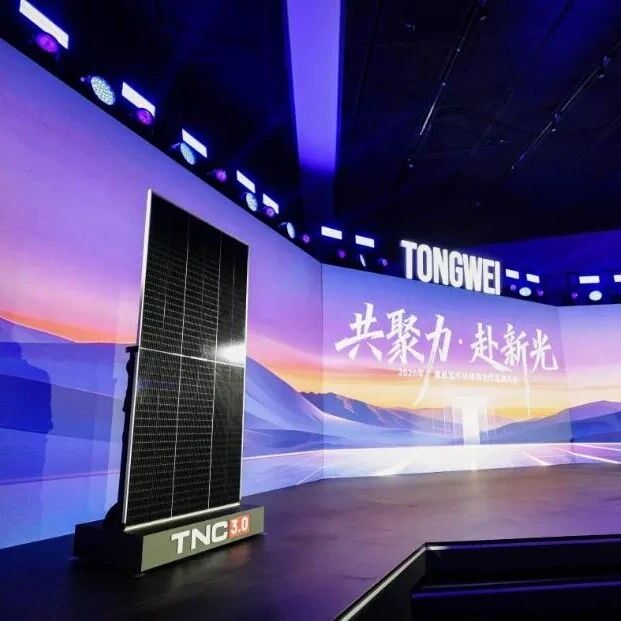
TNC 3.0推出 通威为光储协同时代提供技术范本
水皮More· 2026-02-06 09:36
Core Viewpoint - The article discusses the evolving landscape of the photovoltaic (PV) industry, emphasizing the importance of integrating energy storage with solar power systems to enhance project value and long-term returns. The introduction of Tongwei's TNC 3.0 series solar modules is highlighted as a response to market demands for higher efficiency and reliability in energy generation [2][4][13]. Group 1: Industry Trends - By 2025, China's cumulative photovoltaic installed capacity is expected to reach 315 GW, with new energy storage installations growing by 85% year-on-year to 144.7 GW [2]. - The era of merely pursuing installation scale is ending; future success will depend on the effective integration of photovoltaic systems with energy storage to achieve greater system benefits [2]. - The industry consensus is shifting towards the necessity of energy storage for project value enhancement and the selection of high-quality, adaptable solar modules for securing long-term returns [2]. Group 2: Tongwei TNC 3.0 Module Features - The TNC 3.0 series features a maximum power output of 770W and an efficiency of 24.8%, supported by a comprehensive reliability solution that includes high power output, high bifaciality, and improved performance in high-temperature and low-light conditions [4][6]. - The TNC 3.0 modules utilize a 360° passivated cell technology, achieving over 26.3% efficiency, which enhances energy output and reduces losses [6]. - The design includes a four-slice structure that minimizes micro-damage and optimizes electrical performance, resulting in a temperature coefficient of -0.26%/°C, ensuring stable power output even in high-temperature conditions [6][11]. Group 3: Performance Enhancements - The TNC 3.0 modules demonstrate significant advantages in energy generation across various climates, with performance improvements of 1.23% to 1.90% compared to conventional half-cell TOPCon modules [6]. - The bifaciality of the TNC 3.0 modules reaches 85±5%, enhancing energy capture in reflective environments such as sandy or snowy areas, which is crucial for maximizing overall system efficiency [8][9]. - The modules are designed to maintain high power output even under low light conditions, addressing the challenge of energy generation during peak pricing periods [10]. Group 4: Reliability and Long-term Performance - The TNC 3.0 modules incorporate a dual-channel circuit design that mitigates the impact of shading or faults, thereby reducing energy loss and enhancing performance under non-ideal conditions [11]. - The four-slice design distributes stress more evenly, reducing the risk of micro-cracks by 50% compared to traditional half-cell structures, which enhances long-term reliability [11]. - The modules achieve a first-year degradation of ≤1% and a linear annual degradation of ≤0.35%, ensuring stable output and meeting investor demands for predictable returns [11]. Group 5: Future Outlook - The TNC 3.0 series is positioned to play a critical role in the integration of photovoltaic and energy storage systems, responding to the industry's need for high power output, comprehensive generation capabilities, and reliability [13]. - The launch of TNC 3.0 reflects Tongwei's ongoing technological advancements and provides a model for the industry as it navigates the transition into a "value deep water zone" [13].

反套路 | 谈股论金
水皮More· 2026-02-05 10:18
Market Overview - A-shares experienced a collective pullback today, with the Shanghai Composite Index down 0.64% closing at 4075.92 points, the Shenzhen Component down 1.44% at 13952.71 points, and the ChiNext Index down 1.55% at 3260.28 points [3][4] - The trading volume in the Shanghai and Shenzhen markets was significantly reduced to 2.19 trillion yuan, a decrease of 309 billion yuan compared to the previous day [3][4] Sector Performance - The consumer sector, particularly represented by "two bottles of liquor," led the gains, driven by expectations of increased consumption during the Spring Festival [4] - The beauty and personal care sector ranked first in gains, followed by tourism and hospitality, with significant contributions from Kweichow Moutai and Wuliangye to the market indices [4] Declining Sectors - Precious metals, including gold and silver, saw significant declines, impacting related sectors such as energy metals and non-metallic materials [5] - The coal and mining sectors also faced notable declines, influenced by previous gains due to production cuts in Indonesia [5] Technology Sector Insights - The technology sector's performance is closely linked to the U.S. market, with significant drops in major tech stocks like AMD and Nvidia, raising concerns for A-share tech stocks, particularly in the semiconductor sector [6] - The potential for a turning point in A-share tech stocks is highlighted, especially if U.S. tech stocks continue to decline due to high valuations and decreasing demand [6] Market Dynamics - The market saw a rebound led by bank stocks in the morning, followed by a surge in the securities sector, which contributed to the formation of a market bottom [6] - The insurance sector's performance in the afternoon further solidified the rebound, with notable performances from companies like China Ping An [6] Hong Kong Market Trends - The Hong Kong market also exhibited a rebound, with the Hang Seng Index closing up 0.14% and a significant increase in trading volume [7] - Notable individual stock performances included Tencent rebounding from a 3% drop and Baidu's strong performance following a share buyback announcement [7]





回马枪 | 谈股论金
水皮More· 2026-02-04 09:21
Market Overview - The A-share market showed mixed performance today, with the Shanghai Composite Index rising by 0.85% to close at 4102.20 points, while the Shenzhen Component Index increased by 0.21% to 14156.27 points. The ChiNext Index experienced a decline of 0.4%, closing at 3311.51 points. The total trading volume in the Shanghai, Shenzhen, and Beijing markets reached 2.5 trillion yuan, a decrease of 623 billion yuan compared to the previous day [2][3]. Sector Performance - The significant rise in the Shanghai Composite Index was primarily driven by the strong performance of the "YYDS" sectors, which include banking, telecommunications, oil and coal, and electric power. These sectors, known for their resilience during the previous bear market, collectively supported the index's upward movement [4][5]. - Key sectors contributing to the index's rise included coal, photovoltaic, and aviation, while the real estate sector and its related industries, such as steel, cement, construction design, and engineering, also showed rebound trends. In contrast, the precious metals sector and AI-related industries, including cultural media, gaming, internet services, and software development, faced declines [5][6]. Stock Performance - A total of 3180 stocks rose, while 1983 stocks fell, with a median increase of 0.45%. The trading volume was 2.47 trillion yuan, indicating a general upward trend among individual stocks [6]. - The micro-cap stocks reached new highs, contrasting with the performance of the "YYDS" sectors, highlighting a market environment where opportunities are polarized, with limited chances for the middle 80% of stocks [6]. Capital Flow - In terms of capital flow, there was a net outflow of 155 billion yuan from the Shanghai market and 498 billion yuan from the Shenzhen market, reflecting a divergence in capital movement that corresponds with the differing index performances [6]. Technology Sector - The Hang Seng Technology Index opened lower and closed down by 1.84%, with Tencent Holdings leading the decline. The company had previously engaged in buybacks to support its stock price but paused these actions during the earnings disclosure period, leading to increased selling pressure. This situation raised concerns about internal management issues within Tencent, while Alibaba showed relative resilience [7].