量子位

Search documents
顶尖技术+标准产品+创新模式+可靠服务,打造大模型商业落地中国范式 | 卓世科技@MEET2026
量子位· 2025-12-16 00:56
Core Viewpoints - The commercialization of large models has entered a new stage, shifting from competition in model capabilities to industry implementation, scenario empowerment, and sustainable monetization [7] - The core of industrial-grade AI is not a single technological breakthrough but a self-circulating loop formed by the interaction of models, terminals, and data [7] Group 1: Industry Context and Evolution - The focus of technological evolution has shifted from scale expansion to a fundamental question: how can intelligence continuously generate value in the physical world [2] - The next competition in large models will not be about the models themselves but about the self-driven loop formed by models, terminals, data, and business flows [3] - The cloud is no longer the only stage for intelligence; terminals have become the entry point for perceiving the physical world, and data feedback continuously nourishes the model [4] Group 2: Company Background and Development - The company has been developing for seven to eight years, founded by core technical team members from major firms like Baidu, Alibaba, and Huawei, focusing on large model algorithms, industry models, and intelligent applications [12] - The company has established various R&D centers nationwide and is recognized as a key small giant enterprise in the national specialized and innovative sector [12] Group 3: Commercialization Strategy - A successful large model system must possess three essential components: self-research technology, standardized product capabilities, and innovative business models [13][21] - The value of AI in industries is transitioning from efficiency tools to becoming the AI brain of enterprises, reconstructing business processes and decision-making systems [13] Group 4: Application Cases - The company has served nearly 100 quality enterprises across various sectors, including enterprise services, industrial manufacturing, healthcare, media, and education [24] - In enterprise services, automation of workflows and intelligent office assistants have been successfully implemented, significantly improving efficiency [25][26] - In industrial manufacturing, large models are integrated with visual and automation capabilities to optimize production processes, leading to substantial energy savings [29] - In healthcare, the company collaborates with community hospitals to provide services that integrate common diseases and medications into a large model for enhanced diagnostic support [31] Group 5: Future Directions and Deployment - The company is exploring various deployment options, including private, public, and hybrid cloud solutions, ensuring tight integration with hardware for optimal performance [35] - The focus is on creating a comprehensive service system that includes 24/7 online support and pre-sales performance testing to enhance customer satisfaction [36]


无预训练模型拿下ARC-AGI榜三!Mamba作者用压缩原理挑战Scaling Law
量子位· 2025-12-15 10:33
Core Insights - The article discusses a new research called CompressARC, which introduces a novel approach to artificial intelligence based on the Minimum Description Length (MDL) principle, diverging from traditional large-scale pre-training methods [1][7][48]. Group 1: Research Findings - CompressARC, utilizing only 76K parameters and no pre-training, successfully solved 20% of problems on the ARC-AGI-1 benchmark [3][5][48]. - The model achieved a performance of 34.75% on training puzzles, demonstrating its ability to generalize without relying on extensive datasets [7][48]. - CompressARC was awarded third place in the ARC Prize 2025, highlighting its innovative approach and effectiveness [5]. Group 2: Methodology - The core methodology of CompressARC revolves around minimizing the description length of a specific ARC-AGI puzzle, aiming to express it as the shortest possible computer program [8][10][23]. - The model does not learn a generalized rule but instead seeks to find the most concise representation of the puzzle, which aligns with the MDL theory [8][9][10]. - A fixed "program template" is utilized, which allows the model to generate puzzles by filling in hardcoded values and weights, thus simplifying the search for the shortest program [25][28]. Group 3: Technical Architecture - CompressARC employs an equivariant neural network architecture that incorporates symmetry handling, allowing it to treat equivalent transformations of puzzles uniformly [38][39]. - The model uses a multitensor structure to store high-level relational information, enhancing its inductive biases for abstract reasoning [40][41]. - The architecture is similar to a Transformer, featuring a residual backbone and custom operations tailored to the rules of ARC-AGI puzzles, ensuring efficient program description [42][44]. Group 4: Performance Evaluation - The model was tested with 2000 inference training steps per puzzle, taking approximately 20 minutes for each puzzle, which contributed to its performance metrics [47]. - CompressARC challenges the assumption that intelligence must stem from large-scale pre-training, suggesting that clever application of MDL and compression principles can yield surprising capabilities [48].
PPIO姚欣:AI正在进入自主行动与创造时代,智能体需要全新的操作系统|MEET2026
量子位· 2025-12-15 10:33
Core Insights - The industry is transitioning into the era of Agentic AI, where AI applications evolve from merely answering questions to autonomously executing tasks, necessitating a new foundational infrastructure known as Agent Infra [1][2][3] - The complexity of agent architecture is increasing exponentially, requiring higher demands on the underlying framework, with the operating system being a crucial middle layer across different technological eras [1][3][18][22] Group 1: Evolution of AI - AI is moving from generative capabilities to Agent AI, exemplified by products like Doubao Phone, which can autonomously place orders and compare prices, showcasing the shift towards intelligent agents that automate tasks [8][12] - The true form of intelligent agents requires capabilities such as autonomous analysis, decision-making, and task execution, moving beyond early-stage tools that merely enhance search or processing abilities [11][13] Group 2: Agent Infrastructure - The concept of Agent Infra is likened to an operating system for the AI era, managing model capabilities, tool invocation, and task execution, thereby facilitating resource management and unified scheduling for developers [23][24] - The core component of Agent Infra is Runtime, which addresses the adaptability and stability of intelligent agents across various environments, ensuring comprehensive scheduling of different capabilities [24] Group 3: PPIO's Role - PPIO is building a complete AI cloud capability from the ground up, integrating distributed computing resources and creating a GPU inference cloud platform to support the Agent Infra [26][28] - The PPIO Agent Sandbox, designed for executing tasks, provides a secure and efficient cloud environment for agents, supporting dynamic tool invocation and ensuring high concurrency and rapid deployment [29][31]

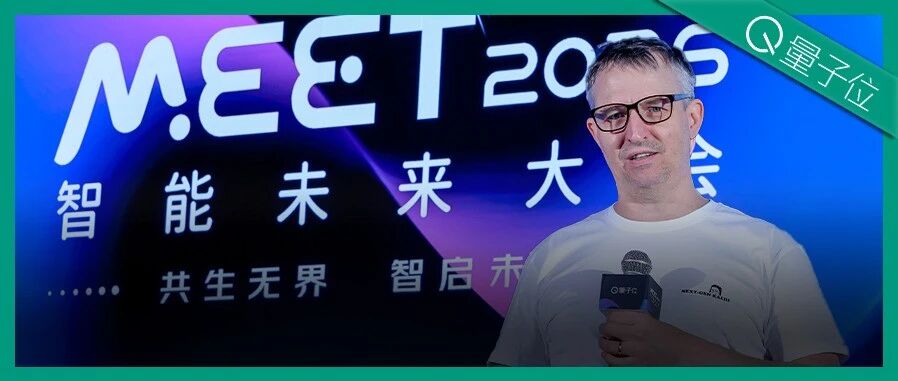
小米语音首席科学家:AI发展的本质就像生物进化,不开源要慢1000倍 | MEET2026
量子位· 2025-12-15 08:05
Core Insights - The evolution of AI closely mirrors the biological evolution process, characterized by trial and error to identify superior solutions for specific tasks [7][10] - AI development is not linear but follows a pattern of "long-term stagnation + sudden leaps," similar to the concept of "punctuated equilibrium" in biology [7][25] Group 1: AI Evolution and Open Source - Open source is deemed a crucial accelerator for AI evolution; without it, the research speed could decrease to one-thousandth of its current pace [3][34][35] - The design process of AI "recipes" involves experimenting with different variants and selecting effective ones for publication, which others can then replicate [12][13] - The time required to replicate a new idea in AI, akin to the "generation time" in biology, has decreased from approximately two years to about six months [18][20] Group 2: Strategies for Survival in AI Competition - Large companies should adopt a dual strategy: leveraging current leading technologies while also exploring unknown territories to find the next disruptive opportunity [5][13][45] - Maintaining a balance between "generalists" and "specialists" in AI models is essential, as different evolutionary strategies can adapt to varying environments [44][45] - Companies should preserve a diversity of model architectures to increase the chances of discovering practical new technologies [45][46] Group 3: Future Directions and Innovations - The AI field must continuously explore new ideas across various tasks, as breakthroughs can emerge from unexpected areas [39][42] - The current focus on Transformer technology is likened to a "musical chairs" scenario, where companies must keep up with the prevailing trends while preparing for future shifts [46][47] - The company is developing a new model architecture called Zapformer, which aims to enhance voice recognition accuracy by 10%-15% and improve general robustness [53][54][56]

布林坦承谷歌低估Transformer,“还被OpenAI挖走了Ilya”
量子位· 2025-12-15 08:05
Core Insights - The article discusses Google's journey from its inception to its current challenges in the AI space, highlighting mistakes made and opportunities missed, particularly in relation to OpenAI's rise [1][2][5][26]. Group 1: Google's History and Development - Google was founded by Sergey Brin and Larry Page, initially focusing on a project called BackRub, which evolved into the Google search engine [10][16][19]. - The name "Google" reflects their ambition to organize vast amounts of information, derived from a mathematical term representing a large number [21]. - Google fostered a strong academic environment, attracting top talent and focusing on foundational research, which laid the groundwork for its future innovations in AI [22][25]. Group 2: AI Strategy and Mistakes - After the release of the Transformer model, Google underestimated the potential of AI and failed to allocate sufficient resources, allowing OpenAI to capitalize on the opportunity [26][29]. - Despite setbacks, Google's long-term investments in AI research and development, including the creation of specialized TPU chips, have helped maintain its technological edge [30][29]. Group 3: Future Directions and Recommendations - Sergey Brin emphasizes the importance of leveraging AI in various aspects of life and encourages students to pursue computer science, as coding skills remain crucial for developing better AI [32][35]. - He suggests that quantum computing and materials science are undervalued future technologies that could have significant impacts, particularly in conjunction with AI [37]. - Brin advises against prematurely commercializing ideas without adequate preparation, using the example of Google Glass to illustrate the importance of refining concepts before market introduction [42][45].


量子位编辑作者招聘
量子位· 2025-12-15 08:05
AI热潮还在汹涌,但如果你还不知道如何参与……那为什么不来 量子位 呢? 我们是一家以 追踪AI新进展 为核心的内容平台,经过8年积累,目前拥有顶流影响力,广泛且备受认可的产业资源,以及时代风口的最佳观 测和学习生态位。 目前,我们有 三大方向 岗位招聘,希望你是 (或者能成为) 这三个方向的内容专家: 岗位均为全职,工作地点:北京中关村。 岗位面向: 加入我们,你可以获得: 以下是岗位详情: 编辑部 发自 凹非寺 量子位 | 公众号 QbitAI 参与核心采访,对话产业专家、技术大牛、撰写AI云落地案例。 任职要求: AI财经商业方向 所有岗位不同能力层级职位均在开放,欢迎结合个人履历和经验申请。 AI产业方向 岗位职责: AI产业方向 :关注基建层创新,包含芯片、AI Infra、云计算; AI财经方向 :关注AI领域创投和财报,跟踪产业链资本动向; AI产品方向 :关注AI在应用和硬件终端方向的进展。 社招:覆盖编辑、主笔、主编各个层级,按能力匹配岗位; 校招:应届毕业生,接受实习且可转正。 站在AI浪潮之巅 :第一时间接触和了解AI领域最新技术和产品,构建完整的AI认知体系。 玩转AI新工具 :将各种 ...

Minion Skills: Claude Skills的开源实现
量子位· 2025-12-15 08:05
Core Insights - The article introduces the Skills system by Claude, which allows AI Agents to dynamically load professional capabilities to process various document types like PDF, Excel, and PPT as needed [1][4] - The Skills system addresses the challenge of limited context windows versus the infinite demand for capabilities in AI development [2][3] Skills System Overview - The Skills system is designed to enable AI Agents to identify specific user requests, load the necessary skills dynamically, execute tasks, and return results efficiently [4] - The traditional approach of embedding all tools and instructions into a system prompt leads to inefficiencies, high costs, and longer response times [2] Skill Definition and Structure - Each Skill is defined in a directory containing a SKILL.md file, which includes the skill's name, description, and instructions [5][6] - The Skills Loader searches for available skills in multiple directories, allowing for project-specific and user-level skills with a priority mechanism [6] Performance Comparison - The Skills approach significantly reduces the context size from 50K tokens in traditional methods to 10K tokens for basic context and 10K + 3K tokens for specific tasks, resulting in shorter response times and improved task quality [9] Future Directions - The article envisions a Skills Marketplace where developers can publish and share professional skills, enhancing the ecosystem [12] - Intelligent recommendations based on user history and current tasks are proposed to improve user experience [13] - The potential for skill combinations to work collaboratively on tasks is highlighted [14] Open Source Implementation - The open-source version of the Skills system allows for deep customization, community contributions, and learning opportunities, making it accessible to a broader range of developers [15][20] - The design philosophy emphasizes that AI should not try to know everything but should know where to find answers when needed [18][19]
昆仑万维方汉:通用Agent是伪命题,AI Office仍有存在空间丨MEET2026
量子位· 2025-12-15 05:57
Core Viewpoint - The current wave of AI Agents represents a shift from general artificial intelligence to a system focused on automating verifiable processes, emphasizing the replication of established workflows rather than creating new paradigms [2][12][16]. Group 1: Evolution of AI Agents - The transition from models like ChatGPT to DeepSeek signifies a leap from merely retrieving answers to understanding and replicating processes, marking a new phase centered on process generalization [5][18]. - The essence of Agents is not general AI but the automation of verifiable processes, excelling in structured decision-making and mathematical tasks while lacking in innovative breakthroughs [12][16]. Group 2: Market and Product Insights - Kunlun Wanwei has developed the Skywork Super Agents, which includes five specialized Agents and one general Agent, capable of generating a 30-page PPT in five minutes, with 40% of daily active users engaging with this feature [11][12]. - The company has a strong international presence, with 93% of its revenue coming from overseas markets, allowing it to effectively cater to diverse global demands in AI products and services [10]. Group 3: Challenges and Opportunities - The deployment of Agents in various industries, such as healthcare and finance, faces challenges due to the lack of quality process datasets, which are essential for effective application [21][24]. - The competition for channels in the Agent market is critical, as traditional software vendors may resist new Agents that threaten their established ecosystems [26][27]. Group 4: Organizational Transformation - The rise of Agents will fundamentally reshape organizational structures, with traditional roles being replaced by process architects who design and maintain workflows, leading to increased efficiency [28][29]. - As repetitive tasks diminish, the demand for roles focused on process design and innovation will grow, positioning employees as creators and maintainers of new processes [31].


马斯克猛猛带货太空数据中心!“能耗比地球香太多”
量子位· 2025-12-15 05:57
Core Viewpoint - The article discusses the emerging trend of space data centers as a new frontier for AI infrastructure, driven by key figures like Elon Musk and supported by other tech giants such as Amazon and Google [1][12]. Group 1: Space Data Centers and AI Infrastructure - Space data centers are becoming a focal point in discussions within Silicon Valley and beyond, with significant interest from major tech leaders [2][12]. - Elon Musk has been a prominent advocate for space data centers, indicating that SpaceX plans to deploy data centers in space and expressing support for Google's similar initiatives [4][6]. - Musk argues that the energy potential in space is vastly greater than on Earth, suggesting that deploying AI systems in space could be more cost-effective within the next 4-5 years [8][27]. Group 2: Advantages of Space Data Centers - Space offers abundant and stable energy sources, as solar panels in space can provide continuous power without the interruptions caused by weather or day-night cycles [24]. - Cooling in space is more efficient due to the extreme cold temperatures, allowing for effective heat dissipation without the need for complex cooling systems [25]. - The cost of launching payloads into space is decreasing, with estimates suggesting it could drop to $100 per kilogram in the near future, enhancing the feasibility of space data centers [30]. Group 3: Industry Response and Developments - Major companies are actively pursuing space data center projects, with Starcloud successfully launching a satellite to train a language model in space [38]. - Google is working on "Project Suncatcher," which aims to create a constellation of solar-powered satellites equipped with their tensor processing units (TPUs) [41][42]. - Jeff Bezos has also indicated that moving data centers to orbit is a rational approach, predicting that costs will surpass terrestrial AI infrastructure within 20 years [46]. Group 4: Future Prospects and Challenges - The article highlights the potential for space data centers to alleviate the energy shortages projected for data centers on Earth, particularly in the U.S., where demand for electricity is expected to exceed supply due to AI growth [33][34]. - The construction of space data centers could provide a solution to the regulatory and environmental challenges faced by terrestrial data centers, offering a more agile and sustainable approach to meet increasing computational demands [36]. - The article concludes that both domestic and international players are recognizing the potential of space data centers, marking a significant shift in the landscape of AI infrastructure [50][55].

苏州大学首篇数学四大刊!解决了40年未决的丢番图逼近问题
量子位· 2025-12-15 04:04
闻乐 发自 凹非寺 量子位 | 公众号 QbitAI 中国学者又一篇数学四大刊成果出炉,还是 苏州大学 的首篇四大刊成果。 论文《Khintchine dichotomy for self-similar measures》已被Journal of the American Mathematical Society (《美国数学杂志》) 录用。 该项成果的作者是 苏州大学副教授张涵 ,合作者有 Timothée Bénard (法国国家科学研究中心 (CNRS),巴黎北索邦大学 (LAGA) 的研 究员) 和 何伟鲲 (中国科学院数学与系统科学研究院副研究员) 。 《数学年刊》《数学学报》《数学新进展》和《美国数学杂志》并称为数学四大刊,是国际数学界公认的数学顶级期刊,每年中国研究机构中 选论文经常不超过10篇。 这次的突破是把描述有理数如何近似表达实数的 辛钦定理 推广到了 所有自相似测度 上。 接下来咱就看看是怎么个拓展法。 比如用22/7逼近π,误差不到0.0015;用355/113逼近π,误差更是能缩小到千万分之三。 而数论领域的辛钦定理,就从数学层面量化了这种逼近的可能性和效率。它给出了一个明确的判 ...