是说芯语

Search documents
视涯科技科创板IPO获受理!
是说芯语· 2025-06-28 05:08
Core Viewpoint - The article highlights the successful IPO application of Visionary Technology Co., Ltd. on the Sci-Tech Innovation Board, aiming to raise 2.015 billion yuan for expanding production capacity and enhancing R&D capabilities [1][4]. Company Overview - Visionary Technology is a leading global provider of micro-display solutions, specializing in silicon-based OLED micro-displays, and offers value-added services including strategic product development and optical systems [2]. - The company is the first globally to achieve mass production of silicon-based OLED micro-displays using 12-inch wafer backplanes and possesses comprehensive self-research capabilities across the entire stack of "display chip + micro-display + optical system" [2]. Financial Performance - From 2022 to 2024, the company has seen continuous revenue growth, but R&D expenses have also increased significantly, with ratios of R&D expenses to revenue at 124%, 133%, and 96% respectively [3]. - The company reported net losses of 247 million yuan, 304 million yuan, and 247 million yuan during the same period, indicating it has not yet achieved profitability and has accumulated unremedied losses [3]. Shareholding Structure - The company has a special voting rights arrangement, where the controlling shareholder's A-class shares have a voting power ratio of 7:1 compared to B-class shares, allowing the actual controller to hold approximately 62% of the voting rights despite only holding about 29% of the shares [3]. IPO Fund Utilization - The funds raised from the IPO will be allocated to the expansion of ultra-high-resolution silicon-based OLED micro-display production lines and the establishment of R&D centers, which will help the company enhance its production capacity and technical strength [4]. Industry Position and Growth Potential - As a leading enterprise in the silicon-based OLED industry, the company aims to solidify its market position through the implementation of the fundraising projects, which will also promote the development of the upstream and downstream sectors of the industry in China [5]. - The market for silicon-based OLED micro-displays is expected to grow rapidly, with applications expanding into various fields such as medical, education, and industrial internet [7]. Production Capabilities - The company has established a production line focused on 12-inch wafers, capable of producing 9,000 pieces per month, which is more cost-effective and technologically advanced compared to traditional 8-inch wafers [6]. - A second production line is under construction to further meet customer demand, with the existing facility capable of accommodating three production lines, potentially reaching a maximum capacity of 27,000 pieces per month [6].

创业板首家,未盈利芯片IPO,来了!
是说芯语· 2025-06-27 08:48
Core Viewpoint - Shenzhen Dapu Microelectronics Co., Ltd. has become the first unprofitable company to have its IPO application accepted by the Shenzhen Stock Exchange, highlighting the board's support for high-quality unprofitable enterprises and its commitment to fostering innovation in the technology sector [1]. Group 1 - The acceptance of Dapu Micro's IPO application marks a significant step for the Growth Enterprise Market (GEM) in supporting unprofitable yet high-quality companies, enhancing the inclusivity and adaptability of the market [1]. - The Shenzhen Stock Exchange emphasizes its strict adherence to various listing standards while providing more inclusivity for both profitable and unprofitable enterprises, aiming to broaden financing channels for innovative companies [1]. Group 2 - Dapu Micro, founded in 2016 by CEO Yang Yafei, is a leading designer of enterprise SSD controller chips and storage solutions in China, with over 380 team members and a strong R&D capability [1]. - The company has raised nearly 2 billion in equity financing and has developed products widely used in mainstream servers both domestically and internationally [1]. - Dapu Micro has applied for over 300 domestic and international patents and was awarded the title of "Specialized, Refined, and Innovative Small Giant" by the state in 2022 [1].
小米、华为联手投出一个芯片IPO,年销量超5000万颗,中国大陆第一
是说芯语· 2025-06-27 00:42
Core Viewpoint - Yunyinggu Technology Co., Ltd. is a leading global AMOLED display driver chip design company, aiming to provide reliable and high-performance display driver solutions for consumer electronics brands [2][3]. Group 1: Company Overview - Yunyinggu is the largest AMOLED display driver chip manufacturer in mainland China and the fifth largest globally, based on sales volume projected for 2024 [2]. - The company operates on a Fabless business model, collaborating strategically with key industry partners such as wafer foundries, OSAT companies, and display panel manufacturers to enhance user display experiences [2]. - Since focusing on AMOLED display driver chip R&D and design in 2017, Yunyinggu has established itself as a key supplier to major consumer electronics brands [2][3]. Group 2: Technology and Products - The company has developed industry-leading integrated hardware and software display driver technologies, covering chip design, compensation algorithm development, and pixel compensation circuit layout [3]. - Yunyinggu's products include AMOLED display driver chips for high-end smartphones and Micro-OLED display backplanes/drivers for AR/VR devices [4]. - As of December 31, 2024, the company is the first in mainland China to achieve over 10 million units sold to brand companies and has a projected sales volume of over 50 million units for 2024 [3]. Group 3: Financial Performance - Yunyinggu's total revenue for 2022, 2023, and 2024 is approximately 551 million, 720 million, and 891 million RMB, respectively, with corresponding annual losses of about 124 million, 232 million, and 309 million RMB [4]. Group 4: Investment and IPO Plans - The company has notable investors including Sequoia, Xiaomi Changjiang, Huawei Hubble, and Qualcomm [5]. - The funds raised from the Hong Kong IPO will be used for R&D and optimization of AMOLED TDDI chips, development of Micro-OLED and Micro-LED display driver backplanes, strategic investments or acquisitions, and general corporate purposes [5].
荣耀确认启动A股IPO辅导!
是说芯语· 2025-06-27 00:37
Core Viewpoint - Honor has taken a significant step towards its IPO in the A-share market, which could enhance the innovation vitality of the technology sector in the A-share market and potentially reshape the AI segment in the capital market [1][2]. Group 1: IPO Progress - On June 26, Honor Terminal Co., Ltd. received listing guidance registration from the China Securities Regulatory Commission, marking the beginning of its listing journey [1]. - The company aims to complete its shareholding reform by the end of 2024 and has engaged various professionals, including brokers, law firms, and accountants, to facilitate the IPO process [3]. Group 2: AI Strategy and Market Position - Honor is accelerating its transformation towards AI with its "Alpha Strategy," which includes the upcoming launch of the AI foldable flagship phone, Honor Magic V5, scheduled for July 2 [2]. - The company is expanding its AI foundational research and building an open ecosystem that extends into cutting-edge fields such as robotics [2]. - Honor's sales and service president expressed the goal of returning to the top three in the domestic market by the end of this year [3].

重磅!我国自主研发新一代CPU发布,无需依赖任何国外授权技术
是说芯语· 2025-06-26 11:27
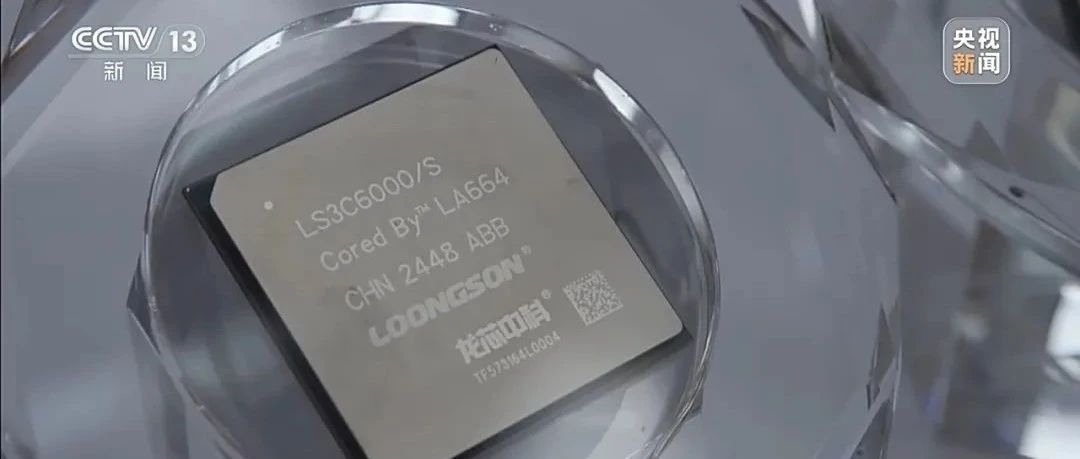
Core Viewpoint - The launch of the domestically developed Loongson 3C6000 processor marks a significant advancement in China's semiconductor industry, showcasing the country's capability to produce independent and secure computing solutions without relying on foreign technology [1][3]. Group 1: Product Launch and Features - The Loongson 3C6000 processor is designed with a self-developed instruction set architecture, ensuring independence from foreign technology and supply chains [1][3]. - The performance of the 3C6000 is comparable to mainstream products expected in 2023 or 2024, indicating its competitive edge in the market [3]. - Additional processors, Loongson 2K3000 and 3B6000, were also launched, targeting smart terminals and industrial control applications, providing foundational support for AI and other fields [3]. Group 2: Company Background and Market Position - Loongson Technology, the company behind the 3C6000, specializes in the research, development, and sales of processors and related chips, with a focus on providing comprehensive hardware and software solutions [5]. - The company went public on the Sci-Tech Innovation Board in 2022, and as of June 26, 2023, its stock price was 122.41 yuan per share, with a total market capitalization of 49.1 billion yuan [5]. - The IPO has accelerated the company's R&D iterations, increasing the annual new chip releases from 1-2 to 4-5, enhancing the efficiency of product development [5]. Group 3: Industry Trends and Performance - The chip industry in China is rapidly advancing towards domestic production, with over 100 companies in the integrated circuit sector listed on the Sci-Tech Innovation Board [4][5]. - As of May 2025, the total number of integrated circuit companies on the board reached 119, covering the entire supply chain from chip design to wafer fabrication and packaging [5]. - In the first quarter, over 110 integrated circuit companies reported a combined revenue of 72.18 billion yuan, a year-on-year increase of 24%, and a net profit of 4.48 billion yuan, up 73% year-on-year, reflecting strong growth driven by domestic demand and recovery in AI, IoT, and industrial sectors [5].
联发科起诉华为
是说芯语· 2025-06-26 07:13
Core Viewpoint - The ongoing patent litigation between MediaTek and Huawei reflects a strategic confrontation in the global patent landscape, particularly focusing on the transition from 4G to 5G technologies and the evolving business models for patent licensing [2][5][6]. Group 1: Patent Litigation Overview - MediaTek's subsidiary HFI Innovation has filed a patent infringement lawsuit against five Huawei subsidiaries, targeting the European patent EP2689624 related to LTE core technology [1]. - The lawsuit comes four months after Huawei initiated its own legal action against MediaTek regarding 5G patents, indicating a reciprocal legal strategy between the two companies [1][2]. Group 2: Historical Context and Developments - The conflict originated from failed 5G patent licensing negotiations in March 2022, where Huawei proposed a chip-level licensing fee of $2.5 per device, which MediaTek deemed inconsistent with industry practices [2]. - Huawei initiated its first lawsuit against MediaTek in May 2024, claiming $46.2 million for alleged infringement of its 5G patent portfolio, leading to multiple lawsuits across various Chinese cities [2][3]. Group 3: Judicial Landscape - The litigation has created a tripartite judicial confrontation in China, the UK, and Germany, with MediaTek winning a key ruling in the UK confirming its right to set global FRAND rates [3]. - In China, the Supreme People's Court has upheld jurisdiction for cases in Guangzhou and Zhengzhou, moving towards technical assessments [3]. Group 4: Patent Ownership and Market Impact - As of the end of 2024, Huawei holds 14.59% of global 5G standard essential patents (SEPs), leading the market, while MediaTek is focusing its litigation efforts in Europe and the UK [4][5]. - The outcome of these lawsuits could significantly reshape the patent cost structure for Chinese smartphone manufacturers, potentially reducing patent expenses by 30%-40% if Huawei's chip-level licensing model gains traction [8][10]. Group 5: Implications for Industry Standards - The ongoing patent battle is seen as a critical case for assessing the adaptability of global patent rules, with implications for the semiconductor industry where IP disputes account for 47% of litigation cases [9]. - The results of the litigation could influence the transition from a "terminal payment" model to a "chip payment" model in the telecommunications industry, affecting cost structures for companies like Xiaomi and OPPO [10].
刚刚!针对中国,美国国会推出《禁用敌对人工智能法案》
是说芯语· 2025-06-26 01:41
Core Viewpoint - The article discusses the introduction of the "No Adversarial AI Act" aimed at strengthening the U.S. federal government's ability to protect against risks posed by foreign adversaries' artificial intelligence technologies [1][2][15] Legislative Background - The act was proposed by bipartisan members of Congress in response to the complex geopolitical landscape and increasing technological competition, particularly highlighting the threats posed by AI systems controlled by foreign adversaries such as China and Russia [2][15] - Specific examples, such as the company DeepSeek, are cited to illustrate the potential risks associated with foreign-controlled AI systems [2] Objectives of the Act - The primary goal of the act is to empower the federal government to identify, exclude, and remove adversarial AI technologies while enhancing transparency and oversight [3][15] - A federal adversarial AI list will be created to identify AI systems developed by foreign adversaries [3][6] Implementation Framework - The act mandates the Federal Acquisition Security Council to create and regularly update a list of AI technologies developed by foreign adversaries within 60 days of the act's enactment [4][6] - The Office of Management and Budget (OMB) is required to publish this list on a public website within 180 days [5][6] Usage Restrictions - Federal agencies are prohibited from procuring or using AI systems listed as developed by adversarial entities [7][15] - Agencies must review and consider the exclusion of these technologies within 90 days of the act's enactment [8][9] Exceptions and Oversight - Limited exceptions for using listed AI technologies are allowed under specific circumstances, such as research or national security, but must be documented and reported to Congress [10][11][12] - The act defines key terms to ensure clarity and effective enforcement, including definitions for "artificial intelligence" and "foreign adversary" [13][14] Strategic Implications - The act reflects the U.S. effort to decouple from China in the technology sector, establishing a framework to prevent the use of AI technologies developed by foreign adversaries [15] - This legislative action may lead to increased global competition in AI, potentially creating parallel but disconnected AI ecosystems [15]

国内存储龙头起纠纷,江波龙诉佰维!
是说芯语· 2025-06-25 23:10
Core Viewpoint - The article discusses a patent dispute between two leading companies in the domestic storage industry, Shenzhen Jiangbolong Electronics Co., Ltd. and Shenzhen Baiwei Storage Technology Co., Ltd., highlighting the implications for the industry and the ongoing trends in patent litigation and technology competition [1][2]. Group 1: Patent Dispute Details - Jiangbolong's subsidiary, Yuan Yuzhi Technology, filed a lawsuit against Baiwei Storage for patent infringement, seeking compensation of 1.21685 million yuan [1]. - The patents in question relate to core technologies for eMMC storage devices, originally owned by Nokia and later transferred to Jiangbolong's affiliates [1]. - Baiwei Storage asserts its compliance with FRAND principles during negotiations and claims insufficient legal basis for the lawsuit [1]. Group 2: Financial Impact and Industry Trends - The amount in dispute represents only 0.79% of Baiwei Storage's Q1 2025 revenue of 1.543 billion yuan, indicating a limited immediate financial impact [2]. - The eMMC technology at the center of the dispute is a mainstream solution in the embedded storage market, with Baiwei Storage's revenue in AI edge storage exceeding 1 billion yuan in 2024, reflecting a 294% year-on-year growth [2]. Group 3: Legal Considerations - The case may focus on three key legal issues: whether the implementation of standard-essential patents constitutes infringement, the reasonableness of licensing fees under FRAND principles, and the conditions for applying injunctions [3]. - Baiwei Storage plans to file for a declaration of patent invalidity and continue developing high-end products like LPDDR5X and PCIe5.0 [3].
全芯智造11.97%股权成功转让,成交价4.69亿元
是说芯语· 2025-06-25 09:54
Core Viewpoint - The recent equity transfer of 11.97% in Quanxin Zhizao Technology Co., Ltd. has attracted significant industry attention, with the transaction valued at approximately 469.29 million yuan, reflecting the growing interest in the semiconductor sector [1][2]. Group 1 - The equity transfer involved the transferor, Huada Semiconductor Co., Ltd., which was an early investor in Quanxin Zhizao, holding 11.97% of the shares prior to the transfer [2]. - The new shareholder, Hefei Gaotou Kechuang Investment Partnership (Limited Partnership), is expected to influence Quanxin Zhizao's strategic direction and business development in the competitive semiconductor industry [2]. - Quanxin Zhizao reported a revenue of 51.47 million yuan for the fiscal year 2024, but incurred a total profit loss of 45.66 million yuan and a net loss of 34.71 million yuan, with total assets amounting to 222.44 million yuan [2].
艾为电子起诉聚芯微索赔千万
是说芯语· 2025-06-25 06:13
Core Viewpoint - Aiwai Electronics (688798.SH) has shifted from being a defendant to a plaintiff in a patent infringement lawsuit against Wuhan Juxinwei, claiming infringement of its patent related to LRA motor driver chips used in specific smartphone models, seeking a total of 10.5 million yuan in damages [1][2]. Group 1: Patent Litigation - Aiwai Electronics filed a lawsuit in January 2024 against Wuhan Juxinwei for infringing its patent on a control method and device for LRA motor driver chips [1]. - The company has received support from the Supreme People's Court regarding the jurisdiction of the case [2]. - This is not Aiwai Electronics' first involvement in patent disputes; it previously faced a lawsuit from Xinhai Technology regarding a piezoelectric detection processor, which was resolved in Aiwai's favor after the patents in question were declared invalid [4][5]. Group 2: Business Performance and R&D - Aiwai Electronics reported significant growth in its camera driver chip business, having achieved mass production of various products, including OIS technology [2]. - The company has invested a total of 59.34 million yuan in a research and development project for linear/DC/stepper motor driver chips, which is currently in the validation stage [3]. Group 3: Industry Context - Industry experts emphasize that patents are crucial for establishing a technological moat, especially in the context of domestic supply chain substitution trends [7]. - Domestic motor manufacturers have not only achieved self-sufficiency in technology but also collect patent fees from overseas companies [7].