是说芯语

Search documents
资本加码NPU,单笔融资破5亿
是说芯语· 2026-02-21 02:58
2025年,中国AI芯片赛道进入深度洗牌期,摩尔线程、沐曦股份等GPU"四小龙"相继上市,国产AI芯片赛道迎来久违的IPO密集窗口期。 在此行业背景下,专注于NPU架构的上海昉擎科技有限公司(简称"昉擎科技")悄然成为资本竞逐的"黑马",凭借其创新性技术布局,2025年一年内完成 三轮融资,2026年开年再获新一轮注资,累计融资额突破5亿元,成为国产AI芯片细分赛道的重点关注企业。 昉擎科技成立于2022年9月,注册于上海市浦东新区,属于科学研究和技术服务业,核心聚焦人工智能(AI)计算领域,专注于面向人工智能的多核NPU 计算芯片研发,覆盖算法-架构-芯片全链路优化,核心业务围绕AI计算效率提升展开,同时涉足信息系统集成服务、计算机软硬件批发零售等相关领域, 旨在通过技术创新解决AI大模型发展中的算力痛点,打造适配AI场景的高效计算解决方案。 针对AI大模型参数跃升引发的算力利用率低、能耗飙升、硬件适配难等核心痛点,昉擎科技给出了独特的技术解决方案,创造性地提出"上下文相 关"(context aware)与"上下文无关"(context free)解耦的分布式计算架构。这项核心技术将传统Transform ...

春晚 21 芯,看懂中国半导体风向
是说芯语· 2026-02-20 01:00
Core Viewpoint - The 2026 CCTV Spring Festival Gala serves as a cultural feast and a showcase of the global chip industry, highlighting the advancements in China's chip technology from "usable" to "highly usable" [1][29] Group 1: Robotics Showcase - Four humanoid robots, MagicBot Z1, Galbot G1, Unitree H1, and "Little Bumi," showcased at the gala, demonstrating the capabilities of eight chip companies that support these "tech performers" [3][29] - MagicBot Z1 features 100% domestically produced core chips, with Allwinner Technology providing the main SoC chip for overall control and motion planning [4][5] - Galbot G1 relies on NVIDIA's AGX Orin 64GB chip, achieving 275 TOPS of computing power for AI interactions [6][7] - Unitree H1, the most commercially successful model, utilizes multiple chips including Intel's Core i7 for high-performance motion control and NVIDIA's Jetson Orin NX for edge AI inference [8][9][10][11] - "Little Bumi" targets the consumer market with a price under 10,000 yuan, using Rockchip's RK3588 SoC for approximately 6 TOPS of AI computing power [12][13][14] Group 2: Broadcasting Technology - The gala achieved 8K ultra-high-definition wireless broadcasting, supported by four chip companies that built the computational foundation [15][29] - Huawei's Hi3536DV400 chip enabled real-time compression of 8K video, while the Kunpeng 920S chip supported over 1 billion concurrent live requests [16][17] - AMD's EPYC 9004 series chips provided rendering power for real-time graphics during the event [18] Group 3: Communication Infrastructure - The seamless connection between the main venue and four sub-venues relied on three chip companies for communication technology [19][29] - Huawei's Tian Gang 02 base station chip facilitated low-latency transmission of 8K signals, marking the large-scale application of 5G-A technology [19] - ZTE and China Star Network contributed to the 5G-A network and satellite communication, ensuring stable signal transmission in remote areas [20][21] Group 4: Stage Control and Perception - The precise operation of stage lighting, robotic arms, and AR effects depended on three chip companies providing MCU, power chips, and perception chips [22][29] - GigaDevice's GD32H7 series MCU enabled rapid light switching and robotic movement control [23] - STMicroelectronics' IGBT power chips ensured stable operation of high-power stage equipment [24] - Orbbec provided depth perception chips for the Unitree H1 robot, enhancing spatial awareness and obstacle avoidance [25] Group 5: End-User Experience - The viewing experience for audiences was enhanced by three chip companies ensuring high-quality visuals and security [26][29] - Hisense's X9 image quality chip optimized 8K visuals for the gala [27] - Unisoc's financial-grade security chips safeguarded interactive data during the event [28] - BDU's BD960 positioning chip ensured synchronization of devices across different locations [29]



中国光刻设备到底还要多久才能追上?
是说芯语· 2026-02-20 01:00
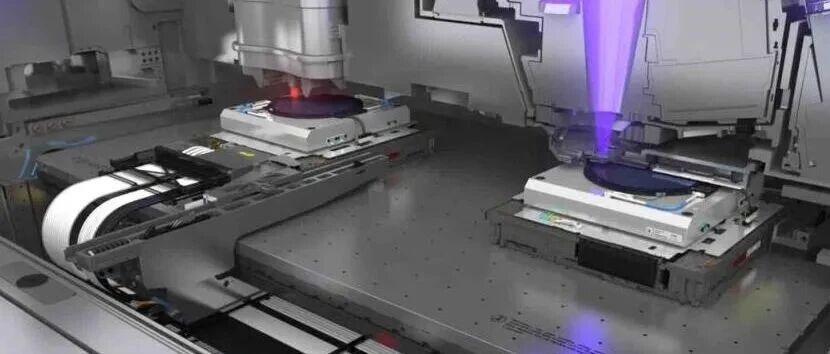
上海微电子作为国内头部光刻机厂商,90nm 及以上成熟节点机型已实现稳定量产,主要用于功率器件、显示驱动、汽车电子等领域; 28nm 浸没式 DUV 光刻机已完成首台交付与产线验证,计划 2026 年全面量产,但尚未进入大规模商用阶段。与全球龙头 ASML 相 比,国产光刻机在制程覆盖、精度、产能、生态与先进技术(EUV) 上仍存在显著代差。 目前中国已是全球最大WFE( Wafer Fab Equipment )支出市场。 WFE 市场,即晶圆制造设备市场,是半导体产业链中技术壁垒最高、价值量最大的环节,也是衡量一国芯片自主化水平的核心指标。 瑞银测算,2025年中国半导体行业设备支出约427.5亿美元,预计2028年将达503.5亿美元,未来几年仍将占据全球约1/3采购份额。与 此同时,国产设备替代正在加速,盛美半导体、中微公司、北方华创等本土厂商高速增长,预计2027年三家企业在国内设备支出中的 占比将升至31%。 | WFE SALES IN CHINA ($USD billions) | | | | | | --- | --- | --- | --- | --- | | Company | 2025 ...

黄仁勋官宣:GTC 2026发布“前所未见”芯片,新一代 AI 芯片即将登场!
是说芯语· 2026-02-19 05:11
Core Viewpoint - Nvidia's CEO Jensen Huang announced the unveiling of a "world unprecedented" new chip at the upcoming GTC 2026 conference, which is expected to further solidify the company's leading position in the AI infrastructure sector [1][3]. Group 1: Upcoming GTC 2026 Conference - The GTC 2026 conference will take place on March 15 in San Jose, California, focusing on a new era of AI infrastructure competition [3]. - Huang acknowledged the challenges in developing these new chips, stating that "all technologies are approaching their limits," yet the industry remains optimistic due to Nvidia's past performance [3]. Group 2: New Chip Series - The specific models of the new chips have not been disclosed, but speculation suggests they may come from two major series: the Rubin series derivatives and the next-generation Feynman series [3]. - The Rubin series, which includes six new chip designs, has already been mass-produced, while the Feynman series is described as "revolutionary," exploring wide integration with SRAM and potential 3D stacking technology [3]. Group 3: AI Computing Needs - Nvidia is adapting to quarterly changes in AI computing demands, shifting focus from model pre-training with the Hopper and Blackwell series to inference scenarios with the Grace Blackwell Ultra and Vera Rubin series [3]. - The new products are expected to specifically address latency and memory bandwidth bottlenecks, which are critical for AI applications [3]. Group 4: Strategic Positioning - Huang emphasized that extensive collaboration and investment are key to Nvidia's continued leadership, as the company is positioning itself across the entire AI industry chain, including energy, semiconductors, and data centers [3].

马斯克要开建超级晶圆厂!
是说芯语· 2026-02-19 01:04
Core Viewpoint - Tesla is strategically recruiting semiconductor talent in South Korea to strengthen its supply chain, accelerate production, and enhance its AI chip development capabilities [3][8]. Group 1: Recruitment Strategy - Tesla's recruitment announcement emphasizes the need for engineers in chip design, manufacturing, and AI software, highlighting the importance of solving challenging technical problems as a core evaluation criterion [1][6]. - The recruitment is part of a broader strategy to establish a team that can work closely with Samsung, facilitating a "co-located R&D" model to shorten the chip design cycle to an aggressive nine months [4][5]. Group 2: Supply Chain and Manufacturing - The decision to recruit in South Korea is driven by the physical proximity to key suppliers, particularly Samsung, with whom Tesla has signed a $16.5 billion long-term manufacturing agreement for AI chips [3][5]. - The AI5 chip, critical for Tesla's operations, will utilize Samsung's 3nm GAA process, ensuring that the production meets Tesla's urgent needs [3][4]. Group 3: Technological Advantages - South Korea is recognized as a global hub for HBM (High Bandwidth Memory) technology, essential for processing vast amounts of data required for Tesla's Full Self-Driving (FSD) capabilities [5][6]. - By establishing a local team, Tesla aims to optimize the interface performance between chips and memory, enhancing overall computational power and efficiency [5][6]. Group 4: Talent Pool and Geopolitical Considerations - South Korea boasts a top-tier semiconductor talent pool, driven by companies like Samsung and SK Hynix, which cover the entire semiconductor value chain [6][7]. - The recruitment strategy also considers geopolitical factors, as South Korea is a U.S. ally, providing a safer environment for technology transfer and intellectual property protection [7][8]. Group 5: Future Manufacturing Plans - The recruitment effort is aligned with Tesla's long-term goal of establishing its own trillion-dollar wafer fabrication plant (TeraFab), gradually reducing reliance on external suppliers [8].



英伟达清仓 Arm,五年收购计划彻底终结
是说芯语· 2026-02-19 01:04
此后,由软银集团控股的Arm加速推进上市进程,并于后续顺利完成首次公开募股。截至目前,英伟达与Arm双方均未对此次股份出售事宜作出回应—— 英伟达拒绝置评,Arm方面也未立即回应媒体的置评请求。 作为全球市值最高的企业之一,英伟达目前已成为科技行业的重要战略投资方,其持仓涵盖英特尔、诺基亚、CoreWeave、新思科技(Synopsys)等多家 知名企业。公司明确表示,将依托自身的资金实力与技术积累,进一步推动人工智能计算基础设施的规模化部署与广泛应用,助力人工智能计算的普及与 推广。 声明:本文仅为信息交流之用,不构成任何投资建议,股市有风险,投资需谨慎。 2026年2月18日,英伟达完成对Arm Holdings全部剩余股份的出售,两家公司过去数年间围绕股权与战略关系的一系列变动正式终结。 根据最新披露的监管文件显示,英伟达在去年第四季度的某个时间点减持了110万股Arm股票,按本周二Arm的收盘价计算,这笔交易价值约1.4亿美元, 折合人民币约9.68亿元。此次减持后,英伟达对Arm的持股比例降至零,不再持有其任何股份。 这一决定意味着五年前英伟达启动的Arm收购计划彻底落幕。 2020年,英伟达曾宣布 ...

内存 “闪崩” 传闻刷屏,真实情况是这样
是说芯语· 2026-02-18 01:03
Core Viewpoint - Recent reports of "memory price flash crash" in the domestic market have attracted significant attention from the capital market and the industry, although investigations indicate that current spot prices for memory have shown slight declines, the extent is limited and has not led to a systematic industry downturn [1][4]. Group 1: Market Dynamics - In the North American market, some leading storage companies have experienced high-level stock price corrections, and rumors of price softening at the channel level have intensified discussions about an "early cycle turning point" [1]. - Some subcategories have even seen a phase of "rebound" in prices [2]. - Channel feedback indicates that market speculation has cooled, but the overall supply-demand structure has not fundamentally reversed [3]. Group 2: Supply and Demand Analysis - The current "flash crash" rumors are primarily concentrated in the channel spot market rather than the original factory contract market, with inventory management and cash flow needs among channel vendors contributing to short-term price fluctuations [4]. - On the supply side, major manufacturers like Samsung Electronics, SK Hynix, and Micron Technology are maintaining a cautious capacity strategy, focusing on high-end product lines driven by AI computing demand, while traditional DRAM and NAND capacity expansions remain controlled [4][5]. - The absence of significant supply increases is a key reason for the industry's belief that a "flash crash" is unlikely [5]. Group 3: Market Sentiment and Valuation - The high-level adjustments in the North American capital market for storage stocks have amplified market sentiment, with previous AI narratives driving significant valuation recovery in the storage sector [6]. - Short-term profit-taking and cautious sentiment ahead of the holiday season have led to the rapid spread of "flash crash" narratives, but from a fundamental perspective, there are no signs of significant inventory accumulation or proactive price cuts by manufacturers to gain market share [6].


只靠 IP 授权,半导体公司还能走多远?
是说芯语· 2026-02-18 01:03
Core Insights - The semiconductor industry is undergoing significant changes, particularly in the business model of intellectual property (IP) licensing, which is shifting towards a more integrated approach that includes design services and system integration [4][5][6]. Industry Trends - The most notable change is industry consolidation driven by the transition to system-on-chip (SoC) designs, particularly for the Internet of Things (IoT), leading semiconductor companies to acquire IP to reduce reliance on third-party sources and enhance product differentiation [2][3]. - Open-source hardware IP is emerging as a disruptive force in the hardware ecosystem, similar to the impact of open-source software, with RISC-V architecture gaining traction in both embedded and high-performance computing applications [3][4]. - The evolution of the semiconductor industry, supported by advanced electronic design automation (EDA) tools and the proliferation of licensable IP, is making custom chip development more accessible, with AI accelerating development speed and reducing costs [3][4]. Changes in IP Business Model - The traditional IP licensing model is declining as a standalone business model, becoming more valuable as part of a broader product and service offering that includes design services and system integration [4][5]. - Companies like Arm and MIPS are adapting to these changes, with Arm expanding its IP offerings and MIPS transitioning to an IP service provider model focused on specific applications [5][6]. Strategic Developments - Following its acquisition by SoftBank, Arm has increased its R&D budget and is now targeting new markets, including high-performance computing, while also offering comprehensive design services [5][6]. - MIPS, after overcoming bankruptcy, is focusing on RISC-V architecture and positioning itself as an IP service provider, reflecting the challenges faced by traditional IP suppliers [5][6]. - GlobalFoundries' acquisition of MIPS is part of a broader strategy to provide custom semiconductor solutions, integrating design and manufacturing capabilities [6][7]. Future Outlook - Despite rapid innovation in semiconductors, structural changes in the industry will take time, with Arm's standard CPU architecture remaining dominant while custom and RISC-V based CPUs are expected to grow [7]. - Successful companies will be those that view IP as part of a broader silicon solution platform rather than as a standalone product [7].

半导体CIM赛道迎变局
是说芯语· 2026-02-17 04:46
Core Viewpoint - The article highlights the significant opportunity for domestic semiconductor companies, particularly Pengxi Semiconductor, to break the international monopoly in the high-end CIM (Computer Integrated Manufacturing) sector, focusing on the 12-inch wafer manufacturing needs in China [3][7]. Group 1: Company Overview - Pengxi Semiconductor has completed its initial public offering and is officially starting its A-share listing process [1]. - The company specializes in the CIM system, which is crucial for the efficient operation of modern wafer fabs, integrating software, hardware, and management logic [4]. Group 2: Market Dynamics - The global CIM market is dominated by two major players, Applied Materials and IBM, which hold over 80% of the market share [5]. - The CIM market exhibits a highly concentrated structure with significant barriers to entry, including high technical, customer, and ecological barriers [6]. Group 3: Domestic Market Development - Recent years have seen unprecedented development opportunities for domestic CIM players, with Pengxi Semiconductor emerging as a key player in the 12-inch wafer manufacturing sector [7]. - The domestic CIM landscape includes companies like Shangyang Software, Shanghai Geruili, and Saimeite Technology, which are collectively accelerating the domestic CIM replacement process [7]. Group 4: Market Projections - The global semiconductor CIM market is projected to reach approximately $3.172 billion by 2025 and $5.012 billion by 2032, with a compound annual growth rate of 6.9% [7].
刘胜院士专访 深度解读:玻璃基板与先进封装
是说芯语· 2026-02-16 01:02
Core Viewpoint - The article discusses the urgent need for innovative cooling technologies in the face of increasing power demands from AI and HPC chips, highlighting a paradigm shift from external cooling methods to intrinsic solutions that integrate with chip materials and structures [1][11]. Group 1: Breakthroughs in Cooling Technologies - The article identifies three disruptive breakthroughs in cooling technologies: material-level innovations, packaging architecture competition, and structural integration [2]. - The first breakthrough involves the use of diamond and SiC materials to overcome the thermal resistance limitations of silicon, with diamond being a key material due to its superior thermal conductivity [3][4]. - The second breakthrough focuses on the competition between SiC interposers and glass substrates for packaging architecture, with SiC offering significantly better thermal efficiency [8][9]. - The third breakthrough is the concept of embedded microfluidics, where cooling fluids are integrated within the chip structure to manage extreme heat loads effectively [10]. Group 2: Future of Packaging Materials - For large-scale production of structural substrates by 2028, glass substrates are expected to dominate, while diamond will play a crucial role in addressing AI computing bottlenecks [12][16]. - Glass substrates are favored for their high interconnect density capabilities, which are essential as AI chips evolve [14][15]. - Diamond is positioned as a critical component for thermal management in high-performance AI chips, expected to be integrated into packaging solutions alongside glass substrates [16][17]. Group 3: Addressing Thermal Management Challenges - The article outlines three key strategies for improving thermal management in glass substrates: vertical thermal vias, lateral heat diffusion enhancements, and integrated microfluidic cooling systems [19][20][21]. - Vertical thermal vias involve creating high-density copper pillar arrays to facilitate heat dissipation [19]. - Lateral heat diffusion can be enhanced by thickening metal layers on the substrate to improve thermal conductivity [20]. - Integrated microfluidics leverage the chemical properties of glass to create internal cooling channels, significantly improving heat management [21]. Group 4: Multi-Physics Co-Design in Chip Manufacturing - The article emphasizes the importance of multi-physics co-design in semiconductor manufacturing, integrating electrical, thermal, mechanical, and magnetic fields to optimize performance and reliability [22][29]. - The approach advocates for eliminating interface issues through hybrid bonding techniques, which enhance electrical, thermal, and mechanical properties [23][26]. - Material selection is evolving from traditional methods to computational approaches that balance multiple physical fields, ensuring optimal performance under high thermal loads [28][29].