机器人大讲堂

Search documents
招聘!「机器人大讲堂」高能团队扩列!启程硬核时代,与机器人产业共成长!
机器人大讲堂· 2026-01-19 09:09
Core Insights - The robot industry is experiencing unprecedented growth, with a market size surpassing 100 billion and an annual growth rate exceeding 20% [1] - There is a widening information gap in the industry, highlighting the need for a professional platform that can provide in-depth analysis and insights [1] - The "Robot Lecture Hall" serves as a leading vertical media platform in China, boasting over 1 million precise users and covering the entire industry chain [1] Industry Opportunities - The robot industry is at a historic turning point, with both domestic and international giants investing heavily [1] - The lack of a comprehensive platform for deep analysis presents a unique opportunity for content creators and analysts [1] Platform Advantages - Joining the "Robot Lecture Hall" allows individuals to be at the forefront of observing the robot industry [2] Recruitment Needs - The company is seeking talent across five major sectors, including media, short video production, planning, think tank consulting, and government relations [4][7] - Specific roles include deputy editor, lead writer, and various positions in short video and planning sectors [4][7] Media Sector Roles - The media sector requires individuals with experience in technology media or related fields, capable of producing original content and tracking industry trends [5][8] Short Video Sector Roles - The short video sector is looking for content planners and operators who can create engaging video content and manage social media accounts effectively [9][11] Planning Sector Roles - The planning sector seeks individuals who can conceptualize and execute brand events, ensuring alignment with brand identity and messaging [13][15] Think Tank Consulting Roles - The think tank consulting sector requires senior researchers and industry analysts who can conduct in-depth policy analysis and produce comprehensive reports [16] Government Relations Roles - The government relations sector focuses on establishing and maintaining connections with various government levels to align company resources with governmental needs [17] Company Background - The "Lide Robot Platform" has been a prominent service provider in the robot industry for 10 years, offering various professional services to over 300 leading companies [20][22] - The platform has a strong focus on the development of the robot industry, particularly in key regions like Beijing, Shanghai, and Hangzhou [22]


中科院沈阳自动化研究所等最新综述:走进类生命机器人的奇妙世界
机器人大讲堂· 2026-01-19 00:00
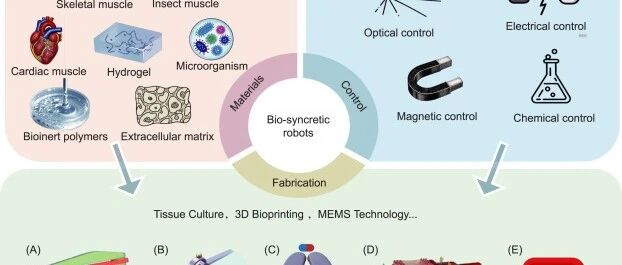
Core Viewpoint - The article discusses the rapid development of biohybrid robots, which are constructed from living cells and artificial materials, enabling them to efficiently utilize energy, self-repair, and execute precise commands like machines [1]. Group 1: Evolution of Biohybrid Robots - Traditional robots rely on motors and hydraulic systems, which have limitations in efficiency and adaptability to complex environments [5]. - The idea emerged to use biological components as the driving force for robots, leading to early experiments with muscle cells for simple movements [5][6]. - Advances in optogenetics and microfluidics have allowed for precise control of these robots, enabling them to respond to external stimuli and navigate obstacles [6][10]. Group 2: Materials and Manufacturing - The construction of biohybrid robots requires suitable living materials, such as cardiac muscle cells, skeletal muscle cells, insect muscle tissues, and microorganisms [11][13]. - Artificial materials like biocompatible polymers and hydrogels provide structural support and a conducive environment for cell growth [15][16]. - Techniques like 3D bioprinting and microfluidic perfusion are essential for creating complex three-dimensional structures and ensuring nutrient delivery [19][20]. Group 3: Control Mechanisms - Various control methods have been developed for biohybrid robots, including optogenetics, electrical stimulation, magnetic control, and chemical control [21][23][24]. - Optogenetics allows for high-precision control using light, while electrical stimulation mimics natural neural control [23][24]. - The integration of multiple control methods is being explored to enhance navigation and functionality in complex environments [24]. Group 4: Future Applications - Biohybrid robots have the potential to revolutionize healthcare, with applications such as biodegradable surgical robots and living tissue patches for repairing damaged organs [27]. - They can also be deployed for environmental monitoring and remediation, autonomously detecting and degrading pollutants [27]. - Future advancements may lead to biohybrid robots with learning and adaptive capabilities, resembling biological systems in processing information [27]. Group 5: Philosophical Implications - The research into biohybrid robots challenges fundamental questions about the boundaries between life and machines, prompting interdisciplinary collaboration among scientists and ethicists [28].
北大、BIGAI重磅推出TacThru传感器 实现触觉、视觉双感知突破操作精度直线飙升
机器人大讲堂· 2026-01-18 04:03
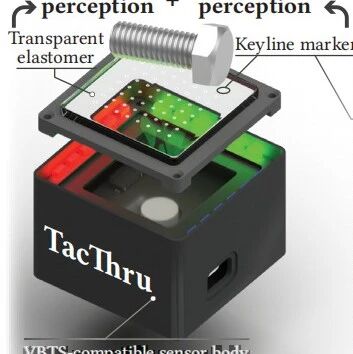
Core Viewpoint - The TacThru sensor developed by a research team from Peking University and Beijing General Artificial Intelligence Research Institute integrates tactile and visual perception, enhancing the precision of robots in delicate operations and contact-intensive tasks [3][4]. Group 1: Sensor Design and Functionality - TacThru employs a fully transparent elastic material, allowing the embedded camera to "see through" and capture tactile signals simultaneously, eliminating the need for complex mode-switching [10]. - The sensor features innovative "Keyline Markers," designed with concentric circles that maintain visibility even in complex backgrounds, enhancing tracking capabilities [12]. - Utilizing a Kalman filter algorithm, TacThru can accurately track the displacement of 64 markers, processing each frame in just 6.08 milliseconds, supporting high-frequency perception and real-time operations [15]. Group 2: Learning Framework and Data Integration - The TacThru-UMI imitation learning framework combines the TacThru sensor with a Transformer-based diffusion policy, creating an end-to-end learning system that intelligently integrates multimodal signals [16][19]. - The system processes four types of inputs: global visual information from a wrist camera, close-range visual images from TacThru, tactile data from marker displacements, and proprioceptive information from the robot, enabling dynamic attention allocation based on the scenario [19]. Group 3: Performance Validation - In five typical robotic operation tasks, TacThru-UMI achieved an average success rate of 85.5%, significantly outperforming pure visual (55.4%) and traditional tactile-visual solutions (66.3%) [20][24]. - In the "tissue extraction" task, TacThru excelled by capturing the position and deformation of soft tissues in real-time, achieving a much higher success rate compared to traditional methods [21]. - The "bolt sorting" task demonstrated TacThru's ability to distinguish subtle geometric and color differences, achieving an 85% success rate, far exceeding the 45% of traditional solutions [22]. Group 4: Paradigm Shift in Robotic Operations - TacThru represents a shift from single-sensor reliance to multimodal collaboration in robotic operations, allowing robots to adaptively choose between visual and tactile feedback [25]. - This transition expands operational boundaries, enhances robustness in complex environments, and lowers application barriers by being compatible with existing manufacturing processes [25].
硬核“机器人国家队”来了!这家企业牵头打造国家级智能采收实验室
机器人大讲堂· 2026-01-18 04:03
Core Viewpoint - The establishment of the "Intelligent Harvesting Robot Key Laboratory" by the Ministry of Agriculture and Rural Affairs marks a significant step towards addressing labor shortages in agriculture through the development of intelligent robots equipped with 3D vision and bionic arms [1][3]. Group 1: Establishment of the National Team - The newly approved laboratory is a timely response to the global issue of agricultural labor shortages, particularly in China, where the problem is more pronounced [3][4]. - The laboratory is led by Jicui Intelligent Manufacturing Technology Research Institute, in collaboration with Jiangsu Academy of Agricultural Sciences and Nanjing Agricultural Mechanization Research Institute [1][3]. Group 2: Technological Innovations - Jicui Intelligent has developed a leading intelligent harvesting technology system, successfully creating robots for harvesting tomatoes, strawberries, lychees, and apples [4]. - The core challenge for intelligent harvesting robots is accurately identifying and picking fruits in complex field environments, which traditional robots struggle with due to obstructions and lighting changes [6]. - Jicui's innovation includes a "perception-decision-execution" closed-loop process, utilizing a visual language model for multi-modal semantic perception to enhance fruit identification [6][7]. Group 3: Embodied Intelligence - "Embodied intelligence" is a key focus of the laboratory, emphasizing learning through interaction with the environment, akin to human intelligence development [10]. - The company has developed various embodied intelligence technologies, including a full-body visual motion attention strategy and remote operation technology based on large models [10][12]. Group 4: Challenges in Cost and Technology - The high cost of harvesting robots, ranging from 150,000 to 250,000 yuan for single-arm models and 500,000 to 800,000 yuan for multi-arm models, poses a barrier for small and medium-sized farms [15]. - Maintenance costs for domestic equipment are approximately 10,000 to 20,000 yuan annually, while imported equipment can reach 20,000 to 30,000 yuan, further deterring purchases [15]. - Despite a recognition accuracy exceeding 90% for mainstream models, challenges remain in extreme weather and complex scenarios, necessitating ongoing algorithm improvements [15]. Group 5: Integrated Innovation Model - The laboratory exemplifies an integrated innovation model, combining industry, academia, and research to create a complete innovation chain from basic research to industrial application [18]. - Jicui Intelligent is actively converting cutting-edge research into practical products and aims to establish a production base for nearly 10,000 intelligent robots by September 2026, which will significantly reduce manufacturing costs [18][20]. - The laboratory's short-term goal is to overcome key technical bottlenecks in intelligent harvesting robots, while the long-term vision includes expanding the application of agricultural robots across various farming processes [20][23].

机器人国际顶刊封面:用AI教会仿生人脸机器人“开口说话”—— 网红博主“U航”的人脸机器人登上Science Robotics封面
机器人大讲堂· 2026-01-17 04:04
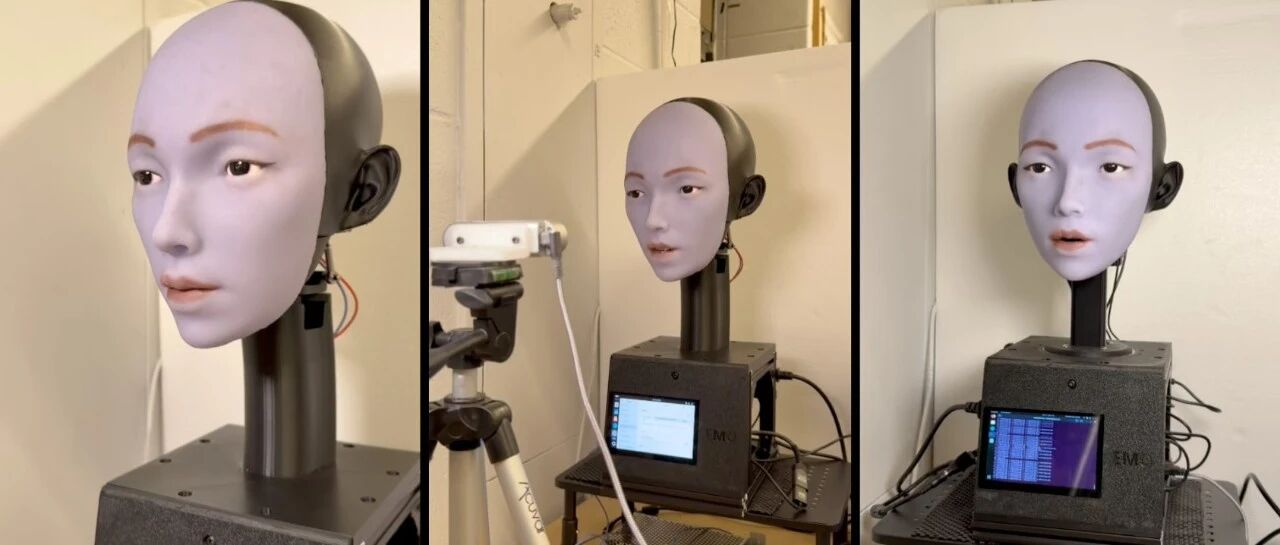
Core Insights - The article highlights the achievements of Hu Yuhang, a prominent figure in the field of bionic robotics, particularly his work on creating robots capable of realistic facial expressions and speech synchronization [1][10][25]. Group 1: Research and Development - Hu Yuhang has published multiple papers in top-tier journals, focusing on autonomous learning and self-modeling in robotics, leading to the establishment of his company, Shouxing Technology, which has attracted significant investment [3][10]. - The latest research published in "Science Robotics" introduces a novel hardware and software solution that enables humanoid robots to have expressive faces capable of synchronized lip movements with speech [12][25]. Group 2: Technical Innovations - The research employs a self-supervised learning framework called Facial Action Transformer (FAT), which allows for real-time generation of lip movements based on any audio input without prior examples [12][19]. - The hardware design features a unique mechanism with 10 degrees of freedom for the mouth, enabling complex facial expressions and accurate sound articulation [15][18]. Group 3: Performance and Adaptability - The system demonstrates significant improvements in lip-sync accuracy compared to traditional methods, with the ability to adapt to multiple languages, including Chinese, Japanese, and Russian, without specific tuning [22][24]. - The robot's performance in generating lip movements for AI-generated songs indicates a deep understanding of the underlying physical principles of human speech and facial muscle coordination [22][25]. Group 4: Future Implications - This advancement marks a transition in humanoid robotics from basic text interaction to more emotionally rich interactions, suggesting a future where robots can engage in nuanced human-like communication [25].
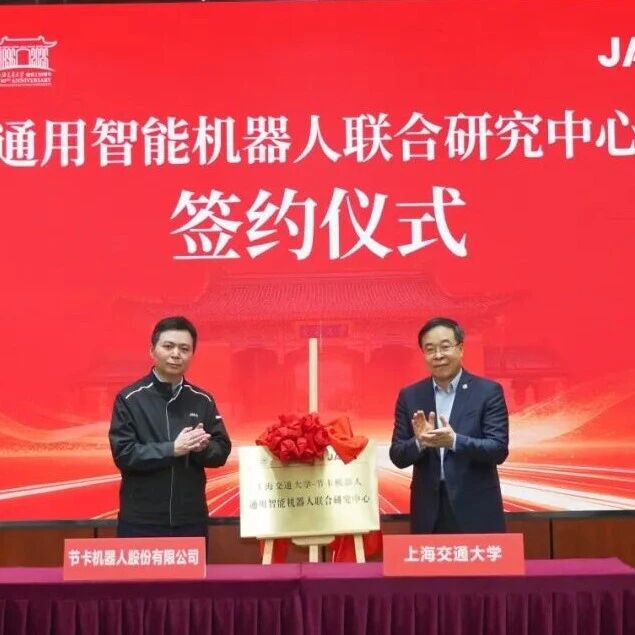
上海交通大学与节卡机器人共建通用智能机器人联合研究中心
机器人大讲堂· 2026-01-17 04:04
上海交通大学作为国内顶尖高等学府,拥有多学科交叉的科研底蕴,在机器人基础理论、核心部件研发等领域 积累深厚。 前不久, 上海交通大学 在2025年度增设具身智能本科专业, 该专业将融合人工智能、机械动 力、计算机科学与技术等多学科前沿知识,旨在培养跨"感知-决策-控制-本体设计"的复合型创新人才,填补现 有教育体系相关人才缺口。 节卡机器人作为全球领先的通用智能机器人公司,产品覆盖全球100多个国家和地区,广泛应用于汽车、电 子、新能源、精密制造与商业服务领域,沉淀了丰富的产业化应用经验。 节卡机器人目前还 已形成了从核心 部件到整机、从软件算法到场景解决方案的全栈布局,拥有轮式人形 JAKA Kargo、具身平台 JAKA Lumi 等产品。 ▍持续 发力具身智能 近日,上海交通大学与节卡机器人股份有限公司签署协议,共建 通用智能机器人联合研究中心 (以下简 称"联合研究中心"),聚焦通用智能机器人核心技术突破与产业应用,深化产学研深度协同创新。 ▍ 合作双方有何背景? 据悉,节卡机器人与 上海交通大学 共建的通用智能机器人联合研究中心, 将瞄准产业核心需求,攻关具身智 能关键技术、智能传感系统 设计制造等 ...
乐聚打响人形机器人“量产进厂”第一枪
机器人大讲堂· 2026-01-16 09:00
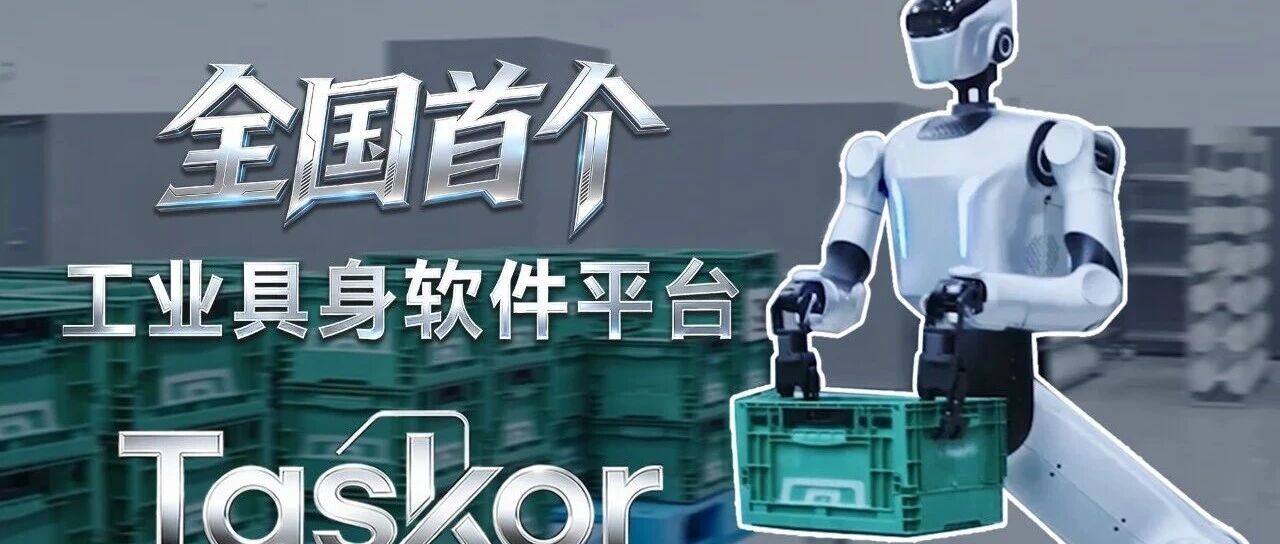
2026 年 1 月 ,两段视频在科技圈形成了奇妙的对比。 一段来自美国 Figure 公司:他们的机器人在实验室里优雅地制作咖啡,通过对话理解指令,自主完成从开柜 门到递杯子的全过程。视频结尾,机器人甚至还能整理一下台面。 另一段则在中国制造业的圈子里流传:乐聚机器人发布的 Taskor 平台演示中, 工厂管理人员在电脑上拖拽 几个图形模块,就编排好了一套完整的拆垛流程。点击 " 部署 " ,车间里的五台机器人同时开始工作 —— 没有一句语音指令,只有机械臂精准的起落。 前者像是一位天赋异禀的表演艺术家,在聚光灯下展示着机器智能的可能性;后者则更像一支训练有素的施工 队,在流水线上创造着实实在在的价值。 这种分化揭示了一个残酷的产业现实:教会机器人煮一杯咖啡,与让一百台机器人每天稳定完成一万次搬运, 解决的是完全不同维度的问题。 当埃隆 · 马斯克在特斯拉股东大会上调侃 "Optimus 有一天可能比汽车业务更值钱 " 时,中国工厂的车间主任 们在问一个更实际的问题: " 这些机器人,能对接我们的 MES 系统吗? " 01 工厂的人形机器人到底要什么? 这个春天,乐聚正式发布了这套 " 管理系统 "—— ...
开普勒全球首例“人机协作”高空焊接作业震撼亮相!
机器人大讲堂· 2026-01-16 04:01
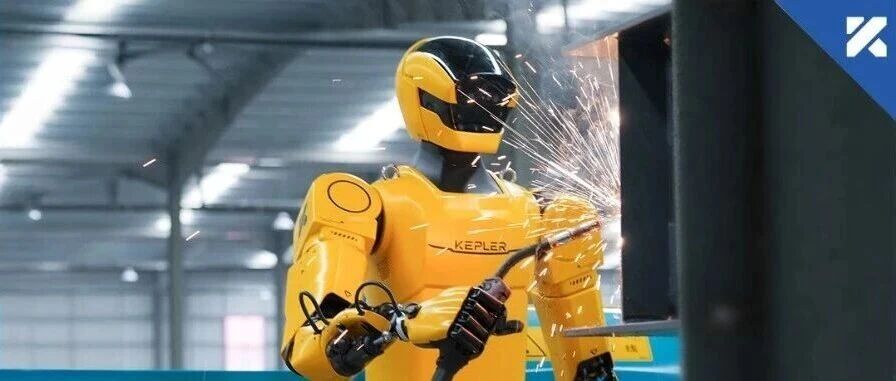
Core Viewpoint - The article highlights the successful application of humanoid robots in high-altitude welding tasks, showcasing the capabilities of the Kepler K2 Bumblebee robot in industrial settings, emphasizing its strong load capacity, long endurance, and autonomous evolution [1][2][12]. Group 1: Technology and Innovation - The Kepler immersive full-body remote control system integrates motion capture, low-latency communication, and force feedback, enabling precise 1:1 control of the robot [4][10]. - The system records multi-modal motion data during operations, allowing the robot to autonomously optimize its action strategies over time, significantly reducing the training period for new tasks from weeks to minutes [7][15]. - Key technological advantages include a transmission delay of less than 100 milliseconds, motion reproduction accuracy of 0.1mm, and real-time data collection for continuous learning [10][20]. Group 2: Market Demand and Pain Points - The article addresses the high incidence of accidents in high-altitude welding and the increasing demand for high-precision, strong-load, and long-endurance capabilities in industrial production [8][12]. - Traditional remote operation systems face challenges such as complex deployment, poor compatibility, and limited control capabilities, which the Kepler solution effectively overcomes [9][18]. Group 3: Safety and Efficiency - The Kepler solution aims to eliminate human presence in hazardous environments, allowing operators to control the robot from a safe distance, thus reducing the risk of accidents [13][14]. - With a load capacity of 30 kg and an operational endurance of 8 hours, the Kepler K2 Bumblebee can handle heavy industrial tasks, improving productivity by over 200% and enabling continuous operation [14][16]. Group 4: Flexibility and Deployment - The deployment of the Kepler system is straightforward, requiring minimal modifications to existing factory layouts, allowing for quick setup and ease of use by operators with basic training [18][20]. - The solution supports remote operation over distances of up to 2000 kilometers, facilitating the optimization of resources and expertise across different geographical locations [16][22]. Group 5: Future Outlook - The article emphasizes the potential of the Kepler system to redefine industrial production boundaries, making high-risk tasks routine for robots while enhancing human creativity in safer environments [22][23].
擎天租=机器人界的“滴滴”?
机器人大讲堂· 2026-01-16 00:03
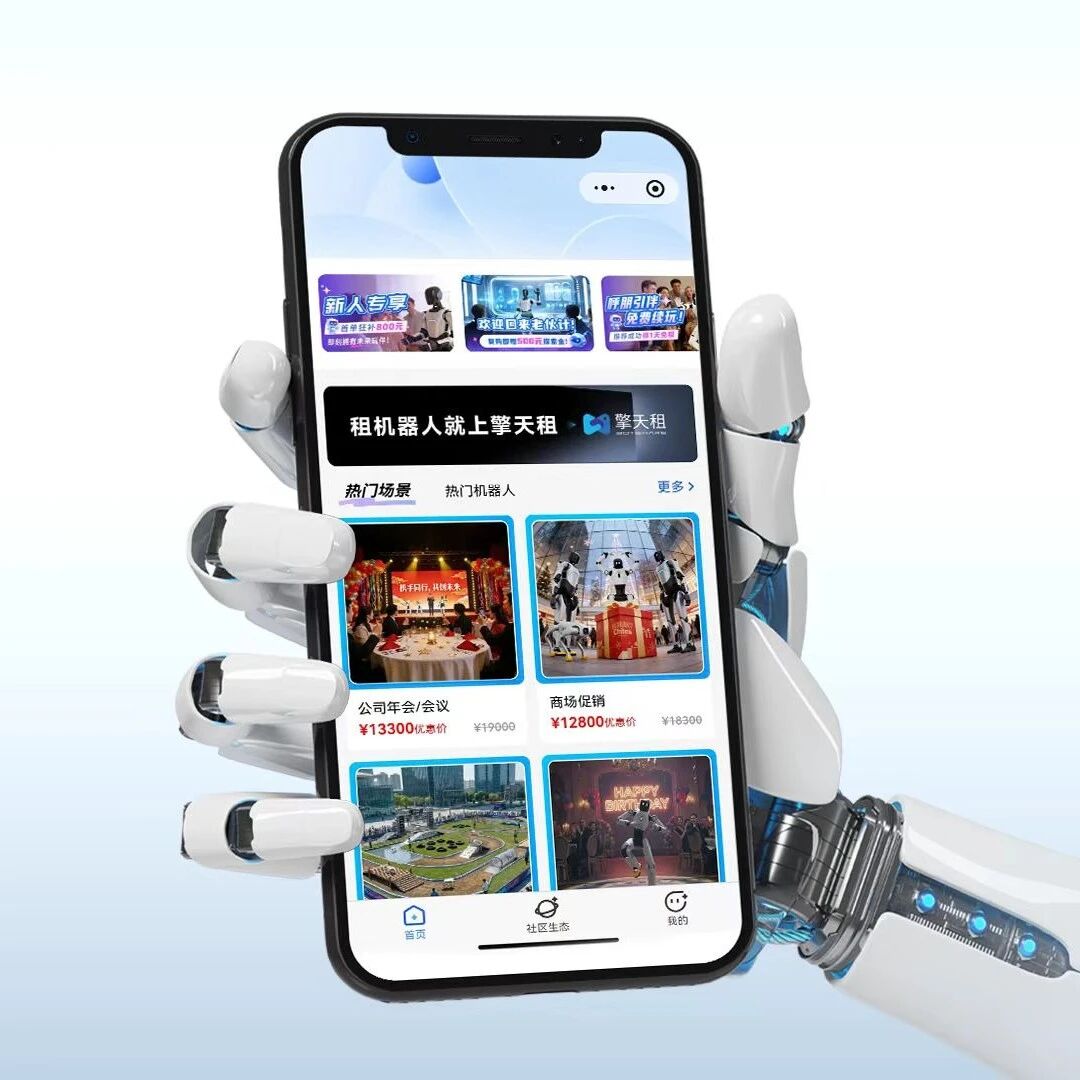
Core Viewpoint - The article discusses the rapid growth and potential of the robot leasing platform "Qingtian Rental," which aims to become the "Didi" of the robotics industry by making high-end robots accessible to a wider audience through a rental model [1][3][11]. Group 1: Business Model and Market Position - Qingtian Rental has secured seed funding from Hillhouse Capital and other investors just three weeks after its launch, indicating strong investor confidence [1]. - The platform has already attracted over 200,000 users and processes more than 200 orders daily, showcasing its rapid adoption [1][12]. - The company positions itself as a rental service for robots, similar to ride-hailing services, allowing businesses and individuals to rent robots for various events without the need for significant upfront investment [4][5]. Group 2: Industry Pain Points and Solutions - The high cost of commercial humanoid and quadruped robots has historically limited access to large enterprises, creating a gap that Qingtian Rental aims to fill [4][5]. - By offering robots for rent, the platform lowers the barrier to entry for small and medium-sized enterprises, enabling them to utilize advanced technology for events and marketing without the burden of ownership [5][11]. - The rental model allows for flexible pricing, with options ranging from 200 yuan per day to over 100,000 yuan, catering to various budgets and needs [10]. Group 3: Strategic Initiatives - The "1 yuan flash rental" strategy has been implemented in major cities to attract users, similar to Didi's promotional tactics, effectively educating the market about the availability of rental robots [12][14]. - Qingtian Rental has integrated over 600 service providers and more than 1,000 robots across 50 cities, achieving standardized delivery and enhancing competitive advantage [14][15]. Group 4: Team and Technical Support - The company is backed by Zhiyuan and Feikuo Technology, with a strong team that brings expertise in robotics, ensuring high-quality technical support and rapid development for specific applications [15][16]. - This partnership allows Qingtian Rental to provide original factory-level technical support, enhancing the reliability of its rental offerings [15]. Group 5: Future Challenges and Considerations - The sustainability of demand for robot rentals remains a concern, as current orders are heavily concentrated in event-driven scenarios, which may not provide consistent revenue [19][27]. - The platform's ability to maintain neutrality and fairness in its operations is questioned, especially given its ties to specific robot manufacturers [27][28]. - The profitability of the rental model is uncertain due to high maintenance costs and the need for significant scale to cover operational expenses [27][30].
全球首个基于视频转3D具身数据的数据集开源!动捕、遥操获取数据的时代要结束了?
机器人大讲堂· 2026-01-16 00:03
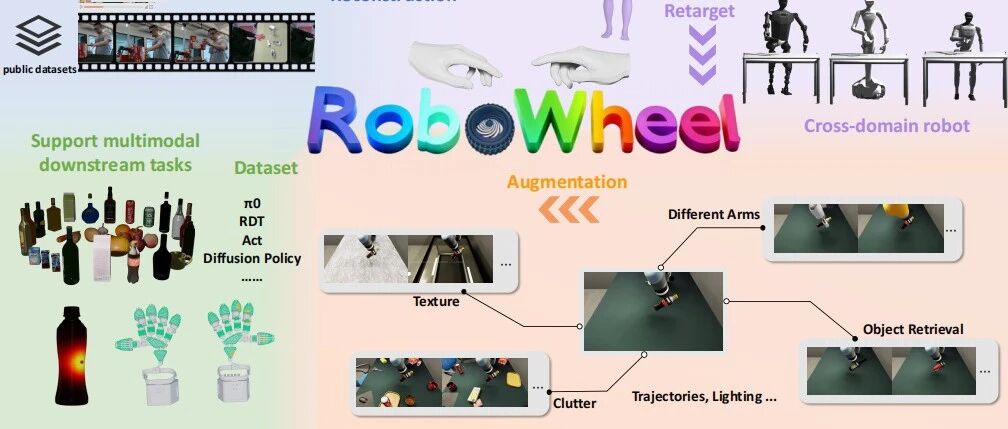
通过互联网视频提取具身智能训练数据,已成为行业突破 "数据荒"的 重要 方向 , 特斯拉早在 2025 年就明 确布局,Optimus 机器人已实现通过第一视角视频 学习 扫地、炒菜等 16 项任务,后续更 是加大使用 互联 网第三人称视频扩大训练规模,复刻 FSD 的成功路径。 国内不少企业也 在 跟进这一 技术路线 ,但行业 依旧 处于各自为战的状态 , 多数企业的数据仅服务于自有 模型,既不对外开源,也缺乏统一的质量评估标准,导致数据精度、一致性等核心指标无法量化验证,难以形 成协同效应。 不过,现在这种现状即将迎来转机。 在机器人学习领域, "数据荒" 一直是制约技术落地的核心痛点。传统机器人训练依赖昂贵的遥操作设备或专 业动捕工作室,不仅成本高企,还难以覆盖真实世界的多样化场景。而互联网上海量的人类手-物交互视频, 却因物理不一致、形态不匹配等问题,长期被挡在机器人训练的数据大门外 , 如果能够有效解决这个棘手问 题,那么机器人产业将面临一次彻底的变革。 近日,清华大学与枢途科技研发团队联合推出的 RoboWheel数据引擎正式发布 。该引擎可将普通单目 RGB/RGB-D 相机拍摄的人类手-物交互 ...