机器人大讲堂

Search documents
引领革新!鹿明机器人发布FastUMI Pro,定义具身智能数据采集新范式
机器人大讲堂· 2025-12-01 09:36
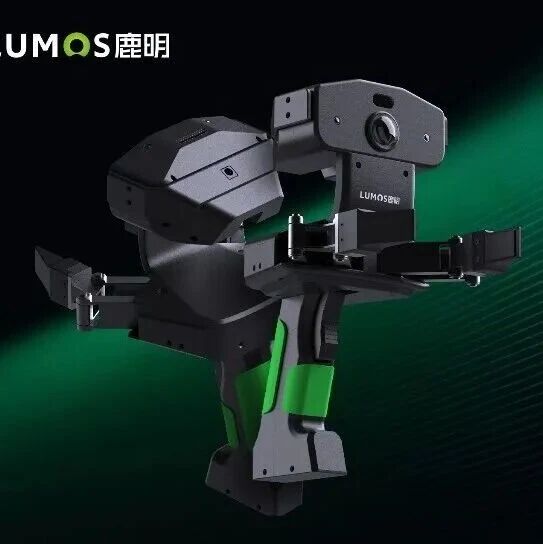
Core Viewpoint - Lumos Robotics has launched a revolutionary product, the FastUMI Pro, which addresses the critical bottleneck in acquiring high-quality, large-scale, multi-modal data essential for the advancement of embodied intelligence [1][21]. Group 1: Product Features - FastUMI Pro features a lightweight design with a total weight of only 600g and a load capacity of up to 2kg, enhancing portability and enabling data collection in any scenario [3][10]. - The system boasts a global leading pure visual positioning technology with an accuracy of up to 3mm, eliminating reliance on heavy laser and fixed base stations [6][17]. - It supports multi-modal data collection, integrating pressure-sensitive and tactile sensors, which allows for comprehensive data capture during operations [8][19]. - FastUMI Pro can quickly adapt to various robots without the need for body replacement, showcasing high compatibility [9]. - The system significantly improves data collection efficiency by three times and reduces costs to one-fifth of traditional solutions, addressing the industry's high-cost and high-barrier challenges [11][21]. Group 2: Ecosystem and Integration - FastUMI Pro is not just a hardware device but a complete ecosystem that provides an end-to-end solution from hardware design to model training, facilitating a seamless data pipeline for researchers [13][21]. - The system includes a real-time pre-processing architecture that allows users to verify data validity during collection, thus preventing ineffective data acquisition [19][20]. - It features a four-eye vision system that enhances environmental feature capture, ensuring stable operation even in challenging lighting and occlusion conditions [19]. Group 3: Market Impact - The introduction of FastUMI Pro marks a significant step for Lumos Robotics in the core infrastructure of embodied intelligence, aiming to lower the barriers for acquiring high-quality data [21]. - The product is positioned to accelerate the scaling process of intelligent systems by enabling global research teams to obtain diverse data at lower costs and higher efficiency [21].

杭州,为何成为机器人创新的“梦工厂”?
机器人大讲堂· 2025-12-01 04:00
Core Viewpoint - Hangzhou is transforming from a commercial city into a global hub for robotics innovation, leveraging its robust industrial ecosystem and technological advancements [1][3]. Group 1: Industry Ecosystem - Hangzhou's robotics industry ecosystem features over 200 related enterprises, creating a competitive industrial cluster across various segments such as "brain," "small brain," and "body" [4]. - The city has established a comprehensive ecosystem for embodied intelligence robotics, with key players in upstream components, midstream manufacturing, and downstream system integration [4][6]. - Notable companies include Yushutech, which leads in global humanoid robot shipments, and Yundongchu, which is set to deploy the first industry-level quadruped robot in Singapore's power grid [6][7]. Group 2: Innovation and Application - The robotics ecosystem in Hangzhou emphasizes a closed-loop model of "application - feedback - iteration," supported by strong innovation and talent bases [13]. - The city hosts 39 innovation research institutions related to robotics, including 4 national-level and 26 provincial-level centers, contributing to the development of national standards in the field [13][15]. - Hangzhou is constructing application pilot bases to integrate testing, standardization, and production, enhancing the practical application of robotics across various sectors [15]. Group 3: Policy Support - The Hangzhou government has implemented several supportive policies, including the "Hangzhou Robot Industry Development Action Plan," aiming for a robotics industry scale exceeding 50 billion yuan by 2025 [9][10]. - New regulations, such as the "Hangzhou Regulations on Promoting the Development of Embodied Intelligent Robotics Industry," provide a legal framework for industry growth [9][12]. - Financial incentives and tax benefits are part of the government's strategy to foster innovation and attract talent, creating a conducive environment for robotics development [12][10]. Group 4: Market Potential - The embodied intelligence industry in China is in its early stages, with market size projected to reach 400 billion yuan by 2030 and exceed 1 trillion yuan by 2035 [7]. - Hangzhou's complete industrial ecosystem positions it at the forefront of this growth wave, making it a key player in the global robotics market [7].


为机器人而生!NVIDIA 开启具身智能新纪元的终极大脑
机器人大讲堂· 2025-12-01 01:30
Core Insights - The next challenge for robots is not just to see accurately but to make correct decisions and actions based on what they see, requiring a new, generalized AI capability framework [1] - The global robotics industry is at a historical "singularity moment," transitioning from specialized to general-purpose robots driven by breakthroughs in AI technology [3] Group 1: Acceleration Towards Generalization - Achieving the vision of generalization in robotics requires unprecedented demands on foundational technologies, including significant advancements in computational power [4] - Training robots to understand the complexities of the physical world necessitates a shift from current kilowatt clusters to megawatt scales [4] - High-fidelity simulation platforms are essential for training robots, allowing them to learn through extensive trial and error in a digital twin environment [5] Group 2: Understanding Physical World Laws - The core of generalization is the robot's deep understanding of fundamental physical laws, such as gravity and friction, which is increasingly recognized in academic research [7] - The concept of world models is gaining traction, enabling robots to perform logical reasoning and predict the consequences of their actions [7][13] - A richer perception system is required, as single sensory inputs are insufficient for reliable actions in unstructured environments [8] Group 3: Paradigm Shift in Robotics - The robotics industry is experiencing a profound architectural restructuring, moving from tools to partners in embodied intelligence [9] - Traditional methods relying on manual programming are being replaced by a new paradigm that integrates simulation, world models, and edge computing [10] - The "simulation-first" approach is becoming central to the next generation of robot development, emphasizing the importance of digital twins throughout the entire lifecycle [12] Group 4: NVIDIA's Role in Robotics - NVIDIA's comprehensive solution, centered around the "three computers" architecture, aims to integrate cloud, edge, and endpoint capabilities to set new industry standards [15][17] - The introduction of the Jetson AGX Thor is a milestone product designed to support edge computing, crucial for real-time perception and decision-making in robots [22] - NVIDIA's open-source Isaac GR00T series models facilitate significant advancements in robot cognition and motion skills, simulating human cognitive processes [24] Group 5: Industry Adoption and Future Outlook - Numerous robotics companies globally are adopting NVIDIA's solutions, indicating a collective decision driven by efficiency and risk mitigation in the uncertain landscape of general-purpose robotics [33] - The transition to a "simulation-first" development paradigm, combined with robust edge computing, is propelling general robots from science fiction to commercial reality [35][36] - The integration of advanced technologies like NVIDIA's Jetson AGX Thor is making the path to achieving general-purpose robots clearer and more feasible [37]


登顶T-RO!清华仿生“海龟”机器人,实现水陆动态环境全自主适应
机器人大讲堂· 2025-11-30 15:55
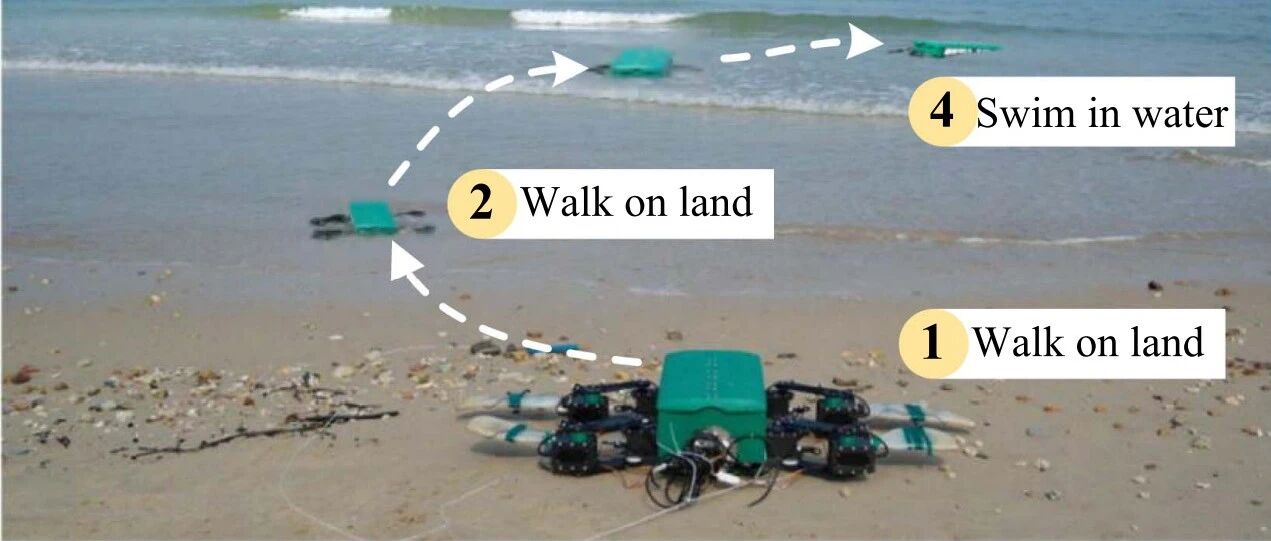
Core Insights - The article discusses the breakthrough research by Tsinghua University on an intelligent bionic amphibious turtle robot named "IBATR," which can operate effectively in both water and land environments, showcasing high adaptability and performance [3][20]. Group 1: Innovation and Design - IBATR is designed to mimic the physical and movement characteristics of a turtle, providing excellent stability and propulsion capabilities, making it suitable for complex coastal environments [6][7]. - The robot weighs only 10.48 kg, featuring a flat design with a waterproof cylindrical shell and a carbon fiber skeleton, ensuring both strength and lightweight properties [7][10]. Group 2: Sensory and Control Systems - IBATR incorporates a dual-modal perception system that combines visual and tactile information, allowing it to identify terrain types with an accuracy of 99.17% [11][14]. - The control system includes a Raspberry Pi 4B main controller and a STM32F103C8T6 servo control board, enabling real-time data transmission and motion state awareness [10][18]. Group 3: Adaptive Movement and Optimization - The robot can autonomously switch its movement modes based on terrain recognition, optimizing its locomotion for different surfaces such as grass, sand, and water [14][15]. - A Bayesian optimization algorithm is used to enhance movement parameters, achieving a balance between speed and energy efficiency, with improvements in speed by 9.2% and energy efficiency by 25.9% compared to traditional methods [17][19]. Group 4: Testing and Real-World Applications - Extensive testing in various environments, including indoor simulations and real coastal settings, demonstrated IBATR's ability to navigate complex terrains and switch between land and water seamlessly [18][19]. - The robot has potential applications in marine exploration, environmental monitoring, and disaster response, showcasing its versatility and effectiveness in real-world scenarios [20].
这家初创公司获美国政府1000万美元人形机器人订单!
机器人大讲堂· 2025-11-30 06:25
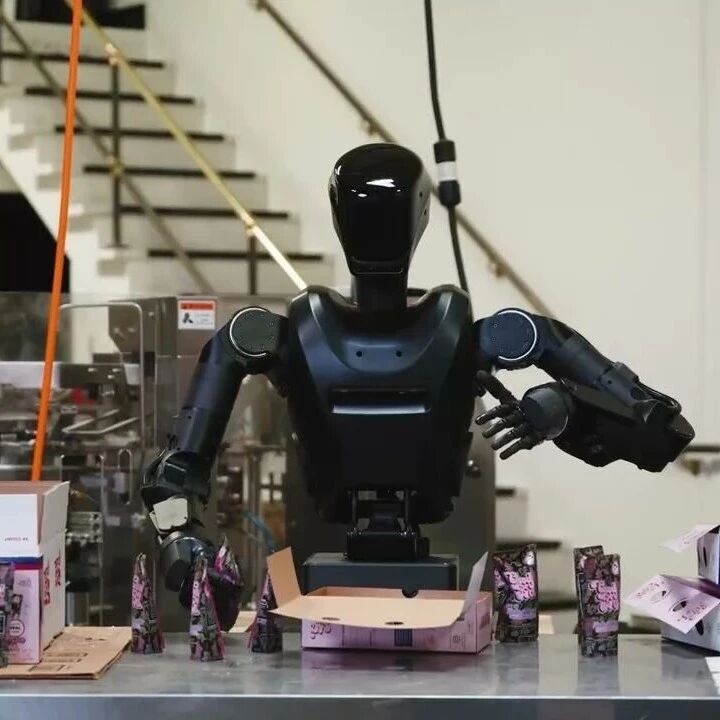
Core Insights - The Phantom MK1 humanoid robot developed by Foundation has received a $10 million procurement order from the U.S. government [1] - The robot is designed for high-risk scenarios, with applications in military logistics and space infrastructure [4][6] - Foundation aims to deliver thousands of these robots for specific tasks within the next 12 to 18 months, with a long-term vision of scaling to millions in the next decade [21] Group 1: Product Specifications and Applications - The Phantom MK1 is made of steel and plastic, standing 1.75 meters tall, weighing 80 kg, with a walking speed of approximately 6.4 km/h, a continuous load capacity of 20 kg, and a maximum operational height of 2.03 meters [3] - The robot is currently being piloted in industrial applications and is in discussions with the U.S. Department of Defense for military tasks such as aircraft maintenance and fuel supply [7][6] - Foundation has already produced about 10 units for industrial use, including applications in automotive manufacturing [6] Group 2: Company Background and Development Timeline - Foundation was established in 2023 by former executives from Synapse and Tribe Capital, along with a former Marine [4] - The company completed the acquisition of Boardwalk Robotics, which allowed for the development of the Phantom MK1 within 13 months from concept to deployment [10][12] - The initial production cost of the robot is around $150,000, with expectations to reduce the price by half as production scales [8] Group 3: Future Projections and Market Outlook - Foundation plans to launch a second-generation product in 2025, aiming for improved performance and simplified manufacturing processes [12] - Industry experts have mixed views on the future of humanoid robots, with predictions ranging from thousands of units in the next few years to millions in the next decade [21] - Challenges remain in terms of technology stability and the robot's ability to perform continuous operations, which Foundation is currently addressing [23] Group 4: Controversies and Ethical Considerations - The potential for weaponization of the Phantom MK1 has raised concerns, although Foundation currently has no plans to arm the robots [15][17] - The urgency of exploring robotic weaponization is increasing globally, with various countries already investigating this area [18] - The U.S. Department of Homeland Security has denied rumors of using the Phantom MK1 for border patrol tasks [20]
智源RoboCOIN重磅开源!全球本体数最多、标注最精细、使用最便捷的高质量双臂机器人真机数据集来了
机器人大讲堂· 2025-11-30 06:25
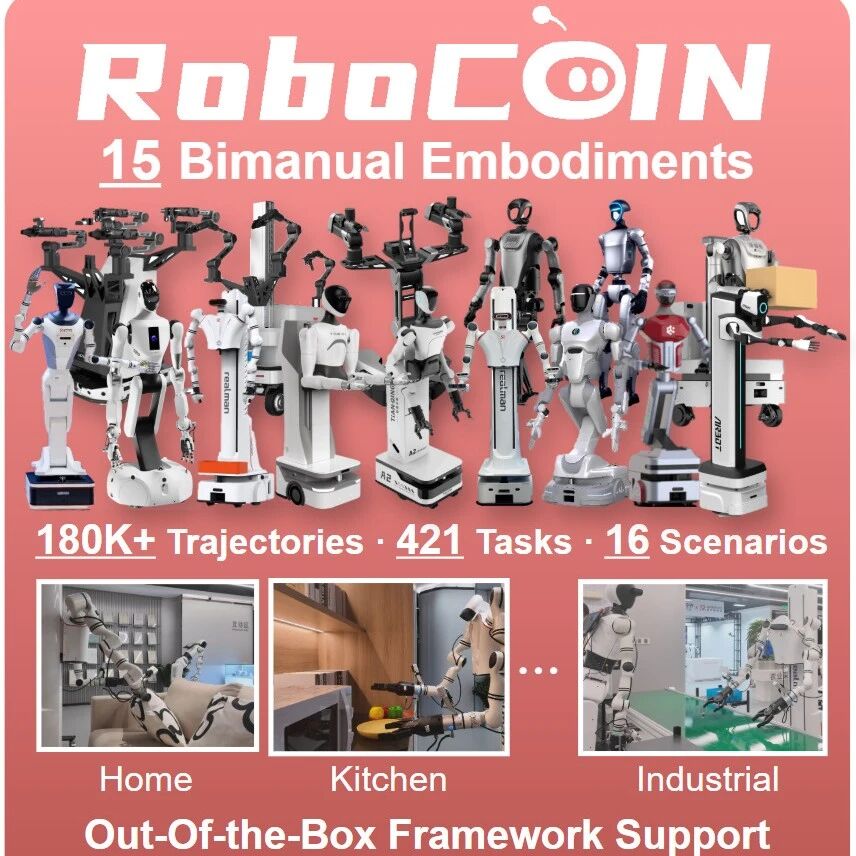
Core Insights - The article discusses the launch of RoboCOIN, a high-quality bimanual robotic dataset aimed at overcoming the challenges in embodied intelligence applications, particularly the scarcity of large-scale, high-quality, and multi-platform compatible robotic operation data [2][5]. Group 1: Challenges in Embodied Intelligence Data - The current embodied intelligence data faces three main challenges: lack of standards, weak quality control, and high usage barriers, which severely restrict industry development [3]. - Existing datasets are often characterized by insufficient real-world coverage, single-task focus, and excessive laboratory conditions, leading to a lack of generalizability across different robotic platforms [2][6]. Group 2: RoboCOIN Dataset Features - RoboCOIN dataset boasts three core advantages: it includes 15 heterogeneous robotic platforms, over 180,000 trajectories, and 421 tasks, making it the most diverse bimanual real-machine dataset globally [5][7]. - The dataset covers 16 types of real-world environments and includes 432 different objects, supporting 36 types of bimanual operation skills, thus creating a progressive task system from simple to complex [7][8]. Group 3: Data Quality and Annotation - The dataset is collected through human teleoperation, ensuring high quality with over 180,000 real trajectories, each equipped with multi-view images, joint states, and end-effector poses, all synchronized in time and unified in coordinate systems [8][9]. - RoboCOIN introduces a "Hierarchical Capability Pyramid" for multi-resolution annotation, enhancing data information density and teaching value, allowing models to learn "what to do," "how to do it," and "how to do it accurately" [10][19]. Group 4: CoRobot Software Framework - To support the efficient construction and application of RoboCOIN, the CoRobot software framework has been developed, featuring three core components: RTML for trajectory markup, an automated annotation toolchain, and a unified multi-embodiment management platform [12][13][16]. - The RTML significantly improves data reliability by automatically evaluating and filtering low-quality trajectories [13]. Group 5: Performance Improvement - Experiments on real robotic platforms show that the introduction of RoboCOIN's hierarchical annotation has increased the success rate of complex tasks from 20% to 70% [19]. - Training models with high-quality data filtered through RTML has resulted in an average success rate improvement of 23%, validating the "quality over quantity" data paradigm [20]. Group 6: Community and Collaboration - The initiative encourages global researchers and developers to join the RoboCOIN community, aiming to build a new ecosystem for embodied data and promote the transition of embodied intelligence from laboratories to various industries [22][23].
突发!日本重启人形机器人计划!
机器人大讲堂· 2025-11-30 06:25
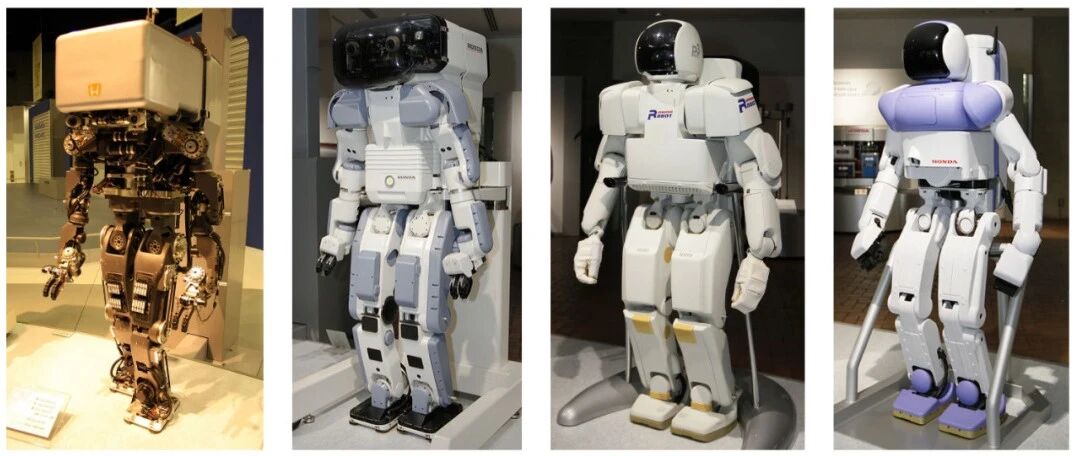
Core Viewpoint - The Japanese government is preparing to inherit or restart the unfinished business of Asimo in the humanoid robot field, aiming to develop AI-driven humanoid robots for workplaces and homes by 2030, with a long-term goal of creating multifunctional humanoid robots by 2050 that can perform all human tasks and make independent decisions [1][4]. Group 1: Current Status of Humanoid Robotics in Japan - Despite rumors of Japan exiting the humanoid robot competition after Honda discontinued Asimo, the country's technological strength and research enthusiasm in this field have not diminished [4][6]. - Major Japanese institutions like Toyota Research Institute and Kawasaki Heavy Industries continue to hold patents and advance humanoid robot technology [6]. Group 2: Key Players and Developments - Toyota Research Institute (TRI) has been focusing on humanoid robotics since its establishment in 2015, collaborating with Boston Dynamics to enhance the Atlas robot's autonomous task handling capabilities [7][10]. - The collaboration with Boston Dynamics aims to integrate TRI's large behavior model into Atlas, allowing it to autonomously generate control signals based on various inputs [10][12]. - TMSUK, a representative company in service robots, has developed humanoid robots for various fields, including a dental training robot that simulates children's behavior for training purposes [13][15]. Group 3: Future Plans and Collaborations - TMSUK plans to develop a prototype humanoid robot for disaster response by the end of 2026 in collaboration with several institutions [19]. - Kawasaki Heavy Industries has iterated its Kaleido series of humanoid robots, with the latest models capable of complex tasks and enhanced human interaction features [34][36]. - Murata Manufacturing is also involved in humanoid robotics, with plans to start trials for domestically produced humanoid robots by March 2026 [33]. Group 4: Global Context and Competition - Other countries, such as South Korea, are also advancing in humanoid robotics, with plans to develop commercial humanoid robots by 2028, involving major tech companies [39][41]. - The global landscape for humanoid robotics remains competitive, with no standout companies achieving mass production yet, indicating that the industry is still in its early stages [41][42].
绕过大脑思考,超材料机赋予机器人身体本能! | Science Robotics
机器人大讲堂· 2025-11-30 06:25
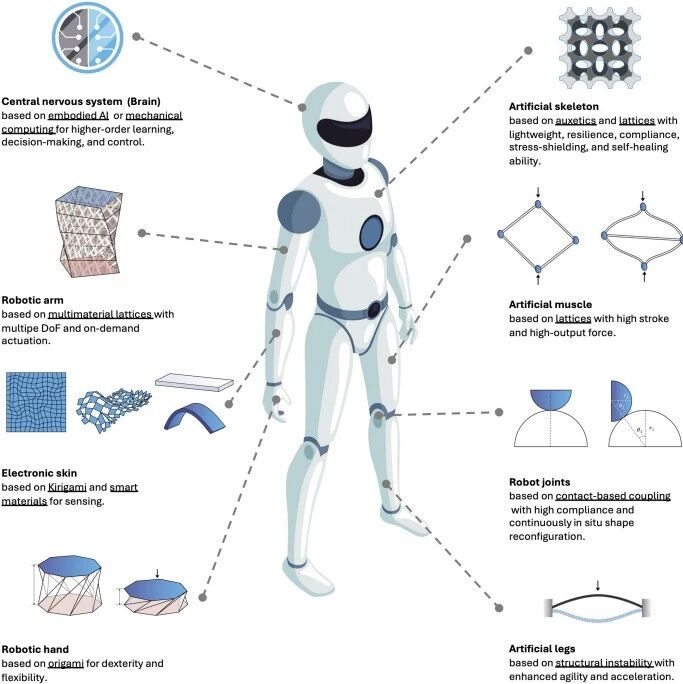
Core Concept - The article discusses a silent revolution in robotics, focusing on the integration of "mechanical metamaterials" to enhance robots' capabilities by allowing them to perceive, react, and adapt autonomously, merging central command with instinctive responses [1][4]. Group 1: Current Challenges in Robotics - Traditional robots operate on a "brain + body" model, where a central processor controls all functions, leading to limitations in flexibility and responsiveness [5][9]. - Current robotic systems are often heavy and rigid, making them unsuitable for delicate tasks that require safe interaction [6][9]. - The reliance on a central brain for every action creates bottlenecks, especially in unpredictable environments where rapid response is crucial [9][10]. Group 2: Mechanical Metamaterials - Mechanical metamaterials are defined as intelligent materials with programmable structures that can directly interpret and execute complex mechanical commands [7][11]. - The design principles of metamaterials include mechanics-inspired architectures, reconfigurable structures, and material-driven functionalities, which collectively enhance robots' physical capabilities [8][11][17]. Group 3: Innovations in Robotic Design - The first principle involves creating lightweight yet strong lattice structures that allow for adaptable flexibility and energy storage for rapid movements [11][12]. - The second principle utilizes origami and kirigami techniques to enable robots to dynamically change their shapes, enhancing their adaptability to various environments [13][15]. - The third principle integrates responsive materials that allow robots to sense and react to their surroundings, effectively merging sensory and motor functions [17][19]. Group 4: AI and Metamaterials - The integration of AI with metamaterials is seen as a key to overcoming current design challenges, allowing for efficient modeling and intelligent control of robotic systems [23][24]. - AI can assist in reverse engineering designs based on desired functionalities, improving the efficiency of creating complex metamaterial structures [24][26]. Group 5: Future Vision - The ultimate vision for metamaterial robots is a deep integration of embodied intelligence, where robots can operate more like biological entities, with distributed sensory and decision-making capabilities [27][28]. - Future robots are expected to function effectively in dynamic environments, with the ability to self-assemble and reconfigure into different forms as needed [28].
机器人的“折纸”骨架如何实现“小身材,大能量”?
机器人大讲堂· 2025-11-29 04:04
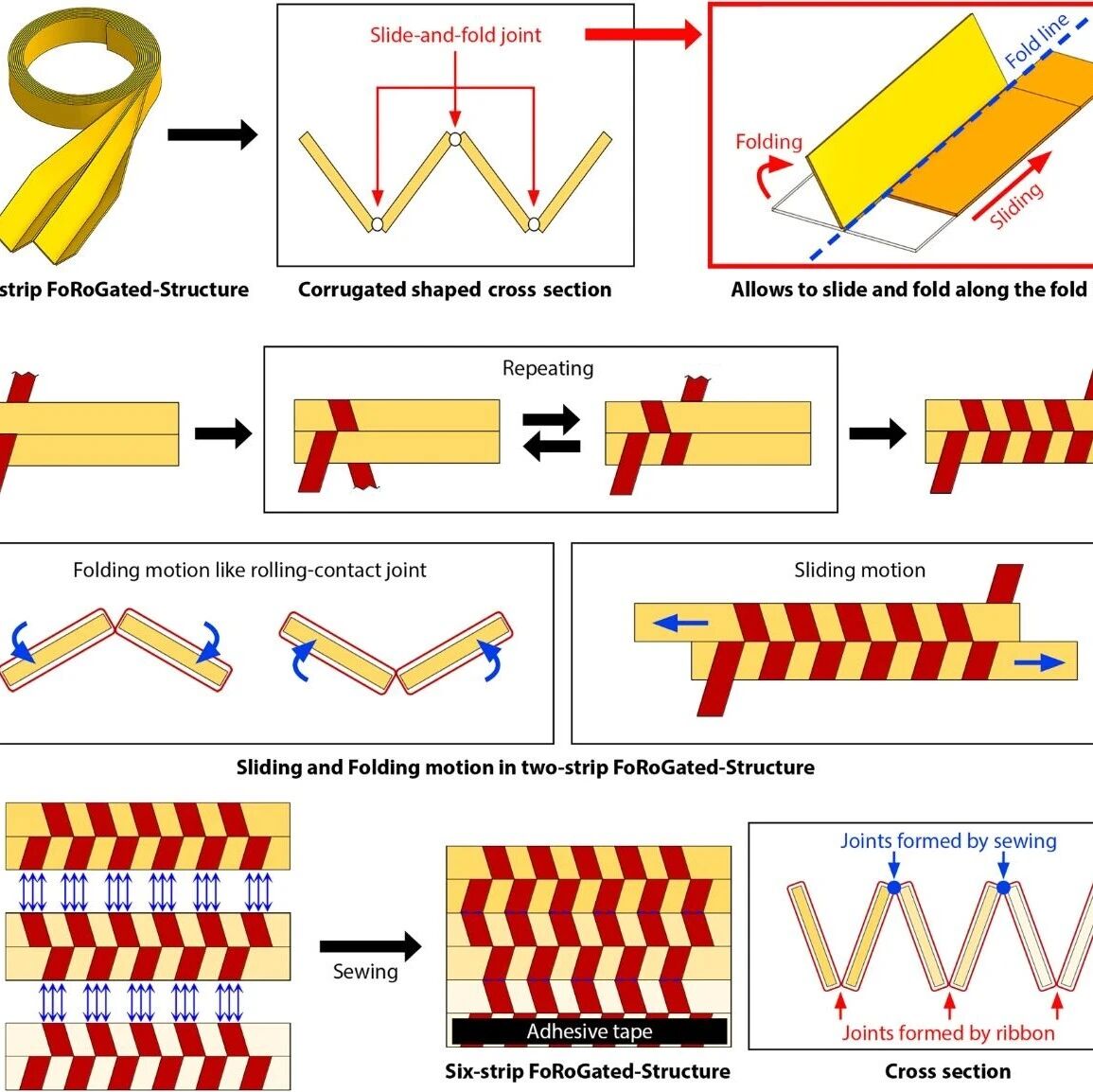
Core Insights - The article discusses the innovative FoRoGated structure developed by a research team from Seoul University, which combines origami techniques and weaving to create a highly efficient and scalable robotic mechanism [4][10][12]. Group 1: Technology and Innovation - The FoRoGated structure addresses the challenge of creating a compact yet strong robotic arm that can both store efficiently and bear significant loads [5][9]. - Traditional telescopic mechanisms face limitations in terms of bending resistance and compactness, often requiring trade-offs between strength and size [6][9]. - The new design allows for a multi-layer structure that provides high strength and rigidity while maintaining compact storage capabilities [10][12]. Group 2: Performance Evaluation - The mechanical performance of the FoRoGated structure shows high scalability and directional strength, with bending stiffness and critical load capacity increasing linearly with the number of strips used [18][19]. - In comparative tests, a two-strip FoRoGated structure demonstrated 1.55 times the bending stiffness and over three times the critical bending moment of traditional structures like the TRAC arm [21]. - As the number of strips increases, the strength in non-primary directions also significantly improves, making it suitable for complex loading conditions [21]. Group 3: Practical Applications - The article highlights two impressive applications of the FoRoGated structure: a compact shelf-operating robot and a deployable mobile 3D printing robot [22][28]. - The compact robot features a FoRoGated structure that can extend to 1.6 meters while carrying a load of 0.5 kilograms, showcasing its utility in everyday environments [23][28]. - The 3D printing robot can expand to a height of 3.43 meters and support a 12.5-kilogram 3D printing system, demonstrating the structure's stability and precision in high-demand tasks [32].
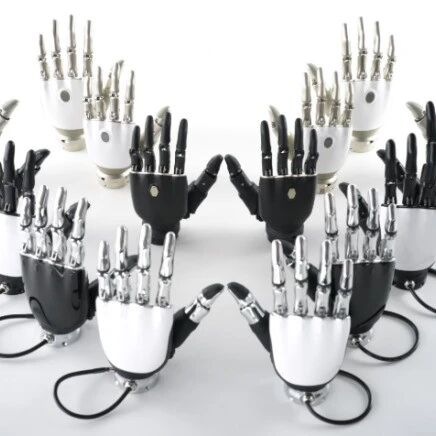
让机器拥有一双“巧手”,这家中国公司年内融资超三亿
机器人大讲堂· 2025-11-29 04:04
Core Viewpoint - Shanghai Aoyi Information Technology Co., Ltd. has successfully completed a strategic financing round of over 100 million yuan, marking its third financing of this scale within the year, indicating strong market recognition of its innovation in embodied intelligence and brain-machine interface fields [1][12]. Group 1: Company Overview - Founded in 2015, Aoyi Technology has established a comprehensive technology research and development system covering robotics, neural interfaces, and artificial intelligence, with a focus on the intersection of embodied intelligence and neural interface technology [2][4]. - The company has built a complete capability for self-research and production of core components, achieving a full-chain layout from research and development to mass production, with its core product, the dexterous hand, ranking among the top in the domestic market [2][4]. Group 2: Product Development - Aoyi Technology has developed a three-in-one self-research platform focusing on neural interfaces, robotics, and AI algorithms, successfully overcoming the "cost + system parameters + system stability" challenges in the dexterous hand industry [4][5]. - The ROHand series of dexterous hands has been commercialized, with the ROH-AP001 model featuring high integration design and industrial-grade bionic structure, capable of sensing minute pressure changes and adaptable to various application scenarios [4][5]. Group 3: Market Position and Trends - The dexterous hand industry is experiencing explosive growth, with a significant market potential for humanoid robots that can handle multiple tasks, indicating a shift towards multifunctional robots [8]. - The global market for embodied robots is expected to exceed 100 billion USD by 2030, with urgent domestic demand for localization of core components like dexterous hands [8][12]. Group 4: Strategic Partnerships - The recent investment from Redick, a comprehensive bearing manufacturing company, is a strategic move for both companies to explore collaborative innovation in high-end equipment and intelligent interaction [10]. - Aoyi Technology aims to leverage Redick's resources to enhance its leading position in end-effectors and become a key supplier of core components for global embodied robots [10][12]. Group 5: Future Plans - The funds from the latest financing will primarily be used for upgrading mass production capabilities, full-scenario technology research and development, and global market expansion [12]. - Aoyi Technology is expected to further increase its market share in the domestic dexterous hand localization wave, contributing to the high-quality development of the domestic embodied robot industry [12].