13个精算师

Search documents
友邦人寿2025上半年业绩稳健增长,多维战略深耕中国内地保险市场
13个精算师· 2025-08-22 09:59
Core Viewpoint - AIA's subsidiary, AIA Life, has demonstrated strong growth in the Chinese insurance market, with several key operational indicators showing steady improvement in the first half of 2025 [1][2]. Group 1: Financial Performance - AIA Life achieved insurance business revenue of RMB 49.708 billion in the first half of 2025, representing a year-on-year growth of 14.1% [2]. - The new business value for the first half of 2025 was USD 743 million, with a 10% increase before accounting for economic assumption changes, and a 15% growth in the second quarter [2]. - The new business value margin was 58.6%, an increase of 2 percentage points year-on-year [2]. - As of the end of the second quarter of 2025, AIA Life's comprehensive solvency adequacy ratio was 410.03%, and the core solvency adequacy ratio was 287.82%, maintaining a AAA risk rating for two consecutive quarters [2]. Group 2: Market Potential - By 2030, the middle class and affluent population in mainland China is expected to exceed 550 million, with a significant increase in the aging population, projected to reach 40% by 2050 [3][5]. - There is a substantial gap in health and pension insurance, with a life insurance protection gap exceeding USD 600 billion and a health insurance protection gap exceeding USD 1.4 trillion by 2024, accounting for 50% of similar gaps across Asia [3][5]. Group 3: Competitive Advantages - AIA Life's marketing agent team is a key competitive advantage, with the average new business value per agent in 2024 being 2.9 times higher than the industry average [8]. - Since 2017, the new business value generated by AIA Life's agents has increased by 60%, while the market has declined by over 40% during the same period [10]. - AIA Life focuses on customer lifetime value with a differentiated product portfolio that meets various life stage needs, with over 90% of agents selling protection policies [11][13]. Group 4: Innovation and Technology - AIA Life has upgraded its "Health You Walk" app to "AIA You Share," transforming it into a comprehensive digital platform for customer interaction, facilitating over 5 million online customer interactions in 2024 [23][25]. - The integration of artificial intelligence in the "AIA You Share" platform has improved customer resource integration and marketing efficiency, achieving a 19% conversion rate for high-intent customer leads [25][30]. Group 5: Strategic Expansion - AIA Life plans to expand into new markets, targeting 1-2 new provinces annually from 2025 to 2030, with a goal of achieving a compound annual growth rate of 40% in new business value in these regions [35]. - The company has established 14 provincial-level institutions and aims to leverage its marketing channels and differentiated bancassurance models to drive growth in new markets [33][35].

众安发布2025半年报:AI重塑保险价值链,半年度承保综合成本率历史最优
13个精算师· 2025-08-21 11:06
Core Viewpoint - ZhongAn Online reported a significant increase in net profit and total premium for the first half of 2025, indicating strong performance across its insurance segments and a focus on technology-driven growth [3][4][28]. Group 1: Insurance Segment Performance - Total premium reached 166.61 billion yuan, a year-on-year increase of 9.3%, outperforming the overall growth rate of the property insurance industry by 4 percentage points [5][28]. - The self-operated channel contributed 36.97 billion yuan to total premium, accounting for 22.2% of the total, with a year-on-year growth of 16.9% [7]. - Health and automotive ecosystems were key contributors, with health premiums at 62.75 billion yuan (up 38.3%) and automotive premiums at 14.78 billion yuan (up 34.2%) [9][10]. Group 2: Underwriting Profit and Cost Ratio - The comprehensive cost ratio improved to 95.6%, a decrease of 2.3 percentage points year-on-year, marking the lowest half-year ratio in company history [14][16]. - Underwriting profit reached 627 million yuan, an increase of 346 million yuan year-on-year, driven by improved claims ratios [16][18]. - The health ecosystem's cost ratio was 92.9%, while the automotive ecosystem's cost ratio improved to 91.2% [17]. Group 3: Banking Division Achievements - ZA Bank achieved a historic turnaround with a net profit of 49 million HKD, and net income increased by 82.1% to approximately 457 million HKD [18][19]. - The bank's customer deposits grew by 8.8% to about 211 billion HKD, indicating strong market positioning [19]. Group 4: Technology Division Growth - Technology revenue reached 496 million yuan, a year-on-year increase of 12.2%, with over 1,000 clients served [20][23]. - R&D investment totaled 398 million yuan, focusing on AI, big data, and cloud computing to enhance the insurance value chain [23][24]. - The AI platform significantly improved operational efficiency, with a claims processing time reduction of 70% for small injury cases [24]. Group 5: Market Sentiment and Future Outlook - Norges Bank increased its stake in ZhongAn Online, reflecting foreign confidence in Chinese insurance assets and the effectiveness of the company's dual-engine strategy of "insurance + technology" [27][28]. - Analysts expect continued growth in health insurance innovation and profitability in the automotive insurance sector, driven by regulatory support and market trends [28].

2024年度全球主要上市保险公司加权ROE为14.7%,创近五年来新高!中国上市公司大幅提高!
13个精算师· 2025-08-20 11:03
Core Viewpoint - The 2024 global insurance companies' weighted ROE reached 14.7%, marking a five-year high, with significant improvements in Chinese listed companies [1][11][15]. Group 1: Global Insurance Companies' Performance - The 2024 ROE for 41 major global listed insurance companies was calculated, with a notable increase in China's ROE to 16.2%, up by 6.7 percentage points year-on-year [1][15]. - The highest ROE among Chinese listed companies was achieved by Xinhua Insurance at 25.9%, while the highest globally was recorded by Progressive Insurance at 35.5% [1][8][24]. - The average ROE for the US market was 14.6%, down by 2.1 percentage points, while Europe saw an increase to 16.4%, up by 2.0 percentage points [1][15]. Group 2: Distribution of ROE - The distribution of ROE among the 41 companies showed a normal distribution pattern, with most companies falling within the 10% to 25% range [22]. - There were two companies with ROE exceeding 30%, while four companies had ROE below 5%, indicating a disparity in performance [22]. Group 3: Profitability Rankings - Berkshire Hathaway led the profitability rankings with a net profit of $89 billion in 2024, followed by China Ping An with $17.61 billion and China Life with $14.88 billion [17][19]. - The profitability of the listed insurance companies was significantly impacted by the implementation of IFRS 9 and IFRS 17, enhancing the comparability of key operational indicators [5][10].





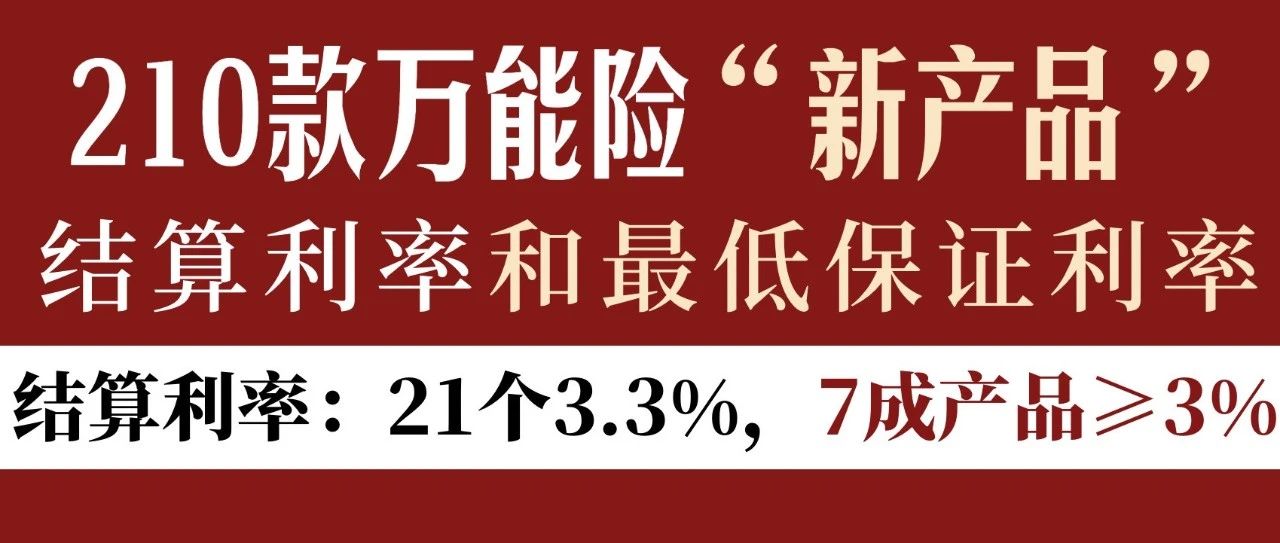
210款万能险的结算利率和最低保证利率:21个3.3%,73个3.0%,7成结算利率≥3%...
13个精算师· 2025-08-19 16:01
Core Viewpoint - The article discusses the trends and changes in the insurance market, particularly focusing on the new universal insurance products launched in 2024, their settlement rates, and minimum guaranteed rates, highlighting the competitive landscape among major insurance companies [1][12]. Summary by Sections Universal Insurance Products - 210 new universal insurance products have been launched in 2024, with 70% of them having a settlement rate of at least 3% [1]. - Among these, 21 products have a settlement rate of 3.3%, while 73 products have a rate of 3.0% [1]. Settlement Rates and Stability - Major insurance companies, referred to as "old six," have maintained a stable settlement rate around 3% for their universal insurance products [1]. - The minimum guaranteed rate for universal insurance is crucial as it sets the lower limit for future settlement rates [1]. Changes in Guaranteed Rates - As of September, the guaranteed rates for various insurance products are set to decrease, with the maximum guaranteed rate for universal insurance dropping to 1.0% [12]. - This change is a response to the current market conditions, where the highest pricing for ordinary insurance products has been adjusted due to regulatory triggers [12]. Market Dynamics - The article notes an increase in activity among insurance agents as they promote the last opportunities to purchase products before the rate changes take effect [12]. - The competitive landscape is characterized by a focus on floating yield products, with universal insurance settlement rates being more transparent and directly observable [13].

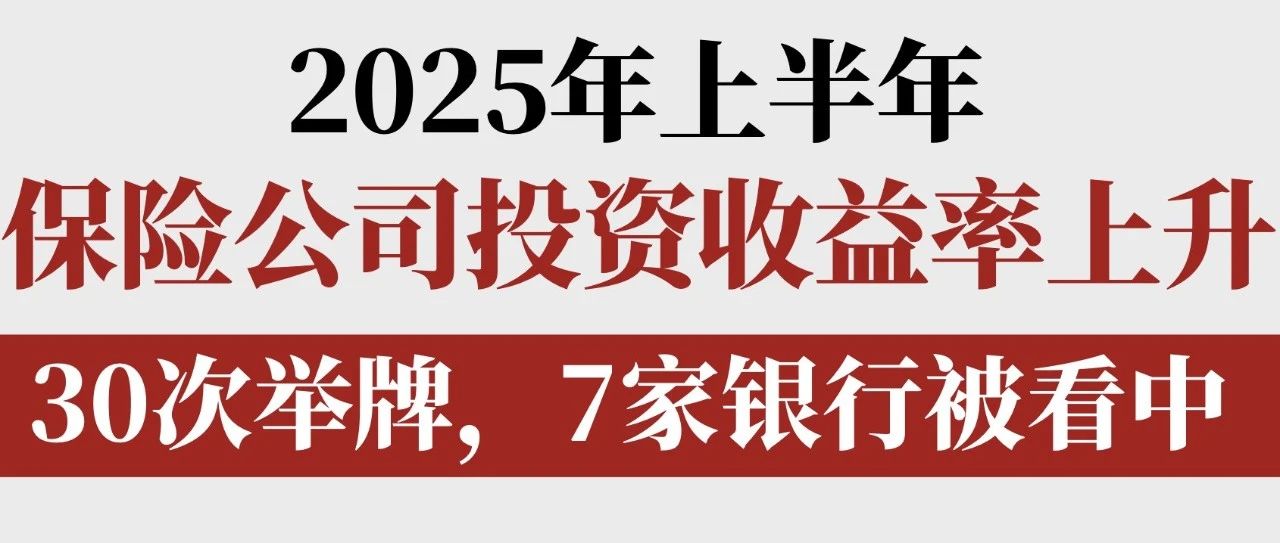
首破36万亿!举牌30次!2025年上半年保险公司投资资金增加,7家银行被看中,时隔六年再度举牌同业!
13个精算师· 2025-08-18 15:57
Core Viewpoint - The insurance funds have reached a historical high of 36 trillion, with stock investments surpassing 3 trillion for the first time, indicating a significant increase in investment activity in the capital market [1][2][4]. Group 1: Insurance Fund Growth - As of the first half of 2025, the total investment funds of insurance companies exceeded 36 trillion, marking a nearly 25 trillion increase over the past decade, with an average annual growth rate exceeding 10% [4][5]. - The increase in insurance funds is attributed to continuous growth in premium income and stable profitability [4]. Group 2: Stock Investment Surge - Insurance companies' direct investments in stocks have increased by approximately 1 trillion compared to the same period last year, reaching over 3 trillion for the first time [7][5]. - The growth in stock investments is supported by favorable policies encouraging long-term capital market participation and a shift in product development towards dividend insurance products [7][5]. Group 3: Shareholding Activities - In 2025, insurance companies have made 30 shareholding actions involving 23 companies, indicating a notable increase in activity [12][15]. - Seven banks have been targeted for shareholding, including Postal Savings Bank, China Merchants Bank, and Agricultural Bank, with multiple actions taken against these institutions [9][18]. Group 4: Investment Returns - The investment yield for life insurance companies has increased significantly in the first half of 2025, with many companies experiencing stock price increases exceeding 20% [25][23]. - The average annualized investment yield for non-listed life insurance companies is expected to be around 3.4% due to the growth in equity investment returns [25][23]. Group 5: New Product Development - Over 90% of new dividend insurance products launched in 2025 have achieved a dividend realization rate exceeding 100%, with actual yields around 3.05% [28][26]. - The focus on high-dividend assets is evident as insurance companies seek to enhance their investment returns in response to declining interest rates [21][20].
【保险学术前沿】文章推荐:2025全球保险业展望:运营模式革新,塑造行业未来
13个精算师· 2025-08-17 02:04
Core Insights - The insurance industry is undergoing significant transformation driven by rising interest rates, inflation, and emerging risks, necessitating a shift from traditional risk assessment to more proactive management strategies [5][6][8]. Non-Life Insurance - The U.S. non-life insurance sector achieved an underwriting profit of $9.3 billion in Q1 2024, a significant recovery from a loss of $8.5 billion in the same period last year, driven by multiple rounds of rate increases [10]. - The industry faces challenges including rising claims costs due to social inflation and geopolitical tensions, which require careful risk assessment and management [11][16]. - Global natural disaster losses exceeded $100 billion for the first time in six years, highlighting the need for reinsurance companies to closely monitor and reassess underwriting risks [11][16]. Life Insurance and Annuities - The high interest rate environment has stimulated demand for savings-related products, with U.S. annuity sales reaching $385 billion in 2023, a 23% increase year-over-year [21]. - There is a significant protection gap in the U.S. life insurance market, estimated at $25 trillion, and a global retirement savings gap of approximately $70 trillion [25][26]. - Life insurance companies must modernize core systems and optimize processes to sustain long-term growth and profitability [25][32]. Group Insurance and Employee Benefits - The group insurance sector has benefited from high renewal rates and wage inflation, but growth may slow due to a projected increase in unemployment rates [33][34]. - Employers are increasingly recognizing the importance of benefits packages in attracting and retaining talent, with over 70% of respondents in a consumer confidence survey indicating that benefits are crucial [34]. AI and Digitalization - 76% of U.S. insurance companies have implemented generative AI in at least one business area, with claims and customer service being the primary focus [36]. - The AI liability insurance market is projected to grow at a compound annual growth rate of 80%, potentially generating $4.7 billion in annual premiums by 2032 [20]. Emerging Areas - Embedded insurance is expected to exceed $722 billion globally by 2030, driven by partnerships with industries such as automotive and real estate [20]. - Insurance companies can balance profitability and social value by investing in climate resilience and innovative underwriting practices [43][44]. New Tax Regime - The introduction of a global minimum tax rate is reshaping the tax landscape for insurance companies, particularly those in traditionally low-tax jurisdictions [46]. - Companies must adapt their organizational structures and compliance strategies to meet new tax obligations, which may impact pricing and operational strategies [46]. Conclusion - The insurance industry is at a pivotal moment, requiring companies to innovate and adapt to changing market dynamics, consumer expectations, and regulatory environments to maintain competitiveness and sustainability [48].

“平安系”接连举牌中国人寿、中国太保H股;5款CAR-T疗法入围商保创新药初审目录;2险企董事长获批|13精周报
13个精算师· 2025-08-16 03:05
Regulatory Dynamics - Nine departments announced a 1% interest subsidy for loans to service industry operators, with a maximum loan amount of 1 million [6] - Three departments introduced a 1% fiscal subsidy for eligible personal consumption loans, with a cap of 3,000 yuan for individual borrowers [7] - As of the end of July, M2 grew by 8.8% year-on-year, with social financing increasing by 5.12 trillion yuan in the first seven months [8] - The National Medical Insurance Administration announced that over 650 drugs were preliminarily approved for the medical insurance drug list, introducing a "dual-track" mechanism [9] - The Financial Regulatory Administration reported that insurance companies' original premium income reached 3.7 trillion yuan in the first half of 2025, a 5.1% increase year-on-year [10] Company Dynamics - China Ping An acquired 9.5 million shares of China Life H-shares, raising its stake to 5.04% [22] - China Ping An also invested approximately 55.84 million HKD to increase its stake in China Pacific Insurance H-shares [23] - Minsheng Life increased its stake in Zheshang Bank H-shares to 5% [25] - Ping An Life increased its holdings in Postal Savings Bank by 14.14 million shares [26] - Hongkang Life raised its stake in Zhengzhou Bank by 9.9 million shares [27] - Guoshou Investment participated in a 300 million yuan Series A financing round for Zhiren Medical [28] Industry Dynamics - The commercial insurance innovation drug preliminary review list was released, with five CAR-T therapies included [44] - Insurance capital has made 29 equity stakes in listed companies this year, with a focus on banks and peer companies [45] - The average investment yield for life insurance companies was 4.67%, with nearly 90% below 3% [46] - The insurance sector saw significant gains, with major companies benefiting from dual dividend attributes [47] - The average car insurance premium among 57 property insurance companies was approximately 1,979 yuan [52] Product and Service Innovations - Xinhua Insurance expanded its partnership with five new health communities, bringing the total to 40 [61] - AXA launched innovative insurance products for typhoon parameters and cross-border travel [62] - The first industrial software insurance product "Soft Chain Insurance" was launched in Nanjing [64] - A specialized insurance for the star oil vine was issued in Guangxi, marking a new risk protection scheme [65]



过去15年财险公司前五大产品深度分析:近六成公司的车险为公司第一大险种,但利润却是四分天下!
13个精算师· 2025-08-15 11:03
Core Insights - The core conclusion of the article indicates that in 2024, the property insurance industry is expected to generate a total premium income of 1.69 trillion yuan, with the top five products accounting for 1.50 trillion yuan, representing 89% of total business income [1][19]. Group 1: Premium Income and Product Distribution - In 2024, the distribution of premium income among major insurance types is as follows: auto insurance at 913.7 billion yuan, health insurance at 257.6 billion yuan, agricultural insurance at 148.4 billion yuan, and liability insurance at 137.2 billion yuan [17]. - The number of companies with auto insurance as their primary product remains high at 51, accounting for 60% of the total, while the number of companies with corporate property insurance is 11 (13%), health insurance is 8 (9%), liability insurance is 7 (8%), and credit guarantee insurance is 3 (4%) [21][24]. Group 2: Underwriting Profit Analysis - In 2024, the underwriting profit for auto insurance is reported at 14.77 billion yuan, making it the main profit source for the property insurance industry, with an average rate of 0.091% and a profit margin of 1.69% [29]. - Health insurance is expected to generate a profit of 1.98 billion yuan, with an average rate of 0.0042% and a profit margin of 0.852% [29]. - Liability insurance is projected to incur a loss of 6.84 billion yuan, marking it as the largest loss-making segment in the industry, with an average rate of 0.0022% and a profit margin of -5.237% [29][43]. - Corporate property insurance is also expected to face significant losses of 2.56 billion yuan, with an average rate of 0.036% and a profit margin of -5.464% [29][50]. Group 3: Trends and Changes - The trend shows a decline in the proportion of companies with auto insurance as their primary product, decreasing from 65% in 2010 to 60% in 2024, while the number of companies with health insurance as their primary product has increased from 0% in 2010 to 9% in 2024 [21]. - The underwriting profit distribution indicates that while auto insurance remains the primary product for many companies, the profits are shared among various types, with 19 companies ranking auto insurance as their top profit source [9][24].

利率进入下行周期,“保底+浮动收益”分红险产品的优势愈发明显,哪些公司值得推荐?(第一期)
13个精算师· 2025-08-14 03:03
Core Viewpoint - The insurance industry is experiencing a continuous decline in preset interest rates, with the latest adjustments indicating a strategic shift towards promoting participating insurance products, particularly dividend insurance, to attract policyholders in a low-interest-rate environment [2][4][8]. Group 1: Interest Rate Adjustments - As of July 25, the preset interest rate for ordinary life insurance products is set at 1.99%, triggering a downward adjustment mechanism for the first time since the implementation of the dynamic adjustment mechanism in January 2025 [2]. - Starting in September, preset interest rates will be lowered across the board: ordinary type to a maximum of 2.0% (down 50 basis points), participating type to a maximum of 1.75% (down 25 basis points), and universal type to a maximum guaranteed rate of 1.0% (down 50 basis points) [2][4]. - This marks the third consecutive reduction in preset interest rates since 2023, driven by a sustained decline in market interest rates [4]. Group 2: Participating Insurance Products - The participating insurance products are being promoted as they can lock in current interest rates while allowing policyholders to share in future profit opportunities [9]. - The recent adjustment in the preset interest rate for participating insurance was only a reduction of 25 basis points, narrowing the guarantee spread with ordinary products from 50 basis points to 25 basis points, indicating a strategic push by insurance companies to enhance the attractiveness of participating insurance [8][9]. - Participating insurance products are characterized by profit-sharing and risk-sharing features, where policyholders receive non-guaranteed benefits based on the company's profits, with at least 70% of distributable surplus allocated to policyholders [9]. Group 3: Company Performance and Strategy - Heng An Standard Life has accelerated its transformation towards participating insurance, with a significant increase in premium income for these products, achieving a 21% year-on-year growth to 5.882 billion yuan in 2024 [22]. - The company has established a strong governance and operational mechanism, which supports its long-term stable operation and enhances its ability to share dividends with policyholders [36]. - Heng An Standard Life's participating insurance products have shown a high dividend realization rate, exceeding the industry average by 34 percentage points, demonstrating robust risk resistance in a low-interest-rate environment [25][27].

初审名单公布!商保创新药目录121个:百万元一针的抗癌药,五款CAR-T通过...
13个精算师· 2025-08-13 16:00
Core Viewpoint - The article discusses the introduction of a "dual directory" system for medical insurance and commercial health insurance in China, with the preliminary results for 2025 announced, highlighting the inclusion of 121 innovative drugs in the commercial health insurance directory [2][3][6]. Group 1: Dual Directory System - The "dual directory" system for medical insurance and commercial health insurance is officially established, marking a significant shift in the healthcare payment landscape [6][10]. - The preliminary review results for the 2025 medical insurance and commercial health insurance innovative drug directories have been released, with 121 drugs approved for the commercial health insurance directory [11][12]. Group 2: Innovative Drug Directory - The commercial health insurance innovative drug directory includes 121 drugs, focusing on high-value medications that are not covered by basic medical insurance, particularly targeting cancer and rare diseases [14][24]. - Among the approved drugs, five CAR-T therapies, which are high-cost cancer treatments, have been included, reflecting the directory's emphasis on addressing the needs for innovative therapies [24][26]. Group 3: Impact on Healthcare - The introduction of the commercial health insurance innovative drug directory aims to bridge the gap in coverage for innovative drugs, allowing patients to access high-cost treatments through commercial insurance [14][31]. - The integration of data between medical insurance and commercial health insurance is expected to facilitate synchronized billing and improve patient access to necessary medications [33][34]. Group 4: Market Trends - The rapid development of commercial health insurance products, such as million-dollar medical insurance plans, indicates a growing market for innovative drug coverage [23][30]. - The article highlights the significant increase in claims for innovative drugs, with companies like Ping An Health reporting a 70% year-on-year growth in special drug expenses [36].