SENSETIME(00020)

Search documents
胡润人工智能企业50强发布,苏州2家企业上榜
Yang Zi Wan Bao Wang· 2026-01-19 07:45
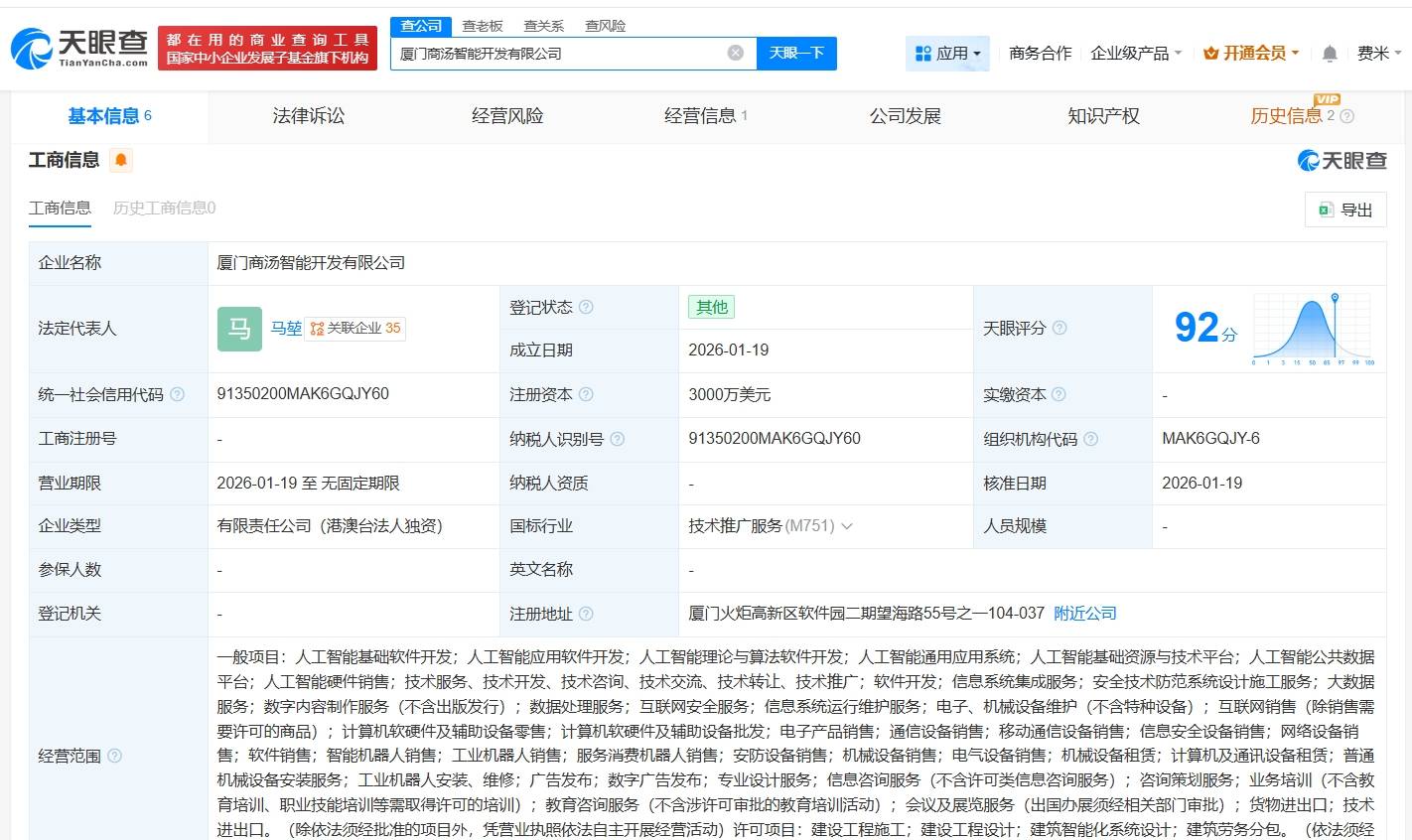
Core Insights - The "2025 Hurun China AI Companies Top 50" list was released, ranking companies based on their value, with a focus on those primarily engaged in artificial intelligence [1][4] - Among the listed companies, two from Suzhou, Megvii and Ninebot, specialize in data analysis and autonomous driving [1] Company Rankings - The top three companies are: 1. Cambricon with a value of 630 billion RMB, specializing in AI chips [4] 2. Moore Threads valued at 310 billion RMB, focusing on GPUs [4] 3. Muxi Technology valued at 250 billion RMB, also in the GPU sector [4] - Notably, seven out of the top ten companies are related to AI chips, including Horizon Robotics and Rockchip [4] Geographic Distribution - Beijing leads with 19 companies on the list, followed by Shanghai with 14, Shenzhen with 6, and Guangzhou with 4 [6][7] - The number of companies from Shanghai increased by 5 compared to the previous year, while Beijing saw a decrease of 1 [7] Emerging Trends - Nearly 40% of the Chinese population are users of generative AI, with 515 million users reported by mid-2025 [8] - The core value of AI is seen as enhancing human capabilities across various domains, including computation, data analysis, machine vision, voice recognition, content generation, and autonomous driving [9]


商汤在厦门成立智能开发公司
Sou Hu Cai Jing· 2026-01-19 07:42
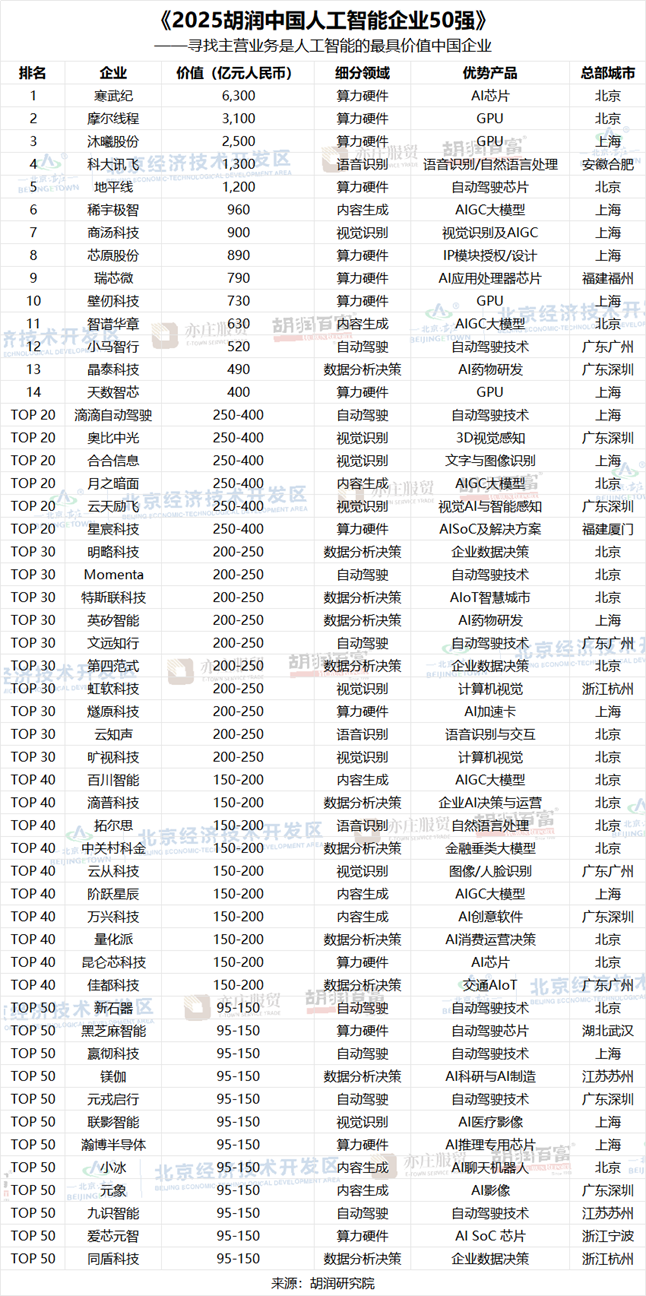
| D 大 H t i | 都在用的商业查询工具 | 商公司 查老板 章关系 查风险 | | | | | | --- | --- | --- | --- | --- | --- | --- | | | 国家中小企业发展了基金旗下机构 | 厦门商汤智能开发有限公司 | 区 | 天眼一下 | 間 应用 ▼ | 商务合作 | | 基本信息 6 | 法律诉讼 | 经营风险 | 经营信息 1 | | 公司发展 | 知 | | 股东信息 1 2 ● 品 股权结构 | | | | | | | | 序号 | | 股东名称 | | | 持股比例: | 认缴出资额(万) | | 商沥 | 商汤集团有限公司 品 | | | | | | | 集团 | 实际控制人 控股股东 | | | | 100% | | 每日经济新闻 每经AI快讯,天眼查工商信息显示,1月19日,厦门商汤智能开发有限公司成立,法定代表人为马堃,注册资本3000万美元,经营范围包括人工智能基础软 件开发、人工智能应用软件开发、人工智能理论与算法软件开发、人工智能通用应用系统等。股东信息显示,该公司由商汤集团有限公司全资持股。 | 音风险 | 音表板 | 省并报 | ...
胡润发布中国AI企业50强,前10有7家芯片公司
Guan Cha Zhe Wang· 2026-01-19 07:38
Core Insights - The 2025 Hurun China AI Companies Top 50 report highlights the rapid growth and prominence of AI chip companies in China, with the top three companies being Cambricon, Moore Threads, and Muxi, all of which are AI chip-related firms [1][2][6] Group 1: Company Performance - Cambricon ranks first with a valuation of 630 billion RMB, experiencing a 165% increase from the previous year. In Q3 2025, the company reported revenue of 1.727 billion RMB, a year-on-year growth of 1332.52%, and a net profit of 567 million RMB, marking its fourth consecutive profitable quarter [1][6] - Moore Threads, established in 2020, ranks second with a valuation of 310 billion RMB. The company achieved a revenue of 785 million RMB in the first three quarters of 2025, a 182% increase compared to the previous three years combined, although it reported a net loss of 724 million RMB [1][2] - Muxi ranks third with a valuation of 250 billion RMB, reporting revenue of 1.236 billion RMB in the first three quarters of 2025, a 453.52% year-on-year increase, while its net loss narrowed to 346 million RMB [2][6] Group 2: Industry Trends - The report indicates a significant increase in the number of AI chip companies on the list, with 14 firms represented, an increase of 9 from the previous year. This growth is attributed to the tightening of high-end AI chip export controls by the U.S., prompting domestic companies to accelerate their capabilities [6][7] - The AI user base in China is substantial, with 515 million users reported by mid-2025, indicating that nearly 40% of the population are users of generative AI [6] - The top 50 list features a total of 14 companies in the computing hardware sector, the largest category, followed by 11 in data analysis and decision-making, and 8 each in content generation, visual recognition, and autonomous driving [3][4] Group 3: Market Position - The combined market value of the top three Chinese computing power companies is approximately 1.2 trillion RMB, which is only 4% of Nvidia's market value, suggesting a significant gap that may narrow in the next five years as China's computing power industry advances [7] - Major cities dominate the list, with Beijing leading with 19 companies, followed by Shanghai with 14, indicating that over 80% of the listed companies are based in first-tier cities [4]


中国人工智能50强榜单出炉!寒武纪、摩尔线程、沐曦股份位列前三
Zheng Quan Shi Bao· 2026-01-19 04:53
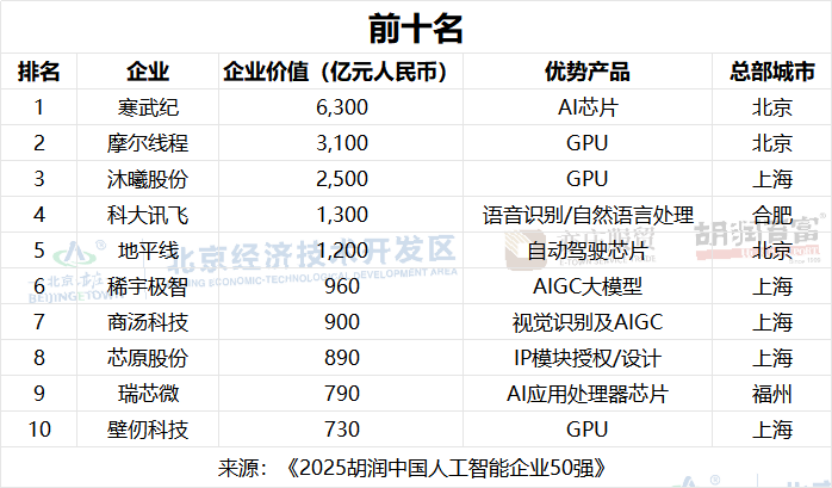
Core Insights - The "2025 Hurun China AI Companies Top 50" report highlights the increasing valuation and significance of AI companies in China, particularly in the AI chip sector [1][6] - The threshold for inclusion in the list has risen significantly, indicating a growing market and competition within the AI industry [1] Valuation and Rankings - The average value of listed companies is 54 billion RMB, which is 2.4 times higher than the previous year [1] - The top ten companies have a valuation threshold of 73 billion RMB, more than three times the previous year's 22 billion RMB [1] - The top three companies are all AI chip-related, with Cambrian Technology leading at 630 billion RMB, followed by Moore Threads at 310 billion RMB, and Muxi Technology at 250 billion RMB [4][5] Company Performance - Cambrian Technology reported a revenue of 2.88 billion RMB in the first half of 2025, a 43-fold increase year-on-year [4] - Moore Threads achieved a revenue of 780 million RMB in the first three quarters of 2025, marking a 182% year-on-year growth [5] - Muxi Technology has focused on high-end GPU development and is among the first to achieve full domestic production [5] Geographic Distribution - Beijing leads with 19 companies on the list, followed by Shanghai with 14, indicating a concentration of AI talent and resources in major cities [7] - Over 80% of the listed companies are based in first-tier cities, showcasing their importance in the AI sector [7] Industry Trends - The number of AI chip companies on the list has increased to 14, up by 9 from the previous year, driven by domestic demand due to U.S. export controls [6] - The AI sector is reshaping wealth distribution in China, with notable increases in the wealth of key figures in the industry [9]
中国人工智能50强榜单出炉!寒武纪、摩尔线程、沐曦股份位列前三
证券时报· 2026-01-19 04:46
Core Insights - The article discusses the release of the "2025 Hurun China AI Companies Top 50" list, highlighting the significant growth in valuations and the increasing importance of AI companies in China [1]. Group 1: AI Companies Overview - The list features 50 companies focused on AI computing power or algorithms, with a minimum valuation of 9.5 billion RMB, an increase of 3.5 billion RMB from the previous year [1]. - The average value of the listed companies is 54 billion RMB, which is 2.4 times higher than last year [1]. - The top ten companies have a minimum valuation of 73 billion RMB, more than three times the previous year's threshold of 22 billion RMB [1]. Group 2: Leading Companies - Cambricon Technologies ranks first with a valuation of 630 billion RMB, focusing on AI core processor chip development, achieving a revenue of 2.88 billion RMB in the first half of 2025, a 43-fold increase year-on-year [4][6]. - Moore Threads, established in 2020, ranks second with a valuation of 310 billion RMB and reported a revenue of 780 million RMB in the first three quarters of 2025, a 182% year-on-year increase [5]. - Muxi Co., Ltd. ranks third with a valuation of 250 billion RMB, specializing in full-stack GPU development [6]. Group 3: Industry Trends - The AI chip sector shows a significant valuation advantage over other fields, with 14 AI chip companies making the list, an increase of 9 from the previous year [6]. - The concentration of AI companies is primarily in first-tier cities, with Beijing leading with 19 companies, followed by Shanghai with 14, indicating a strong urban cluster effect in the AI sector [8]. - The article notes that AI is reshaping China's wealth landscape, with notable increases in the wealth of individuals in the AI sector, such as Chen Tian Shi of Cambricon, whose wealth grew by nearly 150 billion RMB [10].

商汤集团在厦门成立智能开发公司
Zheng Quan Shi Bao Wang· 2026-01-19 02:33
人民财讯1月19日电,企查查APP显示,近日,厦门商汤智能开发有限公司成立,注册资本为3000万美 元,经营范围包含:人工智能基础软件开发;人工智能应用软件开发;人工智能理论与算法软件开发; 智能机器人销售;工业机器人销售等。企查查股权穿透显示,该公司由商汤集团有限公司全资持股。 ...
多家企业联手发布“芯模数智”方案,推动AI技术与实体产业融合
Xin Hua Cai Jing· 2026-01-17 09:35
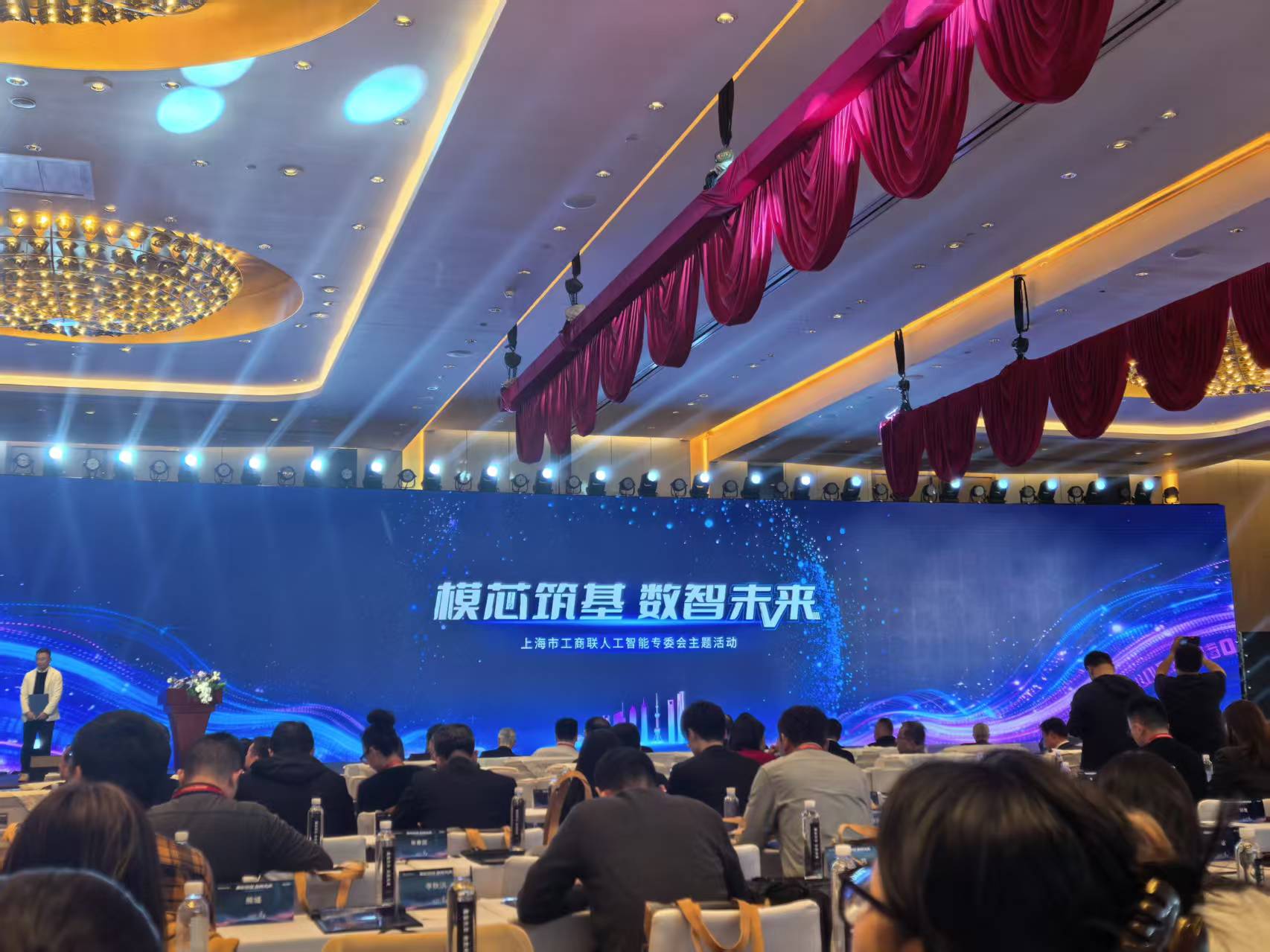
Core Insights - The article discusses the launch of the "Chip Model Intelligence" ecosystem solution by Shanghai Yizhi Electronics Technology Co., Ltd. in collaboration with several tech companies, aiming to integrate AI technologies across various industries [1][3]. Group 1: Ecosystem Solution - The "Chip Model Intelligence" solution integrates four key elements: models, chips, data, and intelligence, creating a closed loop from technology implementation to value transformation [1]. - The collaboration aims to break down industry barriers and promote innovative synergy in areas such as intelligent diagnosis, risk control, and production line upgrades, thereby enhancing the integration of the digital economy with the real economy [1]. Group 2: Industry Outlook - Huang Haiqing, Chairman of Yizhi Electronics, predicts that 2026 will mark the year of practical application for industry-specific intelligent systems, following the general intelligence era expected in 2025 [3]. - The emergence of numerous unicorn companies is anticipated as industry-specific intelligent systems penetrate various sectors, with significant differences in their forms across industries, particularly in finance [3]. - The article highlights that embodied intelligence and physical AI may enter practical application stages by 2026, with companies like Zhiyuan Robotics leading in humanoid and industrial robot development [3].
商汤-W转换1.04亿股A类普通股至B类普通股
Zhi Tong Cai Jing· 2026-01-16 10:59
商汤-W(00020)发布公告,于2026年1月16日,该公司转换约1.04亿股A类普通股至B类普通股。 ...
商汤-W(00020)转换1.04亿股A类普通股至B类普通股
智通财经网· 2026-01-16 10:57
智通财经APP讯,商汤-W(00020)发布公告,于2026年1月16日,该公司转换约1.04亿股A类普通股至B类 普通股。 ...
2025年12月中国AI大模型平台排行榜
Sou Hu Cai Jing· 2026-01-16 10:44
Group 1: Industry Trends - The domestic AI large model industry is experiencing a critical turning point with intensified competition for C-end traffic and clearer commercialization paths [2][3] - Major companies are shifting focus from B-end empowerment to comprehensive efforts in the C-end market, leading to the emergence of "AI native super apps" [2][3] - The rapid growth of user engagement is evident, with ByteDance's Dola achieving over 10 million daily active users and the Kimi model from Moonlight achieving a monthly user growth rate of 170% [3][4] Group 2: Capital and Financing - The AI large model sector has seen significant capital activity, with Moonlight completing a $500 million Series C funding round, raising its valuation to $4.3 billion [4][5] - The industry is projected to generate over 10 billion in revenue by the end of 2025, indicating a shift from merely burning cash to demonstrating real monetization capabilities [4][5] - Companies are adopting differentiated capital strategies, with some focusing on immediate funding through technological advancements while others pursue long-term IPOs [4][5] Group 3: Company Developments - Alibaba's Qwen team launched several new models and applications, including the Qwen-Image-Edit model and the Qwen-Image-Layered model, enhancing capabilities in image generation and editing [11][12][14] - ByteDance's Dola and the Beanbag model have shown remarkable growth, with the latter's daily token usage surpassing 50 trillion, reflecting a tenfold increase year-on-year [9][20] - SenseTime's Kapi camera app has reached over 10 million users, becoming a leading choice in the photography app market [34] Group 4: Market Dynamics - The competition is shifting from simple parameter comparisons in chip performance to a focus on overall computational efficiency and cost-effectiveness across chips, systems, and software [6][7] - The AI large model industry is entering a phase characterized by differentiated competition and a focus on commercial performance, moving away from the narrative of merely burning cash [5][6] - The emergence of AI native applications is expected to enhance user experience and promote healthier business ecosystems [3][5]