
HKEX(00388)

Search documents
T+2变T+1,港交所拟缩短港股现货市场结算周期,将带来哪些挑战与机遇?
Sou Hu Cai Jing· 2025-07-18 10:45
Core Viewpoint - The Hong Kong stock market is expected to transition to a "T+1" settlement cycle after 33 years, which will significantly shorten the settlement period for investors and enhance market efficiency [1][5][7]. Group 1: Settlement Cycle Changes - The Hong Kong stock market has been using a T+2 settlement cycle since 1992, despite implementing T+0 trading [1][7]. - The proposed shift to T+1 is anticipated to reduce systemic risks and improve market efficiency [1][8]. - Currently, markets such as mainland China, the US, Canada, Mexico, Argentina, and India already operate on a T+1 settlement cycle, with Europe expected to follow by 2027 [5][6]. Group 2: Market Impact - The total market capitalization of the Hong Kong stock market reached HKD 42.7 trillion by mid-2025, a 70% increase over the past decade, with average daily trading volume rising by 246% to HKD 240.2 billion [7]. - The transition to T+1 is expected to enhance liquidity, reduce transaction costs, and improve capital utilization for both retail and institutional investors [8][9]. - The T+1 settlement cycle will also facilitate faster capital turnover, allowing investors to reinvest funds more quickly [8][9]. Group 3: Challenges and Considerations - The implementation of T+1 will require significant adjustments in operational models for brokers and banks, including the need for system upgrades to handle the reduced settlement time [9][10]. - The complexity of multi-currency settlements in the Hong Kong market poses additional challenges compared to markets with single currency settlements [9][10]. - The transition will also affect the Hong Kong Stock Connect program, which currently operates on a T+2 basis, necessitating adjustments for mainland investors [10][11]. Group 4: Future Opportunities - The T+1 settlement cycle is expected to encourage the development of diverse trading strategies, such as arbitrage between A-shares and H-shares, and enhance trading activity among southbound funds [11]. - The overall acceleration of settlement processes is projected to boost trading efficiency in the Hong Kong securities market [11].

创金合信基金旗下创金合信港股通量化股票A二季度末规模2.42亿元,环比减少2.69%
Jin Rong Jie· 2025-07-18 10:38
Group 1 - The net asset of the fund "Changjin Hexin Hong Kong Stock Connect Quantitative Equity A" (007354) as of June 30, 2025, is 242 million yuan, representing a decrease of 2.69% from the previous period [1] - The fund manager, Dong Liang, has an extensive background in quantitative investment and has held various positions in notable financial institutions since 2003 [2] - The fund's recent performance shows a 14.9% return over the last three months and a 36.27% return over the past year, while the cumulative return since inception is -8.41% [3] Group 2 - The fund's top ten stock holdings include Tencent Holdings, Alibaba-W, HSBC Holdings, Xiaomi Group-W, and others, with a total holding percentage of 41.70% [3] - Changjin Hexin Fund Management Co., Ltd. was established in July 2014 and is based in Shenzhen, with a registered capital of 260.96 million yuan [3]



香港交易所信息显示,花旗集团在阿里巴巴-W的持股比例于07月14日从3.66%升至5.60%。
news flash· 2025-07-18 09:25
Group 1 - Citigroup increased its stake in Alibaba Group Holding Limited from 3.66% to 5.60% as of July 14 [1]

7月18日电,香港交易所信息显示,花旗集团在阿里巴巴-W的持股比例于07月14日从3.66%升至5.60%,平均股价为0.0000港元。
news flash· 2025-07-18 09:24
Core Viewpoint - Citigroup increased its stake in Alibaba Group Holding Limited (Alibaba-W) from 3.66% to 5.60% as of July 14 [1] Group 1 - Citigroup's ownership in Alibaba-W has seen a significant rise, indicating increased confidence in the company's prospects [1]
7月18日电,香港交易所信息显示,腾讯大股东、南非Naspers集团在腾讯控股的持股比例于07月17日从23.00%降至22.99%,平均股价为516.0776港元。

news flash· 2025-07-18 09:20
智通财经7月18日电,香港交易所信息显示,腾讯大股东、南非Naspers集团在腾讯控股的持股比例于07 月17日从23.00%降至22.99%,平均股价为516.0776港元。 ...
刘格菘二季度最新持仓曝光!加仓军工、新消费以及互联网产业,半导体设备、新能源产业链个股减持明显
Sou Hu Cai Jing· 2025-07-18 06:09
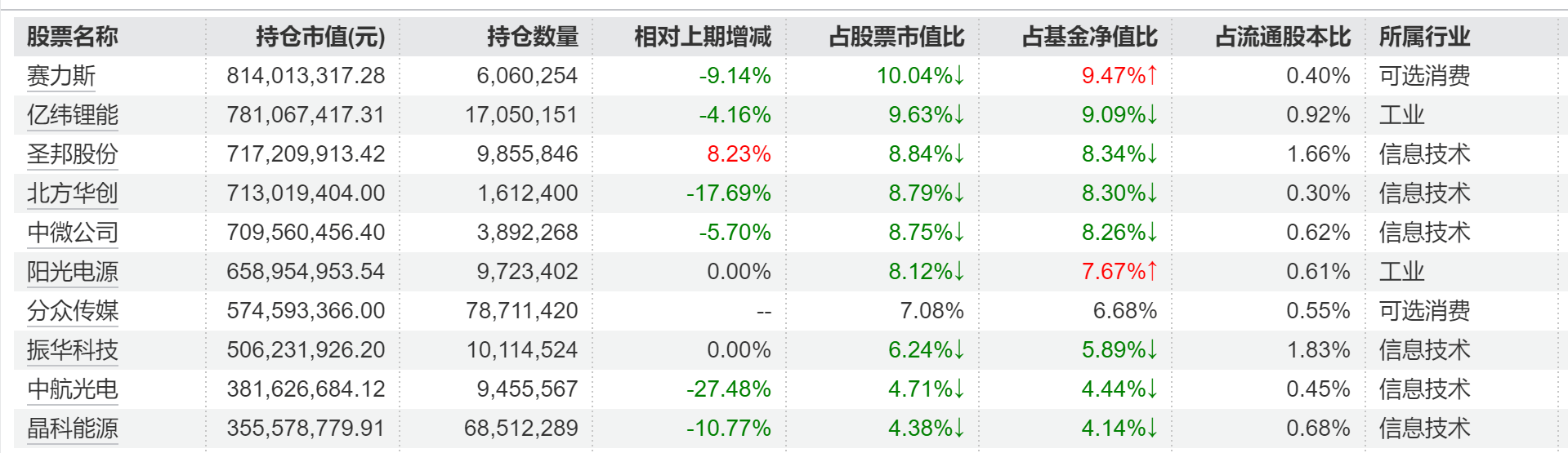
Core Viewpoint - The report highlights significant adjustments in the heavy holdings of Liu Gesong's six funds managed by GF Fund, particularly in the new energy vehicle and semiconductor sectors, with a notable shift towards new consumption, internet, and military industries [1][2]. Fund Holdings Adjustment - Liu Gesong's funds have reduced their positions in several previously favored stocks, including: - North Huachuang: Holdings decreased by approximately 17.69% to 161,240 shares [2]. - Seres: Holdings reduced by 9.14% [6]. - EVE Energy: Holdings decreased by 4.16% [6]. - JinkoSolar: Holdings down by 10.77% [6]. - Conversely, there has been a significant increase in holdings of stocks such as: - DeYe Co.: Increased by 40% [3][8]. - Xichuang Data: Increased by nearly 76% [3]. - Xiaomi Group-W: Increased by 25.66% [7]. Fund Performance - The overall performance of Liu Gesong's funds in Q2 was underwhelming, with all funds experiencing net redemptions: - The best-performing fund, GF Multi-Dimensional Emerging, recorded a net value growth rate of 7.91% [4]. - Other funds, such as GF Small Cap Growth A and C, reported growth rates of 2.38% and 2.28%, respectively [4]. - GF Innovation Upgrade and GF Technology Pioneer recorded negative returns [4]. Market Context - The A-share market saw mixed performance in Q2, with the Shanghai Composite Index rising by 3.26% and the Shenzhen Component Index slightly declining by 0.37% [5]. - Key sectors such as military, banking, and telecommunications showed significant gains, while sectors like food and beverage, home appliances, and steel performed poorly [5]. - Liu Gesong remains optimistic about the domestic economy's resilience, citing factors such as the easing of geopolitical tensions and supportive domestic policies [5].





西部利得港股通新机遇混合A:2025年第二季度利润53.96万元 净值增长率3.14%
Sou Hu Cai Jing· 2025-07-18 05:16
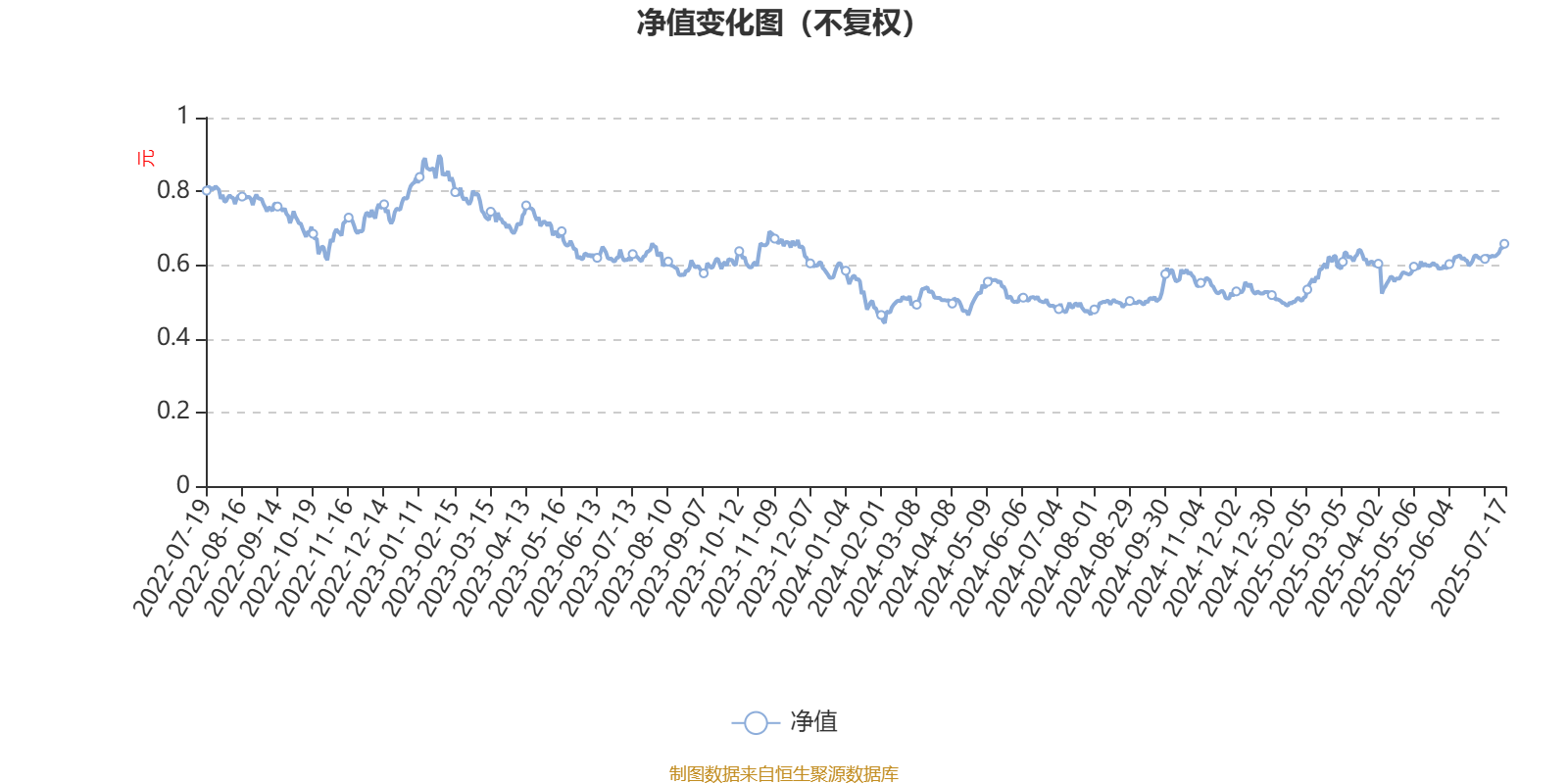
Core Viewpoint - The AI Fund Western Li De Hong Kong Stock Connect New Opportunities Mixed A (008861) reported a profit of 53.96 thousand yuan for Q2 2025, with a weighted average profit per fund share of 0.0189 yuan, and a net asset value growth rate of 3.14% during the period [2]. Fund Performance - As of July 17, the fund's unit net value was 0.658 yuan [2]. - The fund's scale reached 17.6493 million yuan as of the end of Q2 2025 [13]. - The fund's performance over various periods includes: - 3-month net value growth rate: 16.63%, ranking 129 out of 880 comparable funds [2]. - 6-month net value growth rate: 31.25%, ranking 22 out of 880 comparable funds [2]. - 1-year net value growth rate: 32.92%, ranking 124 out of 880 comparable funds [2]. - 3-year net value growth rate: -17.98%, ranking 575 out of 870 comparable funds [2]. Investment Strategy - The fund manager indicated a strategy of gradually realizing gains from technology, new energy vehicles, and consumer companies with reasonable valuations, while increasing positions in innovative pharmaceuticals with favorable policies and potential catalysts [2]. - The fund adopted a barbell strategy in the absence of a clear market direction, enhancing allocation to stable high-dividend assets [2]. Risk Metrics - The fund's 3-year Sharpe ratio was -0.0515, ranking 533 out of 874 comparable funds [7]. - The maximum drawdown over the past three years was 50.65%, ranking 97 out of 864 comparable funds, with the largest single-quarter drawdown occurring in Q1 2022 at 28.84% [9]. Portfolio Composition - The average stock position over the past three years was 81.24%, slightly above the comparable average of 80.33% [12]. - The fund's top ten holdings as of Q2 2025 included Tencent Holdings, Hong Kong Exchanges and Clearing, Alibaba-W, Kingdee International, China Mobile, HSBC Holdings, Xpeng Inc.-W, 3SBio, AIA Group, and BeiGene [16].
香港资本市场火热,中介机构“干半年顶一年” !创业升温、写字楼也回暖……
Zheng Quan Shi Bao· 2025-07-18 02:24
Group 1: Hong Kong Capital Market Performance - Hong Kong's capital market has rapidly recovered in 2025, with significant capital inflow and the highest IPO fundraising globally [1][3] - The total equity financing in Hong Kong reached 2897.40 billion HKD, with IPOs contributing 1240.06 billion HKD, reflecting year-on-year increases of 286.52% and 584.22% respectively [4] - The number of IPOs in Hong Kong has increased to 304, with 51 companies listed, indicating a 14.29% rise in quantity [4] Group 2: Intermediary Institutions' Business Surge - Intermediary institutions in Hong Kong, including brokers, law firms, and accounting firms, are experiencing a surge in business due to the active IPO market [3][5] - The issuance fees for 51 listed companies in 2025 reached 53.40 billion HKD, nearly matching the total for the entire year of 2024 [3] - Major accounting firms have seen significant increases in their audit and advisory services due to the heightened demand from IPO activities [5][6] Group 3: Future Outlook for IPOs and Intermediaries - The second half of 2025 is expected to maintain or even increase the IPO activity in Hong Kong, with over 200 companies having submitted listing applications [9] - The demand for legal services has surged, with law firms completing 15 IPO projects in the first half of 2025, reflecting a growth rate exceeding the industry average [5][6] - Intermediary institutions are optimistic about the future, anticipating continued growth driven by favorable policies and international capital inflow [8][9] Group 4: Real Estate Market Recovery - The demand for office space in Hong Kong's core business districts is showing signs of recovery, driven by the active IPO market [10][12] - The rental prices for Grade A office buildings in Central have dropped nearly 45% from their peak in 2019, making them attractive to financial institutions [11] - The resurgence in the IPO market is expected to positively impact the leasing demand for office spaces, particularly in Central [13] Group 5: Growth in Hong Kong's Tech Sector - The strong performance of the capital market has revitalized Hong Kong's tech sector, with a notable increase in the number of startups [14][15] - The number of startups in Hong Kong reached 4694 in 2024, a 10% increase from 2023, with significant growth in health, medical, and green technology sectors [14] - Investment in Hong Kong's tech sector is projected to rise, with venture capital funding expected to grow from under 500 million USD in 2015 to 5 billion USD by 2025 [17]

香港核心商务区写字楼需求回升
Zheng Quan Shi Bao· 2025-07-17 19:12
Core Viewpoint - The Hong Kong office market, particularly in the Central business district, is showing signs of recovery driven by a resurgence in the capital market and IPO activities, despite challenges such as high vacancy rates and new supply [1][2][3]. Group 1: Market Trends - The Hong Kong Exchange's acquisition of a commercial building for HKD 6.3 billion signifies a major transaction in the office market, reflecting confidence in the sector [1]. - Reports indicate that while the office market faces pressure from new supply and high vacancy rates, there are emerging signs of recovery, especially in Central [2][3]. - As of June 2025, Grade A office rents in Central are expected to have dropped nearly 45% from their peak in 2019, making it an attractive option for financial institutions [2]. Group 2: Demand Drivers - The demand for premium office space in Central is primarily driven by financial institutions, particularly as more mainland companies list in Hong Kong, which is expected to boost leasing activity [2][4]. - The first half of the year saw a notable demand from mainland financial, insurance, real estate, and professional services firms for quality office spaces in core business districts [3]. - Smaller tech companies and startups are also entering the market, seeking affordable office spaces ranging from 200 to 500 square feet [3]. Group 3: Future Outlook - The recovery of the Hong Kong capital market is attracting more Western financial institutions to the office market, with several large leasing contracts signed recently [4]. - The IPO market's activity is anticipated to positively influence the demand for office spaces, particularly in Central, with expectations of rental stabilization in the second half of the year [4]. - A differentiated market trend is expected, with core areas stabilizing while non-core areas may continue to face pressure, dependent on global economic conditions and the absorption of new supply [4].
T+1结算!港股拟重大调整
Jin Rong Shi Bao· 2025-07-17 13:34
Core Viewpoint - The Hong Kong Stock Exchange (HKEX) has released a discussion paper aimed at shortening the settlement cycle for the stock cash market from T+2 to T+1, encouraging market participants to discuss how and when this change can be implemented [1][2]. Group 1: Market Context - Hong Kong is one of the most active capital markets globally, with over 2,600 companies listed and an average daily trading volume exceeding HKD 240 billion in the first half of 2025 [2]. - The current T+2 settlement cycle has been in place since 1992, attracting global investors and fostering a robust financial ecosystem through active corporate financing and cross-border investment flows [2]. Group 2: Global Trends - Other major global markets have transitioned to T+2 settlement cycles over the past 20 years, with many now considering or adopting T+1 or shorter cycles [2]. - Markets currently using T+1 settlement include mainland China, the United States, Canada, Mexico, Argentina, and India, with an expectation that by 2027, 88% of global stock market transactions will utilize T+1 or T+0 settlement cycles [2][3]. Group 3: Benefits and Challenges - Transitioning to a T+1 settlement cycle could enhance market efficiency, reduce systemic risk, and align the Hong Kong market more closely with international standards [3]. - Challenges include addressing time zone differences, foreign exchange conversions, and the need for market participants to upgrade systems and automate processes to maintain operational efficiency [3]. Group 4: Implementation and Participation - The discussion on the settlement cycle is limited to the secondary market for stock cash transactions and does not involve primary market settlements [3]. - The HKEX encourages all market participants to submit their suggestions by September 1, 2025, to help establish a timeline for implementation [3]. - HKEX's CEO emphasizes the importance of collaboration within the financial community to adapt to evolving global market conditions and optimize the financial infrastructure [3].
