GRAND PHARMA(00512)

Search documents
远大医药:全球创新眼科药物GPN00884在中国开展的IIa期临床研究完成了首例患者入组
Zhi Tong Cai Jing· 2025-10-26 10:35
Core Insights - The company Yongda Pharmaceutical (00512) has announced the completion of the first patient enrollment in the IIa clinical trial for its innovative ophthalmic drug GPN00884, aimed at delaying the progression of myopia in children [1][2] - GPN00884 is a novel eye drop formulation that does not cause pupil dilation or associated side effects, potentially improving patient compliance compared to existing treatments like low-concentration atropine [1] - The IIa trial will enroll over 80 participants aged 6 to 12 years to evaluate the efficacy and safety of GPN00884 in a randomized, double-blind, placebo-controlled setting [1] Group 1 - GPN00884 is designed to address the unmet clinical needs in the treatment of myopia in children, where there is currently a lack of effective and safe medications in the domestic market [1] - The drug has previously completed a successful I phase clinical trial, demonstrating good safety and tolerability in healthy subjects, with linear pharmacokinetic characteristics [2] - The initiation of the IIa clinical trial marks a significant milestone for the company in the ophthalmology sector [2]
远大医药(00512):全球创新眼科药物GPN00884在中国开展的IIa期临床研究完成了首例患者入组
智通财经网· 2025-10-26 10:29
Core Viewpoint - The company has initiated a Phase IIa clinical trial for its innovative ophthalmic drug GPN00884, aimed at slowing the progression of myopia in children, marking a significant milestone in its ophthalmology segment [1][2] Group 1: Clinical Trial Details - The Phase IIa clinical trial is a randomized, double-blind, placebo-controlled study that plans to enroll over 80 participants aged 6 to 12 years [1] - The primary objective is to evaluate the efficacy and safety of GPN00884 eye drops in delaying myopia progression in children [1] Group 2: Product Characteristics - GPN00884 eye drops feature a novel mechanism of action and do not cause pupil dilation, light sensitivity, or accommodation reduction, which enhances patient compliance [1] - There is currently a lack of effective and safe medications for delaying myopia progression in children in the domestic market, indicating an unmet clinical need [1] Group 3: Previous Research Milestones - GPN00884 eye drops were previously approved for Phase I clinical research in March 2024, with all participants enrolled by August of the same year [2] - The Phase I results demonstrated good safety and tolerability in healthy subjects, with linear pharmacokinetic characteristics [2]
远大医药(00512) - 自愿性公告: 本集团全球创新眼科药物 GPN00884 在中国开展的 I...
2025-10-26 10:04
香港交易及結算所有限公司及香港聯合交易所有限公司對本公告之內容概不負責,對 其準確性或完整性亦不發表任何聲明,並明確表示概不就因本公告全部或任何部分內 容而產生或因倚賴該等內容而引致的任何損失承擔任何責任。 Grand Pharmaceutical Group Limited 遠大醫藥集團有限公司* ( 於百慕達註冊成立之有限公司 ) (股份代號:00512) 自願性公告 本集團全球創新眼科藥物 GPN00884 在中國開展的 IIa 期臨床研究完成了首例患者入組 本公告乃遠大醫藥集團有限公司(「本公司」,連同其附屬公司統稱「本集團」)之董事 會(「董事會」)自願刊發。 董事會欣然公告,本集團用於延緩兒童近視進展的全球創新眼科藥物 GPN00884 在中國 開展的 IIa 期臨床研究,近日完成了首例患者入組。該研究是一項隨機、雙盲、安慰劑 平行對照的 IIa 期臨床試驗,擬入組 80 餘例 6~12 周歲近視受試者,旨在初步評價 GPN00884 滴眼液延緩兒童近視進展的有效性及在兒童近視患者中的安全性。 本集團始終以眼科領域作為重要戰略發展方向之一,持續聚焦眼科藥物創新,堅持專業 化發展道路,不斷提升行業地 ...
我国核药产业全力突围
Zheng Quan Ri Bao· 2025-10-23 22:37
Core Viewpoint - The development of radiopharmaceuticals is revolutionizing cancer treatment, allowing targeted delivery of radiation to tumor cells while minimizing damage to surrounding healthy cells [1][2][3]. Industry Overview - Radiopharmaceuticals, which contain radioactive isotopes, are becoming a strategic focus in the biopharmaceutical industry globally, with major pharmaceutical companies entering the field [3][4]. - The global radiopharmaceutical market is projected to grow from $12.6 billion in 2023 to $21 billion by the end of 2029, with a compound annual growth rate (CAGR) of 8.29% from 2024 to 2029 [3]. Clinical Application - The treatment process involves imaging techniques like SPECT or PET to locate tumors and determine the appropriate dosage of radiopharmaceuticals, which are then administered to the patient [5]. - The integration of diagnosis and treatment, referred to as "diagnosis-therapy integration," is a key feature that distinguishes radiopharmaceutical therapy from existing cancer treatment methods [5]. Market Dynamics - The international market has validated the value of radiopharmaceuticals, exemplified by the approval and success of Pluvicto in the U.S. for treating metastatic castration-resistant prostate cancer, generating $271 million in its first year [6]. - In China, as of February 2024, only three innovative radiopharmaceuticals have been approved, highlighting a lag in innovation compared to international counterparts [7][8]. Challenges and Opportunities - The development of innovative radiopharmaceuticals is hindered by the need for collaboration across the supply chain, including the availability of imaging equipment and isotopes [8][9]. - Recent government initiatives aim to enhance the infrastructure for radiopharmaceuticals, including plans for comprehensive coverage of nuclear medicine departments in hospitals by 2025 [10][11]. Innovations and Developments - Companies like Shanghai United Imaging Healthcare have made significant advancements in high-end imaging equipment, contributing to the rapid proliferation of PET technology in China [11]. - Domestic production of isotopes is improving, with companies like China National Nuclear Corporation and Yuan Da Pharmaceutical achieving mass production of various isotopes [12]. Future Outlook - The Chinese radiopharmaceutical industry is expected to enter a phase of accelerated development, with over 205 innovative radiopharmaceuticals currently in clinical stages [12][18]. - Multiple companies, including Fosun Pharma and Baiyang Pharmaceutical Group, are actively expanding their presence in the radiopharmaceutical sector, indicating a robust growth trajectory [14][15][16].
创新加速、市场空间大 我国核药产业全力突围
Zheng Quan Ri Bao· 2025-10-20 00:48
Core Viewpoint - The development of radiopharmaceuticals is revolutionizing cancer treatment, allowing targeted delivery of radiation to tumor cells while minimizing damage to surrounding healthy cells [1][3]. Industry Overview - The global nuclear medicine market is projected to grow from $12.6 billion in 2023 to $21 billion by the end of 2029, with a compound annual growth rate (CAGR) of 8.29% from 2024 to 2029 [2]. - Major pharmaceutical companies worldwide, including domestic firms like Fosun Pharma and Yanda Pharmaceutical, are actively entering the nuclear medicine sector [2]. Clinical Application - The clinical application of radiopharmaceuticals involves imaging techniques such as SPECT and PET to locate tumors and determine the appropriate dosage of nuclear medicine [3]. - The integration of diagnosis and treatment, referred to as "diagnosis-therapy integration," is a key feature that distinguishes nuclear medicine from traditional cancer treatments [3]. Innovation and Development - Companies are developing products that utilize different isotopes for both diagnosis and treatment, creating a closed-loop system for cancer precision therapy [4]. - The domestic market has seen a significant increase in the number of innovative radiopharmaceuticals, with 205 pipelines currently in clinical stages as of February 2024 [9][12]. Challenges and Solutions - The lack of domestic production capabilities for medical isotopes and imaging equipment has historically limited the development of innovative radiopharmaceuticals in China [5][6]. - Recent government policies aim to enhance the infrastructure and supply chain for nuclear medicine, including plans for comprehensive coverage of nuclear medicine departments in hospitals by 2025 [7][8]. Market Dynamics - The domestic PET market has seen substantial growth, with a reported 722 PET machines in use as of 2023, an increase of 80.8% since 2019 [8]. - Companies like United Imaging Healthcare have made significant advancements in the development of high-end imaging equipment, contributing to the proliferation of PET technology in medical institutions [8]. Collaborative Efforts - Multiple companies, including Fosun Pharma and Baiyang Pharmaceutical Group, are forming partnerships and investing in the nuclear medicine sector to accelerate innovation and market entry [12]. - The collaboration between pharmaceutical companies and government entities is expected to enhance the development and application of radiopharmaceuticals in China [12].
创新加速 市场空间大我国核药产业全力突围
Zheng Quan Ri Bao Zhi Sheng· 2025-10-19 17:40
Core Insights - The development of radiopharmaceuticals is revolutionizing cancer treatment by allowing targeted delivery of radiation to tumor cells while minimizing damage to surrounding healthy cells [1][3] - The global radiopharmaceutical market is projected to grow from $12.6 billion in 2023 to $21 billion by the end of 2029, with a compound annual growth rate (CAGR) of 8.29% from 2024 to 2029 [2] - The integration of diagnosis and treatment in nuclear medicine, referred to as "diagnosis-therapy integration," is a key feature that distinguishes it from existing cancer treatment methods [3][4] Industry Landscape - Major global pharmaceutical companies have entered the radiopharmaceutical sector, with domestic companies like Fosun Pharma, Yanda Pharmaceutical, and China Isotope & Radiation Corporation actively positioning themselves [2] - As of February 2024, there are 205 innovative radiopharmaceuticals in clinical development in China, indicating a significant increase in research and development activity [9][10] Challenges and Solutions - The lack of domestic production capabilities for medical isotopes and imaging equipment has hindered the development of innovative radiopharmaceuticals in China [6][8] - Recent government policies aim to enhance the infrastructure for nuclear medicine, including the development of imaging equipment and stable supply of medical isotopes [7][8] Innovations and Collaborations - Companies like Yanda Pharmaceutical and Baiyang Pharmaceutical are making strides in developing innovative radiopharmaceuticals and establishing comprehensive industry chains [10][11] - The establishment of partnerships and platforms, such as Fosun Pharma's nuclear medicine platform, is expected to accelerate the development and commercialization of radiopharmaceuticals [11]
远大医药20251016
2025-10-16 15:11
Summary of the Conference Call for YuanDa Pharmaceutical Industry Overview - The global nuclear medicine market is projected to reach $21 billion by 2029, with a compound annual growth rate (CAGR) of 16.4% [5][6] - The Chinese market is expected to expand to 26 billion RMB by 2030, with a CAGR of 9% [5] - Nuclear medicine offers unique advantages over traditional cancer treatments, including visualization, precise targeting, and integrated diagnosis and therapy [5] Company Performance - YuanDa Pharmaceutical's nuclear medicine business is experiencing rapid growth, with core product E90 (for liver cancer treatment) expected to generate 500 million HKD in domestic revenue in 2024, a 140% year-on-year increase [2][4] - The traditional pharmaceutical segment remains stable, achieving 6.11 billion HKD in revenue and 1.17 billion HKD in net profit in the first half of 2025, with pharmaceutical technology accounting for 60% of revenue [2][7] - The company maintains a stable expense ratio, with a sales expense ratio of 31% and gross and net profit margins recovering to 58.9% and 19.2%, respectively [2][8] Key Products and Innovations - E90 has treated over 2,000 patients and is the first nuclear medicine product for liver cancer in China [4] - The innovative drug 3,141, targeting sepsis, shows promising clinical data and aims to address the global lack of effective treatments for this condition [2][16] - The PSMA-targeted radiotherapy product, Lu-177 PSMA, significantly extends survival for prostate cancer patients, with overall survival (OS) increasing from 11.3 months to 15.3 months and progression-free survival (PFS) from 3.4 months to 8.7 months [12] Competitive Landscape - Major global players in the nuclear medicine market include Novartis and Bayer, with some products already launched in Europe and the U.S. [6] - YuanDa Pharmaceutical faces competition from both domestic and international companies in the nuclear medicine sector [2][5] Financial Policies - The company has a stable dividend policy, with a total dividend of 910 million RMB in 2024 and a dividend payout ratio of 37% [3][11] - The company emphasizes shareholder returns but future sustainability of the dividend policy remains a concern [3] Research and Development - YuanDa has established a comprehensive pipeline in nuclear medicine, with 12 clinical candidates, four of which are in Phase III trials [4] - The company collaborates with Shandong University to enhance its nuclear medicine production and research capabilities [4] Market Potential - The liver cancer treatment market remains significant, with E90's revenue growth indicating strong market demand [13][14] - The innovative drug 3,141 addresses a critical gap in sepsis treatment, highlighting the potential for substantial market impact [16] Conclusion - YuanDa Pharmaceutical is well-positioned in the growing nuclear medicine market, with strong product performance and a stable financial foundation, but must navigate increasing competition and ensure the sustainability of its dividend policy.
核医学投资价值分享
2025-10-14 14:44
Summary of Nuclear Medicine Investment Value Sharing Industry Overview - The nuclear medicine market is experiencing significant growth, particularly driven by successful commercialization of products like Bloviate. [1][3] - The overseas nuclear medicine market is projected to reach $1.4 billion in revenue for Novartis in 2024, representing a 42% year-over-year increase. [1][3] - The PSMA diagnostic drug market is expected to reach $1.9 billion, with a corresponding 525,000 treatment sessions anticipated by 2025. [1][7] Key Points and Arguments - **Overseas Market Growth**: Novartis's core products, Provenge and Lutathera, have shown significant growth, with Provenge expected to exceed $5 billion in peak revenue. [3][5] - **Domestic Market Development**: The domestic nuclear medicine market is entering a commercialization phase, with new drugs like Fluorobetaine for AD diagnosis launched and expected approvals for Provenge and Lutathera in Q4. [1][5] - **RDC Market Potential**: The Radiopharmaceutical Drug Conjugates (RDC) market is projected to reach $3.7 billion in 2024, with total estimates around $4-5 billion, comparable to the early stages of Antibody Drug Conjugates (ADC). [1][6] - **RDC vs. ADC**: RDC is structurally similar to ADC, replacing cytotoxic payloads with radionuclides, making it suitable for targeted radiotherapy. [1][7][10] Additional Important Insights - **Clinical Development**: Domestic companies like East China and Hengrui are advancing to clinical stages, narrowing the gap with international counterparts. [3][11] - **Market Trends**: The nuclear medicine sector is expected to maintain strong growth, with several catalysts anticipated in the near future, including new product approvals and market entries. [2][13] - **Investment Opportunities**: Companies like East China and Yuanda Pharmaceutical are highlighted as potential investment opportunities due to their low valuations and promising R&D progress. [2][14] Conclusion - The nuclear medicine industry is poised for substantial growth, driven by both domestic and international developments, with significant investment opportunities emerging as new products and companies enter the market. [2][13]

董事会主席唐纬坤增持远大医药5万股 每股作价8.21港元
Zhi Tong Cai Jing· 2025-10-14 11:12
Core Viewpoint - The chairman of the board, Tang Weikun, has increased his stake in Yuan Da Pharmaceutical (00512) by purchasing 50,000 shares at a price of HKD 8.21 per share, totaling HKD 410,500, which reflects confidence in the company's future prospects [1] Group 1 - The purchase of shares by the chairman indicates a positive outlook on the company's performance [1] - After the acquisition, the chairman's total shareholding increased to 950,000 shares, representing a 0.03% ownership stake in the company [1]
远大医药aXess展现全球领先革命性潜力 全球创新布局加速“Go Global”战略推进
Zhi Tong Cai Jing· 2025-10-11 08:26
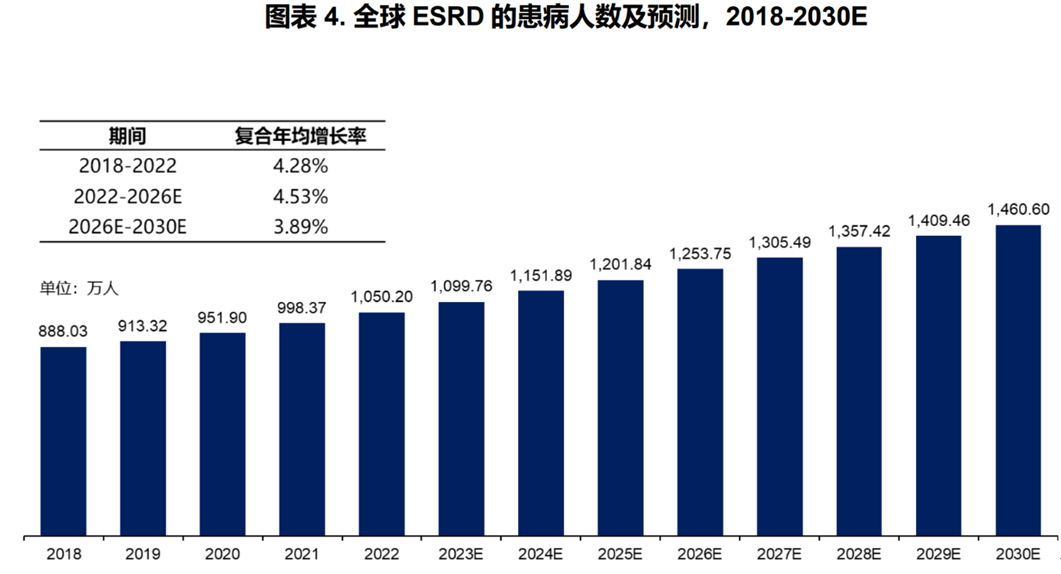
Core Insights - Recent clinical achievements in the innovative pipeline of YuanDa Pharmaceutical (00512) enhance its competitive edge in the nuclear medicine oncology diagnosis and treatment sector with the completion of patient enrollment for the GPN00289 clinical study [1] - The aXess product, a groundbreaking artificial blood vessel, has shown unprecedented safety and efficacy in key clinical trials, potentially revolutionizing treatment for end-stage renal disease (ESRD) patients [1][7] Group 1: Clinical Developments - The aXess product has demonstrated superior patency rates and lower re-intervention rates compared to traditional arteriovenous fistulas (AVF), addressing significant clinical challenges faced by ESRD patients [7] - In a prospective study involving 120 patients, only one case of infection-related removal of the artificial vessel was reported, highlighting the product's high anti-infection performance [7] - The aXess product utilizes endogenous tissue repair (ETR) technology, allowing for rapid integration with the patient's own tissue, thus reducing complications associated with traditional dialysis access methods [8] Group 2: Market Potential - Chronic kidney disease (CKD) poses a significant global health challenge, with approximately 850 million affected individuals, and ESRD cases expected to rise to nearly 14.61 million by 2030, growing at a compound annual growth rate (CAGR) of about 4.5% [2] - In China, ESRD patients account for over 30% of the global total, with projections indicating that the number will exceed 6.2 million by 2030 [2] - The blood purification market in China is projected to grow significantly, with a CAGR of approximately 6.5% from 2019 to 2022, potentially reaching nearly 48.4 billion RMB by 2030 [5] Group 3: Product Synergy and Strategic Expansion - The aXess product is part of a broader strategy in YuanDa's cardiovascular precision intervention platform, which includes over 30 high-end medical device products, with 22 already approved in China [9] - The company aims to leverage the aXess product alongside another innovative device, APERTO OTW, to enhance dialysis access pathways for patients [9] - YuanDa is actively pursuing international collaborations and has established partnerships with clinical centers and research platforms in multiple countries, supporting its "Go Global" strategy [11]