CHINA UNICOM(00762)

Search documents
联通集团取得索引创建方法、装置和存储介质专利
Sou Hu Cai Jing· 2025-12-02 05:56
Group 1 - China United Network Communications Group Co., Ltd. has obtained a patent titled "Index Creation Method, Device, and Storage Medium," with authorization announcement number CN116226118B, applied for on December 2022 [1] - China United Network Communications Group Co., Ltd. was established in 1994, located in Beijing, primarily engaged in telecommunications, broadcasting, television, and satellite transmission services, with a registered capital of approximately 10.48 billion RMB [1] - The company has invested in 34 enterprises, participated in 3,281 bidding projects, holds 3,738 trademark records, and has 5,000 patent records, along with 11 administrative licenses [1] Group 2 - Unicom Digital Technology Co., Ltd., established in 2006 in Beijing, focuses on software and information technology services, with a registered capital of approximately 988.98 million RMB [2] - The company has invested in 54 enterprises, participated in 5,000 bidding projects, holds 24 trademark records, and has 1,900 patent records, along with 42 administrative licenses [2] Group 3 - Unicom Cloud Data Co., Ltd., established in 2013 in Beijing, is engaged in internet and related services, with a registered capital of 400 million RMB [2] - The company has invested in 1 enterprise, participated in 2,265 bidding projects, holds 709 patent records, and has 11 administrative licenses [2]

中国千兆及以上宽带接入用户达2.38亿户 占总用户数超1/3
Sou Hu Cai Jing· 2025-12-02 05:35
Core Insights - The China Academy of Information and Communications Technology reported the economic operation of the telecommunications industry for the first ten months of 2025, highlighting significant growth in broadband access and user numbers [1] Group 1: Broadband Access Growth - As of the end of October, the total number of internet broadband access ports in China reached 1.243 billion, representing a net increase of 40.89 million compared to the end of the previous year [1] - The total number of fixed internet broadband access users among the three major telecom operators (China Mobile, China Unicom, and China Telecom) reached 697 million, with a net increase of 27.01 million users since the end of last year [1] Group 2: High-Speed Internet Adoption - The number of fixed internet broadband access users with speeds of 100 Mbps and above reached 663 million, accounting for 95.1% of the total user base [1] - Users with access speeds of 1000 Mbps and above reached 238 million, marking a net increase of 31.13 million users, which is a historical high [2] - The proportion of users with gigabit access (1000 Mbps and above) expanded to 34.1%, an increase of 3.3 percentage points compared to the end of the previous year [2]





让大模型学会“高维找茬”,中国联通新研究解决长文本图像检索痛点|AAAI 2026 Oral
量子位· 2025-12-01 05:45
Core Insights - The article discusses a new state-of-the-art (SOTA) model for long-text image retrieval called HiMo-CLIP, developed by the China Unicom Data Science and AI Research Institute, which addresses limitations in existing models like CLIP by effectively capturing semantic differences in context [2][4]. Group 1: Model Limitations - Existing models, including Long-CLIP, struggle with long text descriptions, often resulting in decreased alignment scores as the text becomes more detailed, indicating a failure to process the hierarchical structure of language [6][9]. - The phenomenon where longer descriptions lead to lower alignment scores highlights the inadequacy of current models in distinguishing core semantics from detailed information [6][9]. Group 2: HiMo-CLIP Framework - HiMo-CLIP introduces a plug-and-play representation framework that includes two core components: Hierarchical Decomposition (HiDe) and Monotonicity-aware Contrastive Loss (MoLo) [10][12]. - HiDe dynamically extracts semantic components using PCA within batches, while MoLo enforces alignment between the full text and its semantic components, ensuring monotonicity [12][17]. Group 3: Performance and Efficiency - HiMo-CLIP demonstrates significant advantages in both long and short text retrieval tasks, outperforming models trained on much larger datasets, achieving SOTA with only 1 million training samples [17][20]. - The model's ability to extract unique features from complex scenes allows it to maintain high performance across various retrieval benchmarks [18][22]. Group 4: Evaluation Metrics - The research team constructed the HiMo-Docci dataset and introduced the HiMo@K metric to quantify the model's understanding of hierarchical structures, achieving a high monotonicity correlation coefficient of 0.88, surpassing comparative methods [22][25]. - As text descriptions become more complete, HiMo-CLIP's scores show a consistent upward trend, while other models exhibit significant fluctuations [25][26].

安徽联通助力9家工厂入选国家5G工厂名录
Ke Ji Ri Bao· 2025-12-01 05:30
Core Insights - The article highlights the successful establishment of nine 5G factories in Anhui, which have been recognized in the national directory by the Ministry of Industry and Information Technology, marking a significant milestone in the province's industrial internet development [1][2] - Anhui Unicom is positioned as a key player in driving digital transformation in manufacturing, leveraging 5G and industrial internet technologies to support high-quality development in the region [1][2] Group 1: 5G Factory Development - Nine 5G factories in Anhui have been included in the national-level directory, showcasing the province's advancements in smart manufacturing [1][2] - These factories are distributed across multiple cities, including Wuhu, Suzhou, and Huangshan, indicating a collaborative regional approach to smart manufacturing [1] Group 2: Technological Advancements - Anhui Unicom is utilizing breakthroughs in 5G technology, mobile edge computing, artificial intelligence, and digital twins to fill technological gaps in smart manufacturing scenarios [2] - The company aims to create sustainable value for industrial enterprises through the application of cutting-edge technologies like 5G [1] Group 3: Strategic Vision - Anhui Unicom's vision is to become the preferred partner for the intelligent upgrade of manufacturing in the Jianghuai region, emphasizing a technology-led and collaborative empowerment approach [1] - The company is committed to enhancing regional collaboration and industrial integration to contribute to the high-quality development of the Yangtze River Delta [2]
联通破解扩散模型速度质量零和博弈,推理速度提升5倍丨CVPR 2025 Highlight
量子位· 2025-12-01 04:26
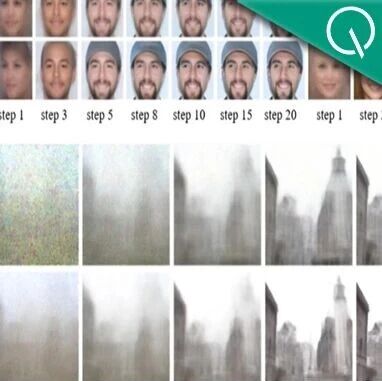
Core Insights - The article discusses the advancements in diffusion models, particularly focusing on the ShortDF and LeMiCa papers, which represent significant breakthroughs in the field of image and video generation [1][2][4]. Group 1: Technical Evolution - ShortDF serves as a theoretical pioneer in optimizing diffusion models through online training, while LeMiCa expands this theory into offline mapping for higher-dimensional tasks [4]. - The core challenge in diffusion models is the expensive inference costs, which hinder real-time applications [8]. - The non-linear denoising trajectory of diffusion models is identified as a primary reason for slow progress in the field [9]. Group 2: ShortDF's Mechanisms - ShortDF introduces a "shortest path optimization" approach to directly straighten the denoising trajectory during training, aiming to break the trade-off between speed and quality [12]. - The model's core insight is that the denoising process is fundamentally a correction of the initial error, which can be minimized to improve overall performance [13][14]. - ShortDF employs a three-pronged strategy: 1. Locking the "error upper bound" to optimize from the source [14][15]. 2. Utilizing graph theory to relax and compress paths, thereby minimizing the error upper bound [20][21]. 3. Implementing multi-state optimization to ensure training stability amidst random noise [28][29]. Group 3: Performance Metrics - ShortDF demonstrates superior performance in speed and quality, achieving a 5.0 times speed increase over DDIM while improving image quality (FID score of 9.08 compared to DDIM's 11.14) [36]. - The model shows robustness in complex scenarios, effectively restoring object contours faster than competing methods [37]. - In various datasets, ShortDF maintains a balance between performance and speed, showcasing its potential for real-world applications [40]. Group 4: Industry Implications - The advancements in ShortDF and LeMiCa highlight the importance of refined mathematical modeling over mere computational power in enhancing diffusion model speeds [41]. - These developments are crucial for the application of AIGC technology in resource-constrained environments, such as mobile devices and real-time interactive designs [42].
中国联通(00762) - 截至2025年11月30日止之股份发行人的证券变动月报表
2025-12-01 03:21
FF301 第 1 頁 共 10 頁 v 1.1.1 FF301 II. 已發行股份及/或庫存股份變動 股份發行人及根據《上市規則》第十九B章上市的香港預託證券發行人的證券變動月報表 | 截至月份: | 2025年11月30日 | 狀態: | 新提交 | | --- | --- | --- | --- | | 致:香港交易及結算所有限公司 | | | | | 公司名稱: | 中國聯合網絡通信 (香港) 股份有限公司 | | | | 呈交日期: | 2025年12月1日 | | | | I. 法定/註冊股本變動 不適用 | | | | | 1. 股份分類 | 普通股 | 股份類別 | 不適用 | | 於香港聯交所上市 (註1) | 是 | | | --- | --- | --- | --- | --- | --- | --- | --- | | 證券代號 (如上市) | 00762 | 說明 | | | | | | | | | 已發行股份(不包括庫存股份)數目 | | 庫存股份數目 | | 已發行股份總數 | | | 上月底結存 | | | 30,598,124,345 | | 0 | | 30,598,124 ...
1200+ 全球头部企业齐聚上海!激光光学 × 半导体全链路协同的顶级峰会仅剩最后三席
半导体行业观察· 2025-11-29 02:49
Core Insights - The article highlights the significance of the Munich Shanghai Optical Expo as a pivotal event for the global optoelectronics and semiconductor industry, featuring over 1,200 leading companies and attracting hundreds of thousands of professional attendees, emphasizing the theme of "technological iteration + ecological integration" [2] Group 1: Policy Alignment - The forum aligns closely with the "14th Five-Year Plan," focusing on the critical role of laser technology in supporting 6G/5G-A, targeting key areas such as compound semiconductors, EDA tools, and optical communication chips, and aims to create a collaborative ecosystem through "policy - technology - capital" synergy [2][4] Group 2: Technical Focus - The forum emphasizes a comprehensive technology logic covering the entire supply chain from "materials - tools - chips - devices - components - applications," showcasing hard-core achievements from leading companies in critical areas like compound semiconductor mass production processes and AI-enabled optical chip design [3] Group 3: Demand-Supply Coupling - The forum effectively links the supply side, represented by leading technology firms like Silan Micro and Xizhi Technology, with the demand side, including major telecom operators and cloud service providers, creating a high-efficiency closed loop of "technology output - demand feedback - cooperation landing" [4] Group 4: Key Participants - Major telecom operators such as China Mobile, China Unicom, and China Telecom are participating to address 6G network architecture and 5G-A deployment needs, while leading cloud service providers like Alibaba Cloud and Tencent Cloud are seeking solutions for high-speed data transmission and green data center construction [6] Group 5: Final Opportunities - The article emphasizes the urgency of securing the last three sponsorship seats for the forum, highlighting the scarcity of resources and the potential for significant market engagement, with a focus on connecting with decision-makers from major telecom and cloud service companies [7][9]


“马墩墩”首发上市销售
Zhong Guo Qing Nian Bao· 2025-11-28 22:56
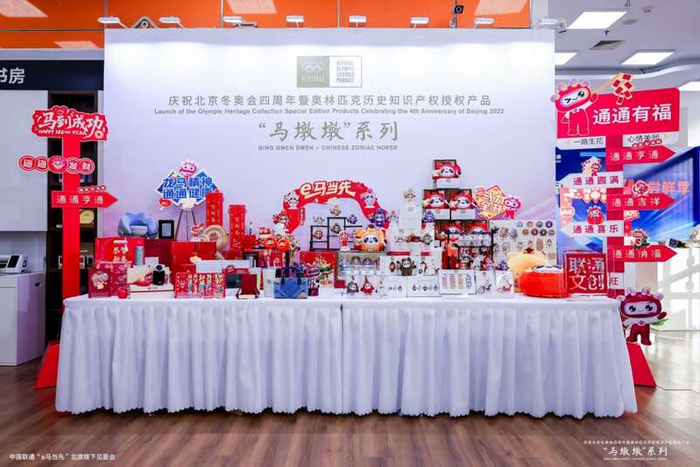
Group 1 - China Unicom launched the "Ma Dun Dun" series of products, including plush toys, refrigerator magnets, and keychains, during a sales event in Beijing on November 28 [1] - The event featured a theme stamp collection activity at the Xidan branch, where participants could collect stamps through various activities and exchange them for limited edition merchandise [2] - Customers purchasing specific eSIM devices and related services were offered exclusive "Ma Dun Dun" cultural creative gifts [2]
2025全球数商大会聚焦数据要素市场发展
Sou Hu Cai Jing· 2025-11-28 12:45
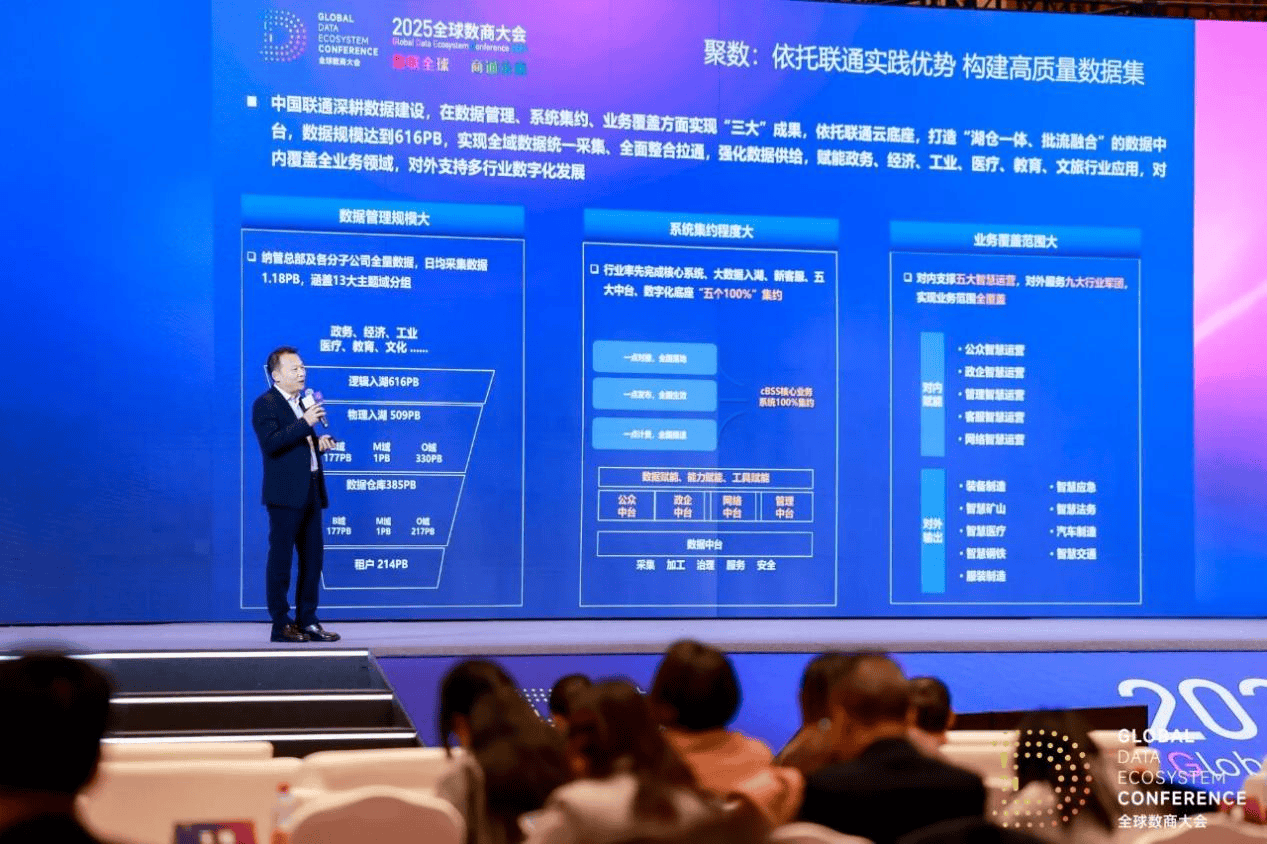
Core Insights - The 2025 "Data Element ×" competition national finals and Global Data Business Conference was held in Shanghai, focusing on the market-oriented allocation of data elements and the application of digital technology innovation [1] - China Unicom's subsidiary, Unicom Smart, is actively participating in the development of the data element market, emphasizing the importance of effectively utilizing data [3] Group 1: Data Element Market Development - The data element market, centered around data, intelligence, and applications, is maturing, pushing industries towards higher value stages [3] - China Unicom has achieved significant milestones in data management, with a data scale reaching 616PB and accumulating 400TB of high-quality datasets [4] Group 2: Infrastructure and Engineering - China Unicom is building a new intelligent computing infrastructure system that integrates AIDC, AI computing, and AINet [5] - The company has developed a comprehensive data engineering platform that supports the entire data lifecycle from acquisition to intelligent processing [5] Group 3: Industry Empowerment - China Unicom is focusing on common scenarios in various sectors such as government, economy, industry, healthcare, education, and culture, creating significant application results [7] - The company has established a national high-quality economic dataset and serves over 30 ministries and more than 100 local government units [7]
河北联通:以智慧科技点亮工业、农业、生态新图景
Xin Hua She· 2025-11-27 02:30
Core Insights - Hebei Unicom is leveraging innovative technologies to enhance public services and optimize user experience, contributing to high-quality development through digital solutions [1] Group 1: Industrial Innovation - Hebei Unicom has supported Hebei New Energy Technology Co., Ltd. by implementing a predictive maintenance system for over 500 critical devices, transitioning from reactive to proactive maintenance, significantly improving operational efficiency [2] - The integration of 5G technology has resolved previous issues with unstable industrial Wi-Fi networks, ensuring smooth operations in the coking production process [2] Group 2: Agricultural Upgrade - The implementation of a smart greenhouse system in the Xiaoliang Vegetable Planting Cooperative has increased crop yield by 15% through data-driven irrigation and fertilization, replacing traditional methods based on experience [4] - The project incorporates IoT, blockchain, and big data technologies to transform agricultural practices from experience-based to data-driven, addressing challenges in production efficiency and resource waste [4] Group 3: Ecological Protection - Hebei Unicom has enhanced communication network coverage in the Saihanba forest area, facilitating reliable mobile connectivity for visitors and supporting ecological monitoring [6] - The deployment of high-definition infrared cameras and a smart fire prevention platform enables early detection and precise location of fire incidents, contributing to ecological protection and sustainable development [6] Group 4: Service Philosophy - The initiatives by Hebei Unicom in industrial, agricultural, and ecological sectors reflect a commitment to the service philosophy of responding to public needs, aiming to enhance community satisfaction and support high-quality industry development [8]